
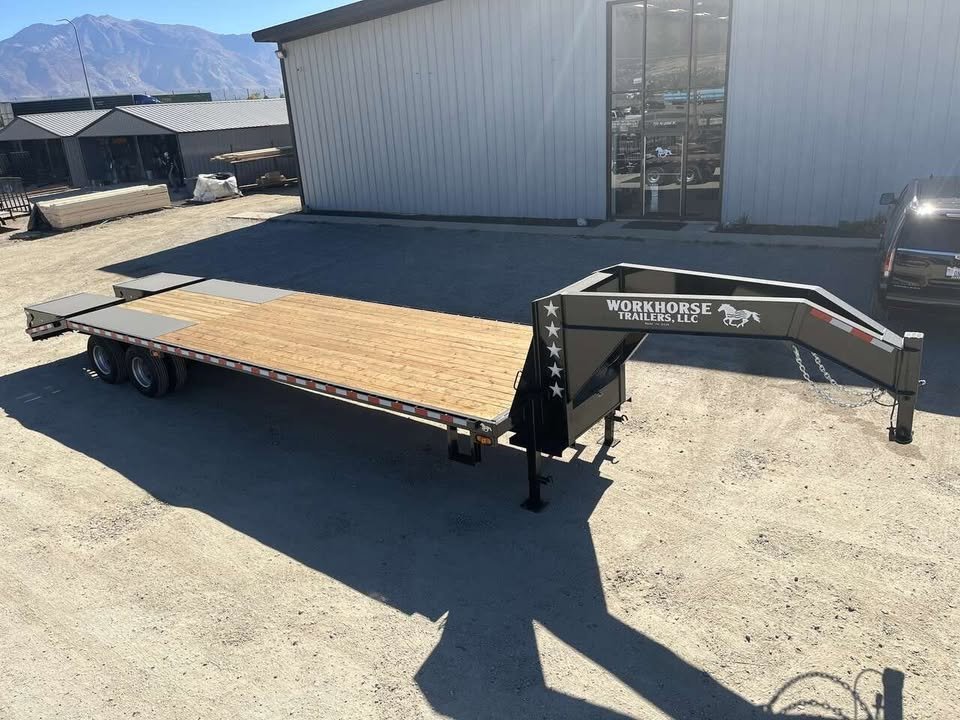
Wyoming Equipment Hauler Trailers
All locationsThe machines that build Wyoming’s roads, extract its resources, manage its rangelands, and maintain its infrastructure spend almost as much time riding on trailers as they do working on the ground. In a state where job sites are separated by 50, 100, or even 200 miles of open highway and unpaved access road, the equipment hauler trailer becomes the critical connector that keeps heavy machinery productive across a territory vast enough to swallow several eastern states whole. A dozer sitting idle at the yard because there is no trailer available to deliver it to the job bleeds money at the same rate it would earn if it were cutting grade. Workhorse Trailers LLC serves Wyoming’s equipment operators with hauler trailers built for the singular demands of transporting heavy machinery across a landscape defined by distance, elevation, wind, and weather extremes that leave no room for underbuilt equipment.
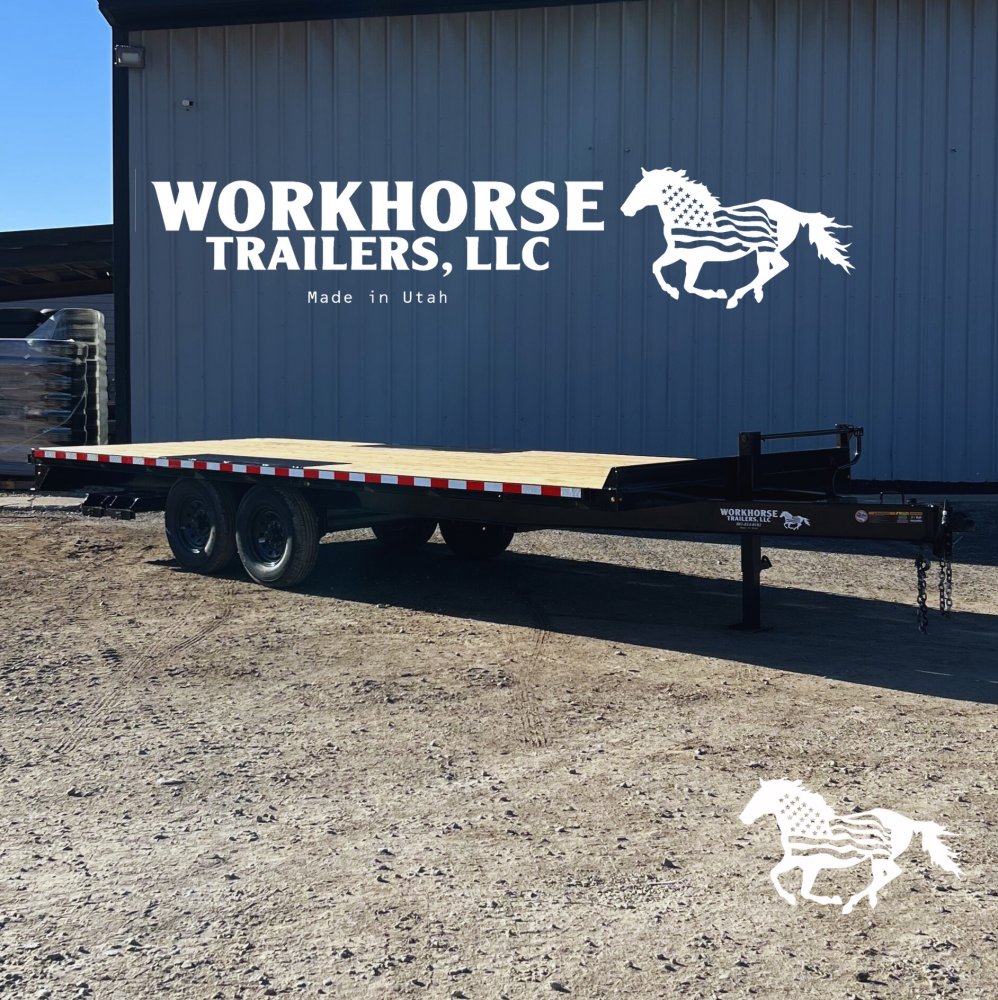
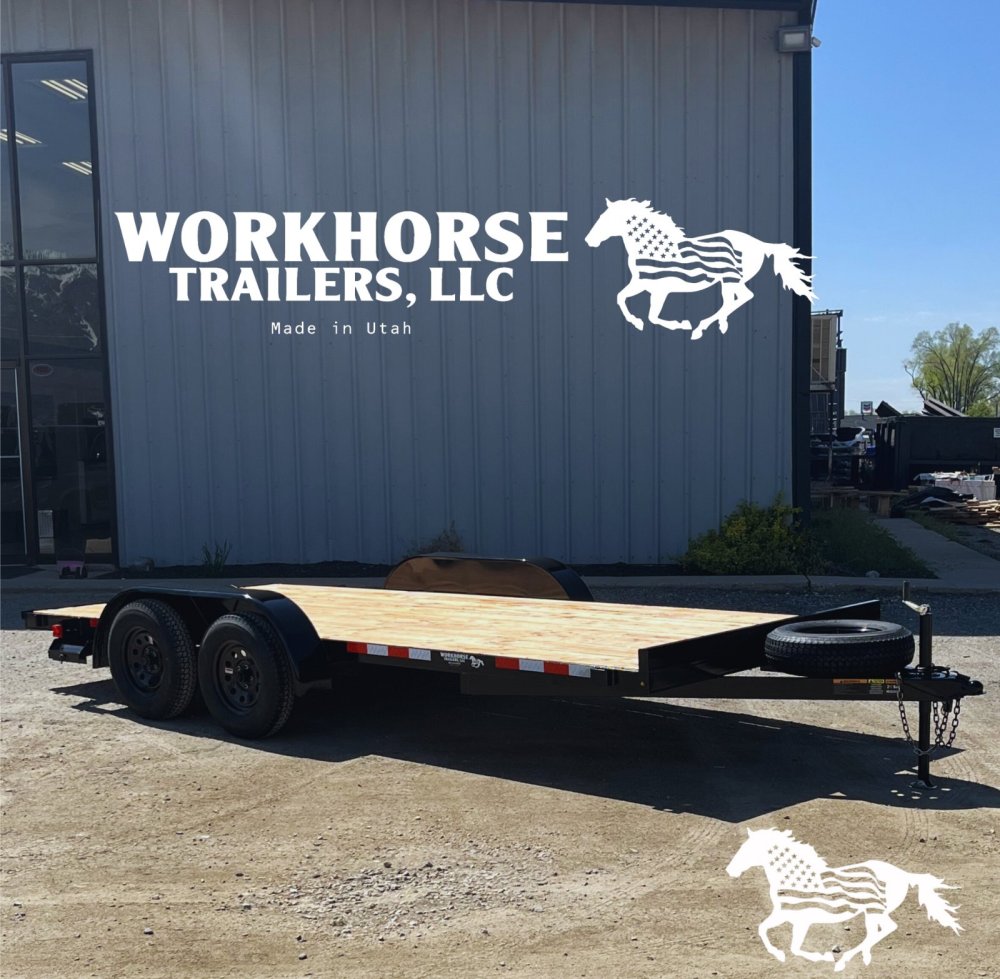
Wyoming’s extractive industries, agricultural backbone, and expanding infrastructure needs place relentless pressure on the equipment transport fleets that support them. Coal mines in the Powder River Basin, natural gas compression stations in the Jonah Field, wind farm construction along the I-80 energy corridor, and highway rehabilitation projects managed by WYDOT all depend on equipment hauler trailers cycling machines between staging areas and active work zones on schedules measured in hours rather than days. Workhorse Trailers LLC suppliesWyoming Equipment Hauler Trailers that meet the cycle time and structural endurance requirements these operations impose, providing the hauling capacity that keeps Wyoming’s heaviest industries moving at the pace their contracts demand.
Industries That Keep Equipment Hauler Trailers Rolling Across Wyoming
The breadth of heavy equipment use in Wyoming reflects an economy rooted in resource extraction, land stewardship, and infrastructure development. Each sector places distinct demands on the trailers that move its machines, and understanding these differences helps buyers select equipment hauler trailers matched to their actual operating conditions.
Surface Mining and Mineral Extraction
Wyoming leads the nation in coal production, with massive open-pit mines concentrated in Campbell and Converse counties producing hundreds of millions of tons annually. While the largest haul trucks and draglines at these operations stay on site permanently, an array of support equipment travels between mines, maintenance facilities, and supplier yards on equipment hauler trailers. Motor graders that maintain haul roads, water trucks that suppress dust, welding rigs that perform field repairs, and light plants that illuminate night shift operations all require trailer transport when they relocate between pits or report for scheduled service at off-site shops.
Trona mining near Green River, bentonite extraction in the Bighorn Basin, and uranium operations in the Gas Hills region each generate their own equipment transport cycles. The common thread is machinery that weighs tens of thousands of pounds and must travel across terrain that offers no paved shortcuts between origin and destination. Equipment hauler trailers in the mining sector absorb punishment from haul roads surfaced with crusite, scoria, and raw aggregate that would shred a trailer built for suburban pavement within a single season.
Pipeline and Midstream Infrastructure
Wyoming’s network of oil and gas pipelines requires constant maintenance, expansion, and integrity testing. Pipeline crews deploy side booms, trenchers, padding machines, boring units, and hydrostatic test equipment along rights-of-way that cross private ranch land, BLM acreage, and national forest boundaries. Moving this equipment from the contractor’s yard to the active spread involves equipment hauler trailers navigating county roads, crossing cattle guards, and climbing grades on surfaces that alternate between hardpan clay and axle-deep mud depending on the season.
Midstream companies operating compressor stations and processing plants throughout the state reposition portable equipment between facilities during maintenance turnarounds and capacity expansions. A compressor package weighing 20,000 pounds that needs to move from a station near Wamsutter to another near Pinedale travels roughly 150 miles through some of the most isolated country in the lower 48. The equipment hauler trailer making that trip must be mechanically sound enough to complete the journey without roadside breakdown in a corridor where cell service is spotty and passing traffic is sparse.
Road Construction and Bridge Rehabilitation
WYDOT and its network of private contractors maintain over 6,800 miles of state highway and thousands of bridges across Wyoming. The short construction season imposed by the state’s long winters compresses road building and bridge repair into an intense period between May and October when every working day counts. Equipment hauler trailers shuttle pavers, milling machines, concrete barrier installers, and crane trucks between project segments that may span 30 or 40 miles along a single highway corridor.
The pace of mobilization during construction season demands equipment hauler trailers that are ready to load and go every morning without mechanical delays. A hydraulic ramp that will not lower, a brake system throwing error codes, or a tire showing sidewall damage discovered during the pre-trip inspection costs the entire crew a morning of productivity while the problem gets resolved. Wyoming road contractors invest in premium equipment hauler trailers specifically to avoid these start-of-day delays that cascade into missed paving windows and schedule penalties.
Timber Harvest and Forest Management
The national forests covering Wyoming’s western mountain ranges support active timber harvest programs alongside wildfire mitigation and beetle kill salvage operations. Feller bunchers, skidders, log loaders, and portable sawmill units travel between timber sales on equipment hauler trailers navigating forest service roads with tight switchbacks, narrow bridges, and seasonal weight restrictions that limit access during spring thaw.
Equipment hauler trailers used in timber operations encounter conditions unlike any other sector in Wyoming. Sap-covered decks, bark debris accumulating in ramp hinges, steep approach grades at landing sites, and the constant presence of moisture from mountain snowmelt all stress trailer components in ways that flatland operators never experience. Corrosion-resistant finishes and sealed electrical connections are not upgrades in this environment. They are survival features.
Matching Trailer Capacity to Wyoming Machinery
Wyoming’s equipment fleet spans a broad weight range, and selecting an equipment hauler trailer with the correct capacity prevents both the safety hazards of overloading and the economic waste of towing more trailer than the cargo requires.
Medium Capacity for Support Equipment
Trailers rated between 10,000 and 16,000 pounds serve the support machinery segment that includes compact excavators, light rollers, walk-behind compactors, portable light towers, and field welding units. These machines form the backbone of maintenance operations across every Wyoming industry and move between job sites more frequently than the primary production equipment they support.
A medium-capacity equipment hauler paired with a one-ton pickup truck gives a Wyoming field supervisor or maintenance foreman the ability to deliver support machines independently without tying up a larger truck and trailer combination. This flexibility matters enormously in a state where dispatching a heavy rig from Casper to retrieve a generator from a well pad near Midwest represents a half-day commitment that a lighter, faster combination could complete in two hours.
Heavy Capacity for Primary Production Machines
Ratings above 20,000 pounds accommodate the full-size excavators, dozers, loaders, and graders that perform the primary earthmoving and material handling work on Wyoming job sites. These machines frequently weigh between 15,000 and 40,000 pounds depending on size class and configuration, placing them firmly in the territory where only a heavy-capacity equipment hauler trailer provides legal and safe transport.
Heavy-capacity trailers in Wyoming typically run on triple axle sets with individual brake assemblies on each axle position. The triple configuration distributes the concentrated weight of a single large machine across six tire contact patches rather than four, which reduces per-tire loading and improves traction during the low-speed maneuvers required when loading and positioning on soft ground at remote Wyoming work sites.
Oversize Load Considerations
Certain pieces of Wyoming mining and construction equipment exceed standard legal width or height limits when loaded on a trailer. Scrapers with wide moldboards, articulated haul trucks, and large crane sections all may require oversize load permits issued by WYDOT for transport on public highways. Equipment hauler trailer operators moving these loads must comply with escort vehicle requirements, restricted travel hours, and specific route designations that avoid bridges and overpasses with inadequate clearance.
Understanding the permit process before committing to a transport schedule prevents the delays and fines that result from attempting to move oversize loads without proper authorization. Wyoming’s permit system is administered through WYDOT’s oversize and overweight permit office, and applications can be processed quickly when the operator provides accurate dimensions and weight data for the loaded trailer combination.
Structural Demands Unique to Wyoming Service
Equipment hauler trailers operating year-round in Wyoming face environmental forces that accelerate wear on components originally designed for milder conditions. The construction details that determine whether a trailer thrives or merely survives in this environment deserve careful examination.
Frame Resilience Under Thermal Stress
Wyoming’s temperature range routinely spans 130 degrees Fahrenheit across a calendar year, from minus 30 in January to over 100 in July. Steel expands and contracts measurably across this range, and the repeated cycling generates thermal fatigue at weld joints and bolted connections. Frames fabricated from consistent, high-quality steel with full-penetration welds at every structural junction resist thermal fatigue better than frames assembled with intermittent welds or tack-welded gussets that concentrate stress at small contact areas.
Suspension Travel for Unimproved Access Roads
The final miles of most equipment delivery routes in Wyoming occur on surfaces that were never engineered for heavy trailer traffic. Well pad access roads, forest service two-tracks, mine haul roads, and ranch trails all present irregular surfaces that punish stiff suspension systems and transfer shock directly into the frame and cargo.
Equipment hauler trailers with adequate suspension travel absorb these impacts before they reach the frame, protecting both the trailer structure and the machine riding on the deck. Leaf spring packs with sufficient deflection range or torsion axle systems rated for the trailer’s gross weight provide the compliance needed to traverse Wyoming’s unpaved network without shaking the trailer apart one rough mile at a time.
Ramp Durability for Daily Cycling in Abrasive Conditions
Equipment hauler ramps in Wyoming accumulate grit, gravel, and dried mud from every loading surface they contact. This abrasive material grinds against ramp surfaces, hinge pins, and latch hardware with every cycle, wearing components that would last years in cleaner environments down to replacement threshold in a single busy season.
Hardened steel hinge pins, greaseable bushing assemblies, and ramp surfaces with replaceable wear strips extend the service intervals between major ramp repairs. Wyoming operators who load and unload daily should inspect ramp hardware weekly for elongated pin holes, cracked welds at hinge brackets, and worn latch engagement surfaces. Catching wear early and replacing individual components before cascading failure damages adjacent parts keeps repair costs manageable and prevents the sudden ramp failures that strand equipment at loading sites.
Pre-Trip Discipline for Wyoming Equipment Haulers
The isolation of many Wyoming equipment delivery destinations makes a thorough pre-trip inspection a non-negotiable habit rather than a bureaucratic exercise. A mechanical failure 80 miles from the nearest town on a county road with no cell coverage creates a situation that ranges from deeply inconvenient to genuinely dangerous depending on the season and weather conditions.
Tire condition and pressure verification tops the pre-trip checklist. Underinflated tires generate heat that accelerates sidewall failure, and the long highway distances typical of Wyoming equipment hauls provide ample time for a marginal tire to progress from warm to overheated to blown. Checking pressure cold and confirming that all tires match the load-rated specification for the current cargo weight catches problems before they develop into roadside emergencies.
Brake function testing on every axle confirms that the system delivers its full rated stopping power. A quick visual inspection of brake wiring connections, breakaway battery charge level, and controller signal response through the tow vehicle takes less than five minutes and provides assurance that the braking system will perform when the loaded trailer crests a hill and begins the descent that demands it.
Lighting circuits deserve the same pre-trip attention as mechanical systems. Every lamp, marker, reflector, and signal must function correctly before the trailer enters a Wyoming highway where the next vehicle approaching from behind might not appear for several minutes, leaving no ambient traffic to compensate for a missing brake light or absent turn signal.
Workhorse Trailers LLC Understands What Wyoming Equipment Operators Face
Moving heavy equipment across Wyoming is not a task for operators who cut corners or for trailers assembled with anything less than full commitment to structural quality. Workhorse Trailers LLC respects the demands this state places on hauling equipment and selects its inventory accordingly. Buyers travel from Rock Springs, Kemmerer, Powell, Buffalo, Torrington, Newcastle, Saratoga, Dubois, and every oil field camp and ranch community in between because the Workhorse team consistently delivers equipment hauler trailer recommendations grounded in real understanding of Wyoming’s terrain, climate, and operational pace. For the operators who keep Wyoming’s heaviest industries productive across one of the most challenging landscapes in America, Workhorse Trailers LLC provides the equipment hauler trailers worthy of the work.