
Wyoming Enclosed Cargo Trailers
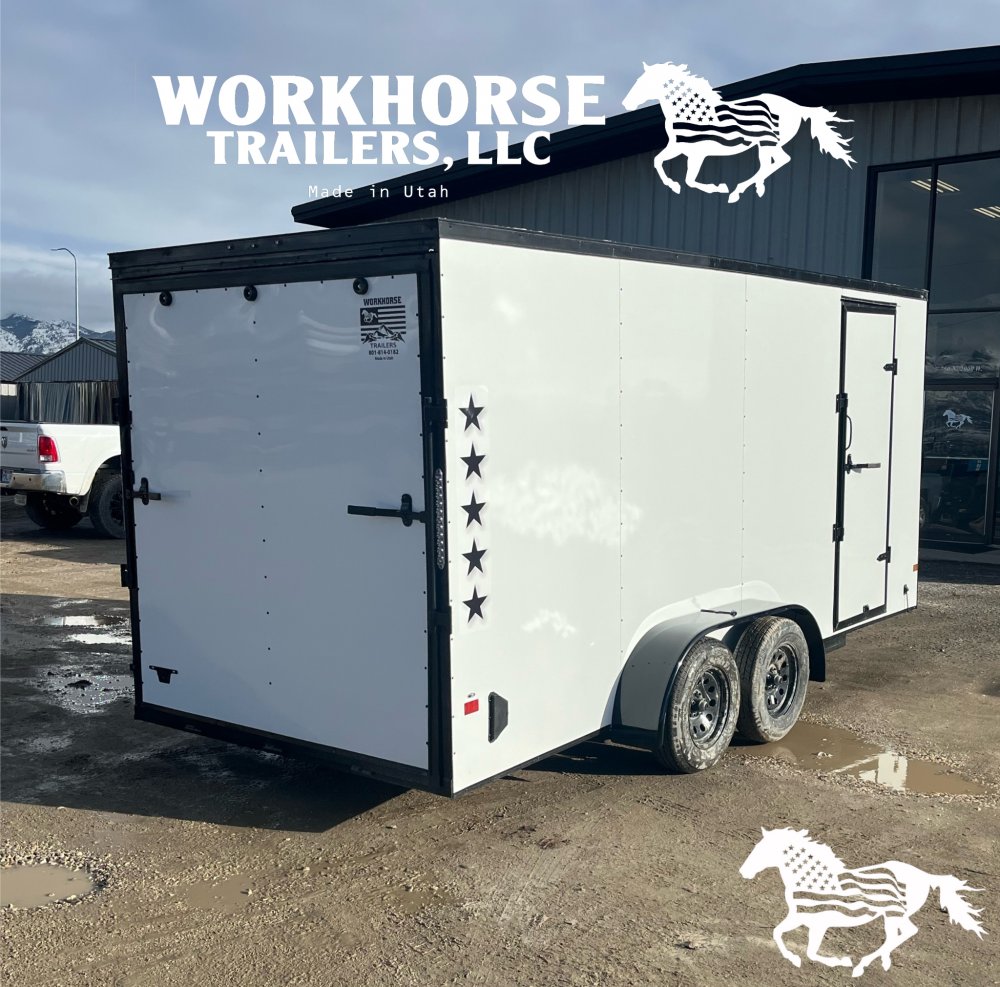
All locationsWyoming weather does not negotiate. It arrives on its own schedule, hits with full force, and leaves damage behind for anyone who failed to prepare. An open trailer loaded with tools, merchandise, feed supplements, or sensitive equipment offers zero defense against the horizontal snow, punishing hail, and scouring wind that can materialize across any corner of the state with little warning. An enclosed cargo trailer seals everything inside behind walls, a roof, and a lockable door that together form a barrier against every atmospheric assault Wyoming can deliver. For the businesses, ranchers, tradespeople, and organizations operating across this state, an enclosed cargo trailer is not an upgrade over an open model. It is the minimum viable protection for cargo that cannot afford to arrive damaged, frozen, soaked, or stolen. Workhorse Trailers LLC provides Wyoming buyers with enclosed cargo trailers built to withstand conditions that would reduce lighter equipment to scrap within a handful of seasons.
The isolation that characterizes so much of Wyoming amplifies the consequences of cargo damage during transport. A contractor whose power tools arrive at a job site near Thermopolis covered in ice and road grime after a 90-mile open-trailer haul from Worland cannot simply drive to a nearby supply house for replacements. A veterinary supply distributor delivering temperature-sensitive vaccines to a ranch clinic outside of Meeteetse cannot accept the spoilage that results from an unprotected trailer exposed to a July afternoon topping 95 degrees. Workhorse Trailers LLC stocksWyoming Enclosed Cargo Trailers that prevent these scenarios by placing an impenetrable shell between valuable cargo and a climate that shows no mercy toward the unprepared.
Protection That Goes Beyond Weather
While weather resistance ranks as the primary motivation for most Wyoming enclosed trailer purchases, the sealed body delivers additional advantages that prove equally valuable in the daily reality of operating across a state with vast distances between populated areas.
Theft Deterrence in Remote Locations
Wyoming’s open landscape and low population density mean that trailers parked at remote job sites, trailhead staging areas, and overnight hotel stops sit unmonitored for extended periods. An open trailer loaded with hand tools, welding equipment, or inventory displays its contents to every passerby and offers no physical barrier to someone inclined to help themselves. The distance between the parked trailer and the nearest occupied building may be measured in miles rather than feet.
An enclosed cargo trailer conceals its contents completely and presents a locked steel barrier that casual thieves cannot breach without tools and noise. While no security measure is absolute, the deterrent effect of a locked enclosure dramatically reduces opportunistic theft during the overnight stops and multi-day job site stays that Wyoming’s geography frequently requires. Contractors working week-long projects at well pads in the Bighorn Basin or construction sites near Pinedale sleep easier knowing their enclosed trailer protects the tools and materials they need when work resumes the next morning.
Dust and Particulate Exclusion
The fine alkali dust that blankets much of Wyoming’s basin country infiltrates everything it contacts. Open trailers hauling electronics, medical supplies, food service equipment, or precision instruments through the Wind River Basin or across the Red Desert deliver cargo coated in a gritty film that damages sensitive surfaces, clogs moving parts, and contaminates packaged goods. The dust does not settle quietly. It is driven by winds that force particles into seams, crevices, and packaging openings that appear sealed under calmer conditions.
An enclosed cargo trailer with properly gasketed doors and sealed panel joints excludes the vast majority of airborne particulate during transit. The interior remains clean enough to protect cargo categories that would be unsuitable for open transport anywhere in Wyoming outside of a perfectly calm day, which is a meteorological event so rare that planning around it would be impractical.
Organized Mobile Storage Between Destinations
Wyoming operators who travel circuits covering hundreds of miles per week use their enclosed cargo trailers as rolling warehouses that maintain order between stops. A rodeo stock contractor hauling tack, veterinary supplies, and arena equipment between events in Cheyenne, Douglas, and Sheridan keeps everything organized on interior shelving rather than repacking loose bins at each venue. A mobile mechanic serving ranch clients from Lusk to Sundance retrieves specific tools and parts from labeled compartments instead of digging through a wind-scattered truck bed.
This organizational capacity transforms the enclosed trailer from a simple cargo container into a productivity system. Every item has a place, every place is protected from weather and theft, and every stop begins with the operator knowing exactly where to find what they need.
Wyoming Professionals Who Rely on Enclosed Trailers
The enclosed cargo trailer market in Wyoming serves a cross-section of the state economy that is broader than many buyers initially realize. The applications described here represent the most common use cases, though the versatility of the enclosed format accommodates far more.
Oilfield Instrumentation and Calibration Services
The wellheads, compressor stations, and processing plants dotting Wyoming’s producing basins require regular instrumentation calibration and testing performed by specialized technicians who carry sensitive electronic equipment worth tens of thousands of dollars. Pressure gauges, flow meters, gas chromatographs, and portable calibration standards cannot tolerate the vibration, temperature swings, and contamination that open transport exposes them to.
Enclosed cargo trailers outfitted with shock-absorbing shelf systems, climate-buffering insulation, and dedicated compartments for individual instruments provide the controlled transport environment these technicians demand. A calibration service operating out of Casper that covers wellsites from the Powder River Basin to the Wind River Reservation may log 400 miles in a single day. Every mile subjects the cargo to road vibration that only a properly equipped enclosed trailer can attenuate to acceptable levels.
Western Lifestyle and Rodeo Vendors
Wyoming’s rodeo circuit, county fair system, and western lifestyle event calendar generate a thriving market for traveling vendors who sell clothing, leather goods, jewelry, horse tack, and specialty food products. These vendors follow a seasonal route that touches communities across the state, setting up temporary retail displays at each stop before tearing down and rolling to the next venue.
An enclosed cargo trailer serves as inventory vault, display storage, and mobile stockroom throughout the selling season. Merchandise stays clean, dry, and secure between events regardless of the weather conditions encountered during transit. Vendors who operate out of towns like Cody, Jackson, or Lander and follow the fair circuit from Cheyenne Frontier Days through the smaller county events in places like Basin, Lovell, and Pine Bluffs depend on their enclosed trailers to protect the inventory that represents their livelihood.
Hunting Outfitters and Guide Services
Licensed outfitters running guided hunts in Wyoming’s backcountry transport wall tents, wood stoves, cooking equipment, game bags, pack saddles, and client gear to staging areas at the edge of wilderness trailheads. This equipment represents a capital investment of many thousands of dollars, and its condition directly affects client satisfaction and the outfitter’s professional reputation.
An enclosed cargo trailer staged at the trailhead serves as a secure base camp supply depot for the duration of the hunt. Equipment not needed on the mountain stays locked inside rather than exposed to weather and wildlife. At season’s end, the outfitter loads everything back into the trailer for the drive home knowing that gear stored properly in the enclosed space will emerge in usable condition when the next season opens.
Emergency and Disaster Preparedness
Wyoming communities face natural disaster risks including wildfire, flooding, severe winter storms, and tornado activity along the eastern plains. Volunteer fire departments, emergency management agencies, and community preparedness organizations maintain caches of supplies, communication equipment, generators, and medical provisions that must be deployable on short notice.
Enclosed cargo trailers loaded with pre-staged disaster response kits provide ready-to-roll capability that fixed storage buildings cannot match. When a wildfire threatens structures near Dubois or a spring flood isolates a community along the North Platte River, an enclosed trailer loaded with relief supplies can be hitched and dispatched within minutes rather than the hours it would take to load a bare trailer from a warehouse.
Surviving Wyoming Winters Inside an Enclosed Shell
Operating an enclosed cargo trailer through Wyoming’s extended winter season introduces challenges that enclosed trailer owners in milder climates never face. Understanding these challenges and addressing them during the purchase process prevents costly surprises once the temperature drops.
Snow Load on Roof Panels
An enclosed trailer parked outdoors during a Wyoming winter accumulates snow on its roof that can exceed the structural capacity of lightweight panel systems. A 24-foot enclosed trailer roof holding six inches of wet snow carries approximately 1,500 pounds of additional weight concentrated on the weakest structural plane of the body. Roof bowing, panel cracking, and in extreme cases complete collapse can result when snow load exceeds the design limits.
Wyoming buyers should confirm that any enclosed trailer they purchase uses a roof structure engineered for snow accumulation. Reinforced roof bows spaced at closer intervals than standard designs, along with panel gauges thick enough to resist deflection under distributed load, prevent the winter parking failures that strand equipment and damage cargo. Alternatively, parking the trailer under a covered structure or clearing accumulated snow after each storm eliminates the concern entirely.
Door Seal Integrity in Sub-Zero Conditions
The rubber and foam gaskets that seal an enclosed trailer’s doors against weather intrusion become stiff and brittle as temperatures plunge below zero. Seals that maintain their flexibility and compression in moderate cold lose their ability to conform to door frame surfaces when the temperature drops to minus 10 or minus 20 degrees, leaving gaps that admit snow, wind-driven ice crystals, and frigid air.
Selecting an enclosed trailer with silicone-based door seals rather than standard rubber compounds maintains weather protection across the full temperature range encountered during Wyoming winters. Silicone retains its flexibility at temperatures far below zero and recovers its original shape after compression, which means the seal performs equally well during a January cold snap and a July heat wave.
Condensation and Interior Moisture Control
A sealed enclosed trailer creates a microclimate inside the body that responds to external temperature changes on its own timeline. When a Wyoming winter day warms the trailer’s exterior panels while the interior cargo remains cold, moisture in the trapped air condenses on the coldest surfaces inside the trailer. Repeated condensation cycles leave water stains on merchandise, promote mold growth on organic materials, and corrode unprotected metal tools and equipment.
Passive roof vents that allow warm, moist air to escape while preventing precipitation from entering provide the simplest and most reliable solution for Wyoming conditions. Two vents positioned near opposite ends of the trailer body create a through-flow pattern that equalizes interior and exterior temperature and humidity without requiring powered fans or electrical components that add complexity and failure points to the system.
Sizing and Configuration Guidance for Wyoming Buyers
The distances between Wyoming communities and supply sources mean that enclosed trailer sizing decisions should account for the cost of each trip, not just the volume of the cargo. A trailer that holds one full load eliminates a second round trip that might cover 200 miles or more. That saved trip represents hours of driving time, significant fuel expense, and wear on both the tow vehicle and the trailer itself.
Compact Enclosed Trailers for Individual Operators
Units measuring 5 by 8 feet through 6 by 10 feet serve solo tradespeople, small-scale vendors, and individual operators whose cargo fits within a manageable footprint. Wyoming farriers, locksmiths, small-engine repair technicians, and market vendors operating within a defined regional territory find that compact enclosed trailers provide adequate capacity without demanding the larger tow vehicles and greater fuel consumption that bigger models require.
Mid-Size Enclosed Trailers for Commercial Operations
Trailers in the 6-by-12-foot through 7-by-16-foot range address the needs of established businesses that carry diverse inventories or larger equipment sets. Oilfield service technicians, traveling retail vendors, outfitting operations, and construction support teams in Wyoming gravitate toward this category because it accommodates a full working inventory while remaining towable behind the one-ton and three-quarter-ton trucks that serve as the standard commercial vehicles across the state.
Large Format Enclosed Trailers for High-Volume Transport
Units extending from 8 by 20 feet through 8.5 by 28 feet serve Wyoming businesses moving large volumes of merchandise, extensive equipment inventories, or bulky items that demand maximum interior space. Moving companies, exhibition haulers, and large outfitting operations choose these models when every cubic foot of enclosed volume contributes directly to operational capability.
Workhorse Trailers LLC Protects What Wyoming Operators Cannot Afford to Lose
The cargo riding inside an enclosed trailer represents livelihood, investment, and readiness for whatever the next day brings. Workhorse Trailers LLC treats that reality with the seriousness it deserves, matching every Wyoming buyer with an enclosed cargo trailer that fits their operation and withstands their environment. Customers arrive from Green River, Kemmerer, Evanston, Rock Springs, Riverton, Powell, Gillette, Torrington, Laramie, and the scores of unincorporated communities that stitch Wyoming’s vast landscape together, knowing that the Workhorse team will recommend a trailer built for what this state actually delivers rather than what a brochure from a milder climate promises. For Wyoming operators who refuse to gamble their cargo against the elements, Workhorse Trailers LLC provides the enclosed protection that takes chance out of the equation.