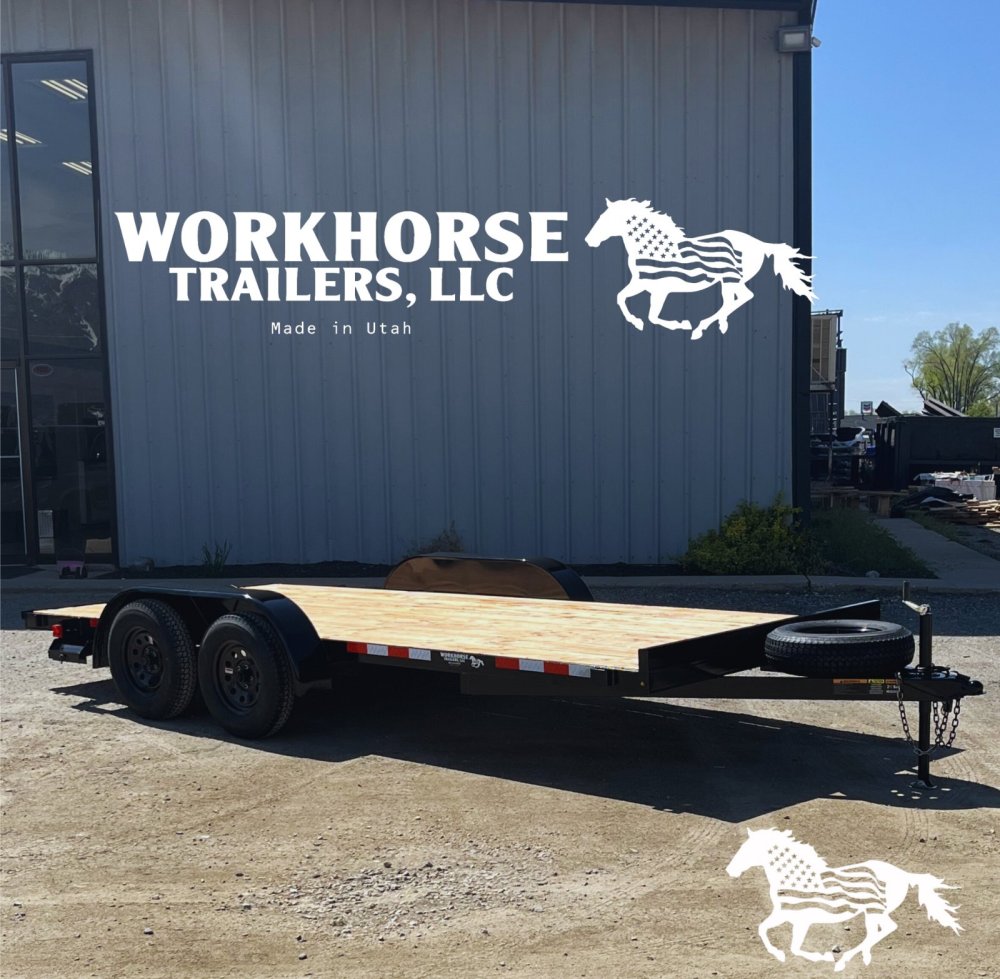
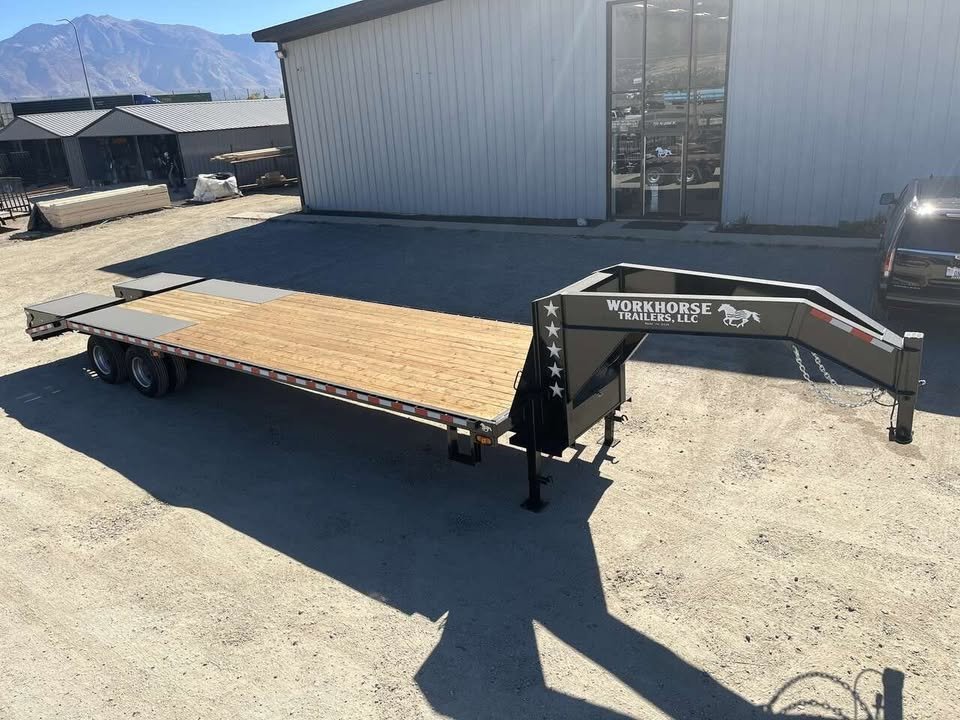
Wyoming Deck Over Trailers
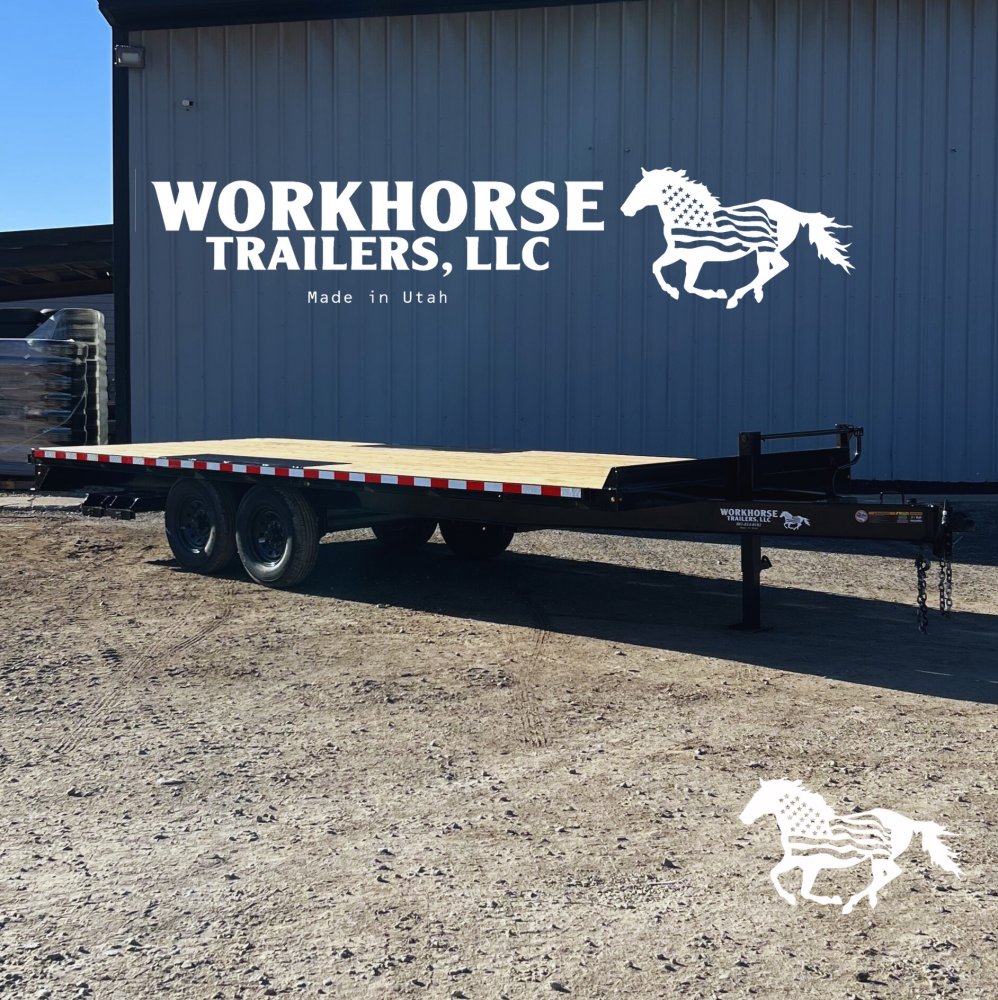
All locationsStandard trailers force Wyoming operators to work around wheel wells that eat into cargo space like fence posts set in the middle of a loading zone. In a state where every trip to town burns a half tank of diesel and the next supply run might not happen for a week, leaving usable deck width on the table because the fenders are in the way is a waste that working people in this part of the country cannot afford. Deck over trailers push the entire platform above the wheel line, delivering a flat expanse of cargo surface from rail to rail with nothing protruding into the loading area. That unobstructed deck changes the math on what fits, how it stacks, and how many trips a job requires. Workhorse Trailers LLC has watched demand for deck over trailers grow steadily across Wyoming as ranchers, contractors, and industrial operators discover that the full-width platform solves hauling problems they had been tolerating for years without realizing a better option existed.
Wyoming’s economy produces cargo that is unapologetically wide, awkwardly shaped, and stubbornly heavy. Round hay bales stacked two across, drilling rig floor mats that span eight feet, prefabricated corral panels bundled for delivery, and wind turbine maintenance platforms that cannot be disassembled for transport all demand a loading surface without obstructions. Workhorse Trailers LLC carriesWyoming Deck Over Trailers that provide exactly that surface, giving operators across the state the room they need to load what they actually haul rather than what a conventional trailer’s narrow channel between the fenders allows.
Why Wyoming Cargo Demands Full-Width Decks
The types of materials and equipment that move across Wyoming’s road network on a daily basis skew heavily toward oversized, irregularly shaped items that fit poorly within the confines of a standard trailer bed. This is not a market where the majority of loads consist of neatly palletized boxes. Wyoming cargo tends to be raw, bulky, and indifferent to the convenience of the person trying to transport it.
Hay and Forage Transport
Wyoming ranches produce and consume massive quantities of hay, and the logistics of moving it between fields, stack yards, and feeding locations consume a significant portion of every operation’s time and fuel budget. Large round bales measuring five feet in diameter sit side by side on a deck over trailer with room to spare, while the same bales on a conventional flatbed must ride single file between the wheel wells or hang dangerously over the edges.
A deck over trailer carrying two bales across and three bales long delivers six bales per trip compared to the three or four that a standard flatbed accommodates with the same bed length. For a ranch near Sheridan putting up 500 bales in a season and moving them from meadow to stack yard, that increased per-trip capacity cuts the total number of hay hauling trips nearly in half. Multiplied across the weeks of haying season, the fuel savings, reduced tire wear, and recovered labor hours represent a tangible return on the deck over investment.
Oilfield Mat and Pad Construction Materials
The energy industry across Wyoming’s producing basins uses composite and wooden rig mats to create temporary work surfaces at drilling locations, pipeline crossings, and equipment staging areas. Individual mats can measure 8 feet wide by 14 feet long and weigh several thousand pounds. Loading these mats onto a conventional trailer requires positioning them lengthwise to clear the fender wells, which limits the number that fit per load and often leaves dead space on either side of the cargo.
A deck over trailer accepts rig mats laid flat across the full platform width, allowing operators to stack them efficiently without wasting space to fender clearance. Mat hauling contractors serving the Niobrara shale play in eastern Wyoming and the coalbed methane fields of the Powder River Basin move hundreds of mats per season and measure their profitability in loads per day. The deck over format directly increases that number by maximizing the cargo carried on each run.
Prefabricated Building Components
Modular construction has gained traction across Wyoming as builders seek to overcome the skilled labor shortages that plague rural construction markets. Wall panels, roof trusses, floor cassettes, and bathroom pods fabricated at shops in Cheyenne, Casper, or out of state arrive at building sites on trailers. These components are manufactured to finished building widths that frequently exceed the usable space between a conventional trailer’s wheel wells.
Deck over trailers transport prefabricated components flat and fully supported across the entire deck surface, preventing the flexing and racking damage that occurs when wide panels overhang a narrow cargo channel. Builders erecting homes, bunkhouses, and commercial structures in remote Wyoming locations where on-site fabrication is impractical depend on intact delivery of these precision-built components. A single cracked panel or warped truss caused by inadequate deck support during transport can delay a project by weeks while a replacement is fabricated and shipped.
Heavy Equipment Attachments and Implements
The attachments that expand the capability of Wyoming’s construction and agricultural equipment are frequently wider than the base machines they serve. Brush mower decks, snow pusher blades, grader scarifier bars, and excavator screening buckets all present widths that challenge the narrow loading area of a standard trailer. Ranch operators transporting a seven-foot rotary mower attachment to a hay field or a contractor delivering an eight-foot snow pusher to a parking lot contract need a trailer that accepts these implements without the gymnastics of angling, tilting, or disassembling them to squeeze between fender wells.
Deck Over Performance on Wyoming Roads
The condition of Wyoming’s road surfaces and the distances they cover influence how a deck over trailer performs in ways that matter more here than in states with shorter trips and smoother pavement. Understanding these factors helps buyers select a trailer that handles the real-world conditions it will face.
Stability at Highway Speeds in High Winds
The elevated deck height of a deck over trailer raises the overall center of gravity when loaded, which increases sensitivity to crosswind forces. Wyoming’s notorious wind exposure makes this characteristic more consequential than it would be in calmer regions. A loaded deck over trailer traveling I-80 through the Arlington to Elk Mountain wind corridor or crossing the open plains along Highway 287 between Rawlins and Muddy Gap faces sustained lateral pressure that demands respect from the driver and predictable response from the trailer.
Keeping heavy cargo positioned low on the deck surface counteracts some of the center-of-gravity elevation inherent in the deck over design. Spreading the load evenly across the platform width prevents the lopsided weight distribution that amplifies wind-induced lean. Reducing speed during high-wind advisories and monitoring WYDOT travel condition reports before departing with a loaded deck over trailer are standard operating practices for experienced Wyoming haulers.
Long-Haul Bearing and Tire Endurance
A deck over trailer towing 120 miles from Gillette to Sheridan accumulates bearing rotation and tire heat that a trailer covering 12 miles across an urban job site never approaches. Wyoming’s long inter-city distances mean that bearings, tires, and brake components operate under sustained load for periods that approach or exceed the continuous-duty design assumptions of some trailer components.
Selecting trailer tires rated for sustained highway speeds at the maximum load the trailer will carry provides the thermal margin needed for Wyoming distances. Load range G or H tires withstand the heat buildup generated during two-hour loaded highway runs far better than lighter-rated tires pressed into the same service. Bearing assemblies packed with synthetic high-temperature grease and fitted with quality seals maintain lubrication integrity through the extended rotational periods that Wyoming towing demands.
Unpaved Road Durability
The last stretch of nearly every delivery route in rural Wyoming involves gravel, dirt, or unimproved surface. A deck over trailer that just completed 80 miles of highway towing transitions directly onto surfaces that jar, bounce, and twist the frame in directions highway pavement never does. The elevated deck amplifies the sensation of these impacts slightly because the cargo rides higher above the axle pivot point, transmitting more perceived movement to the load.
Deck over trailers with properly rated suspension systems and adequate ground clearance beneath the frame members navigate these transitions without damage. Buyers who know their routes include significant unpaved mileage should confirm that the trailer’s suspension provides enough travel to absorb the worst surfaces on their regular delivery network without bottoming out and transmitting shock directly through the frame into the cargo.
Selecting Hitch Configuration for Wyoming Deck Over Use
The choice between bumper-pull and gooseneck hitching on a deck over trailer determines payload capacity, handling characteristics, and tow vehicle requirements. Wyoming’s operating conditions steer most professional operators toward one clear preference, though both configurations have legitimate roles in the market.
Bumper-Pull Deck Over Applications
Bumper-pull deck over trailers connect to a standard receiver hitch and serve lighter-duty applications where the total loaded weight stays below 14,000 pounds. Wyoming homeowners, small-acreage operators, and part-time contractors who haul fencing materials, firewood, ATV loads, and general ranch supplies find that a bumper-pull deck over provides the full-width loading advantage without requiring a gooseneck hitch installation in their truck bed.
The bumper-pull format also preserves full use of the truck bed when the trailer is disconnected, which matters to Wyoming operators who use their trucks for daily ranch chores and need the bed available for feed sacks, mineral tubs, and tools between trailer trips.
Gooseneck Deck Over Applications
Gooseneck deck over trailers dominate the professional and commercial segment of the Wyoming market. The hitch location above the rear axle supports gross trailer weights of 20,000 to 30,000 pounds and beyond, which accommodates the heavy industrial, agricultural, and construction cargo that Wyoming operators haul routinely.
The gooseneck connection also delivers handling stability that becomes critically important during the long, wind-exposed highway runs between Wyoming communities. The centered hitch point resists the lateral forces that crosswinds apply to a loaded deck over trailer far more effectively than a bumper-mounted receiver positioned behind the tow vehicle’s rear axle. For Wyoming operators towing full-width loads across the state’s windiest corridors, the gooseneck configuration provides a stability advantage that directly affects safety on every trip.
Protecting Deck Over Trailers from Wyoming’s Climate
The environmental extremes found across Wyoming attack trailer materials through several mechanisms that operate simultaneously and year-round. A disciplined protection and maintenance approach preserves the trailer’s structural integrity and appearance through decades of service in conditions that would consume lesser equipment in a fraction of that time.
Surface Protection Against UV and Wind Erosion
Wyoming’s high altitude intensifies ultraviolet radiation, and the persistent wind carries fine particulate matter that sandblasts exposed surfaces over time. Paint systems that withstand these combined forces require a proper primer layer bonded to clean, prepared steel followed by a topcoat formulated for UV resistance. Powder coating offers superior adhesion and thickness compared to spray-applied liquid paint and resists the micro-chipping caused by windblown grit better than conventional finishes.
Wyoming operators who store their deck over trailers outdoors should inspect the coating twice annually for chips, scratches, and thin spots where the bare steel has become exposed. Touching up damage promptly with a compatible coating prevents corrosion from establishing a foothold beneath the surrounding finish and spreading invisibly until a large section of the frame requires stripping and refinishing.
Wooden Deck Preservation in Arid Conditions
Treated lumber decking on a Wyoming deck over trailer loses moisture rapidly in the state’s dry climate, which causes shrinkage, checking, and eventual splitting that weakens the boards and creates gaps between them. Fasteners loosen as the wood contracts around them, and the resulting play allows boards to shift under load and accelerate wear at the contact points.
Applying a penetrating wood preservative at the beginning of each summer season replenishes the protective compounds that slow moisture loss and maintain dimensional stability. Tightening deck fasteners after the preservative application re-seats any hardware that loosened during the preceding dry season. This annual maintenance cycle keeps wooden decks tight, stable, and structurally sound through the years of service that Wyoming operators expect from their trailers.
Electrical System Weatherproofing
The combination of wind-driven moisture, road chemical exposure during winter, and the fine alkali dust prevalent across Wyoming’s basins corrodes electrical connections with a persistence that defeats standard automotive-grade weatherproofing. Trailer lighting connectors, junction boxes, and ground points all require sealed housings and dielectric grease at every metal-to-metal contact point to maintain reliable signal transmission across seasons.
Wyoming operators who tow through winter storms and along chemically treated highways should clean and re-grease all electrical connections at least twice per year. Replacing corroded connectors before they cause intermittent lighting failures prevents the citations, accidents, and roadside troubleshooting sessions that corroded wiring invariably produces at the most inconvenient possible moment.
Workhorse Trailers LLC Delivers Deck Over Solutions Across Wyoming
The working people of Wyoming need trailers that carry what the job requires without excuses about width limitations or fender clearance problems. Workhorse Trailers LLC meets that need with deck over trailers proven across the full spectrum of Wyoming hauling conditions. Buyers drive from Lander, Riverton, Thermopolis, Worland, Cody, Afton, Evanston, Rawlins, Wheatland, and every small community dotting the state’s highway map because the Workhorse team understands both the product and the environment it must perform in. For Wyoming operators who have spent years working around the limitations of conventional trailers, a properly selected deck over from Workhorse Trailers LLC opens up a full-width world of hauling capability that makes every trip more productive and every load more secure.