
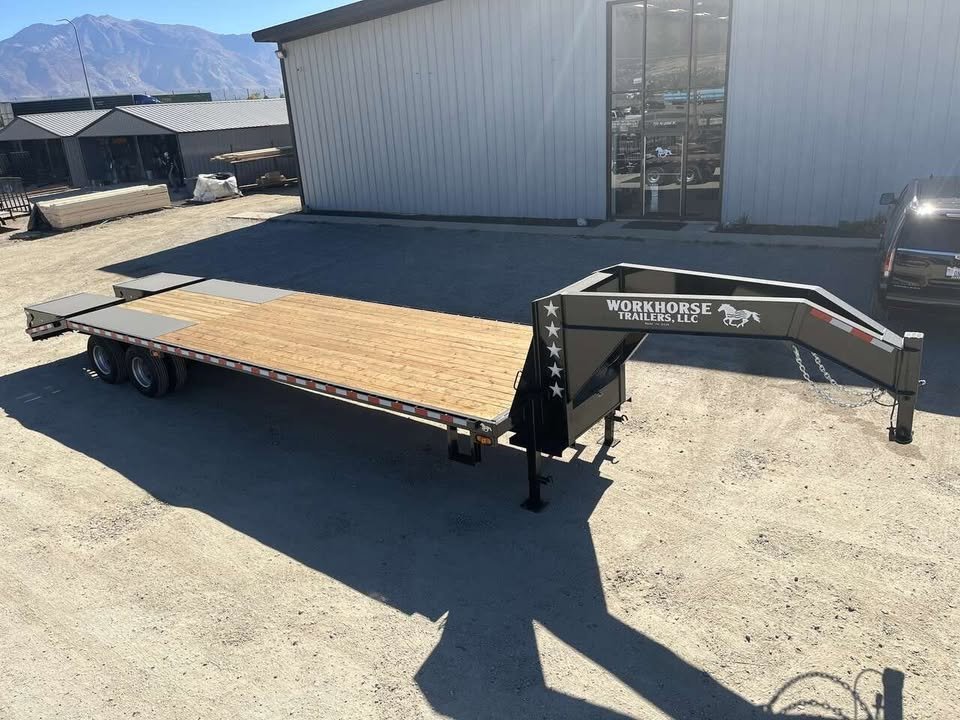
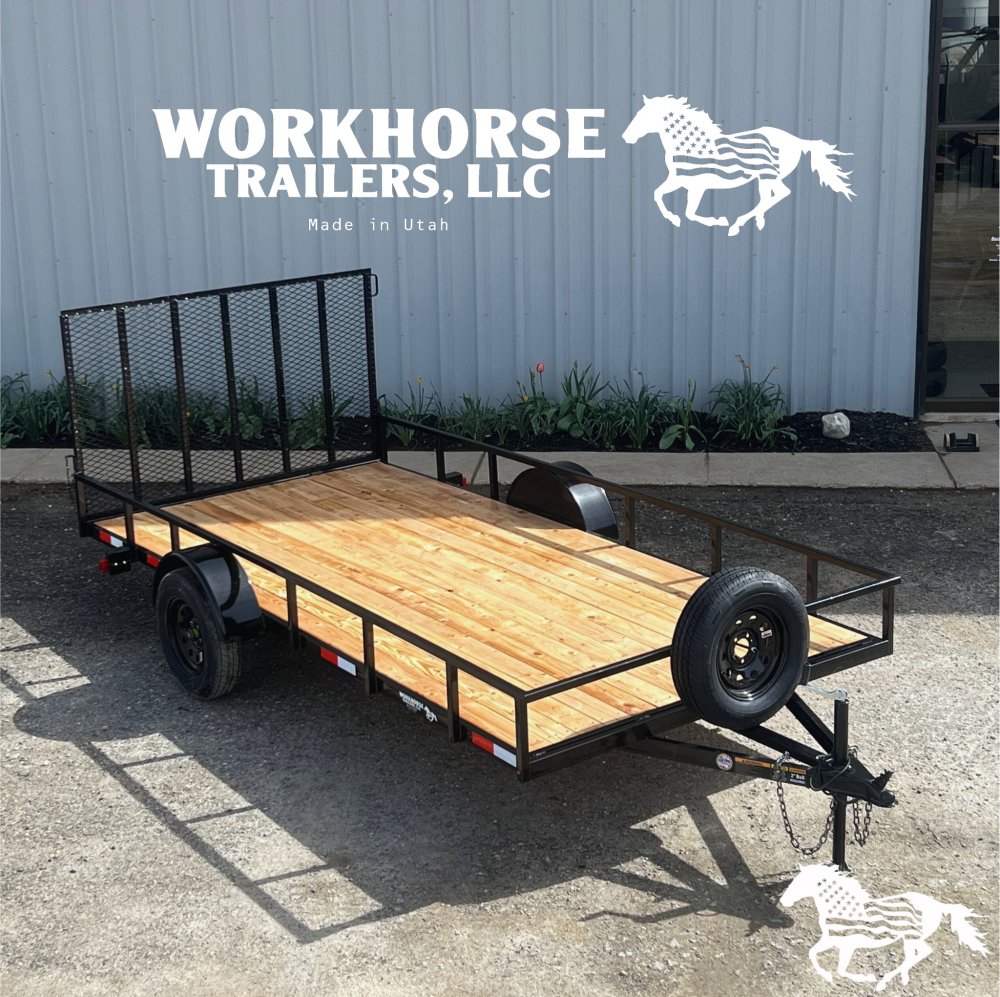
Wyoming Car Hauler Trailers
All locationsBuying, selling, recovering, and relocating vehicles across Wyoming involves distances that dwarf what operators in most other states consider a normal trip. A rancher picking up a used flatbed truck from a seller in Sheridan and driving it home to Rawlins faces a 300-mile journey each way. A towing service dispatched to recover a broken-down sedan on I-80 between Laramie and Cheyenne may need to deliver that vehicle to a repair shop in Casper, adding another 180 miles to the haul. A collector who spots a vintage pickup at an estate sale near Thermopolis has no choice but to bring their own transport if they want the vehicle home before someone else claims it. In a state where the space between points A and B is measured in hours rather than minutes, owning a personal car hauler trailer is less of a convenience and more of a practical requirement. Workhorse Trailers LLC equips Wyoming buyers with car hauler trailers constructed to handle these marathon distances and the punishing conditions that accompany them.
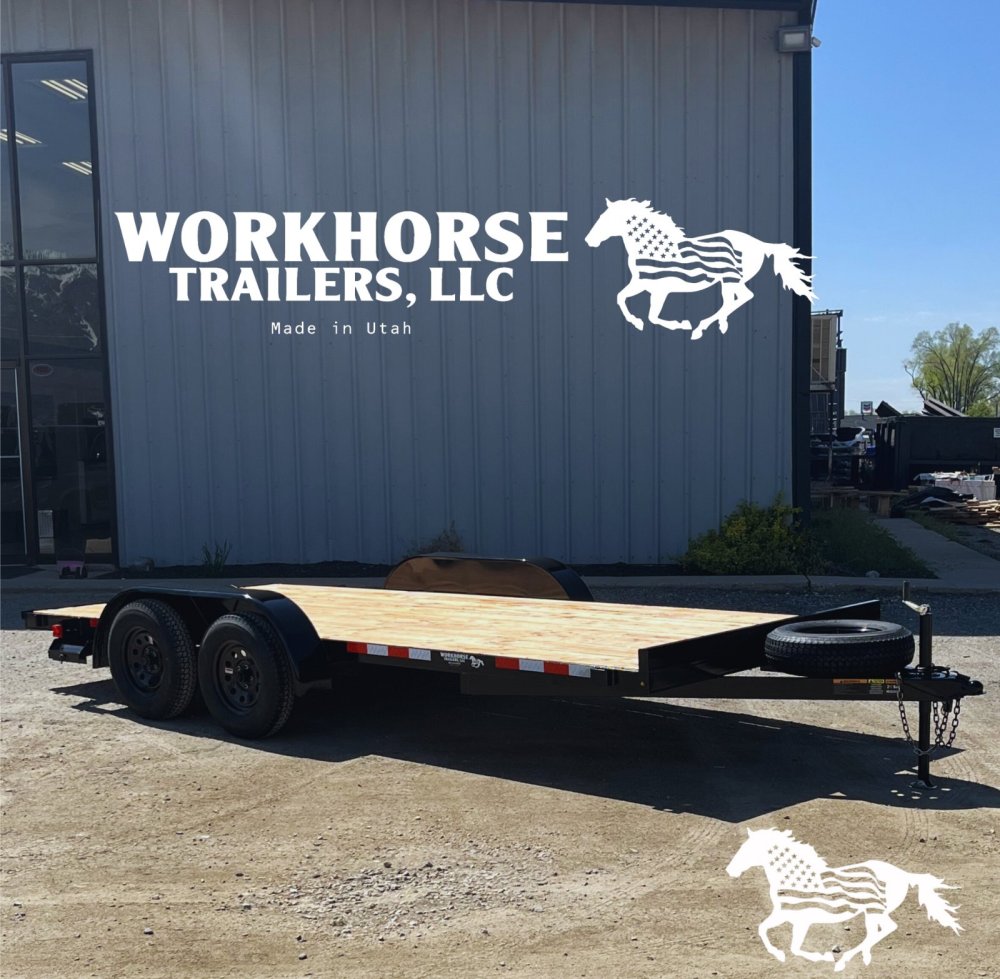
Wyoming’s road network connects its widely scattered communities through some of the most exposed and climatically volatile terrain in the country. Interstate 80 crosses the southern tier through wind corridors notorious for overturning high-profile vehicles. Interstate 90 traverses the northeastern corner past open grassland where winter blizzards reduce visibility to zero. US Highway 26 threads through mountain passes and river canyons where grades and curves demand constant attention from any driver pulling a loaded trailer. Workhorse Trailers LLC providesWyoming Car Hauler Trailers engineered for stability and endurance across every mile of this demanding road system, ensuring that the vehicle on the deck arrives at its destination in the same condition it was loaded.
Who Needs a Car Hauler Trailer in Wyoming
The thin population density that defines Wyoming means that nearly every vehicle-related transaction involves significant travel. This reality creates a car hauler market that reaches well beyond the traditional base of towing companies and auto dealers into communities of everyday vehicle owners who simply cannot accomplish their goals without one.
Private Vehicle Buyers and Sellers
Wyoming residents shopping for used trucks, cars, and SUVs quickly discover that the best selection and pricing often exist in other cities or even other states. A buyer in Riverton searching for a specific model may find the right match listed in Billings, Montana, or Fort Collins, Colorado, neither of which is a quick afternoon drive. Hiring a commercial transport service for a single vehicle move across these distances costs hundreds of dollars and involves scheduling delays that risk losing the deal to a faster buyer.
Owning a car hauler trailer turns every vehicle purchase into a self-managed operation. The buyer hitches up, makes the drive, inspects the vehicle in person, loads it on the spot if the deal closes, and brings it home on their own timeline. Over the course of several vehicle transactions spread across a few years, the trailer pays for itself in avoided transport fees alone. Wyoming buyers who trade vehicles frequently or who help family members and neighbors acquire cars from distant sellers treat their car hauler trailers as tools that earn their keep with every trip.
Ranch and Farm Fleet Management
Large agricultural operations across Wyoming maintain fleets of trucks, ATVs, UTVs, and older work vehicles that cycle between active service, seasonal storage, and repair facilities. A ranch headquartered near Pinedale might keep work trucks stationed at line camps 50 miles from the main property. When one of those trucks breaks down or needs service, someone has to retrieve it. Calling a commercial tow truck to a remote location in Sublette County carries a hefty price tag, and availability is never guaranteed on the timeline a working ranch requires.
A car hauler trailer stored at the ranch headquarters handles these recovery missions at no per-trip cost beyond fuel. It also facilitates the seasonal repositioning of ATVs and side-by-sides between summer range and winter pasture locations, and it provides a way to haul older vehicles to auction or salvage without burning registration and insurance dollars driving them on public roads.
Motorsport and Weekend Enthusiasts
Wyoming’s small-town drag strips, dirt tracks, and organized racing events draw participants who trailer their competition vehicles from home garages scattered across hundreds of miles. Grassroots oval track racing at venues near Casper, Sheridan, and Gillette draws loyal fields of competitors who would never consider driving their race cars on public highways to reach the track. Drag racing events, burnout competitions, and car shows held during community celebrations in towns like Lander, Cody, and Newcastle all depend on participants who arrive with their vehicles safely strapped to car hauler trailers.
The mud racing and demolition derby circuits that thrive during county fair season throughout Wyoming add another layer of demand. These vehicles are purpose-built machines with no street legality whatsoever. They exist only on the trailer and on the competition surface, making a car hauler the only possible method of getting them from the build shop to the event and back again.
Seasonal Residents and Snowbird Migration
Wyoming attracts a population of seasonal residents who split their time between the state and warmer climates during winter months. These snowbirds often maintain a vehicle at each residence but occasionally need to consolidate, swap, or relocate vehicles between locations. A retired couple who winters in Arizona and summers near Jackson may want to bring a specific vehicle south for the season rather than leaving it parked in a frozen driveway for five months.
A car hauler trailer makes that seasonal migration a single-vehicle towing operation rather than a two-driver caravan. One person handles the truck and trailer while the other follows in the second vehicle, or the spare vehicle rides on the trailer while the couple travels together in the cab. The flexibility this arrangement provides appeals strongly to Wyoming seasonal residents who value simplicity in their travel logistics.
Trailer Features That Matter on Wyoming Highways
The environmental conditions encountered while towing across Wyoming sort car hauler trailers into two categories: those built to handle the abuse, and those that fail trying. Specific features and construction details determine which category a trailer falls into.
Wind-Rated Towing Stability
Wyoming wind is not an occasional inconvenience. It is a near-constant force that shapes every aspect of highway travel in the state. The stretch of I-80 between Rawlins and Rock Springs and the corridor between Cheyenne and Laramie rank among the windiest highway segments in North America. Car hauler trailers traveling these routes with a vehicle loaded on the deck present a significant sail area to crosswinds, and the aerodynamic forces generated can push both trailer and tow vehicle out of their lane without warning.
A car hauler trailer designed for Wyoming service should feature a low deck profile that minimizes the height of the loaded vehicle above the road surface. Every inch of reduced height lowers the wind’s leverage against the trailer. Proper tongue weight loading, with the transported vehicle positioned to place approximately 10 to 15 percent of the total loaded weight on the hitch, keeps the tow vehicle’s rear axle planted and resistant to lateral displacement during gusts.
Heavy-Gauge Decking and Frame Members
The long towing distances in Wyoming subject trailer frames and decking to more cumulative road vibration, thermal cycling, and impact loading per year than trailers covering shorter routes in more temperate states experience. A car hauler that tows 500 miles per trip instead of 50 accumulates an order of magnitude more fatigue stress in its structural components over the same number of trips.
Frame members fabricated from heavier gauge steel and decking secured with reinforced fastening systems withstand this accumulated stress without developing the cracks, loose bolts, and warped surfaces that plague lighter-built trailers pressed into long-distance service. Wyoming buyers should evaluate frame construction as a primary purchasing criterion rather than an afterthought, because the distances they tow will test every weld and every fastener over the life of the trailer.
Reliable Lighting in Extreme Cold
Trailer lighting systems that function perfectly in moderate weather can fail when temperatures plunge below zero. Incandescent bulbs draw more current as filaments cold-soak, and corroded connections that pass enough current in warm conditions may fall below the threshold needed to illuminate a bulb in bitter cold. LED lighting systems eliminate the filament variable entirely and draw so little current that marginal connections still deliver adequate power.
Wyoming operators towing car hauler trailers during winter months should verify that every lamp on the trailer uses LED technology and that all wiring connections are sealed against moisture intrusion. A trailer with non-functional brake lights or turn signals on a dark December highway between Douglas and Gillette creates a hazard that endangers the operator and every other driver sharing the road.
Securing Vehicles for Long-Distance Wyoming Hauls
The extended distances and rough road surfaces encountered during Wyoming car hauler trips amplify the consequences of inadequate vehicle securing. A strap that loosens gradually over a 20-mile trip in an urban environment may not cause a problem before the driver notices and retightens it. The same strap loosening over a 200-mile Wyoming highway run has far more time and vibration to work itself free before a check stop occurs.
Ratchet Strap Inspection and Replacement Cycles
The nylon webbing in ratchet straps degrades from UV exposure, abrasion, and repeated tensioning cycles. Wyoming’s intense high-altitude sunshine accelerates UV breakdown, and the grit that collects on straps during loading on gravel surfaces acts as an abrasive that weakens fibers with every tightening cycle. Inspecting straps before each trip for fraying, discoloration, and stiffness catches deterioration before a failure occurs under load.
Replacing straps on a calendar schedule rather than waiting for visible damage provides an additional margin of safety. Professional towing operators in Wyoming who secure vehicles daily typically replace their working straps every six to twelve months regardless of appearance, treating the webbing as a consumable item rather than a permanent accessory.
Secondary Securing Methods
Belt-and-suspenders redundancy in vehicle securing makes particular sense for Wyoming hauls where a strap failure at highway speed on an empty stretch of road could result in a vehicle departing the trailer with no witness, no immediate help, and no nearby safe stopping point. Adding safety chains from the transported vehicle’s frame to the trailer deck as a backup to the primary strap system provides a secondary retention method that catches the vehicle if the primary tie-down fails.
Wheel chocks placed snugly against the front and rear of each tire prevent rolling movement that straps alone may not fully eliminate, particularly during the braking and acceleration events that occur repeatedly during normal highway driving. The combination of straps, chains, and chocks creates a three-layer securing system that accounts for the unique demands of long-distance towing in a state where the margins for error are thin and the consequences of failure are severe.
Wyoming Title, Registration, and Towing Regulations
Wyoming titles and registers trailers through the county clerk’s office in the owner’s county of residence. A manufacturer’s statement of origin accompanies new trailer purchases for initial titling, while used trailer transactions require a properly assigned Wyoming title or an out-of-state title that meets Wyoming transfer requirements. Registration fees vary by county and trailer weight classification and must be renewed annually.
Trailer braking requirements in Wyoming mandate independent brakes on trailers with a gross vehicle weight exceeding 3,000 pounds. Car hauler trailers carrying a loaded vehicle virtually always exceed this threshold, making functional trailer brakes both a legal obligation and a critical safety feature on the steep grades found along routes like Highway 14 through the Bighorn Mountains and the Snake River canyon descent on Highway 26 near Alpine.
Breakaway brake systems that activate automatically if the trailer separates from the tow vehicle during travel are required on all trailers equipped with brakes. The breakaway battery must hold sufficient charge to bring the disconnected trailer to a controlled stop on its own. Testing this system before every trip confirms readiness and takes less than a minute, a trivial investment of time that provides a final layer of protection against the most dangerous scenario a towing operator can face.
Workhorse Trailers LLC Partners with Wyoming Vehicle Owners
The people of Wyoming do not buy equipment for show. They buy it to work, and they expect it to perform without excuses in conditions that would sideline lesser gear. Workhorse Trailers LLC meets that expectation by offering car hauler trailers that match the durability and dependability standard Wyoming operators hold for every tool they own. Buyers make the trip from Evanston, Green River, Wheatland, Worland, Sundance, Afton, and dozens of small communities whose names only locals recognize, because the Workhorse reputation for honest product recommendations has spread through the networks of trust that connect Wyoming’s tight-knit communities. For anyone in the state who needs to move a vehicle safely across the kind of distances and through the kind of weather that only Wyoming delivers, Workhorse Trailers LLC provides the car hauler trailers and the straightforward guidance that make it possible.