Utah County Deck Over Trailers
All locationsNarrow trailer decks pinched by wheel well intrusions force operators to compromise on load width, cargo arrangement, and overall efficiency every single trip. Deck over trailers solve that problem at the structural level by raising the platform above the axle and tire assemblies, reclaiming every inch of space between the rails for usable cargo surface. Throughout Utah County, from the warehouses of Lindon to the ranch properties outside Goshen, Workhorse Trailers LLC supplies deck over trailers that give buyers the full-width hauling platform their work demands without asking them to settle for less.
Utah County's economic landscape combines rapid suburban construction, active agricultural production, thriving small businesses, and a deeply rooted outdoor culture. Each of these sectors generates hauling tasks where cargo width becomes a deciding factor. A pallet that is two inches too wide for a conventional trailer fits comfortably on a deck over. A compact roller that clips fender wells on a standard flatbed rolls onto a deck over with room to spare on both sides. That additional clearance is not a minor convenience. It is the difference between completing a job with one trip or wasting time, fuel, and labor on a second run.
The Structural Concept Behind Deck Over Trailers
Every trailer positions its deck surface relative to its axles and wheels, and that relationship defines how much width the operator can actually use. On a conventional trailer, the deck drops between the axles, and the wheel wells protrude upward into the cargo space, creating raised obstacles along each side that reduce the effective loading width by a foot or more.
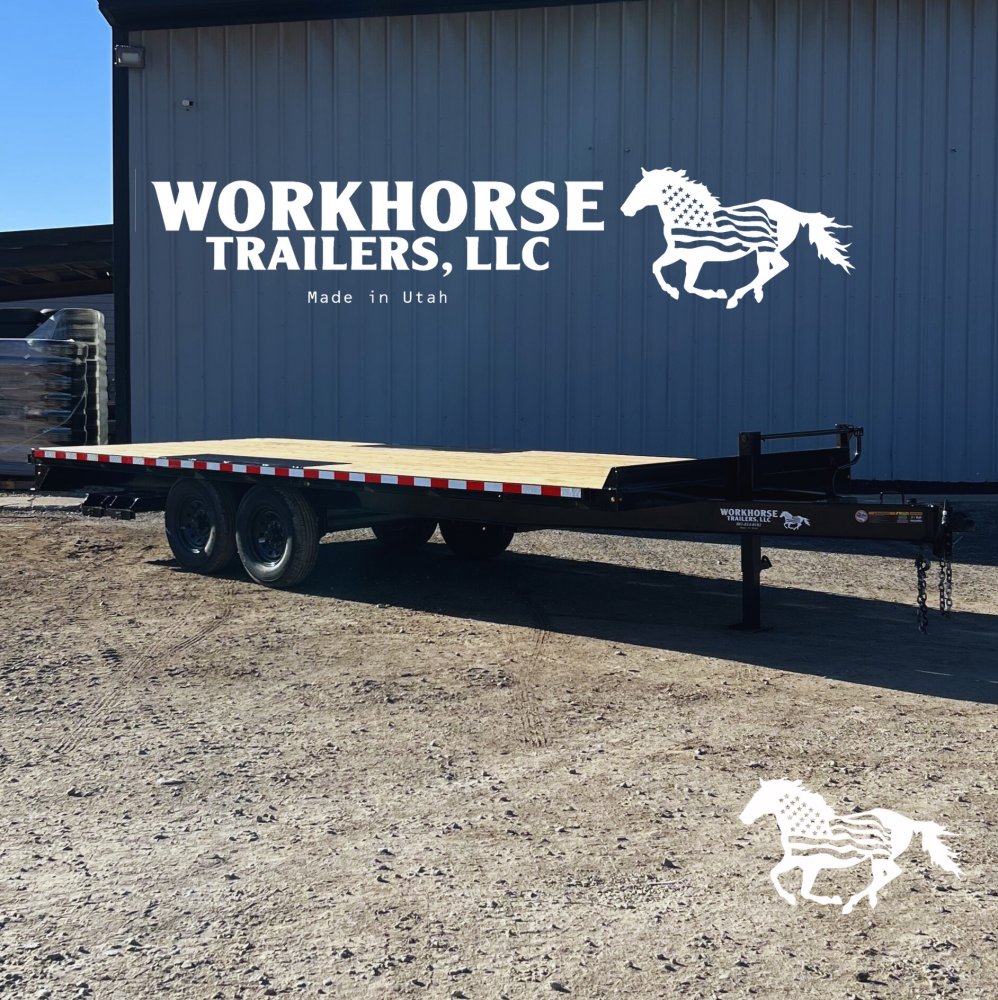
A deck over trailer reverses that geometry. The platform mounts on top of the frame rails, which themselves ride above the axle assemblies. The wheels spin beneath the deck surface entirely, leaving the full width of the platform clear from edge to edge. For a trailer with an 84-inch-wide frame, a deck over design delivers 84 usable inches of cargo width compared to roughly 60 to 70 inches between the wheel wells on a drop-deck equivalent.
This elevated mounting does place the deck surface higher off the ground, typically between 30 and 38 inches depending on axle and tire specifications. That added height creates a steeper approach angle for ground-level loading and requires longer ramps or alternative loading methods. Workhorse Trailers LLC helps Utah County buyers evaluate whether the width advantage of a deck over outweighs the height trade-off for their particular cargo mix, ensuring that every purchase decision is grounded in practical analysis rather than assumption.
Utah County Applications Where Deck Over Trailers Excel
The full-width deck surface of a deck over trailer unlocks hauling configurations that would be impossible or impractical on conventional platforms. Several industries and activities throughout Utah County depend on this capability daily.
Commercial Building Material Delivery
Lumber yards, roofing supply houses, and masonry distributors across Utah County deliver materials to job sites on trailers that must accommodate wide or awkwardly shaped loads. A bundle of roof trusses spanning 80 inches does not fit between the wheel wells of a standard trailer without overhanging the sides. Sheet goods like plywood, OSB, and drywall measure 48 inches wide and are most efficiently transported when stacked two bundles across, requiring at least 96 inches of clear deck to sit flat without extending past the rails.
Deck over trailers handle these loads naturally. Workhorse Trailers LLC works with Utah County building material suppliers and general contractors who need to move full-width loads to sites in communities like Vineyard, Cedar Hills, and Highland where new construction activity generates constant delivery demand.
Agricultural Implement Transport
Farming equipment designed to cover wide swaths of ground often exceeds the usable width of a conventional trailer. Disc harrows, rotary mowers, hay tedders, and grain drills can span six feet or more in their transport configuration. Loading these implements onto a deck over trailer allows the equipment to sit squarely on the platform with its weight centered between the rails, eliminating the dangerous overhang and instability that would result from forcing the same load onto a narrower surface.
Utah County's agricultural corridor running south from Spanish Fork through Salem, Payson, and into the Santaquin benchlands generates consistent demand for deck over trailers capable of shuttling implements between fields, storage barns, and equipment dealers. Workhorse Trailers LLC understands the seasonal urgency of agricultural transport and stocks deck over models ready for immediate delivery when planting and harvest windows demand fast equipment repositioning.
Landscaping and Hardscape Installation
Professional landscaping crews operating throughout Utah County's residential neighborhoods transport a daily mix of mowers, compact equipment, material pallets, and bulk supplies that consume every available square foot of trailer space. The deck over format lets crews arrange equipment side by side rather than in single file, fitting more onto one trailer and reducing the number of return trips to the supply yard.
Hardscape installers who move pallets of pavers, retaining wall blocks, and natural stone slabs benefit particularly from the unobstructed deck surface. These pallets are heavy, wide, and unforgiving if they catch on a wheel well during loading. A deck over trailer accepts forklift-loaded pallets from either side without any obstacle in the path, speeding up material staging at job sites across Utah County's Provo, Orem, and Pleasant Grove neighborhoods.
Event and Festival Setup Operations
Utah County hosts a packed calendar of community festivals, farmers markets, county fairs, and outdoor events that require stages, vendor booths, signage, generators, and other oversized equipment to be transported and positioned quickly. Event logistics companies rely on deck over trailers because the flat, wide surface accommodates irregularly shaped items that do not conform to standard cargo dimensions.
A deck over trailer loaded with folding stage sections, canopy frames, and lighting rigs can deliver an entire event infrastructure package in a single trip that would require multiple loads on a narrower platform. Workhorse Trailers LLC has supplied deck over trailers to Utah County event professionals who value the time savings and operational simplicity that a full-width hauling surface provides during the compressed setup windows that precede major community gatherings.
Choosing Between Bumper Pull and Gooseneck Deck Over Trailers
Deck over trailers are manufactured in both bumper pull and gooseneck hitch configurations. The choice between them depends on payload weight, deck length requirements, and the tow vehicle available to the Utah County buyer.
Bumper Pull Deck Over Trailers
Bumper pull deck over trailers attach to a receiver hitch mounted at the rear of the tow vehicle. This configuration works well for trailers up to approximately 20 feet in deck length and 14,000 pounds GVWR. The bumper pull hitch is the simpler installation, requires no modification to the truck bed, and allows the tow vehicle to retain full bed utility for carrying loose cargo alongside the trailer.
Utah County homeowners, part-time contractors, and small landscaping operations frequently select bumper pull deck overs because their tow vehicles are personal-use trucks that serve multiple roles beyond trailer hauling. Workhorse Trailers LLC carries bumper pull deck over trailers with adjustable height couplers that accommodate different truck ride heights and maintain level towing geometry across various vehicle and load combinations.
Gooseneck Deck Over Trailers
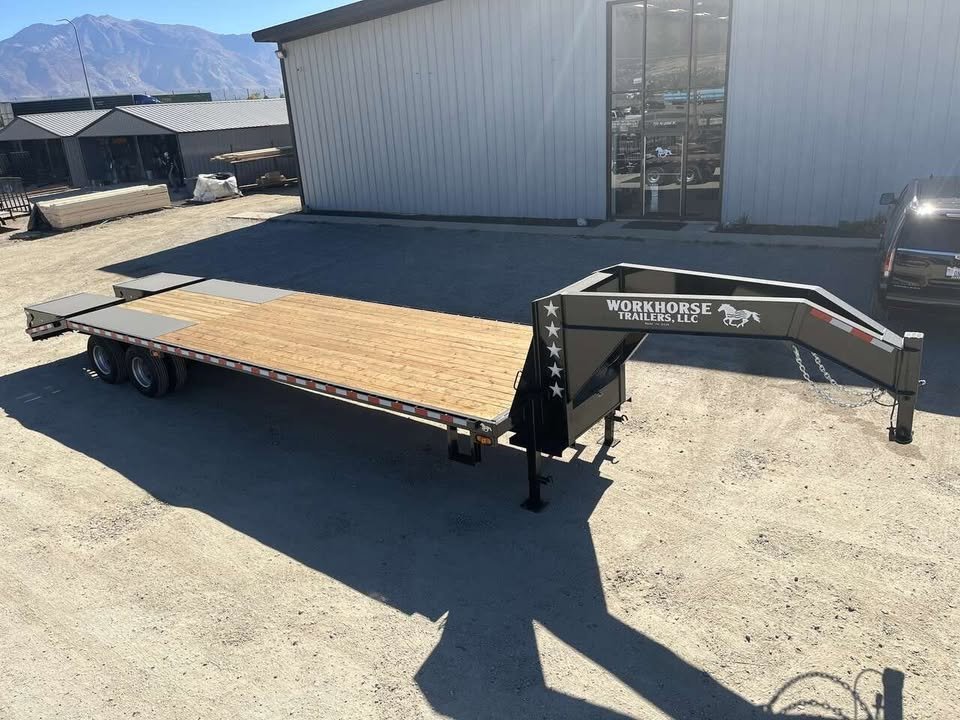
When payload demands exceed what a bumper pull can safely handle, gooseneck deck over trailers step in with higher GVWR ratings, longer deck lengths, and the inherent towing stability that comes from mounting the hitch point inside the truck bed over the rear axle. Gooseneck deck overs are the standard choice for Utah County commercial operations that routinely move loads above 10,000 pounds or need deck lengths beyond 20 feet.
The gooseneck hitch places a larger share of tongue weight on the truck's drive axle, which improves traction during acceleration and enhances directional control during braking. This performance advantage becomes especially apparent on the graded slopes of construction sites in the foothills above Alpine, Draper, and Elk Ridge where loose gravel surfaces challenge traction. Workhorse Trailers LLC offers gooseneck deck over trailers with dual and triple axle configurations for the heaviest commercial applications found in Utah County.
Key Specifications Utah County Buyers Should Compare
Shopping for a deck over trailer involves evaluating a set of specifications that interact with each other in ways that casual buyers may not immediately recognize. Workhorse Trailers LLC walks every Utah County customer through these variables to ensure the selected trailer performs across all intended applications.
Frame Type and Cross-Section
Deck over trailer frames are built from either channel iron or I-beam steel, and the choice affects both load capacity and resistance to vertical deflection. Channel frames are lighter and less expensive, making them appropriate for mid-range payload applications where the trailer will not regularly operate at its maximum rating. I-beam frames offer significantly greater stiffness and load-bearing capacity, which matters for Utah County commercial operators who stack heavy pallets or position concentrated equipment loads at the center of the deck where bending forces peak.
Crossmember Spacing and Attachment
The crossmembers bridging the two main frame rails determine how evenly the deck distributes point loads down into the frame structure. Closer crossmember spacing provides better load distribution and prevents localized deck deflection when heavy objects sit between supports. Sixteen-inch spacing is standard on most quality deck over trailers, while premium models designed for equipment transport may reduce that interval to 12 inches for additional rigidity.
Workhorse Trailers LLC inspects crossmember welds on every deck over trailer that enters its Utah County inventory, verifying full penetration joints that will not crack under the cyclic loading these trailers experience during years of active commercial service.
Deck Surface Selection
Utah County buyers choose between pressure-treated lumber and steel plate decking based on their cargo profile and maintenance preferences.
Treated lumber provides a textured surface that grips rubber tires and boot soles naturally, absorbs minor impacts without denting, and can be replaced one board at a time if localized damage occurs. The trade-off is susceptibility to moisture absorption, freeze-thaw splitting, and gradual surface degradation under UV exposure during Utah County's intense summer sun seasons.
Steel plate decking, available in smooth or diamond tread patterns, resists impact, abrasion, and weather far more durably than wood. Steel decks maintain their structural integrity indefinitely under normal use and never require individual board replacement. However, they add meaningful weight to the trailer's curb mass, reducing available payload capacity, and they can become dangerously slick when wet or frosted unless treated with a non-skid coating.
Workhorse Trailers LLC presents both options with transparent comparisons so that Utah County buyers can weigh durability against weight savings and traction characteristics against maintenance requirements.
Ramp Style and Weight Rating
The elevated deck height of a deck over trailer makes ramp selection a consequential decision. Ramps must be long enough to create a safe loading angle, wide enough to accommodate the cargo's tire or track width, and rated to support the weight of the heaviest item that will cross them.
Stand-up ramps that store vertically against the trailer's rear face conserve space behind the trailer when parked, while fold-flat ramps lie down against the deck surface during transport. Spring-assisted mechanisms reduce the physical effort needed to raise and lower heavy ramps, which matters for Utah County operators who deploy ramps multiple times per day.
Workhorse Trailers LLC matches ramp specifications to each buyer's cargo list, confirming that ramp width, length, and weight rating align with the machines and materials the trailer will carry across its service life.
Operating a Deck Over Trailer on Utah County Roads
The elevated center of gravity inherent to a loaded deck over trailer requires operational awareness that goes slightly beyond what conventional trailers demand. Utah County's geography and weather patterns amplify certain aspects of this dynamic.
Crosswinds channeling through the mountain gaps along the Traverse Range and across the open stretches south of Elberta can buffet a loaded deck over trailer laterally, particularly when the cargo presents a tall profile above the already elevated deck surface. Reducing highway speed by five to ten miles per hour during gusty conditions significantly improves stability and gives the driver more reaction time if the trailer begins to track off center.
Load placement on a deck over matters greatly. Positioning the heaviest items as low as possible and concentrating mass in the forward half of the deck keeps the center of gravity manageable and ensures adequate tongue weight for stable towing. Stacking tall items above the deck rails raises the center of gravity to a point where cornering forces and crosswinds have greater leverage on the towing combination. When tall cargo cannot be avoided, reducing speed through curves and turns is the appropriate compensation.
Winter driving through Utah County with a loaded deck over trailer requires clean deck surfaces free of ice and snow accumulation that adds unpredictable weight and interferes with tie-down anchor accessibility. Clear the deck thoroughly before loading, and confirm that every securement point is free of frozen debris before departing.
Maintaining a Deck Over Trailer Through Utah County Seasons
Seasonal maintenance keeps a deck over trailer structurally sound and operationally ready throughout the dramatic temperature swings and weather variations that characterize life in Utah County.
After winter use, wash the entire undercarriage and frame assembly to remove accumulated road treatment chemicals. Concentrate on joints, crevices, and areas around axle mounts where salt-laden moisture pools and accelerates localized corrosion. Apply a penetrating rust inhibitor to any areas where the factory finish has been compromised by rock strikes or cargo abrasion.
Before the spring work season begins, torque-check all deck fasteners and inspect the wood or steel surface for winter damage. Treated lumber boards may have split along the grain during freeze-thaw cycles, and steel panels may show surface rust at scratch points. Address these conditions before placing the trailer back into regular loaded service.
Grease all pivot points on ramp hinges and latching mechanisms quarterly, and more frequently if the trailer operates in dusty or muddy conditions prevalent on Utah County construction sites. Inspect brake components, wheel bearings, and tire condition at the same interval to catch developing issues before they escalate into roadside failures.
Explore Deck Over Trailers at Workhorse Trailers LLC
A deck over trailer delivers an uncompromised hauling surface that accommodates the widest loads, simplifies cargo arrangement, and eliminates the dimensional frustrations that plague operators working with conventional platforms. For Utah County buyers whose cargo regularly pushes the boundaries of what a standard trailer can handle, the deck over format is the logical solution.
Browse current inventory, compare specifications, and connect with the Workhorse Trailers LLC team by visitingUtah County Deck Over Trailers for everything you need to make a confident purchasing decision. From first-time buyers evaluating their options to fleet managers adding capacity for a growing operation, Workhorse Trailers LLC delivers the product knowledge, honest guidance, and after-purchase support that Utah County's hardest-working trailer owners have come to expect.