
Utah County Car Hauler Trailers
All locationsMoving a vehicle from one location to another without putting miles on its odometer or exposing it to road hazards requires a dedicated car hauler trailer built for the job. Across Utah County, thousands of automobiles are transported each year for reasons ranging from private sales and auction pickups to race day preparation and collector car preservation. Workhorse Trailers LLC provides the region with car hauler trailers that combine secure loading systems, road-stable towing characteristics, and construction quality that protects both the trailer and the vehicle riding on it through every mile between Point A and Point B.
Utah County stretches from the tech-driven northern corridor around Lehi and American Fork down through the agricultural heartland near Payson and Santaquin, with a population that continues to expand year after year. That growth brings more vehicles onto the road, more private transactions between buyers and sellers in different cities, and more demand for safe, efficient car transport. Whether the destination is across town in Orem or across the state line in Wendover, a purpose-built car hauler from Workhorse Trailers LLC gives Utah County drivers the tools to move automobiles with confidence.
Identifying the Right Car Hauler for Your Situation
Car hauler trailers are not interchangeable. A trailer designed to carry a lightweight roadster handles very differently from one engineered to support a lifted diesel truck. Before browsing inventory, Utah County buyers benefit from thinking clearly about which vehicles they will transport most often, how frequently those trips will occur, and what their tow vehicle can realistically manage.
Determining Vehicle Weight and Dimensions
Every car hauler purchase should begin with the weight and measurements of the heaviest and largest vehicle the buyer expects to haul. A midsize sedan might weigh 3,400 pounds, while a crew cab pickup can push past 5,800 pounds before any accessories or modifications are factored in. The car hauler's gross vehicle weight rating must accommodate that vehicle weight plus the trailer's own curb weight with a comfortable margin remaining.
Length and width matter equally. Trucks with extended cabs and long beds require deck lengths of 20 feet or more to sit fully on the platform without the bumper hanging past the rear edge. Vehicles with aftermarket fender flares, wide-body kits, or oversized mirrors need a deck width that provides clearance on both sides during loading. Workhorse Trailers LLC keeps dimensional specifications readily available for every car hauler on the lot and encourages Utah County buyers to bring measurements from their specific vehicles so the match can be confirmed before any paperwork is signed.
Frequency of Use and Ownership Goals
A Utah County resident who needs to transport a single vehicle once or twice a year has different priorities than a mobile mechanic who retrieves customer cars five days a week. Occasional users may prioritize purchase price and compact storage dimensions, while frequent users should invest in features that streamline loading and reduce physical wear on the operator over hundreds of annual cycles.
Workhorse Trailers LLC sees both buyer profiles regularly across Utah County and tailors its recommendations accordingly. There is no advantage in overselling a weekend hobbyist on a commercial-grade platform, just as there is no wisdom in steering a high-volume operator toward an entry-level trailer that will be outgrown within a season.
Exploring Car Hauler Trailer Styles at Workhorse Trailers LLC
The inventory at Workhorse Trailers LLC spans several distinct car hauler configurations, each addressing a different combination of budget, cargo type, and operational preference found among Utah County buyers.
Flatbed Car Haulers with Ramps
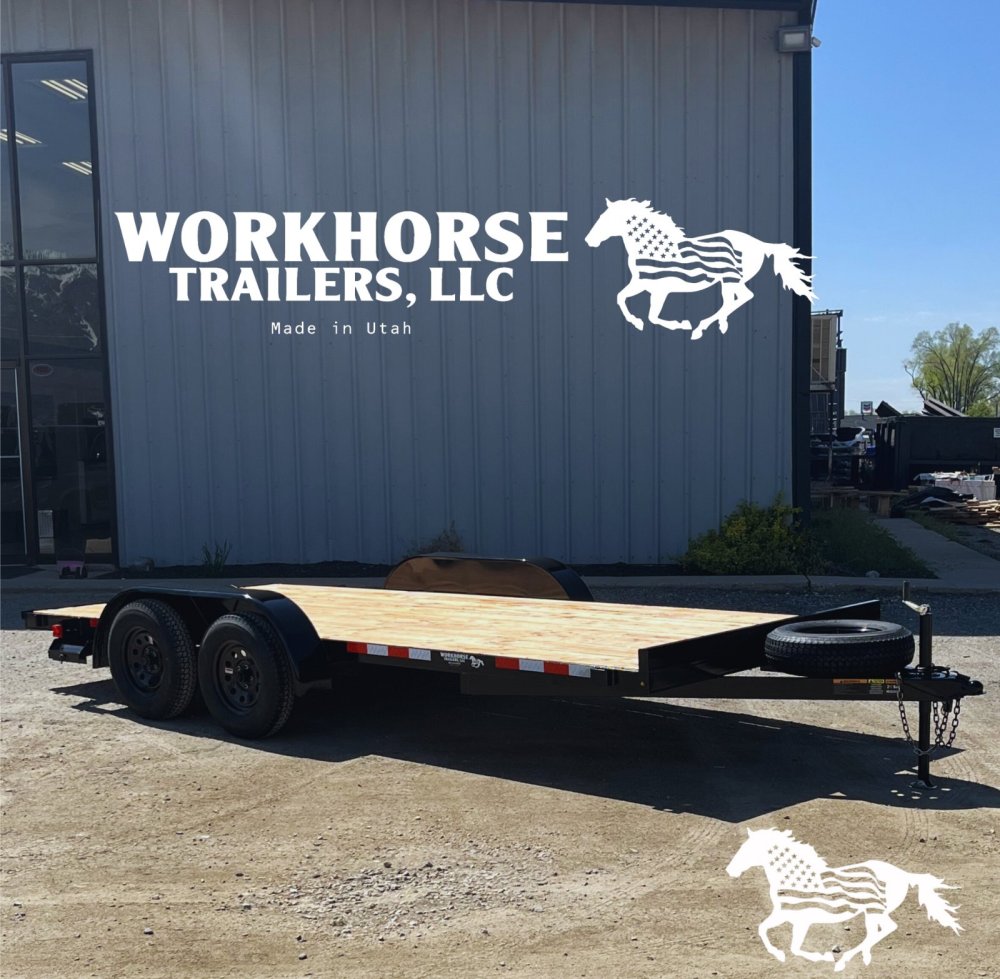
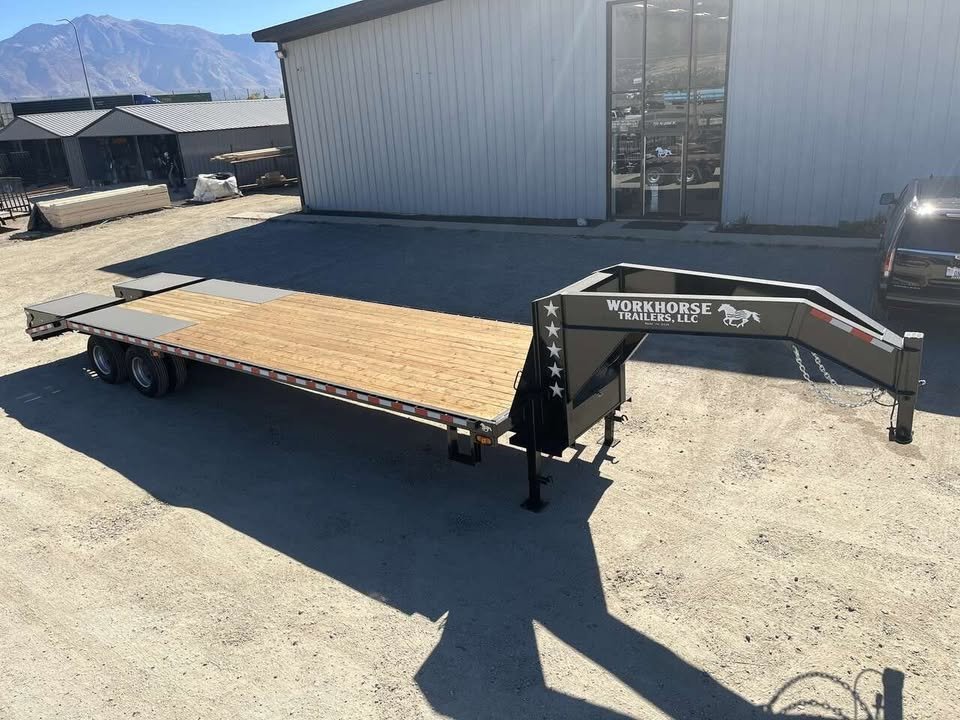
Flatbed car haulers equipped with rear-loading ramps represent the most widely purchased style in Utah County. The open deck provides unrestricted access from all sides for strap placement and inspection, and the fold-down ramps store compactly against the trailer's tail during highway travel. Steel diamond plate and expanded metal mesh are common ramp surface materials, both offering traction patterns that grip rubber tires effectively even when the surface is damp.
This style suits Utah County buyers who value simplicity and affordability. There are no walls to maintain, no doors to align, and no enclosed space to ventilate. The vehicle sits in plain view throughout the journey, making it easy to pull over and verify that straps remain tensioned without opening any panels. Workhorse Trailers LLC carries flatbed car haulers in both single and tandem axle versions, covering the full range of vehicle weights encountered in the Utah County market.
Hydraulic Tilt Car Haulers
Hydraulic tilt car haulers replace ramps entirely with a deck that angles rearward at the push of a switch, bringing the trailing edge down to ground level for a seamless drive-on approach. Once the vehicle reaches the front portion of the platform, the deck settles into its flat transport position and locks automatically.
Utah County buyers who load vehicles that are not running under their own power find tilt car haulers especially practical. Winching a disabled sedan onto a tilted surface requires less cable tension and a more predictable pull direction than dragging it up a steep ramp angle. The continuous deck surface also eliminates the gap between ramp tips and deck edge where small-diameter wheels can catch and hang up. Workhorse Trailers LLC offers tilt car haulers with hydraulic systems powered by 12-volt pumps that draw from the tow vehicle's electrical system, keeping the mechanism self-contained and ready to operate at any location.
Fully Enclosed Car Haulers
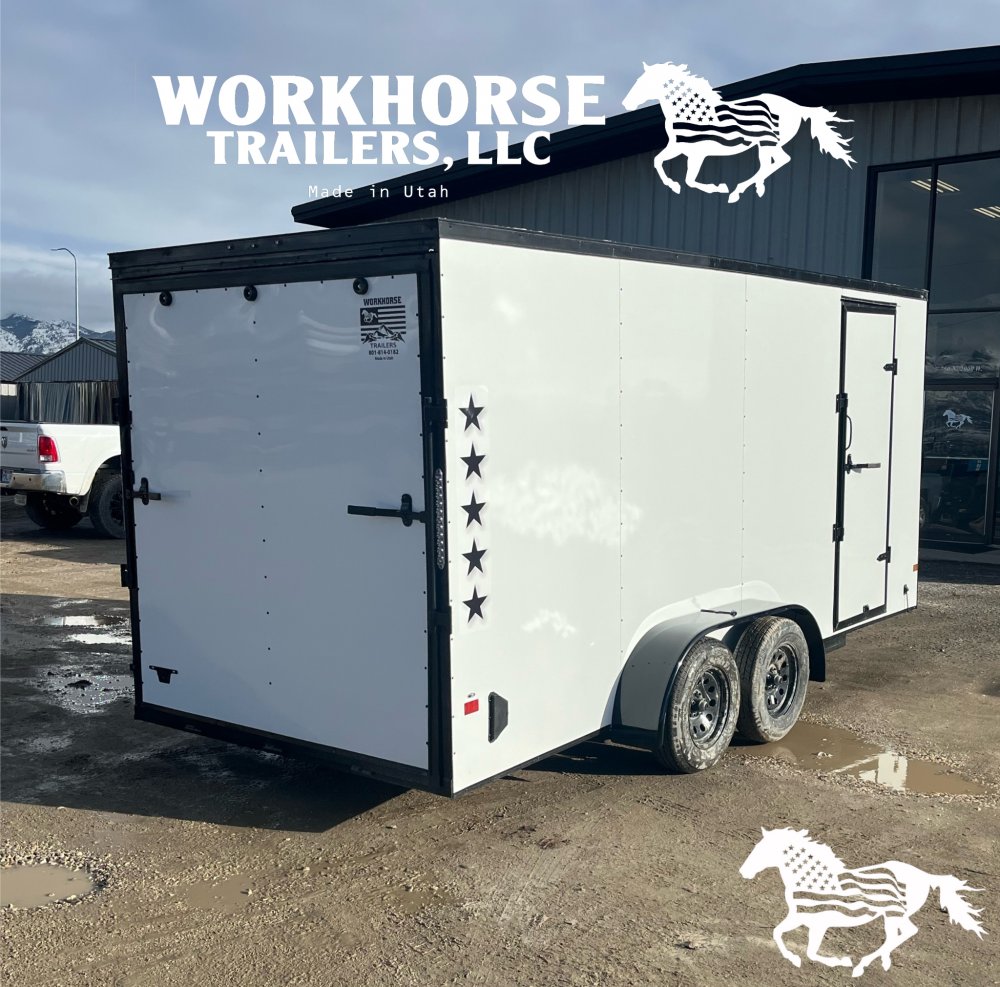
Enclosed car haulers surround the vehicle in a rigid shell of walls, roof, and sealed flooring that blocks road debris, weather, sunlight, and prying eyes for the duration of the trip. This level of protection justifies the higher price tag for Utah County owners who transport high-value automobiles where even minor cosmetic damage represents a significant financial loss.
The enclosed format also serves a practical security function. A vehicle concealed inside a locked trailer attracts far less attention at overnight rest stops, hotel parking lots, and unattended job sites than one sitting openly on a flatbed visible from the road. Utah County collectors attending events in Las Vegas, Scottsdale, or the Pacific Northwest regularly choose enclosed car haulers for the combined assurance of protection and privacy during long-distance trips.
Workhorse Trailers LLC carries enclosed car haulers with rear ramp doors, side escape doors, interior dome lighting, and ventilation openings that prevent heat and moisture buildup inside the cargo space during summer transport across the Utah County valley floor where temperatures frequently exceed 100 degrees at pavement level.
Safely Securing a Vehicle on a Car Hauler
Loading a vehicle onto a car hauler is only half the equation. The other half is restraining it so thoroughly that no amount of braking, cornering, or road vibration can shift the cargo during transit. Utah County roads include everything from smooth interstate stretches to potholed city streets and gravel access roads that jostle a towing combination without warning.
Wheel Strap and Tire Net Systems
The most common and effective method for securing a car on a hauler involves placing ratchet-operated straps or net baskets over each tire and anchoring them to the trailer deck. Tire-based securement distributes holding force across the widest contact surface available and avoids placing tension on vulnerable vehicle components like suspension arms, axle shafts, or body panels.
Workhorse Trailers LLC equips its car hauler trailers with D-ring anchors welded at positions calculated to align with standard vehicle tire widths. Utah County buyers can request additional anchor points if they plan to haul vehicles with non-standard track widths or if they transport different vehicle types that require varied strap positions from load to load.
Axle Straps and Frame Tie-Downs
For situations where tire-based securement is impractical, such as when a vehicle has flat or missing tires, axle straps and frame hooks provide an alternative attachment method. Straps loop around the axle tubes or connect to factory-specified tie-down points on the vehicle's frame or subframe. This approach requires knowledge of the vehicle's structural layout to avoid placing loads on components not designed to bear lateral or vertical forces during transport.
Checking Securement During Transit
Straps can loosen during the first several miles of travel as the vehicle's suspension settles under the vibration of road contact. Utah County drivers should plan a brief stop within the first 10 to 15 miles of departure to walk around the trailer, inspect every strap for slack, and re-tension any connection that has relaxed. Repeating this check at every fuel stop or rest break maintains a secure cargo throughout longer trips that cross Utah County's boundaries into neighboring regions.
Navigating Utah County's Road Network with a Car Hauler
Utah County presents a towing environment that mixes high-speed interstate travel with urban congestion, rural two-lane highways, and seasonal mountain access roads. Each setting demands a slightly different approach from the car hauler operator.
Interstate Travel on I-15 and I-15 Frontage Roads
The I-15 corridor is the primary artery through Utah County, carrying heavy traffic volumes between the Point of the Mountain in the north and the Santaquin interchange in the south. Merging onto I-15 with a loaded car hauler requires sufficient acceleration space and awareness of surrounding traffic patterns. Staying in the right lane at or slightly below the posted speed limit provides the greatest margin for reacting to lane changes from other drivers and reduces aerodynamic instability caused by passing semi-trucks.
Frontage roads and business loops through American Fork, Pleasant Grove, Provo, and Spanish Fork provide lower-speed alternatives when interstate congestion makes towing stressful. These routes add travel time but offer more frequent stopping opportunities and less aggressive traffic behavior.
Urban Maneuvering in Provo, Orem, and Lehi
City driving with a car hauler demands vigilance at intersections, parking lots, and residential streets where turning radii shrink and obstacles multiply. Utah County's university-area streets near BYU and UVU feature narrow lanes, pedestrian traffic, and on-street parking that narrows the available corridor further. Plan routes through urban areas in advance, favoring wide arterial roads over residential side streets whenever possible.
Canyon and Mountain Routes
Recreational and scenic routes leading out of Utah County's valley floor into the surrounding canyons require extra preparation. Squaw Peak Road, the Alpine Loop, and the roads accessing Deer Creek Reservoir all feature grades and curves that test braking capacity and towing stability. Confirm that the tow vehicle's cooling system, transmission, and brakes are in peak condition before committing to a loaded canyon run. Carry emergency gear including wheel chocks, a fire extinguisher, and reflective triangles in case a mechanical issue forces a roadside stop on a narrow mountain road.
Utah County Industries and Activities That Rely on Car Haulers
The demand for car hauler trailers across Utah County comes from a remarkably diverse set of buyers whose motivations span commerce, hobby, and necessity.
Private Vehicle Sales and Online Marketplace Transactions
The rise of online vehicle marketplaces has turned every private driveway into a potential car lot. Utah County residents buying and selling cars through digital platforms frequently need to transport vehicles between cities without involving expensive third-party shipping services. A personal car hauler pays for itself within a handful of transactions by eliminating per-vehicle transport fees that can run several hundred dollars per trip.
Automotive Restoration and Project Vehicle Acquisition
Utah County has a vibrant community of gearheads, restorers, and fabricators who seek out project vehicles at estate sales, classified listings, and auction events across the Intermountain West. These vehicles are often non-running and must be physically loaded and hauled to the buyer's garage or shop. A car hauler trailer equipped with a functional winch and low-angle loading capability transforms vehicle acquisition from a logistical headache into a routine weekend outing.
Dealership Inventory Movement
Independent dealerships and used car lots scattered across Utah County regularly reposition inventory between sales locations, detail shops, and mechanic bays. A dealer-owned car hauler allows these moves to happen on the dealership's schedule rather than waiting for a contracted transport company to fit the job into their queue. The resulting control over timing and vehicle handling quality makes a compelling case for ownership versus outsourcing.
Motorsport and Performance Event Participation
From drag racing at Rocky Mountain Raceway to autocross events hosted at parking venues around the valley, Utah County motorsport enthusiasts need to get their competition vehicles to the venue without accumulating street miles or risking a breakdown on public roads. A dedicated car hauler keeps the race car fresh, preserves tire life, and ensures that the vehicle arrives with its suspension settings and alignment undisturbed by highway travel.
Protecting Your Investment with Proper Trailer Care
A car hauler trailer that receives attentive maintenance will deliver reliable performance through years of service across Utah County's demanding conditions.
Rinse the trailer frame, deck, and running gear thoroughly after any exposure to winter road treatments. Salt residue accelerates corrosion on steel components and degrades electrical contacts, and even a quick rinse with a garden hose after returning from a winter haul prevents long-term damage that compounds with each untreated exposure.
Lubricate all moving parts including ramp hinges, coupler latches, winch gears, and jack mechanisms on a quarterly basis or more frequently under heavy use. Inspect the deck surface for loose fasteners, warped planking, or cracked welds that could interfere with loading or compromise the platform's ability to support vehicle weight evenly.
Verify that all lighting circuits function correctly before every trip, and carry spare bulbs and fuses in the tow vehicle as a precaution. A malfunctioning brake light on a car hauler trailer towed through Provo's evening rush creates an avoidable collision risk that no responsible operator should accept.
Connect with Workhorse Trailers LLC
The right car hauler trailer turns vehicle transport from a stressful undertaking into a routine operation that runs smoothly every time. Workhorse Trailers LLC brings the product selection, technical knowledge, and customer-first approach that Utah County buyers deserve when making this important purchase.
View the full inventory of styles, sizes, and pricing available across the region by visitingUtah County Car Hauler Trailers and discovering what Workhorse Trailers LLC has ready for your next haul. The team welcomes every inquiry, from first-time buyers exploring their options to experienced operators upgrading their current setup, and stands behind every trailer with guidance that continues well beyond the day of purchase.