
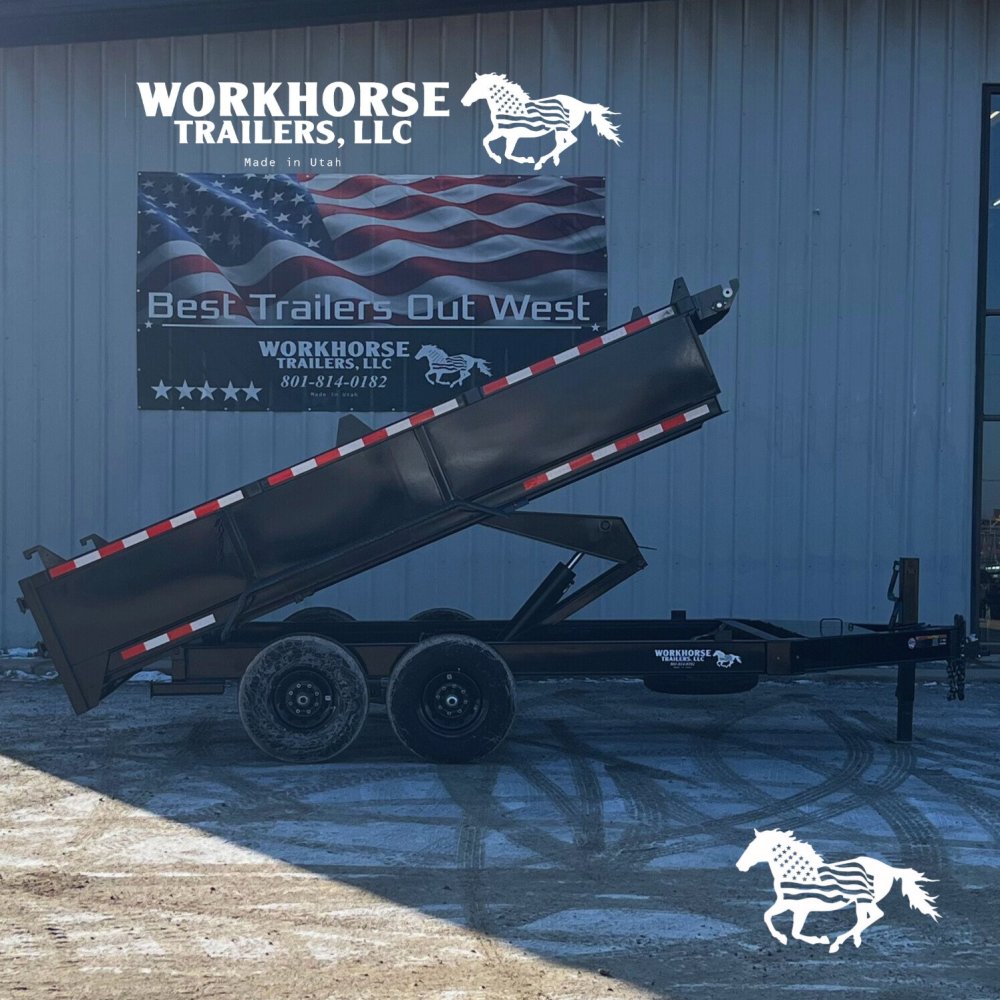
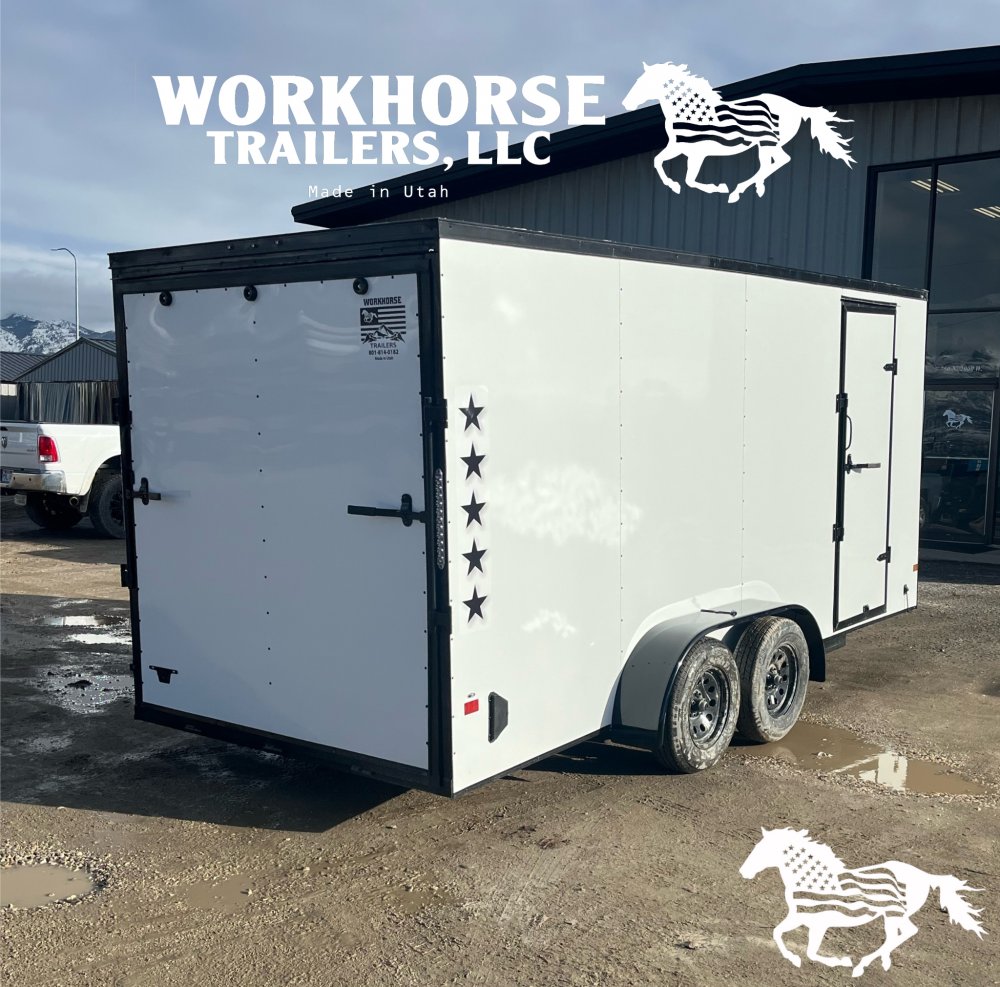
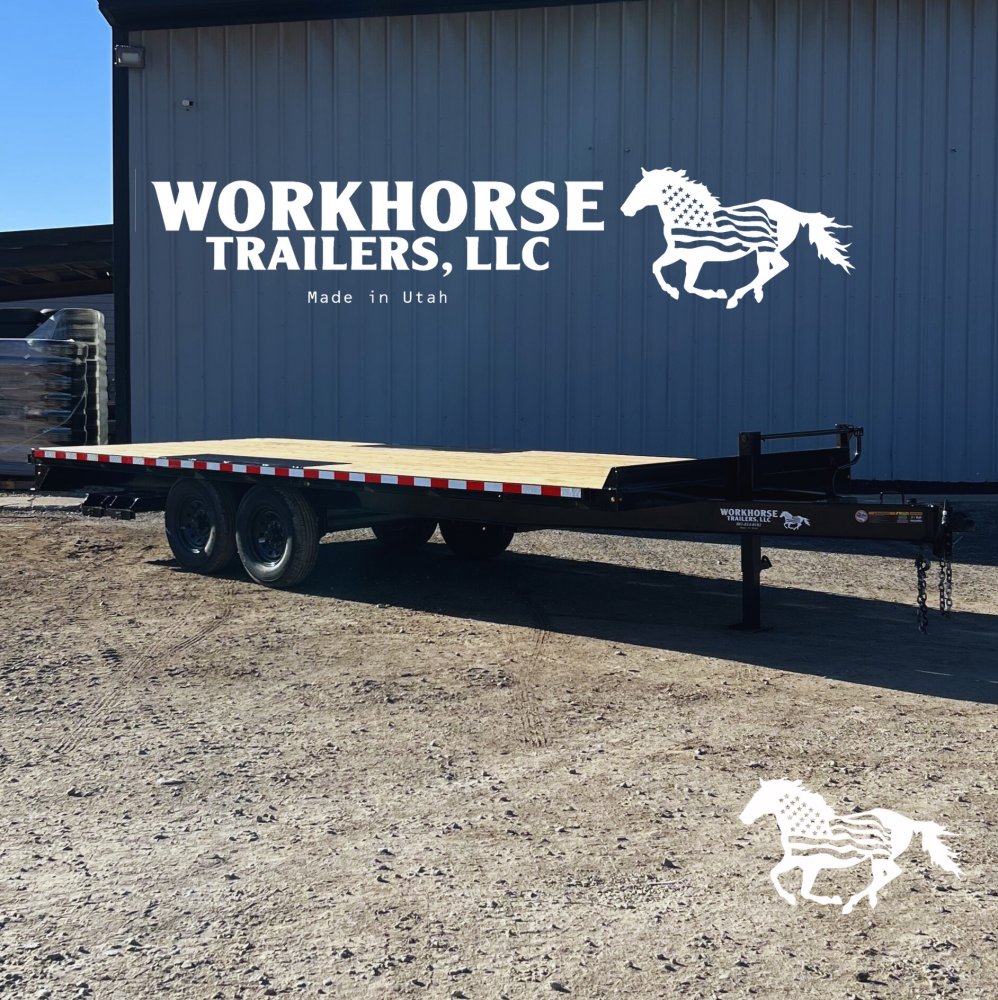
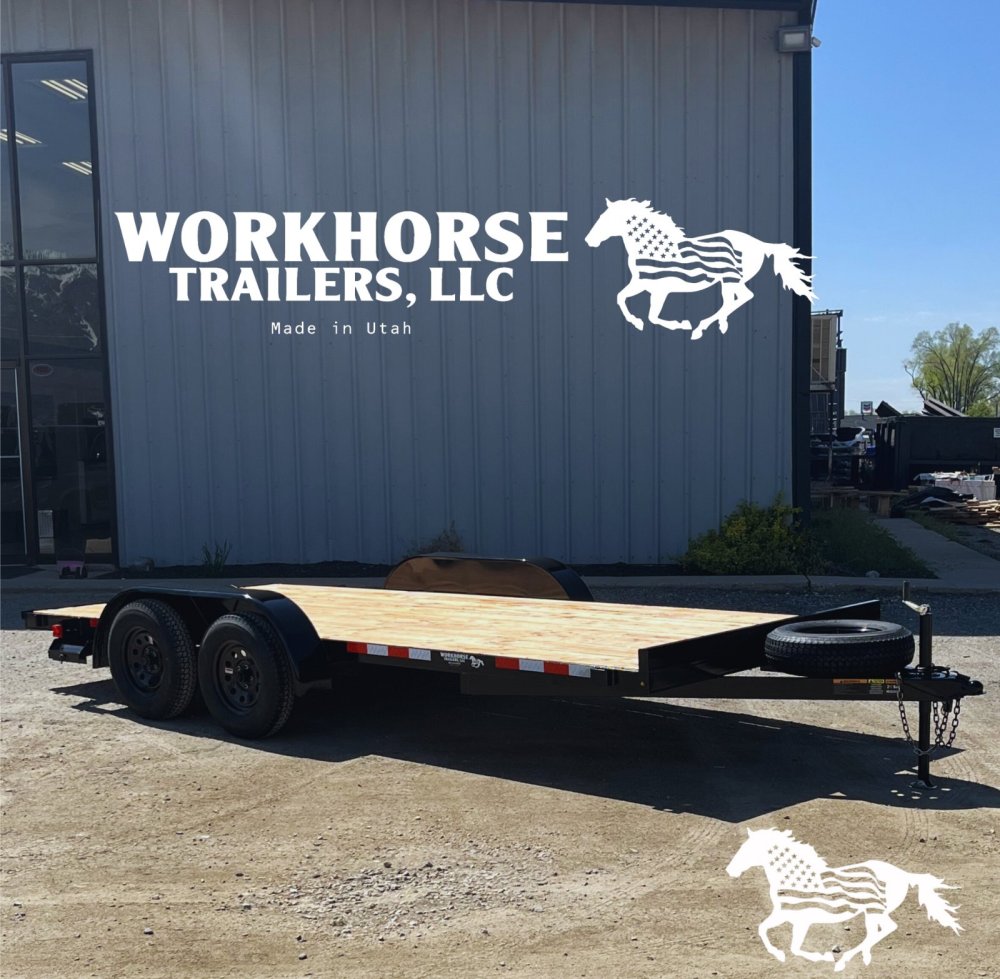
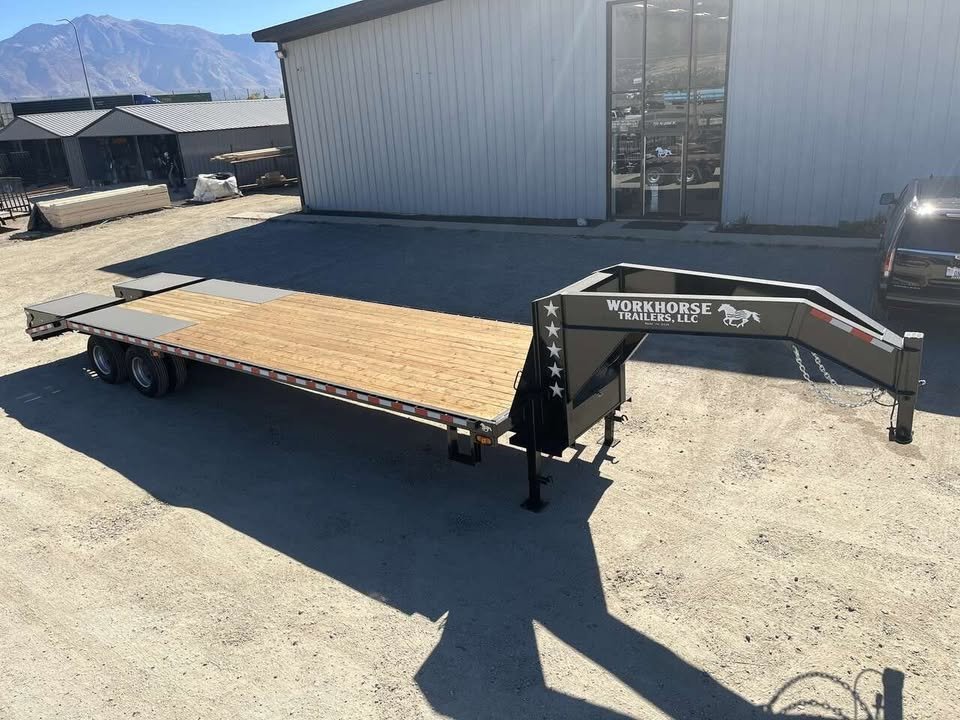
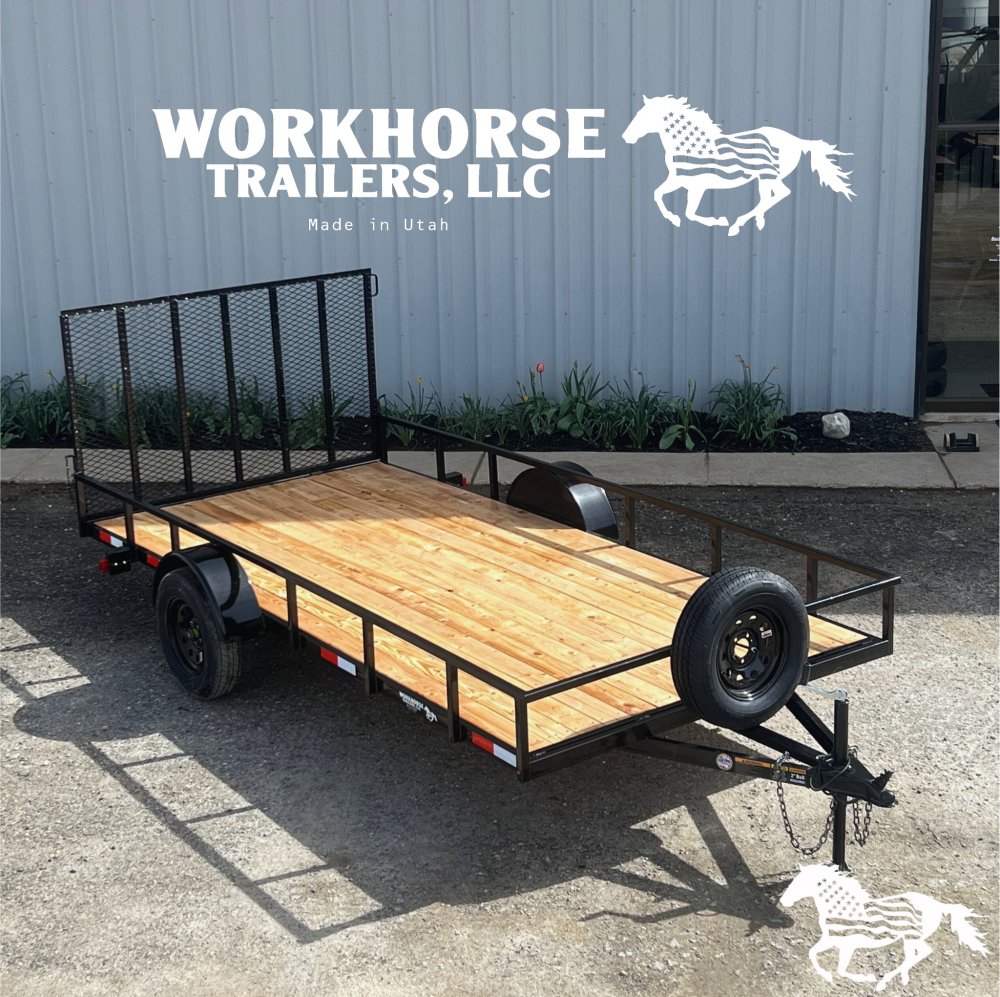
St George Equipment Hauler Trailers
All locationsHeavy machinery moves the earth that shapes a city, and few cities in the western United States are being shaped as aggressively as St. George right now. Multi-phase developments along St. George Boulevard, the 180-acre Tech Ridge project on the former airport site, airport expansion, highway widening on 3000 East, new fire stations, resort construction, and hundreds of residential subdivisions spreading across Washington County all depend on contractors who can get their equipment where it needs to be on time and intact. That starts with an equipment hauler trailer engineered for the weight, width, and abuse that heavy machinery demands. Workhorse Trailers LLC manufactures equipment haulers at its Utah fabrication facility, building every unit from the ground up with the kind of heavy-duty components that commercial operators in St. George rely on daily.
The Equipment Hauler Market in Southern Utah
St. George's economy leans heavily on construction. Census figures put the industry's local workforce at over 8,000 people across the metro area, making it one of the top three employment sectors in the region. That number reflects an enormous volume of earthmoving, grading, trenching, and site preparation happening across Washington County in any given month.
Behind those jobs sits a fleet of compact and mid-size equipment that needs reliable transport between sites. Skid steers, mini excavators, compact track loaders, trenchers, plate compactors, and walk-behind rollers are the workhorses of residential and light commercial construction. Most of these machines are too heavy for a standard utility trailer and too wide for a car hauler, which is exactly why purpose-built equipment haulers exist.
Beyond construction, the agricultural operations spread across the valleys north and east of St. George generate their own demand for equipment transport. Ranchers in the Enterprise, Veyo, and New Harmony areas move tractors, implements, hay equipment, and fencing supplies between properties on a seasonal basis. Small farming operations that lack the budget for a dedicated transport truck often invest in an equipment hauler that can handle the job behind an existing pickup.
Landscaping outfits represent another significant buyer group. As residential growth pushes into the desert foothills, landscape contractors need to shuttle compact equipment like mini skid steers, stump grinders, and trenching machines between scattered job sites. An equipment hauler parked at the shop ready to load and go is the difference between hitting three sites in a day or getting stuck at two because you spent the morning waiting on a rented flatbed.
What Defines an Equipment Hauler Trailer
Equipment haulers occupy a specific position in the trailer lineup that sits above car haulers and utility trailers in terms of structural capability. They are purpose-built for loads that are heavier, wider, and more demanding than passenger vehicles or general cargo. Understanding what makes them different helps buyers avoid the expensive mistake of underbuying.
Reinforced Frame Design
The frame on an equipment hauler is built heavier than what you find on lighter trailer classes. Thicker steel channel or I-beam construction runs the full length of the trailer, with additional crossmembers welded at closer intervals to distribute concentrated loads. When a 6,000-pound mini excavator rolls up a ramp and parks in the center of the deck, that weight presses down on a relatively small footprint. A reinforced frame prevents flexing, sagging, and the long-term metal fatigue that eventually cracks weaker structures.
Workhorse Trailers LLC fabricates its equipment hauler frames entirely in-house, which gives the company control over material selection, weld quality, and structural tolerances at every stage. There is no outsourced assembly or imported subframe to question.
Heavy-Duty Axles and Braking
Equipment haulers carry loads that push well beyond the capacity of a 3,500-pound axle. Tandem axle configurations rated at 5,200 to 7,000 pounds per axle are standard on most models, providing the total weight capacity needed for machines in the 4,000 to 10,000-pound operating range. Electric brakes on both axles provide stopping power proportional to the load, which matters enormously on the steep descents south of Cedar City and through the Virgin River Gorge on Interstate 15.
Buyers should confirm that brake controllers in their tow vehicles are compatible with the trailer's braking system and properly calibrated for the load being carried. An improperly adjusted brake controller can either lock the trailer wheels prematurely or fail to engage them quickly enough, both of which create dangerous situations at highway speed.
Ramp Systems
Loading a tracked machine or a piece of wheeled equipment with limited ground clearance requires ramps that can handle the weight and provide a manageable approach angle. Equipment haulers typically feature heavy-duty fold-down ramps with spring-assist mechanisms that make deployment and stowage a one-person job despite the ramp weight. The spring-assist is not a luxury feature. Without it, manually lifting steel ramps that weigh 80 to 100 pounds each at the end of a long day invites back injuries and frustration.
Ramp width is another consideration that separates equipment haulers from lighter trailer types. Machines like skid steers and compact track loaders have wider track or tire footprints than passenger vehicles, and ramps need to accommodate that width with room to spare. A ramp that is too narrow forces the operator to line up with almost no margin for error, which increases the risk of a machine slipping off the edge during loading.
Deck Height and Fender Clearance
Equipment haulers tend to ride lower to the ground than car haulers, which serves two purposes. A lower deck reduces the ramp angle needed to load heavy machinery, making the loading process safer and easier on the equipment's drivetrain. It also lowers the overall center of gravity when loaded, which improves stability during towing. Fenders are typically positioned and reinforced to handle potential contact from tracked machines or oversized tires without bending or tearing loose.
Sizing an Equipment Hauler for Your Operation
Choosing the right equipment hauler starts with an honest assessment of what you plan to load on it. Contractors who buy based on today's smallest machine often find themselves needing a bigger trailer within a year as their fleet grows.
Matching GVWR to Your Heaviest Machine
Gross vehicle weight rating is the ceiling that accounts for the weight of the trailer itself plus everything on it. A mini excavator in the 7,000-pound class loaded onto a trailer that weighs 2,500 pounds empty requires a GVWR of at least 9,500 pounds, and that leaves zero margin for fuel, attachments, or tools loaded alongside the machine. Experienced operators size their trailer to handle their heaviest realistic load with at least a 15 to 20 percent buffer above the combined weight.
Deck Length Considerations
A 16-foot deck handles most compact equipment comfortably. Operators who carry a machine plus attachments like buckets, augers, or breaker hammers may need 18 or 20 feet to fit everything in a single trip. Running a second trip to retrieve attachments burns fuel and time that add up across a busy project schedule.
Tow Vehicle Compatibility
The tow vehicle needs to match the loaded trailer. Washington County terrain puts extra strain on drivetrain and cooling systems, particularly during summer months when ambient temperatures exceed 110 degrees. A half-ton truck pulling a fully loaded equipment hauler up the grade from Virgin to Kolob Terrace Road is going to overheat. Three-quarter-ton and one-ton trucks with factory tow packages are the appropriate match for most equipment hauler configurations. Check the tow vehicle's gross combined weight rating to verify that the truck, passengers, fuel, and loaded trailer stay within the manufacturer's limits.
Why Workhorse Trailers LLC Fits the St. George Market
Workhorse Trailers LLC has manufactured trailers from its Utah facility since 2018. The company is family-owned, BBB-accredited, and operates as Dealer #937A. Their equipment haulers are designed and welded by the same team that handles every other trailer in the Workhorse lineup, which means construction-grade attention to detail runs through every step of the build process.
The equipment hauler category at Workhorse is built for the kind of daily punishment that commercial use delivers. These are not weekend-warrior trailers repurposed for occasional heavy loads. They are built with heavy-duty components throughout, from the frame and axles to the ramps and coupler, because the buyers who need them cannot afford downtime caused by a trailer that was not up to the task.
For St. George buyers evaluating their options, the Workhorse team provides hands-on guidance to match the trailer to the job. They ask about the specific machines you run, the terrain you travel, and how often the trailer will be in use before recommending a configuration. That conversation prevents the common problem of buying a trailer that is either too small for your actual workload or unnecessarily oversized for what you need. To see available equipment hauler models and get details on specifications and pricing, visitSt. George Equipment Hauler Trailers and connect directly with the team.
Safe Transport Practices for Heavy Equipment
Moving heavy machinery on public roads carries inherent risk, and cutting corners on transport procedures is a reliable way to turn a routine job site transfer into a roadside disaster or a liability claim.
Secure Every Load at Multiple Points
Chain binders and heavy-duty ratchet straps rated for the load weight should anchor the machine at a minimum of four points. For tracked equipment, chain over the tracks at the front and rear of each side. For wheeled machines, secure from the frame or axle, not from hydraulic lines, bucket arms, or body panels that can bend or detach under tension. Verify that nothing has shifted after the first mile of driving and again at each stop.
Distribute Fuel and Attachment Weight Thoughtfully
A full fuel tank adds significant weight to one area of the machine. If you are running close to your trailer's rated capacity, consider transporting the machine with a partial tank and topping it off at the job site. Attachments loaded separately on the deck should be positioned to maintain the trailer's tongue weight balance rather than stacked haphazardly wherever they happen to fit.
Account for Seasonal Road Conditions
Summer heat softens asphalt at weigh stations and rest stops, which can cause trailer jacks and stabilizer pads to sink into the surface. Winter trips north through the canyon require tire chains for the tow vehicle and careful attention to braking distances on icy grades with a heavy load behind you. Spring winds along the I-15 corridor and through the open stretches near Hurricane create crosswind forces that increase with trailer height, making a loaded equipment hauler more susceptible to sway than a low-profile empty trailer.
Building the Right Fleet Starts with the Right Trailer
Contractors and operators throughout Washington County are working against tight schedules and rising expectations from project owners who want sites developed faster than ever. The pace of commercial and residential construction in St. George is not expected to slow down, and the demand for reliable equipment transport will grow alongside it.
An equipment hauler from Workhorse Trailers LLC gives you a trailer built for that pace. It is fabricated in Utah by people who understand what commercial buyers need, priced without the markup of national chain distributors, and supported by a team that treats every purchase like a relationship rather than a transaction. Every trailer includes a free spare tire, and the staff walks through a thorough pre-delivery checklist before any unit leaves the lot. Those small details add up when you are operating in remote areas of Washington County where the nearest tire shop or service center might be an hour away.
Whether you run a one-truck excavation crew out of Hurricane or manage a multi-crew operation handling subdivisions across the St. George valley, the right equipment hauler keeps your machines moving and your schedule intact. Contact the Workhorse team to discuss your specific hauling requirements and find out which model configuration puts your equipment where it needs to be, safely and on schedule.