St George Deck Over Trailers
All locationsMost trailer designs force you to work around the wheels. Fenders eat into usable deck space, wheel wells narrow the loading surface, and forklift operators have to thread the needle when placing pallets between tire housings that sit six inches from the cargo. A deck over trailer eliminates all of that by positioning the entire platform above the axles, creating a flat, unobstructed loading surface that spans the full width of the frame. For buyers in St. George who regularly move oversized materials, wide loads, or palletized goods, a deck over trailer opens up hauling possibilities that other trailer styles simply cannot match. Workhorse Trailers LLC manufactures deck over trailers at its Utah facility, and the design has become a popular choice among commercial and residential buyers throughout Washington County.
How a Deck Over Trailer Differs from Standard Flatbed Designs
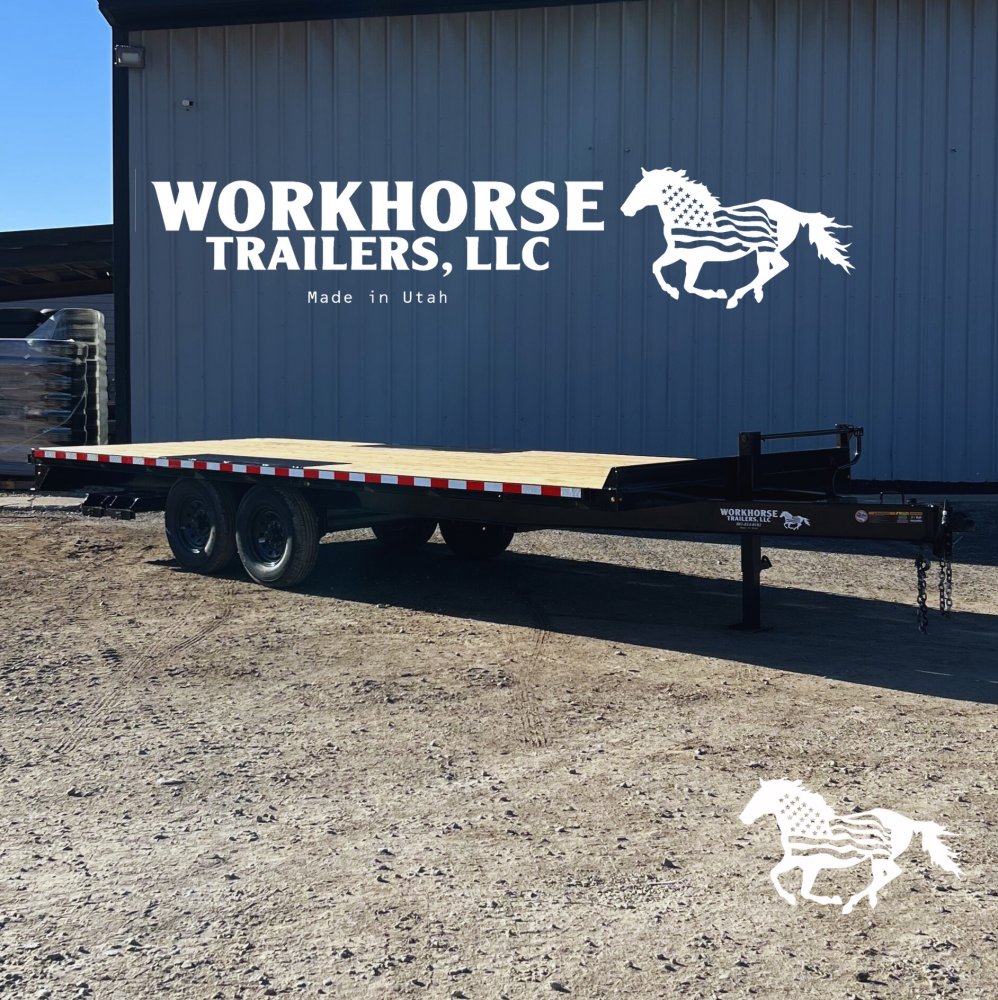
The defining feature of a deck over trailer is right in the name. The deck sits on top of the wheels rather than between them. That single design difference creates a cascade of practical advantages that make the deck over a specialized tool for certain hauling situations.
Full-Width Loading Surface
On a standard flatbed or car hauler, the usable deck width is limited to the space between the wheel wells. That typically leaves you with around 72 to 78 inches of clearance between fenders. A deck over trailer puts the full platform width at your disposal, often 96 inches or more of flat, uninterrupted surface. That extra width is not just convenient. For loads that exceed the space between standard fenders, it is the only option short of stepping up to a commercial semi trailer.
Think about what that means in practical terms. A standard pallet is 48 inches wide. On a conventional flatbed, you can place two pallets side by side, but clearance is tight and forklifts have almost no room to maneuver around the wheel housings. On a deck over, two pallets sit comfortably with space to spare, and a forklift operator can approach from either side of the trailer without obstruction. When you are managing deliveries or pickups at a job site with limited maneuvering room, that accessibility translates directly into time saved.
Side Loading Access
Because the deck extends past the wheels in every direction, a deck over trailer can be loaded from the rear, from either side, or from a combination of all three. This multi-directional access is a significant advantage at lumber yards, building supply distributors, and warehouse docks where the forklift approach angle is dictated by the layout of the facility rather than by the design of your trailer. Standard trailers with protruding fenders restrict side access and force operators to work from limited angles, which slows down every load and unload cycle.
Ground Clearance Advantages
The elevated deck position gives deck over trailers noticeably higher ground clearance than their between-the-wheel counterparts. In the St. George area, where unpaved job sites, graded lots, and rural ranch roads are part of daily operations, that clearance prevents the trailer from bottoming out on uneven surfaces, steep driveway transitions, or construction site entrance ramps. A trailer that drags its frame across every lip and grade transition is not just annoying to operate. It causes cumulative structural damage that shortens the life of the entire unit.
Who Benefits from a Deck Over in Washington County
Deck over trailers attract a specific cross-section of buyers whose hauling needs go beyond what conventional trailer designs can accommodate. In the St. George market, several groups stand out.
Building Material Suppliers and Distributors
Washington County's residential and commercial construction pipeline generates constant demand for material deliveries. Lumber, drywall, roofing bundles, steel framing packages, and palletized concrete products all move more efficiently on a deck over. Suppliers who deliver to active job sites appreciate the ability to pull up, have a forklift place the load from the side, and pull away without repositioning the trailer. When you are running multiple deliveries per day across the sprawl of new development from Little Valley to Desert Color, those minutes saved at each stop compound into meaningful gains by the end of the week.
Solar Panel Installers
Southern Utah's abundant sunshine has made solar installation one of the fastest-growing trades in the region. Solar panel arrays, racking systems, and inverter equipment are bulky, oddly shaped, and easily damaged. A deck over trailer provides the flat, wide surface needed to lay panel bundles flat during transport, reducing the risk of flexing or cracking that comes with stacking them vertically in a van or placing them on a narrow trailer where they overhang the edges. Several local installation companies have adopted deck over trailers as their primary transport solution for exactly this reason.
Fencing and Irrigation Contractors
The ranching communities spread through the valleys surrounding St. George, from the Gunlock area west of town to the agricultural properties near Toquerville and La Verkin, rely on fencing and irrigation contractors to maintain and expand their operations. Rolls of wire fencing, bundles of steel T-posts, sections of PVC pipe, and pallets of irrigation fittings are all loads that benefit from the unobstructed deck space of a deck over. These materials vary in shape and dimension from job to job, and the absence of wheel wells means the operator can arrange each load according to what the day's project requires rather than working around fixed obstructions.
Event and Venue Setup Crews
St. George's identity as a destination for endurance events, festivals, and outdoor gatherings creates demand for the transport of staging materials, portable barriers, tent structures, and audio visual equipment. The Ironman triathlon, the St. George Marathon, the Huntsman World Senior Games, and seasonal arts festivals all require logistical support that often involves moving oversized, awkwardly shaped items that do not conform to standard cargo dimensions. Deck over trailers handle these loads without the constraints that enclosed trailers or narrow flatbeds impose.
Deck Over Configurations Available from Workhorse Trailers LLC
Workhorse Trailers LLC has produced trailers at its northern Utah manufacturing facility since 2018. The company operates under Dealer #937A, holds BBB accreditation, and is owned and managed by the Martinez family. Every trailer in their lineup, including their deck over models, is designed and welded under one roof by the same fabrication team that handles the company's full product catalog.
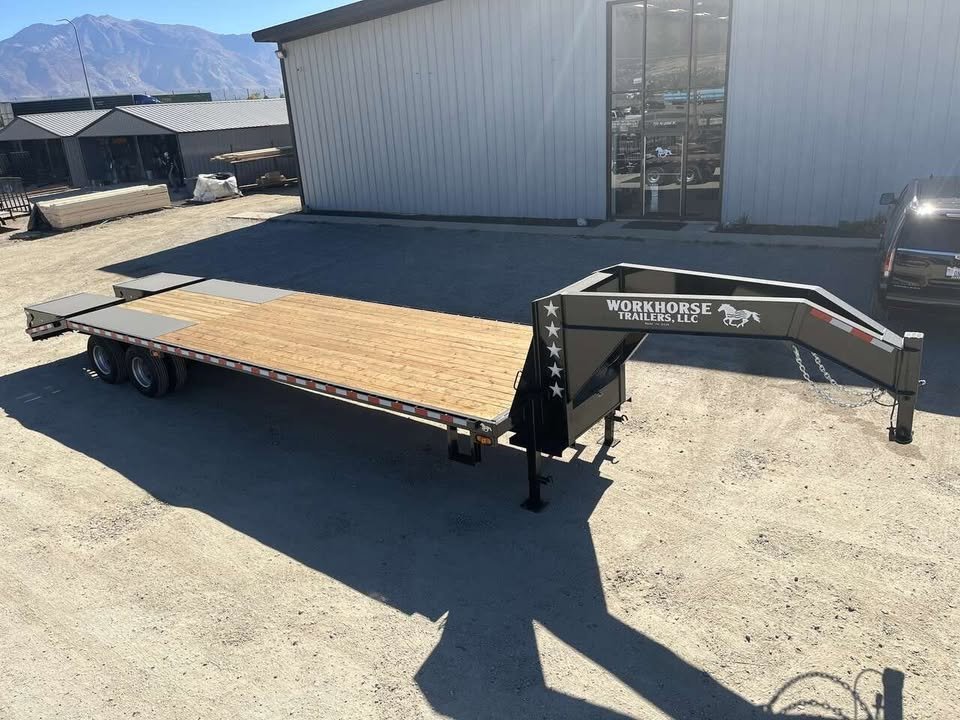
The Workhorse deck over lineup is built to handle heavy-duty commercial loads. The over-axle platform design provides the wide, flat deck surface that commercial buyers need, while the heavy-duty frame underneath delivers the structural integrity to carry palletized materials, oversized bundles, and irregular cargo configurations without flex or fatigue. Standard features include tandem axles, fold-down ramps with spring-assist mechanisms for rear loading, and tie-down provisions distributed across the deck surface.
What buyers frequently mention about the Workhorse purchasing experience is how efficiently the process moves. The staff guides you through a configuration discussion based on what you actually haul, not what they have sitting on the lot. Most transactions wrap up in under 30 minutes, and a thorough pre-delivery inspection covers everything from the hitch connection to the lighting circuit before you leave. A complimentary spare tire accompanies every purchase. To review available deck over models and discuss which specifications match your operation, visitSt. George Deck Over Trailers and connect with the Workhorse team directly.
Understanding the Tradeoffs
A deck over trailer is not the right choice for every hauling scenario. Informed buyers understand both the strengths and the limitations of the design before making a purchase.
Higher Center of Gravity
Because the load sits above the axles rather than between them, a deck over trailer carries its cargo at a higher elevation than a conventional flatbed. This raises the center of gravity, which can affect stability when hauling tall or top-heavy loads at highway speed. The effect is manageable with proper loading techniques and appropriate driving habits, but it is worth factoring into the decision if your primary use involves tall, stacked loads on the windy stretches of I-15 between St. George and the Beaver area or through the open corridor near Hurricane where spring gusts are routine.
Steeper Ramp Angle
The elevated deck means ramps extend at a sharper angle to reach the ground. For most wheeled and tracked equipment, this presents no problem. For vehicles with limited ground clearance, like lowered cars or modified trucks, the breakover point where the ramp meets the deck can cause scraping. Longer ramps reduce this angle, and some deck over owners add a dovetail section at the rear of the deck that creates a gradual transition. If you plan to drive low-clearance vehicles onto your deck over with any regularity, discuss ramp length and dovetail options with the Workhorse fabrication team before ordering.
Deck Height and Hand Loading
The platform on a deck over sits roughly 12 to 18 inches higher than a standard flatbed trailer. For loads placed by forklift or crane, this is irrelevant. For hand-loading scenarios where you are lifting items onto the deck manually, the additional height adds effort over the course of a long day. Buyers who split their time between forklift-loaded commercial cargo and manually loaded personal hauling should weigh this factor honestly.
Maximizing the Lifespan of a Deck Over in Desert Conditions
The Washington County climate puts specific demands on any piece of outdoor equipment, and deck over trailers are no exception. A few maintenance habits keep the trailer performing well across years of southern Utah use.
Deck Surface Inspection
The flat, exposed deck takes direct hits from the sun for months at a time. Wood decking, if equipped, should be inspected annually for splitting, warping, and fastener loosening caused by repeated heat cycling. Steel decking holds up better in UV exposure but should be checked for coating degradation where cargo contact wears through the protective finish. Touching up exposed areas with a rust-inhibiting coating before the winter season prevents the slow creep of oxidation that starts at a single scratch and spreads outward.
Ramp Hinge and Spring Maintenance
The spring-assist mechanisms on fold-down ramps endure significant stress during each loading cycle. Desert dust and fine sand accumulate in the hinge points and spring housings, accelerating wear on moving parts. A periodic cleaning with compressed air followed by a light application of dry lubricant keeps the mechanisms operating smoothly. Wet lubricants attract more dust and compound the problem, so dry formulations work better in this environment.
Electrical Connections
The elevated deck position routes wiring along a longer path from the coupler to the rear lights compared to lower-profile trailers. More wiring means more potential failure points. Inspect connector pins at the plug for corrosion before each trip, and replace any sections of wiring that show heat damage or cracked insulation. A broken running light on a trailer carrying a wide load on a two-lane highway after dark is a safety hazard that no amount of other preparation can offset.
Fitting a Deck Over into Your Operation
The decision to invest in a deck over comes down to a straightforward question. Do you regularly haul loads that are wider than 72 inches, require forklift access from the side, or involve mixed cargo that does not fit neatly between standard fenders? If the answer to any of those is yes, a deck over trailer belongs in your fleet.
For St. George businesses managing deliveries, material transport, or multi-site logistics across a county that adds new construction projects every month, the efficiency gained from a properly configured deck over pays dividends that a general-purpose flatbed cannot replicate. The ability to load faster, carry wider, and access the deck from any angle turns a trailer from a passive piece of equipment into an active competitive advantage.
Workhorse Trailers LLC builds deck over trailers for buyers who put their equipment to work and expect it to keep up. Contact the team to talk through your specific hauling requirements, compare configurations, and find out what a Utah-built deck over can do for your St. George operation.