
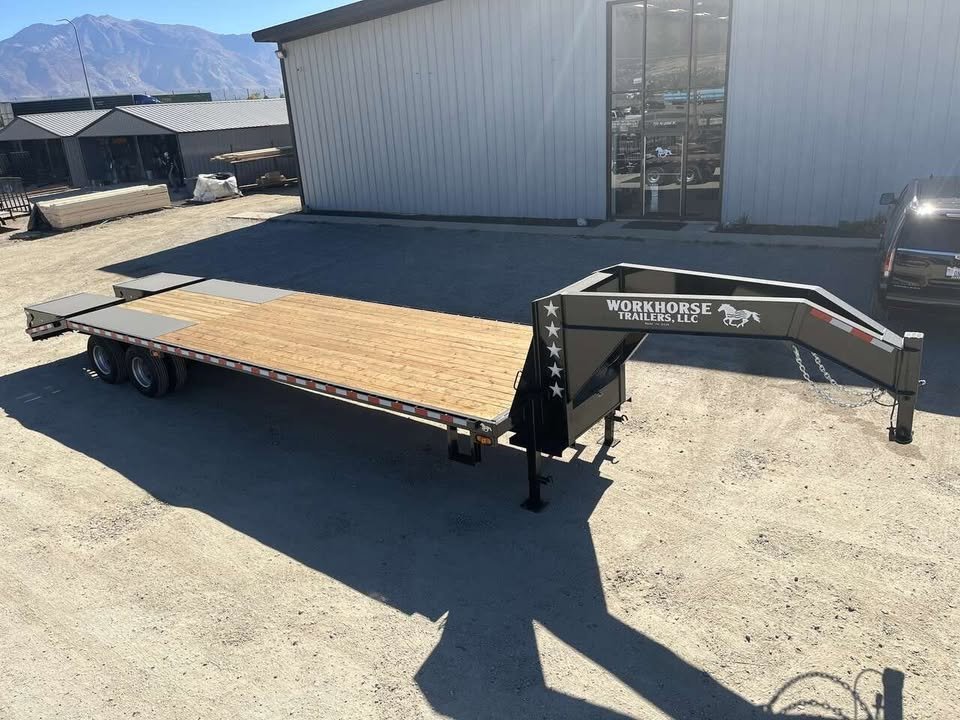
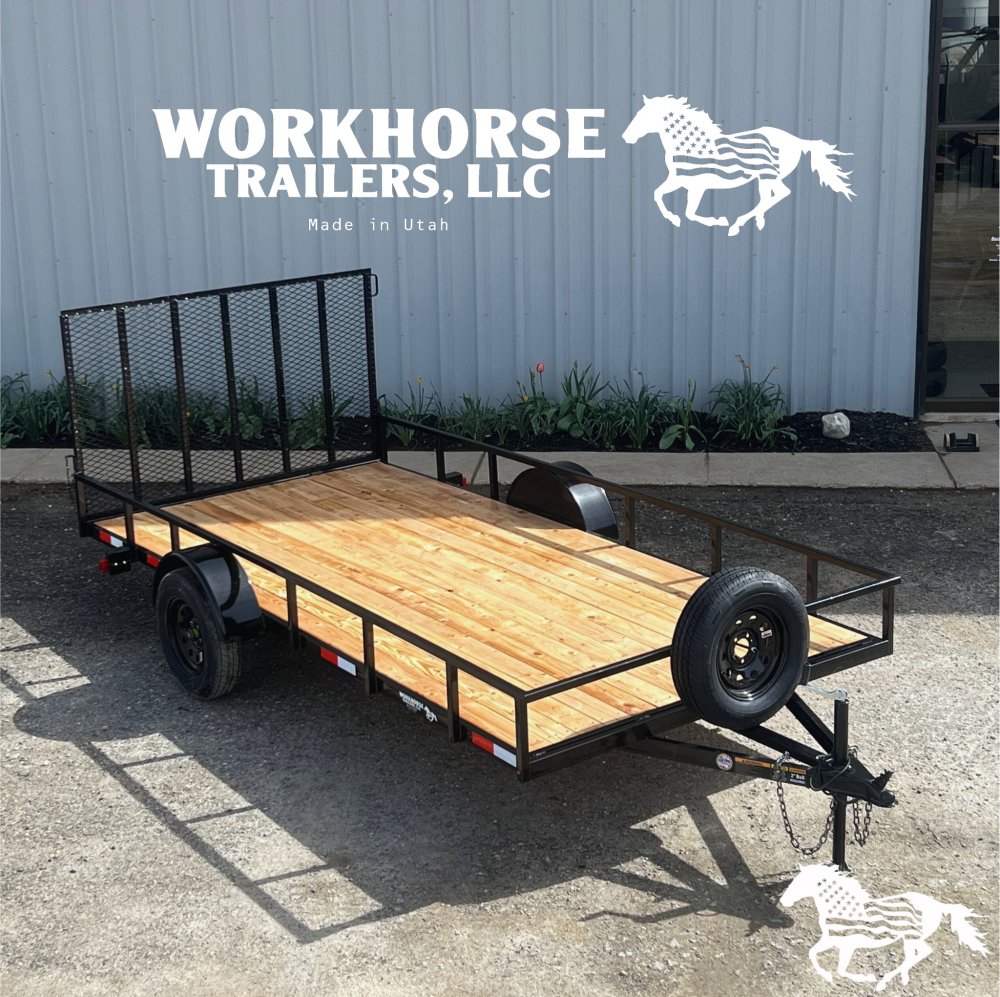
Reno Equipment Hauler Trailers
All locationsReno’s construction sector is operating at a tempo that would have seemed improbable a decade ago. Data center campuses consuming hundreds of millions of dollars in investment are rising along the USA Parkway corridor east of Sparks. Distribution warehouses serving the e-commerce logistics chain line up along the I-80 frontage from McCarran to Fernley. Residential subdivisions push into the foothills of Spanish Springs, Somersett, and the valleys south of the airport. And the infrastructure projects needed to support all of this growth, from sewer line extensions to road widening to electrical substation upgrades, generate their own layer of equipment-intensive construction activity. Every one of these projects requires machinery that arrives by trailer and departs by trailer when the work is done. Equipment hauler trailers serve as the transport backbone for Reno’s construction economy, and the demands that this particular market places on those trailers differ meaningfully from what equipment haulers encounter in the state’s desert interior or its rural ranching communities. Workhorse Trailers LLC provides equipment hauler trailers to Reno buyers whose operations span the elevation zones, seasonal conditions, and growth-driven hauling volumes that distinguish the Truckee Meadows construction market from anywhere else in Nevada.
An equipment hauler trailer is purpose-built for machines that generate concentrated loads, drive themselves on and off the deck, and weigh enough to demand structural reinforcement beyond what standard flatbed trailers provide. The reinforced deck surfaces, heavy-duty ramp assemblies, and elevated weight ratings that define the category exist because a 12,000-pound excavator sitting on four square feet of track contact area creates stress patterns that general-purpose trailers aren’t designed to survive repeatedly.
Reno’s Construction Growth Zones and Hauling Patterns
The geography of Reno’s development determines where equipment hauler trailers travel, how often they make the trip, and what conditions they encounter along the way.
The Eastern Industrial Corridor
The Tahoe Reno Industrial Center and the USA Parkway development zone east of Sparks have attracted Tesla’s Gigafactory, Switch data centers, Google, Apple, and dozens of supporting industrial and logistics operations. The construction activity surrounding these facilities runs continuously, with new buildings, expansions, and infrastructure improvements generating equipment hauler traffic between Reno-based contractor yards and the TRIC work zone daily.
The drive from a contractor’s staging area near Reno’s Kietzke Lane industrial district to a TRIC job site covers approximately 30 miles of highway. Equipment haulers make this run loaded in the morning and empty in the evening, or shuttle between multiple TRIC sites throughout the day as machines reposition between project phases. The route follows I-80 east through Sparks and onto USA Parkway, a corridor that’s well-maintained but carries increasing heavy truck traffic that requires defensive towing posture from equipment hauler operators navigating the merge zones and interchange ramps.
Mountain and Foothill Development
Residential development in Reno’s higher-elevation neighborhoods creates equipment transport requirements that valley floor projects don’t share. Projects in Arrowcreek, Callahan Ranch, the ridgeline developments above Caughlin Ranch, and the expanding communities along Mt. Rose Highway involve hauling equipment up grades that test tow vehicle performance and trailer braking capability.
The elevation gain from downtown Reno at 4,500 feet to a construction site above Galena Creek at 6,200 feet subjects the loaded combination to sustained climbing that increases engine temperature, transmission heat, and fuel consumption. The return trip with an empty trailer reverses the challenge, requiring controlled descent on grades steep enough to build significant speed if braking isn’t managed proactively. Equipment hauler operators working these mountain projects develop route-specific knowledge about which grades demand low gear engagement, where runaway ramps exist, and how traffic patterns at different times of day affect safe descent speed.
Infill and Redevelopment in the Urban Core
Central Reno’s redevelopment along the Truckee River corridor, the Midtown district, and the areas surrounding the University of Nevada campus generates equipment hauler demand in a confined urban context. Excavators, skid steers, and compact loaders working demolition, foundation, and utility projects in these neighborhoods load and unload on streets shared with parked cars, pedestrians, and through traffic.
The loading footprint of an equipment hauler trailer, including the ramp extension behind the trailer’s rear, can occupy 35 to 40 feet of street length. In Midtown’s narrow blocks or along the side streets near the river, this footprint consumes most of an available parking lane. Operators working urban Reno infill projects often coordinate with city permitting to reserve street space for loading operations, which requires advance planning rather than the improvised street parking that works on suburban sites with open frontage.
Seasonal Equipment Transport Challenges
Reno’s four-season climate creates equipment hauler operating conditions that shift meaningfully across the calendar, unlike southern Nevada’s relatively constant warm-weather environment.
Winter Construction Continuity
Unlike northern states where construction largely halts during winter, Reno’s construction season extends through the cold months with modifications. Interior work continues uninterrupted. Exterior concrete and earthwork slow but don’t stop entirely during cold spells, resuming during the mild windows that Reno’s winters provide between storm systems. Equipment hauler activity continues year-round, but winter trips introduce hazards that summer hauling avoids.
Morning frost on steel deck surfaces creates loading traction problems identical to those ice produces. The frost forms on exposed metal when overnight temperatures drop below the dew point, which happens regularly in Reno from November through March. A machine driving onto a frost-coated steel deck at 6 AM encounters traction conditions the operator may not anticipate because the frost layer is thin enough to be visually subtle. Checking deck surface conditions by touch before loading, and scattering traction material when frost is present, prevents the sliding incidents that cold morning loading enables.
Storm Cycle Towing
Pacific storm systems crossing the Sierra drop rain and snow on the Reno valley floor several times per month during winter. Equipment hauler operators who tow during active precipitation face reduced visibility, wet road surfaces that extend stopping distances, and splash spray from commercial trucks on I-80 that further impairs visibility for the tow vehicle driver.
The more consequential challenge comes during the transition between storm and clear periods. Temperatures that hover near freezing create black ice on bridge decks, shaded curves, and road surfaces that received snowmelt runoff during the day and refroze overnight. Equipment haulers carrying 14,000 to 20,000 pounds of loaded weight require substantially more stopping distance on icy surfaces than the same rig on dry pavement. The truck’s antilock braking system manages wheel lockup on the tow vehicle, but the trailer’s electric brakes lack ABS and can lock the trailer tires independently, initiating a jackknife sequence if the trailer brakes engage more aggressively than the truck’s traction allows.
Reducing brake controller gain during known or suspected icy conditions and increasing following distance provides the margin that winter equipment hauling in Reno demands.
Spring Conditions and Soft Ground
The same snowmelt and rain that create road hazards also saturate construction sites and staging areas throughout the Truckee Meadows during March and April. Equipment haulers loading and unloading at sites with unpaved staging areas encounter soft ground that affects both the trailer’s stability during loading and the machine’s ability to maintain traction on the ramps.
Tracked machines handle soft-ground ramp conditions better than wheeled machines because the track distributes drive force across its full contact length. Wheeled loaders and forklifts attempting to climb ramps on muddy sites may spin their drive tires before gaining the traction needed to ascend. Cleaning mud from the ramp surface between loading cycles and maintaining the ramp’s tread pattern free of packed soil keeps the surface functional during Reno’s wet season.
Tow Vehicle Cooling on Reno’s Mountain Grades
Equipment hauler tow vehicles in the Reno market face cooling system demands that flat-terrain markets don’t produce. The combination of elevation, grades, and payload creates thermal stress that reveals cooling system weaknesses that level highway towing never exposes.
Transmission Temperature Management
Automatic transmissions generate heat proportional to the load they’re managing. A one-ton truck towing a loaded equipment hauler up Mt. Rose Highway or the grade toward Verdi on I-80 westbound pushes the transmission’s torque converter into sustained high-slip operation that generates heat faster than the stock transmission cooler can dissipate it. Transmission fluid temperatures above 250 degrees accelerate fluid breakdown, seal hardening, and internal component wear.
Reno equipment hauler owners who tow loaded trailers on mountain routes regularly should install an auxiliary transmission cooler if the tow vehicle didn’t come equipped with one from the factory. Even trucks with factory tow packages benefit from supplemental cooling capacity during the sustained loaded climbs that Reno’s geography produces. Monitoring transmission temperature through an aftermarket gauge provides real-time awareness that allows the driver to reduce speed or downshift before the temperature reaches the damage threshold.
Engine Coolant Performance at Altitude
Engine cooling efficiency decreases at elevation because the lower air density moves less heat per unit of air flowing through the radiator. A cooling system that maintains 210-degree engine temperature at sea level under load may reach 230 degrees under the same load at 5,000 feet. The reduced cooling margin means that any additional factor, a partially clogged radiator, a marginal water pump, or an aging thermostat, can tip the system from stable to overheating during a loaded mountain climb that it would handle without difficulty at lower elevation.
Pre-season cooling system inspection including radiator flush, thermostat verification, and coolant concentration testing costs far less than the engine damage that overheating causes during a loaded haul up Geiger Grade or the Mt. Rose corridor.
Equipment Security During Multi-Site Days
Reno contractors who reposition equipment between multiple job sites during a single workday face a security consideration that single-site operators don’t. A loaded equipment hauler parked at a commercial job site while the operator handles paperwork inside a project trailer or walks a site with the superintendent sits unattended with a machine worth $30,000 to $80,000 riding in plain view.
Construction equipment theft in the Reno-Sparks metro, while less prevalent than in larger cities, occurs with enough regularity that casual inattention creates opportunity. A skid steer sitting on an unlocked trailer in a commercial parking lot near the Meadowood Mall or a retail development along South Virginia Street presents a target that organized theft rings can capitalize on within minutes.
Securing the machine to the trailer with chains rated for the machine’s weight and locking the chains with hardened steel padlocks adds minutes to each loading cycle but removes the opportunity for drive-on theft where a thief simply starts the machine and drives it off the trailer. Coupler locks on the trailer itself prevent the entire rig from being towed away during the operator’s absence.
Washoe County Registration and Weight Compliance
Equipment hauler trailers registered in Washoe County follow Nevada’s DMV process. The county’s 8.265 percent sales tax applies to the purchase. CDL requirements activate when the loaded truck-and-trailer combination exceeds 26,001 pounds gross combined weight, a threshold that many Reno equipment hauler configurations approach when carrying mid-size excavators or loaded skid steers with attachment pallets.
Nevada’s weight enforcement infrastructure includes portable scales deployed by the Nevada Highway Patrol along I-80 and on state routes in the Reno area. Equipment haulers operating near their rated capacity should maintain awareness of axle weights and gross combined weights, as enforcement actions apply independently to each rating. A rig that’s within GVWR but over a per-axle limit faces the same citation as one that exceeds the overall rating.
Workhorse Trailers LLC and Reno Equipment Hauler Buyers
Workhorse Trailers LLC serves Reno equipment hauler buyers whose operations navigate the intersection of mountain terrain, seasonal weather, urban construction constraints, and the growth-driven hauling volumes that define the Truckee Meadows market. The company matches each buyer to an equipment hauler that handles the specific machines, routes, and conditions their operation encounters daily.
Reno buyers evaluating equipment hauler trailers for construction, utility installation, industrial service, or general heavy hauling can visitReno Equipment Hauler Trailers to compare available configurations and connect with the Workhorse team for recommendations tailored to Reno’s unique towing environment.
The equipment hauler you depend on in Reno has to climb mountain grades loaded in July and descend them on ice in January. Workhorse Trailers LLC ensures the one you select is built for both extremes and everything between them.