Provo Deck Over Trailers
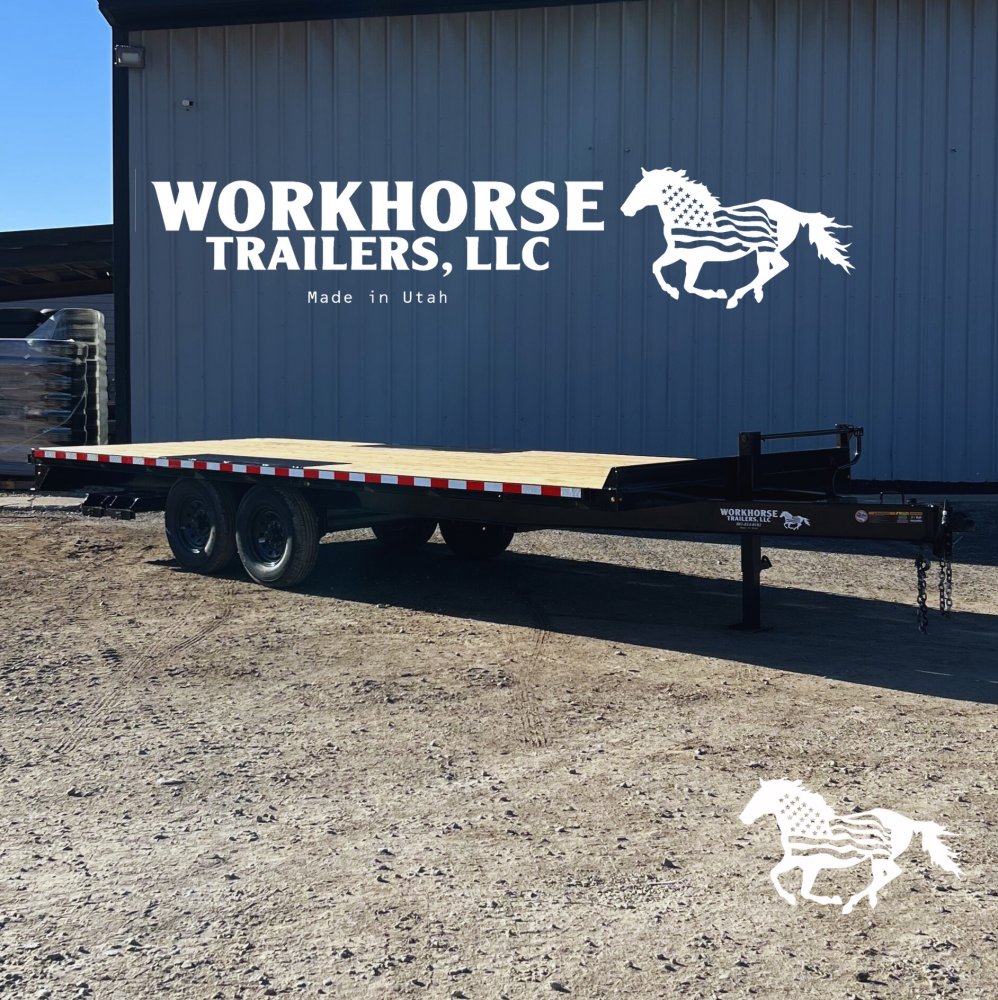
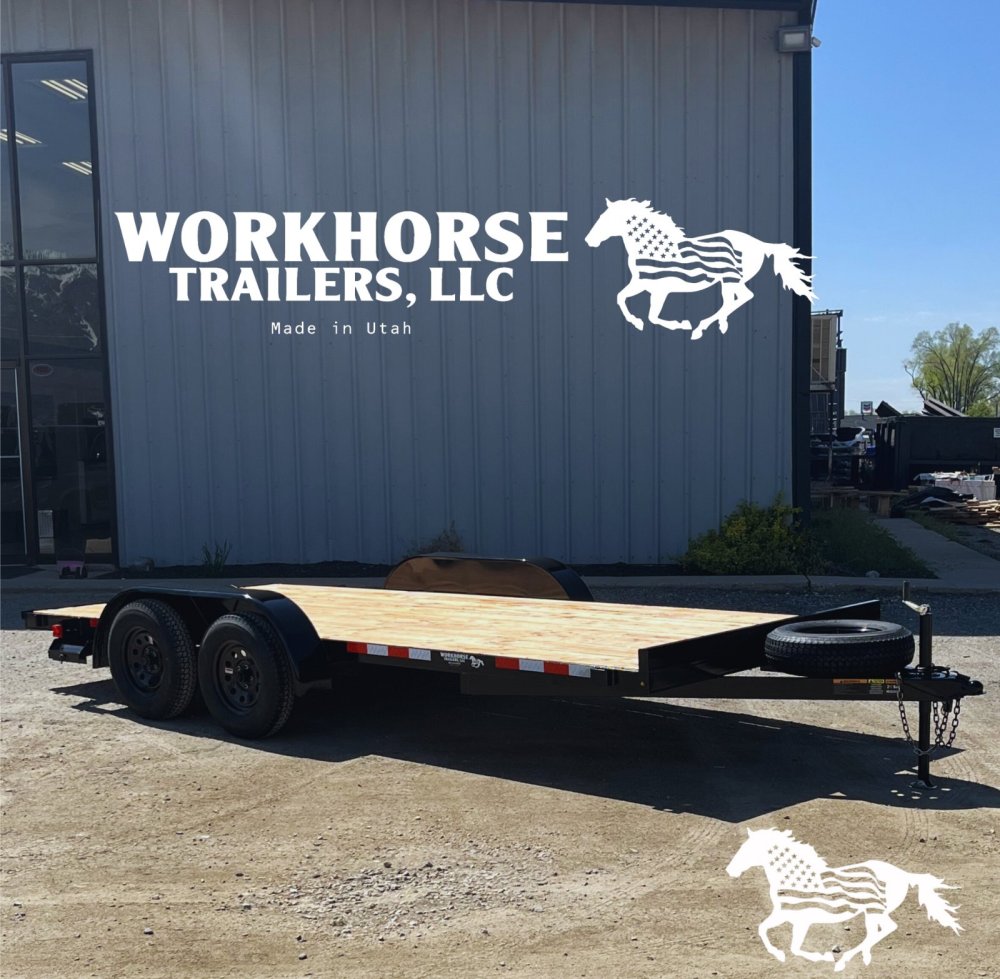
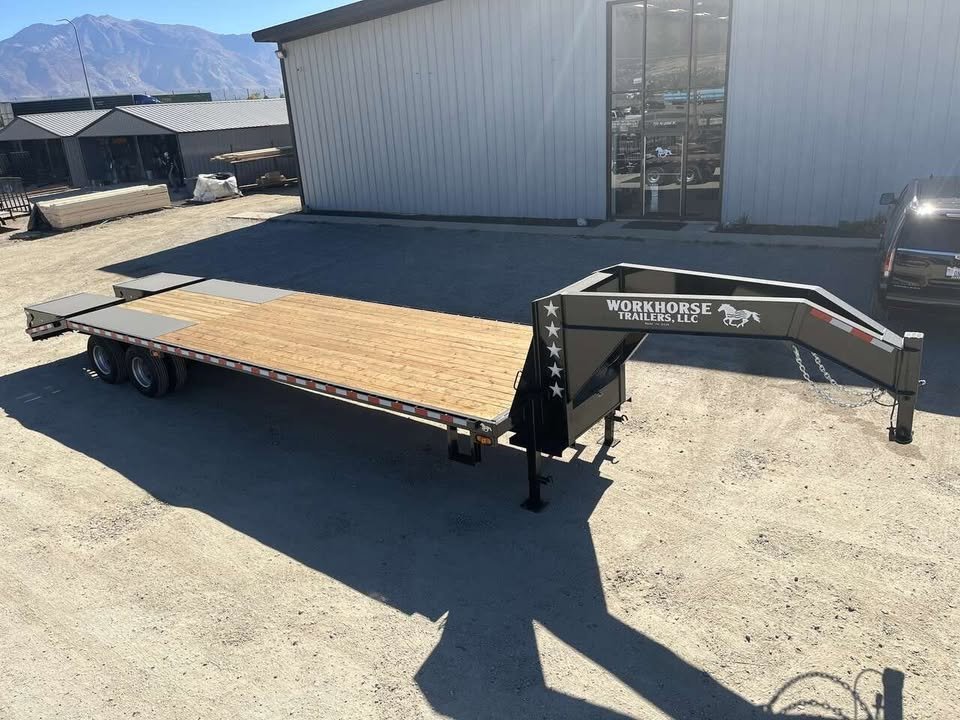
All locationsStandard trailers funnel cargo into a narrow channel between wheel wells that dictates what you can carry, how you arrange it, and how much time you spend wrestling awkward loads into a space that was never shaped for them. Deck over trailers reject that limitation entirely. By mounting the platform above the axle line, a deck over trailer presents a flat, wall-to-wall loading surface that accepts cargo based on its actual dimensions rather than forcing it through the bottleneck of recessed wheel housings. In a city like Provo, where the cargo moving across town on any given morning ranges from bundled steel joists to stacked event staging to palletized restaurant supplies, the deck over trailer's uncompromised width is not a convenience. It is a competitive advantage that saves trips, prevents damage, and lets operators focus on the work itself instead of the logistics of fitting things onto the trailer. Workhorse Trailers LLC keeps Provo supplied with deck over trailers built to handle the payload weights and loading patterns this fast-growing Utah County seat generates daily.
Provo's economic identity has shifted dramatically over the past decade. What was once primarily a university town with a modest commercial base has evolved into a regional center for technology employment, healthcare services, government administration, and mixed-use development that attracts investment from across the state. Each of these sectors produces cargo that benefits from the deck over platform's geometry, and the diversity of the local economy means deck over trailers in Provo rarely serve just one purpose. A trailer that delivers drywall to a downtown renovation in the morning may haul irrigation pipe to a west-side agricultural plot by afternoon. This versatility is built into the design, and this page explains how Provo's industries use it, what Workhorse Trailers LLC stocks for the local market, and how buyers can select and maintain the right deck over trailer for their specific operation.
How Provo's Economy Creates Deck Over Demand
The industries and activities generating the strongest deck over trailer demand in Provo share a common thread: they move cargo whose width, shape, or loading method conflicts with the constraints of conventional trailer designs.
Government and Municipal Operations
As the Utah County seat, Provo hosts county government offices, court facilities, and administrative campuses that periodically require deliveries of furniture, filing systems, modular office partitions, and technology infrastructure components. These items arrive on pallets and crates that occupy substantial width and benefit from unobstructed forklift access across the full deck surface. City parks and recreation departments add another demand layer, transporting bleacher sections, portable fencing, playground components, and seasonal decorations between storage facilities and public venues throughout the calendar year. Deck over trailers serve these municipal functions with a platform that accepts the varied cargo shapes government operations generate without requiring custom loading arrangements for each delivery.
Healthcare Facility Construction and Renovation
Provo's healthcare sector, anchored by Utah Valley Hospital and supplemented by specialty clinics and urgent care centers scattered across the city, undergoes continuous facility upgrades that demand heavy material deliveries. Medical-grade cabinetry, imaging equipment shipping crates, prefabricated wall panels with embedded utility chases, and oversized HVAC components for operating suite environments all require the full-width loading surface a deck over trailer provides. The precision nature of healthcare construction materials means these items cannot be tilted, stacked unevenly, or wedged between wheel wells without risking the damage that sends an expensive specialty component back to the manufacturer for replacement.
Technology Campus Buildout and Tenant Improvement
The cluster of technology companies along Provo's western corridor and in the downtown innovation district generates a steady flow of tenant improvement projects as startups expand, relocate, and reconfigure their office and lab spaces. These projects move server racks, networking cabinets, modular workstation systems, and specialized testing equipment that arrives on oversized pallets and custom shipping platforms designed for flat, unobstructed placement. A deck over trailer slides beneath a warehouse dock, accepts the forklift-loaded cargo across its full width, and delivers it to the construction site where another forklift or crane lifts it directly from the platform without the repositioning that narrower trailers force.
Agricultural and Equestrian Property Support
Provo's western reaches and the rural transition zones along its southern boundary maintain active agricultural and equestrian properties that generate deck over demand distinct from the city's urban sectors. Hay bales stacked three-wide across a full deck surface. Fence posts and rail bundles laid flat in quantities that a conventional trailer's wheel wells would bisect. Livestock panels transported in flat stacks that require edge-to-edge platform contact to prevent bowing during transit. These agricultural loads exploit the deck over's geometry just as effectively as urban construction materials, demonstrating the design's reach across Provo's full economic spectrum.
Deck Over Trailer Selection at Workhorse Trailers LLC
Workhorse Trailers LLC structures their Provo-facing deck over inventory around payload performance tiers that correspond to the load intensities local buyers describe during the purchasing conversation.
Standard Duty Deck Over Trailers
Standard duty deck over trailers carrying GVWR ratings from 9,900 to 12,000 pounds and deck lengths between 18 and 20 feet fill the entry and mid-range of the Provo deck over market. These models serve property managers, small contractors, agricultural operators, and municipal departments whose typical loads stay within the moderate weight band but require the full-width platform that distinguishes the deck over from lighter utility trailer alternatives.
Frame construction on standard duty models uses rectangular tube steel main rails with crossmembers welded on 16-inch centers. This spacing supports distributed loads like lumber stacks and pallet arrays without deflection while keeping the trailer's empty weight moderate enough for towing behind the three-quarter-ton trucks common in Provo's commercial fleet. Workhorse Trailers LLC equips standard duty deck overs with powder-coated finishes, sealed LED lighting, and tandem axle assemblies with electric brakes that deliver reliable stopping performance in Provo's hilly terrain.
Heavy Duty Deck Over Trailers
Heavy duty deck over trailers rated from 14,000 to 20,000 pounds serve Provo's most demanding commercial haulers. General contractors delivering structural steel and engineered lumber packages, concrete forming companies transporting stacked panel inventories, and equipment rental firms repositioning loaded material handlers all require platforms in this capacity range. Frame rails advance to structural channel or I-beam profiles at this tier, and crossmember gauge increases to resist the concentrated point loads that heavy crated equipment and tracked machines generate.
Buyers exploringProvo Deck Over Trailers at Workhorse Trailers LLC will find heavy duty models available with both bumper pull and gooseneck hitch configurations. Gooseneck options at this weight class provide the stability advantage that Provo operators hauling near the trailer's maximum capacity appreciate, particularly during the freeway segments and grade changes that local routes include. Hydraulic or spring-assisted ramps, adjustable coupler heights, and integrated toolbox compartments built into the trailer's tongue or neck structure round out the heavy duty feature set.
Extended Length Deck Over Trailers
Extended length decks over trailers stretching from 24 to 32 feet address the cargo dimensioning requirements that shorter platforms cannot satisfy. Provo buyers who transport long structural members, prefabricated wall sections, truss packages, and extended pipe runs need the platform length to support these items without overhang that creates safety and compliance concerns on public roads. Extended models typically ride on gooseneck hitches that accommodate the tongue weight generated by a long, heavily loaded platform, and their axle configurations scale to triple assemblies when the GVWR exceeds the capacity of a tandem setup.
Workhorse Trailers LLC recognizes that extended length deck overs serve a specialized niche within the Provo market, and they stock these models in configurations that reflect the specific cargo categories local buyers transport rather than offering generic long-platform options that may not match the region's actual hauling patterns.
Practical Advantages and Trade-Offs of the Deck Over Design
Every trailer design involves engineering compromises, and the deck over is no exception. Understanding where the design excels and where it requires accommodation helps Provo buyers set accurate expectations.
Loading Versatility as the Primary Advantage
The deck over's most significant advantage is its ability to accept cargo from above via crane or boom, from the sides via forklift, and from the rear via ramp or driven loading without any dimensional constraint imposed by wheel housings. This three-axis loading versatility means that the same trailer adapts to a forklift-loaded pallet run in the morning, a crane-placed steel beam delivery at midday, and a ramp-loaded equipment shuttle in the afternoon. No other trailer configuration offers this degree of loading flexibility at equivalent payload ratings.
Elevated Center of Gravity as the Primary Accommodation
The deck over platform sits higher than a conventional trailer deck because the surface must clear the top of the axle and tire assembly beneath it. This elevated platform raises the center of gravity of every load placed on it, which affects the trailer's roll stability during cornering, crosswind response during highway travel, and the overall feel of the tow vehicle during lane changes and evasive maneuvers. Provo operators who transport tall, narrow loads on deck over trailers should account for this higher center of gravity by reducing cornering speeds, increasing following distances to avoid sudden maneuvers, and monitoring crosswind conditions during travel along exposed stretches like the western Provo flats near Utah Lake.
Ramp Length Requirements
The elevated deck height means that loading ramps must span a greater vertical distance to create a navigable approach angle for wheeled and tracked equipment. Longer ramps add weight to the trailer, require more storage space when stowed, and create a more gradual but longer loading path that takes additional time to traverse. Provo buyers who frequently load equipment should verify that the ramp length produces an approach angle their specific machines can negotiate without catching low-mounted components on the ramp surface or the ramp-to-deck transition point.
Cargo Securement Strategies for Full-Width Platforms
The deck over's expansive surface area creates securement opportunities that narrower trailers cannot match, but it also introduces securement considerations unique to the design.
Perimeter Securement Using Stake Pockets
Stake pockets spaced along the deck edges provide anchor points for vertical stakes, strap hooks, and chain binders positioned at the cargo's outer boundary. This perimeter securement approach contains the load within a defined footprint and prevents lateral migration during cornering. For palletized loads placed side by side across the full deck width, perimeter securement with stake-mounted side rails or strap loops creates a corral effect that holds the entire load array in position without requiring individual pallet strapping.
Interior Anchor Points for Centered Loads
Single heavy items positioned at the deck's center require anchor points inboard of the perimeter stake pockets. Recessed D-rings or flush-mount tie-down plates installed at regular intervals across the deck surface provide these interior anchor points. Workhorse Trailers LLC configures their Provo deck over models with anchor point grids that accommodate both perimeter and centered securement geometries, giving operators flexibility to secure any load arrangement without aftermarket hardware installation.
Preventing Forward Shift Under Braking
The forces generated during hard braking push every unsecured item on the deck toward the front of the trailer. On a deck over with its full-width surface, a wide load that shifts forward can contact the headboard, the gooseneck structure, or the tow vehicle's tailgate with destructive force. Front-facing securement straps angled from the leading edge of the cargo down to deck-mounted anchors absorb braking forces and hold the load in its original position. Supplement these front-facing straps with side and rear straps for complete multi-directional restraint that addresses acceleration, cornering, and road irregularity forces simultaneously.
Operating a Deck Over Trailer on Provo Streets
Provo's road environment introduces operating considerations that deck over trailer owners should incorporate into their daily towing habits.
Overhead Clearance Vigilance
The elevated deck height combined with tall cargo creates a combined profile that approaches or exceeds the clearance beneath bridges, utility lines, drive-through canopies, and parking structure entries found throughout Provo. Measure your loaded height before every trip that involves a new route or a new cargo configuration. Provo's older commercial zones along Center Street and near the downtown core contain structures built to clearance standards that predate the current trailer fleet's typical loaded heights, and assuming clearance without verification invites contact damage that harms both the cargo and the infrastructure.
Backing Visibility Challenges
The elevated and wide deck of a loaded deck over trailer can obstruct the tow vehicle's rear mirror sightlines more completely than lower-profile trailers. Backing maneuvers in Provo's commercial lots and residential construction zones become more difficult when the driver cannot see the trailer's rear corners through the mirrors. Use extended towing mirrors, backup cameras mounted on the trailer's rear frame, or a ground spotter to compensate for the reduced visibility that a loaded deck over creates during reverse maneuvers.
Wind Sensitivity on Open Corridors
Provo's western flats between I-15 and Utah Lake lack the terrain features and building density that shelter trailers from crosswind exposure. A deck over trailer loaded with flat, wide cargo like sheet goods, panels, or bundled material acts as a sail that catches lateral wind gusts and transfers the force into the tow vehicle's steering. Reduce speed during wind events, grip the steering wheel firmly with both hands, and avoid overcorrecting when a gust pushes the rig sideways. Smooth, gradual steering inputs allow the trailer to stabilize naturally rather than initiating the oscillation that sharp corrections produce.
Seasonal Care for Provo Deck Over Trailers
Deck over trailers operating in Provo face seasonal maintenance demands shaped by the city's continental climate and the chemical environment its road maintenance practices create.
Winter Undercarriage Protection
Road salt and magnesium chloride brine penetrate every crevice beneath the deck surface where visual inspection is difficult. The deck over design actually increases the number of protected crevices compared to open-frame trailers because the deck platform shields the undercarriage from rain rinsing that would naturally flush some contaminants away. Actively wash the undercarriage after each winter trip, using an angled spray nozzle to reach the spaces between crossmembers and around axle mounting hardware that accumulate the densest salt deposits.
Spring Fastener Audit
Winter's thermal cycling expands and contracts steel components at rates that differ between bolted connections, loosening fasteners gradually over the cold months. Perform a comprehensive torque check on all deck fasteners, fender mounts, ramp hinge bolts, and coupler hardware each spring before the busy hauling season begins. A single loose crossmember bolt caught during a spring audit prevents the progressive deck vibration and eventual structural damage that the loose connection would cause under heavy summer loads.
Summer Deck Coating Evaluation
UV radiation and thermal expansion stress deck coatings throughout Provo's intense summer months. Inspect painted or powder-coated surfaces for chalking, peeling, and blistering that exposes bare steel to oxidation. Touch up damaged areas promptly with a compatible coating to maintain the corrosion barrier before autumn moisture arrives and exploits every gap in the protective finish.
Fall Brake and Light Preparation
Shorter daylight hours increase the proportion of towing that occurs in reduced visibility conditions during fall and winter. Verify that all marker lights, brake lights, and reflective tape surfaces perform at full effectiveness before the autumn time change. Service brakes to ensure maximum stopping capability for the wet, slippery road conditions that Provo's late fall storms introduce ahead of winter's more severe weather.
Why Provo's Deck Over Buyers Trust Workhorse Trailers LLC
A deck over trailer earns its place in a Provo operation by doing what no other trailer design does as well: delivering cargo across a flat, full-width surface that adapts to whatever the day's work requires. Workhorse Trailers LLC supports this versatility with a deck over inventory spanning the payload tiers, hitch configurations, and platform lengths that Provo's economy demands. Their standard duty models handle the routine material runs that keep small businesses and property managers productive. Their heavy duty platforms carry the concentrated loads that construction and industrial operations generate. And their extended length options serve the specialty hauling niches that shorter trailers cannot reach. Every model arrives with Provo buyers receiving verified weight ratings, Utah-compliant lighting and braking, and the technical guidance that turns a sound purchase into years of dependable performance. For operators who refuse to let wheel wells dictate what they can carry, Workhorse Trailers LLC provides the deck over trailers that set the cargo free.