Orem Gooseneck Trailers
All locationsWhen the payload outgrows the capabilities of a standard bumper pull hitch, the conversation shifts to a different class of trailer entirely. Gooseneck trailers occupy the upper tier of towing performance, connecting to the tow vehicle through a coupler mounted on an elevated neck that reaches forward into the truck bed and locks onto a ball positioned directly over the rear axle. This connection geometry transforms the towing dynamic by channeling weight through the truck’s strongest structural point rather than leveraging it against the vehicle’s tail end. The result is a trailer that carries heavier loads with greater composure at speed, turns with a shorter swept path in crowded spaces, and resists the lateral instability that plagues overloaded bumper pull rigs. Workhorse Trailers LLC serves Orem’s heavy hauling community with gooseneck trailers configured for the payload demands and urban operating conditions that define commercial transport in Utah County’s second-largest city.
Orem’s position as a major economic center along the I-15 corridor places it at the intersection of construction logistics, institutional operations, and commercial distribution networks that all generate consistent demand for trailers capable of carrying five-figure payloads. The gooseneck trailer is not a niche product in this market. It is a standard tool for businesses whose daily cargo weights have long since exceeded the practical ceiling of lighter towing configurations. This page examines the forces behind Orem’s gooseneck trailer market, surveys the models Workhorse Trailers LLC stocks for local buyers, and provides the selection and operational guidance that turns a gooseneck purchase into years of productive, trouble-free hauling.
What Pushes Orem Operators Into the Gooseneck Category
The decision to purchase a gooseneck trailer typically follows a progression of hauling experiences that reveal the limitations of lighter setups. Several patterns specific to Orem’s economy accelerate this progression.
Multi-Machine Transport Efficiency
Orem contractors who operate small equipment fleets face a daily logistics choice: make multiple trips with a lighter trailer or invest in a gooseneck that carries two machines per load. A landscaping company with a skid steer and a mini excavator can load both onto a single gooseneck flatbed and reach the job site in one trip, saving the fuel, time, and road exposure of a second round trip across Orem’s congested arterials. As fuel costs and labor rates climb, the economic case for consolidating loads onto a single high-capacity trailer strengthens, and the gooseneck’s payload headroom makes that consolidation possible.
Long-Distance Material Sourcing
Orem businesses that source materials from Salt Lake City, the Wasatch Back, or rural suppliers south of the county regularly tow loaded trailers across distances that magnify every handling characteristic. A trailer that feels slightly loose at 30 miles per hour on a local delivery becomes genuinely unsettling at 70 on the interstate with a 50-mile stretch ahead. The gooseneck hitch’s inherent resistance to sway provides a stability margin that long-distance haulers feel immediately and come to depend on permanently. Orem buyers who make regular sourcing runs report that the gooseneck’s highway composure alone justified the upgrade from their previous bumper pull setup.
Competitive Bidding Advantage
Contractors who bid on larger projects in Orem need to demonstrate the logistical capability to mobilize and demobilize equipment efficiently. Owning a gooseneck trailer signals to general contractors and project managers that the bidding firm controls its own heavy transport and will not delay the project schedule waiting for a third-party hauler. This capability becomes a competitive differentiator in bid evaluations where multiple firms offer similar pricing and technical qualifications but differ in their ability to self-perform equipment moves on tight timelines.
Weight Ceiling on Bumper Pull Configurations
Every tow vehicle has a bumper pull towing limit that sits well below its gooseneck rating. A one-ton pickup rated at 14,000 pounds on a bumper pull hitch may carry a gooseneck rating of 22,000 pounds or higher. Orem operators whose loads have crept upward over time eventually reach the bumper pull ceiling and face a choice between buying a heavier truck or switching to a gooseneck trailer that unlocks the truck’s full towing potential. The gooseneck path is almost always more cost-effective than replacing the tow vehicle, and it delivers a performance improvement that extends across every subsequent load.
Gooseneck Trailer Categories at Workhorse Trailers LLC
Workhorse Trailers LLC organizes their gooseneck inventory by primary application, making it straightforward for Orem buyers to locate models aligned with their specific cargo and operational patterns.
Construction and Material Hauling Goosenecks
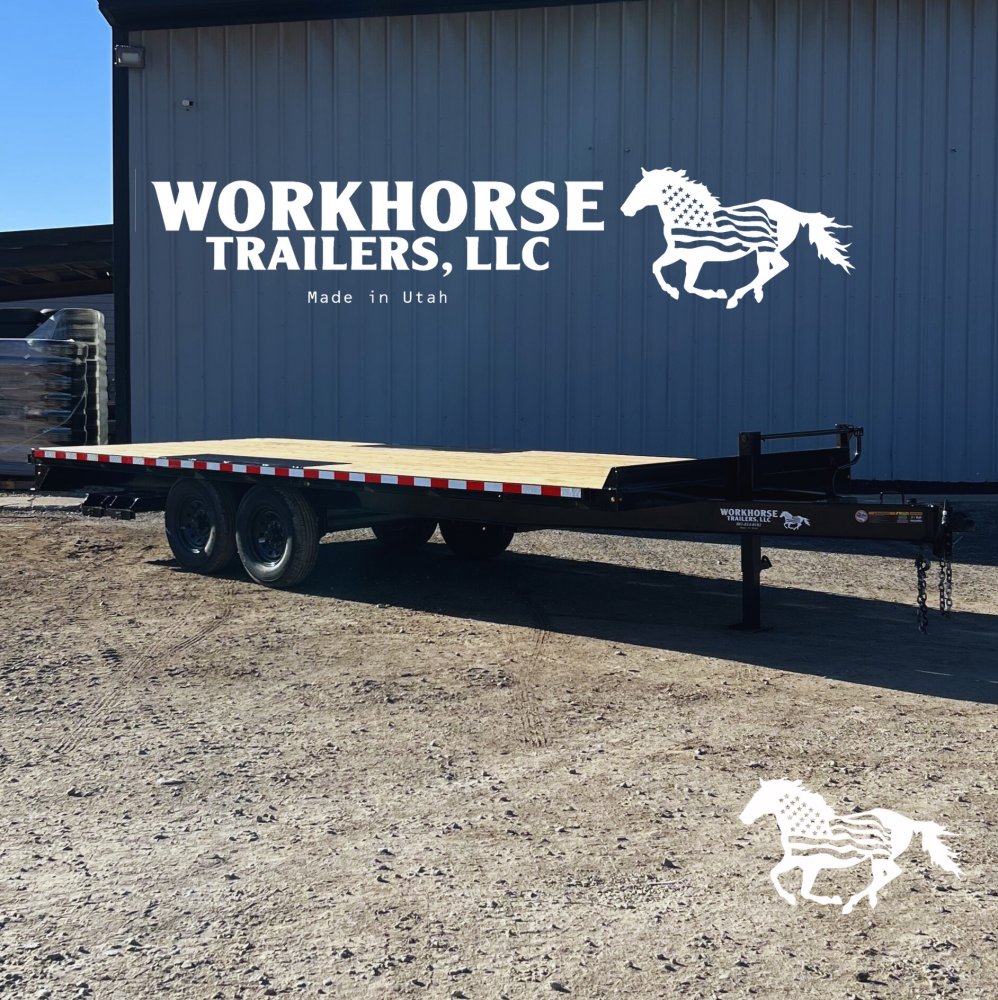
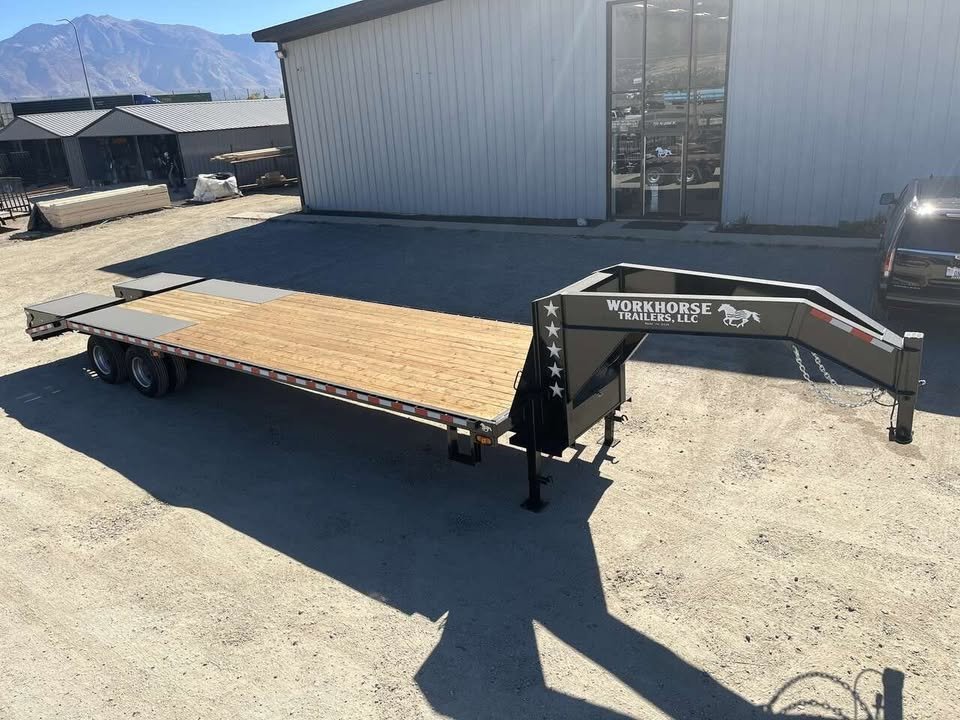
Construction-focused gooseneck trailers at Workhorse Trailers LLC feature open flatbed decks in lengths from 20 to 30 feet, with GVWR ratings spanning 16,000 to 25,000 pounds. These models serve Orem’s building trades with platforms that accept palletized materials, structural steel, lumber bundles, and heavy equipment through a combination of crane loading from above, forklift loading from the sides, and ramp loading from the rear.
Deck surfaces on construction goosenecks include treated lumber planking for general material transport and steel tread plate for operations that subject the deck to abrasive cargo like aggregate, scrap metal, or rough-sawn timber. Dovetail rear sections with spring-loaded flip ramps come standard on many models, creating a loading transition gentle enough for tracked equipment while keeping the main deck at a uniform height for material placement.
Dump Body Gooseneck Trailers
Dump body gooseneck trailers merge hydraulic dumping capability with the stability of a gooseneck hitch, producing a trailer that hauls and unloads bulk materials without manual shoveling or loader assistance at the dump site. Orem demolition contractors, excavation firms, and landscape material suppliers use these trailers to transport and deposit loads of soil, gravel, crushed concrete, tree debris, and construction waste at volumes that hand unloading could never match.
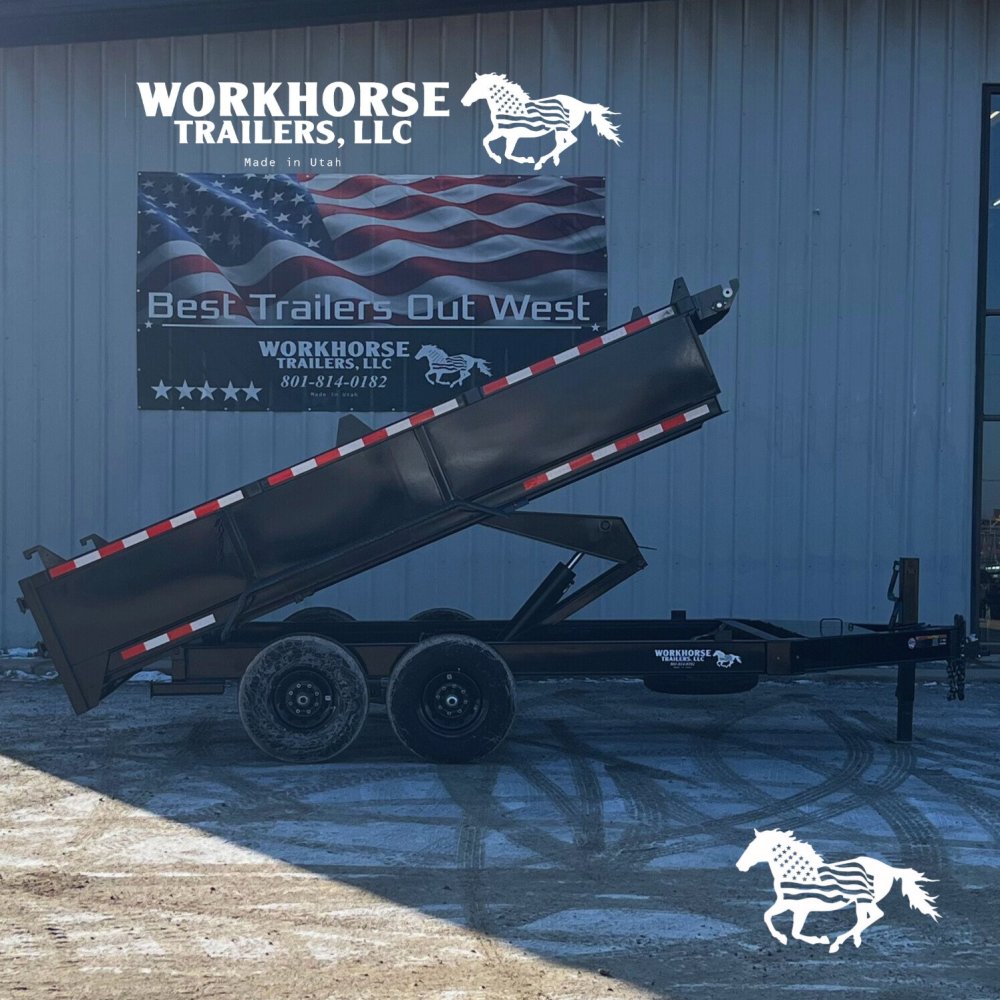
Workhorse Trailers LLC carries dump gooseneck models with telescoping hydraulic cylinders powered by 12-volt or PTO-driven pump systems. Bed lengths range from 14 to 20 feet with sidewall heights configured for both dense materials that fill by weight before volume and lighter materials that fill by volume before weight. Scissor-lift dump mechanisms provide greater bed stability at full extension compared to single-cylinder designs, which matters when dumping loads with a high center of gravity that could tip a less stable bed during the discharge cycle.
Flatbed Hauling and Hotshot Goosenecks
Flatbed gooseneck trailers designed for hotshot freight and general long-haul service cater to Orem owner-operators who transport oversize items, machinery, and commercial freight on routes that extend well beyond Utah County. These models prioritize highway towing characteristics including aerodynamic neck profiles, low-rolling-resistance tire specifications, and suspension tuning that favors high-speed stability over rough-terrain compliance.
Buyers investigatingOrem Gooseneck Trailers at Workhorse Trailers LLC will find hotshot-oriented gooseneck models featuring lengths up to 40 feet, dual tandem axle sets for maximum payload distribution, and integrated toolbox and storage compartments mounted beneath the deck or within the gooseneck neck structure for chains, binders, tarps, and securement accessories that over-the-road haulers carry on every trip.
Specialty Application Goosenecks
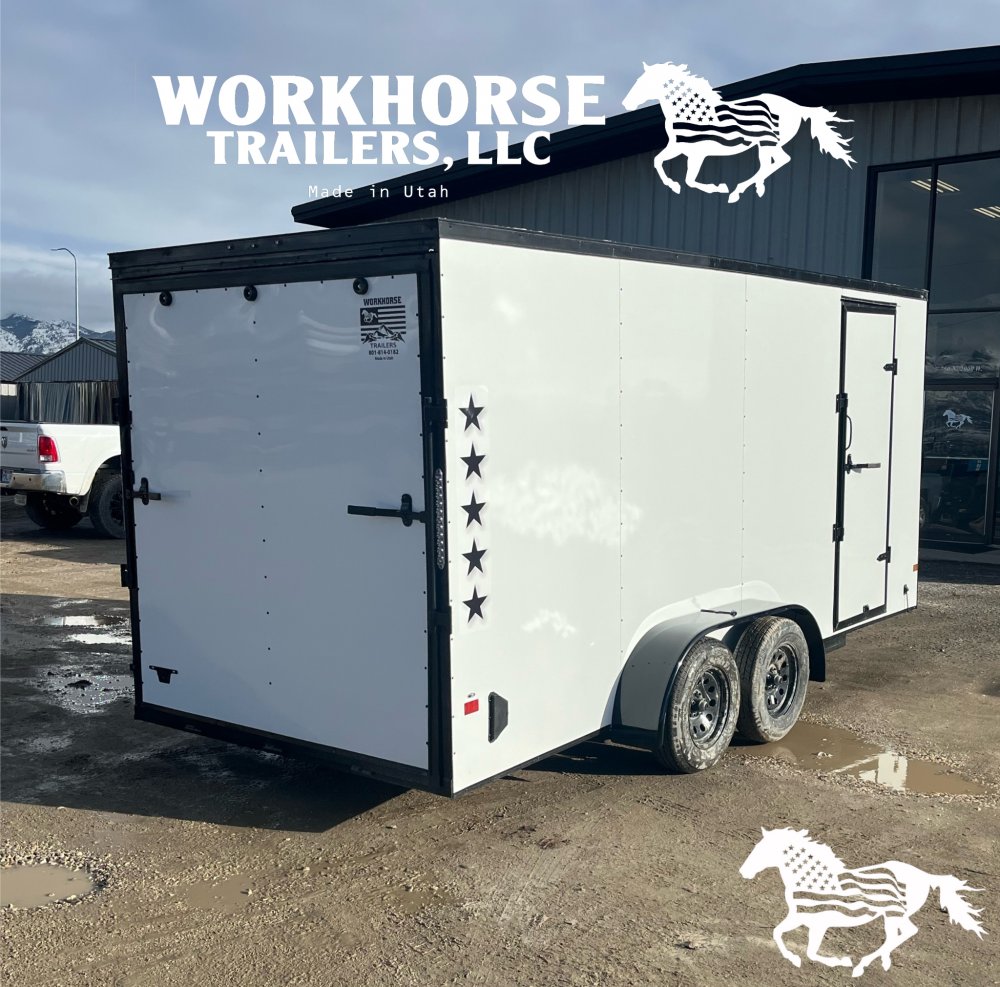
Beyond the core flatbed and dump categories, Workhorse Trailers LLC stocks gooseneck trailers configured for specialty applications relevant to Orem’s market. Enclosed gooseneck cargo trailers protect weather-sensitive and high-value freight during long-distance transport. Tilt deck gooseneck models combine powered deck tilting with gooseneck towing stability for heavy equipment loading without separate ramps. Stock trailers with gooseneck hitching serve the agricultural operators in Orem’s western reaches who move livestock between seasonal pastures and market destinations. Each specialty configuration applies the gooseneck’s towing advantages to a specific cargo category that benefits from the elevated weight capacity and directional control the hitch system provides.
Truck Preparation and Compatibility Verification
A gooseneck trailer performs only as well as the tow vehicle supporting it. Confirming compatibility across several dimensions before purchase prevents dangerous mismatches that compromise safety and void manufacturer warranties.
Hitch Ball Height and Coupler Match
The gooseneck ball must sit at a height that allows the trailer coupler to engage fully while maintaining a level or slightly nose-down trailer attitude when loaded. A ball that sits too high forces the trailer into a nose-up attitude that reduces front axle traction on the tow vehicle and shifts excessive weight to the trailer’s rear axle. A ball that sits too low creates a nose-down slope that overloads the tow vehicle’s rear suspension and can cause the trailer tongue to contact the truck bed or tailgate during turns. Workhorse Trailers LLC measures the coupler engagement height on every gooseneck they sell and verifies compatibility with each Orem buyer’s specific truck and hitch configuration before finalizing the sale.
Payload Rating Versus Tongue Load
The gooseneck tongue transfers between 20 and 25 percent of the loaded trailer weight into the truck bed. This tongue load adds directly to the truck’s payload, which is the total weight the truck can carry including passengers, in-bed cargo, and the downward force from the trailer. A truck whose payload rating is consumed by a heavy tongue load has no remaining capacity for passengers, toolboxes, or fuel weight fluctuation. Workhorse Trailers LLC calculates the expected tongue load for each gooseneck trailer based on the buyer’s typical cargo weight and position, confirming that the truck’s payload rating accommodates the tongue load with a functional margin for the other items the truck must carry.
Bed Length and Turning Clearance
The gooseneck neck arches over the truck’s tailgate and into the bed, and during sharp turns, the neck swings laterally as the trailer tracks a different path than the truck. Short-bed trucks provide less interior clearance for this lateral movement, and in extreme cases, the trailer neck or frame can contact the truck cab corners or bed sides during tight turns. Long-bed trucks offer more clearance but are less common in Orem’s consumer truck market. Workhorse Trailers LLC advises buyers on the minimum truck bed length required for safe articulation with each gooseneck model and can demonstrate the turning clearance on the lot before purchase.
Driving a Gooseneck Trailer Through Orem’s Urban Environment
Orem’s traffic patterns and road geometry present specific challenges for gooseneck operators that differ from the open highway conditions where these trailers feel most at home.
Intersection Awareness With Long Rigs
A 30-foot gooseneck trailer behind a full-size pickup creates a combined vehicle length approaching 55 feet. At Orem’s busiest intersections along State Street and University Parkway, this length requires careful judgment about whether the entire rig can clear the intersection before the signal changes. Enter intersections only when you are confident the trailer will clear the far crosswalk before opposing traffic receives a green signal. Being stranded mid-intersection with a loaded gooseneck creates a hazardous obstruction that no amount of horn honking from surrounding drivers will resolve faster than patience and proper timing would have prevented.
Backing Into Delivery Locations
Gooseneck trailers respond to steering input differently than bumper pull trailers during backing maneuvers. The shorter effective wheelbase between the truck’s rear axle and the trailer’s pivot point makes gooseneck trailers more responsive to small steering corrections, which experienced operators appreciate but newcomers often find overly sensitive. Practice backing in an empty parking lot until the trailer’s response becomes predictable, and always use a ground spotter when backing at Orem delivery locations where pedestrians, vehicles, and building corners occupy the blind zones behind the rig.
Grade Management on East Bench Routes
Deliveries to construction sites and residential properties on Orem’s east bench involve sustained uphill grades that test the tow vehicle’s cooling system and downhill descents that challenge the trailer’s braking capacity. Use lower gears on both ascents and descents to keep engine RPMs in the powerband and to provide engine braking that supplements the trailer’s electric or hydraulic brake system. Monitor the truck’s temperature gauge during extended climbs and pull over to cool if the needle approaches the warning zone. A loaded gooseneck trailer on a hot day climbing a steep east bench road can push even a well-maintained diesel truck toward its thermal limits.
Gooseneck Trailer Maintenance for Orem Conditions
The heavier loads and greater mechanical stresses that gooseneck trailers endure demand a maintenance discipline that exceeds what lighter trailer types require.
Coupler and King Pin Inspection
The coupler mechanism locks onto the gooseneck ball under tons of vertical and horizontal force during every towing event. Inspect the coupler jaws for wear grooves, the locking pin for bending or looseness, and the ball socket for ovality that indicates the coupler has stretched beyond its design tolerance. A worn coupler that rattles or rocks on the ball during a parking lot test will only worsen under loaded highway conditions, and replacing it costs far less than repairing the damage a coupler failure would cause.
Hydraulic System Service on Dump Models
Dump gooseneck trailers require periodic hydraulic fluid changes, filter replacement, and cylinder seal inspection. Dark or gritty fluid indicates contamination that accelerates pump and valve wear. Cylinder seals that weep fluid leave stains beneath the trailer and signal impending failure that could leave the dump bed stuck in a raised position at an Orem job site. Follow the manufacturer’s fluid change interval precisely and inspect seals during every pre-trip walkthrough.
Structural Weld Surveillance
Gooseneck trailers concentrate enormous forces at the junction between the neck and the main frame. This joint is the single most critical weld on the entire trailer, and its failure under load results in immediate separation of the trailer from the tow vehicle. Inspect this junction visually before every trip, looking for paint cracking that reveals flex, rust staining along weld lines that indicates moisture penetrating a micro-crack, and any visible crack regardless of size. Annual professional inspection with magnetic particle or dye penetrant testing provides the highest confidence that this critical joint remains sound.
Road Salt Defense
Orem’s winter road treatment program deposits salt and brine on every surface the trailer contacts during cold-weather operation. The gooseneck neck, coupler assembly, safety chain anchors, and brake components are particularly vulnerable because they occupy the spray zone directly behind the tow vehicle’s rear tires. Rinse these components with pressurized water after every winter trip and apply corrosion-inhibiting grease to the coupler mechanism and chain anchor points. Coat the neck structure with a rust-preventive spray at the beginning of each winter season to establish a sacrificial barrier between the road chemicals and the structural steel beneath.
Why Orem’s Heaviest Haulers Choose Workhorse Trailers LLC
Gooseneck trailers represent the most significant towing investment most Orem operators will make, and the consequences of choosing poorly scaled with the payload. An underbuilt gooseneck that flexes, tracks unevenly, or develops structural cracks under commercial loads creates liabilities that far exceed the purchase price saved by cutting corners. Workhorse Trailers LLC eliminates this risk for Orem buyers by curating gooseneck inventory from manufacturers whose construction standards match the intensity of real commercial use. Their pre-sale compatibility verification ensures that every truck and trailer combination leaving the lot operates within all rated limits. And their post-sale guidance on maintenance, operation, and seasonal preparedness equips owners with the knowledge to keep their gooseneck performing at peak capacity through every load and every season Orem delivers. For operators whose business depends on moving heavy cargo reliably, Workhorse Trailers LLC provides the gooseneck trailers and the trusted partnership that heavy hauling demands.