
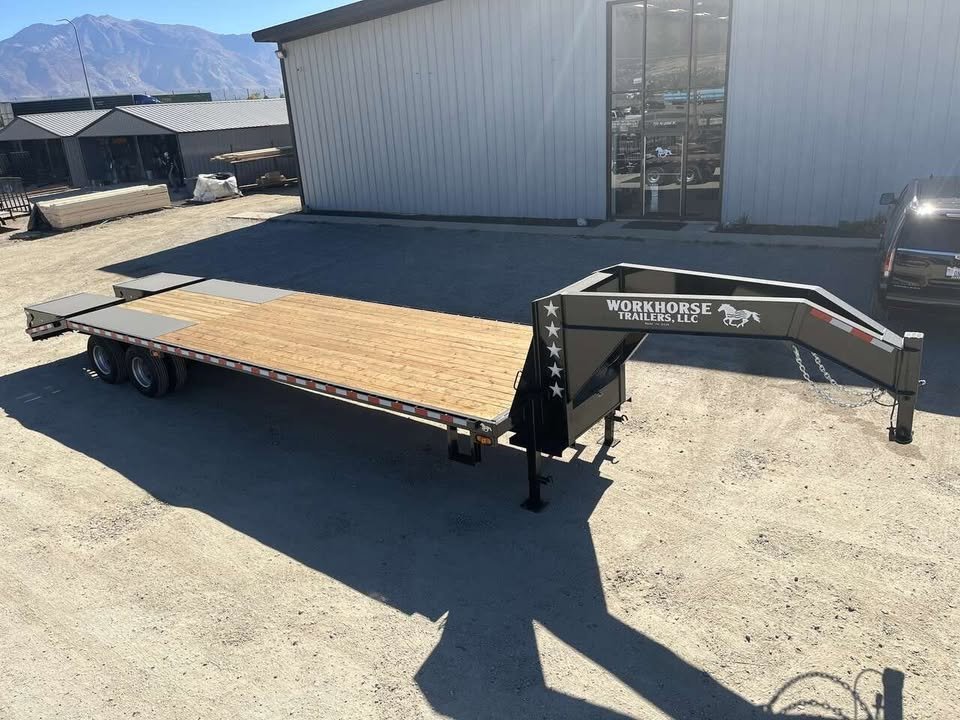
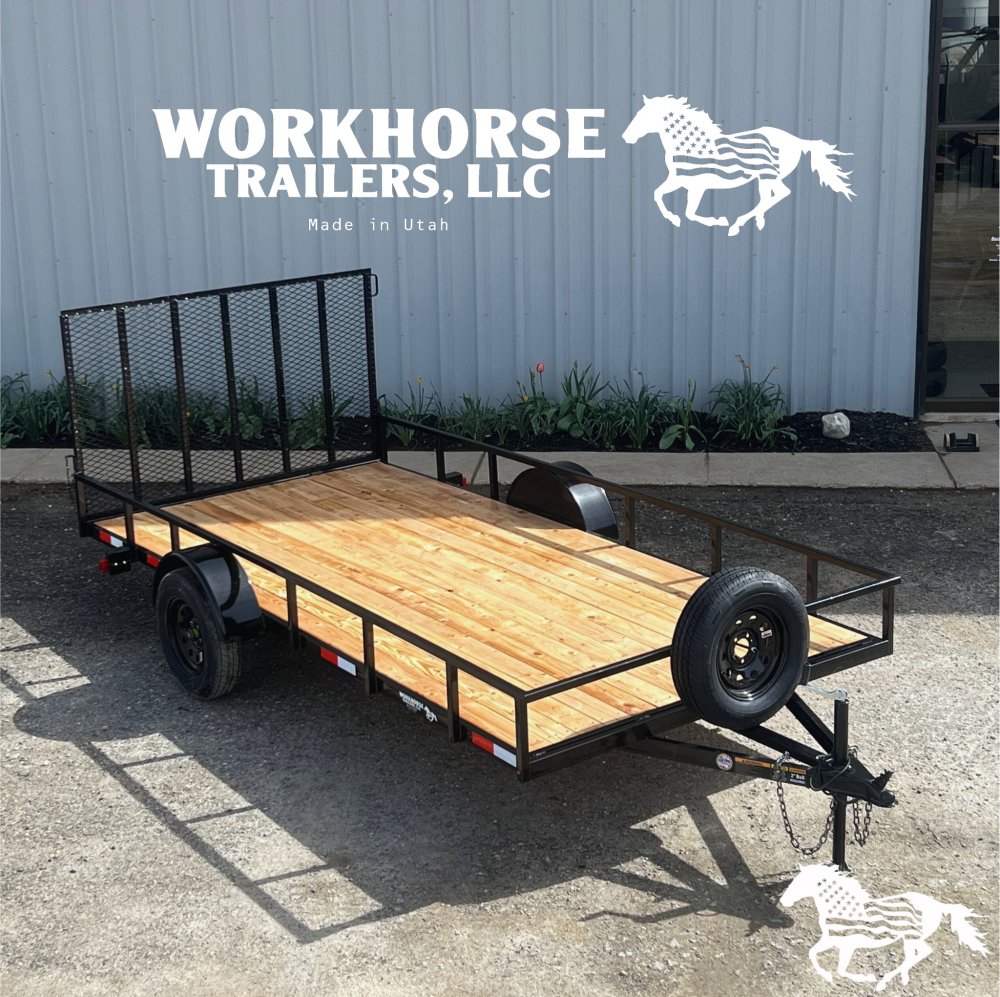
Orem Equipment Hauler Trailers
All locationsBehind every finished building, paved parking lot, and manicured commercial property in Orem stands a chain of machinery deployments that made the work possible. Excavators carved the foundations. Skid steers graded the lots. Compactors pressed the asphalt. Aerial platforms reached the rooftop mechanicals. None of these machines walked to the job site on their own. They arrived on equipment hauler trailers driven by operators who understand that the trailer beneath a $60,000 excavator is not the place to cut corners on quality. Workhorse Trailers LLC equips Orem’s construction professionals, municipal crews, and commercial service providers with equipment hauler trailers engineered to carry the machines that build and maintain one of Utah County’s largest and busiest cities.
Orem’s geography compresses a surprising amount of economic activity into a relatively compact municipal footprint. Commercial development along the State Street and University Parkway corridors, residential expansion climbing the east bench toward the mountains, and ongoing infrastructure investment by city and county agencies all generate overlapping demand for heavy machinery transport. The equipment hauler trailer that delivers a backhoe to a water main replacement on 800 North in the morning might shuttle a paving roller to a parking lot resurface on Center Street by afternoon. This constant rotation of machines across short urban distances defines the operating rhythm for Orem’s equipment hauler fleet, and it demands trailers that load quickly, tow predictably through congested streets, and endure the repetitive stress of daily maximum-payload cycles without structural compromise.
Orem’s Infrastructure and Development Driving Equipment Transport
The specific projects and industries generating equipment hauler demand in Orem reflect the city’s position as an established urban center undergoing continual reinvestment and modernization.
Commercial Redevelopment and Infill Projects
Orem’s mature commercial districts are experiencing a wave of redevelopment as aging strip malls, office buildings, and retail parcels give way to mixed-use projects, medical facilities, and updated retail centers. These infill projects occur on constrained sites surrounded by active businesses and public roads, which limits the space available for equipment staging and requires frequent machinery rotation as different phases of demolition, grading, utility installation, and vertical construction proceed in tight sequence. Equipment hauler trailers enable contractors to bring machines in for specific tasks and remove them the same day, keeping the cramped work zone clear for the next phase without dedicating permanent parking to idle equipment.
Underground Utility Upgrades
Decades of growth have pushed Orem’s underground utility networks toward capacity limits, triggering replacement and expansion projects for water mains, sewer lines, storm drains, and fiber optic conduit. These linear projects move progressively through neighborhoods, advancing a few hundred feet per day along established streets. The trenching, boring, and pipe-laying equipment follows the advancing front, relocating daily on equipment hauler trailers that navigate residential streets lined with parked cars and school zone speed restrictions. The ability to load and unload machinery efficiently on these narrow corridors directly affects how much linear progress each crew achieves before the end of the workday.
Institutional Campus Maintenance
Utah Valley University, Orem City facilities, and the Timpanogos Regional Hospital campus all maintain grounds, parking structures, and building systems that require periodic heavy equipment access. Tree removal, parking lot seal coating, elevator modernization, and HVAC replacement all involve machinery too heavy for standard delivery trucks and too specialized to keep on campus permanently. Equipment hauler trailers shuttle these machines to campus for the duration of the task and remove them when the work concludes, avoiding the cost and space burden of on-site equipment storage for infrequently used machines.
Seasonal Landscape and Hardscape Contracting
Orem’s residential neighborhoods support a robust landscape contracting industry that peaks from April through November. During this season, compact track loaders, mini excavators, stump grinders, and hydraulic augers travel between residential properties on equipment hauler trailers operated by crews who may visit five or six addresses in a single day. The trailers that serve this market need to be agile enough for residential street navigation while maintaining the payload capacity to handle machines in the 3,000 to 7,000 pound range that dominate residential landscape work.
Equipment Hauler Models at Workhorse Trailers LLC
Workhorse Trailers LLC stocks equipment hauler trailers across a capacity range that mirrors the machinery weights and transport frequencies most common in the Orem market. Their selection allows buyers to invest precisely at the capacity level their operation requires.
Single Purpose Light Equipment Haulers
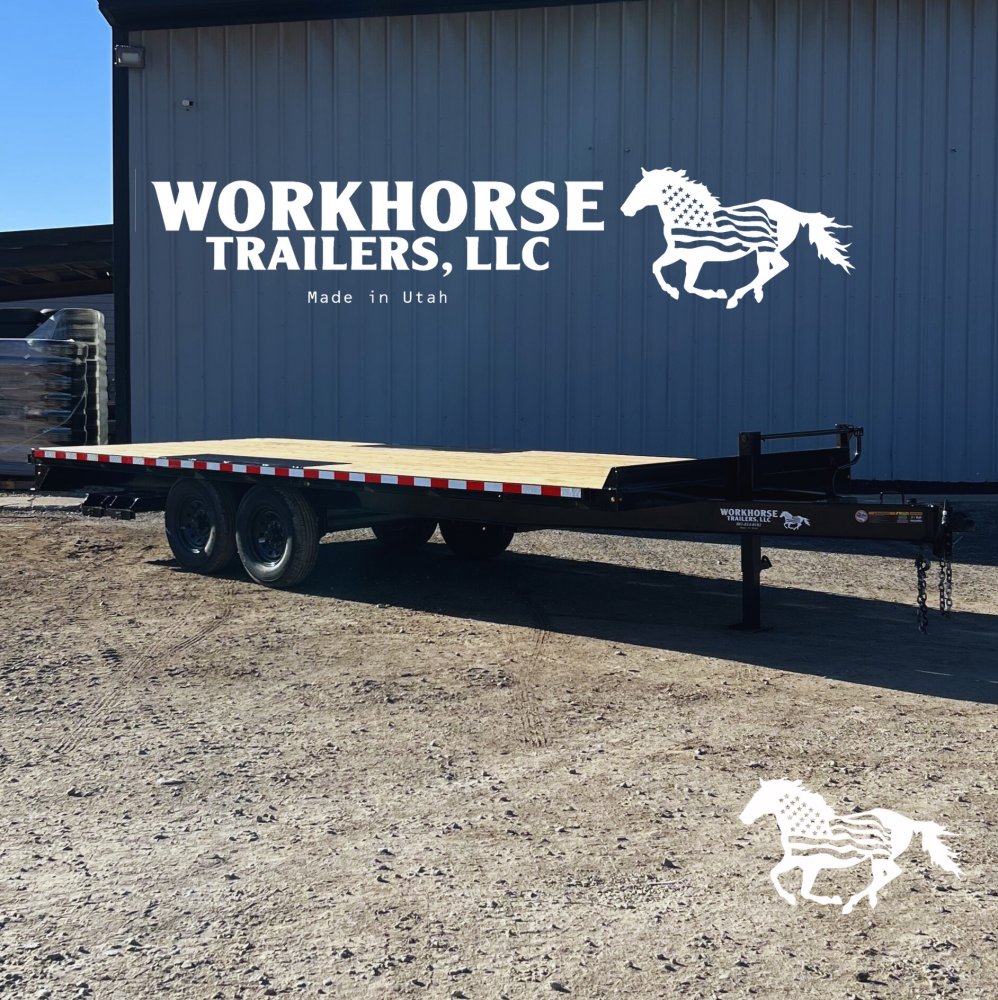
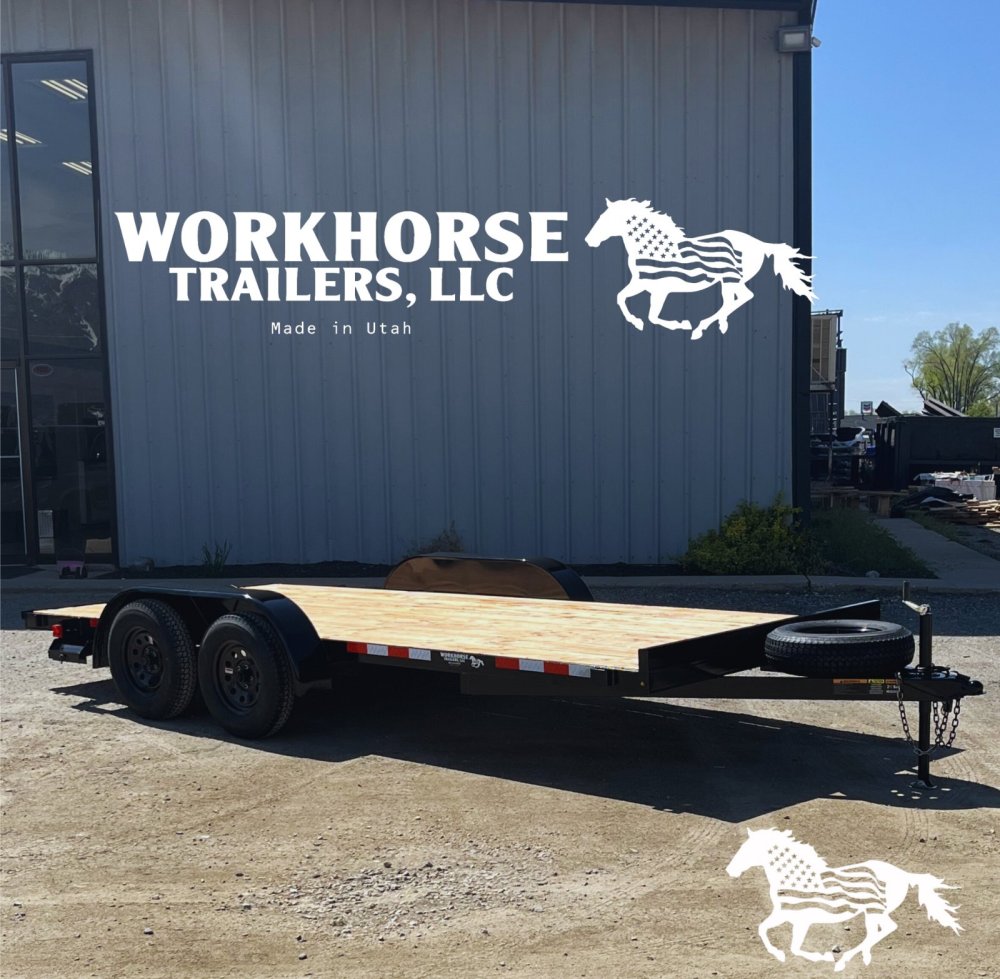
Light equipment haulers with GVWR ratings between 7,000 and 9,900 pounds serve Orem operators who transport a consistent roster of smaller machines. Walk-behind compactors, powered wheelbarrows, hydraulic breakers, and compact skid steers all fall within this capacity window. These trailers feature welded tube steel frames with treated wood or steel mesh decking, single or tandem axle configurations depending on payload, and fold-down ramps sized for the track and wheel widths of the equipment they are designed to carry.
The 9,900-pound GVWR threshold holds special significance for many Orem buyers because it represents the upper boundary before certain commercial vehicle regulations and registration fees increase. Workhorse Trailers LLC offers several models calibrated to this threshold, maximizing payload capacity within the lighter regulatory classification and keeping annual ownership costs lower for operators whose machinery fits within the weight limit.
Versatile Mid-Capacity Equipment Haulers
Mid-capacity equipment haulers rated between 10,000 and 16,000 pounds form the core of the Workhorse equipment hauler inventory for Orem commercial buyers. These trailers handle the full-size skid steers, compact excavators in the 8,000 to 12,000 pound class, and loaded material handlers that anchor most construction and utility crews operating in the city.
Frame construction at this tier uses structural channel iron or light I-beam main rails with crossmembers on 12 to 16 inch centers, creating a deck platform rigid enough to support tracked machines without deflection between supports. Those researchingOrem Equipment Hauler Trailers at Workhorse Trailers LLC will find mid-capacity models equipped with self-cleaning dove tail sections that shed mud and debris, spring-loaded flip ramps for rapid deployment by a single operator, and integrated chain trays that keep securement hardware organized and off the deck surface where it could damage equipment tires or tracks during loading.
Maximum Payload Equipment Haulers
Equipment haulers rated above 16,000 pounds serve the heaviest transport requirements in the Orem market. Full-size excavators, rubber-tired backhoe loaders, motor graders, and loaded concrete pumping equipment demand platforms built to industrial specifications with I-beam frames, triple axle assemblies, and braking systems capable of arresting the momentum of a combined rig that may weigh 30,000 pounds or more when factoring in the tow vehicle.
Workhorse Trailers LLC offers maximum payload equipment haulers with both bumper pull and gooseneck hitch options at this tier. Gooseneck configurations predominate among Orem buyers at these weight levels because the over-axle hitch point provides the stability margin that keeps a heavily loaded rig composed during the stop-and-go traffic cycles common on Orem’s arterial roads.
Evaluating Equipment Hauler Construction Quality
The forces acting on an equipment hauler trailer during loading, transit, and unloading are among the harshest any trailer category endures. Evaluating construction quality before purchase prevents the premature failures that inferior builds develop under these conditions.
Crossmember Gauge and Spacing
Crossmembers span the width of the trailer between the main frame rails and directly support the deck surface where equipment sits during transport. Their thickness, measured in steel gauge, and their spacing along the trailer’s length determine how well the deck resists point loading from equipment tracks, outrigger pads, and stabilizer feet. Thicker gauge crossmembers spaced at 12-inch centers outperform thinner members on wider spacing because they distribute concentrated forces across a shorter unsupported span, reducing the bending stress each member absorbs.
Workhorse Trailers LLC specifies crossmember gauge and spacing on each equipment hauler model based on the rated payload, ensuring that the deck structure matches the weight class the trailer is designed to serve. Orem buyers can compare these specifications between brands and immediately identify trailers whose deck construction may be underrated relative to their advertised GVWR.
Fender and Tire Clearance
Equipment haulers carry loads heavy enough to compress the suspension significantly, reducing the clearance between the tire tops and the fender assemblies. If the fenders sit too close to the tires at unloaded ride height, a full payload compresses the suspension into contact, grinding the fenders against the tires and destroying both components within a few miles. Adequate fender clearance accounts for the full suspension travel under maximum payload and adds margin for the additional compression that road bumps and pothole impacts produce.
Inspect fender clearance on any equipment hauler you are considering and ask the dealer what clearance remains at maximum rated payload. Workhorse Trailers LLC designs their fender mounts with the suspension geometry of each model in mind, maintaining functional clearance across the entire rated weight range without requiring aftermarket fender lifts or modifications.
Ramp Hinge and Pivot Durability
Equipment hauler ramps endure concentrated impact at the hinge point every time a multi-ton machine drives across the transition from ramp to deck. The hinge pins, bushings, and mounting brackets at this junction must withstand these repeated impacts without developing the looseness that allows ramps to wobble, bind, or detach during loading. Greaseable hinge pins and replaceable bushings indicate a design intended for long service, while welded-in-place pins with no provision for lubrication suggest a shorter expected lifespan.
Workhorse Trailers LLC uses greaseable hinge assemblies on all their equipment hauler ramps, allowing Orem owners to maintain smooth, tight ramp operation through thousands of loading cycles with nothing more than a grease gun and a few minutes of periodic attention.
Loading Protocols That Protect Machines and Operators
The minutes spent loading and unloading represent the highest-risk phase of equipment transport. Disciplined loading protocols reduce the chance of machine damage, trailer damage, and personal injury.
Ground Preparation at the Loading Site
Before tilting or deploying ramps, assess the ground beneath and behind the trailer. Soft soil, standing water, gravel over mud, and sloped surfaces all compromise ramp stability and traction. Position the trailer on the firmest, most level ground available at the Orem job site. If conditions are marginal, place steel plates or heavy timber mats beneath the ramp contact points to create a stable bearing surface that prevents sinking or shifting as the machine’s weight rolls across.
Controlled Speed During Loading
Drive equipment onto the trailer at the slowest speed the machine’s controls allow. Rapid loading generates impact forces at the ramp-to-deck transition that stress hinges, frame joints, and deck surfaces far beyond the static weight of the machine alone. A tracked excavator driven onto a trailer at walking speed produces a modest dynamic load multiplier. The same machine driven aboard at jogging speed can momentarily double the effective force on the ramp and deck, exceeding design limits on trailers rated close to the machine’s weight.
Securement Immediately After Positioning
Once the machine reaches its designated position on the deck, engage the parking brake or lower the bucket and blade to ground contact before stepping away from the controls. Secure the machine with chains or straps before performing any other task, including stowing ramps, raising the jack, or connecting to the tow vehicle. An unsecured machine on a tilted or uneven trailer can shift or roll without warning, and the consequences of that movement range from cosmetic deck damage to catastrophic trailer upset.
Towing Loaded Equipment Through Orem
Operating a loaded equipment hauler on Orem’s urban road network involves navigating conditions that long-haul highway towing does not present.
Traffic Signal Timing and Intersection Clearance
Orem’s signalized intersections along State Street and University Parkway cycle frequently, and the acceleration rate of a loaded equipment hauler may not match the green phase duration on a fresh signal. If you cannot clear the intersection before the signal changes, wait for the next cycle rather than entering and risking a red light exposure in the middle of the crossing. The stopping distance of a loaded rig at even moderate speed exceeds what trailing vehicles expect, and an abrupt stop inside an intersection creates a collision scenario from multiple directions.
Railroad Crossings
Several active railroad crossings span Orem’s road network. Utah law requires vehicles towing certain trailer weight classes to stop before crossing railroad tracks. Confirm whether your loaded combination weight triggers this requirement, and approach every crossing prepared to stop regardless. The time needed to clear the tracks from a standing start with a loaded equipment hauler is substantially longer than with a passenger vehicle, and stalling on the tracks with a multi-ton machine behind you creates a scenario with no safe exit.
Residential Street Courtesy
Equipment hauler trailers transiting through Orem neighborhoods to reach job sites share the road with school buses, pedestrians, cyclists, and residents backing out of driveways. Reduce speed below the posted limit when the street conditions warrant it, avoid engine braking that generates excessive noise in early morning hours, and signal your turns well in advance so residents have time to yield to a wide-turning rig they may not immediately recognize as oversized.
Maintaining Equipment Haulers for Orem Service Conditions
The urban operating environment in Orem subjects equipment haulers to frequent loading cycles, stop-and-go traffic wear, and road surface contaminants that demand proactive upkeep.
Brake Wear Monitoring
Frequent stopping in Orem traffic generates more brake wear per mile than sustained highway cruising. Monitor brake shoe or pad thickness at intervals shorter than the manufacturer’s highway-based recommendation, and adjust or replace components when the remaining material approaches minimum safe thickness. Uneven wear between axles indicates an imbalance in brake force distribution that a qualified trailer brake technician can diagnose and correct before it causes pulling or skidding under hard braking.
Frame Fatigue From Repeated Loading
Each loading and unloading cycle stresses the frame at the same points repeatedly, and cumulative fatigue can develop cracks in high-stress zones long before the overall frame shows visible deterioration. Focus inspections on the ramp hinge brackets, the area where the tongue meets the main frame, and any gusset plates that reinforce corners or transitions. Catching a fatigue crack at the hairline stage allows a simple weld repair that costs a fraction of the structural reconstruction needed once the crack propagates across a primary member.
Deck Surface Replacement Planning
Wood deck boards on equipment haulers absorb tremendous punishment from tracked undercarriages, steel equipment feet, and dropped tools. Plan for periodic board replacement as a normal cost of ownership rather than a sign of trailer failure. Keep spare boards cut to the correct dimensions at your Orem shop so a damaged board discovered during a post-load inspection can be swapped out before the next trip rather than delaying a delivery while you source replacement lumber.
Why Workhorse Trailers LLC Fits Orem’s Equipment Transport Needs
Orem’s equipment hauler buyers operate in an environment defined by urban density, tight project timelines, and machinery that represents a major capital investment. The trailers carrying those machines must match the seriousness of what is at stake. Workhorse Trailers LLC meets that standard for Orem operators through equipment haulers built with frame integrity, axle capacity, and ramp durability calibrated to real-world commercial use rather than occasional weekend duty. Their team brings practical knowledge of how equipment haulers perform under the specific conditions Orem presents, from navigating congested intersections to managing accelerated brake wear from stop-and-go traffic. For contractors, fleet managers, and service companies whose schedules depend on machinery arriving safely and on time, Workhorse Trailers LLC provides the equipment hauler trailers and the operational insight that Orem’s demanding transport environment requires.