Orem Deck Over Trailers
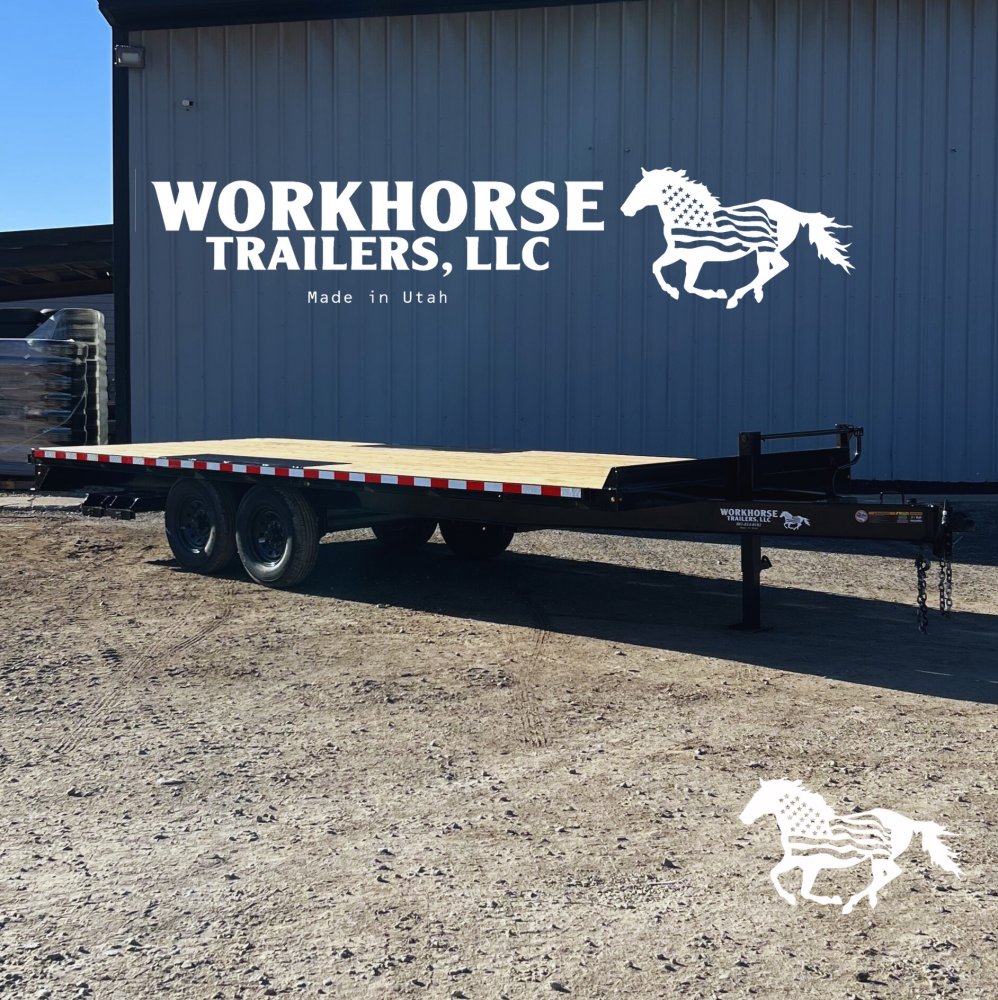
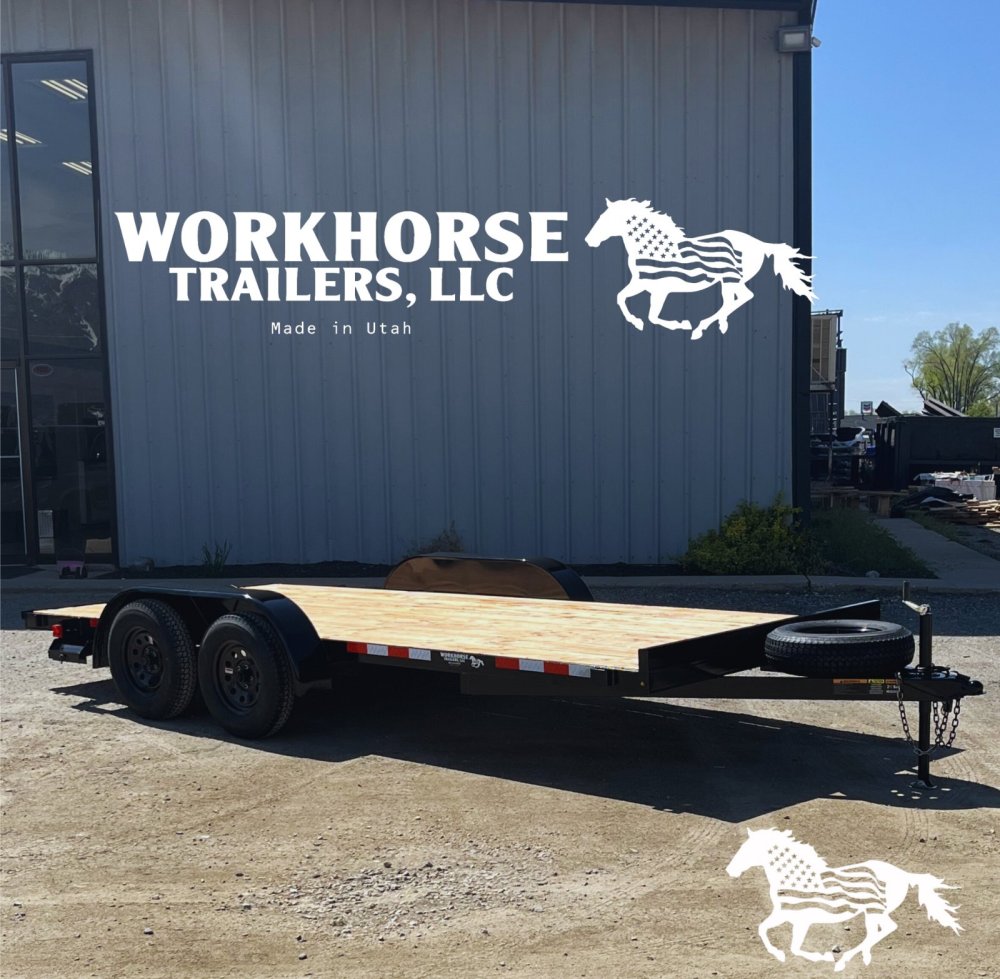
All locationsWidth restrictions cost money. Every time a load has to be reconfigured, split across multiple trips, or rejected entirely because the trailer deck narrows around recessed wheel wells, the operator absorbs a productivity hit that adds up across weeks and months of work. Deck over trailers eliminate this constraint by placing the entire platform above the axle assembly, delivering an uninterrupted surface that stretches from one rail to the other without a single inch sacrificed to wheel cutouts. For a city as commercially active as Orem, where material deliveries, equipment shuttles, and jobsite supply runs happen on tight schedules across dozens of active projects at any given time, the deck over trailer’s full-width advantage translates directly into fewer trips, faster turnarounds, and less cargo handling at both ends of the route. Workhorse Trailers LLC stocks deck over trailers matched to Orem’s commercial pace and payload demands, giving local buyers immediate access to the platform style that maximizes every load.
Orem generates deck over trailer demand from an unusually wide cross-section of its economy. The same trailer design that serves a roofing company delivering bundles of shingles on pallets also serves a sign fabricator transporting oversized aluminum panels to an installation site across town. This versatility stems from the deck over’s fundamental geometry, which imposes fewer restrictions on cargo shape, width, and placement than any other trailer configuration. This page details how Orem’s industries leverage that geometry, describes the deck over models available through Workhorse Trailers LLC, and provides the selection and ownership guidance that helps local buyers get full value from their investment.
Orem Industries That Rely on Full-Width Deck Access
The deck over trailer’s appeal in Orem connects to specific cargo challenges that local industries encounter repeatedly. Understanding these use cases clarifies why the design holds such a strong position in the local market.
Roofing and Exterior Contractors
Orem’s housing stock and commercial building inventory sustain a busy roofing and exterior renovation sector. Roofing materials arrive bundled on pallets that occupy significant width when loaded two abreast for efficient delivery. Siding panels, fascia stock, and gutter coils similarly benefit from flat, edge-to-edge placement that prevents bending and shifting during transit. A conventional trailer with wheel wells forces roofing crews to stack pallets single file or offset them at angles that waste deck space and complicate forklift unloading at the job site. A deck over trailer accepts side-by-side pallet placement across the full platform width, doubling the material volume per trip and cutting delivery costs for Orem roofing companies that service multiple projects each day.
Mechanical and HVAC Contractors
Heating, ventilation, and air conditioning contractors based in Orem transport equipment that rarely conforms to standard trailer dimensions. Rooftop units, ductwork sections, condensing units on shipping skids, and packaged chiller systems all present width and footprint challenges that drop-deck trailers struggle to accommodate. The deck over design provides the flat, unobstructed surface these bulky items require, and the elevated deck height actually benefits HVAC delivery because it positions the equipment closer to the height of building loading docks and rooftop crane access points, reducing the vertical lift distance during offloading.
Wholesale and Distribution Operations
Orem’s commercial density supports wholesale distribution businesses that deliver products to retail stores, restaurants, and institutional buyers throughout Utah County. These distributors load mixed pallets of varying dimensions onto trailers using warehouse forklifts, and the loading pattern changes with every order. A deck over trailer gives the forklift operator freedom to place pallets anywhere on the platform without navigating around wheel well obstructions, which accelerates the loading process in the warehouse and ensures that the cargo arrangement matches the delivery route sequence rather than the trailer’s physical constraints.
Concrete Form and Scaffolding Transport
Concrete forming companies and scaffolding rental firms operating out of Orem transport inventory that consists of flat, wide panels, frames, and planking that nests most efficiently when laid across the full width of a trailer deck. Forming panels stacked between wheel wells can only go so many layers deep before the stack height becomes unstable. Spread across a deck over’s full width, the same volume of panels rides in a lower, more stable configuration that is easier to secure and safer to transport through Orem’s traffic corridors.
Workhorse Trailers LLC Deck Over Inventory for Orem Buyers
Workhorse Trailers LLC maintains deck over trailer stock organized by the operational intensity and payload tier most relevant to Orem’s buying patterns. Each tier reflects a distinct segment of the local market so buyers can focus their evaluation efficiently.
Contractor Series Deck Over Trailers
The contractor series encompasses deck over trailers with GVWR ratings from 10,000 to 14,000 pounds and deck lengths between 18 and 22 feet. These models address the daily demands of Orem trade contractors who haul palletized materials, bundled stock, and mid-weight equipment across the city’s commercial and residential zones. Frame construction relies on heavy channel iron main rails paired with closely spaced crossmembers that support concentrated pallet loads without deflection between supports.
Standard features on the contractor series include perimeter stake pockets on 24-inch centers, recessed chain hooks for flush tie-down access, LED marker and brake lighting, and spring-assisted rear ramps that a single operator can deploy and stow without help. Workhorse Trailers LLC configures these models with tandem axle assemblies and electric brakes calibrated to the stopping requirements of a fully loaded rig operating in Orem’s signal-heavy traffic environment.
Professional Series Deck Over Trailers
The professional series steps up to GVWR ratings between 14,000 and 20,000 pounds, serving Orem operations that transport heavier machinery, denser materials, and larger cargo volumes on a sustained commercial schedule. Frame rails upgrade to I-beam profiles at this tier, and crossmember connections incorporate gusseted welds that distribute dynamic forces across a broader area of the frame structure. Deck lengths extend to 26 feet and beyond for buyers whose cargo requires additional platform real estate.
Buyers exploringOrem Deck Over Trailers at Workhorse Trailers LLC will find that professional series models offer optional features including hydraulic dovetail sections for equipment loading, adjustable pintle eye couplers for compatibility with commercial truck hitches, and air brake preparation packages for operations that tow with Class 6 or Class 7 trucks equipped with air brake systems.
Gooseneck Deck Over Trailers
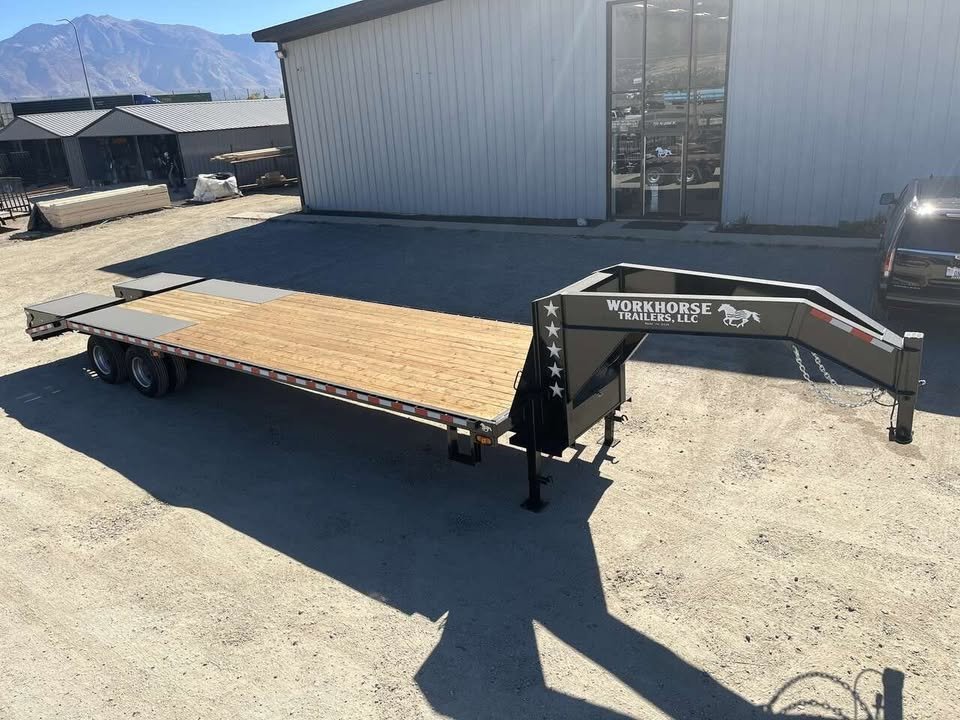
Gooseneck deck over trailers combine the full-width platform advantage with the towing stability and elevated payload ratings that gooseneck hitching provides. These models represent the premium tier of the Workhorse deck over lineup and serve Orem’s heaviest commercial haulers, including structural steel contractors, precast product manufacturers, and heavy equipment transport operations whose loads routinely exceed 16,000 pounds.
The gooseneck attachment shifts the hitch point into the tow truck’s bed, distributing tongue weight over the rear axle and allowing the trailer to carry substantially more payload than a bumper pull configuration at equivalent towing safety margins. Gooseneck deck over trailers at Workhorse Trailers LLC feature GVWR ratings from 16,000 to 25,000 pounds, with deck lengths reaching 32 feet on models designed for the longest and heaviest cargo categories.
Technical Considerations for Deck Over Purchases
Deck over trailers present a unique set of technical trade-offs that buyers should evaluate against their specific operating conditions before committing to a model.
Deck Height and Its Practical Implications
The defining characteristic of a deck over trailer, its platform positioned above the axles, creates a higher standing deck surface than drop-deck designs of comparable capacity. This added height affects several aspects of daily operation. Loading wheeled or tracked equipment requires longer ramps to achieve a safe approach angle, which increases ramp weight and storage footprint. Hand-loading cargo from ground level requires lifting items higher, adding physical effort to each loading event. Overhead clearance beneath bridges, canopies, and utility lines decreases when tall cargo sits atop the elevated deck.
However, the same elevated position produces benefits that offset these considerations. Ground clearance beneath the frame increases, allowing the trailer to traverse rough construction entrances, gravel lots, and the deteriorated pavement sections found on some of Orem’s older commercial side streets without scraping the undercarriage. The higher deck also aligns more closely with standard loading dock heights, simplifying the transfer of palletized goods between the trailer and warehouse facilities.
Weight Distribution Across the Full Width
A deck over trailer’s full-width platform invites operators to spread cargo across the entire surface, but doing so requires awareness of how lateral weight distribution affects towing behavior. A heavy item placed entirely on one side of the deck shifts the trailer’s center of gravity off-center, which can cause the rig to lean in turns and track unevenly on straight roads. Distribute weight as symmetrically as possible between the left and right halves of the deck, and position the heaviest single item along the trailer’s centerline whenever the cargo arrangement allows.
Workhorse Trailers LLC marks the centerline on many of their deck over models with a visible reference stripe that helps Orem operators place cargo symmetrically without measuring from the rails on every load.
Stake Pocket Versatility
Stake pockets welded along the deck perimeter serve multiple functions beyond their traditional role of accepting vertical stake sides. They anchor removable side panels, provide attachment points for ratchet strap hooks, accept flag holders for loads that overhang the trailer’s rear, and support tarp roller brackets that protect open cargo from rain during transit. The spacing and depth of stake pockets determine how many of these accessories can be deployed simultaneously and how close together attachment points can be placed.
Workhorse Trailers LLC spaces stake pockets at intervals that accommodate standard lumber lengths, common pallet widths, and the tie-down point spacing recommended by federal cargo securement regulations. This deliberate placement means Orem buyers can secure diverse loads using the factory-installed pockets without welding or drilling supplemental hardware onto the trailer.
Operating Deck Over Trailers Across Orem’s Road Network
Orem’s dense urban layout and heavy traffic volumes create operating conditions that deck over trailer owners should account for in their route planning and driving habits.
Height Awareness on Commercial Routes
The elevated deck profile of a loaded deck over trailer brings the top of the cargo closer to overhead obstructions than lower-riding trailers would. Orem’s commercial zones include drive-through canopies, parking structure entrances, decorative archways at shopping center entrances, and low-hanging signage that may not accommodate the combined height of a deck over trailer and its cargo. Measure the loaded height of your rig from the ground to the top of the tallest item, record that measurement on a card visible from the driver’s seat, and compare it against posted clearance heights before committing to any route that passes beneath a structure.
Turning Radius in Commercial Lots
Longer deck over trailers require wider turning arcs that can exceed the radius available in Orem’s tighter commercial parking lots and drive aisles. The trailer’s rear corners swing outward during turns, potentially striking parked vehicles, bollards, or landscaping islands that sit beyond the driver’s mirror view. Scout unfamiliar delivery locations on foot before attempting to navigate them with a loaded deck over rig, and identify a pull-through path wherever possible to avoid the risks associated with backing a long trailer in a confined space.
Freeway On-Ramp Acceleration
Merging onto I-15 from Orem’s interchanges with a loaded deck over trailer requires extended acceleration distances that some on-ramp configurations provide only marginally. The combined weight of trailer and cargo reduces the tow vehicle’s acceleration rate significantly, and attempting to force a merge into fast-moving traffic creates a dangerous speed differential. Time your entry to coincide with natural traffic gaps, and use the full length of the acceleration lane before merging rather than cutting into the travel lane prematurely.
Maintaining a Deck Over Trailer Through Orem’s Seasonal Conditions
Orem’s four-season climate subjects deck over trailers to temperature extremes, moisture exposure, and chemical contamination that degrade structural and mechanical components at predictable rates. Proactive maintenance intercepts this degradation before it compromises the trailer’s safety or functionality.
Deck Surface Preservation
Whether finished in treated wood or steel, the deck surface is the component that absorbs the most direct abuse from cargo placement, dragging, and impact. Inspect wood boards after heavy loads for splits, crushed fibers, and fastener pull-through that indicate a board has reached the end of its service life. Inspect steel surfaces for dents deep enough to create water-pooling depressions and for weld cracks where the steel plate attaches to the crossmembers below. Address damaged areas promptly to prevent secondary damage to the underlying frame structure that occurs when water infiltrates through a compromised deck surface and contacts unprotected steel below.
Suspension and Axle Attention
Deck over trailers carry heavy loads that compress suspension components to a greater degree than lighter trailer types. Leaf springs develop micro-fractures in individual leaves that weaken the pack progressively, and the sagging that results from broken leaves shifts weight unevenly between axles. Inspect spring packs at the start of each work season by looking for separated or cracked leaves, and replace any damaged spring in a matched set to maintain equal suspension support on both sides of the trailer. Axle alignment should be verified annually, as the repeated stress of heavy loading can shift axle position within the mounting brackets, causing the trailer to track off-center and accelerate tire wear.
Winter Salt Remediation
Orem’s road maintenance crews apply generous quantities of salt and brine during winter months, and the undercarriage of a deck over trailer collects this material with every trip. Salt trapped in frame crevices, around axle mounting hardware, and inside brake drum assemblies initiates corrosion that weakens structural steel and degrades braking performance simultaneously. Wash the undercarriage after every winter outing, directing water into the recesses and joints where salt accumulates most heavily. Apply a corrosion-inhibiting coating to the undercarriage at the start of each winter season and reapply mid-season if heavy salt exposure has stripped the initial protection.
Electrical System Integrity
Road vibration, thermal cycling, and moisture exposure gradually degrade the wiring harness, connector pins, and ground connections on any trailer. Deck over trailers face additional wire stress because the elevated frame subjects the harness to greater flexion as the trailer articulates over road irregularities. Test all lighting circuits monthly during active use periods and trace any intermittent faults to their source rather than accepting flickering or dim lights as normal. A failed brake light or turn signal on a loaded deck over trailer traveling through Orem’s busy intersections creates a rear-end collision risk that a few minutes of electrical diagnosis easily prevents.
Why Workhorse Trailers LLC Serves Orem’s Deck Over Market Best
Deck over trailers occupy a specific niche defined by the need for maximum usable deck width at every payload level. Workhorse Trailers LLC fills that niche for Orem buyers by stocking models that reflect the actual cargo dimensions, weight classes, and operating conditions local industries present. Their contractor series handles the daily material runs that keep Orem’s trade professionals productive. Their professional series carries the heavier machinery and denser materials that larger commercial operations demand. And their gooseneck models deliver the ultimate combination of width, length, and payload for Orem’s most intensive hauling requirements. Each model arrives with Utah-compliant documentation, factory-tested braking and lighting systems, and the transparent specification data that empowers buyers to match their trailer precisely to their workload. For Orem operators who need every inch of their trailer working in their favor, Workhorse Trailers LLC provides the deck over inventory and the practical guidance to put that width advantage to work immediately.