
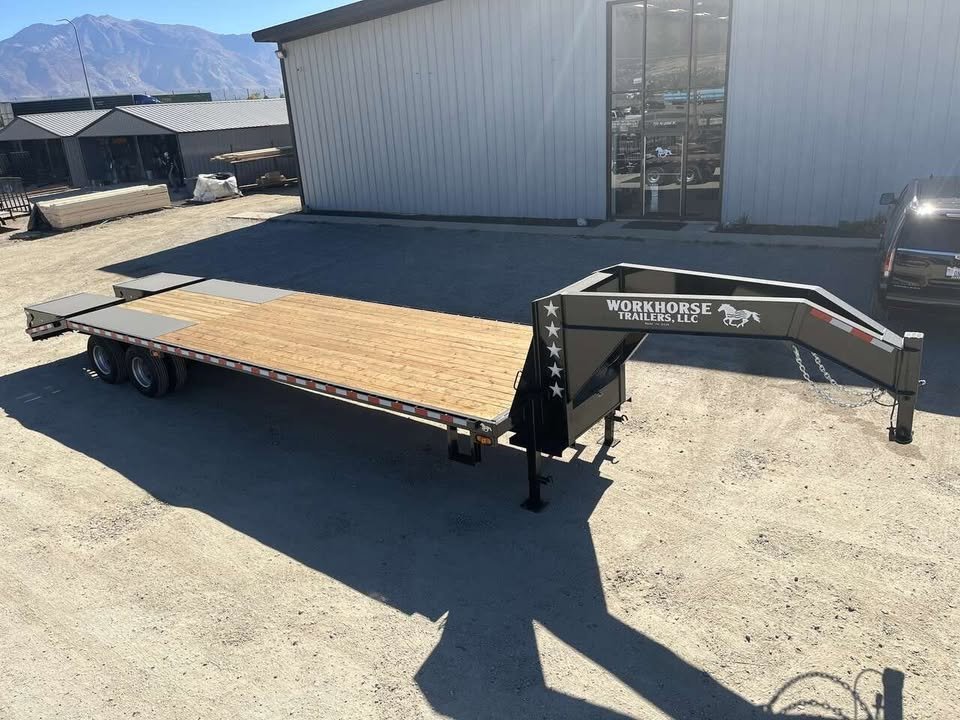
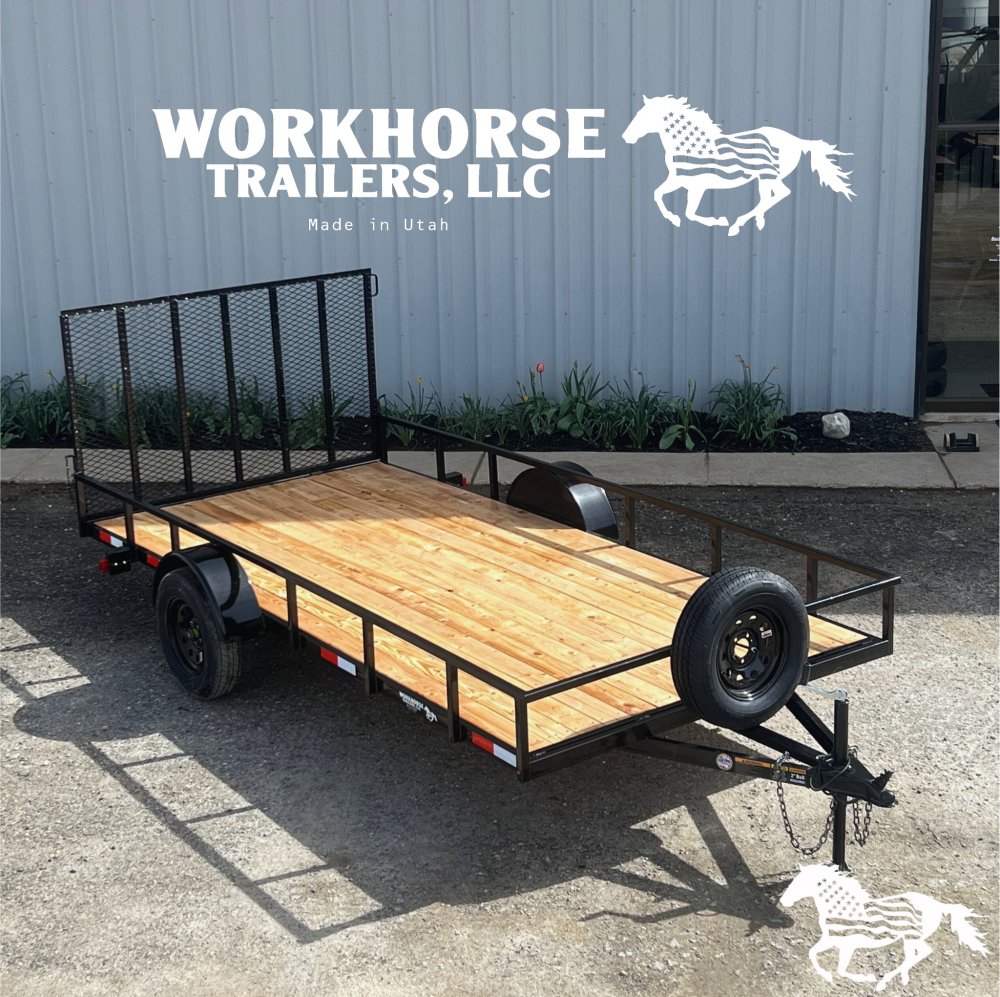
Orem Car Hauler Trailers
All locationsOrem’s automotive landscape stretches from the independent repair shops lining State Street to the garage bays of weekend hobbyists tucked into neighborhoods across the city. Vehicles pass through this community at every stage of their life cycle, arriving as fresh dealer inventory, aging through years of daily commuting, undergoing restoration in home workshops, and eventually heading to salvage yards or new owners in distant cities. At nearly every transition point, someone needs to move a vehicle without putting miles on its odometer or risking a breakdown on the highway. That is the role a car hauler trailer fills, and Workhorse Trailers LLC provides Orem buyers with car haulers built to manage the full range of vehicle transport scenarios this city generates.
The decision to purchase a car hauler trailer often arrives at a specific moment. A hobbyist buys a non-running project car from an online listing 200 miles away. A shop owner wins a contract to retrieve vehicles from an insurance lot. A family relocates and needs to tow a second car behind the moving truck. Each situation demands a trailer capable of supporting several thousand pounds of rolling stock on a platform that keeps the vehicle stable, secure, and undamaged from loading dock to driveway. This page walks Orem buyers through the car hauler options at Workhorse Trailers LLC, explains the engineering details that distinguish a dependable hauler from a risky one, and offers guidance on the ownership practices that keep both the trailer and its cargo safe trip after trip.
The Orem Automotive Ecosystem and Car Hauler Demand
Orem sustains a robust automotive ecosystem fed by its population density, its position along the I-15 corridor, and the spending patterns of a community that values both practical transportation and recreational vehicles.
Independent Shops and Service Centers
The concentration of independent auto repair facilities, body shops, and specialty performance garages throughout Orem creates consistent commercial demand for car hauler trailers. These businesses retrieve disabled vehicles from roadside locations, transport customer cars between specialty service providers, and deliver finished work to clients who cannot pick up in person. A shop that owns its own car hauler controls the logistics of vehicle retrieval without depending on tow company availability or paying per-call dispatch fees that erode profit margins on lower-cost repairs.
Private Sales and Online Marketplace Activity
Orem’s population and digital connectivity make it an active hub for private vehicle sales conducted through online platforms. Buyers and sellers routinely close deals on cars located hours away, and the buyer needs a way to bring the purchase home safely. Vehicles sold through private channels often have expired registrations, mechanical issues, or cosmetic damage that makes driving them on public roads impractical or illegal. A car hauler trailer resolves the transportation challenge cleanly, allowing the new owner to collect their purchase and haul it home for inspection, repair, or registration at their own pace.
Fleet and Institutional Vehicle Movement
Utah Valley University, Orem City government, and a number of corporate campuses within city limits maintain vehicle fleets that periodically require repositioning, retirement, or transfer to auction. Fleet managers use car hauler trailers to consolidate these movements internally rather than contracting each individual transfer to an outside carrier. The cost savings accumulate meaningfully for organizations that cycle vehicles on a regular schedule, and a trailer purchased for fleet use typically pays for itself within the first year of operation.
Recreational and Project Vehicle Culture
Orem’s recreational community includes dirt bike racers, off-road truck builders, drag strip enthusiasts, and classic car restorers who acquire, modify, and transport vehicles as a central part of their hobby. These owners accumulate machines that are not street legal, not yet running, or too valuable to expose to highway conditions. A dedicated car hauler becomes a permanent fixture in the hobbyist’s garage, enabling participation in events, parts runs to distant vendors, and the occasional sale of a completed build to a buyer who needs delivery.
Car Hauler Configurations at Workhorse Trailers LLC
Workhorse Trailers LLC structures their car hauler inventory to cover the range of vehicle weights, protection levels, and loading requirements that Orem buyers present. Each configuration addresses a distinct set of priorities so buyers can focus their evaluation on models that genuinely fit rather than sorting through options that do not apply.
Flatbed Steel Car Haulers
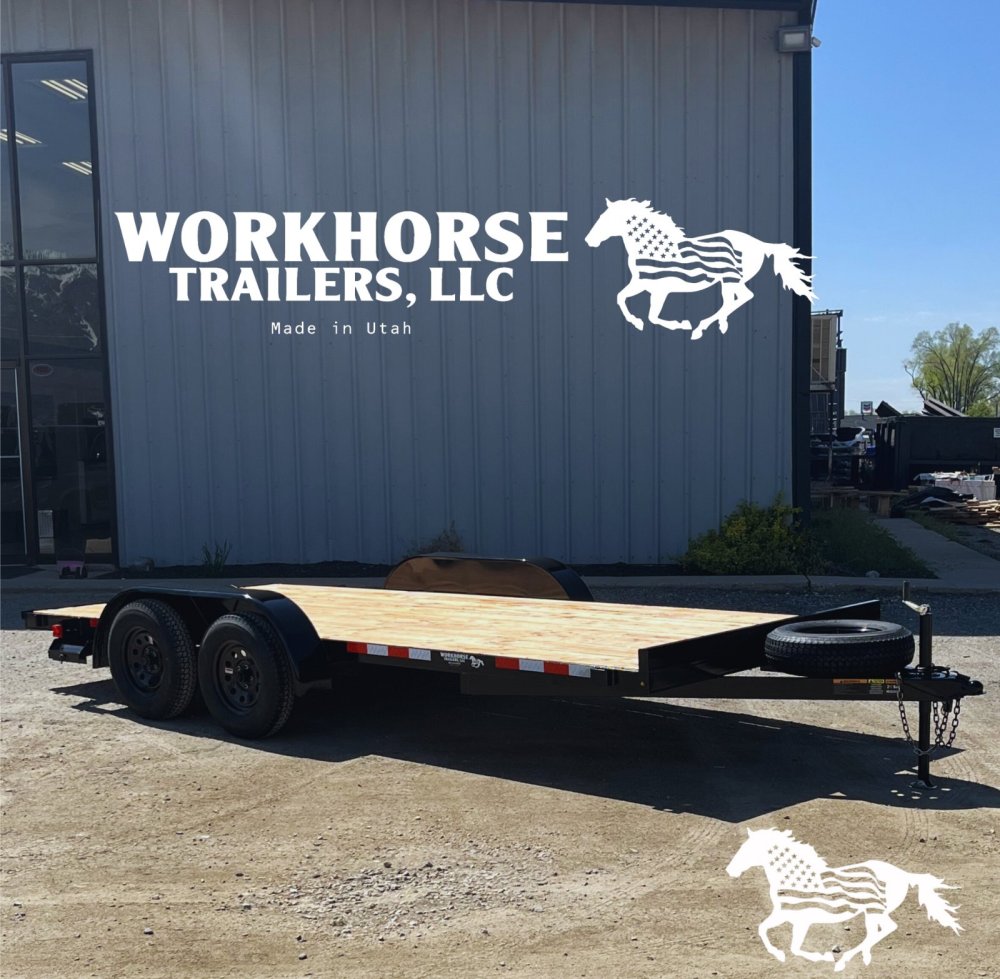
Flatbed steel car haulers deliver straightforward vehicle transport on an open deck with welded steel construction, integrated tie-down anchors, and rear loading ramps. These models represent the most popular configuration among Orem buyers who transport vehicles in fair weather, who need to load from the rear or the side, and who value the ability to hose down the deck after hauling a muddy off-road machine or a leaking project car. Workhorse Trailers LLC carries flatbed steel car haulers in lengths from 16 to 20 feet with GVWR ratings that accommodate everything from compact sedans to full-size crew cab trucks.
The open design also simplifies the inspection process for commercial operators who must verify vehicle condition during loading. Body damage, fluid leaks, and tire condition are visible from every angle without opening doors or removing panels, which speeds up the documentation that insurance and auction companies require at the point of vehicle retrieval.
Dovetail Car Haulers
Dovetail car haulers incorporate a downward-angled section at the rear of the deck that reduces the loading ramp angle and creates a smoother ground-to-deck transition for vehicles rolling onto the platform. This feature matters most when transporting vehicles with limited ground clearance, long rear overhangs, or low-mounted exhaust components that would contact the ramp surface on a flat-rear trailer. The dovetail section typically spans the last three to five feet of the deck and angles downward at a degree that bridges the height difference between the deck surface and the loading ramp without creating the abrupt breakover point that damages vulnerable underbody components.
Workhorse Trailers LLC offers dovetail car haulers with both fixed and removable ramp options. Fixed ramps fold up against the dovetail for transport and deploy quickly at the loading site. Removable ramps detach entirely and store alongside or beneath the deck, freeing the rear of the trailer for flush-back loading against a wall or dock. Orem buyers who transport a mix of standard and low-clearance vehicles find the dovetail configuration versatile enough to handle both without switching trailers.
Fully Enclosed Car Haulers
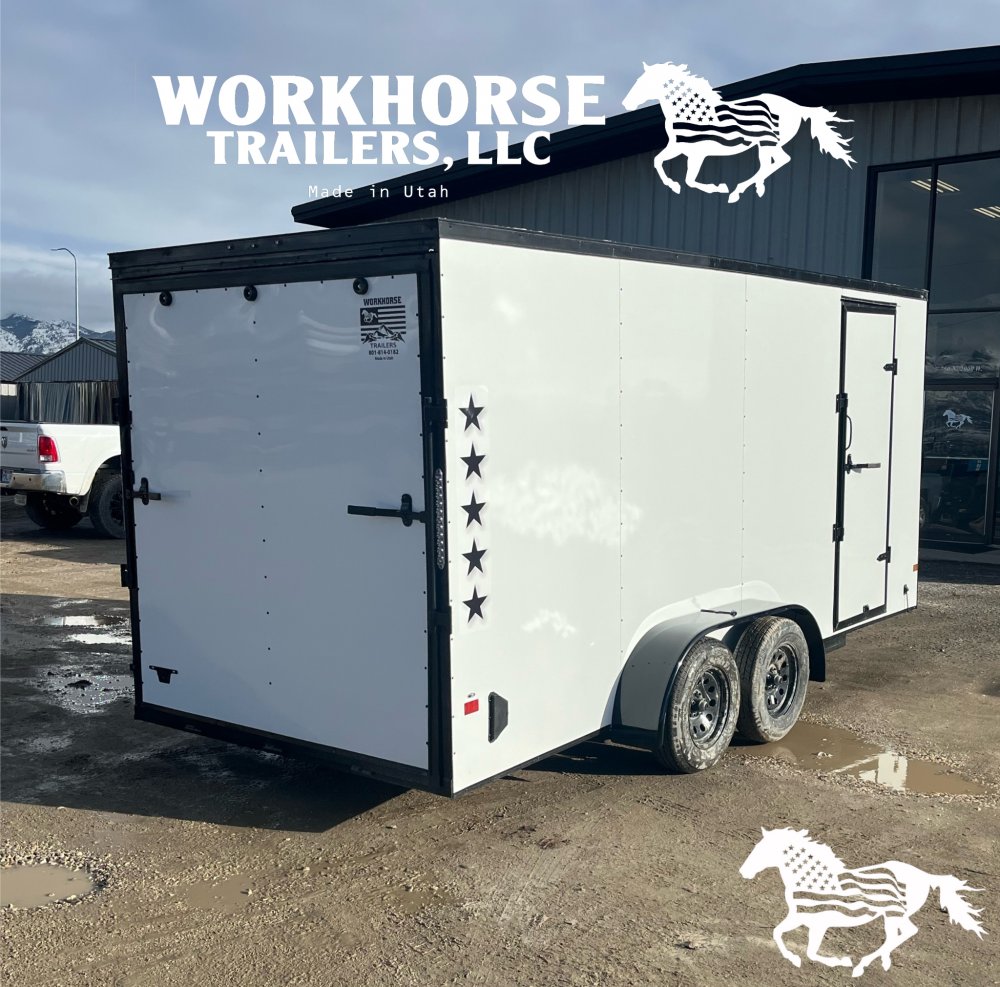
Fully enclosed car haulers surround the vehicle in a sealed shell that blocks precipitation, road debris, UV radiation, theft attempts, and the curious eyes of passersby. These trailers command a higher price than open models, but the protection they provide justifies the premium for Orem owners who transport high-value classics, freshly painted restoration projects, and competition-prepared machines that must arrive at their destination in showroom condition.
Buyers investigatingOrem Car Hauler Trailers will discover that the enclosed models at Workhorse Trailers LLC include interior amenities like recessed floor-mounted D-rings, LED ceiling panels, sidewall ventilation louvers, and cabinet systems for storing detailing products, spare parts, and safety equipment. Some models feature a personnel door on the curbside wall that provides interior access without raising the rear ramp, allowing operators to check on the secured vehicle mid-trip without a full unloading event.
Engineering Details That Separate Quality Car Haulers
Two car haulers can look similar on a dealer lot yet perform very differently under load. The engineering choices buried in the frame, axles, and attachment hardware determine whether a trailer delivers reliable service or develops problems that put the vehicle and the driver at risk.
Weld Penetration and Joint Design
The strength of a welded steel frame depends on how deeply the weld material penetrates the base metal at each joint. Shallow surface welds may pass a visual inspection but lack the cross-sectional strength to resist the dynamic forces that highway towing generates. Quality car haulers feature full-penetration welds at critical joints, including where the crossmembers meet the main rails, where the tongue attaches to the frame, and where the axle mounts connect to the undercarriage. Workhorse Trailers LLC inspects weld quality on every car hauler they sell, verifying that the joints meet the strength standards their customers depend on.
Axle Placement and Tongue Weight
The position of the axles relative to the overall trailer length determines how much of the loaded weight transfers to the tow vehicle as tongue weight. Axles placed too far forward create excessive tongue weight that overloads the truck’s rear suspension. Axles placed too far rearward reduce tongue weight below the threshold needed for stable towing, allowing the trailer to fishtail at highway speeds. The ideal tongue weight falls between 10 and 15 percent of the total loaded trailer weight, and achieving this balance requires axle placement calculated against the typical load distribution of a vehicle sitting on the deck.
Workhorse Trailers LLC engineers their car haulers with axle positions optimized for the weight distribution patterns that standard passenger vehicles and light trucks create when centered on the deck. This factory-calibrated placement means Orem buyers can load a vehicle in the normal centered position and achieve proper tongue weight without resorting to supplemental weight blocks or load-shifting calculations.
Ramp Strength and Surface Traction
Car hauler ramps must support the driven weight of the vehicle during loading and provide enough surface traction to prevent tire slip on the inclined surface. Steel ramps with a punched diamond or expanded metal surface offer the best combination of strength and grip, while smooth steel ramps can become dangerously slippery when wet or contaminated with oil. Ramp width should accommodate the widest tire in the vehicle’s stance with several inches of margin on each side to allow for minor steering corrections during the loading approach.
Every car hauler ramp at Workhorse Trailers LLC meets or exceeds the payload rating of the trailer deck itself, ensuring that the ramps never become the weak link in the loading process. Their surface treatments provide reliable traction in dry, wet, and dusty conditions that Orem operators encounter throughout the year.
Vehicle Securement Principles for Safe Transport
A vehicle loaded onto a car hauler is only as secure as the tie-down system holding it in place. Proper securement protects the vehicle from movement during acceleration, braking, cornering, and road surface irregularities.
Four-Point Minimum Attachment
Every vehicle on a car hauler should be secured at a minimum of four points, with straps or chains extending from the vehicle’s designated tie-down locations to anchor points on the trailer deck. The front pair of straps resists forward movement during braking. The rear pair resists rearward movement during acceleration and prevents lateral shifting during turns. Skipping even one attachment point compromises the geometry of the entire securement system and increases the load on the remaining straps beyond their intended share.
Strap Angle and Load Direction
The angle at which a strap extends from the vehicle to the deck anchor affects its holding power. Straps routed at steep vertical angles pull the vehicle downward into the deck but provide minimal resistance to horizontal movement. Straps routed at shallow horizontal angles resist sliding effectively but generate less downward clamping force. The optimal angle falls between 30 and 45 degrees from horizontal, balancing both vertical clamping and horizontal restraint. Workhorse Trailers LLC positions their D-ring anchors at spacing that naturally produces effective strap angles when securing the most common vehicle widths and track dimensions found among Orem buyers’ vehicles.
Retensioning After Initial Travel
Tie-down straps and chains undergo initial settling during the first miles of travel as the vehicle’s suspension compresses under the straps’ tension and the trailer’s own suspension adjusts to the loaded weight. This settling introduces slack that reduces holding force. Stop within the first 15 miles of departure to inspect every attachment point and retension any strap that has loosened. On longer hauls originating from Orem to destinations across the state, repeat this check at each fuel or rest stop to maintain consistent securement throughout the journey.
Navigating Orem’s Roads With a Loaded Car Hauler
Towing a car hauler through Orem’s traffic environment requires adjustments to normal driving habits that account for the added length, weight, and stopping distance of the combined rig.
Urban Speed Management
Orem’s posted speed limits along commercial corridors typically range from 25 to 40 miles per hour, with frequent traffic signals that require regular stops and starts. A loaded car hauler adds several thousand pounds to the tow vehicle’s braking demands, extending stopping distances significantly. Maintain a following distance of at least four seconds behind the vehicle ahead, and begin braking earlier than you would without the trailer to allow for smooth, gradual deceleration that avoids jarring the secured vehicle and stressing the tie-down hardware.
Freeway Merging and Lane Changes
Entering I-15 from Orem’s on-ramps with a loaded car hauler demands patience and planning. The combined rig accelerates slowly, and the acceleration lane at several Orem interchanges provides limited distance to reach traffic speed. Time your merge to coincide with a gap in the right lane rather than forcing entry alongside vehicles traveling at full highway speed. Lane changes require extended mirror checks to account for the trailer’s length, and every maneuver should be executed slowly enough to prevent the trailer from developing a lateral oscillation that feeds into the tow vehicle’s handling.
Parking and Staging
When stopping at Orem businesses, restaurants, or residences with a loaded car hauler, choose pull-through parking spots whenever possible to avoid backing the rig in congested areas. If backing is unavoidable, use a spotter positioned where they can see both the trailer’s rear corners and the surrounding obstacles. The value of the vehicle on the trailer often exceeds the value of the objects it might contact during a careless backing maneuver, making the extra minute spent positioning a spotter a worthwhile precaution.
Seasonal Factors for Orem Car Hauler Owners
Orem’s climate introduces seasonal variables that affect car hauler performance and the condition of vehicles transported on them.
Winter Road Film and Vehicle Contamination
Winter driving in Orem coats the trailer and any vehicle riding on an open car hauler with a film of road salt, brine, and grime that damages paint, chrome, and undercarriage components. If transporting a vehicle you intend to keep in good condition during winter months, consider covering it with a breathable vehicle cover secured with straps that will not abrade the finish. After arrival, wash both the trailer and the transported vehicle promptly to remove corrosive residue before it bonds to the surfaces.
Summer Asphalt Softening
Newly paved or chip-sealed roads in Orem can soften during peak summer heat, and a loaded car hauler’s tires can pick up loose aggregate and tar that transfers to the deck surface and eventually to the tires of the next vehicle loaded. Inspect the deck and ramp surfaces periodically during hot months and scrape off any accumulated tar before it builds up enough to interfere with vehicle loading or contaminate tire sidewalls.
Wind Events During Vehicle Transport
Spring and fall wind events along the Wasatch Front generate crosswind gusts that affect open car haulers more noticeably than enclosed models. A vehicle sitting on an open deck increases the trailer’s wind profile, and the combined aerodynamic drag can push the rig sideways during strong gusts. Reduce speed during wind advisories, grip the steering wheel firmly, and avoid abrupt corrections that amplify trailer sway rather than dampening it.
Why Orem Buyers Trust Workhorse Trailers LLC
The car hauler market presents Orem buyers with a wide spectrum of price and quality, and the correlation between the two is not always obvious from a catalog listing or a website photo. Workhorse Trailers LLC differentiates through details that only reveal themselves under real-world use: weld integrity that holds after thousands of miles, axle placement that keeps the rig tracking straight at highway speed, and ramp surfaces that grip reliably in conditions that send lesser trailers sliding. Their team understands the specific transport challenges Orem’s automotive community faces, from navigating tight urban lots to protecting show-quality paint during winter hauls, and they channel that understanding into recommendations that serve the buyer’s actual needs. For Orem residents and businesses who refuse to gamble with the vehicles entrusted to their care, Workhorse Trailers LLC provides car hauler trailers built to earn that trust on every trip.