
Nevada Utility Trailers
All locationsNevada asks more of a trailer than most states. The heat alone sets conditions apart. Surface temperatures on asphalt in Las Vegas, Reno, and the highways connecting them regularly exceed 150 degrees during summer months, punishing tires, bearings, and wiring that would perform fine in a milder climate. Add the state’s vast distances between population centers, its booming construction sector, and the desert terrain that surrounds virtually every community, and you get a hauling environment where a cheap trailer becomes an expensive problem fast. Utility trailers remain the most versatile and widely owned trailer type in Nevada, serving homeowners, contractors, property managers, ranchers, and off-road enthusiasts across the state. Workhorse Trailers LLC supplies utility trailers to Nevada buyers who understand that durability in desert conditions starts with the trailer you choose, not the maintenance you perform after the fact.
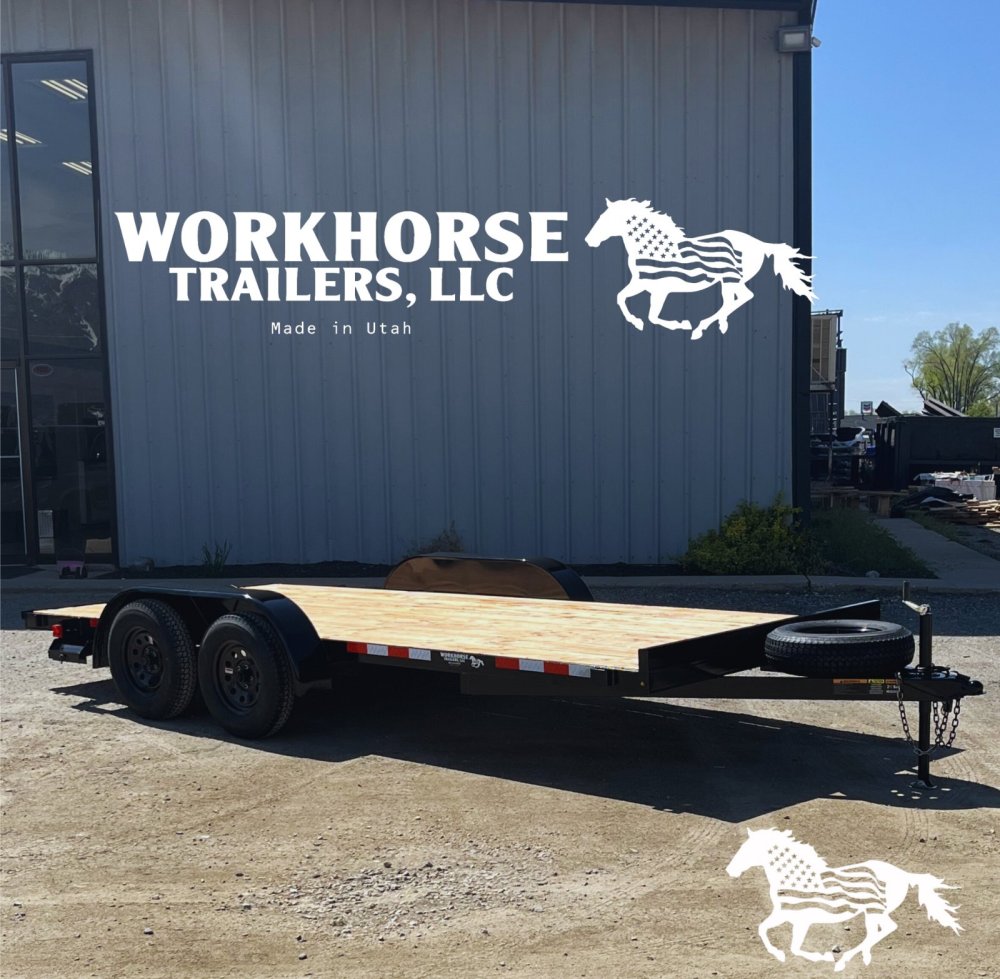
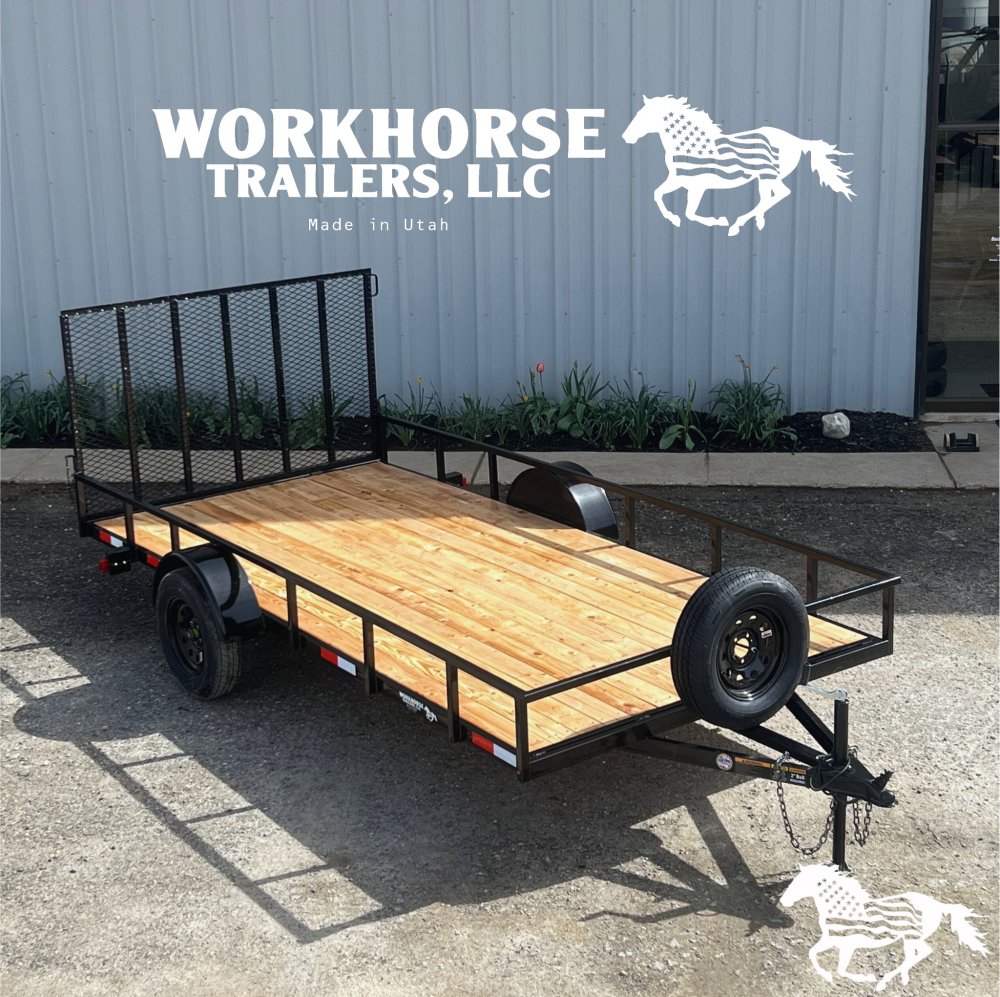
A utility trailer fills the space between hauling things in a truck bed and needing a specialized rig for a specific purpose. It carries landscaping materials, fencing supplies, ATVs, household furniture, job site debris, and anything else that doesn’t require the enclosed protection of a cargo trailer or the reinforced platform of an equipment hauler. What makes utility trailers popular across Nevada is their accessibility. They hitch to most trucks and many SUVs, cost less than any other full-size trailer type, and handle a rotating list of tasks without requiring the buyer to own a different trailer for each one.
The critical factor for Nevada buyers is selecting a utility trailer built to withstand conditions that accelerate wear and failure far beyond what owners in temperate states experience.
How Nevada’s Climate Affects Utility Trailer Components
Understanding what the desert does to trailer materials helps Nevada buyers make informed purchasing decisions and avoid replacements that a better initial choice would have prevented.
Tire Degradation
UV radiation at Nevada’s elevation and latitude breaks down tire rubber compounds faster than in states with less solar intensity. A utility trailer tire rated for five to seven years of service in Oregon or Michigan may show sidewall cracking and tread separation in Nevada within three to four years, even with minimal mileage. The heat radiating off road surfaces during summer compounds this by raising tire operating temperatures beyond what many economy-grade tires are designed to handle for sustained periods.
Nevada buyers should prioritize trailer tires with higher speed ratings and temperature grades. The Department of Transportation’s Uniform Tire Quality Grading system assigns temperature grades of A, B, or C, with A indicating the highest heat resistance. Tires rated B or C may cost less upfront but fail sooner in Nevada’s thermal environment. Storing the trailer in shade when not in use and checking tire pressures before every trip in summer months extends tire life measurably.
Bearing and Grease Performance
Wheel bearing grease loses viscosity as temperatures rise. Standard lithium-based greases that perform adequately in moderate climates can thin to the point of insufficient lubrication during sustained highway towing in Nevada summer heat, particularly on routes like US-93 between Las Vegas and Ely or I-80 across the northern desert. Synthetic or high-temperature bearing greases maintain their protective properties at temperatures where conventional greases break down.
Bearing failure on a remote Nevada highway creates a more serious situation than it would in a densely populated area. Distances between service options can stretch 50 miles or more on many Nevada routes. A bearing that seizes between Tonopah and Hawthorne leaves the trailer owner stranded in a location where cell service may be unreliable and tow response times are measured in hours rather than minutes.
Wiring and Electrical Components
Heat degrades wire insulation, connector housings, and LED lens materials over repeated thermal cycles. Utility trailers with factory wiring routed along the frame without heat shielding or conduit protection develop brittle insulation that cracks and exposes conductors to grounding faults and short circuits. Nevada buyers should inspect the wiring harness routing on any trailer under consideration and favor sealed, heat-resistant wiring systems over economy-grade alternatives.
Connector corrosion presents less of an issue in Nevada’s dry climate than in coastal or high-humidity states, but the alkaline dust prevalent across much of the state can accumulate in connector housings and create resistance that dims lights and impairs brake signal transmission. Cleaning electrical connectors with contact cleaner before each use takes seconds and prevents problems that are difficult to diagnose once they develop.
Frame and Finish Longevity
The good news for Nevada utility trailer owners is that corrosion progresses much more slowly in arid conditions than in states with high humidity, road salt, or coastal salt air. A painted steel frame that would show surface rust within two years in the Pacific Northwest can remain clean for five or more years in Nevada’s dry interior. Powder-coated finishes hold up even longer, and the absence of road salt treatment on most Nevada highways eliminates one of the primary corrosion accelerators that plagues trailers in northern states.
Aluminum-framed utility trailers, already resistant to oxidation, gain an even longer effective lifespan in Nevada conditions. The premium cost of aluminum construction pencils out favorably for Nevada buyers who plan to own their trailer for a decade or more and want to avoid any frame maintenance during that period.
Sizing a Utility Trailer for Nevada Distances
Nevada’s geography amplifies the consequences of choosing the wrong trailer size. A buyer in a compact eastern state who buys slightly too small can make a second trip without losing much time. A Nevada buyer who underestimates their needs faces a potential repeat of a 90-minute drive each way across empty highway. Getting the size right the first time matters more here than in most markets.
Compact Models for Urban Nevada
Buyers in the Las Vegas valley, Reno-Sparks metro, Henderson, and Carson City who haul primarily within city limits and surrounding suburbs can often work efficiently with single-axle utility trailers in the 5×8 to 6×10 range. These handle runs to landscape supply yards, home improvement stores, and municipal transfer stations without creating parking or storage headaches in Nevada’s subdivisions and commercial lots.
Las Vegas in particular presents a storage consideration that other markets don’t share at the same scale. Many homes in master-planned communities like Summerlin, Anthem, and North Las Vegas subdivisions are governed by HOA restrictions that prohibit or limit trailer parking in driveways and on streets. A compact single-axle utility trailer that fits inside a standard garage bay avoids HOA conflicts that a larger model would trigger.
Mid-Size and Full-Size Models for Statewide Hauling
Buyers who haul between cities, to rural properties, or across Nevada’s expansive public lands need trailers that justify the drive. A tandem-axle 7×14 or 7×16 utility trailer maximizes the payload carried per trip, reducing the number of round trips required for large projects. A rancher supplying a property outside Elko, a contractor working a project in Pahrump, or a homeowner moving belongings from Las Vegas to a second property near Fallon all benefit from a trailer large enough to carry a full load on each run.
Tandem-axle models also provide the tire redundancy that Nevada’s remote highways demand. Interstate 80 across the northern tier, US-93 through the central corridor, and US-95 running north-south through the western desert all include stretches where a single-axle tire failure leaves no options except waiting for roadside assistance that may be hours away. A tandem-axle trailer with a blown tire can be driven slowly to the next town for repair, keeping the trip moving rather than stopping it entirely.
Nevada Registration and Legal Requirements
Nevada trailer registration follows a process administered through the Nevada Department of Motor Vehicles. New trailers purchased from a dealer include the necessary documentation for title and registration. Used trailers purchased through private sale require a signed title, bill of sale, and sometimes a VIN inspection depending on the trailer’s origin state.
Unlike Montana, Nevada does impose sales tax on trailer purchases. The statewide rate varies by county, ranging from approximately 6.85 percent to 8.375 percent in Clark County, which includes Las Vegas. This tax applies to both new and used trailer purchases through dealers. Private party sales may also be subject to use tax at registration. Buyers should factor this cost into their purchase budget, as it adds a meaningful amount to the total on a $3,000 to $8,000 utility trailer.
Braking and Lighting Requirements
Nevada requires brakes on all trailer wheels when the GVWR exceeds 3,000 pounds. Trailers at or below 3,000 pounds are exempt from the brake requirement but must still display functioning tail lights, brake lights, turn signals, and reflective markers when operated on public roads. A breakaway brake system is required for all trailers equipped with electric brakes.
Nevada Highway Patrol conducts trailer inspections during routine traffic stops, and citations for non-functional lighting or absent brakes on trailers above the weight threshold carry fines and potential impoundment. Keeping the electrical system functional and brake components maintained is both a safety practice and a legal requirement.
Weight and Dimension Limits
Nevada limits trailer width to 8 feet 6 inches without a permit, which accommodates the standard 102-inch-wide full-size utility trailers sold in the market. Overall length limits for a truck-trailer combination vary by road classification. On Nevada interstates, a single-vehicle towing a trailer can operate at up to 70 feet overall length. On state highways and local roads, shorter limits may apply.
Buyers towing near the upper weight limits of their truck and trailer combination should be aware that Nevada weigh stations on major corridors, including those on I-80, I-15, and US-93, may direct pickup trucks with loaded trailers through for inspection during enforcement periods.
Popular Utility Trailer Uses Across Nevada
Desert Recreation
Nevada’s Bureau of Land Management areas, open desert valleys, and designated OHV trails attract riders from across the western states. Utility trailers haul ATVs, dirt bikes, and side-by-sides to riding areas near Jean, Primm, Logandale, the Pony Express Trail corridor east of Reno, and hundreds of unnamed desert access points across the state. The open bed of a utility trailer with side rails accommodates machines and gear without the overhead clearance restrictions of an enclosed trailer, and the desert dust that coats everything during a ride washes off an open trailer more easily than out of an enclosed interior.
Construction and Trades
Nevada’s construction industry has sustained high activity levels driven by residential growth in the Las Vegas metro, data center development in northern Nevada, and commercial expansion in Reno-Sparks. Tradespeople working across these markets use utility trailers to carry pipe, conduit, wiring spools, hand tools, and small power equipment between job sites. A 6×12 utility trailer behind a service truck gives an electrician or plumber enough capacity for a full day’s materials without upgrading to a larger enclosed unit.
Property and Land Management
Rural Nevada property owners maintain acreage that requires regular hauling of fence posts, water infrastructure components, firewood, and ranch supplies. The distances between a hardware supplier in Winnemucca and a ranch property in the surrounding valleys can exceed an hour of driving. A utility trailer large enough to carry a full project’s worth of materials eliminates the multi-trip inefficiency that these distances impose.
Residential Cleanup and Moving
Nevada’s transient population, particularly in the Las Vegas metro where relocation rates are among the highest in the country, creates steady demand for utility trailers as personal moving platforms. A rented or owned utility trailer handles apartment moves, garage cleanouts, and estate dispersals at a fraction of the cost of hiring a moving company. The Nellis Air Force Base community in North Las Vegas generates additional demand as military families rotate in and out of the area on regular transfer cycles.
Desert Storage and Care Practices
Nevada utility trailer owners who store their trailers outdoors face different challenges than owners in wetter climates.
Tire flat-spotting occurs when a loaded or even empty trailer sits on hot pavement for extended periods. The heat softens the rubber at the contact patch, and the tire conforms to the flat surface beneath it. Moving the trailer periodically or parking on plywood or rubber pads prevents the permanent flat spots that cause vibration during subsequent towing.
Deck board shrinkage affects trailers with treated wood floors. Nevada’s low humidity draws moisture from wood, causing boards to shrink and gaps to widen between planks. Checking and retightening deck board fasteners annually keeps the floor surface stable. Some Nevada owners apply a wood sealant to cut ends and exposed surfaces to slow the drying process.
Sun damage to any non-metallic components accumulates steadily. Rubber fender flares, plastic light housings, and vinyl decals degrade under Nevada’s UV exposure. Parking the trailer under a carport, in a garage, or beneath a shade structure when not in use extends the life of these components by years.
Workhorse Trailers LLC and the Nevada Utility Trailer Market
Workhorse Trailers LLC provides Nevada buyers with utility trailers selected for performance in the conditions this state imposes. The desert doesn’t forgive shortcuts in component quality, and the distances between towns don’t forgive undersized payloads. The company’s approach matches the buyer’s hauling patterns, tow vehicle capability, and intended use to a trailer built to handle Nevada rather than simply survive it.
Nevada buyers ready to compare specifications and options across the utility trailer range can visitNevada Utility Trailers to review the current selection and connect with Workhorse for recommendations tailored to their situation.
Whether you’re outfitting a trade truck in Henderson, stocking a ranch outside Battle Mountain, or gearing up for weekend rides in the desert south of Sparks, the utility trailer you hitch to your truck should be built for the environment it operates in. Workhorse Trailers LLC makes sure that’s the trailer you take home.