
Nevada Deck Over Trailers
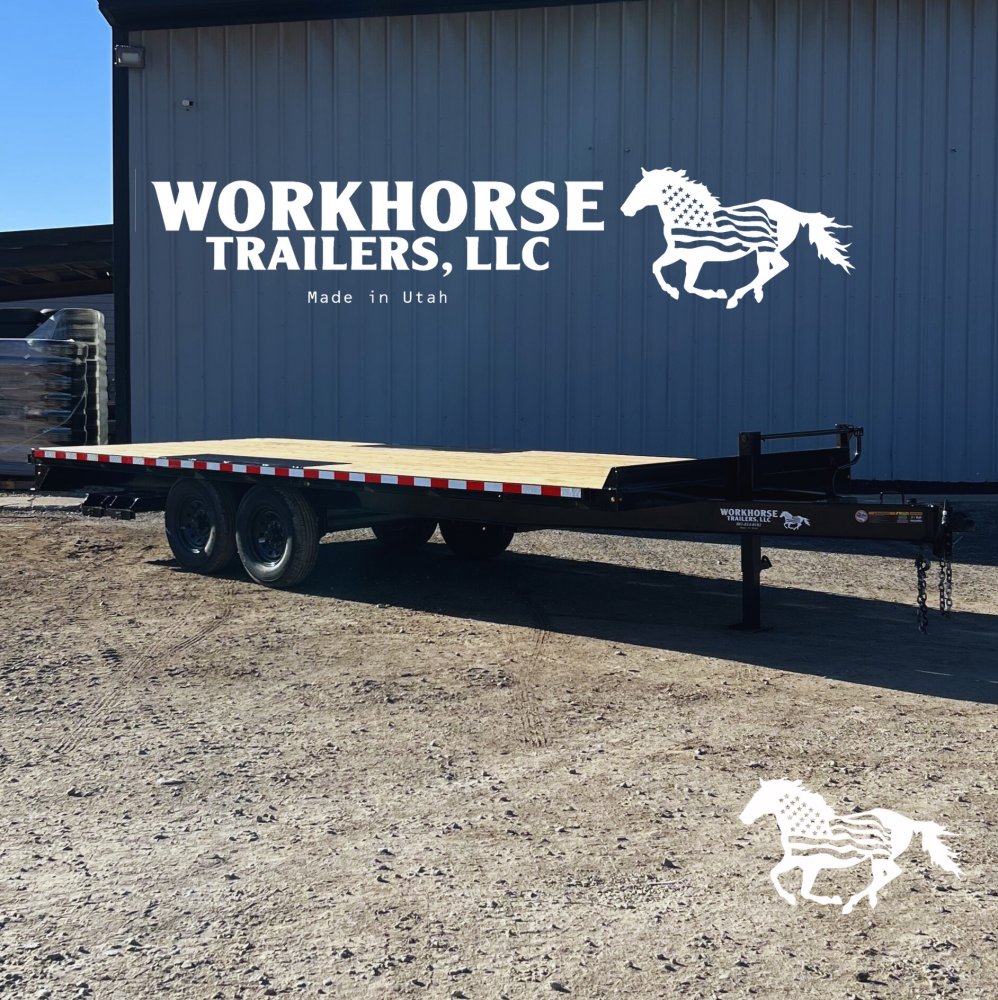
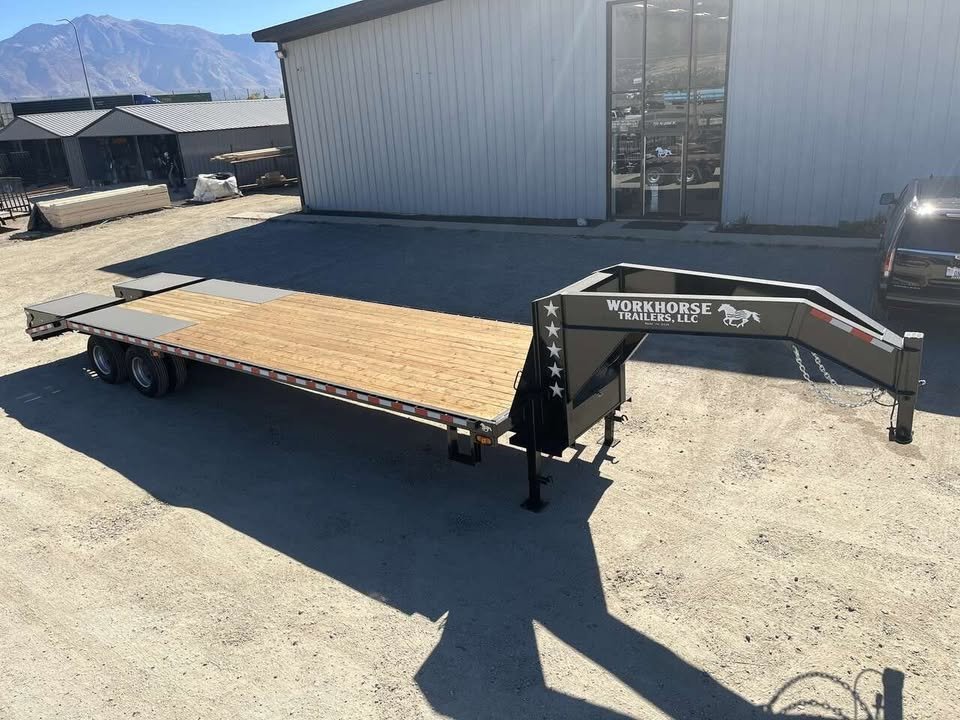
All locationsNevada’s development boom runs on materials that are wide, heavy, and awkward to stack. Steel framing bundles destined for a commercial project in Henderson don’t fit between fender wells. Ductwork sections being delivered to a data center build east of Reno need a flat surface wide enough to lay out without overlapping. Concrete form panels headed to a foundation pour in North Las Vegas require uninterrupted deck space for efficient loading by boom truck. The deck over trailer answers these demands with a bed that clears the wheel assemblies entirely, stretching to a full 102-inch width with nothing protruding upward to obstruct the usable surface. Workhorse Trailers LLC provides deck over trailers to Nevada buyers who haul loads that refuse to conform to the narrower dimensions of conventional trailer beds, delivering a platform engineered for the oversized cargo that Nevada’s construction, industrial, and infrastructure sectors generate daily.
The deck over design elevates the trailer bed above the tires and axle assemblies rather than positioning it between them. This geometry eliminates fender intrusion into the cargo area and produces a continuous flat surface from one side rail to the other. The trade-off is a higher deck height compared to standard flatbeds, which raises the center of gravity of the loaded trailer and requires ramps rather than ground-level step-on access. For Nevada buyers whose cargo demands full-width capability, that trade-off resolves decisively in the deck over’s favor.
Nevada Industries That Depend on Full-Width Hauling
The state’s economic growth sectors produce cargo profiles that push beyond what fender-obstructed trailers can accommodate efficiently.
Solar Farm Material Delivery
Nevada’s utility-scale solar installations consume staggering quantities of racking steel, panel mounting hardware, combiner boxes, and cable tray sections. Much of this material arrives at project staging areas on flatbed semi-trailers but needs redistribution across installation zones using smaller trailers pulled by pickup trucks. Deck over trailers serve as the final-mile delivery vehicle for these components, carrying loads of racking steel and mounting brackets from staging areas to specific installation rows across solar fields that can span thousands of acres.
The full-width deck allows bundled racking to lay flat without cantilevering over fender walls, which keeps the load stable and compliant with site safety requirements that prohibit unsecured overhang on active construction zones. Solar contractors working projects in Nye County, southern Clark County, and along the US-95 corridor between Las Vegas and Indian Springs rely on deck over trailers for this redistribution work because no other trailer configuration provides the unobstructed surface area needed for wide steel bundles.
Water Infrastructure and Pipeline
Nevada’s growth has strained existing water infrastructure, generating construction activity around new pipeline installations, treatment facility expansions, and distribution system upgrades across both the Las Vegas and Reno service areas. Large-diameter HDPE pipe sections, valve assemblies, hydrant components, and fitting kits travel between supply yards and installation trenches on trailers that can accommodate their dimensions.
A 24-inch HDPE pipe section measures roughly 30 inches across its outer diameter when accounting for bell ends. Stacking multiple sections side by side on a between-the-fender trailer with 78 inches of clear width limits the row to two pipes with tight clearance. The same sections on a 102-inch deck over fit three across with room for dunnage strips between them. That additional pipe per row multiplies across a full trailer load into meaningfully fewer trips between the supply yard on Losee Road and a trenching operation in Centennial Hills.
Prefabricated Construction Components
The shift toward prefabricated and modular building components in Nevada’s construction market has created demand for trailers that transport wide, flat assemblies. Wall panels, roof trusses, prefabricated mechanical rooms, and exterior cladding sections often exceed the interior width of fender-constrained trailers. Deck over trailers carry these components flat on the full deck surface, supported uniformly and secured without the angular loading that between-the-fender trailers force when wide items must be tilted or propped at an angle to fit inside the fender clearance.
A prefabrication shop in the industrial zone off Warm Springs Road producing wall panel assemblies for a housing development loads finished panels directly onto deck over trailers using an overhead crane. The panels lay flat, strapped at intervals along the deck, and travel to the site ready for lift and placement without the handling damage that occurs when panels ride at angles imposed by narrower trailer beds.
Landscape and Hardscape Supply
Commercial landscaping in Nevada’s urban markets involves moving palletized pavers, retaining wall blocks, decorative stone, and precast concrete elements that are both heavy and dimensionally rigid. A standard pallet of interlocking pavers weighs roughly 2,500 pounds and measures 48 inches square. Placing two pallets side by side and adding a partial third row is possible on a deck over but impossible on a fender-obstructed trailer of the same frame length. Nevada landscape supply yards in the southeast valley, along Boulder Highway, and in the Sparks industrial district load deck over trailers by forklift, placing pallets across the full width without the alignment precision that narrower trailers demand.
Deck Over Performance in Nevada’s Thermal Environment
The desert heat that defines Nevada’s operating conditions affects deck over trailers in ways that buyers should anticipate during the selection process.
Wood Deck Behavior in Low Humidity
Treated pine decking is the standard surface on most steel-frame deck over trailers. In Nevada’s desert climate, where relative humidity routinely drops below 15 percent during summer months, wood loses moisture content faster and more completely than it does in states with moderate humidity. The practical effect is accelerated board shrinkage that opens gaps between planks within the first year of ownership.
These gaps create problems beyond appearance. Equipment tracks catch on exposed edges. Loose cargo can wedge into gaps and damage the underlying cross members. Securement chains and straps slip into openings rather than bearing cleanly on the deck surface. Nevada deck over owners should plan for an initial retightening of all deck board fasteners within six months of purchase, and annual inspections thereafter to close gaps before they become functional issues.
Some Nevada buyers preemptively seal all six faces of each deck board with a penetrating wood sealer before the trailer enters service. This slows moisture loss significantly and reduces the shrinkage that drives gap formation. The time investment is modest, and the effect on board longevity in the Nevada climate is pronounced.
Steel Deck Expansion Cycles
Deck over trailers with steel tread plate surfaces avoid the shrinkage issue but face their own thermal challenge. Steel expands measurably in Nevada’s temperature range. A 24-foot steel deck that measures precisely at 70 degrees ambient will grow nearly a quarter inch in length at 130 degrees. This expansion is accommodated in well-engineered trailers through slot-bolted connections or expansion gaps at deck panel seams. Economy trailers that rigidly fasten the deck to the frame without thermal allowance develop buckled deck sections, popped welds, and stressed fastener holes after repeated seasonal cycling.
Buyers evaluating steel-decked trailers for Nevada use should ask specifically how the deck attachment system handles thermal movement. The answer reveals whether the manufacturer designed for desert conditions or simply applied a universal specification without regional consideration.
Ramp Surface Traction in Heat
The loading ramps on a deck over trailer reach extreme surface temperatures during Nevada summer afternoons. Traction between tire rubber and heated metal drops measurably compared to the same surfaces at moderate temperatures. Equipment operators accustomed to confidently driving machines up ramps during cool mornings may find insufficient grip during afternoon loading on a trailer that has been sitting in direct sun.
Expanded metal ramp surfaces and punched tread patterns outperform smooth plate in all thermal conditions because the raised edges provide mechanical grip that doesn’t depend on the rubber-to-metal friction coefficient. For Nevada deck over buyers who load equipment regularly during hot hours, specifying ramps with aggressive tread patterning avoids the traction problems that smooth ramps develop in the heat.
Wind Loading on Full-Width Deck Over Cargo
Nevada’s desert winds present a cargo security variable that the deck over design amplifies compared to narrower trailer types. A load stacked across the full 102-inch width of a deck over presents a broader cross-section to crosswinds than the same cargo riding within the fender walls of a conventional trailer. The additional width acts as a larger sail, generating lateral forces that the tie-down system must resist.
The I-15 corridor between Las Vegas and the California border through the Ivanpah Valley experiences regular crosswind events. The US-395 corridor through the Washoe Valley south of Reno is notorious for wind gusts that have overturned commercial vehicles. Deck over trailers carrying tall or flat-sided loads through these zones need tie-down configurations that account for lateral wind force, not just the forward-and-backward forces of braking and acceleration.
Practical wind securement involves angling tie-down straps or chains inward from the load’s upper edges to low-mounted D-rings on the opposite side of the trailer, creating a triangulated restraint pattern that resists lateral displacement. A load secured only with vertical downward straps has no lateral resistance beyond the friction between the cargo base and the deck surface, which can be overwhelmed by sustained crosswind pressure on a wide, flat-sided load.
Deck Over Weight Distribution on Nevada Grades
Nevada highways include significant grade changes despite the state’s popular association with flat desert. The approach to Las Vegas from the northwest on US-95 descends through mountain passes. I-80 crosses the Humboldt Range and several summit grades between Reno and Elko. The climb from the Las Vegas valley floor to the Spring Mountains on Highway 156 or 157 gains thousands of feet of elevation. Even the valley floor surrounding Reno includes rolling terrain that affects loaded trailer behavior.
Weight placement on a deck over trailer directly influences towing stability on grades. Cargo positioned too far forward overloads the truck’s rear axle and lightens the front end, reducing steering authority on descents where braking loads transfer weight forward. Cargo positioned too far rearward reduces tongue weight and allows the trailer to oscillate during downhill braking, which can escalate into a sway condition at highway speed.
The target tongue weight of 10 to 15 percent of the loaded trailer’s total weight applies to bumper pull deck overs. Gooseneck deck overs tolerate and benefit from a higher percentage, typically 20 to 25 percent, because the coupling point sits over the truck’s rear axle rather than behind it. Nevada buyers who haul varying loads should develop the habit of estimating weight placement before each trip and shifting cargo as needed to maintain proper balance for the specific route’s grade profile.
Nevada Registration and Road Compliance
Deck over trailers registered in Nevada follow the standard DMV process. Sales tax applies at county-specific rates, reaching 8.375 percent in Clark County. Registration fees are based on the trailer’s declared weight and are renewed annually.
The 102-inch standard width of most full-size deck over trailers falls within Nevada’s 8-foot-6-inch maximum width limit for unpermitted operation. Cargo that extends beyond the trailer rails may push the overall width past this threshold, requiring a wide-load permit from the Nevada Department of Transportation. Lumber, pipe, and panel loads that overhang the sides even slightly can trigger the permit requirement during enforcement stops.
Reflective conspicuity tape is required on trailers exceeding 80 inches in width and over 10,000 pounds GVWR. Most full-size deck over trailers meet both thresholds. The tape must appear on the sides and rear of the trailer in alternating red and white segments. Factory-applied conspicuity tape on new trailers satisfies this requirement, but used trailer buyers should verify that the tape is present and reflective rather than faded or peeling.
Workhorse Trailers LLC and the Nevada Deck Over Market
Workhorse Trailers LLC serves Nevada deck over buyers with an understanding of how the state’s heat, wind, terrain, and industry mix shape the requirements for a trailer that performs beyond its first season. The company matches buyers to deck over configurations that account for cargo dimensions, loading methods, route conditions, and the thermal realities that Nevada imposes on every component from deck boards to ramp surfaces.
Nevada buyers evaluating deck over trailers for construction supply, industrial hauling, infrastructure work, or general-purpose wide-load transport can visitNevada Deck Over Trailers to compare available options and connect with the Workhorse team for recommendations grounded in Nevada-specific operating knowledge.
The right deck over trailer gives you the full-width platform your cargo requires and the durability your climate demands. Workhorse Trailers LLC makes certain the trailer you select delivers both from day one through years of Nevada service.