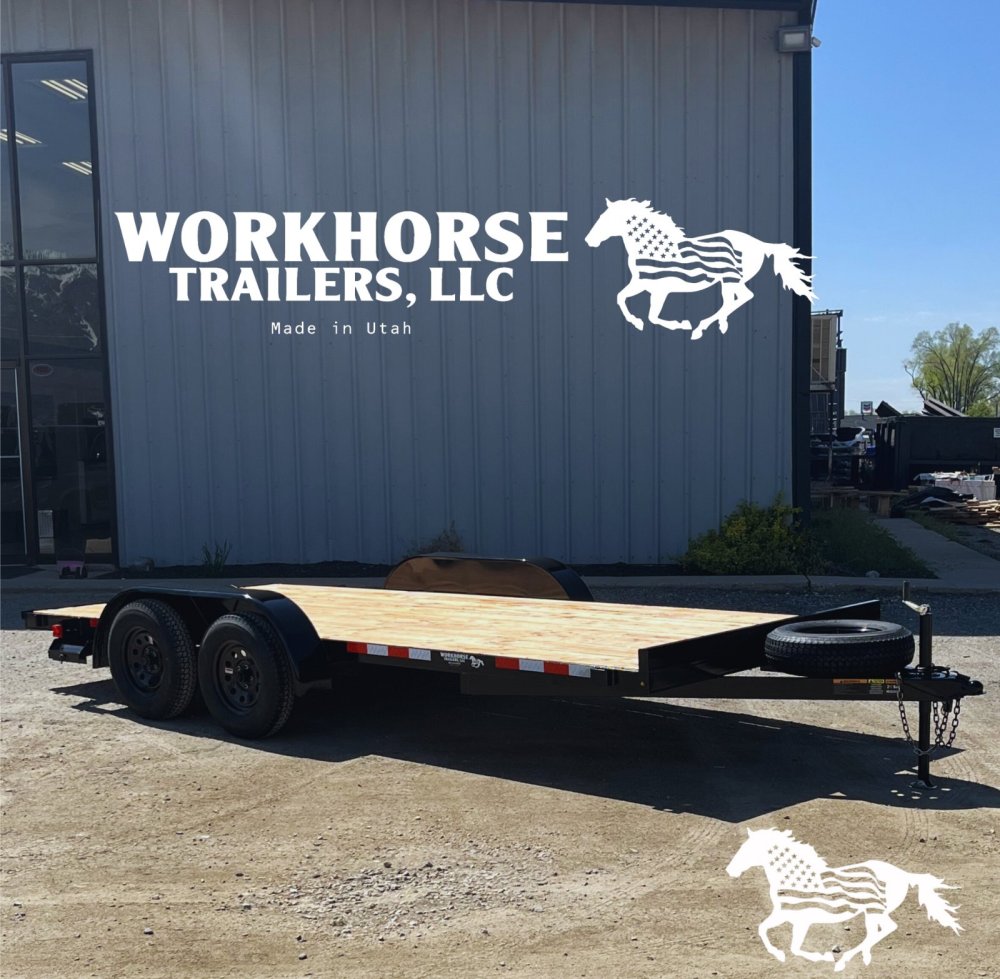
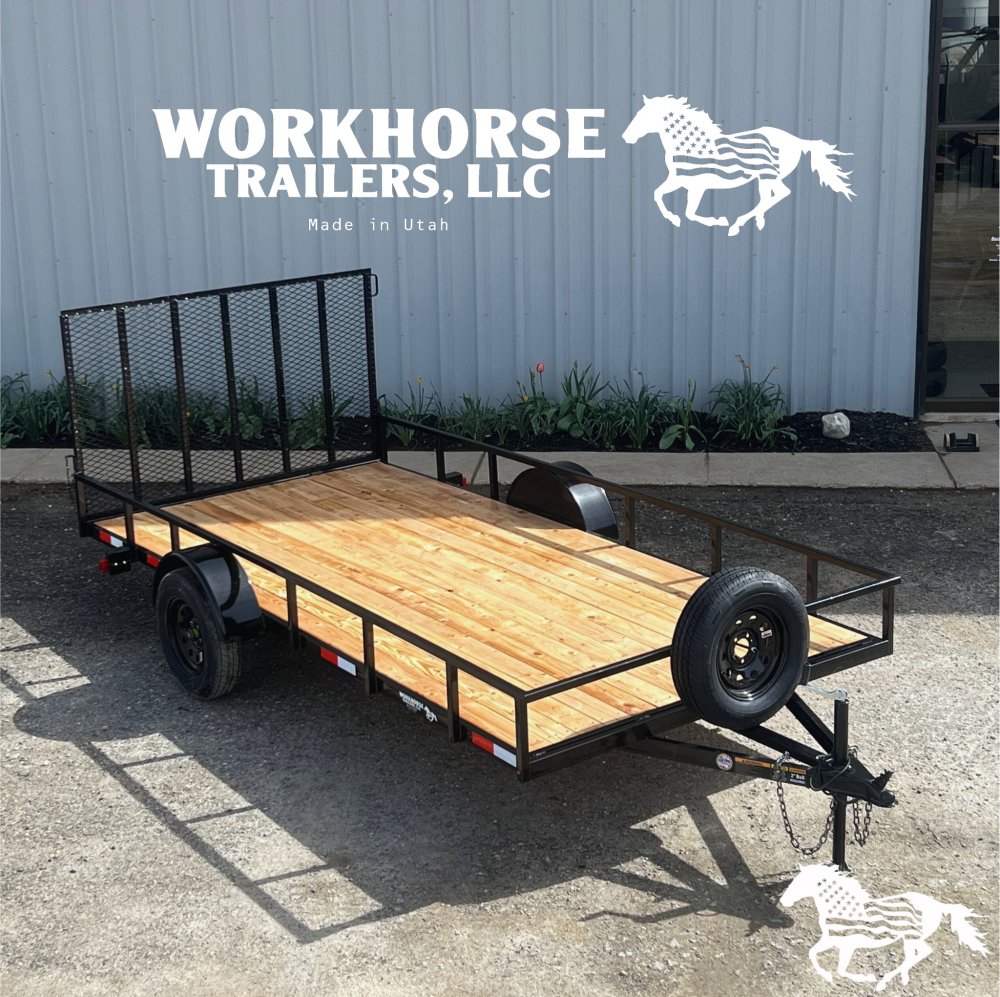
Montana Equipment Hauler Trailers
All locationsMoving heavy machinery across Montana is not a casual undertaking. The state’s enormous geographic footprint, isolated job sites, and physically demanding terrain mean that the trailer carrying your equipment must be every bit as capable as the machines riding on it. Workhorse Trailers LLC supplies Montana professionals with equipment hauler trailers built for the kind of sustained, high-stakes service that this state’s industries demand. Their inventory reflects a deep understanding of what it takes to transport excavators, loaders, compactors, and other heavy iron safely across hundreds of miles of mountain highway, prairie two-track, and everything in between.
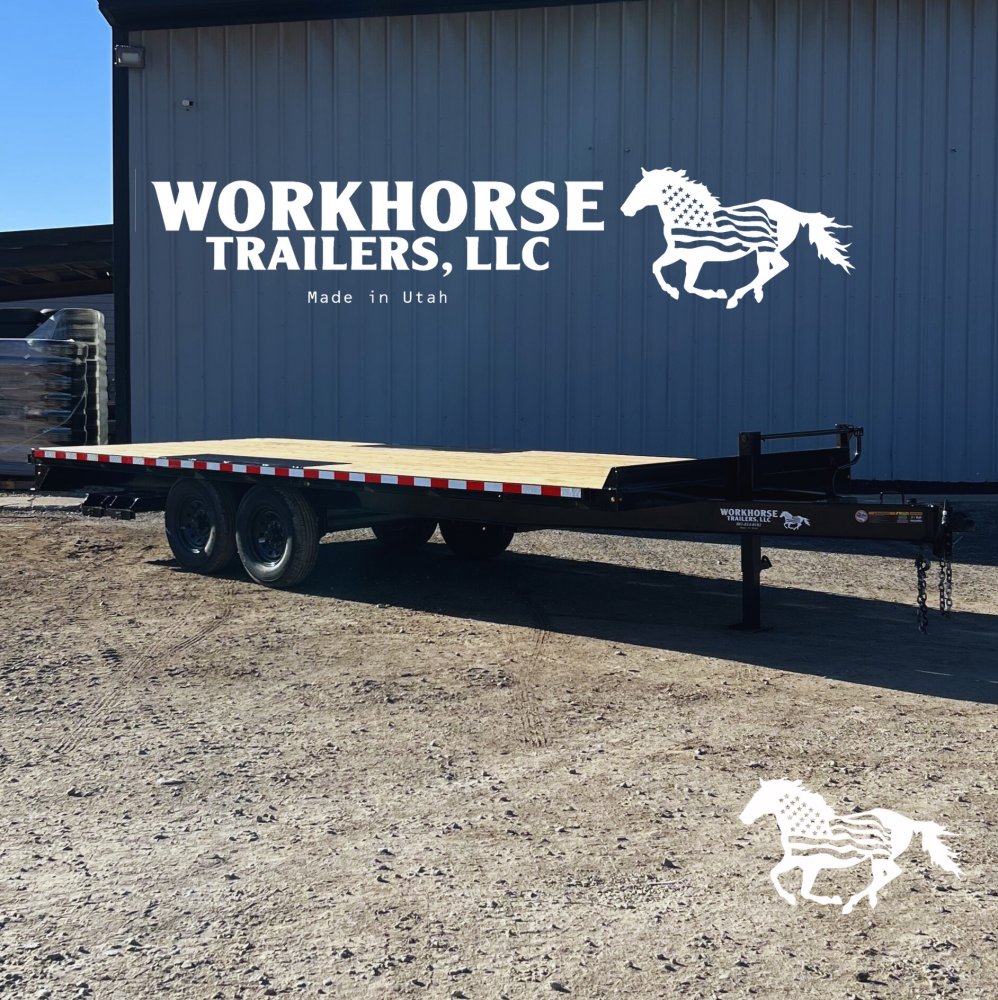
Equipment hauler trailers occupy the heavy-duty end of the trailer spectrum. They are purpose-engineered to carry concentrated loads that would overwhelm standard flatbeds and general-use platforms. Reinforced frames, high-capacity axle assemblies, commercial-grade braking systems, and robust deck surfaces distinguish these trailers from lighter alternatives that may look similar at first glance but lack the structural backbone to handle serious machinery. For Montana operators whose livelihoods depend on getting the right machine to the right location on time, cutting corners on the trailer is simply not an option.
The Role of Equipment Haulers in Montana’s Economy
Montana’s economic engine runs on industries that consume heavy equipment at a remarkable rate. Each sector places distinct demands on the trailers tasked with moving that machinery from site to site.
Mining and Mineral Extraction
Montana’s mining history stretches back more than a century, and modern operations continue to extract copper, gold, silver, palladium, talc, and other minerals from sites scattered across the western and central portions of the state. Surface mining operations cycle through bulldozers, haul trucks, graders, and crushing equipment that must travel between pits, processing facilities, and maintenance yards. Underground operations rely on specialized boring machines, mucking equipment, and ventilation systems that require careful transport on trailers rated for their exceptional weight and irregular dimensions.
The remote locations of many Montana mining operations add complexity to equipment transport. Access roads may be steep, narrow, and unpaved for the final miles approaching the site. Equipment hauler trailers serving the mining sector need not only the payload capacity to carry massive machines but also the ground clearance and structural resilience to handle rough approach routes without sustaining frame damage or bottoming out on uneven surfaces.
Timber and Forest Products
The timber industry remains a significant economic force in western Montana, where logging operations harvest and transport millions of board feet of lumber annually. Feller bunchers, skidders, log loaders, and portable sawmill equipment move between cutting units as harvest plans shift throughout the season. These machines are heavy, often tracked, and built with sharp steel components that can damage poorly constructed trailer decks during loading and transport.
Equipment hauler trailers serving Montana’s timber sector need reinforced deck plates that resist gouging from steel tracks and log grapple teeth. They also need loading systems that can handle machines caked in mud, bark, and debris without jamming or failing. The seasonal intensity of logging operations means these trailers run hard during harvest windows, making durability under sustained use a non-negotiable requirement.
Agriculture and Land Management
Montana ranks among the top states in the nation for total farm and ranch acreage, and the machinery that works that land requires frequent transport between parcels that may be separated by considerable distances. Grain farmers move combines, air seeders, and tillage implements between fields spread across multiple counties. Ranchers relocate tractors, hay processors, and fence-building equipment as seasonal grazing rotations dictate. Conservation agencies transport earth-moving equipment to stream restoration sites, dam removal projects, and wildlife habitat improvement areas.
Each of these applications demands an equipment hauler trailer matched to the weight and dimensions of the specific machines being moved. A trailer undersized for the task creates safety hazards and accelerates wear on both the trailer and the tow vehicle. Workhorse Trailers LLC consults with Montana agricultural customers to verify that every trailer recommendation accounts for the actual machinery in their fleet.
Construction and Infrastructure
Highway projects, bridge repairs, commercial developments, and residential subdivisions across Montana generate continuous demand for heavy equipment transport. Contractors mobilize and demobilize machinery between active job sites on a weekly or even daily basis during the building season. The ability to relocate an excavator or a paving machine quickly and safely determines whether a crew meets its daily production target or falls behind schedule waiting for equipment to arrive.
Montana’s construction season is compressed by weather into roughly six to seven productive months, which intensifies the pace and raises the stakes for every equipment move. Delays caused by trailer breakdowns, overloaded axles, or inadequate tie-down systems cascade through project timelines and budgets in ways that far exceed the cost of investing in a properly rated equipment hauler from the outset.
What Separates a True Equipment Hauler From a Standard Flatbed
Montana buyers shopping for their first equipment hauler trailer sometimes wonder whether a heavy-duty flatbed might serve the same purpose at a lower price. While there is visual overlap between the two categories, the engineering differences are substantial and directly affect safety, longevity, and legal compliance.
Frame Engineering and Load Distribution
Equipment hauler frames use deeper I-beam main rails and closer crossmember spacing than standard flatbeds. This construction creates a stiffer platform that resists deflection when a 15,000-pound excavator sits concentrated in the center of the deck. Standard flatbed frames designed for distributed loads like lumber or palletized materials can flex dangerously under the point loads that tracked and wheeled heavy equipment generates, leading to permanent frame deformation and compromised structural integrity.
Axle Ratings and Suspension Travel
Equipment haulers mount axles rated for the specific gross vehicle weight the trailer is designed to carry, with suspension systems tuned for the heavy, concentrated loads these trailers encounter. Spring packs are thicker and may include additional leaves compared to standard flatbed suspensions. Some heavy-duty equipment haulers use air ride suspension systems that cushion the frame and cargo during transit while allowing ride height adjustment for loading clearance at the destination.
Running a standard flatbed axle at or near its maximum rating on every trip dramatically shortens bearing life, accelerates tire wear, and increases the probability of a catastrophic axle failure on the highway. Purpose-built equipment haulers spec their axles with appropriate safety margins that account for the reality of daily heavy hauling.
Braking Capacity and Stopping Distance
Stopping a loaded equipment hauler trailer weighing 20,000 pounds or more demands braking capacity that standard flatbed systems cannot provide. Equipment haulers in the heavier weight classes employ hydraulic disc brakes or high-output electric drum brakes with larger shoes and drums than those found on lighter trailer platforms. These systems generate the friction force needed to bring heavy loads to a controlled stop on Montana’s mountain grades, where gravity adds momentum that overwhelmed brakes cannot counteract.
Breakaway brake systems, which automatically engage the trailer brakes if the trailer separates from the tow vehicle, are both a legal requirement and a critical safety feature on equipment haulers. Workhorse Trailers LLC verifies that every equipment hauler they supply to Montana customers includes a properly functioning breakaway system tested before delivery.
Choosing the Right Equipment Hauler Configuration
Equipment hauler trailers are available in several configurations, and Montana buyers benefit from understanding how each design addresses different operational scenarios.
Standard Deck Equipment Haulers
Standard deck equipment haulers position the cargo platform at a uniform height across the full length of the trailer. This straightforward design works well for machines that load easily via rear ramps and do not require an ultra-low deck profile. The consistent deck height simplifies tie-down routing and provides a predictable platform for securing loads of varying shapes.
Drop Deck and Lowboy Equipment Haulers
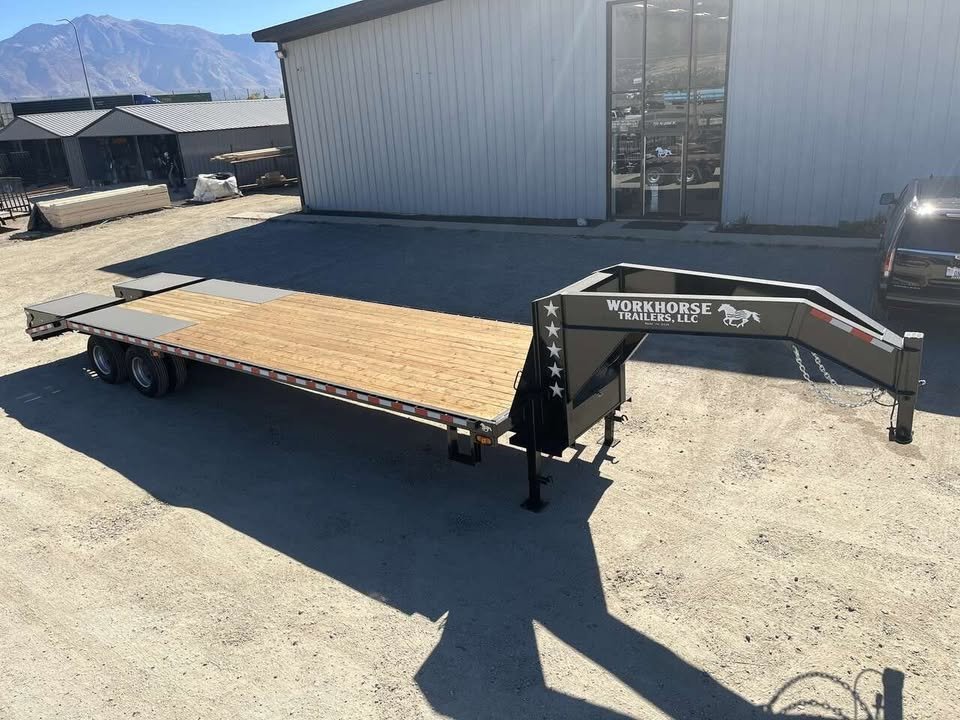
Drop deck configurations lower the main cargo area closer to the ground by stepping the deck down behind the gooseneck rise. This reduced deck height lowers the overall center of gravity of the loaded trailer, improving towing stability and reducing the vertical clearance needed to pass under bridges and overhead power lines. Lowboy configurations take this concept further with deck heights that allow very tall equipment to travel within legal height limits that a standard deck trailer would exceed.
Montana operators who transport tall machines like aerial lift platforms, large excavators with extended boom assemblies, or agricultural equipment with high cab profiles often find that a drop deck or lowboy is the only configuration that keeps their loaded trailer within legal height restrictions on state highways.
Equipment Haulers With Dovetail Loading
Dovetail sections at the rear of an equipment hauler create a transitional slope between the deck surface and the loading ramps. This graduated approach angle reduces the abrupt incline that machines encounter when driving onto a flat-rear trailer, which protects low-hanging hydraulic lines, belly pans, and counterweight assemblies from scraping during the loading process. Beaver tail and knife edge dovetail profiles each offer slightly different approach geometries suited to different machine types.
Montana Road Regulations for Equipment Hauler Trailers
Operating an equipment hauler on Montana public roads involves compliance with state and federal weight, dimension, and safety regulations that vary depending on trailer size and cargo weight.
Gross vehicle weight limits on Montana highways follow federal bridge formula standards on interstate routes and state-specific allowances on non-interstate roads. Overweight loads require special permits from the Montana Department of Transportation, and those permits may restrict travel to certain routes, times of day, and escort requirements depending on the degree of overweight.
Overall length, width, and height limits apply to all trailer configurations operating on Montana roads. Loads that project beyond standard dimensional limits require oversize permits and may need pilot vehicles, flags, signage, and flashing lights. Understanding these regulatory boundaries before purchasing an equipment hauler helps Montana buyers select a trailer configuration that handles their typical loads without triggering permit requirements on every trip.
Workhorse Trailers LLC is familiar with the regulatory landscape affecting Montana equipment hauler operations and factors compliance considerations into every customer consultation. Choosing a trailer that carries your heaviest typical load within legal limits eliminates the ongoing cost and scheduling burden of repeated permit applications.
For Montana professionals ready to evaluate specific equipment hauler models, compare weight ratings across configurations, and discuss which options align with their operational needs, the complete Workhorse Trailers LLC selection is available for review. VisitMontana Equipment Hauler Trailers to browse current inventory and connect with the team for personalized guidance.
Pre-Trip Preparation for Montana Equipment Hauling
The consequences of a mechanical failure while hauling heavy equipment on a remote Montana highway range from inconvenient to genuinely dangerous. Thorough pre-trip preparation minimizes those risks and keeps both the operator and other motorists safe.
Walk around the trailer before every loaded departure and visually confirm that tires show no sidewall damage, bulging, or embedded objects. Verify inflation pressures with a calibrated gauge rather than relying on visual assessment, as radial tires can appear normal while running significantly underinflated. Check that all lug nuts are present and torqued to specification, paying particular attention to any wheel that was recently removed for bearing service or tire replacement.
Test all lighting circuits with the trailer connected to the tow vehicle. Brake lights, turn signals, clearance markers, and reflectors must all function properly before pulling onto public roads. Carry replacement bulbs, fuses, and a basic wiring repair kit for addressing lighting failures that occur during transit, because a loaded equipment hauler without visible brake lights is invisible to following traffic during evening travel or in Montana’s frequent low-visibility weather conditions.
Inspect every tie-down chain, strap, and binder securing the equipment to the trailer deck. Confirm that chain grades match or exceed the working load limit required for the cargo weight and that all binders are fully tightened. Recheck securement after the first 50 miles of travel, as initial settling and vibration can introduce slack that was not present at departure.
Verify that the breakaway brake system battery is fully charged and that the breakaway cable is properly attached to the tow vehicle frame. Test the breakaway switch by pulling the pin while the trailer is chocked to confirm that the brakes engage immediately and hold firmly. This five-second test could prevent a runaway trailer scenario that puts lives at risk on a Montana mountain grade.
Building a Lasting Equipment Hauling Partnership
Workhorse Trailers LLC approaches every Montana equipment hauler sale as the beginning of a long-term relationship rather than a single transaction. The professionals who buy these trailers depend on them daily, and the questions that arise over years of ownership deserve the same quality of attention that the initial purchase received. From axle service intervals and brake adjustment guidance to advice on upgrading components as hauling demands evolve, the Workhorse Trailers LLC team remains engaged and accessible throughout the ownership experience.
Montana’s industries will continue to move heavy iron across challenging terrain for generations to come. Having a trailer partner who understands both the equipment and the environment it operates in gives every Montana professional the foundation they need to keep their machinery moving safely, legally, and efficiently across the miles that separate one job site from the next.