
Montana Enclosed Cargo Trailers
All locationsAn open trailer gets the job done until the weather doesn’t cooperate. In Montana, that can mean sideways rain in April, dust storms rolling through the eastern plains in August, or a November snow squall that materializes faster than the forecast predicted. For anyone who hauls tools, merchandise, equipment, or personal belongings across this state with any regularity, an enclosed cargo trailer solves problems that tarps, bungee cords, and good intentions simply cannot. Workhorse Trailers LLC has become a go-to source for Montana buyers searching for enclosed cargo trailers that balance build quality with practical value, and the company’s consultative approach helps buyers match the right trailer to their specific hauling demands.
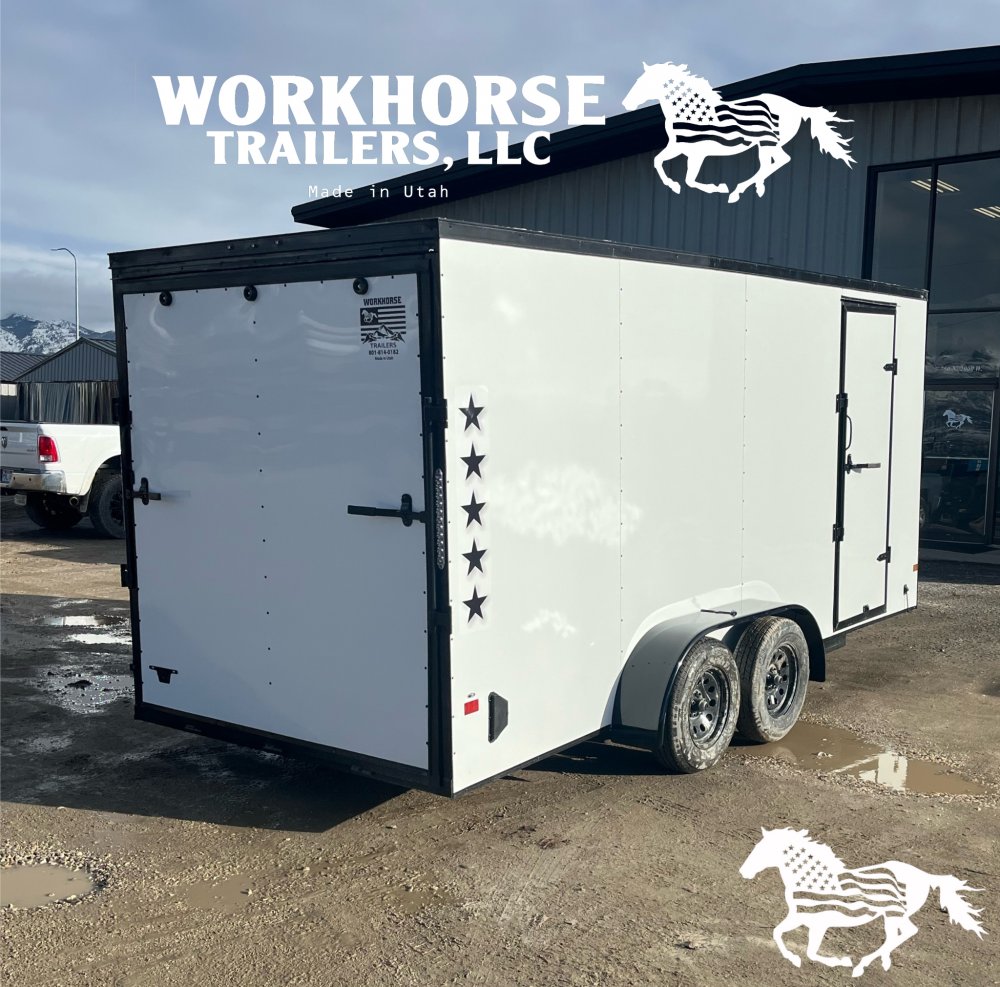
Enclosed cargo trailers are exactly what the name suggests: fully enclosed boxes on wheels, with walls, a roof, and typically a rear ramp door or swing doors for loading access. They come in an enormous range of sizes, from compact 4×6 units you can pull behind an SUV to 8.5×28-foot tandem or triple-axle configurations designed for commercial use. What they share in common is protection. Your cargo stays dry, secure, and hidden from view for the duration of the trip.
That protection carries real financial weight for Montana buyers. A contractor whose power tools sit exposed to freezing rain during a three-hour drive from Missoula to a job site in Hamilton isn’t just dealing with inconvenience. Moisture damage to equipment, rust on metal components, and the corrosive effects of road salt and grime add up over time. An enclosed trailer eliminates that exposure entirely.
Who Buys Enclosed Cargo Trailers in Montana
The customer base for enclosed trailers in Montana is broader than most people expect. These aren’t niche products reserved for a single industry. They serve a cross-section of the state’s economy and lifestyle.
Contractors and Tradespeople
Electricians, plumbers, HVAC technicians, welders, and general contractors represent a large share of enclosed trailer buyers in Montana. A well-organized enclosed trailer functions as a mobile workshop and secure storage unit at the same time. You drive to the job site with everything you need already loaded and organized, lock the trailer when you leave, and nothing walks off overnight. For tradespeople working multiple sites across a wide geographic area, which describes most of Montana’s contractor workforce, that combination of mobility and security is hard to replicate any other way.
Motorsport and Recreation
Montana’s trail systems, backcountry roads, and wide-open spaces attract riders and racers who need to transport motorcycles, ATVs, snowmobiles, and side-by-sides. Enclosed trailers keep machines protected during transit and offer a sheltered staging area at the trailhead or event. Some buyers add interior tie-down systems, LED lighting, and basic cabinetry to create a self-contained base of operations for weekend trips into the mountains.
Small Business and Retail
Mobile vendors, market sellers, and small business owners use enclosed cargo trailers as portable storefronts and inventory transports. Farmers market vendors across the Gallatin Valley and Flathead area haul their products in enclosed trailers to keep food items at stable temperatures and protect fragile goods from road vibration and weather. Landscaping companies load mowers, trimmers, and supplies into enclosed trailers that double as secure overnight storage when parked at the shop.
Personal and Household Use
Montana residents who are relocating, downsizing, or moving belongings between properties frequently choose enclosed cargo trailers over renting a moving truck. The economics work out favorably for anyone making multiple trips or moving on their own timeline rather than a rental company’s schedule. Hunters and outfitters also use smaller enclosed trailers to haul camp gear, game processing equipment, and supplies into remote areas where protecting your provisions from the elements matters.
Sizing and Configuration Options
Choosing the right size enclosed cargo trailer depends on what you’re hauling and what vehicle you’re towing with. Buying too small means you’ll be frustrated every time something doesn’t fit. Buying too large means you’re towing unnecessary weight and dealing with a trailer that’s harder to maneuver and park.
Single Axle Models
Enclosed trailers in the 5×8 to 6×12 range typically ride on a single axle and keep the gross vehicle weight rating under 3,500 pounds. These are towable by most half-ton trucks and many SUVs, making them accessible entry-level options for personal use, light trade work, or recreational hauling. A 6×12 single axle trailer has enough interior volume to carry a motorcycle or a modest load of household goods without requiring a heavy-duty tow vehicle.
Tandem Axle Models
Stepping up to tandem axles opens the door to trailers in the 7×14 to 8.5×24 range, with GVWRs typically between 7,000 and 14,000 pounds. This is the sweet spot for most commercial and serious recreational users in Montana. A 7×16 tandem axle trailer gives a contractor room for a full complement of tools plus materials for a day’s work. An 8.5×20 provides enough floor space for two full-size ATVs or snowmobiles with gear.
Tandem axle configurations provide better weight distribution, improved braking performance, and redundancy in case of a tire failure. On Montana’s long highway stretches between towns, that redundancy is more than theoretical. A single-axle blowout on Interstate 90 between Livingston and Big Timber leaves you stranded. A tandem axle blowout is manageable.
Specialty and Oversized Configurations
For commercial operations that need maximum interior volume, trailers running 8.5 feet wide and 24 to 32 feet long with tandem or triple axles handle large-scale hauling. Car haulers, mobile workshop buildouts, and commercial freight applications fall into this category. These trailers often include features like beaver tail ramp transitions, interior E-track tie-down systems, side access doors, and roof vents or climate control provisions.
Construction Quality: What Separates a Good Enclosed Trailer From a Disposable One
The enclosed trailer market includes products at virtually every price point, and not all of them are built to survive Montana’s conditions. Understanding the key construction differences helps you avoid a purchase you’ll regret within a couple of seasons.
Frame Construction
The trailer’s frame is its skeleton, and the material and design determine how long the trailer holds up under load. Tubular steel frames are standard on quality enclosed trailers, with cross members welded at regular intervals to prevent floor flex and sagging. Some economy trailers use lighter gauge steel or wider cross member spacing to cut costs, which works fine for occasional light-duty use but develops problems quickly under heavy or frequent loading. Look for a minimum of 2×3-inch or 2×4-inch tubular steel main rails with cross members on 16-inch centers for any trailer you plan to work regularly.
Wall and Roof Panels
Most enclosed cargo trailers use either aluminum sheet or composite panels for their walls and roof. Aluminum is lightweight and naturally resistant to corrosion, making it a strong choice for Montana’s variable climate. The gauge of the aluminum matters. Thinner panels dent and fatigue more easily, while .030 or .040 gauge aluminum provides reasonable durability for the weight savings.
The attachment method for wall panels also affects longevity. Screwed panels allow for easier individual panel replacement if damage occurs. Bonded panels create a smoother exterior appearance but can be more involved to repair.
Roof Design
Flat roofs and rounded (radius) roofs are the two primary options. Radius roofs shed water and snow more effectively and tend to hold up better under snow loads, which is a relevant consideration for trailers stored outdoors in Montana. A flat roof with poor drainage can accumulate snow weight that stresses the structure, and standing water from poor drainage accelerates corrosion around seams and fasteners.
Flooring
Exterior-grade plywood, typically three-quarter-inch thickness, is the standard floor material for enclosed cargo trailers. For trailers that will carry heavy equipment, motorcycles, or anything with concentrated point loads, consider models with reinforced flooring or the option to upgrade to a thicker or composite floor. Some buyers add rubber matting or diamond plate aluminum over the plywood to extend its life and provide better traction for wheeled equipment.
Montana Registration and Road Requirements
Enclosed cargo trailers operated on Montana public roads must be registered through the county treasurer’s office in the owner’s county of residence. Montana does not impose a state sales tax, which provides a notable cost advantage compared to purchasing an identical trailer across the border in Idaho, Wyoming, or Washington. Registration fees are calculated based on the trailer’s age and declared GVW, and the annual cost remains low relative to most western states.
All enclosed trailers must display a valid Montana registration plate and carry functioning tail lights, brake lights, turn signals, and reflective conspicuity markings. Trailers exceeding 3,000 pounds GVWR must be equipped with brakes on all wheels and a breakaway braking system. These requirements are enforced during roadside inspections, and the Montana Highway Patrol does conduct trailer-specific checks, particularly on major corridors during peak travel seasons.
Buyers should also verify that their tow vehicle’s GVWR, GCWR, and hitch ratings are compatible with the loaded weight of the enclosed trailer they’re considering. An enclosed trailer loaded with tools and materials can approach or exceed its GVWR quickly, and exceeding your tow vehicle’s ratings creates handling and liability issues that no amount of driving skill can fully offset.
Protecting Your Investment Through Maintenance
An enclosed cargo trailer requires less routine maintenance than many other trailer types because the cargo area is shielded from direct weather exposure. That said, the trailer still operates on the same running gear, electrical systems, and structural components that need periodic attention.
Wheel bearings should be inspected and repacked on a schedule appropriate to your mileage and usage. For trailers that see regular highway use across Montana’s long distances, an annual bearing service is reasonable. Trailers with EZ-lube hubs simplify this process considerably.
Door seals and weatherstripping deserve seasonal inspection. The entire value proposition of an enclosed trailer depends on keeping the interior dry, and a deteriorated door seal defeats that purpose. Replacement seals are inexpensive and straightforward to install, so there’s no reason to tolerate a leak.
Inspect the roof seams and any penetrations (vent openings, antenna mounts, roof-mounted accessories) for sealant integrity at least once a year. Silicone or self-leveling lap sealant applied to any cracked or peeling seam prevents water intrusion that can damage interior framing and insulation.
If the trailer is stored outdoors during winter, clear snow accumulation from the roof promptly. Even a radius roof has load limits, and heavy wet Montana snow packs on quickly during spring storms.
Working With Workhorse Trailers LLC
Workhorse Trailers LLC takes a different approach than the volume-focused dealerships that push whatever sits on the lot longest. The process begins with understanding what the buyer actually needs. A part-time market vendor hauling produce around the Bitterroot Valley has fundamentally different requirements than a welding contractor running jobs between Great Falls and Havre five days a week. Starting from those specifics leads to a better trailer match and a buyer who stays satisfied long after the purchase.
The company’s inventory covers single axle models for personal and light-duty use through heavy tandem axle configurations built for commercial demands. Buyers who want to browse available options and specifications can visitMontana Enclosed Cargo Trailers to see the current selection and get details on pricing and features.
Workhorse also helps buyers think through the add-ons and upgrades that actually deliver value versus the ones that simply inflate the sticker price. Interior lighting, additional tie-down systems, upgraded door hardware, and ventilation improvements are common requests that make a real functional difference. Cosmetic upgrades that don’t affect performance can wait or be skipped entirely without affecting how well the trailer does its job.
Finding the Right Enclosed Cargo Trailer for Montana Life
The right enclosed cargo trailer is the one that fits your cargo, fits your tow vehicle, and holds together through years of Montana roads and weather. It doesn’t need to be the biggest or the most expensive. It needs to be well built, properly sized, and matched to the way you’ll actually use it.
Workhorse Trailers LLC serves buyers throughout Montana, from the western valleys to the eastern prairies and everywhere between. Whether you’re outfitting a trade business, setting up a mobile retail operation, or just need a reliable way to move your stuff without worrying about the weather, the team at Workhorse is ready to walk you through the options and help you make a decision that holds up. Reach out to start the conversation, and you’ll find the process as straightforward as the trailers themselves.