Montana Deck Over Trailers
All locationsWhen your work takes you across Montana’s rugged landscapes, from the timber country around Kalispell to the sprawling agricultural operations south of Billings, the trailer you hitch to your truck needs to earn its keep. Deck over trailers have become a preferred hauling solution for Montana ranchers, contractors, equipment operators, and property owners who need a flat, unobstructed loading surface that can handle serious weight. Workhorse Trailers LLC has built a reputation as a trusted source for these trailers, serving buyers throughout Montana who need reliable equipment without the runaround that often comes with big-box dealerships.
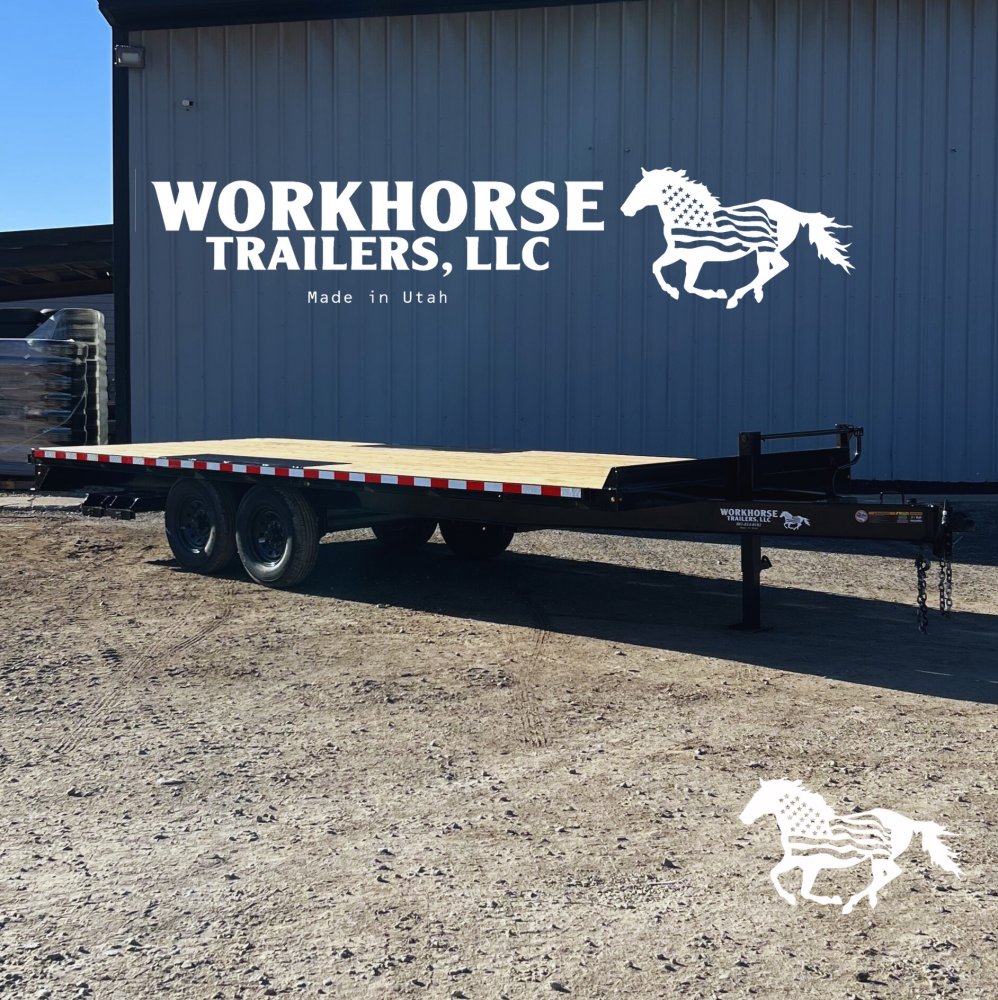
A deck over trailer, sometimes written as deckover or deck-over, places the bed of the trailer above the wheels rather than between them. That design choice changes everything about how the trailer performs in the field. The full-width deck gives you an uninterrupted loading surface, which means wider equipment, palletized materials, and oversized loads fit without the fender clearance issues that come with standard flatbed configurations. For the kind of work Montana demands, that extra width and accessibility isn’t a luxury. It’s the reason most buyers choose this style in the first place.
Why Deck Over Trailers Fit Montana’s Working Conditions
Montana is the fourth largest state by land area, and the distances between job sites, supply yards, and properties can stretch into hours of highway driving. The loads people need to move here reflect the industries that define the state: hay bales and livestock panels for agricultural operations, skid steers and mini excavators for construction, side-by-sides and ATVs for landowners managing remote acreage, and building materials headed for sites that sit miles from the nearest paved road.
Deck over trailers handle all of these hauling scenarios well because of a few core design advantages. The flat, full-width bed eliminates wheel wells from the loading surface, so nothing interrupts the usable space. Loading ramps, whether spring-assisted or hydraulic, fold up from the rear of the trailer and lay flat to create a gentle incline for driving equipment on and off. Tie-down points are spaced along the perimeter and sometimes across the deck itself, giving you flexibility in how you secure different types of cargo.
The elevated deck height does mean a higher center of gravity compared to a drop-deck or car hauler style trailer. That’s a real consideration on Montana’s mountain passes, especially in winter conditions. But for the majority of flatbed hauling tasks where ground clearance, loading versatility, and bed width matter most, deck over designs deliver clear practical benefits.
Common Sizes and Configurations
Deck over trailers come in a range of sizes, and the right one depends on what you’re hauling and what you’re towing with. The most popular configurations in Montana tend to fall into a few categories based on use.
Light to Medium Duty
Trailers in the 14,000 to 16,000 pound GVWR range are common among property owners, hobby farmers, and smaller contracting operations. A typical setup might be 20 to 24 feet long and 102 inches wide, running on tandem axles with electric brakes. These trailers handle tasks like hauling a compact tractor, a load of fencing materials, or a UTV with room to spare. They tow comfortably behind a three-quarter-ton or one-ton pickup without requiring a CDL in most configurations.
Heavy Duty
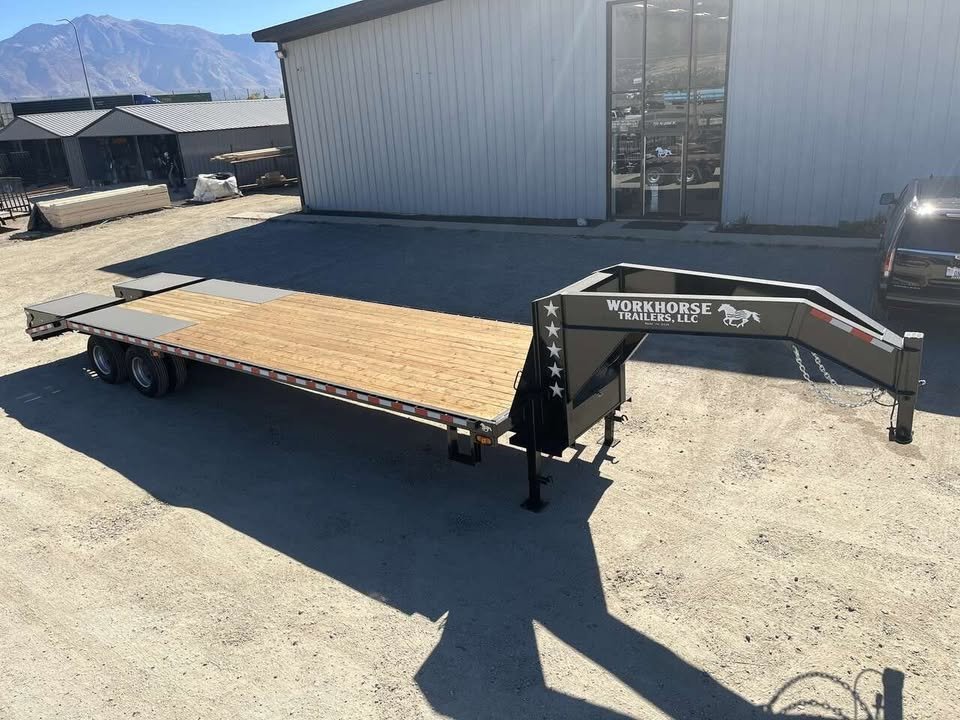
For contractors and equipment rental companies, deck over trailers rated at 20,000 pounds GVWR and above open up the ability to haul mid-size excavators, large skid steers, and loaded material deliveries. These typically run 24 to 30 feet or longer, with heavier axle ratings, upgraded braking systems, and reinforced deck structures. Gooseneck hitching is standard at this weight class, offering better tongue weight distribution and improved towing stability compared to bumper pull setups.
Hotshot and Commercial
Montana’s oil field activity in the Bakken region and ongoing infrastructure projects across the state create demand for commercial-grade deck over trailers rated at 25,000 pounds and beyond. These units often feature air brakes, 12-bolt hubs, and heavy I-beam or tubular main frames designed for daily commercial use. Hotshot haulers running freight corridors through Montana rely on this class of trailer for its payload capacity and durability under continuous use.
What to Look for When Buying a Deck Over Trailer in Montana
Not every deck over trailer is built to handle Montana’s combination of heavy loads, rough terrain, and temperature extremes that swing from well below zero in January to over 100 degrees in July. There are several things worth paying close attention to when evaluating your options.
Frame and Structural Integrity
The main frame is where you separate trailers that will last a decade from trailers that develop cracking and fatigue within a few years. Look for heavy I-beam or channel iron construction with cross members spaced closely enough to support concentrated loads. Weld quality matters enormously. Continuous welds at stress points and gussets at frame junctions are signs of a trailer built for actual work rather than a showroom floor.
Axle and Suspension Quality
Spring suspensions remain the standard for most deck over trailers, though torsion axles appear on some lighter-duty models. For Montana roads, particularly the unpaved county roads and forest service routes that many buyers travel regularly, a spring suspension with quality leaf packs handles washboard surfaces and potholes better than economy-grade alternatives. Axle brand matters here. Dexter and Lippert are the names you see most often on trailers that hold up year after year.
Deck Material and Finish
Treated pine decking is the most common choice and works well for general-purpose hauling. Some buyers opt for oak or composite decking for added longevity, though the cost goes up accordingly. Whatever the material, the deck boards should be tight-fitted and fastened securely. The finish on the steel frame, whether painted, powder-coated, or primed, affects long-term corrosion resistance. Montana’s road salt and wet spring conditions can accelerate rust on trailers with subpar coatings.
Electrical and Lighting
Montana law requires functioning brake lights, turn signals, and reflective markers on all trailers operated on public roads. LED lighting has largely replaced incandescent bulbs on quality trailers because LEDs survive vibration and moisture far better. Sealed wiring harnesses with proper junction connections are important for reliability, especially if you’re running the trailer in rain, mud, or snow regularly.
Registration and Legal Requirements in Montana
Trailer registration in Montana is handled through the county treasurer’s office where the owner resides. Montana does not charge sales tax, which is one reason the state is known as a favorable place to purchase trailers and vehicles. Registration fees are based on the age and weight of the trailer, and the costs are modest compared to most neighboring states.
All trailers operated on Montana highways must display a valid registration plate. Trailers with a GVWR exceeding 26,001 pounds, or combinations where the total weight exceeds that threshold, require the driver to hold a commercial driver’s license. It’s worth confirming the GVWR of any trailer you’re considering relative to your tow vehicle’s ratings and your licensing status before purchasing.
Brakes are required on all wheels for trailers over 3,000 pounds GVWR when traveling on Montana roads. Breakaway systems, which automatically engage the trailer brakes if the trailer separates from the tow vehicle, are also required for trailers with electric brakes.
Maintaining a Deck Over Trailer Through Montana Winters
Montana’s winters test equipment in ways that milder climates simply do not. Keeping a deck over trailer in reliable working condition through the cold months requires some deliberate maintenance habits.
Grease all wheel bearings before winter sets in, or at minimum verify that the bearing seals are intact and the grease is not contaminated with moisture. Wet or degraded bearing grease in freezing temperatures is one of the most common causes of roadside trailer failures in cold weather states.
Inspect the deck boards for cracking or warping before the snow arrives. Water that seeps into cracked deck boards will freeze, expand, and accelerate deterioration. Replacing a few boards in the fall is far cheaper and easier than dealing with a compromised deck in the middle of calving season.
Check all electrical connections after any extended exposure to road salt or wet conditions. Corroded connections cause intermittent brake and lighting failures that are both dangerous and a reliable way to attract a citation from Montana Highway Patrol.
If you store the trailer for any period during winter, block the tires off the ground to prevent flat-spotting and relieve the suspension. Cover the deck if possible, or at least clear snow accumulation regularly to reduce moisture exposure.
Where Workhorse Trailers LLC Fits In
Workhorse Trailers LLC works directly with Montana buyers who want straightforward answers about which trailer matches their actual needs. Rather than steering every customer toward the most expensive option on the lot, the approach is consultative. What are you hauling? How far? How often? What’s your tow vehicle rated for? Those questions lead to better purchasing decisions and fewer regrets six months down the road.
The company’s inventory covers the range of deck over trailers that Montana buyers most commonly need, from tandem-axle bumper pull units for ranch and property use up through gooseneck and commercial-grade configurations for contractors and hotshot operators. Buyers looking to explore the full lineup of available models can visitMontana Deck Over Trailers to see current inventory and specifications.
What sets Workhorse apart from many competitors is the willingness to have an honest conversation about what you don’t need. Selling someone a 30,000-pound rated gooseneck when a 14,000-pound bumper pull would handle their work creates an unhappy customer eventually. That philosophy of right-sizing the purchase to the job has driven steady referral business from buyers who appreciated the candor.
Serving Montana Buyers Across the State
Montana’s geography means that not every buyer lives within easy driving distance of a trailer lot. Workhorse Trailers LLC has experience coordinating with buyers in Missoula, Helena, Great Falls, Bozeman, Butte, Miles City, and the smaller communities scattered between them. Whether you’re running a cattle operation in the Missouri River breaks or building houses in the Flathead Valley, the process of selecting, purchasing, and taking delivery of a deck over trailer can be handled efficiently regardless of where in Montana you’re located.
For buyers who want to see a trailer in person before committing, arranging a visit is straightforward. For those who know exactly what they need and prefer to handle the process remotely, that works too. The priority is making the buying experience match the way Montana people actually prefer to do business: direct, efficient, and without unnecessary complications.
Financing and Budgeting Considerations
Deck over trailers span a wide price range depending on size, weight rating, and features. A solid tandem-axle bumper pull in the 14,000-pound class might start in the mid-single-digit thousands, while a heavy-duty gooseneck with commercial-grade components can reach well into five figures. Montana’s lack of sales tax provides a meaningful savings compared to purchasing the same trailer in a neighboring state like Idaho or Wyoming, where state and sometimes local taxes add to the total cost.
Many buyers finance their trailer purchase, and Workhorse Trailers LLC can help connect you with financing options suited to your situation. For agricultural buyers, some trailer purchases may qualify under USDA equipment financing programs or Section 179 tax deductions for business-use equipment. It’s worth discussing these possibilities with your accountant before finalizing a purchase, as the tax benefits can meaningfully offset the cost in the first year of ownership.
Choosing the Right Deck Over Trailer for Your Work
The best trailer is the one that does what you need it to do, year after year, without creating headaches. For Montana buyers, that means prioritizing build quality, appropriate weight ratings, and features that match real working conditions rather than spec sheet bragging rights. A well-chosen deck over a trailer becomes an extension of your operation, a piece of equipment you rely on constantly and rarely think about because it just works.
Workhorse Trailers LLC is ready to help you sort through the options and land on the right trailer for your situation. Whether you’re replacing an aging flatbed, adding capacity to a growing business, or buying your first trailer for a new property, the conversation starts with your needs and stays there until you’re hitched up and headed home.