
Montana Car Hauler Trailers
All locationsTransporting vehicles across Montana’s sprawling distances requires a trailer specifically engineered for the task. Whether the cargo is a vintage muscle car headed to a Billings car show, a fleet sedan being relocated between dealership lots in Great Falls, or a broken-down pickup that needs to reach a mechanic in Missoula, a dedicated car hauler trailer is the safest and most efficient way to move vehicles without adding miles to their odometers or exposing them to road hazards. Workhorse Trailers LLC provides Montana buyers with a carefully selected inventory of car hauler trailers designed to protect vehicles during transport and perform reliably across the long distances and challenging conditions that define hauling in this state.
Car hauler trailers differ from general-purpose flatbeds and utility trailers in important ways. Their deck profiles, ramp angles, tie-down configurations, and surface treatments are all optimized around the specific geometry and vulnerability of automobiles and light trucks. A trailer built for hauling a skid steer does not cradle a low-slung sports car the same way a purpose-designed car hauler does, and using the wrong trailer for vehicle transport risks cosmetic damage, undercarriage scraping, and inadequate securement that can turn a routine highway trip into an expensive disaster. Workhorse Trailers LLC helps Montana customers avoid those pitfalls by matching each buyer with a car hauler built for their particular transport needs.
Who Needs a Car Hauler Trailer in Montana
The market for car hauler trailers in Montana extends well beyond commercial auto transporters. A surprising variety of individuals and businesses across the state rely on these trailers regularly, and understanding the different user profiles helps illustrate why car haulers remain in steady demand.
Collectors and Enthusiasts
Montana has a passionate automotive culture fueled by long summer cruising seasons, regional car shows, swap meets, and a growing community of classic truck and muscle car restorers. Collectors who own vehicles too valuable or too mechanically fragile to drive long distances between events need car hauler trailers that protect paint finishes, chrome trim, and delicate running gear from stone chips, road grime, and weather exposure during transit. Many enthusiasts invest in enclosed car haulers that shield their prized vehicles completely, while others prefer open haulers that allow easy access and visibility during loading at show venues.
Dealerships and Auto Auctions
Independent auto dealers operating across Montana frequently purchase vehicles from auctions in Billings, Helena, and out-of-state locations. Transporting those acquisitions back to their lots on a dedicated car hauler is more economical than hiring a commercial carrier for each vehicle, especially when buying multiple cars per month. A quality car hauler trailer pays for itself quickly when the alternative is per-vehicle shipping fees that erode profit margins on every unit purchased.
Repair Shops and Body Shops
Collision repair facilities and mechanical shops throughout Montana retrieve disabled vehicles from accident scenes, customer homes, and roadside breakdowns on a weekly basis. A car hauler trailer equipped with a winch allows the shop to recover non-running vehicles without relying on a separate tow truck, expanding service capabilities while keeping overhead costs manageable. Shops that offer pickup and delivery as part of their customer experience gain a competitive edge that justifies the trailer investment many times over.
Motorsport Competitors
Montana’s dirt track racing circuits, drag strips, and off-road rally events draw competitors who need to transport race-prepared vehicles that are not street legal. Car hauler trailers carry these machines between the shop and the track without accumulating wear on racing components or risking a citation for operating an unregistered vehicle on public roads. Many racers also use the tow vehicle and trailer combination as a mobile pit area, storing tools, spare parts, and support equipment alongside the race car during event weekends.
Seasonal and Recreational Transport
Snowbirds who migrate south for the winter and outdoor enthusiasts who tow project vehicles to remote properties or vacation destinations represent another significant segment of Montana car hauler buyers. Rather than putting thousands of highway miles on a secondary vehicle, these owners load it onto a car hauler and tow it behind their primary truck, arriving at the destination with a fresh, unworn vehicle ready for local driving.
Types of Car Hauler Trailers Available Through Workhorse Trailers LLC
Car hauler trailers come in several distinct configurations, and the right choice depends on the vehicles being transported, how frequently the trailer will be used, and what level of protection the cargo requires. Workhorse Trailers LLC maintains inventory across the most popular categories to give Montana buyers real options to compare.
Open Flatbed Car Haulers
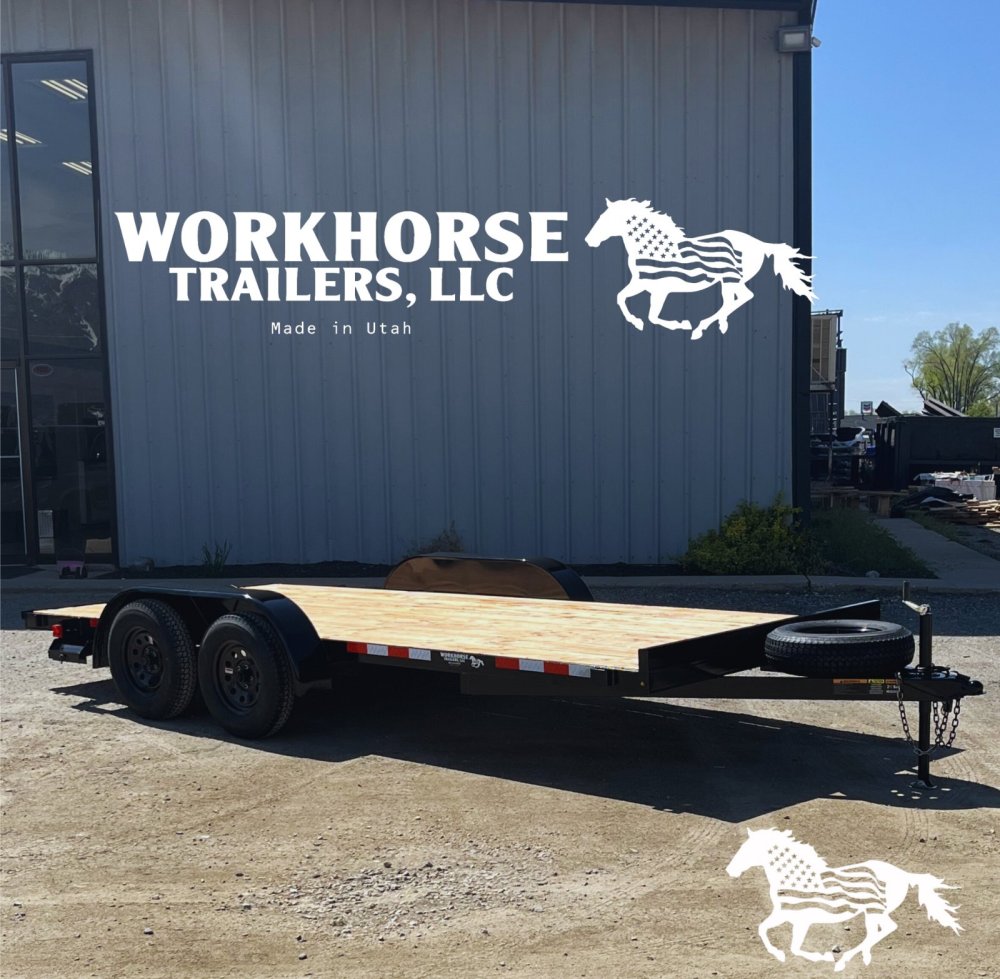
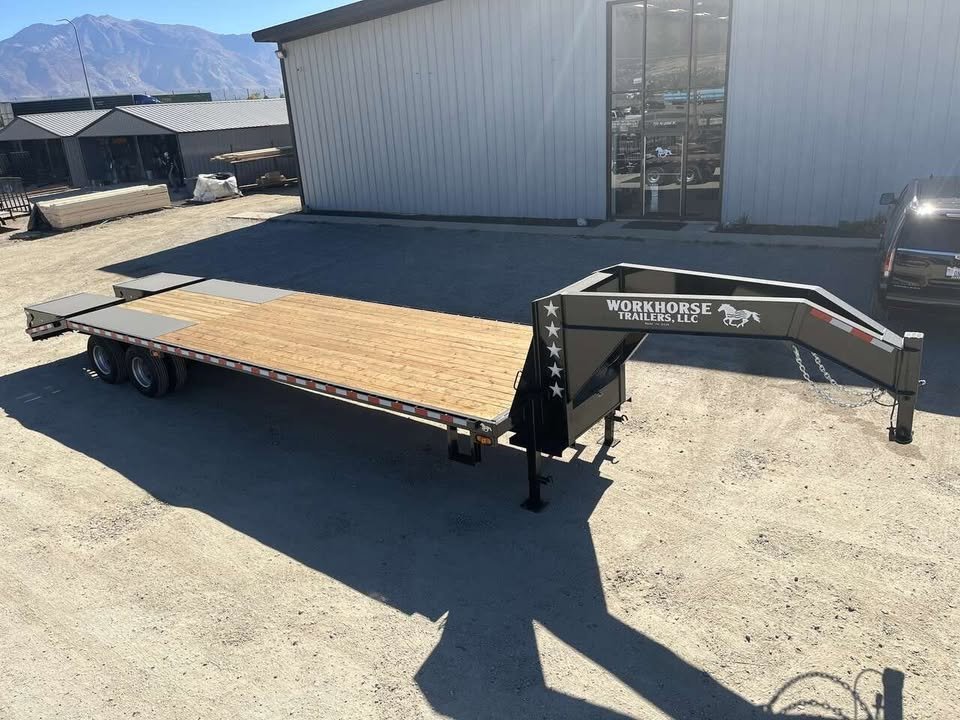
Open flatbed car haulers provide a straightforward, cost-effective platform for transporting vehicles. Their exposed deck allows easy access from both sides for strap placement and inspection during transit, and the absence of walls or a roof keeps the trailer lightweight and affordable. Most open car haulers feature a diamond plate or expanded metal deck surface that provides traction for tires during loading while allowing water drainage so that vehicles are not sitting in pooled moisture during wet weather travel.
These trailers suit buyers who transport vehicles frequently in fair weather conditions and prioritize simplicity and value over maximum protection. Montana dealers moving inventory between lots, mechanics retrieving customer vehicles, and racers hauling track cars that already show wear are all well-served by open flatbed car haulers.
Steel vs. Aluminum Deck Construction
Within the open car hauler category, buyers face a choice between steel and aluminum deck construction. Steel decks cost less and handle concentrated loads without flex, but they weigh more and require ongoing attention to prevent surface rust. Aluminum decks reduce trailer weight significantly, which increases the tow vehicle’s available payload capacity and improves fuel economy on Montana’s long highway stretches. Aluminum also resists corrosion naturally, making it a compelling choice for buyers who operate through Montana winters when road chemicals are prevalent.
Workhorse Trailers LLC carries car haulers in both materials and can walk Montana buyers through the trade-offs based on their intended usage patterns and tow vehicle specifications.
Enclosed Car Hauler Trailers
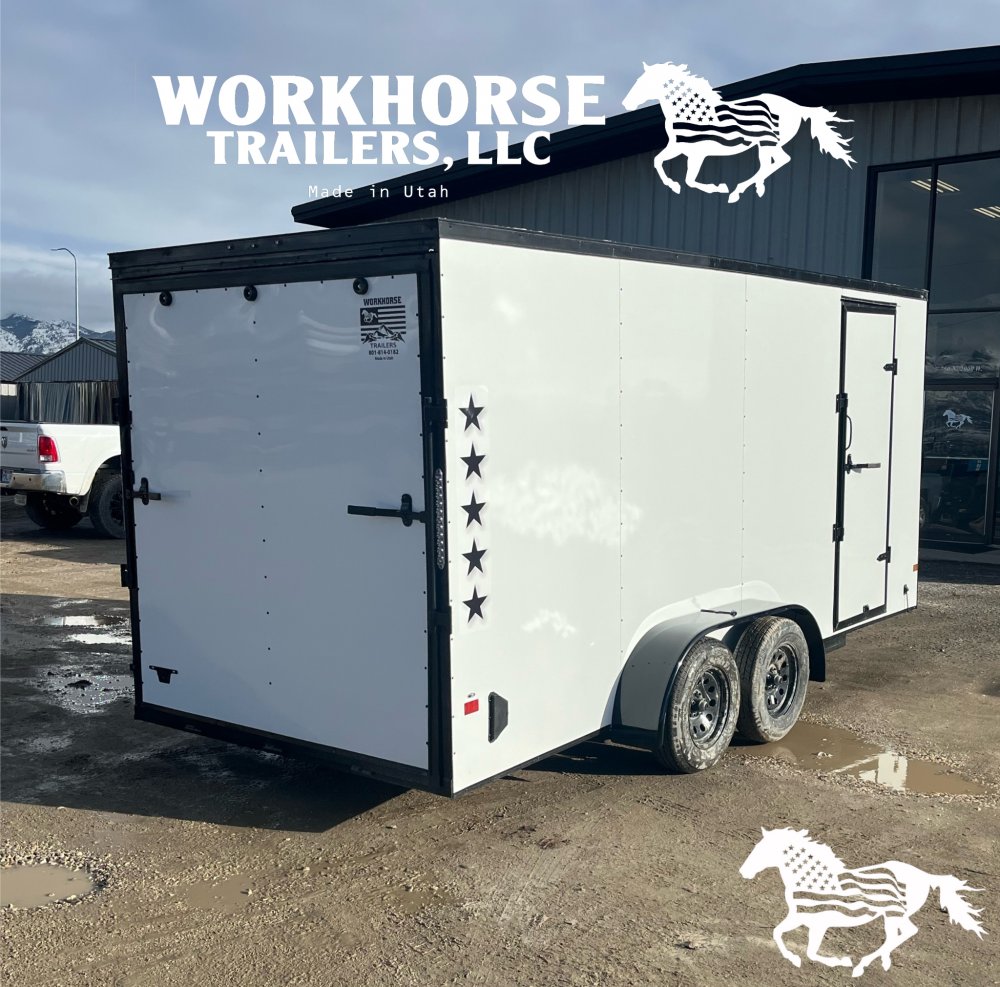
For maximum vehicle protection during transport, enclosed car hauler trailers surround the cargo in a fully sealed shell that blocks road debris, weather, UV exposure, and prying eyes. High-value collector cars, freshly painted custom builds, and vehicles being transported for sale where cosmetic condition directly affects price all benefit from the complete protection that an enclosed hauler provides.
Enclosed car haulers cost more than open models and require a more capable tow vehicle due to their higher empty weight and wind resistance. However, Montana buyers who transport valuable vehicles consider the premium worthwhile because a single incident of hail damage or highway stone chip on an unprotected vehicle can easily exceed the price difference between an open and enclosed trailer.
Interior appointments on enclosed car haulers range from basic bare walls to fully finished interiors with LED lighting, cabinet storage, workbench areas, and integrated tie-down tracks. Some Montana buyers outfit their enclosed haulers as mobile garages where minor repairs, detailing, and pre-show preparation can happen on location regardless of outside weather conditions.
Tilt Bed Car Haulers
Tilt bed car haulers use a pivoting deck that angles downward at the rear to create a low-profile loading ramp without requiring separate ramp components. This design is particularly valuable for loading vehicles with limited ground clearance, lowered suspensions, or front air dams that would scrape on conventional ramp angles. The gradual incline of a tilting deck guides the vehicle smoothly from ground level to transport height, protecting vulnerable underbody components throughout the loading process.
Montana buyers who collect lowered trucks, imported sports cars, or show vehicles with custom body kits frequently choose tilt bed car haulers specifically to avoid the loading damage that steeper ramp-based trailers can inflict on their investments.
Critical Features for Montana Car Hauler Buyers
Several features distinguish a reliable car hauler trailer from one that will create problems down the road. Workhorse Trailers LLC highlights these details during every consultation with Montana customers to ensure no important factor gets overlooked.
Ramp Design and Approach Angle
The ramps on an open car hauler determine how safely and easily vehicles board and exit the trailer. Longer ramps create a shallower approach angle that reduces the risk of scraping bumpers, valances, and exhaust components during the transition from ground to deck. Many quality car haulers feature ramps that extend five feet or more and include a gradual radius at the deck junction to smooth the angle change.
Spring-assisted ramps reduce the physical effort needed to raise and lower heavy steel ramp sections, which matters when one person is handling loading duties alone at a remote Montana location. Ramp width should accommodate the widest vehicle you plan to transport, with a few inches of margin on each side to allow for minor steering corrections during loading.
Tie-Down Points and Securement Methods
Vehicle securement on a car hauler trailer follows specific best practices that differ from general cargo strapping. Wheel bonnets, axle straps, and frame-mounted tie-down chains each serve different securement strategies depending on the vehicle type and the owner’s preferences. A car hauler should provide D-ring or stake pocket anchor points positioned to accommodate the typical wheelbase range of vehicles you plan to carry.
Recessed tie-down rings sit flush with the deck surface to prevent trip hazards and avoid interfering with tire placement during loading. Adjustable track systems welded to the deck allow anchor points to slide into the exact position needed for each vehicle, which is invaluable for haulers that transport different makes and models regularly.
Fender and Splash Guard Protection
Open car haulers expose transported vehicles to road spray kicked up by the trailer’s own tires. Quality fenders and splash guards mounted over each wheel position deflect water, mud, and gravel away from the vehicle sitting above and behind them. In Montana, where gravel shoulders and unpaved road sections are common even on major routes, effective fender coverage prevents the kind of paint pitting and windshield damage that turns a simple transport trip into an insurance claim.
Winch Installation for Non-Running Vehicles
A trailer-mounted winch transforms a car hauler from a drive-on-only platform into a recovery-capable transport system. Mechanical shops, salvage buyers, and breakdown service providers in Montana need the ability to pull non-running vehicles onto the trailer without relying on another vehicle to push from behind. Electric winches rated for the weight of the heaviest vehicle you anticipate loading mount at the front of the trailer deck and use a cable or synthetic rope to draw the vehicle up the ramps smoothly and controllably.
Navigating Montana Distances With a Car Hauler
Montana’s sheer geographic scale affects how buyers should think about their car hauler trailer selection. A trip from Billings to Missoula covers roughly 350 miles each way. A run from Great Falls to the Idaho border exceeds 400 miles. These are not quick errands but substantial highway hauls that test tow vehicle endurance, trailer component durability, and driver stamina.
Bearing quality becomes critical on long-distance hauls. Cheap bearings overheat on extended highway runs and can seize, causing catastrophic wheel failure at interstate speeds. Car haulers equipped with name-brand bearing assemblies and grease fittings that allow roadside re-lubrication provide the reliability margin that Montana distances demand.
Tire ratings also deserve scrutiny. Load range and speed rating must match the actual conditions of use, not merely the minimum legal requirement. A car hauler loaded with a full-size truck and traveling at 75 miles per hour across central Montana on a July afternoon subjects its tires to sustained heat and load stress that will punish underrated rubber mercilessly. Workhorse Trailers LLC verifies that every car hauler they sell to Montana customers rolls on tires rated for the real-world conditions those trailers will face.
Buyers who want to review available car hauler models, compare deck lengths and weight ratings, and learn more about the options that perform best for Montana driving conditions can start their search online. VisitMontana Car Hauler Trailers to explore the current Workhorse Trailers LLC inventory and identify the models best suited to your vehicle transport needs.
Protecting Vehicles During Montana Winter Transport
Hauling vehicles during Montana’s winter months introduces hazards that warm-weather transport does not present. Road salt and deicing chemicals coat the underside of the transported vehicle even though it is not being driven, because tire spray from the trailer’s own wheels carries those chemicals upward onto the cargo. Washing the transported vehicle’s undercarriage promptly after arrival helps prevent the accelerated corrosion that salt exposure causes on brake components, suspension parts, and exhaust systems.
Ice accumulation on trailer decks and ramps creates dangerously slick loading surfaces. Keeping a bag of coarse sand or non-clumping cat litter in the tow vehicle provides a quick traction solution when loading conditions deteriorate. Tire chains or cables on the trailer’s axle tires improve traction during winter highway travel and may be legally required on certain Montana mountain passes during declared chain-up conditions.
Visibility drops dramatically during Montana winter storms, and a loaded car hauler extends the overall length of the tow rig significantly. Ensuring all trailer lights function properly, adding supplemental reflective tape along the trailer’s side rails, and reducing speed to match conditions are basic winter hauling practices that every Montana car hauler operator should follow without exception.
Finding the Right Car Hauler at Workhorse Trailers LLC
The combination of product variety, Montana-relevant expertise, and genuine investment in each customer’s success continues to draw vehicle enthusiasts, dealers, repair shop owners, and commercial operators from across the state to Workhorse Trailers LLC. Their team understands that a car hauler trailer is not a generic commodity but a specialized tool that must protect cargo worth thousands or tens of thousands of dollars while performing safely over the immense distances that Montana travel demands.
Whether your next trip involves delivering a freshly restored Chevelle to a Bozeman concours event, retrieving a fleet vehicle from a Helena auction, or recovering a stranded sedan from a remote stretch of Highway 2, the right car hauler trailer from Workhorse Trailers LLC ensures the vehicle arrives in the same condition it left, every single time.