Midvale Gooseneck Trailers
All locationsGooseneck trailers represent the apex of heavy-duty hauling capability throughout Midvale, delivering superior weight capacity, enhanced stability, and improved maneuverability through innovative coupling systems that mount directly in truck beds rather than at rear bumpers. This fundamental design difference transforms weight distribution physics, enabling safe transport of loads that would overwhelm conventional bumper-pull configurations. Midvale’s industrial base, agricultural connections, and commercial transport operations increasingly depend on gooseneck trailers when hauling requirements exceed what standard equipment can safely handle.
The distinctive ball mount positioned in the truck bed rather than behind the rear axle creates engineering advantages that extend far beyond simple capacity increases. This forward coupling location places tongue weight directly over the tow vehicle’s strongest structural point, distributing forces through the frame and rear axle assembly rather than cantilevering loads behind the vehicle. Midvale businesses operating equipment-intensive operations, commercial haulers serving regional clients, and agricultural producers moving livestock or machinery all benefit from the substantial capabilities that gooseneck engineering provides.
Engineering Foundation of Gooseneck Superiority
Load transfer mechanics in gooseneck configurations position coupling points above rear axles, creating direct vertical loading rather than the horizontal cantilever forces that bumper-pull systems generate. This geometry allows trucks to safely support 20 to 25 percent of total trailer weight as tongue weight compared to the 10 to 15 percent limitation of conventional hitching. The increased weight-bearing capability directly translates to higher total trailer capacities within the same tow vehicle platform.
Articulation benefits result from the elevated hitch position providing clearance for trailer fronts to rotate through tighter turning angles without contacting truck cabs. The mechanical advantage enables gooseneck trailers navigating sharper turns than equivalent-length bumper-pull models, dramatically improving maneuverability in equipment yards, loading docks, and the confined commercial areas common throughout Midvale’s industrial districts.
Stability enhancement through shortened effective wheelbase between hitch point and trailer axles reduces the leverage arm through which destabilizing forces act. This fundamental geometric advantage makes gooseneck trailers inherently resistant to sway and fishtailing that plague heavily loaded conventional trailers. The confidence-inspiring stability proves particularly valuable during highway operation, crosswind exposure, and emergency maneuvers where bumper-pull trailers might develop dangerous oscillations.
Heavy Machinery Relocation Services
Industrial equipment moving operations throughout Midvale utilize gooseneck trailers transporting manufacturing machinery, production equipment, and specialized tools between facilities. CNC machines, industrial presses, and automated manufacturing systems represent enormous investments demanding careful handling during relocation. The substantial capacity and smooth towing characteristics of gooseneck designs provide appropriate platforms for moving precision equipment without the limitations restricting lighter-duty alternatives.
Construction equipment transport serves Midvale contractors deploying excavators, loaders, compaction equipment, and specialized machinery to project sites across the valley. Modern construction equipment has grown substantially in weight and capability, with machines that would have required commercial transport decades ago now moving routinely on gooseneck trailers behind one-ton pickup trucks. This accessibility allows contractors maintaining operational flexibility without commercial trucking dependencies.
Agricultural machinery hauling connects Midvale to surrounding farming operations moving tractors, implements, harvesting equipment, and specialized agricultural tools. Contemporary farm equipment features dimensions and weights that conventional trailers struggle accommodating safely. When consideringMidvale Gooseneck Trailers, agricultural operators prioritize models with adequate capacity margins, appropriate deck dimensions, and features supporting safe machinery securing during transport.
Livestock Transport Applications
Cattle hauling operations depend on gooseneck stock trailers moving animals to feedlots, auction facilities, veterinary centers, and between pasture locations. The superior stability that gooseneck hitching provides reduces trailer motion that stresses livestock during transport. Calm animals arriving at destinations in better condition command higher market prices while experiencing fewer health issues, directly impacting ranching profitability.
Horse transportation for recreational riding, competitive events, and breeding operations employs gooseneck trailers often incorporating living quarters for extended trips. The combination of animal capacity and human accommodations creates self-contained travel platforms supporting multi-day journeys to distant competitions or breeding facilities. Equestrian enthusiasts appreciate the consolidated functionality eliminating separate recreational vehicle requirements.
Specialty livestock including sheep, goats, and exotic species utilize gooseneck trailers configured for specific animal requirements. Interior layouts, ventilation systems, and loading configurations adapt to different species’ characteristics and handling needs. The hauling capacity allows transporting complete herds or breeding stock in single trips improving efficiency while reducing animal stress from prolonged transport.
Flatbed Cargo Versatility
Commercial freight operations utilize gooseneck flatbeds as universal platforms handling diverse cargo types. The unobstructed deck surfaces accept irregularly shaped items, oversized components, and materials that defy conventional packaging. Midvale businesses operating specialized hauling services or companies with varied transport needs appreciate flatbed versatility serving multiple purposes without maintaining dedicated trailers for narrow applications.
Steel and metal product transport leverages gooseneck capacity for structural beams, sheet metal bundles, fabricated components, and raw material stock. The substantial weight ratings handle dense metal products that would overload lighter trailers. Material suppliers and metal fabricators depend on gooseneck flatbeds completing deliveries efficiently without expensive specialized freight arrangements.
Machinery and equipment delivery serves rental companies, dealers, and end users throughout the region. The open deck design facilitates forklift loading at warehouse facilities while providing versatile securing options for equipment with non-standard configurations. Quick reconfiguration between different cargo types maintains operational flexibility essential for businesses serving varied customer requirements.
Dump Functionality Integration
Gooseneck dump trailers combine maximum hauling capacity with hydraulic unloading convenience. Landscaping operations, aggregate suppliers, and demolition contractors utilize these trailers transporting gravel, soil, asphalt millings, and bulk construction materials. The hydraulic lift systems save substantial labor compared to manual unloading while allowing precise material placement through controlled discharge.
Demolition and waste management operations require dump trailers handling heavy debris loads from teardowns and site clearing. The robust construction and high capacity of gooseneck dump designs accommodate the extreme weights and abrasive materials characteristic of demolition work. Hydraulic systems sized appropriately for heavy-duty service provide reliable operation through demanding applications.
Agricultural commodity handling employs dump goosenecks for grain, feed products, and harvest materials requiring efficient bulk management. The ability to position trailers for gravity unloading into storage bins or processing equipment simplifies agricultural operations. Farmers appreciate the time savings and labor reduction that hydraulic dumps provide during busy harvest seasons.
Hot Shot Trucking and Expedited Freight
Time-sensitive cargo delivery throughout Midvale and across regional markets employs gooseneck trailers paired with capable pickup trucks creating responsive freight solutions. Hot shot services fill niches requiring faster delivery than traditional freight while avoiding the overhead of full commercial trucking operations. Industries including oil field services, manufacturing, and emergency equipment supply create steady demand for expedited transport.
Load flexibility allows hot shot operators serving diverse customers without specialized trailer fleets. A single gooseneck flatbed handles machinery parts, construction materials, emergency equipment, and countless other cargo types with minimal reconfiguration. This versatility enables owner-operators and small freight companies competing effectively through responsive service and lower overhead.
Revenue optimization depends on maximizing legal payload within gross vehicle weight limits. Gooseneck trailers’ efficient structural designs reduce empty weight compared to equivalent-capacity bumper-pull alternatives, allowing more revenue-generating payload per trip. The weight efficiency directly impacts profitability through increased cargo capacity without exceeding regulations.
Tandem Versus Triple Axle Selection
Tandem axle goosenecks provide optimal balance between capacity, cost, and maneuverability for most commercial applications. Weight ratings commonly range from 14,000 to 25,000 pounds handling substantial loads while maintaining reasonable operating costs. The two-axle configuration offers redundancy allowing limited travel following single tire failures, preventing complete roadside immobilization from minor mechanical issues.
Triple axle configurations extend capacity to 30,000 pounds and beyond, approaching commercial truck capabilities while remaining towable by heavy-duty pickups. The third axle distributes weight across additional tires reducing individual tire loading while improving compliance with bridge formula regulations. However, the added axle creates tighter turning requirements and increases tire expenses requiring justification through genuine capacity needs.
Capacity matching to actual requirements prevents paying for unused capability while ensuring adequate ratings for maximum anticipated loads. Operations rarely approaching top capacities waste resources on unnecessary third axles and excess tires. Conversely, businesses regularly hauling near maximum weights benefit from triple-axle strength and tire load distribution preventing premature wear from overloading dual-axle systems.
Specialty Configuration Options
Living quarters gooseneck trailers integrate residential accommodations with cargo transport creating multipurpose platforms. Livestock haulers, competitive equestrians, and extended-trip recreational users benefit from front-section living spaces combined with rear cargo capacity. The consolidated design eliminates separate recreational vehicles simplifying travel while reducing total equipment investment.
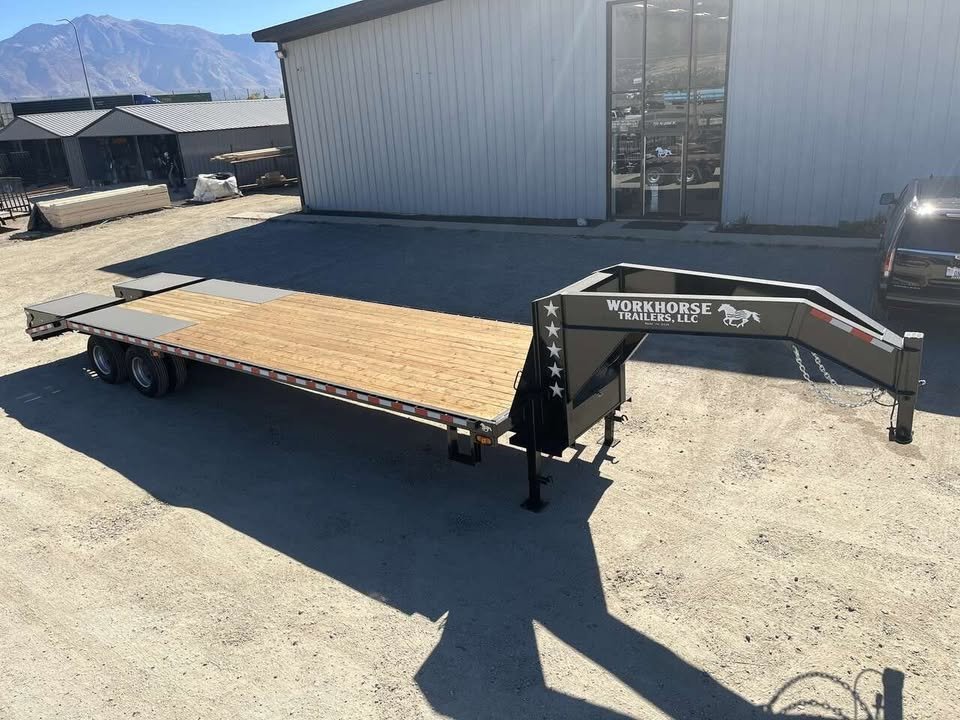
Lowboy gooseneck designs feature dropped deck sections reducing cargo platform heights for loading low-clearance vehicles and equipment. The distinctive profile maintains gooseneck coupling clearance while positioning cargo decks near ground level. These specialized trailers serve auto transporters hauling exotic cars, equipment movers handling low-profile machinery, and applications where ground clearance limits standard-height trailer loading.
Equipment-specific customization addresses unique hauling requirements that standard configurations cannot accommodate. Custom widths, specialized ramp systems, reinforced deck sections, or integrated toolboxes transform generic platforms into purpose-built solutions. Midvale businesses with unusual hauling needs work with custom fabricators developing trailers perfectly matching their operational requirements.
Truck Modification Requirements
Gooseneck hitch installation requires cutting access openings in truck beds for ball mounting and safety chain attachment points. While representing permanent modifications, removable ball systems mitigate concerns by allowing complete hardware removal when not towing. These sophisticated mechanisms restore full truck bed utility between hauling assignments, addressing resale value concerns from visible modifications.
Bed reinforcement becomes necessary on some trucks to handle tongue weight loads that gooseneck coupling creates. Professional installers evaluate frame strength, crossmember adequacy, and bed structure before mounting hardware. Quality installations distribute forces properly preventing stress concentrations that could cause failures under loaded conditions.
Payload capacity awareness determines maximum safe tongue weights independent of hitch hardware ratings. A gooseneck producing 5,000 pounds of tongue weight demands trucks with at least that remaining payload after accounting for fuel, passengers, and cargo. Exceeding payload ratings stresses components, accelerates wear, and creates liability if accidents occur while operating overloaded.
Advanced Braking Technologies
Electric-over-hydraulic brake systems deliver stopping power matching the substantial weights that gooseneck trailers routinely carry. Electrically activated hydraulic actuators combine convenient controller operation with hydraulic force multiplication exceeding pure electric brake capacity. These sophisticated systems suit heavy-duty applications where adequate stopping power becomes critical for safety and compliance.
Hydraulic disc brake upgrades on premium goosenecks provide superior performance compared to standard drum configurations. The improved heat dissipation and consistent braking across varying conditions justify premium costs for operations regularly hauling maximum capacities or traversing mountainous terrain. Professional transport services appreciate the enhanced control and reduced maintenance that disc brakes deliver.
Integrated brake controllers featuring load-sensing technology automatically adjust braking force based on actual trailer weight. These advanced systems optimize stopping performance across varying load conditions without manual controller adjustments. The automation ensures appropriate braking whether hauling empty, partial, or maximum loads improving safety while reducing driver workload.
Deck Material Innovations
Pressure-treated lumber decking provides traditional surfaces balancing initial cost with reasonable durability. Modern pressure treatment processes extend wood life substantially compared to untreated lumber while maintaining the natural traction and repair advantages that wood offers. Premium lumber selection and proper installation techniques ensure years of reliable service before replacement becomes necessary.
Steel decking options deliver maximum longevity for severe-duty applications involving heavy equipment or abrasive materials. Diamond plates or expanded metal surfaces withstand abuse that would quickly destroy softer materials. The substantial weight of steel reduces payload capacity but proves economical through extended deck life eliminating frequent replacement expenses.
Composite decking materials represent advanced alternatives combining synthetic and natural fibers creating surfaces resistant to moisture, chemicals, and physical damage. These engineered products never rot, resist insect damage, and maintain properties through temperature extremes. Higher initial investment recovers through extended replacement intervals and minimal maintenance requirements.
Securing Heavy Loads Safely
Grade 70 transport chain represents minimum standards for serious gooseneck applications, providing adequate strength for equipment and cargo securing. Lower-grade chains lack the working load limits that heavy hauling demands, risking failures under dynamic highway loading. Quality 3/8-inch Grade 70 chain features working load limits around 3,150 pounds per leg, appropriate for four-point restraint systems.
Load binders providing mechanical advantage allow achieving proper chain tension without excessive manual effort or operator injury risk. Lever-operated ratchet binders tighten chains to specifications preventing load movement while avoiding over-tensioning potentially damaging cargo. Proper binder selection, maintenance, and operation ensures reliable securing throughout service life.
E-track mounting systems integrated into gooseneck decks provide adjustable anchor positioning accommodating varying cargo configurations. The recessed tracks accept fittings that lock anywhere along track lengths, allowing precise anchor placement matching specific load dimensions. This flexibility proves valuable for operations transporting diverse equipment types where fixed anchors create securing compromises.
Towing Dynamics and Handling
Weight distribution characteristics unique to gooseneck hitching create distinct driving dynamics compared to bumper-pull towing. The forward tongue weight placement loads rear axles substantially while potentially reducing front axle weight. Proper truck selection ensures adequate front axle loading maintains steering authority and braking effectiveness under maximum loading conditions.
Backing techniques for gooseneck trailers require adapted approaches accounting for hitch positioning over rather than behind rear axles. Trailer response to steering inputs appears delayed compared to bumper-pull backing dynamics. Operators new to gooseneck equipment benefit from practicing in open areas before attempting tight maneuvers in congested environments.
Highway stability advantages make gooseneck trailers markedly less susceptible to sway from passing vehicles, crosswinds, or emergency maneuvers. The inherent stability reduces driver fatigue during long hauls while improving safety margins when encountering challenging conditions. Experienced operators report substantial confidence differences when towing heavy loads with gooseneck versus bumper-pull configurations.
Preventive Maintenance Programs
Bearing service schedules based on mileage and operating conditions maintain wheel bearing lubrication preventing premature failures. Commercial gooseneck operations hauling near capacity should service bearings every 10,000 miles or annually, whichever occurs first. This preventive maintenance costs minimally compared to bearing failures destroying hubs while potentially causing dangerous wheel separations.
Hydraulic system maintenance on dump goosenecks includes fluid changes, filter replacements, and cylinder inspections following manufacturer intervals. Annual service or every 100 dump cycles represents typical recommendations for commercial operations. Monitoring fluid levels between services allows early leak detection preventing complete system failures requiring expensive emergency repairs.
Frame inspection programs focus on welds and high-stress locations where fatigue cracks might initiate. Annual inspections by qualified personnel identify developing problems when repairs remain economical. Catching structural issues early prevents catastrophic failures that could cause accidents while destroying valuable cargo.
Economic Investment Analysis
Initial purchase costs for gooseneck trailers reflect their heavy-duty construction, specialized components, and substantial capabilities. Basic models start at moderate investments while extensively equipped specialty configurations command premium pricing. Total cost of ownership including maintenance, insurance, and depreciation provides more meaningful comparison than initial purchase price alone.
Operational returns through enhanced hauling capacity allow businesses accepting larger jobs or consolidating loads reducing trip frequency. Contractors handling projects requiring heavy equipment transport, freight operators moving substantial cargo, and agricultural businesses with significant hauling needs generate revenues quickly recovering equipment costs. The productivity improvements often justify gooseneck investments within first-year operations.
Resale value retention on quality gooseneck trailers remains strong due to consistent demand for heavy-duty equipment. Well-maintained trailers from reputable manufacturers retain 50 to 70 percent of original value after five years of commercial service. Comprehensive maintenance documentation and evidence of proper care maximize resale prices when upgrading or exiting operations.
Legal Operating Requirements
Registration and licensing through Utah DMV requires annual renewal maintaining legal operating status. Fees base on empty weight or gross vehicle weight rating with commercial operations potentially facing higher costs and additional documentation requirements. Proper registration prevents citations while providing ownership documentation supporting insurance claims and resale transactions.
Weight regulation compliance ensures gooseneck operations remain within legal limits protecting infrastructure while maintaining safe handling. Gross vehicle weight rating, axle weight limits, and bridge formula requirements govern maximum legal loads. Operators must understand applicable regulations ensuring compliance across varying jurisdictions when hauling beyond local areas.
Commercial driver’s license requirements apply when specific weight or for-hire thresholds are exceeded. Understanding when CDL becomes mandatory prevents violations while ensuring proper insurance coverage exists for commercial operations. Many small hauling businesses operate under exemptions though growth may trigger licensing requirements.
Selecting Appropriate Gooseneck Specifications
Application analysis determines whether gooseneck capabilities justify premium costs versus conventional alternatives. Regular heavy hauling, frequent equipment transport, or commercial freight operations clearly benefit from gooseneck advantages. Occasional light use may not justify the investment when simpler bumper-pull options adequately serve infrequent requirements.
Capacity planning accounts for maximum anticipated loads including potential business growth. Modest oversizing prevents rapid obsolescence when operations expand or equipment needs evolve. However, excessive capacity wastes resources on unused capability while potentially requiring larger tow vehicles than operations genuinely need.
Dealer consultation provides valuable guidance matching gooseneck specifications to actual operational requirements. Experienced dealers understand application nuances helping customers avoid under-buying inadequate equipment or over-buying excessive capability. Midvale-area dealers offer convenient access to quality equipment backed by ongoing support ensuring long-term satisfaction.