Grand Junction Gooseneck Trailers
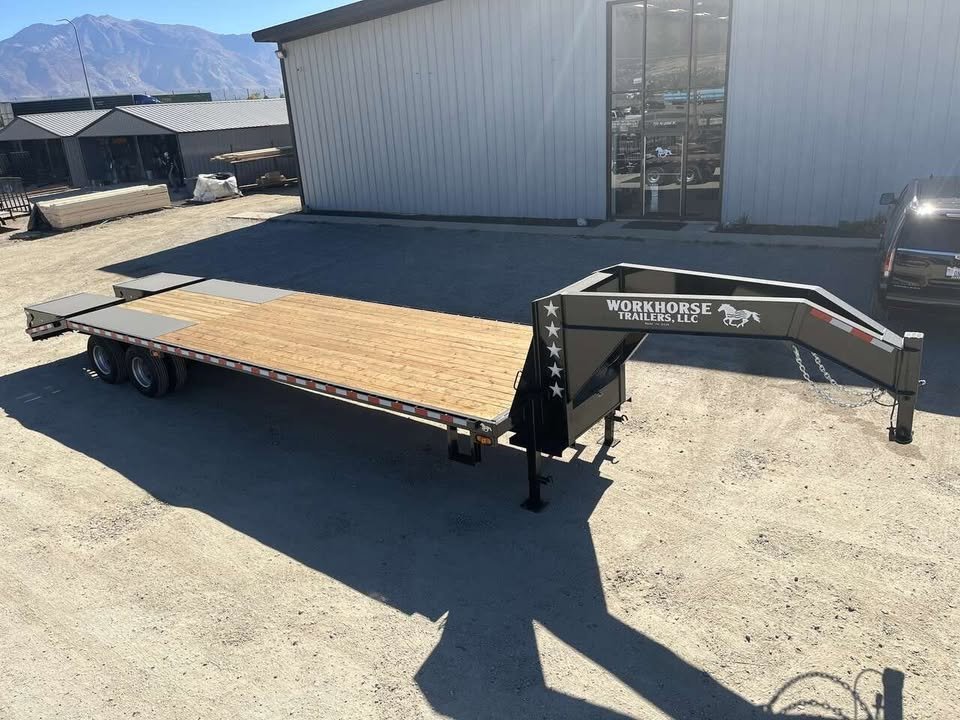
All locationsWhen payload demands exceed what a standard bumper-pull hitch can safely manage, a gooseneck trailer becomes the clear answer. The gooseneck design routes the connection point directly into the bed of the tow truck, centering the tongue load over the rear axle and unlocking payload capacities that bumper-mounted receivers were never engineered to handle. Across Grand Junction and the surrounding western slope, professionals in construction, ranching, energy, and commercial transport have long recognized the gooseneck platform as the backbone of serious hauling operations. Workhorse Trailers LLC serves this market with a focused selection of gooseneck trailers built to perform under the demanding conditions that define life and work in western Colorado.
The geography surrounding Grand Junction poses challenges that amplify the importance of choosing the right towing setup. Routes between job sites cross river valleys, climb desert mesas, and descend through narrow canyons where wind gusts and shifting grades test every component of a truck and trailer combination. A gooseneck hitch system addresses these realities by placing the heaviest point of connection at the strongest part of the tow vehicle, resulting in a more planted, more controllable rig at every speed and on every surface. Workhorse Trailers LLC carriesGrand Junction Gooseneck Trailers that pair this inherent stability advantage with the structural toughness needed for years of productive service on western Colorado roads.
The Engineering Advantage of Gooseneck Hitching
Understanding why gooseneck trailers outperform bumper-pull models in heavy hauling applications starts with basic towing physics. Every trailer exerts a downward force at the hitch point, known as tongue weight. On a bumper-pull trailer, that force acts at the extreme rear of the tow vehicle, behind the rear axle. As tongue weight increases, it lifts pressure off the front tires, reducing steering grip and braking effectiveness. This limitation caps how much total weight a bumper-pull arrangement can safely control.
A gooseneck hitch repositions that same downward force directly above the rear axle rather than behind it. The rear axle absorbs the tongue load without leveraging weight away from the front end of the truck. The result is a tow vehicle that maintains balanced tire contact with the road, even when pulling loads that weigh 20,000 pounds or more. Front-end steering response stays predictable, braking distances remain shorter, and the entire combination tracks straighter through curves and lane changes.
This physics advantage also translates into reduced trailer sway. Because the pivot point sits further forward in relation to the tow vehicle’s center of mass, a gooseneck trailer resists the pendulum effect that causes bumper-pull trailers to oscillate at highway speeds. For Grand Junction operators towing through the crosswind zones along Interstate 70 west of Palisade or through the exposed stretches near Loma, that reduction in sway is not an abstract benefit. It is a tangible improvement in driving confidence and road safety during every trip.
Who Depends on Gooseneck Trailers in the Grand Junction Area
The gooseneck format serves a remarkably broad cross-section of the local economy. Its combination of high capacity, superior road manners, and adaptable platform geometry makes it the default choice for anyone whose livelihood depends on moving substantial loads reliably.
Livestock Producers
Cattle ranchers, horse breeders, and small-stock producers scattered across Mesa, Delta, and Garfield counties rely on gooseneck livestock trailers as essential tools in their operations. Moving animals between seasonal pastures, transporting stock to auction facilities in Grand Junction and Montrose, and hauling horses to competitions and veterinary appointments all require a trailer that keeps animals secure and comfortable during transit.
Gooseneck livestock trailers offer the interior volume and structural reinforcement needed to contain large animals safely. The forward-mounted hitch point allows for longer trailer bodies without exceeding practical overall length limits, which gives animals more room to balance and reduces stress during transport. Ranchers working the mesas north of Grand Junction near Collbran or running cattle on BLM allotments south toward the Uncompahgre Plateau count on their gooseneck stock trailers through every season of the year.
Heavy Construction Contractors
Excavation companies, grading outfits, demolition crews, and general contractors form another core group of gooseneck trailer users in the Grand Junction market. The machines these businesses operate routinely weigh between 8,000 and 30,000 pounds, putting them squarely in the territory where only a gooseneck connection provides adequate towing stability and legal weight capacity.
A typical day for a Grand Junction excavation contractor might involve delivering a mini excavator to a residential dig in Fruita in the morning, relocating a skid steer to a commercial site along North Avenue by midday, and retrieving a compactor from a subdivision project in Clifton before dark. Each of those moves depends on a gooseneck trailer that loads quickly, hauls safely, and drops equipment at the destination without drama.
Hay and Feed Distributors
The agricultural valleys surrounding Grand Junction produce substantial quantities of alfalfa, grass hay, and mixed feed that move between farms, feedlots, and equestrian facilities throughout the region. Gooseneck flatbed trailers stacked with rectangular bales are a common sight on Highway 6 between Palisade and DeBeque and along the rural roads connecting the North Fork Valley to the Grand Valley.
Hay loads are deceptively heavy. A full trailer of large square bales can easily exceed 15,000 pounds, and round bales loaded two or three high push the center of gravity well above the deck. The gooseneck hitch keeps these tall, heavy loads anchored firmly to the tow vehicle’s frame and prevents the front-end lightness that would make a bumper-pull combination dangerously unstable under the same payload.
Hotshot and Freight Haulers
Independent hotshot drivers operating out of Grand Junction use gooseneck flatbed trailers to haul time-sensitive freight across the western states. Oil field equipment bound for the Uinta Basin, construction materials heading to resort developments in Telluride, and industrial components destined for processing plants along the I-70 corridor all travel on gooseneck platforms behind one-ton trucks driven by owner-operators who depend on their rigs for income.
The hotshot segment demands trailers that can handle maximum legal payload within a compact overall footprint. Gooseneck flatbeds in the 30-foot to 40-foot range with 25,000-pound-plus ratings fill this role perfectly, delivering commercial-grade capacity without requiring the CDL licensing and overhead associated with full-size semi-tractor combinations.
Gooseneck Trailer Styles Available Through Workhorse Trailers LLC
The gooseneck hitching system is a connection method, not a trailer type. It pairs with nearly every trailer body style on the market, giving Grand Junction buyers tremendous flexibility in matching their hitch preference to their specific cargo requirements.
Gooseneck Flatbed Trailers
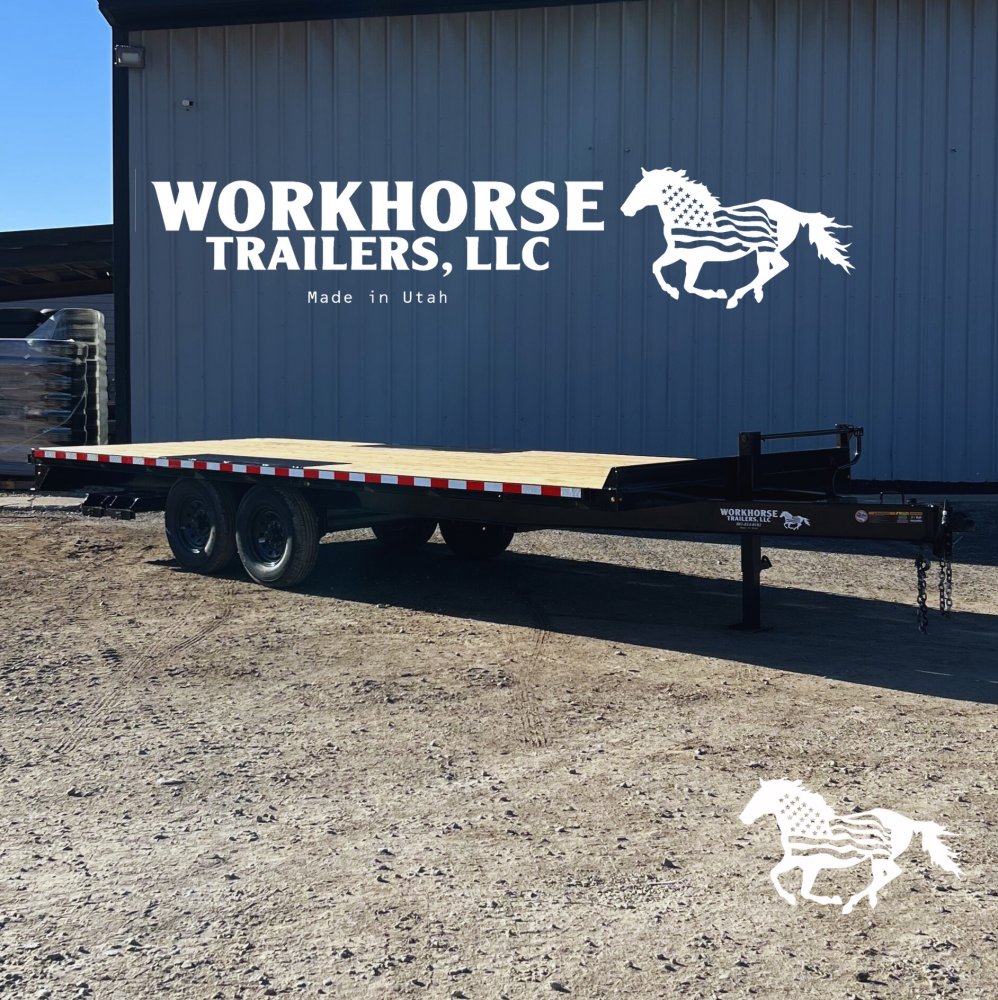
Flatbed gooseneck trailers represent the most universal configuration. An open steel or aluminum deck accepts virtually any type of cargo that can be strapped, chained, or blocked into position. Equipment, vehicles, building materials, hay, lumber, pipe, and containerized goods all ride comfortably on a flatbed platform.
Many Grand Junction buyers choose flatbed gooseneck trailers as their primary workhorse because a single trailer handles such a wide range of tasks. Adding removable sides, stake body panels, or headache racks lets owners reconfigure the trailer for different loads without purchasing separate units for each application.
Gooseneck Dump Trailers
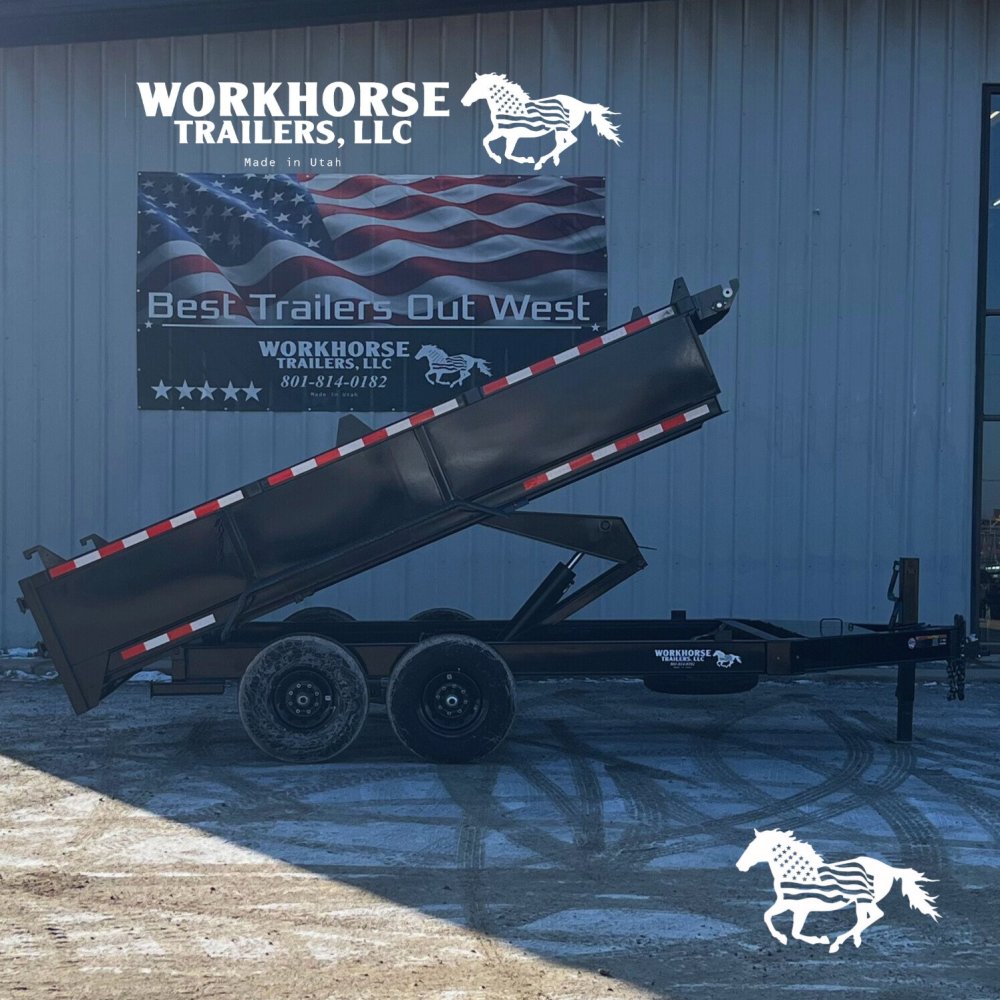
Dump gooseneck trailers combine the hauling capacity of a gooseneck platform with a hydraulic lift system that tilts the bed for gravity unloading. Gravel, sand, topsoil, demolition debris, scrap metal, and agricultural waste all discharge cleanly without manual shoveling or mechanical unloading equipment.
Landscapers, excavation contractors, and property maintenance companies in Grand Junction favor gooseneck dump trailers for their ability to deliver bulk materials directly to the point of use on a job site. The gooseneck hitch handles the heavy loaded weight with confidence, and the hydraulic dump function eliminates the labor and time involved in hand-unloading tons of material at every stop.
Gooseneck Enclosed Trailers
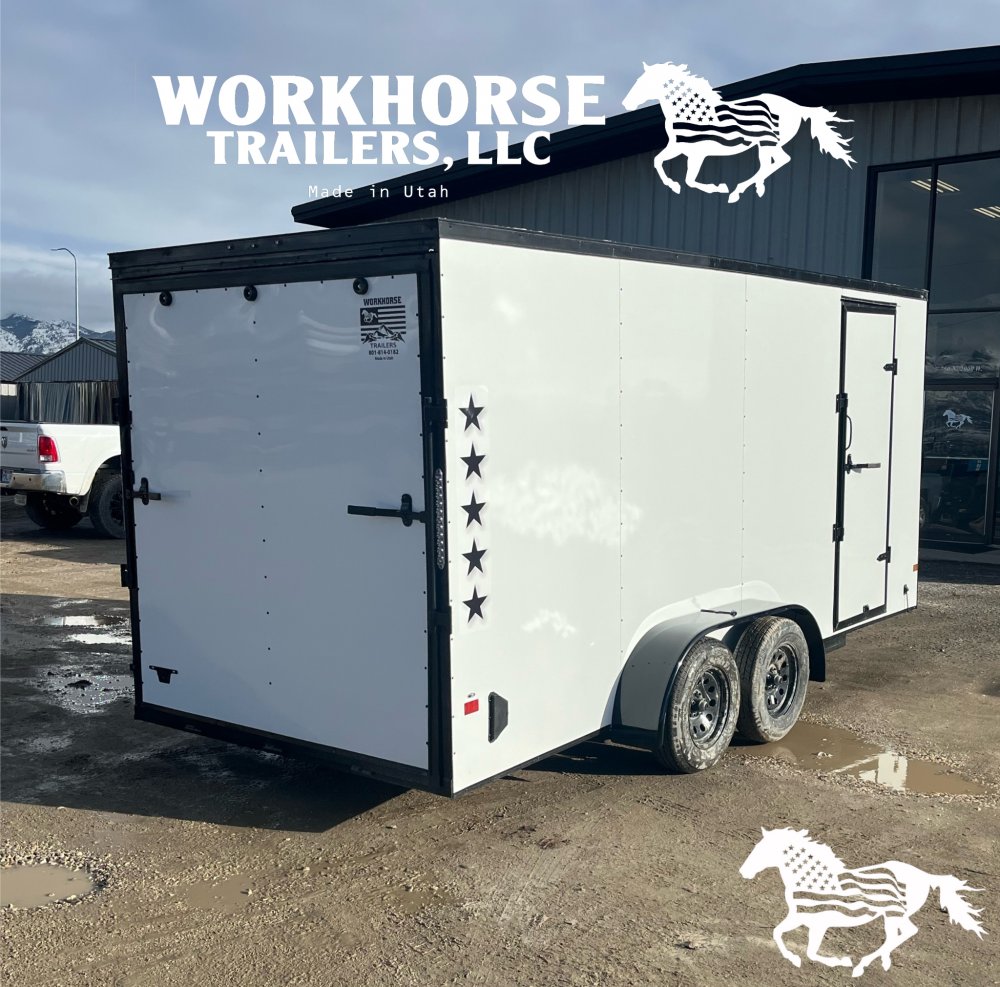
Enclosed gooseneck trailers combine weather and theft protection with the superior towing characteristics of the gooseneck hitch. Race teams, mobile businesses, exhibition haulers, and long-distance movers in the Grand Junction area select enclosed gooseneck configurations when they need both high capacity and full cargo containment.
The gooseneck neck section on enclosed models typically creates a raised forward compartment inside the trailer that owners convert into storage lofts, sleeping quarters, or dedicated tool rooms. This bonus space above the truck bed adds functionality that bumper-pull enclosed trailers cannot replicate, making gooseneck enclosed models especially popular with motorsport enthusiasts who travel from Grand Junction to race events and car shows across multiple states.
Gooseneck Stock and Horse Trailers
Purpose-built gooseneck livestock trailers incorporate dividers, slam-latch gates, rubber floor mats, ventilation systems, and interior padding designed specifically for safe animal transport. Horse trailers add features like individual stalls, breast bars, butt bars, and sometimes living quarter packages in the gooseneck section for overnight hauls.
The horse community around Grand Junction is active and well established. Riders competing in reining, cutting, barrel racing, and endurance events regularly travel to shows in Montrose, Durango, Norwood, and across the state line into Utah. A quality gooseneck horse trailer protects these valuable animals during every mile of highway travel while providing the owner with a comfortable base of operations once they arrive at the event.
Selecting the Right Tow Vehicle for a Gooseneck Trailer
A gooseneck trailer can only perform to its potential when paired with a tow vehicle rated for the job. The truck must support a gooseneck hitch installation, which requires a pickup bed with a flat floor section strong enough to anchor a ball and coupler assembly rated for the trailer’s maximum tongue weight.
Three-quarter-ton and one-ton pickup trucks from all major manufacturers offer factory gooseneck prep packages or aftermarket hitch installations that meet the structural requirements for gooseneck towing. The critical ratings to verify before purchasing a gooseneck trailer include the truck’s maximum gooseneck tow rating, maximum payload capacity, gross combined weight rating, and rear axle weight rating.
Grand Junction buyers should calculate the complete loaded scenario before finalizing a purchase. The truck’s payload must accommodate the tongue weight of the fully loaded trailer plus the weight of passengers, fuel, and anything carried in the truck bed and cab. Exceeding any single rating, even if the others fall within limits, creates an unsafe and potentially illegal combination on Colorado roads.
Workhorse Trailers LLC helps customers work through these calculations using actual specifications rather than estimates. Bringing the truck’s door jamb sticker information or owner’s manual ratings to the consultation ensures that every recommendation accounts for the real-world numbers that govern safe gooseneck operation.
Hitch Installation and Compatibility Considerations
The gooseneck ball and coupler system requires precise installation to function safely. The ball must be centered in the truck bed both side to side and positioned at the correct distance forward of the rear axle. Mounting hardware passes through the truck’s frame rails, and all fasteners must be torqued to manufacturer specifications.
Two primary ball styles exist in the gooseneck market. Traditional fixed ball installations place a permanent ball in the truck bed that protrudes above the floor when not in use. Flip-over and retractable ball systems allow the ball to fold flat or drop below the bed surface when the trailer is disconnected, restoring full use of the truck bed for other purposes.
Turnover ball systems have become increasingly popular among Grand Junction truck owners who use their vehicles for both towing and everyday tasks. The ability to remove the visible ball and restore a flat bed surface makes the truck more practical for hauling loose materials, mounting toolboxes, or simply keeping the bed clear when the gooseneck trailer stays parked.
Coupler styles on the trailer side also vary. Round couplers and square couplers each interface with the ball differently, and matching the correct coupler to the correct ball size is essential for a secure connection. Standard gooseneck ball diameter is 2-5/16 inches, though some heavy-duty applications use larger sizes. Confirming compatibility between the truck’s hitch ball and the trailer’s coupler before every trip prevents dangerous mismatches that could result in separation during travel.
Maintaining a Gooseneck Trailer for Western Colorado Conditions
Gooseneck trailers operating around Grand Junction encounter temperature extremes, UV radiation, alkaline dust, and seasonal moisture that all contribute to component wear. A disciplined maintenance approach preserves the trailer’s structural integrity and protects resale value over the long run.
The gooseneck neck assembly and coupler mechanism deserve particular attention because they bear concentrated stress during every towing cycle. Lubricating the coupler latch, inspecting the neck welds for hairline cracks, and checking the safety chain attachment points should be part of every pre-trip routine. The hydraulic jack or mechanical landing gear at the front of the neck needs periodic greasing and functional testing to ensure it raises and lowers smoothly during hookup and disconnection.
Underneath the trailer, brake components, wheel bearings, suspension hardware, and frame crossmembers should all receive regular inspection. Dust and fine grit from unpaved roads accumulate in brake drums and around bearing seals, accelerating wear if not cleaned out periodically. Bearing repacking on an annual schedule, or more frequently for high-mileage trailers, prevents the catastrophic wheel failures that can strand an operator miles from the nearest service facility.
Electrical connections between the truck and trailer corrode over time, especially when exposed to road salt during winter trips through higher elevation passes east of Grand Junction. Cleaning plug terminals and applying dielectric grease at every connection point maintains reliable signal transmission for lights and electric brake activation.
Workhorse Trailers LLC Matches Grand Junction Buyers with the Right Gooseneck
Choosing a gooseneck trailer involves aligning cargo type, weight requirements, trailer body style, and tow vehicle capability into a single cohesive package. Workhorse Trailers LLC simplifies that process for buyers across Grand Junction and surrounding communities including Cedaredge, Hotchkiss, Paonia, Silt, New Castle, Battlement Mesa, and Rangely. The team evaluates each customer’s operational needs thoroughly before pointing toward a specific model, ensuring that the trailer purchased today still serves its purpose years down the road. For anyone in western Colorado whose hauling demands have outgrown the limits of a bumper-pull setup, Workhorse Trailers LLC provides the gooseneck solutions that keep heavy loads moving safely and efficiently across every mile of this rugged landscape.