Grand Junction Equipment Hauler Trailers
All locationsMoving heavy machinery and industrial tools from one job site to another is a daily reality for thousands of workers across western Colorado. Excavators, skid steers, compactors, generators, welding rigs, and aerial lifts all need to travel between locations quickly and safely. The wrong trailer for the job can lead to equipment damage, unsafe road conditions, and costly project delays. Workhorse Trailers LLC specializes in providing equipment hauler trailers that match the rigorous demands placed on operators working in and around the Grand Junction area.
Mesa County’s economy depends heavily on industries that run on heavy equipment. From pipeline construction in the Piceance Basin to vineyard development in Palisade and commercial building projects scattered across the Grand Valley, the need for reliable equipment transport touches nearly every sector of the local workforce. Workhorse Trailers LLC offersGrand Junction Equipment Hauler Trailers purpose-built to carry the machines that keep these industries moving forward, with construction standards that hold up under the punishing workloads common to this part of the state.
Industries Driving Equipment Hauler Demand in Grand Junction
Understanding who relies on equipment hauler trailers in this region helps illustrate why quality matters so much. Grand Junction is not a market where lightweight or poorly built trailers survive for long. The work here is hard, the distances between job sites can be significant, and the terrain rarely offers an easy path.
Oil, Gas, and Energy Operations
Western Colorado’s energy sector has long been a cornerstone of the regional economy. Drilling operations, pipeline maintenance, solar farm installations, and natural gas processing facilities all require constant movement of specialized machinery. Compressors, pump units, trenching machines, and portable welding stations travel between remote well pads and processing sites on a regular basis. Equipment hauler trailers used in this sector must handle extreme payloads while navigating unpaved access roads that wind through rough mesa terrain and narrow canyon corridors.
Construction and Development
Grand Junction’s ongoing growth has brought a wave of residential subdivisions, commercial retail centers, and infrastructure upgrades. General contractors, concrete companies, excavation firms, and paving crews all depend on equipment hauler trailers to shuttle their machines between active projects. A framing crew might need to relocate a telehandler from a site in Redlands to another across town in Orchard Mesa before lunch. That kind of rapid mobilization only works when the trailer is ready to load, haul, and unload without complications.
Agriculture and Land Management
Farming and ranching operations throughout the Grand Valley and surrounding areas use a surprising amount of heavy equipment. Tractors, brush cutters, post hole augers, hay balers, and irrigation pumps all require transport at various points during the season. Orchardists in Palisade moving spray rigs between their peach and grape blocks, or cattle ranchers in the Plateau Valley relocating fence-building equipment to distant pastures, count on their equipment hauler trailers just as much as any construction company does.
Municipal and Government Services
County road departments, water districts, fire protection agencies, and parks maintenance crews in Mesa County operate fleets of heavy equipment that frequently need repositioning. Graders, backhoes, mowers, and emergency generators all ride on equipment hauler trailers when they need to reach a new work zone. Reliability and compliance with federal and state transportation standards are especially important for public sector operators who face strict accountability for safety and maintenance records.
Trailer Configurations for Equipment Hauling
Not all equipment hauler trailers share the same design. The type of machinery being transported, its weight, its dimensions, and the loading method it requires all influence which trailer configuration is the best fit. Workhorse Trailers LLC stocks multiple configurations to accommodate the full spectrum of equipment hauling scenarios encountered in Grand Junction.
Flatbed Equipment Trailers
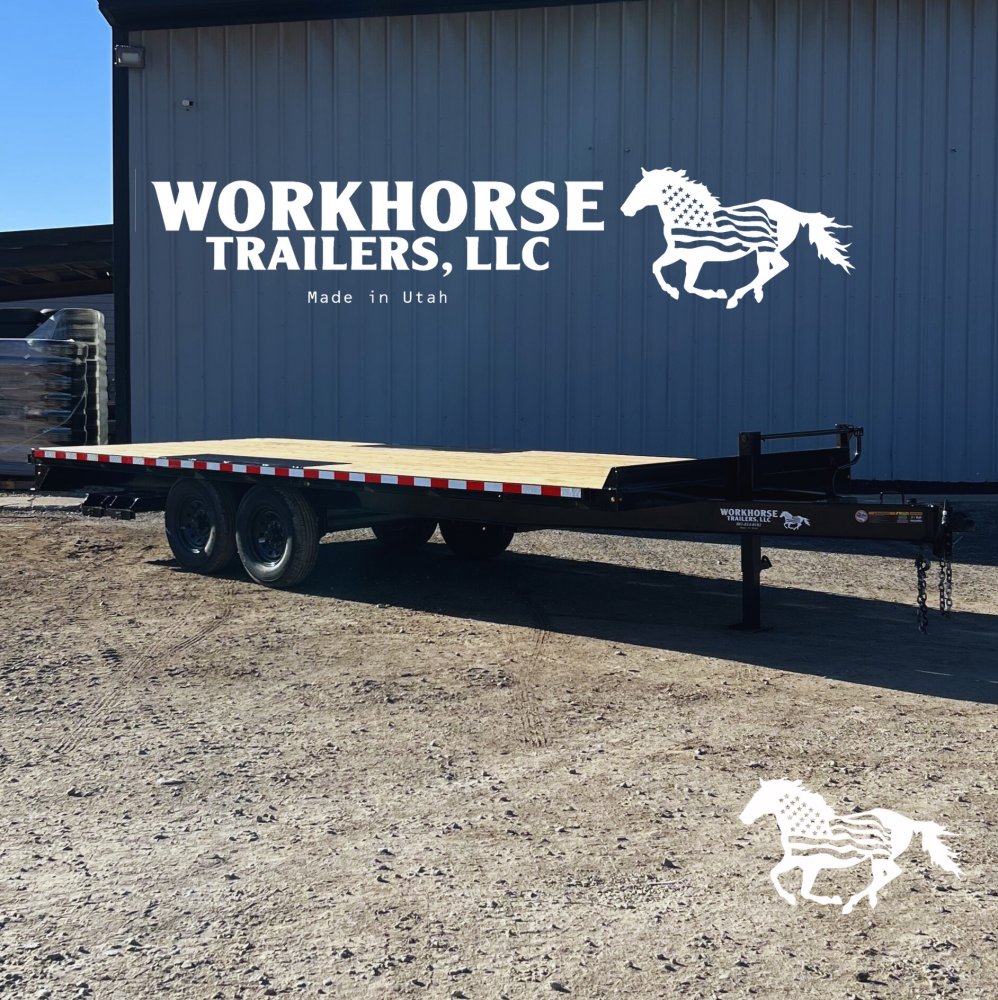
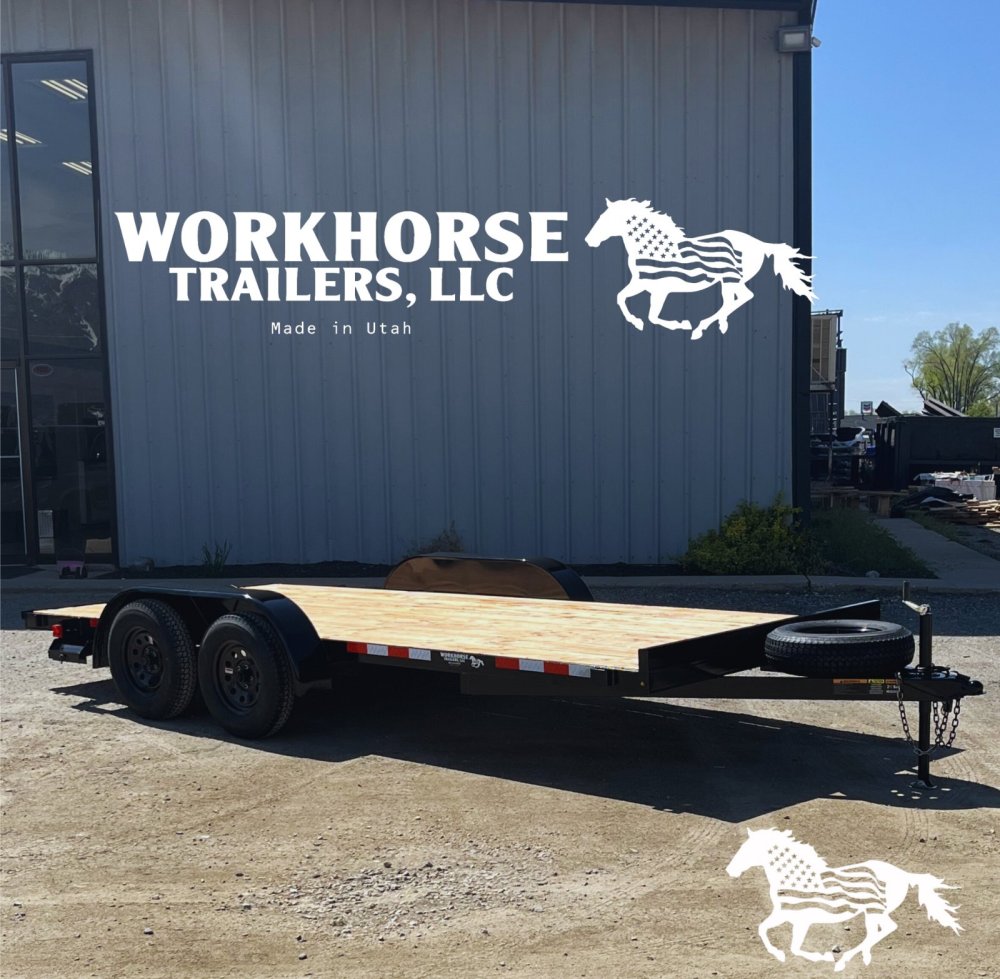
Flatbed equipment trailers offer an unobstructed deck surface that accommodates a wide variety of machine shapes and sizes. Without sidewalls or overhead structures limiting access, operators can load from the rear, sides, or even by crane from above. This flexibility makes flatbed models especially popular among contractors who haul different types of equipment throughout the week and cannot afford to be limited by a restrictive trailer layout.
Steel I-beam frames with crossmember reinforcement provide the backbone for most flatbed equipment trailers. Deck materials range from treated wood planking to diamond plate steel, with each option offering different advantages in terms of traction, durability, and ease of replacement.
Deckover Equipment Trailers
Deckover trailers position the deck surface above the wheel wells rather than between them. This wider deck provides more usable space and eliminates the narrow wheel well intrusions that can interfere with loading certain machines. Deckover designs are particularly useful for hauling equipment with wide tracks or outriggers that would not fit within the wheel wells of a standard configuration.
The trade-off is a higher deck height, which increases the overall center of gravity when loaded and requires longer ramps for ground-level loading. For Grand Junction operators who primarily haul wide or irregularly shaped equipment, the added deck width of a deckover model frequently outweighs the loading angle considerations.
Drop Deck and Lowboy Trailers
Drop deck trailers feature a lower main deck section that sits closer to the ground than standard flatbed or deckover designs. This reduced deck height lowers the center of gravity for improved stability during transport and makes it easier to comply with overall height restrictions when hauling tall equipment like aerial lifts, cranes, or large generators.
The lower loading height also reduces the ramp angle, which benefits machines with limited ground clearance or those that must be winched aboard rather than driven. Operators in Grand Junction who regularly move tall or top-heavy equipment often prefer drop deck configurations for the added margin of safety they provide on highway grades and in crosswind conditions common along the I-70 corridor through DeBeque Canyon.
Gooseneck Equipment Trailers
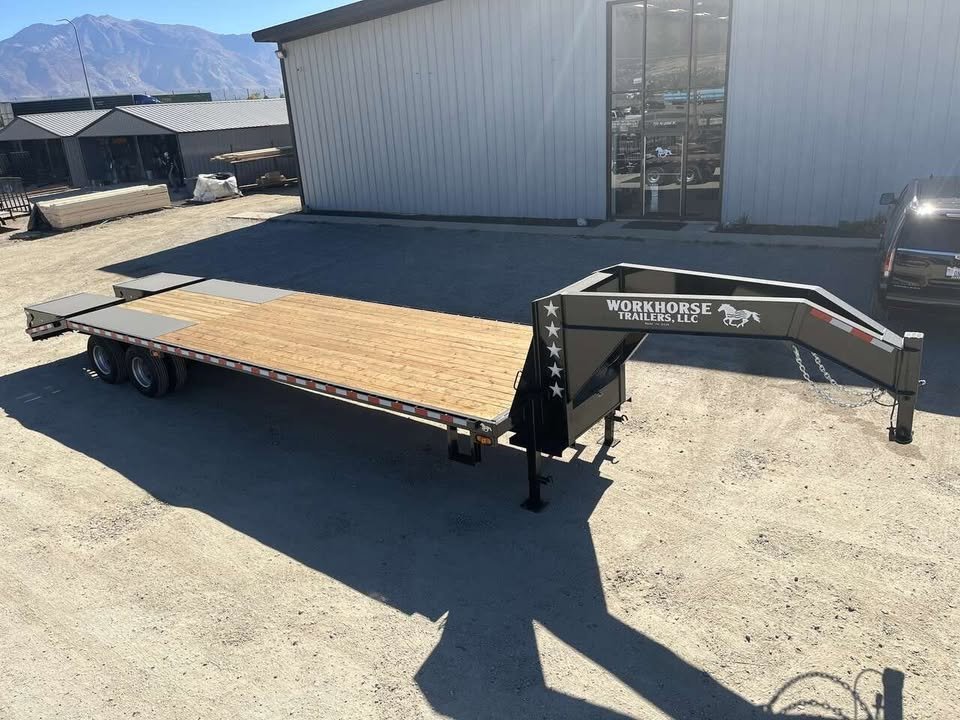
Gooseneck hitching systems connect the trailer to a ball mounted in the bed of the tow truck rather than to a bumper-mounted receiver. This connection point sits directly over the rear axle of the truck, which distributes tongue weight more effectively and allows for significantly higher payload ratings compared to bumper-pull setups.
Gooseneck equipment trailers are the standard choice for professional hauling operations in Grand Junction. Their superior stability at highway speeds, tighter turning radius relative to their length, and higher gross vehicle weight ratings make them the practical option for anyone routinely transporting machines that weigh 10,000 pounds or more. The gooseneck design also leaves the truck bed partially accessible, which many operators use for storing chains, binders, toolboxes, and spare tie-down equipment.
Construction Details That Define a Quality Equipment Hauler
The difference between a trailer that lasts two seasons and one that performs reliably for a decade often comes down to specific construction choices made during manufacturing. Workhorse Trailers LLC evaluates these details carefully when selecting which equipment hauler trailers to offer Grand Junction customers.
Frame and Structural Integrity
The frame is the foundation of every equipment hauler trailer. High-tensile steel I-beam main rails paired with closely spaced crossmembers create a rigid platform capable of supporting concentrated point loads from equipment feet, outrigger pads, and tracked undercarriages. Weld quality at every junction point determines how well the frame resists fatigue cracking under repeated loading cycles.
Grand Junction operators should look for trailers where the frame members are fully welded rather than bolted or tack-welded at stress points. Full penetration welds distribute load forces across a larger area of the joint, which dramatically reduces the likelihood of structural failure during heavy use.
Axle and Suspension Components
Equipment hauler trailers serving the Grand Junction market typically run on tandem or triple axle configurations rated between 7,000 and 10,000 pounds per axle. Spring suspension systems using multi-leaf packs remain the industry standard for heavy-duty equipment trailers due to their load-carrying capacity and straightforward maintenance requirements.
Axle spacing affects both load distribution and tire wear patterns. Properly spaced axles prevent excessive stress on any single set of tires and help the trailer track straight behind the tow vehicle, even when fully loaded. Brake drums or disc brake assemblies on every axle provide the stopping power needed to control loads that may exceed 15,000 or 20,000 pounds.
Ramps and Loading Systems
The ramp system on an equipment hauler trailer takes more abuse than almost any other component. Machines with steel tracks, rubber tires carrying thousands of pounds, and operators who load and unload multiple times per day all place tremendous stress on ramps and their attachment hardware.
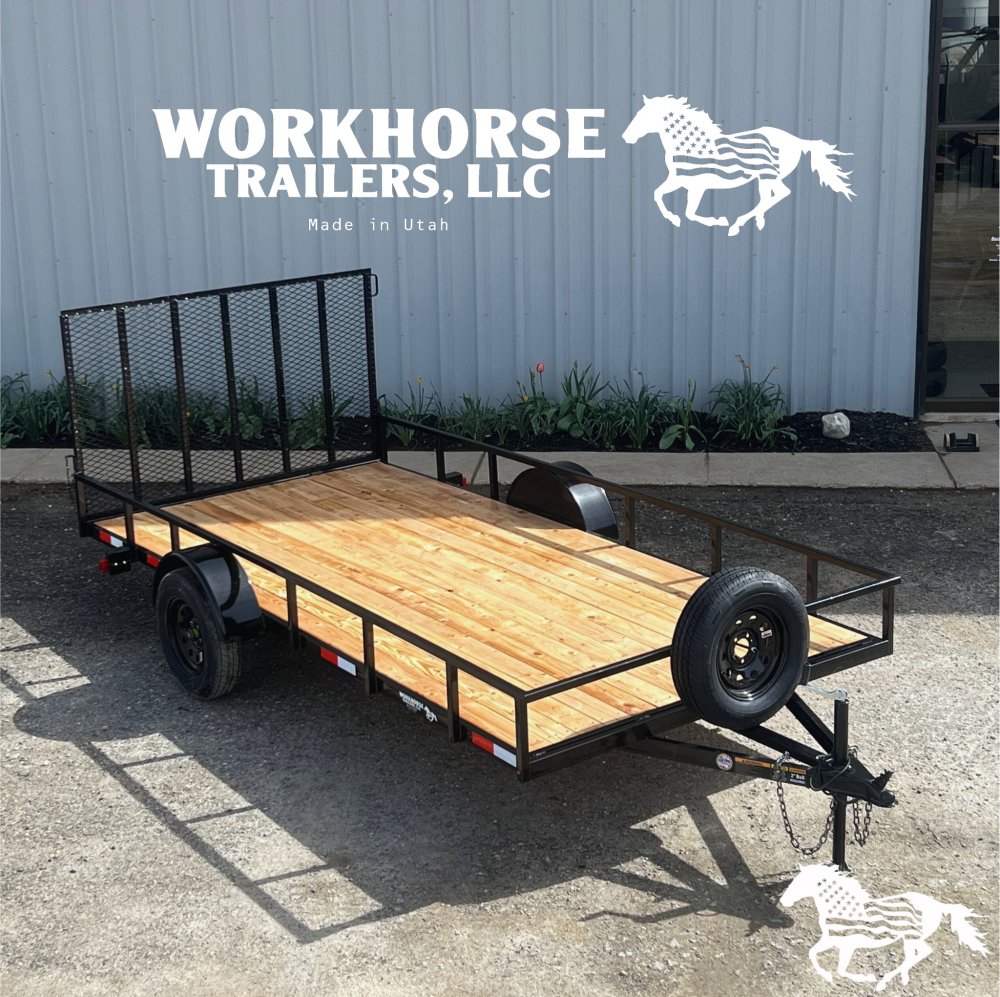
Heavy-duty stand-up ramps with spring-assist lifting mechanisms are the most common option on professional-grade equipment trailers. Ramp surfaces should feature expanded metal grating or aggressive tread patterns that provide traction in wet, muddy, or icy conditions. The pins, hinges, and latch mechanisms securing the ramps to the trailer frame need to be robust enough to handle daily cycling without loosening or wearing out prematurely.
Weight Ratings and Legal Compliance
Operating an equipment hauler trailer on public roads in Colorado requires adherence to state and federal weight regulations. Grand Junction buyers must understand the relationship between their trailer’s gross vehicle weight rating, the weight of the equipment being carried, and the towing capacity of their truck before heading out on any haul.
The gross vehicle weight rating represents the maximum allowable weight of the trailer itself plus its cargo. Exceeding this rating creates unsafe operating conditions and exposes the operator to fines, liability issues, and potential insurance complications. Colorado Department of Transportation enforcement officers patrol I-70 and other major routes near Grand Junction, and overweight violations carry significant financial penalties.
Tongue weight is another critical measurement that affects towing safety. For gooseneck trailers, tongue weight should generally fall between 20 and 25 percent of the total loaded trailer weight. Maintaining this ratio keeps the tow vehicle’s front axle properly loaded for steering control and prevents the dangerous tail-wagging condition known as trailer sway.
Workhorse Trailers LLC assists Grand Junction customers in calculating complete weight scenarios for their specific equipment and tow vehicle combinations. Getting these numbers right before the first haul prevents problems that could otherwise surface at the worst possible moment.
Maintenance Practices for Long-Term Performance
Equipment hauler trailers operating in western Colorado face environmental stresses that accelerate wear on key components. Establishing a consistent maintenance routine protects the investment and ensures the trailer remains safe for road use throughout its service life.
Grease fittings on axle bearings, pivot points, and ramp hinges require regular attention. Dry bearings generate heat and fail rapidly, while ungreased hinge points wear into sloppy, unsafe connections. A schedule of greasing every 3,000 miles or every three months, whichever comes first, keeps these components functioning properly.
Tire condition should be evaluated before every trip. Sidewall cracking from UV exposure is common in the high desert climate around Grand Junction, and tread depth must remain within legal limits for safe braking on paved roads. Tire pressure should be checked cold and set to the manufacturer’s recommended specification for the load being carried.
Brake adjustment and inspection is a responsibility that many operators neglect until a problem becomes apparent on the road. Electric brake magnets wear down over time and lose effectiveness, while hydraulic or surge brake systems can develop leaks in lines and cylinders. Annual professional brake inspections are a sensible precaution for any equipment hauler trailer seeing regular use.
The trailer’s electrical system, including the wiring harness, plug connections, and all lighting fixtures, should be tested before every haul. Corroded connectors are one of the most common causes of intermittent lighting failures, and a trailer without functioning brake lights or turn signals creates a serious hazard for other motorists.
Workhorse Trailers LLC Serves the Entire Western Slope
While Grand Junction is home base for many equipment hauler trailer buyers, Workhorse Trailers LLC welcomes customers from across the broader western slope region. Contractors and equipment operators travel from Glenwood Springs, Eagle, Carbondale, Craig, Rangely, and Meeker to access the selection and product knowledge that Workhorse Trailers LLC provides. Buyers from eastern Utah communities including Price, Vernal, and Roosevelt also find Grand Junction to be a convenient destination for sourcing quality equipment hauling solutions.
The consultation process at Workhorse Trailers LLC begins with a straightforward conversation about what the customer plans to haul, how often they will use the trailer, and what tow vehicle they currently operate. From those answers, the team identifies the configurations, weight ratings, and feature sets that align with the job at hand. This practical, needs-first approach has earned the trust of equipment operators throughout the region who value substance over sales tactics. For professionals across western Colorado who depend on their ability to move heavy machinery safely and efficiently, Workhorse Trailers LLC delivers the equipment hauler trailers that make it possible.