
Evanston Car Hauler Trailers
All locationsTransporting vehicles safely across Wyoming’s demanding highways and backroads requires more than a standard flatbed and a set of tie-down straps. Whether you are a collector moving a restored classic to a weekend car show, a dealer transferring inventory between lots, or a motorsport enthusiast hauling a race car to a track day event, the trailer you choose determines whether your vehicle arrives in the same condition it left. Workhorse Trailers LLC has become the trusted name forEvanston Car Hauler Trailers by offering a carefully vetted lineup of haulers built to protect valuable cargo on every mile of road between pickup and destination.
The Growing Need for Car Haulers in the Evanston Area
Evanston, Wyoming occupies a strategic position along the Interstate 80 corridor near the Utah state line, making it a crossroads for automotive transport moving between the Mountain West and points east. The city’s role as a regional commercial center for Uinta County adds another layer of demand, as local dealerships, body shops, and fleet managers regularly need to move vehicles that cannot or should not be driven under their own power.
Beyond commercial use, the car culture surrounding Evanston continues to expand. Collectors throughout southwest Wyoming and northeast Utah maintain garages full of vintage trucks, muscle cars, and off-road builds that require enclosed or open hauler trailers for safe transport. Grassroots racing events, drift competitions, and off-road rally stages scattered across the Intermountain region draw participants who need dependable car haulers capable of handling repeated long-distance trips over mountain passes and through unpredictable weather.
Even everyday situations create car hauler demand. A family relocating to Evanston might need to tow a second vehicle behind a moving truck. A mechanic purchasing project cars from auctions in Salt Lake City or Boise needs a trailer rated for the weight of a full-size sedan or truck. A rancher hauling an older farm truck to a distant property for permanent use wants assurance that the trailer will handle the load without swaying on I-80’s notorious wind-prone stretches. In all of these scenarios, the quality of the car hauler directly impacts the safety of the driver, the cargo, and everyone else sharing the road.
What Sets Workhorse Trailers LLC Apart
Workhorse Trailers LLC approaches car hauler sales with a level of specificity that generic trailer dealers often lack. The team recognizes that hauling a vehicle is fundamentally different from hauling lumber, livestock, or landscaping materials. Vehicles represent significant financial value, they have low ground clearance points that can catch on ramps, and their weight distribution shifts depending on whether the engine sits in the front or the rear. These factors influence every aspect of car hauler design, from ramp angle and deck width to tie-down placement and suspension calibration.
When a customer visits Workhorse Trailers LLC looking for a car hauler, the conversation starts with specifics. What type of vehicle will you haul most frequently? What is the curb weight of your heaviest load? Do you need weather protection for the cargo? Will you load from the rear only, or do you need side access? How often will the trailer be in use? These questions shape the recommendation and help the buyer avoid spending money on features they do not need while ensuring they do not skip features they cannot do without.
This detail-oriented process reflects years of experience serving customers across the Wyoming-Utah border region, where conditions test both equipment and operator judgment on a daily basis.
Types of Car Hauler Trailers Available
Car hauler trailers come in several distinct configurations, each suited to different vehicles, budgets, and hauling scenarios. Workhorse Trailers LLC stocks options across these categories so that Evanston area buyers can compare models in person before committing.
Open Car Hauler Trailers
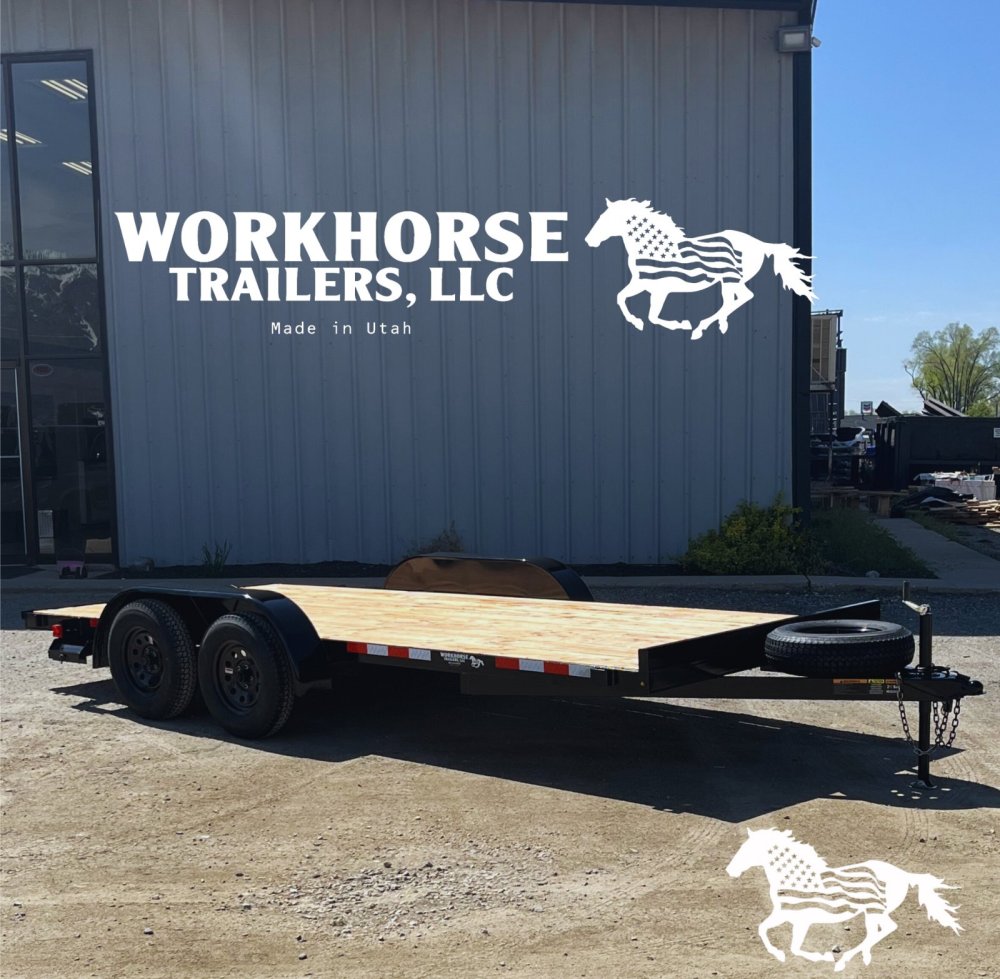
Open car haulers are the most common and cost-effective option for transporting vehicles. They feature a steel or aluminum deck with no walls or roof, providing clear sightlines during loading and easy access from multiple angles. Most open haulers use a beaver-tail rear design paired with fold-down ramps to create a gentle loading angle that accommodates low-profile sports cars and lowered trucks.
Open haulers are favored by dealers moving inventory short distances, hobbyists transporting project vehicles, and anyone who needs a versatile platform that can double as a flatbed for non-automotive cargo when needed. Their lower weight compared to enclosed models also means reduced fuel consumption and compatibility with a broader range of tow vehicles.
Enclosed Car Hauler Trailers
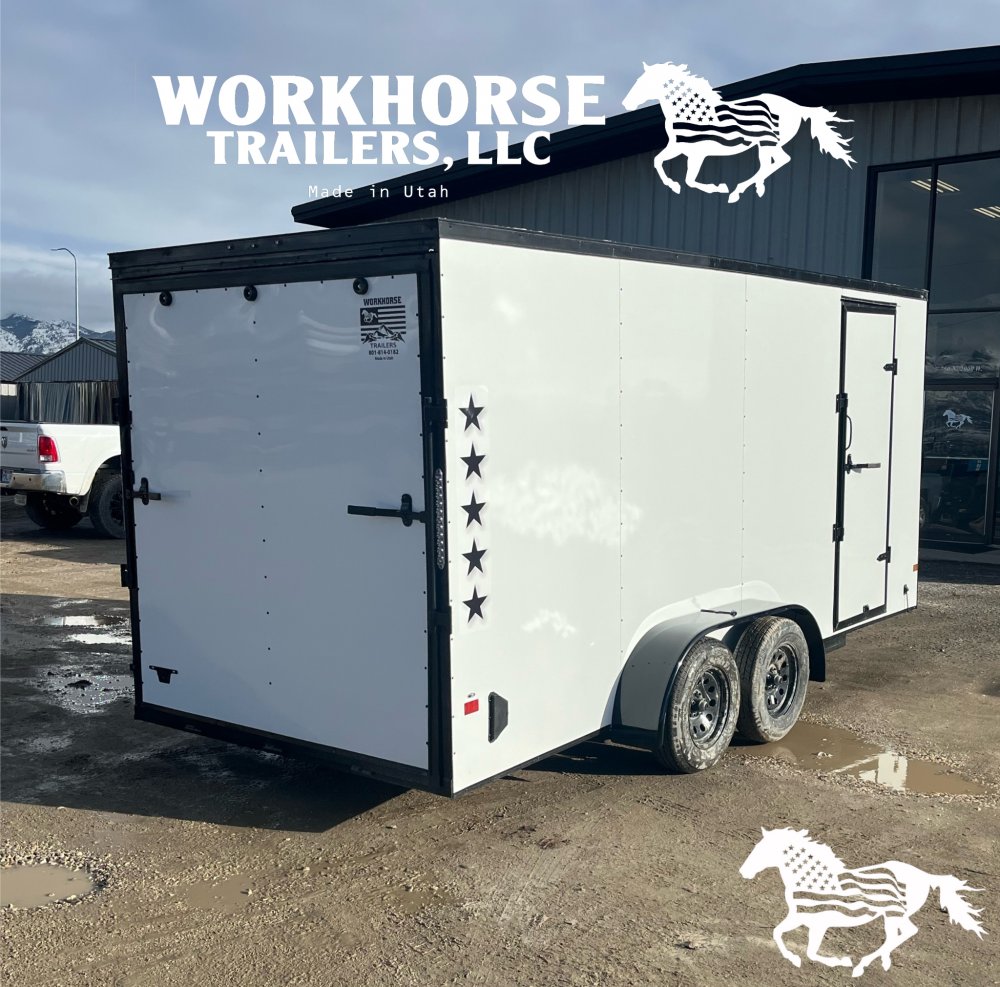
Enclosed car haulers provide complete protection from road debris, weather, theft, and UV exposure. A fully sealed steel or aluminum shell surrounds the cargo area, and many models include interior lighting, ventilation, and finished walls that prevent scratches during loading. For collectors transporting show cars worth tens or hundreds of thousands of dollars, an enclosed hauler is not optional but essential.
Enclosed models also appeal to racing teams that use the interior as a mobile garage, storing tools, spare parts, and pit equipment alongside the race vehicle. The added security of a lockable enclosed space is another advantage, particularly for overnight stops during long-distance hauls through remote areas of Wyoming and neighboring states.
Tilt-Deck Car Haulers
Tilt-deck car haulers eliminate traditional ramps entirely. The entire deck tilts rearward using a hydraulic cylinder or a gravity-actuated mechanism, creating a ground-level loading surface that drastically reduces the approach angle. This design is especially valuable for vehicles with minimal ground clearance, such as lowered imports, vintage sports cars with long front overhangs, or wide-body kit cars that sit just inches above the pavement.
The tilt mechanism also speeds up the loading process. Instead of wrestling with heavy ramps and aligning the vehicle precisely, the operator simply releases the tilt lock, drives or winches the car onto the deck, and re-engages the lock. For professionals loading and unloading multiple times per week, this time savings adds up considerably.
Gooseneck Car Haulers
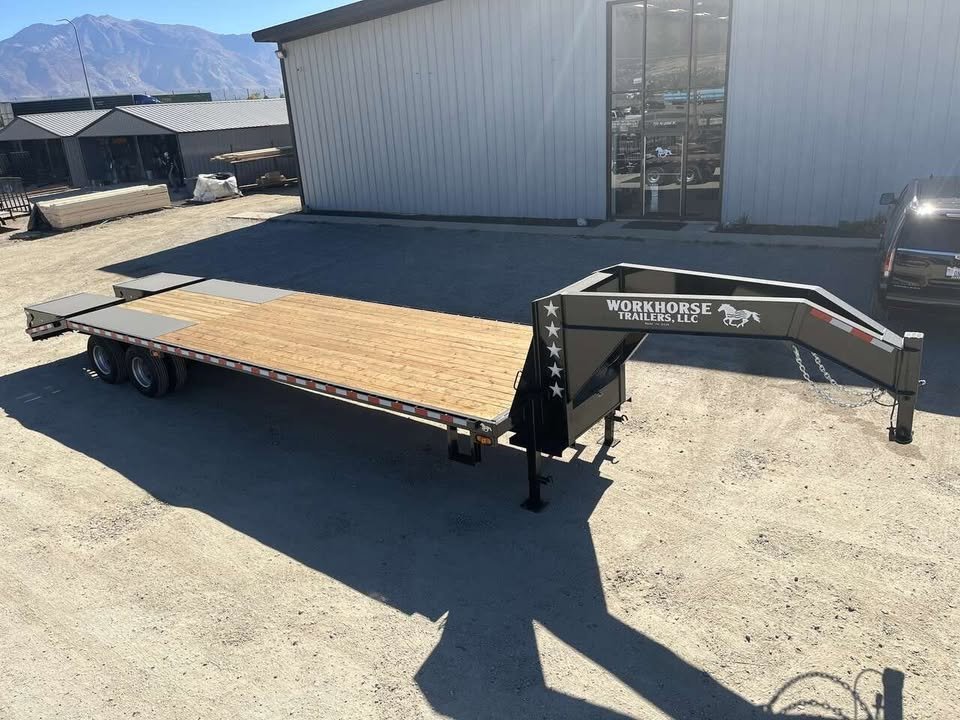
Gooseneck car haulers connect to a ball mounted in the bed of a pickup truck rather than a bumper-mounted receiver hitch. This hitch configuration moves the connection point forward and distributes weight more evenly across the tow vehicle’s rear axle, resulting in superior stability at highway speeds and a tighter turning radius compared to bumper-pull models.
Gooseneck haulers are available in both open and enclosed configurations and typically offer higher payload capacities, making them the preferred choice for hauling full-size trucks, SUVs, or multiple vehicles on a multi-car deck. Contractors and dealers around Evanston who regularly move heavy equipment or oversized vehicles gravitate toward gooseneck setups for their combination of capacity and control.
Critical Features for Car Hauling in Wyoming Conditions
Selecting a car hauler for use in and around Evanston means accounting for environmental and road conditions that differ significantly from those found in lower elevations or milder climates.
Ramp Design and Loading Angle
The angle at which a vehicle transitions from the ground onto the trailer deck determines whether the undercarriage, bumper, or exhaust system will scrape during loading. Quality car haulers feature ramps with a gradual incline, often enhanced by a dovetail or beaver-tail section at the rear of the deck. Spring-assisted or hydraulic ramps reduce the physical effort required to deploy and stow them, which matters when you are loading alone on a remote stretch of highway.
Deck Surface and Traction
Steel decks can become dangerously slippery when wet, icy, or coated with morning frost. Mesh decking, expanded metal surfaces, or rubberized grip strips provide traction that keeps vehicle tires from spinning during the loading process. For Evanston buyers who frequently load vehicles during early mornings or in cold weather, deck traction is a safety feature that deserves serious consideration.
Winch Compatibility
Not every vehicle being hauled can drive onto the trailer under its own power. Project cars, non-running auction purchases, and vehicles with mechanical failures all need to be winched aboard. A well-designed car hauler includes a winch mount positioned at the front of the deck with a clear cable path to the rear. Electric winches rated for the weight of your heaviest anticipated load save time and reduce injury risk compared to manual alternatives.
Tie-Down Systems
Securing a vehicle on a car hauler requires purpose-built tie-down points that allow straps or chains to pull downward on the vehicle’s suspension or frame at the correct angle. Recessed D-rings and adjustable track systems let operators position anchor points precisely, accommodating different wheelbases and vehicle widths. Over-the-tire ratchet straps and axle straps are popular securing methods that avoid contact with painted or chromed surfaces.
Brake and Suspension Performance
Car hauler trailers loaded with a vehicle weighing 3,000 to 6,000 pounds demand braking systems that respond predictably under all conditions. Electric brakes paired with a proportional brake controller in the tow vehicle offer the smoothest stopping performance. Independent torsion axle suspension absorbs road imperfections without transferring harsh jolts to the vehicle on the deck, reducing the chance of cosmetic or mechanical damage during transit.
Navigating Evanston’s Unique Hauling Challenges
Drivers towing car haulers through the Evanston area face a set of challenges that require both quality equipment and informed decision-making. Interstate 80 between Evanston and the Utah border includes long grades and exposed stretches where crosswinds regularly exceed 40 miles per hour. A loaded car hauler with a high profile, particularly an enclosed model, acts as a sail in these conditions. Choosing a trailer with an aerodynamic profile and maintaining a conservative speed through wind-prone zones significantly reduces the risk of sway-related incidents.
Winter conditions add another dimension. Ice-covered roads, reduced visibility during blizzards, and frigid temperatures that affect tire pressure and brake responsiveness all demand heightened awareness. Workhorse Trailers LLC recommends that customers invest in quality tow mirrors, a reliable brake controller, and a thorough pre-trip inspection routine that covers tire condition, lug nut torque, lighting function, and hitch security before every departure.
Highway 150 south toward the Mirror Lake Scenic Byway and the roads connecting Evanston to communities like Fort Bridger, Lyman, and Mountain View present their own considerations. Narrow shoulders, sharp curves, and elevation changes require trailers that track straight and respond smoothly to steering inputs from the tow vehicle. Proper tongue weight distribution, typically 10 to 15 percent of the total loaded trailer weight, is essential for maintaining stable handling on these secondary routes.
Matching the Right Hauler to Your Tow Vehicle
One of the most common mistakes buyers make is selecting a car hauler without verifying their tow vehicle’s rated capacity. Every truck or SUV has a maximum towing rating established by the manufacturer, and exceeding that rating creates dangerous conditions while voiding warranty coverage. The gross combined weight rating accounts for the tow vehicle, passengers, cargo in the truck bed, the trailer itself, and the vehicle loaded on the trailer.
Workhorse Trailers LLC takes the time to review each customer’s tow vehicle specifications alongside the weight of the trailer and its anticipated payload. This ensures that the complete package falls within safe operating limits and that the hitch receiver, ball mount, and wiring are all compatible. Overlooking these details is a recipe for mechanical failure, poor braking, and trailer sway that can escalate into a serious accident.
Financing and Ownership Benefits
A car hauler trailer is an investment that pays dividends over time. Rather than renting a trailer every time you need to move a vehicle or paying a transport company hundreds of dollars per trip, owning your own hauler gives you the freedom to move cars on your own schedule at a fraction of the per-use cost. Workhorse Trailers LLC offers competitive pricing and can connect Evanston area buyers with financing options that spread the purchase cost over manageable monthly payments.
Well-maintained car hauler trailers hold their resale value better than many other types of equipment, particularly models from established manufacturers with reputations for build quality. Should your hauling needs change down the road, a trailer purchased through Workhorse can be sold with confidence that it will attract interested buyers.
Get Started with Workhorse Trailers LLC
Choosing a car hauler trailer is a decision that deserves careful thought and informed guidance. The team at Workhorse Trailers LLC understands what Evanston area drivers face on the road and what their vehicles mean to them. From open-deck haulers for weekend project cars to fully enclosed rigs for six-figure collectibles, every trailer in the Workhorse inventory is selected to meet the performance and protection standards that this region demands. Contact Workhorse Trailers LLC today to discuss your car hauling needs and discover the trailer that fits your vehicles, your tow rig, and your budget.