Elko Utility Trailers
All locationsElko runs on self-reliance. The nearest major metro is over 200 miles away in any direction, and the supply chains that larger cities take for granted thin out considerably by the time they reach northeastern Nevada. When something needs to be hauled in Elko County, you haul it yourself. Hardware store runs that involve picking up fencing materials, livestock panels, or a load of concrete mix aren’t quick errands. They’re commitments that eat half a day when you factor the drive to town and back to a property that sits 30 or 40 miles out on a county road. A utility trailer attached to the back of a pickup truck is one of the most common pieces of equipment in the Elko area because it transforms every trip into an opportunity to carry more, reducing the number of runs a property owner, rancher, or contractor makes across the kind of distances that define daily life in this part of Nevada. Workhorse Trailers LLC provides utility trailers to Elko buyers who treat their trailer as essential equipment rather than an occasional convenience, matching each customer to a build quality that holds up under the sustained use and rough conditions that northeastern Nevada imposes.
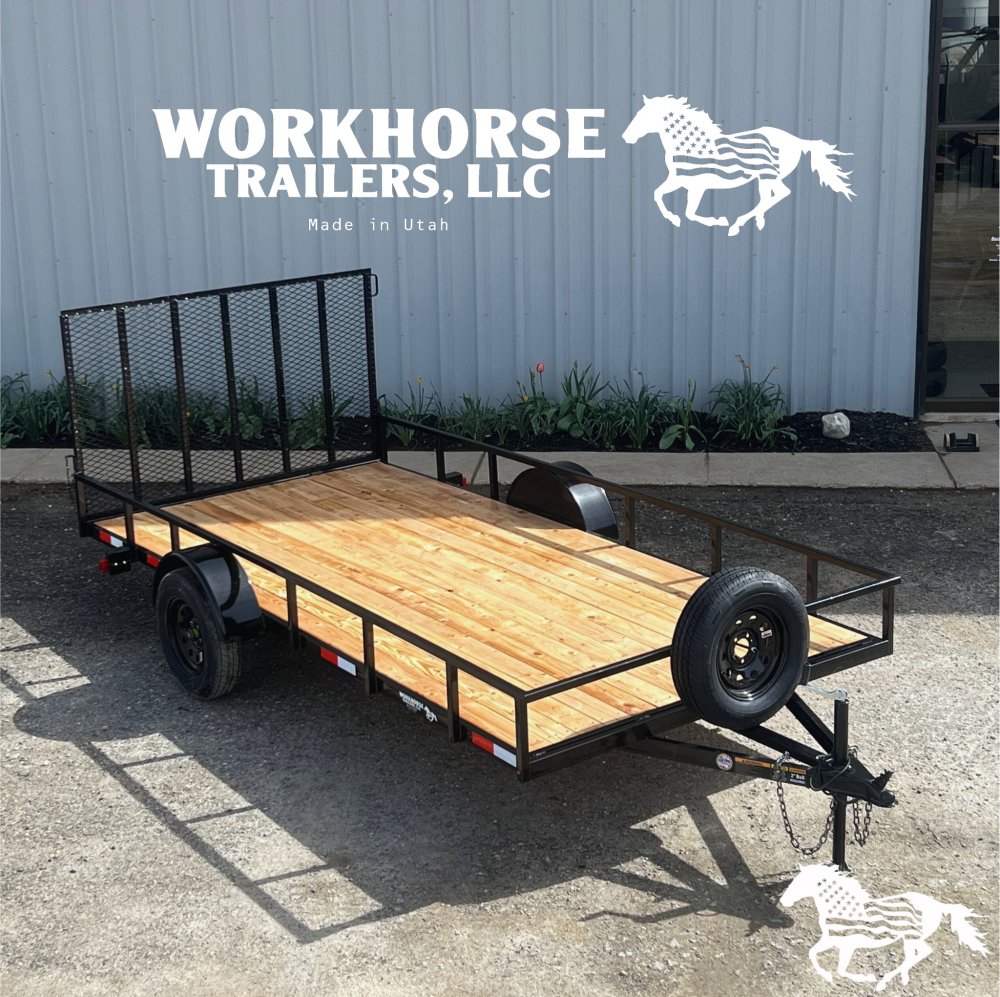
A utility trailer is the generalist of the trailer world. Open bed, low side rails, rear gate, and enough payload capacity to handle whatever the day requires. In Elko, that might mean a load of T-posts and barbed wire headed to a fencing project on BLM allotment land in the morning, a run to the transfer station with brush and construction debris after lunch, and an ATV strapped down for an evening ride on the trails south of Lamoille Canyon. The trailer doesn’t change between tasks. The cargo does. That versatility is what makes the utility trailer the single most owned trailer type in Elko County.
What Makes Elko Different From Urban Nevada Trailer Markets
Buying a utility trailer in Elko isn’t the same proposition as buying one in Las Vegas or Reno. The operating environment, the distances, the road conditions, and the buyer’s expectations all diverge from what urban Nevada trailer shoppers experience.
Road Quality and Terrain Exposure
A significant portion of utility trailer use in the Elko area happens on unpaved roads. County-maintained gravel roads, BLM access routes, ranch roads, and forest service tracks make up the network that connects properties, grazing allotments, recreational areas, and work sites throughout the region. These surfaces transmit vibration, impact, and lateral stress into the trailer’s frame, axles, and fasteners at levels that paved-road trailers never encounter.
A utility trailer that performs adequately on the asphalt between Elko and Spring Creek develops rattles, loose bolts, and cracked welds within months if it spends half its miles on washboarded gravel heading toward a ranch property in the Independence Valley or a mining claim off a forest road in the Ruby Mountains. Elko buyers need frame construction and fastener quality that tolerate sustained rough-road vibration without developing the progressive failures that economy trailers exhibit in this environment.
Distance Between Services
When a trailer component fails in Las Vegas, a parts store or welding shop is rarely more than a 15-minute drive away. When the same component fails 45 miles north of Elko on a ranch road in the Tuscarora range, the nearest assistance might be hours away. This reality shifts the buying calculus for Elko utility trailer owners toward reliability over price. A trailer that costs $400 less but carries a higher risk of bearing failure, wiring malfunction, or structural cracking on a remote road isn’t a bargain. It’s a liability that reveals its true cost at the worst possible moment.
Elko buyers who operate their trailers primarily in remote settings should carry a basic roadside repair kit that includes a spare wheel and tire matched to the trailer, a jack capable of lifting the loaded trailer, lug wrench, bearing grease, electrical tape, wire connectors, and basic hand tools. This kit occupies minimal space in the truck bed and converts a potential stranding into a manageable delay.
Seasonal Extremes
Elko sits at roughly 5,000 feet of elevation in a high desert climate that produces winter temperatures well below zero and summer heat above 100 degrees. The seasonal temperature range exceeds 120 degrees from extreme to extreme. This thermal span stresses every material on the trailer through expansion and contraction cycles that accumulate damage over years. Tires age and crack. Wiring insulation hardens and splits. Grease thins in summer and stiffens in winter. Paint and powder coat develop micro-fractures that admit moisture and start corrosion at the substrate level.
Elko’s winter conditions also include significant snowfall and road treatment. State Route 225 heading north toward Owyhee, the Mountain City Highway, and the rural routes connecting ranching communities receive sand and occasionally salt during winter maintenance. This treatment material clings to the trailer’s undercarriage and accelerates corrosion on exposed steel, particularly at weld joints and areas where the protective finish has been chipped by road debris.
Sizing a Utility Trailer for Elko Area Use
The distances involved in Elko area hauling create a strong incentive to size the trailer for maximum useful capacity per trip. An undersized trailer that requires two trips to move what a properly sized one handles in a single run doubles the drive time on roads that may involve an hour of travel each way.
Single Axle for Town and Short-Range Use
Elko residents whose hauling stays primarily within the city limits and the immediate surrounding area, including runs to the Elko County landfill, the hardware stores along Idaho Street, and the building supply businesses near the railroad corridor, can work efficiently with single-axle utility trailers in the 5×8 to 5×10 range. These trailers handle yard waste, small equipment, and moderate material loads without requiring a heavy-duty tow vehicle.
The compact footprint also fits Elko’s residential lot sizes, where storage space is practical but not unlimited. A 5×10 single-axle trailer parks alongside a garage or behind a shop building without consuming the space needed for other equipment.
Tandem Axle for Ranch, Mining, and Backcountry Work
Buyers who haul regularly to properties and work sites outside the paved road network need tandem-axle utility trailers in the 6×12 to 7×16 range. The second axle provides tire redundancy critical for remote travel, distributes load weight across four tires instead of two for improved stability on uneven terrain, and increases the GVWR ceiling to accommodate the heavier loads that rural work generates.
A 7×14 tandem-axle utility trailer rated at 7,000 pounds GVWR offers roughly 5,000 pounds of payload after accounting for trailer weight. That capacity handles a full load of fencing materials for a multi-day project, a pallet of mineral blocks destined for a grazing allotment, or a side-by-side with fuel cans and tools loaded alongside it. Trying to accomplish any of these tasks with a single-axle 5×8 would require multiple trips that the distances around Elko make impractical.
Utility Trailer Features That Earn Their Value in Elko
Not every trailer feature marketed as an upgrade delivers proportional value. Elko buyers benefit from focusing on the features that address the specific conditions they operate in rather than loading up on options designed for different environments.
Heavy-Gauge Steel Framing
The vibration environment on Elko’s unpaved roads demands frame tubing with wall thickness sufficient to resist fatigue cracking at weld joints. Standard 2×3-inch rectangular tubing with 3/16-inch walls serves most utility trailer applications adequately on paved roads. For trailers that spend significant time on gravel and rough terrain, stepping up to 1/4-inch wall thickness or larger section tubing adds fatigue resistance that translates directly into longer service life. The weight penalty is modest. The durability gain is substantial.
Sealed Wiring Systems
Open-splice wiring connections corrode in Elko’s winter conditions and vibrate apart on rough roads. Sealed wiring harnesses with heat-shrink connectors and weather-pack terminals maintain electrical integrity across the temperature range, moisture exposure, and vibration loads that Elko trailers experience. The difference in cost between an economy wiring harness and a sealed system amounts to a fraction of the trailer’s total price. The difference in reliability across a five-year ownership period is dramatic.
Reinforced Tongue and Coupler Assembly
The tongue and coupler assembly absorbs every impact and oscillation that rough road travel generates. Economy trailers use lightweight tongue assemblies welded to the frame with minimal reinforcement. The repeated stress of washboard roads, cattle guard crossings, and uneven terrain concentrates at the tongue-to-frame junction, which is exactly where lightweight construction fails. A gusseted tongue assembly with reinforced welds at the frame junction distributes these forces across a larger structural area and resists the cracking that eventually sidelines trailers built to minimum specifications.
Greaseable Hubs
Utility trailer hubs come in sealed bearing configurations and greaseable configurations. Sealed bearings are maintenance-free until they fail, at which point the entire hub assembly typically needs replacement. Greaseable hubs allow the owner to service the bearings on a schedule that matches actual use conditions. For Elko buyers who put hard miles on their trailers across varied terrain, the ability to inspect, clean, and repack bearings annually provides both maintenance control and early warning of bearing wear before it progresses to failure.
Registration and Compliance in Elko County
Utility trailers registered in Elko County follow Nevada’s statewide DMV process. Elko County applies a sales tax rate of 6.85 percent to trailer purchases, which falls at the lower end of Nevada’s county-variable tax scale and below the 8.375 percent charged in Clark County. For buyers purchasing trailers specifically in the Elko area, this rate differential produces meaningful savings on higher-priced units.
The Elko DMV office on Fifth Street handles titling and registration locally. New trailers purchased from a dealer include the manufacturer’s certificate of origin needed for the title process. Used trailers acquired through private sale require a signed title and may need a VIN inspection, particularly for trailers originating from out of state.
Braking requirements follow the statewide standard: brakes on all wheels for trailers exceeding 3,000 pounds GVWR, breakaway brake systems for all trailers with electric brakes, and functioning lighting and reflective markers on all trailers operated on public roads. Nevada Highway Patrol maintains a presence along the I-80 corridor through Elko and conducts periodic enforcement on the state routes radiating from the city. Keeping the trailer’s lighting and braking systems functional isn’t just a mechanical priority. It’s a citation avoidance measure on routes where patrol contact is regular.
Storing and Protecting a Utility Trailer Through Elko Winters
Elko’s winters are genuine. Sustained cold, accumulated snowfall, and the moisture associated with spring snowmelt create a seasonal maintenance window that trailer owners should plan around.
Trailers stored outdoors through winter benefit from being parked on gravel or concrete rather than bare ground. Bare soil wicks moisture into contact with the frame, axles, and any steel components resting near the surface. Prolonged moisture contact at temperatures cycling above and below freezing accelerates corrosion at every point where the protective finish has been compromised.
Covering the trailer or parking it under a carport reduces snow accumulation on the deck surface and prevents the freeze-thaw damage that standing water causes to wood deck boards. Treated pine decking common on utility trailers resists rot but is not immune to the mechanical damage caused by water expanding inside grain cracks during hard freezes.
Before parking the trailer for an extended winter layup, remove the road grime and treatment residue from the undercarriage with a pressure washer. The sand, salt, and chemical residue from Elko County winter road maintenance clings to the frame and holds moisture against the steel through the storage period. Washing this material off before it sits for months removes the corrosion accelerant.
Disconnect the trailer’s electrical connector and store it in a dry location to prevent corrosion from developing inside the plug pins during months of inactivity. Reconnecting a corroded plug in spring produces dim lights, intermittent brake function, and diagnostic headaches that a clean stored connector avoids entirely.
Working With Workhorse Trailers LLC in Elko
Workhorse Trailers LLC serves Elko utility trailer buyers with an understanding that this market operates under conditions more demanding than urban Nevada’s comparatively forgiving environment. The distances are longer. The roads are rougher. The consequences of trailer failure are more serious. The company’s recommendations for Elko area buyers emphasize the construction quality and component reliability that northeastern Nevada demands, matching each customer to a trailer built for the terrain rather than the price point.
Elko area buyers ready to evaluate utility trailers across the size and specification range that local ranchers, property owners, miners, and contractors require can visitElko Utility Trailers to compare available options and connect with the Workhorse team for guidance specific to northeastern Nevada operating conditions.
A utility trailer in Elko isn’t a seasonal accessory. It’s a year-round tool that works as hard as the truck it’s hitched to. Workhorse Trailers LLC makes sure the one you choose can handle that workload without excuses.