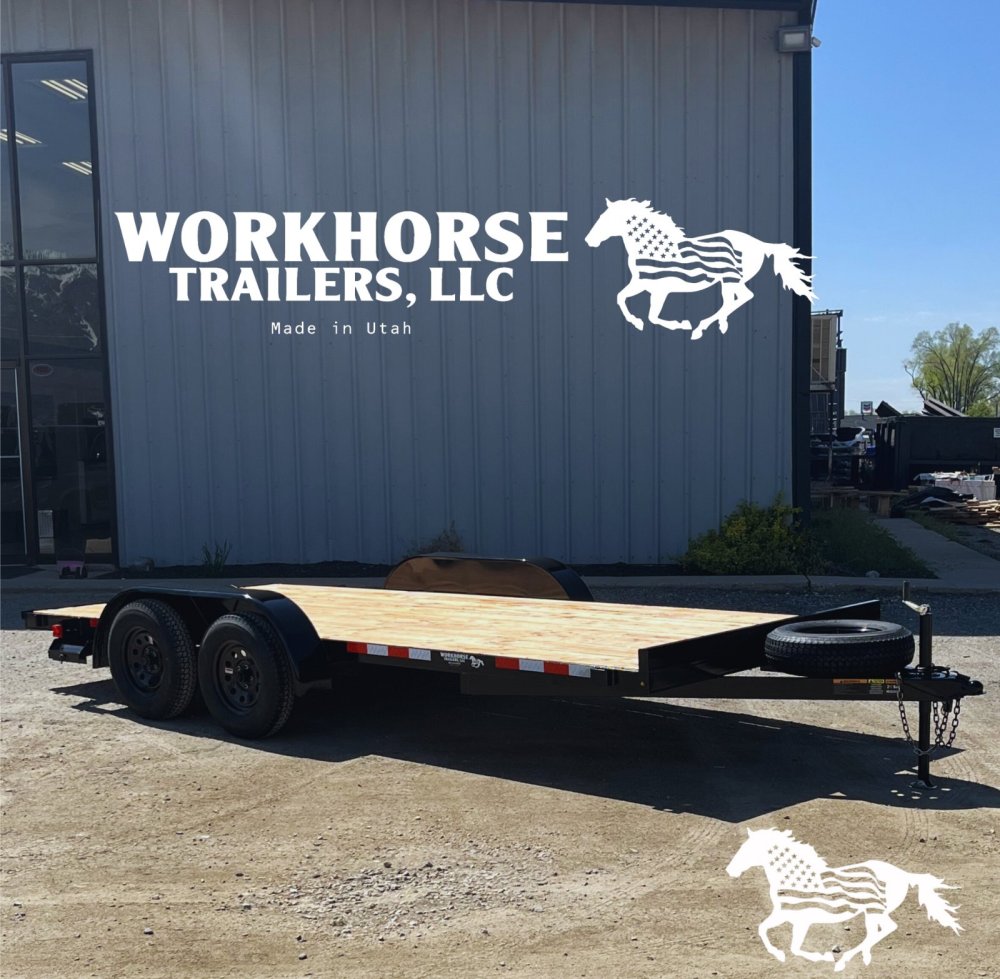
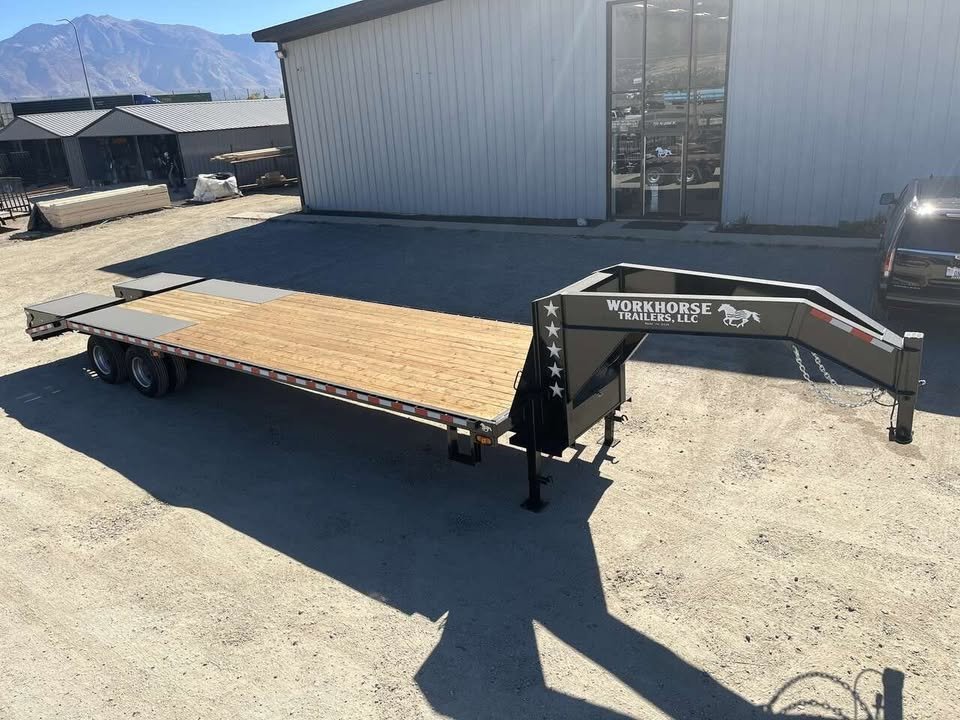
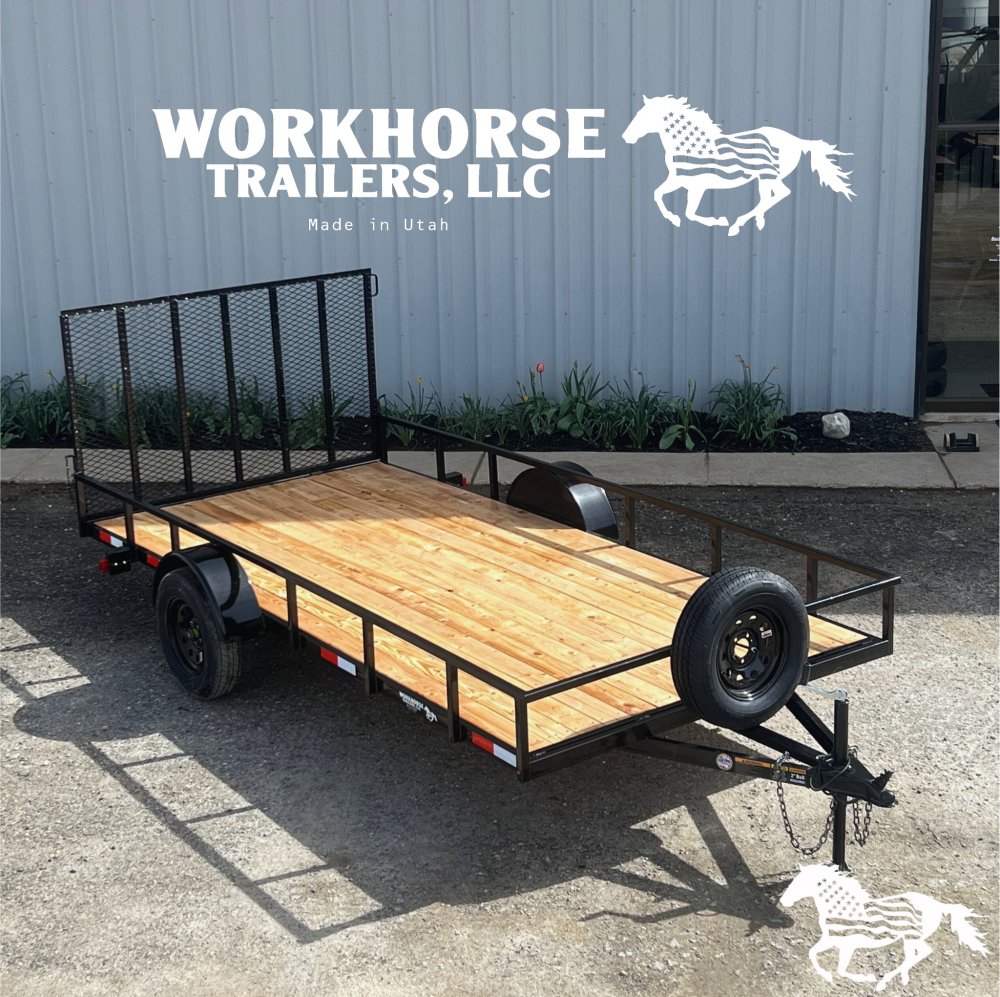
Elko Equipment Hauler Trailers
All locationsGold built Elko into what it is today, and the machinery that extracts it doesn’t walk to the mine site. Excavators, loaders, dozers, drill rigs, and support equipment travel between mine operations, maintenance facilities, and staging yards on equipment hauler trailers that cover ground most urban contractors never encounter. The mine access roads climbing into the Tuscarora Mountains, the haul routes threading through the Carlin Trend, and the service roads connecting processing facilities across the northeastern Nevada mining district subject equipment haulers to conditions that would retire a trailer built for city work within a single season. Elko’s equipment hauler buyers need trailers fabricated for sustained punishment across remote, unpaved, high-elevation terrain where mechanical failure doesn’t result in a convenient call to roadside assistance. Workhorse Trailers LLC supplies equipment hauler trailers to Elko buyers whose operations demand durability over convenience and reliability over price, because the cost of a breakdown 40 miles up a mine access road dwarfs any savings achieved by buying lighter.
An equipment hauler trailer carries machines that generate concentrated loads, drive themselves on and off the deck using tracks or tires that abrade surfaces aggressively, and weigh enough to test every structural connection between the coupler and the tail. In Elko County, these trailers also endure washboard roads, altitude-driven weather shifts, loose aggregate surfaces, and the fine ore dust that infiltrates bearings, electrical connections, and brake assemblies. The trailer that survives this environment for a decade is built differently from the one that lasts two years.
The Mining Equipment Transport Cycle in Elko County
Mining operations surrounding Elko generate a continuous cycle of equipment transport that puts more hours on equipment hauler trailers than most other applications anywhere in Nevada.
Support Equipment Repositioning
The large mining companies operating open-pit gold mines along the Carlin Trend and in the surrounding ranges maintain fleets of support equipment that move between active pits, waste dumps, processing facilities, and maintenance shops. While the primary production machines like haul trucks and large excavators move under their own power on mine haul roads, the support equipment that enables their operation travels by trailer. Welding machines, light plants, water trucks undergoing repair transfer, generators, and portable pump systems rotate between locations on equipment haulers operated by mine maintenance departments and contract service companies.
This repositioning happens on mine property roads that are graded for haul truck traffic but carry characteristics that challenge trailer components. The road surfaces consist of crushed waste rock ranging from fist-sized fragments to fine aggregate. The profile includes grades climbing to mine bench elevations that can exceed 6,000 feet. Dust plumes from haul truck traffic reduce visibility and coat everything in a layer of mineral particulate that works its way into every unsealed joint and bearing.
Contract Service Equipment Delivery
Independent contractors providing services to mining operations haul their own equipment to the mine site for each project. A blasting contractor brings drill rigs and charging equipment. An earthwork subcontractor brings compactors and graders. A reclamation specialist brings hydroseeders and erosion control equipment. Each of these deliveries involves loading at the contractor’s Elko-area yard, driving to the mine site on a combination of public highway and private mine roads, unloading at the designated work zone, and reversing the process when the project concludes.
The frequency of these cycles varies by contractor, but some Elko-area service companies make equipment deliveries to mine sites three to five times per week. That loading frequency, combined with the road quality encountered on every trip, produces wear patterns that trailers designed for occasional use cannot sustain.
Ranch and Agricultural Equipment
Mining dominates Elko’s economy, but cattle ranching remains foundational to the county’s identity and land use. Ranching operations across the Humboldt River drainage, the Ruby Valley, and the grazing allotments stretching north toward the Idaho border use equipment hauler trailers to move compact tractors, skid steers, post drivers, and hydraulic implements between fields, corrals, and hay operations that may be spread across tens of thousands of acres.
Ranch equipment hauling in Elko County happens predominantly on unpaved roads that range from well-maintained county gravel to minimally improved two-track routes across BLM land. The equipment being hauled is lighter than mining machinery, typically in the 3,000 to 10,000-pound range, but the road conditions are equally demanding on the trailer’s suspension, frame, and running gear.
Unpaved Road Stress and Equipment Hauler Construction
The majority of equipment hauler miles logged in the Elko area include a meaningful percentage of unpaved travel. This off-pavement operation creates stress patterns distinct from highway use that buyers should understand when evaluating construction quality.
Vibration Fatigue at Weld Joints
Washboard surfaces transmit rapid, repetitive impact through the trailer’s tires, axles, and frame at frequencies that concentrate stress at weld joints. A frame welded with adequate penetration and proper preparation handles these vibration loads by distributing the energy across the weld zone and surrounding base metal. A frame welded with shallow penetration, cold starts, or inadequate joint preparation develops micro-cracking at the weld toes that propagates with each mile of washboard exposure until visible cracking appears.
Elko equipment hauler buyers should examine the welding quality on any trailer under consideration. Consistent bead profile, full penetration at critical joints, and gusset reinforcement at frame-to-crossmember intersections indicate construction intended for demanding service. Inconsistent beads, visible undercut, and butt joints without reinforcement suggest manufacturing shortcuts that the Elko operating environment will expose within the first year.
Fastener Loosening Under Vibration
Bolted connections on equipment haulers, including fender brackets, ramp hinge assemblies, light mounts, and accessory attachments, work loose under sustained vibration. Nylon-insert lock nuts, serrated flange nuts, and thread-locking compounds resist vibration-induced loosening far better than standard hex nuts. Elko buyers should verify that critical bolted connections use appropriate locking hardware and should plan for periodic retorquing as part of routine maintenance.
The ramp hinge assembly deserves particular attention because it carries the full machine weight during every loading cycle and absorbs impact when the ramp contacts the ground surface. Hinge pins that develop slop from vibration-induced wear allow lateral movement in the ramps, creating a safety hazard during loading and accelerating further deterioration. Greaseable hinge pins with retention clips or cotter pins allow scheduled maintenance that keeps the connection tight.
Suspension Response on Rough Terrain
Leaf spring suspensions remain the dominant configuration on equipment hauler trailers, and their performance on Elko’s rough roads depends heavily on spring pack quality and axle alignment. Spring packs with adequate leaf count and proper arc handle washboard and impact loads without bottoming out. Under-specified spring packs compress fully under load, transmitting full impact force directly into the frame and losing the damping function that spring deflection provides.
Axle alignment shifts when spring bushings wear, U-bolts loosen, or spring hangers deform under repeated impact. Misaligned axles cause uneven tire wear, tracking problems, and increased rolling resistance that burns fuel and stresses the tow vehicle’s drivetrain. Checking axle alignment annually, or more frequently for trailers in heavy mine road service, catches misalignment before it cascades into tire replacement costs and handling problems.
Altitude and Weather Factors for Elko Equipment Haulers
Elko’s 5,000-foot base elevation, with mine sites and work areas reaching considerably higher, introduces performance variables that sea-level equipment hauler owners never consider.
Tire Pressure and Temperature Interaction
Tire pressure increases with elevation gain and temperature rise, and decreases with elevation loss and temperature drop. An equipment hauler loaded at an Elko yard at 5,000 feet and driven to a mine bench at 6,500 feet gains roughly 2 PSI from altitude alone. If the drive occurs during a morning-to-afternoon temperature swing of 40 degrees, the combined pressure increase can reach 5 to 7 PSI above the cold-inflation setting. For tires already inflated to their maximum rated pressure, this elevation and temperature gain pushes the internal pressure beyond the casing’s design limits.
Setting cold inflation pressure 5 to 8 PSI below maximum rated pressure provides the headroom needed for altitude and temperature gains during typical Elko-area operating cycles. This approach trades a minimal reduction in load capacity for a meaningful increase in casing safety margin.
Cold Weather Starting and Brake Response
Elko’s winter mornings routinely drop below zero, and sub-zero temperatures affect electric brake magnet response, hydraulic fluid viscosity in surge brake actuators, and the flexibility of brake shoe friction material. Electric brakes that respond instantly at 70 degrees may exhibit a delayed or reduced initial engagement at minus 10 degrees. Operators towing loaded equipment haulers in Elko’s winter conditions should test brake response during the first few hundred yards of travel each morning and adjust their following distance until the braking system reaches its operating temperature.
Bearing grease stiffens in extreme cold, increasing rolling resistance and startup drag. Synthetic greases formulated for wide temperature ranges maintain their viscosity characteristics across Elko’s seasonal extremes better than conventional lithium-based products. The incremental cost of synthetic grease is negligible per service event and meaningful per bearing life.
Snow and Ice on Deck Surfaces
Equipment haulers parked outdoors in Elko accumulate snow and ice on the deck surface during winter months. Loading a tracked machine onto an ice-covered steel or wood deck creates an immediate traction hazard. The machine’s tracks cannot grip the frozen surface, and the operator risks losing control during the loading incline. Clearing snow and scattering coarse sand or non-corrosive ice melt on the deck before loading takes minutes and prevents the accidents that icy deck surfaces produce.
Ramp surfaces accumulate ice faster than the deck because their angle promotes water runoff that freezes in thin sheets. A ramp that appears dry may carry a transparent ice layer that provides zero traction. Testing ramp traction by stepping on the surface before driving a machine up it takes two seconds and reveals conditions that would otherwise announce themselves through a sliding, uncontrolled machine.
Loading on Unimproved Mine and Ranch Sites
Equipment hauler loading in Elko rarely happens on the level concrete pads that urban operators enjoy. Mine staging areas, ranch work sites, and construction zones throughout the county present loading surfaces that range from compacted gravel to loose dirt to frozen ruts.
The trailer should be positioned on the most level and stable ground available before loading. A loaded equipment hauler that’s parked on a cross-slope concentrates weight on the downhill-side axle and tires, potentially exceeding the per-axle rating even when the total load falls within the trailer’s GVWR. Level ground distributes the load symmetrically and keeps the loaded center of gravity centered over the frame.
Soft ground at loading points causes the trailer to settle unevenly as the machine drives aboard, particularly under the concentrated loading of tracked equipment. Placing timber pads or steel plates beneath the trailer’s tires before loading stabilizes the platform and prevents the trailer from sinking into soft spots as the machine’s weight transfers onto the deck.
Elko County Registration and Weight Enforcement
Equipment hauler trailers registered in Elko County follow Nevada’s DMV process at the local Elko office. The county’s 6.85 percent sales tax rate applies, falling below the rates in Nevada’s more populated southern counties.
CDL requirements follow federal thresholds. Equipment hauler combinations exceeding 26,001 pounds gross combined weight require a Class A commercial driver’s license. Many mining support equipment loads push Elko-area combinations into CDL territory, and contract service companies operating in the mining district should verify that all drivers holding equipment hauler assignments carry appropriate credentials.
Nevada Highway Patrol and mine site safety personnel both enforce weight and equipment compliance. Public road weight enforcement occurs at portable and fixed scales along I-80 and on state routes. Mine site enforcement happens at mine gates where safety departments inspect incoming equipment and trailers for compliance with site-specific safety standards that often exceed public road requirements.
Workhorse Trailers LLC and Elko Equipment Hauler Buyers
Workhorse Trailers LLC serves Elko equipment hauler buyers with a clear-eyed understanding of what northeastern Nevada does to trailers. The mine roads, the ranch roads, the altitude, and the temperatures create an operating environment that rewards heavy construction and punishes shortcuts. The company matches Elko buyers to equipment haulers built for this specific reality, emphasizing weld quality, suspension capacity, and component durability over catalog specifications that don’t account for the conditions these trailers actually face.
Elko area buyers evaluating equipment hauler trailers for mining support, ranch operations, contracting, or general heavy hauling can visitElko Equipment Hauler Trailers to review available options and connect with the Workhorse team for recommendations grounded in northeastern Nevada’s demanding operating profile.
The equipment hauler you depend on in Elko County needs to be as tough as the work it supports. Workhorse Trailers LLC delivers that standard with every sale.