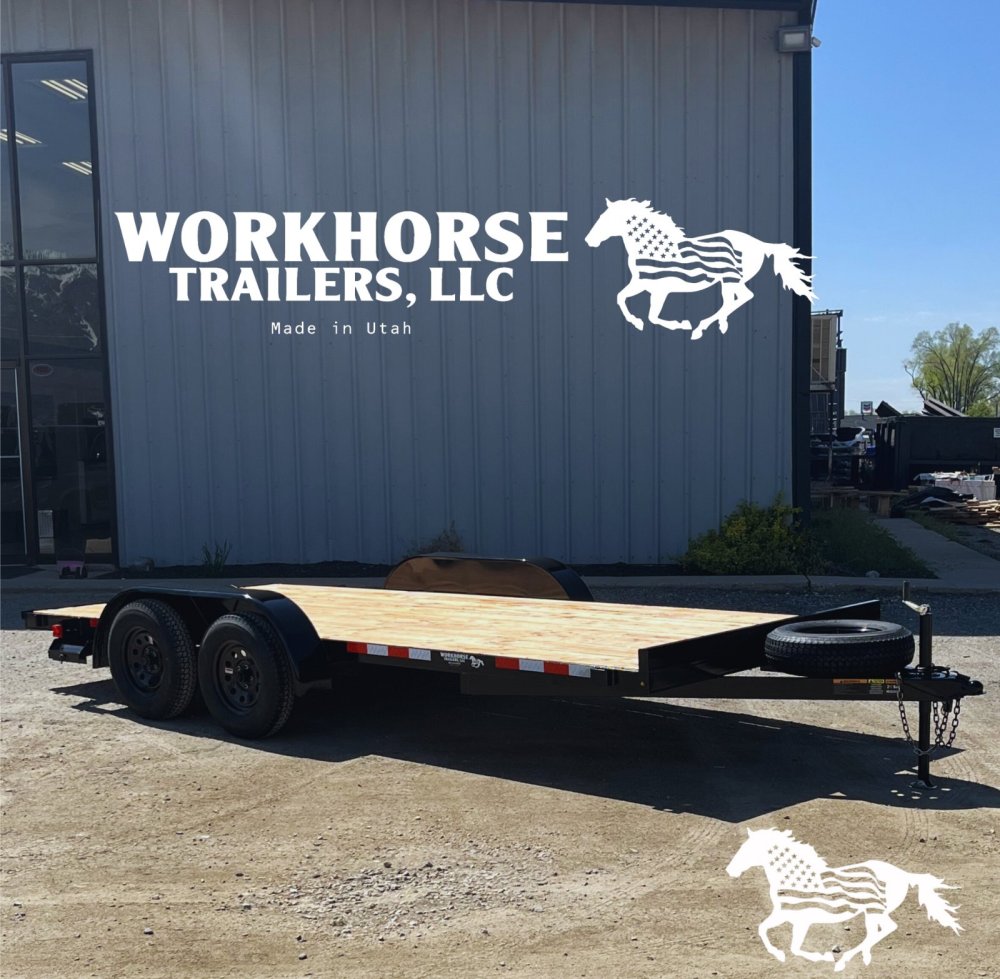
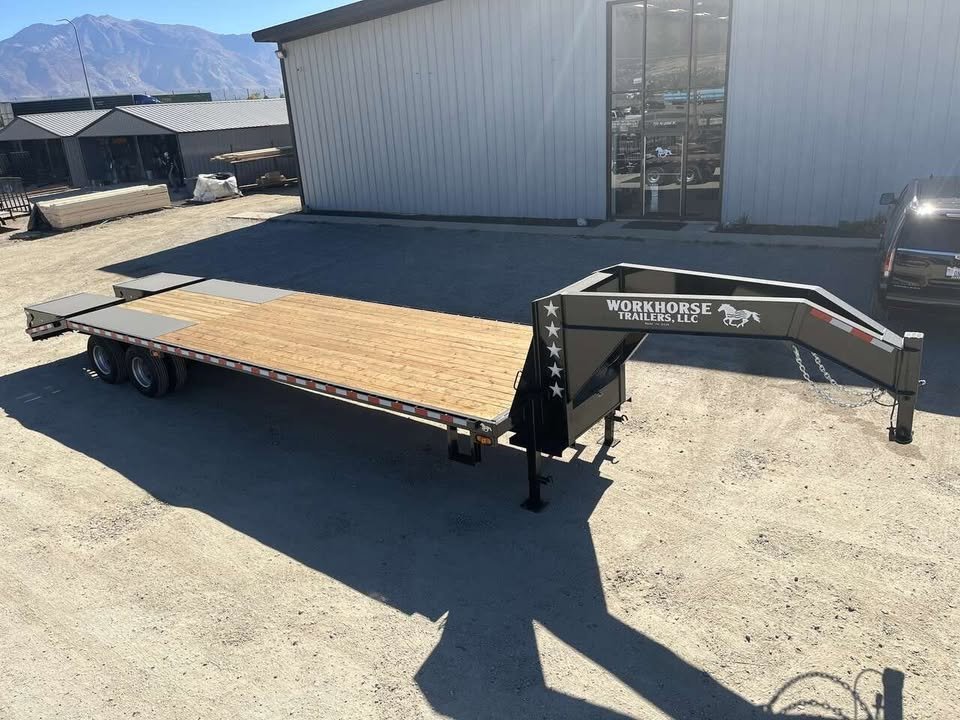
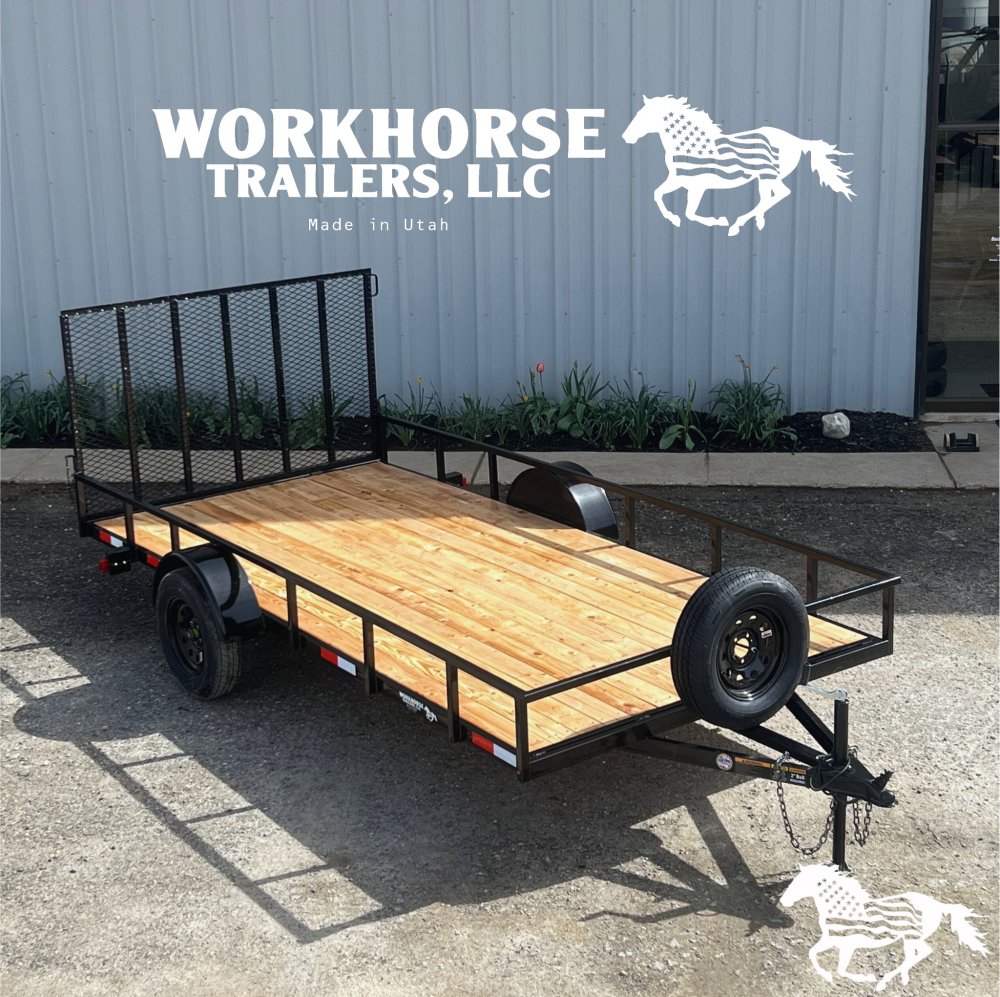
Elko Deck Over Trailers
All locationsRanch supply runs in Elko County don’t look like hardware store trips in a suburb. A single fencing project on a grazing allotment east of the Ruby Marshes might require 200 steel T-posts, 40 rolls of barbed wire, a gas-powered post driver, a spool of smooth wire for gates, and enough staples and clips to fill a five-gallon bucket. Stacking all of that between the fender wells of a conventional trailer means building a precarious tower that shifts on every washboard mile between town and the work site. A deck over trailer spreads the same load across a flat, full-width surface where everything sits stable, accessible, and secured without the creative packing that fender-obstructed trailers demand. In Elko, where hauling distances are long and the roads punish unstable loads, deck over trailers have earned a permanent place in the equipment lineups of ranchers, mine supply operations, and contractors who move wide or bulky cargo as a matter of routine. Workhorse Trailers LLC provides deck over trailers to Elko buyers who need the uninterrupted deck space that conventional flatbeds sacrifice to wheel well intrusion, with construction quality matched to the rough terrain and remote conditions that define hauling in northeastern Nevada.
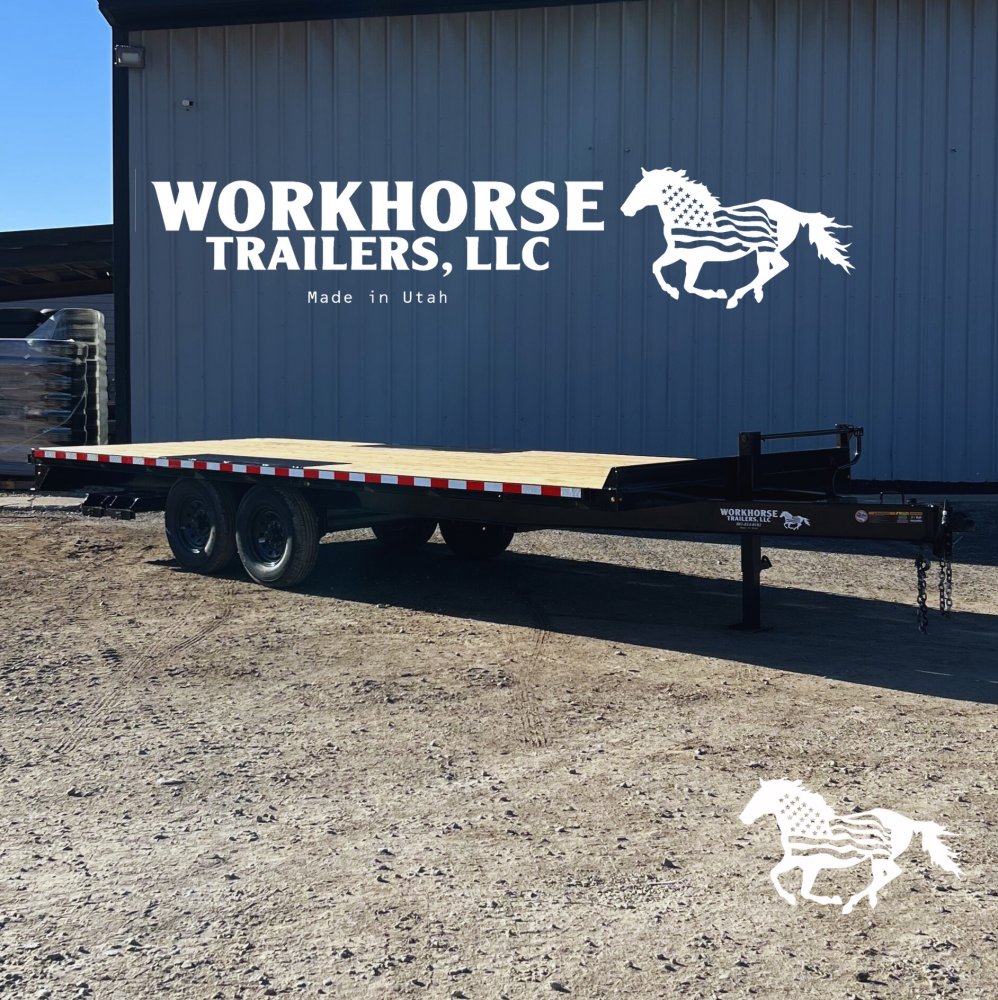
The deck over design positions the trailer bed above the axle and tire assemblies, producing a continuous flat surface that stretches the full width of the frame rails. On most full-size models, that means 102 inches of clear working space from rail to rail. Nothing protrudes into the cargo area. Nothing restricts where loads sit or how they’re arranged. The compromise is a higher deck elevation compared to drop-between-the-axle designs, which raises the center of gravity and requires ramps for loading rather than ground-level step-on access. For Elko buyers whose cargo demands full-width capability, that trade-off resolves in the deck over’s favor every time a wide load needs to move.
How Elko’s Supply Chain Geography Creates Deck Over Demand
Elko’s position in northeastern Nevada means that materials, equipment, and supplies arrive from distant sources and distribute outward to work sites that can sit hours from the nearest pavement. This geography amplifies the value of every trailer trip and makes the deck over’s capacity advantage consequential in ways that shorter-haul markets don’t experience.
Inbound Supply Consolidation
Building materials, ranch supplies, industrial components, and mine consumables arrive in Elko from distribution points in Reno, Salt Lake City, Boise, and sometimes directly from manufacturers in more distant states. Buyers who pick up their own materials at supplier warehouses along the I-80 corridor or at Elko’s commercial supply houses want to consolidate as much cargo onto each trip as possible. A deck over trailer maximizes the usable loading area for palletized and bundled materials that occupy their full width when placed by forklift. Two pallets of concrete mix that fit side by side on a 102-inch deck over would need to ride single file on a narrower between-the-fender trailer, cutting the load in half or forcing a dangerously stacked arrangement.
Outbound Distribution to Remote Sites
Materials that arrive in Elko consolidated on a deck over still need to reach their final destination, which frequently involves 30 to 80 miles of additional travel on roads that deteriorate progressively as they leave the paved highway network. A load that was stable when placed by forklift at the supply yard in town must remain stable across miles of gravel, washboard, and seasonal mud. The deck over’s flat surface distributes the load evenly across the full width of the frame, reducing the point-load concentrations that cause cargo shift on narrower trailers where items stack higher to fit the restricted width.
Hay Transport Between Properties
Elko County’s cattle operations depend on hay transport between fields where it’s cut, storage yards where it’s kept, and feeding locations where it’s consumed. A standard large round bale measures roughly 60 inches in diameter and 60 inches across the flat face, weighing between 800 and 1,400 pounds depending on moisture and crop type. Placing two bales side by side requires at least 120 inches of clear width, which exceeds what most between-the-fender trailers provide. A 102-inch deck over accommodates two bales across its width with the bales overhanging the rails slightly, which is standard practice and legal within Nevada’s 8-foot-6-inch maximum width allowance when properly marked.
Ranchers moving hay between properties scattered across the valleys north and south of Elko depend on this two-wide loading capability. Cutting the load to one bale per row doubles the number of trips and doubles the fuel, time, and road exposure on routes that may involve an hour of unpaved driving each direction.
Center of Gravity Management on Elko’s Mountain Roads
The elevated deck height that defines the deck over design creates a center of gravity concern that Elko buyers must address more deliberately than buyers in flat terrain markets.
The Height Factor
A deck over trailer positions the cargo bed roughly 30 to 36 inches above the ground, compared to 20 to 26 inches on a conventional flatbed or equipment hauler. The cargo sitting on top of that elevated deck adds its own height. A pallet of materials standing 48 inches tall on a deck over trailer places the load’s center of gravity approximately 54 to 60 inches above the road surface. The same pallet on a conventional flatbed sits 8 to 12 inches lower.
On flat, straight highway, this difference is negligible. On the winding grades that connect Elko to mine sites in the Tuscarora range, ranch properties in the Bull Run Basin, or recreational areas accessed through Lamoille Canyon Road, the elevated center of gravity increases the loaded trailer’s susceptibility to rollover during sharp curves and its lateral instability during crosswind events. The physics aren’t theoretical. They produce tangible differences in how the rig handles corners and responds to wind gusts on exposed ridge roads.
Practical Mitigation
Elko deck over owners learn to manage the height factor through load placement and driving technique rather than avoiding the trailer type altogether.
Keeping heavy items as low on the deck as possible reduces the effective center of gravity height. A load of steel fence posts laid flat on the deck surface produces a dramatically lower center of gravity than the same weight of fence posts standing upright in a rack. When mixed loads include both heavy and light components, placing the heavy items directly on the deck and lighter items on top follows the same principle.
Reducing speed on curves and during crosswind exposure gives the tow vehicle and trailer more time to respond to lateral forces. A rig that handles confidently at 55 miles per hour through a sweeping I-80 curve may become uncomfortable at 65 with the same load during a wind event. Elko’s highway environment includes enough open exposure between mountain ranges that crosswinds arrive without the building and tree windbreaks that sheltered environments provide.
Deck Board Performance at Elko’s Elevation and Climate
Elko sits at approximately 5,000 feet in a high desert environment that combines low humidity, intense UV radiation, wide temperature swings, and winter moisture. Each of these factors affects the treated pine deck boards that cover the majority of steel-frame deck over trailers.
Moisture Content Equilibrium
Wood seeks equilibrium with the moisture content of its surrounding air. Treated pine installed at a manufacturing facility in the humid Southeast may contain 15 to 19 percent moisture when new. Elko’s ambient humidity drives the equilibrium moisture content down toward 6 to 8 percent over the trailer’s first year of local use. As the boards lose moisture, they shrink across their width. A 2×8 deck board can lose a quarter inch or more of width during this equilibration period, opening gaps between adjacent boards that grow progressively across the deck.
Buyers taking delivery of a new deck over trailer in Elko should expect this initial shrinkage and plan for a retightening of all deck board fasteners within six to twelve months. Boards that continue to shrink beyond this initial period may need replacement with lumber sourced from a dry climate supplier whose stock starts closer to Elko’s equilibrium moisture content.
Freeze-Thaw Deck Damage
Water that enters checking cracks in deck boards during fall rains or spring snowmelt freezes during Elko’s cold nights and expands inside the wood grain. Repeated freeze-thaw cycles drive the cracks deeper and eventually split boards along their length. Once a board develops a through-split, it loses its load-bearing capacity across the break and should be replaced.
Sealing the end grain and any visible checking with a penetrating wood preservative before the first winter slows water entry into the grain structure. This treatment doesn’t prevent checking entirely but reduces the rate at which freeze-thaw damage progresses through the board cross-section.
UV Surface Degradation
The ultraviolet intensity at Elko’s altitude degrades the surface layer of deck boards faster than at lower elevations. The surface grays, softens, and develops a fibrous texture that reduces traction for both boots and tires. Annual application of a UV-resistant deck treatment maintains the surface hardness and color while adding a degree of moisture repellency that complements the factory pressure treatment.
Multi-Purpose Deck Over Configurations for Elko Operations
Many Elko buyers use their deck over trailer across multiple roles rather than dedicating it to a single cargo type. The flat, unobstructed deck accommodates this versatility, but optimizing the trailer for multi-purpose service requires some deliberate configuration choices.
Removable Side Extensions
Stake pockets welded along the deck over’s side rails accept removable stake sides that convert the flat deck into a contained hauling platform for loose materials. Firewood, brush, loose hay, fencing debris, and construction waste all benefit from side containment that prevents cargo from falling off during transport. When the side extensions aren’t needed, they slide out and store flat against a shop wall, returning the trailer to its open-deck configuration for pallet loading, equipment hauling, and material staging.
Elko buyers who intend to alternate between flat deck and contained hauling should verify that the deck over they’re considering includes stake pockets at intervals that match the extension boards they plan to use. Standard spacing is 24 inches on center, which accommodates commonly available lumber lengths for side boards.
Integrated Tie-Down Patterns
A deck over trailer serving multiple cargo types needs tie-down points positioned for flexibility rather than optimized for a single load configuration. D-rings welded at 24-inch intervals along both side rails and across the deck at the midpoint and quarter points provide attachment options for virtually any load arrangement. Hay bales, pallets, equipment, bundled materials, and mixed loads all benefit from having D-ring options at positions that allow straps or chains to angle correctly for the specific cargo being hauled.
Elko buyers who primarily haul bales may also benefit from adding recessed chain slots along the deck perimeter. These slots accept throw-over chains that secure a full bale load quickly without requiring individual strap attachment at each D-ring.
Registration, Road Compliance, and Practical Ownership in Elko
Deck over trailers registered in Elko County follow Nevada’s DMV process at the local office. The county’s 6.85 percent sales tax rate applies, offering savings compared to purchases made in Nevada’s higher-rate urban counties. Annual registration renewal fees are based on declared weight and remain modest.
The 102-inch standard width of full-size deck over trailers falls within Nevada’s 8-foot-6-inch maximum unpermitted width. However, cargo that extends beyond the trailer rails, such as hay bales in the two-wide configuration described earlier, must not exceed the 8-foot-6-inch total width including overhang. Loads wider than this limit require an oversize permit from the Nevada Department of Transportation, which specifies approved routes and may require pilot car escort.
Reflective conspicuity tape requirements apply to trailers exceeding 80 inches in width and 10,000 pounds GVWR. Most full-size deck over trailers meet both criteria. The tape must be visible and reflective on the sides and rear. Faded or peeling tape should be replaced before operating on public roads, as Nevada Highway Patrol enforces conspicuity requirements during enforcement stops along the I-80 corridor through Elko.
Workhorse Trailers LLC and Elko Deck Over Buyers
Workhorse Trailers LLC serves Elko deck over buyers with an understanding that this trailer operates in an environment of long distances, rough roads, and seasonal extremes that compress the lifespan of underbuilt equipment. The company’s recommendations account for the cargo profiles, terrain conditions, and multi-purpose demands that Elko area ranchers, contractors, and supply haulers face daily.
Elko area buyers comparing deck over trailers for ranch supply, mine material delivery, hay transport, or general-purpose wide-load hauling can visitElko Deck Over Trailers to review available configurations and connect with the Workhorse team for guidance specific to northeastern Nevada’s operating conditions.
A deck over trailer that handles Elko’s roads, weather, and workload without compromise is an investment in operational capability that returns value on every trip. Workhorse Trailers LLC ensures the trailer you select delivers that return from day one.