
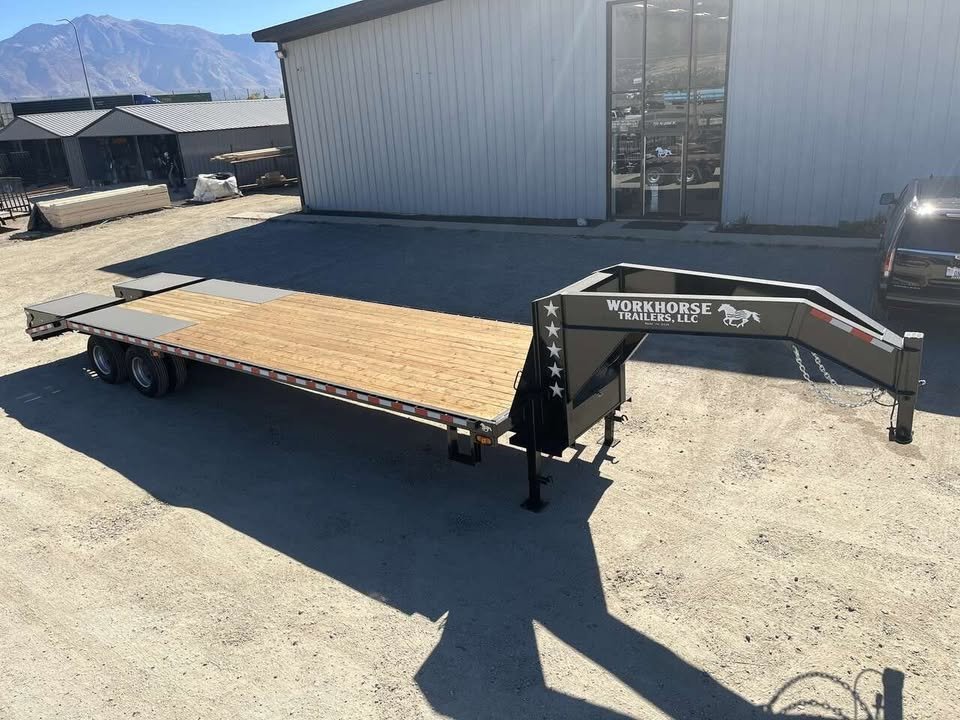
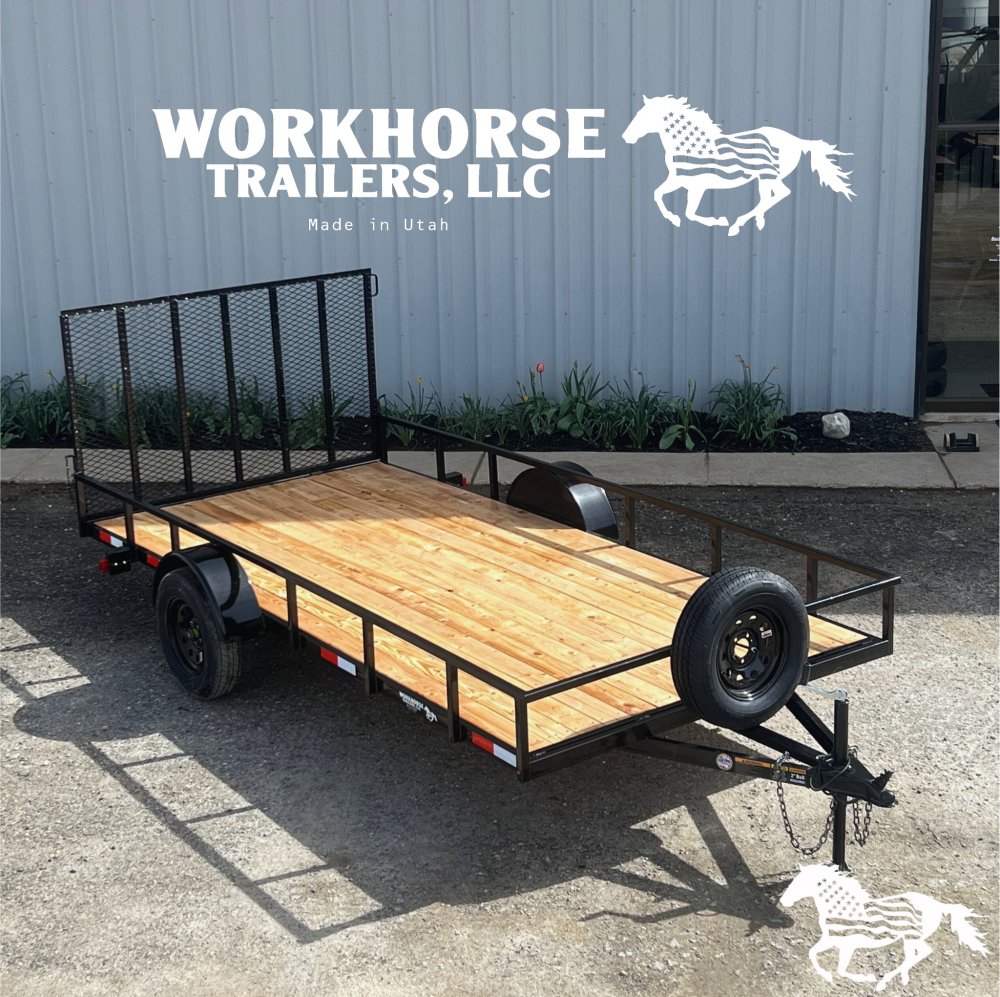
Draper Tilt Deck Trailers
All locationsRamps have been the standard method for loading equipment onto trailers for decades, but they introduce problems that cost operators time, money, and occasionally their safety. Detachable ramps get lost, bent, or left behind at job sites. Fixed ramps add dead weight to every mile driven and create steep inclines that challenge low-clearance machines. Tilt deck trailers bypass these issues altogether by turning the deck itself into the loading surface, pivoting the platform downward until the rear edge contacts the ground and creating a gradual slope that machinery can ascend under its own power. Workhorse Trailers LLC brings this practical innovation to Draper, Utah through a curated inventory of tilt deck trailers that address the real loading challenges faced by operators working across one of the Wasatch Front’s busiest and most geographically varied communities.
The Mechanics of a Tilting Deck
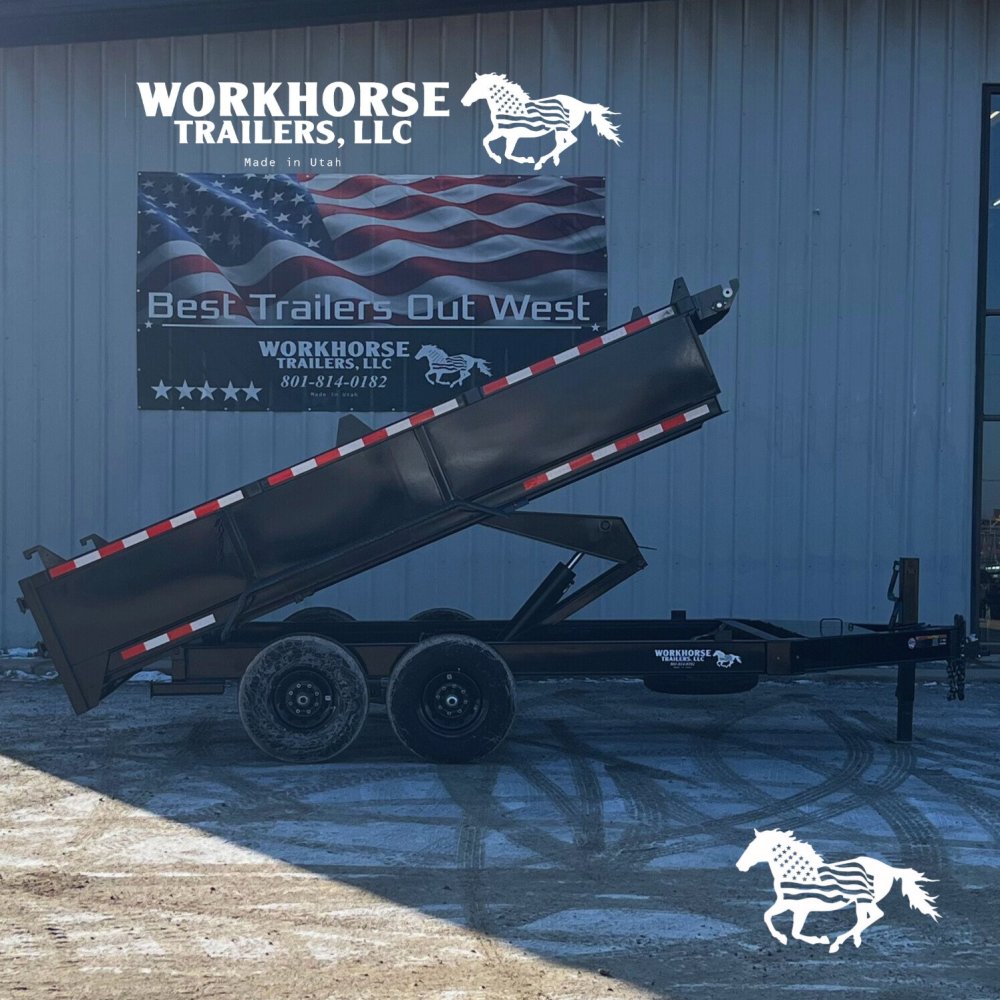
A tilt deck trailer operates through a pivot assembly mounted at a calculated balance point along the trailer frame. When the operator releases a locking mechanism at the front of the deck, the rear portion drops toward the ground while the front lifts slightly, guided by the pivot hardware. The angle created between the lowered deck and the ground provides a gradual incline suitable for driving or winching equipment aboard.
Two mechanical systems govern this tilting action, and each serves a different operator profile. Hydraulic tilt systems use a powered cylinder to control deck movement with precision, raising and lowering the platform at whatever speed the operator selects through a switch or remote control. The alternative approach relies on gravitational balance, where the weight distribution of the unloaded deck naturally tips the rear downward once the lock is disengaged, and the forward movement of loaded equipment past the pivot point returns the deck to its traveling position.
The elegance of this system lies in what it removes from the loading equation. There are no separate ramp pieces to wrangle, no pins to align, and no steep angle that forces tracked machines to climb at grades that stress their drivetrain components. A single operator can manage the entire loading sequence without assistance, which has become an increasingly important factor for Draper businesses operating lean crews in a competitive labor market.
Where Tilt Deck Trailers Prove Essential in Draper
Draper’s position at the junction of dense suburban development and rugged mountain terrain creates a working environment where loading speed and mechanical simplicity translate directly into profitability. Several sectors within the local economy have adopted tilt deck trailers as their preferred transport platform.
Concrete and Masonry Services
The residential and commercial building surge across Draper’s remaining developable land keeps concrete and masonry crews booked months in advance. These teams transport power buggies, motorized wheelbarrows, walk-behind saws, and compact concrete mixers that need to move between pours happening at different addresses on the same day. Conventional ramp loading eats into the narrow time windows between scheduled pours, and the physical effort of handling heavy ramps multiple times per day contributes to crew fatigue and the repetitive strain injuries that plague the trades. A tilt deck trailer compresses each loading cycle into a fraction of the time and eliminates the manual ramp handling entirely, letting crews focus their energy on the skilled work they are paid to perform.
Solar Installation Companies
Utah’s expanding solar energy market has brought a wave of installation companies to the Draper area, many of them operating out of commercial spaces along the Minuteman Drive corridor and the business parks near Draper Parkway. These crews transport scissor lifts, panel carts, ballast material, and rooftop access equipment to installation sites daily. The low approach angle of a tilted deck is particularly beneficial for loading scissor lifts and articulating boom equipment whose geometry makes them awkward to guide up steep conventional ramps. The reduced risk of tipping during the loading process protects both the machine and the crew member operating it.
Fleet Maintenance and Mechanic Shops
Independent mechanic shops and fleet service providers in Draper frequently need to retrieve disabled vehicles, broken-down equipment, and machines pulled from service for scheduled overhaul. Non-running equipment cannot drive itself up a ramp, and pushing or winching heavy machinery up a steep incline introduces risk to both the equipment and the operator. A tilt deck brings the loading surface nearly flush with the ground, allowing a shop winch to pull disabled machines aboard at a gentle angle that minimizes the chance of cable snap, frame damage, or rollback incidents.
Municipal and Public Works Departments
The city of Draper and the utility districts serving the community maintain fleets of compact equipment including street sweeper attachments, portable message boards, generator sets, and water pumps that rotate between storage yards and deployment locations throughout the year. Municipal crews operate on tight schedules governed by public safety deadlines, storm response timelines, and event preparation calendars. Tilt deck trailers allow a single public works employee to load and transport equipment without waiting for a second crew member to assist with ramp setup, keeping response times short and labor costs contained.
Rental Yards and Equipment Dealers
The equipment rental businesses clustered around the 12300 South and I-15 interchange cycle machines in and out of their yards at a relentless pace. Delivery drivers at these operations load and unload equipment a dozen or more times per shift, and every minute spent wrestling with ramps or repositioning loading aids subtracts from the number of deliveries they can complete in a day. Tilt deck trailers have become the delivery platform of choice for rental companies that measure success by turnaround speed, and drivers overwhelmingly prefer them over ramp-based alternatives once they experience the difference firsthand.
Choosing Between Tilt Deck Configurations
Workhorse Trailers LLC stocks tilt deck trailers in several configurations that address different capacity requirements and operational preferences. Draper buyers benefit from understanding the distinctions before committing to a specific model.
Full Platform Tilt
A full platform tilt trailer pivots the entire deck surface from front to rear, providing maximum uninterrupted length for the loaded equipment to occupy. This design works best when the primary cargo is a single large machine that benefits from the longest possible loading path and the most gradual approach angle. Excavators, compact dozers, and large mowing units all load more smoothly on a full tilt platform because the operator can position the machine at the optimal balance point without interference from a fixed deck section.
Stationary Front with Tilting Rear
This split configuration maintains a rigid, non-tilting section at the front of the trailer while only the rear portion pivots. The fixed front deck serves as a stable platform for cargo that should not shift during the tilt cycle, including toolboxes, fuel containers, loose materials, and secondary equipment that rides alongside the primary machine. Operators who carry both a main piece of equipment and a collection of support items on every trip find this layout more practical than a full tilt design because it eliminates the need to remove auxiliary cargo before activating the tilt mechanism.
Single Axle Versus Tandem Axle Platforms
Lighter tilt deck trailers built on single axle frames suit operators who transport equipment in the 2,000 to 5,000 pound range and value the compact footprint for storage and maneuverability. Tandem axle tilt decks step up to the 7,000 to 14,000 pound capacity range demanded by heavier machinery and offer the stability benefits of four contact points on the road. Most Draper commercial operators gravitate toward tandem axle models because their equipment weights and daily usage patterns call for the additional capacity and redundancy that a second axle provides.
Specifications That Matter Most
Beyond the tilt configuration, several technical specifications influence how well a tilt deck trailer performs over years of hard use in Draper’s varied conditions.
Frame Strength at the Pivot Zone
The pivot assembly bears extraordinary stress during every loading cycle as the full weight of ascending equipment transfers through a concentrated area of the frame. Trailers with reinforced gussets, heavy-gauge pivot tubes, and hardened pivot pins at this junction withstand thousands of cycles without developing the sloppiness and cracking that weaker designs exhibit after a single season. Ask to inspect the pivot zone closely on any tilt deck trailer you consider purchasing, and compare the thickness and welding quality of the reinforcement plates between different manufacturers.
Deck Surface Traction
A tilted deck becomes an inclined plane that equipment must climb, making surface traction critical to safe loading. Diamond plate steel, expanded metal grating, and serrated bar grating all provide superior grip compared to smooth steel plate, especially when conditions are wet from rain, morning dew, or the muddy runoff that saturates Draper job sites during spring thaw. Some operators add removable rubber matting over steel decks for additional traction and noise dampening during transit.
Locking Mechanism Reliability
The device that secures the deck in its flat traveling position must engage positively and resist accidental release from road vibration, cargo shifting, and the repeated impact loading that commercial service imposes. Pin-style locks backed by secondary safety latches represent the most dependable configuration. Worn or poorly designed locks that allow even slight deck movement during transit create a dangerous situation where cargo can shift unexpectedly, altering the trailer’s handling characteristics without warning.
Ground Clearance in the Tilted Position
When the deck reaches its fully tilted angle, the lowest point of the rear edge should contact the ground or come within a few inches of it to minimize the step-up height that equipment encounters at the start of the loading ramp. Trailers with insufficient tilt range force machines to climb a noticeable ledge at the deck’s trailing edge, negating much of the advantage the tilt design is supposed to provide. Verify the actual ground clearance in the tilted position on any model you evaluate, preferably on a flat surface that simulates the loading conditions you will encounter most often.
Those researchingDraper Tilt Deck Trailers at Workhorse Trailers LLC gain the advantage of a sales team that evaluates these specifications against every customer’s actual loading scenarios rather than reciting catalog data without context.
Operating Safely on Draper Terrain
Tilt deck trailers simplify the loading process, but safe operation still depends on the operator following consistent procedures that account for Draper’s specific environmental conditions.
Site Assessment Before Tilting
Survey the ground where you plan to tilt the deck before releasing the lock. Soft soil, loose gravel shoulders, and uneven pavement all affect how the deck contacts the ground and whether the trailer remains stable during the loading sequence. On Draper’s hillside construction sites where level ground is scarce, positioning the trailer so the tilt occurs on the most stable available surface prevents the deck from digging into soft earth on one side and creating a lopsided loading path.
Controlled Equipment Approach
Drive or winch equipment onto the tilted deck at a steady, controlled pace. Sudden acceleration can cause tracked machines to overshoot the balance point and slam the deck back to level prematurely, potentially launching the operator forward in the cab. Conversely, stopping short of the balance point on a gravity tilt system leaves the deck in an intermediate angle that complicates securing the load. Practice the approach sequence in a controlled environment before attempting it on a busy job site where time pressure tempts operators to rush.
Securing After the Deck Levels
Once the equipment has traveled past the pivot point and the deck has returned to its flat position, immediately engage the locking mechanism and begin the tie-down process. Never transport a load on a tilt deck trailer without confirming that the deck lock is fully engaged. A deck that tilts unexpectedly during highway driving will send equipment sliding rearward off the trailer with catastrophic consequences for following traffic.
Long-Term Value for Draper Operations
The cumulative time savings from eliminating ramp handling across hundreds or thousands of loading cycles per year represent the most compelling financial argument for tilt deck trailer ownership. A contractor who saves five minutes per loading event and loads equipment four times daily recovers over 80 hours of productive time annually. Multiply that figure by the loaded labor rate of the crew involved, and the tilt deck trailer’s premium over a conventional ramp-equipped model pays for itself within the first year for most active Draper operations.
Reduced physical strain on crew members delivers a secondary return that is harder to quantify but equally real. Fewer back injuries, fewer hand and finger injuries from ramp handling, and less overall fatigue translate into lower workers’ compensation costs, fewer missed workdays, and a workforce that remains productive deep into the demanding Utah construction season.
Workhorse Trailers LLC Serves the Draper Market
Workhorse Trailers LLC has supplied tilt deck trailers to Draper professionals spanning construction, municipal services, equipment rental, specialty trades, and private equipment owners who value efficiency and safety equally. Customers from South Jordan, Riverton, the Mountain View Corridor communities, and the northern Utah County cities of American Fork, Pleasant Grove, and Lindon round out a customer base that extends well beyond Draper’s boundaries but centers on the south valley’s shared need for durable, intelligently designed hauling solutions.
The team invites Draper buyers to visit the lot, operate the tilt mechanisms on display models, and bring specific questions about their equipment weights, loading frequency, and tow vehicle capabilities. That hands-on evaluation combined with informed guidance from the sales staff produces purchasing decisions that Draper operators remain satisfied with for the full working life of the trailer.