
Colorado Utility Trailers
All locationsColorado demands more from a utility trailer than most states ever will. The elevation alone changes the equation, with populated areas sitting between 5,000 and 10,000 feet above sea level and mountain passes climbing well beyond that. Add in dramatic temperature swings, aggressive winter road treatments, and a population that works and plays harder outdoors than almost anywhere else in the country, and the need for a genuinely tough utility trailer becomes clear. Workhorse Trailers LLC serves Colorado buyers with utility trailers selected for their ability to perform under exactly these conditions, delivering the kind of build quality and practical design that earns trust on the Front Range, across the Western Slope, and through every mountain corridor in between.
Colorado’s economy is fueled by industries that move things constantly. Residential construction radiates outward from Denver, Colorado Springs, and Fort Collins at a pace that shows no sign of slowing. Ranching and farming anchor the Eastern Plains and the river valleys of the Western Slope. Tourism and recreation drive a year-round cycle of gear transport, event staging, and property maintenance from Estes Park to Durango. A utility trailer sits at the center of all of this activity as the single most versatile hauling platform a Colorado resident or business can own.
What Colorado Buyers Should Expect from a Utility Trailer
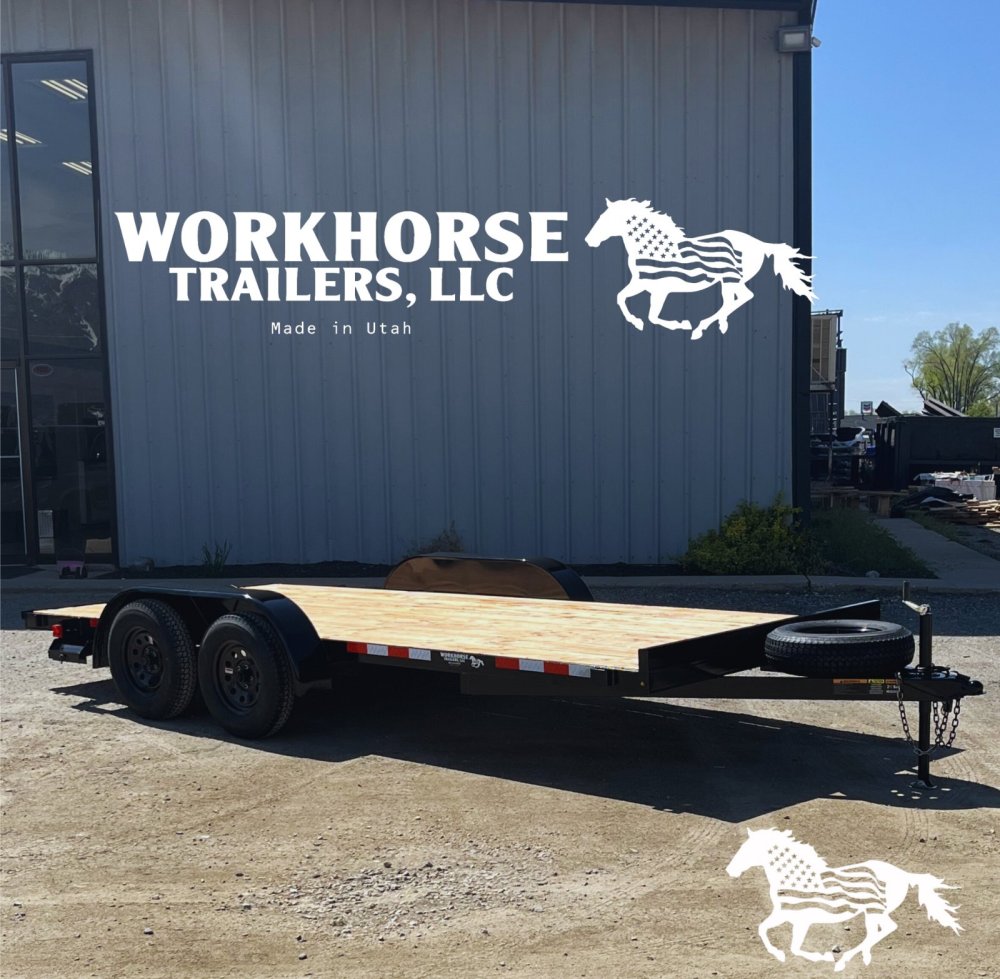
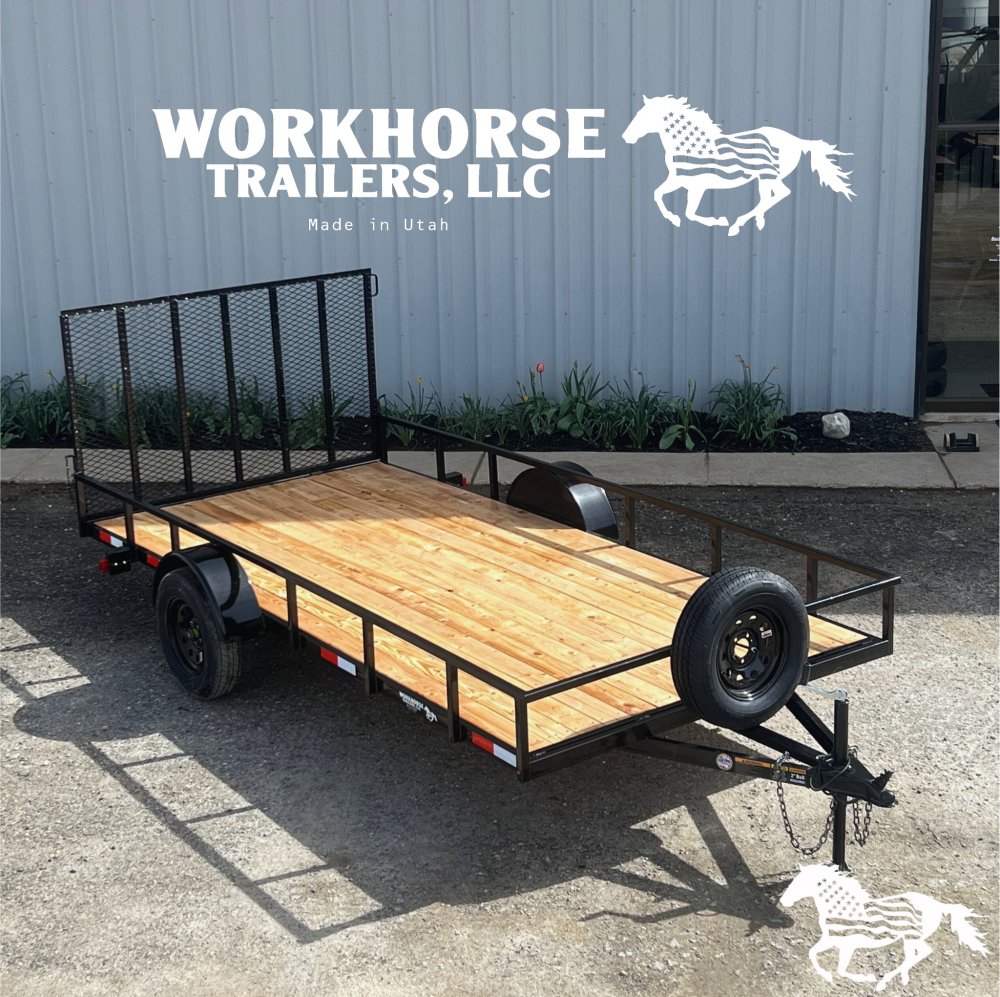
A utility trailer provides a flat, open deck with low side rails and a rear gate or ramp, designed to carry a rotating mix of cargo without requiring specialized loading equipment or permanent configuration changes. That basic format makes utility trailers the most adaptable trailer type on Colorado roads, capable of shifting from hauling landscaping debris on a Tuesday morning to transporting a snowmobile on a Saturday afternoon.
The open deck design keeps the trailer lightweight relative to its cargo capacity, which matters in Colorado where tow vehicles already sacrifice engine power to the thin mountain air. Every pound saved on the trailer itself translates into additional payload the tow vehicle can manage without straining its cooling system on a sustained climb up Floyd Hill or through the Eisenhower Tunnel corridor.
Workhorse Trailers LLC stocks utility trailers across a range of sizes and weight ratings so that Colorado buyers can select a model calibrated to their tow vehicle’s capabilities and their most common cargo demands. Oversizing a trailer wastes fuel and adds unnecessary weight. Undersizing one limits capacity and invites the temptation to overload. Finding the precise match is the first step toward years of productive, trouble-free service.
Sizing a Utility Trailer for Colorado Applications
Colorado’s geographic diversity means that a utility trailer purchased in Pueblo serves a very different daily routine than one based in Steamboat Springs or Grand Junction. Matching trailer dimensions and capacity to the buyer’s actual environment prevents the frustration of owning equipment that does not fit the job.
Small-Footprint Utility Trailers
Trailers measuring 4 to 5 feet wide and 6 to 8 feet long with single axles and GVWR ratings under 3,000 pounds fill a niche that Colorado’s mountain town residents and urban homeowners appreciate. Narrow streets in historic districts like those in Leadville, Georgetown, and Telluride leave little room for wide trailers, and steep residential driveways in mountain communities demand short wheelbases that track tightly behind the tow vehicle without cutting across the inside of switchback turns.
These compact trailers handle household hauling tasks including waste removal runs, garden supply pickups, and small equipment transport with an efficiency that larger trailers cannot match in constrained environments. Workhorse Trailers LLC recommends small-footprint utility trailers for Colorado buyers whose primary use involves short-distance hauling in areas where maneuverability outweighs raw cargo volume.
General-Purpose Utility Trailers
The 5-by-10-foot to 6-by-12-foot range with single or tandem axle options and GVWR ratings from 3,000 to 7,000 pounds covers the broadest set of Colorado hauling scenarios. These trailers serve as the daily platform for property owners on five-acre parcels outside Castle Rock, part-time contractors picking up remodel work in Longmont, and outdoor enthusiasts staging weekend trips to the Arkansas River headwaters or the San Juan backcountry.
General-purpose utility trailers balance cargo volume, towing weight, and storage footprint in a proportion that fits the lifestyle of Colorado buyers who use their trailer several times a month across a unpredictable mix of tasks. Workhorse Trailers LLC carries general-purpose models with enough variation in axle count, deck material, and rail height to let Colorado buyers fine-tune their selection without jumping to a larger or more expensive category.
Heavy-Duty Commercial Utility Trailers
Colorado businesses that operate utility trailers as daily production tools need platforms built to sustain commercial loading cycles, highway miles, and exposure to the full range of Colorado road conditions without premature wear. Trailers in the 7-by-14-foot to 7-by-16-foot range with tandem axles, GVWR ratings above 7,000 pounds, and reinforced frames occupy this commercial tier.
Landscape contractors serving the booming communities along the northern Front Range, fencing crews working ranch properties on the Eastern Plains, and maintenance companies servicing commercial real estate portfolios in the Denver metro area all depend on heavy-duty utility trailers that survive punishing daily use. Workhorse Trailers LLC evaluates commercial-grade utility trailers against the specific punishment Colorado operators inflict and stocks only models that demonstrate the frame integrity, axle durability, and finish longevity this market demands.
Colorado-Specific Challenges That Affect Utility Trailer Selection
Buying a utility trailer in Colorado involves considerations that simply do not apply in lower-elevation, milder-climate states. Workhorse Trailers LLC factors these regional realities into every recommendation it makes to Colorado buyers.
Altitude and Its Effect on Towing Performance
Colorado’s inhabited elevations reduce naturally aspirated engine output by roughly 15 to 20 percent compared to sea-level performance. A truck rated to tow 8,000 pounds at sea level may struggle to maintain highway speed on a loaded climb out of Denver toward the Eisenhower Tunnel at 11,158 feet. Turbocharged and diesel engines handle altitude more gracefully, but every tow vehicle loses some capacity as the air thins.
This means that Colorado utility trailer buyers should build a larger buffer between their trailer’s loaded weight and their tow vehicle’s rated maximum than buyers in lower states might consider necessary. Workhorse Trailers LLC discusses altitude derating honestly with every Colorado customer, helping them select a trailer weight class that keeps the tow vehicle operating within a comfortable margin even on the steepest and highest routes their work or recreation demands.
Road Salt, Magnesium Chloride, and Corrosion Exposure
Colorado’s Department of Transportation applies magnesium chloride as a pre-treatment and deicer on state highways throughout the winter season. This chemical is more aggressive toward bare steel and aluminum than traditional rock salt, and it clings to vehicle and trailer undercarriages in a persistent film that accelerates corrosion between washes.
Utility trailers towed regularly during Colorado winters absorb this chemical exposure on every trip. Frames, axle assemblies, spring hangers, electrical connectors, and fastener hardware all suffer accelerated oxidation unless protected by coatings rated for chemical deicing exposure. Workhorse Trailers LLC prioritizes utility trailers with powder-coated or galvanized frames, sealed LED lighting assemblies, and corrosion-resistant hardware packages that resist Colorado’s aggressive winter road chemistry far longer than basic painted finishes.
Rapid Weather Transitions and Temperature Extremes
Colorado is famous for weather that changes dramatically within hours. A clear 70-degree morning on the Front Range can give way to a 35-degree afternoon hailstorm, and mountain passes can shift from dry pavement to snow-packed ice in the time it takes to drive ten miles. These transitions affect tire performance, braking effectiveness, and cargo security in ways that demand attentive preparation from every utility trailer operator.
Tire compounds that perform well in summer heat may stiffen and lose grip in a sudden cold snap. Cargo that was dry and stable at the origin may be coated in snow and shifting by the time it reaches a mountain destination. Workhorse Trailers LLC advises Colorado buyers to carry securement adjustments and basic weather response gear with every loaded trip and to select tires rated for all-season performance rather than optimizing exclusively for summer traction.
How Colorado Residents Put Utility Trailers to Work
The sheer range of activities that Colorado residents and businesses undertake with utility trailers reflects the state’s unique combination of commercial energy and outdoor culture.
Property Management and Rural Living
Colorado has one of the highest rates of rural and semi-rural property ownership of any western state. Homeowners on acreage outside Colorado Springs, in the Roaring Fork Valley, or across the broad ranchlands of Weld and Larimer counties manage their own fencing, outbuilding construction, firewood supply, and land clearing using utility trailers as the primary means of moving materials between the hardware store, the lumber yard, and the work site.
A utility trailer converts a personal truck into a complete materials transport system that handles everything from fence posts and wire rolls to gravel loads and brush piles. For Colorado’s rural property owners, trailer ownership is less a choice than a basic infrastructure requirement that enables self-sufficient land management.
Seasonal Recreation and Gear Transport
Coloradans own recreational equipment in extraordinary quantities. Dirt bikes, ATVs, kayaks, stand-up paddleboards, mountain bikes, camping trailers, ice fishing shelters, and snowmobiles all need transportation between the garage and the staging area, and many Colorado households own gear spanning multiple seasons and activities.
A single utility trailer accommodates this rotating inventory without requiring a dedicated specialty trailer for each pursuit. The same deck that carries two dirt bikes to Rampart Range in June hauls a snowmobile to Vail Pass in January and a canoe to Eleven Mile Reservoir in September. This multi-season versatility makes utility trailers the most cost-effective gear transport solution for Colorado’s active outdoor population.
Construction and Renovation Support
Colorado’s housing market drives a constant renovation cycle as homeowners update older properties and builders complete new construction across the metro areas and resort communities. Utility trailers serve both professional contractors and DIY homeowners by providing a platform for hauling demolition debris to the transfer station, picking up materials from suppliers, and transporting rented equipment between the tool yard and the job site.
The availability of a personal utility trailer eliminates delivery fees, provides scheduling flexibility, and allows the builder or homeowner to source materials from whichever supplier offers the best price regardless of whether that supplier provides its own delivery service. Across a major renovation project, those savings can offset a significant portion of the trailer’s purchase price.
Small Business and Agricultural Operations
Colorado’s small business ecosystem includes mobile service providers, market vendors, micro-farmers, and artisan producers who rely on utility trailers to connect their production sites with their customers. A vegetable grower hauling product from a greenhouse in Brighton to a farmers market in Boulder, a mobile welding service carrying equipment between ranch clients in Park County, and a firewood dealer delivering split rounds to homes across Woodland Park all operate from utility trailer platforms sized for their specific volumes.
Workhorse Trailers LLC has equipped Colorado small business owners with utility trailers that serve as the logistical foundation of their operations, providing reliable transport capacity that scales with the business without requiring the overhead of a dedicated commercial vehicle.
Registration, Lighting, and Legal Requirements in Colorado
Colorado regulates trailers on public roads through titling, registration, and equipment standards that every buyer should understand before their first trip.
All trailers operated on Colorado roads must be titled and registered with the county clerk’s office. Registration fees are based on the trailer’s empty weight and are payable annually. Trailers acquired from out-of-state sellers must undergo a VIN verification before Colorado registration can be issued.
Lighting requirements mandate functioning tail lamps, brake lamps, turn signals, and reflectors on every trailer. Trailers wider than 80 inches must also display clearance lamps at the widest points. Colorado enforces these requirements during roadside inspections and at the annual registration renewal for commercial vehicles. Workhorse Trailers LLC ensures that every utility trailer sold to Colorado buyers meets state lighting and equipment standards at the time of delivery.
Braking requirements in Colorado apply to trailers with a gross weight exceeding 3,000 pounds. Trailers in this category must be equipped with brakes on at least one axle, and the braking system must be capable of stopping and holding the trailer on any grade the vehicle might encounter. Given Colorado’s mountain terrain, this regulation carries particular practical significance beyond its legal mandate.
Maintaining a Utility Trailer Through Colorado’s Four Seasons
Colorado’s seasonal cycle imposes a maintenance rhythm that utility trailer owners should follow to protect their investment and ensure safe operation year-round.
After every winter towing session, rinse the entire trailer including the undercarriage, axle assemblies, and electrical connections to remove magnesium chloride residue. This single habit prevents more corrosion damage than any other maintenance practice. Allow the trailer to dry thoroughly after washing to prevent moisture from settling in crevices where it can freeze overnight and expand into cracks.
Inspect tires before each loaded trip, checking pressure, tread depth, sidewall condition, and age. Colorado’s temperature swings cause significant pressure fluctuations between morning and afternoon, and between seasons. Tires older than five years should be replaced regardless of visible tread remaining, as UV exposure at Colorado’s altitude degrades rubber compounds faster than at lower elevations.
Grease wheel bearings at least twice annually for trailers in regular use, and more frequently if the trailer encounters water crossings during off-road recreation outings or agricultural work. Check that all lights function before departure by having an assistant observe while the driver cycles through running lights, brakes, and turn signals. Carry spare bulbs and a basic wiring repair kit for field corrections on remote Colorado roads where the next auto parts store may be an hour away.
Connect with Workhorse Trailers LLC
A utility trailer that thrives in Colorado must be built tougher, finished better, and selected more carefully than one destined for gentler terrain and milder weather. Workhorse Trailers LLC applies that understanding to every recommendation it makes, matching Colorado buyers with utility trailers that perform at altitude, resist aggressive road chemistry, and adapt to the extraordinary range of tasks that life in this state generates.
Explore the complete inventory of utility trailers available to Colorado residents by visitingColorado Utility Trailers for current models, specifications, and pricing from Workhorse Trailers LLC. The team is prepared to discuss your towing setup, your typical routes, and the specific demands your Colorado lifestyle places on a trailer, ensuring that the utility trailer you take home delivers years of dependable performance across every elevation and every season.