
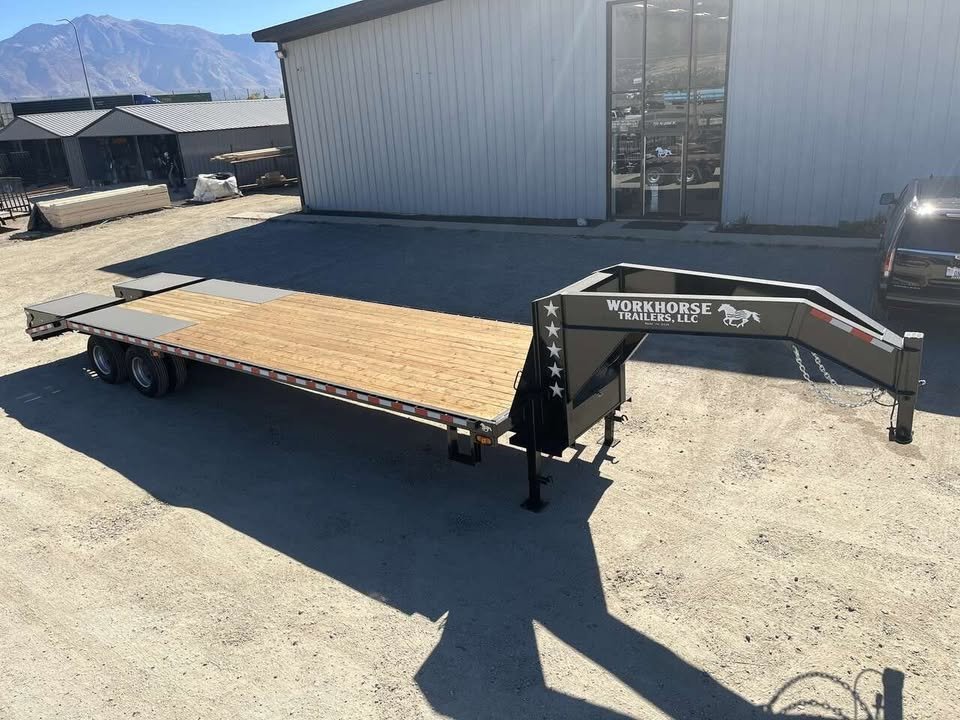
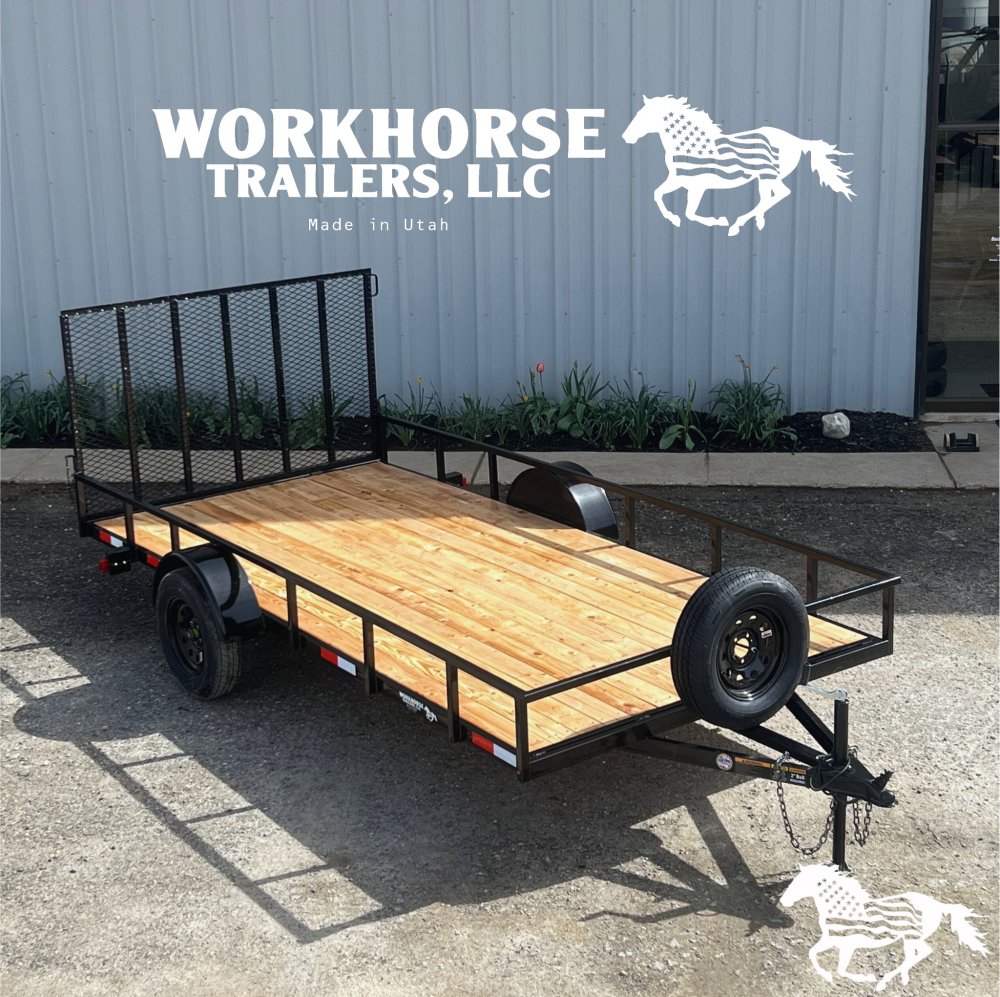
Colorado Springs Utility Trailers
All locationsColorado Springs ranks as the second largest city in the state, and its rapid expansion over the past decade has created a booming demand for practical hauling solutions among homeowners, contractors, and small business operators alike. A dependable utility trailer stands at the center of countless daily tasks across El Paso County, from clearing construction debris on a new housing development in Falcon to delivering fencing supplies for a horse property south of Fountain. Workhorse Trailers LLC has earned a strong reputation among Colorado Springs buyers who expect their equipment to hold up under constant use and deliver honest value over the long haul.
Situated along the Front Range at an elevation near 6,000 feet, Colorado Springs presents a hauling environment shaped by dramatic weather shifts, sprawling suburban growth, and close proximity to mountain terrain that tests both drivers and equipment. Hailstorms roll through with little warning during spring and summer months. Snow and ice transform roads in November and do not fully retreat until April. Gravel roads leading to rural properties on the eastern plains and mountain communities to the west put additional strain on trailer components that were built for gentle pavement. Workhorse Trailers LLC suppliesColorado Springs Utility Trailers constructed to thrive in these conditions, offering buyers access to a curated inventory where every model has been selected for its ability to withstand the Front Range environment without premature wear.
What Makes Utility Trailers Indispensable in Colorado Springs
The city’s identity is defined by a unique blend of military presence, technology sector growth, outdoor recreation culture, and expanding residential neighborhoods. Each of these pillars creates its own set of hauling needs, and the utility trailer sits at the intersection of them all as the single most adaptable piece of towable equipment a Colorado Springs resident can own.
Residential Growth and Home Improvement
Colorado Springs has added thousands of new homes in communities like Banning Lewis Ranch, Cordera, Sterling Ranch, and Wolf Ranch over recent years. Homeowners settling into new properties inevitably face a wave of projects that require moving materials and waste. Landscaping rock, topsoil, sod pallets, retaining wall blocks, fence panels, and demolition debris all need to travel between supply yards and residential addresses on a regular basis.
Renting a trailer from a big-box store for each individual project gets expensive quickly and rarely provides a unit suited to the specific load. Owning a utility trailer gives Colorado Springs homeowners the freedom to tackle projects on their own schedule without rental fees, mileage limits, or the inconvenience of returning equipment before the job is finished. A single trip to haul mulch from a landscape supply yard on Marksheffel Road can justify months of ownership costs when compared to delivery surcharges and rental rates.
Military Community Needs
The concentration of military installations in and around Colorado Springs, including Fort Carson, Peterson Space Force Base, Schriever Space Force Base, and the United States Air Force Academy, brings a population that moves frequently and maintains active lifestyles requiring reliable hauling capacity. Service members and military families use utility trailers to manage PCS relocations, transport recreational vehicles and equipment, haul supplies for unit events, and handle the constant shuffle of household goods that accompanies life in the armed forces.
A utility trailer that is easy to store in a base housing driveway or apartment complex parking area and simple to tow behind a standard pickup or SUV fits the practical realities of military life in Colorado Springs. Compact and mid-range models that fold down or feature removable sides offer the versatility this community values without demanding excessive storage space.
Small Business and Side Hustle Operations
The entrepreneurial spirit runs strong throughout Colorado Springs. Junk removal services, mobile car wash operations, lawn care startups, handyman businesses, and weekend market vendors all rely on utility trailers to keep their operations moving. For a solo operator running a hauling service out of the Security-Widefield area or a two-person landscaping crew based in Old Colorado City, the utility trailer is not just helpful. It is the foundation upon which the entire business model is built.
The relatively low entry cost of a quality utility trailer compared to a dedicated work truck or cargo van makes it an attractive first investment for Colorado Springs entrepreneurs launching service-based businesses. Pairing a reliable trailer with a personal truck keeps startup overhead low while providing the cargo capacity needed to serve paying customers from day one.
Matching Trailer Size to Colorado Springs Applications
Selecting the right dimensions prevents the common frustrations of owning a trailer that is either too cramped for productive use or too bulky for comfortable maneuvering in urban and suburban settings. Colorado Springs street layouts, parking lot configurations, and residential driveway dimensions should all factor into the sizing decision.
Compact Configurations for Urban Maneuvering
Trailers in the 4-by-6-foot to 5-by-8-foot range excel in situations where the operator needs to navigate tight residential streets, squeeze into crowded home improvement store parking lots, and store the trailer alongside a vehicle in a standard two-car garage bay. These compact models handle loads like bagged concrete, potted plants, small appliances, and personal moving boxes without difficulty.
Colorado Springs residents living in townhome communities along Powers Boulevard or in the more densely developed neighborhoods near downtown find compact utility trailers particularly practical because they do not create storage headaches or HOA conflicts. The small footprint also means lighter towing weight, which opens up the range of vehicles capable of pulling the trailer safely.
Mid-Size Models for Versatile Performance
Trailers measuring 5 by 10 feet through 6 by 12 feet occupy the sweet spot for most Colorado Springs buyers. They carry enough material to make each trip worthwhile while remaining manageable in everyday traffic and parking situations. This size bracket handles the bulk of residential and light commercial hauling tasks, from moving a riding mower and yard tools to delivering a half cord of firewood or a load of gravel for a drainage project.
Mid-size utility trailers are the most popular category among Colorado Springs landscapers, property maintenance providers, and general-purpose haulers because they strike the best balance between what fits and what is practical to tow through a busy metro area with more than 500,000 residents sharing the road.
Full-Size Options for Heavy Workloads
Trailers in the 7-by-14-foot to 7-by-16-foot range serve buyers whose cargo regularly includes riding equipment, multiple pallets of material, or large quantities of bulk goods. These full-size utility trailers are common among Colorado Springs contractors who manage renovation projects, roofing crews disposing of tear-off material, and property managers maintaining multiple rental units across different parts of the city.
The longer bed length accommodates items like 16-foot lumber, scaffolding sections, and extended ladder racks that simply will not fit on smaller platforms. Tandem axle configurations at this size provide the stability and weight capacity needed to carry heavier payloads without overloading any single set of tires or exceeding the trailer’s rated limits.
Trailer Features Suited to Front Range Conditions
The environment along the Colorado Front Range introduces specific challenges that influence which trailer features matter most. Colorado Springs sits in a climate zone where intense sunshine, rapid temperature drops, hail, and freeze-thaw cycles all take their toll on outdoor equipment.
Resilient Frame Coatings
Surface protection on the trailer frame determines how well the steel resists corrosion from road salt applied heavily during Colorado Springs winters and from the moisture that accumulates when snow melts on a parked trailer and pools in frame joints. Powder-coated frames create a thick, chip-resistant barrier that outlasts standard spray paint by several years. Buyers who plan to keep their trailer for a decade or longer should prioritize coating quality as one of the most important factors in their purchase decision.
All-Weather Lighting Systems
Short winter days in Colorado Springs mean that many hauling trips start before sunrise or end after dark. LED marker lights, brake lamps, and turn signals provide the visibility needed to operate safely in low-light conditions and during the sudden afternoon thunderstorms that reduce visibility dramatically along the I-25 corridor. Sealed wiring connections prevent the moisture intrusion that causes intermittent electrical failures, which is especially important during the spring snowmelt season when standing water is unavoidable on many Colorado Springs roads.
Mesh and Solid Side Wall Options
High winds are a persistent feature of life along the Front Range, particularly during late winter and spring when gusts routinely exceed 50 miles per hour along the gaps between mountain ridges. For hauling lightweight debris, leaves, cardboard, and other wind-prone materials, mesh side walls contain the load while allowing wind to pass through the trailer rather than catching it like a sail. Solid side walls provide better containment for heavier loose materials like gravel and soil but increase wind resistance significantly.
Colorado Springs buyers who haul a variety of materials throughout the year benefit from trailers with removable or interchangeable side panels that can be swapped between mesh and solid configurations depending on the day’s cargo and weather forecast.
Towing Considerations for Colorado Springs Terrain
The topography of the Colorado Springs metro area includes meaningful elevation changes that affect towing behavior. Traveling from the eastern plains neighborhoods near Schriever at roughly 6,200 feet to the mountain communities west of Manitou Springs above 7,500 feet involves sustained grades that put additional stress on the tow vehicle’s engine, transmission, and braking system.
Trailer tongue weight must be kept within the tow vehicle’s rated range to maintain stable handling on these grades. Too little tongue weight causes the trailer to sway on descents, while too much tongue weight overloads the rear suspension and lifts the front tires, reducing steering control on uphill climbs. Properly distributing the load inside the trailer so that approximately 60 percent of the cargo weight sits forward of the axle centerline maintains the correct tongue weight ratio for safe towing on Colorado Springs roads.
Braking capability is equally critical. Colorado law requires independent trailer brakes on units exceeding certain weight thresholds, and the steep terrain around Colorado Springs makes this requirement a safety necessity rather than a mere regulatory formality. Electric brake systems activated through a controller in the tow vehicle cab give the driver proportional braking control that prevents the dangerous combination of a heavy trailer pushing an under-braked truck downhill.
Caring for a Utility Trailer at Altitude
The higher elevation and intense UV exposure found in Colorado Springs accelerate certain types of wear that trailer owners in lower, cloudier climates rarely encounter. Tire rubber breaks down faster under constant ultraviolet bombardment, leading to sidewall cracking that weakens the tire structure long before the tread wears out. Inspecting tires monthly for signs of UV degradation and replacing them proactively when cracking appears prevents blowouts during loaded highway travel.
Wooden deck boards used on many utility trailers dry out more quickly in the arid Colorado Springs climate than they would in humid regions. The low moisture content causes shrinkage, splitting, and loosening of fasteners that hold the boards to the frame. Treating wood decks with a penetrating sealant every one to two years maintains flexibility in the grain and extends the useful life of the decking material substantially.
Wheel bearing grease thins more rapidly under the temperature extremes common in Colorado Springs, where a sunny winter afternoon can warm exposed metal components to 60 degrees before a nighttime plunge back below zero. This thermal cycling breaks down grease consistency and can allow moisture to infiltrate bearing seals. Annual bearing repacks using a high-temperature grease formulated for wide operating ranges address this concern and prevent the bearing seizures that strand trailers on the shoulder of Highway 24 or Interstate 25.
Workhorse Trailers LLC Delivers for Colorado Springs Buyers
Purchasing a utility trailer should feel like gaining a capable partner for every project ahead, not like settling for whatever happens to sit on the nearest dealer lot. Workhorse Trailers LLC approaches every Colorado Springs customer interaction with the goal of matching the right trailer to the right owner based on actual intended use, towing capability, storage constraints, and long-term plans.
Buyers visit from neighborhoods and communities across the greater metro area, including Monument, Palmer Lake, Woodland Park, Canon City, Pueblo West, and the Tri-Lakes region, drawn by a selection process that prioritizes substance and fit over quick transactions. Whether someone needs a compact trailer for weekend errands around Briargate or a tandem-axle workhorse for daily commercial hauling along Academy Boulevard, Workhorse Trailers LLC provides the guidance, product quality, and aftermarket support that Colorado Springs trailer owners deserve. The right utility trailer, chosen well and maintained properly, becomes one of the most productive tools a Front Range property owner or business operator will ever invest in.