
Colorado Springs Tilt Deck Trailers
All locationsDetachable ramps have been the default loading method on flatbed trailers for decades, but they come with a list of frustrations that Colorado Springs operators know all too well. Ramps get dropped in mud, bent by tracked machines, lost at job sites, and forgotten at the yard on the one morning they are needed most. They add weight to the trailer, consume storage space, and force a two-person operation every time the load needs to change. Tilt deck trailers bypass every one of these headaches by building the loading ramp directly into the platform itself. A single mechanical action drops the rear edge of the deck to ground level, creating a gentle incline that machines drive up, cargo rolls onto, and disabled vehicles get winched across without the drama of steep portable ramps. Workhorse Trailers LLC has seen demand for tilt deck trailers climb steadily among Colorado Springs buyers who are tired of fighting their equipment before the actual work even begins.
The operational rhythm in El Paso County rewards speed and punishes wasted motion. A paving contractor loading a roller at the yard on Janitell Road at 6 AM needs that machine on site at a subdivision in Falcon by 7 AM. A rental company dispatching a mini excavator from its facility near the airport needs the unit delivered and offloaded at a residential dig in Northgate before the homeowner leaves for work. These tight windows leave zero tolerance for the fumbling and physical strain that traditional ramp loading introduces. Workhorse Trailers LLC providesColorado Springs Tilt Deck Trailers that compress loading cycles into a fraction of the time conventional methods require, putting machines where they belong faster and with far less risk of injury or equipment damage.
Operational Advantages That Compound Over Time
The benefits of a tilt deck trailer are immediately obvious during the first loading cycle, but their true value reveals itself over weeks and months of daily use. Small time savings and reduced physical strain accumulate into measurable gains that affect the bottom line of every Colorado Springs operation that adopts the format.
Eliminating the Two-Person Ramp Problem
Standard detachable ramps on a heavy equipment trailer can weigh 80 pounds or more per side. Lifting, positioning, and securing these ramps requires significant physical effort, and doing it alone creates a genuine risk of back injuries, pinched fingers, and dropped ramps landing on feet. Many operations assign two workers to every loading event specifically to manage the ramps, which doubles the labor cost of each equipment move.
A tilt deck trailer reduces the loading operation to a single person. One operator releases the tilt latch, loads the machine, positions the cargo forward to level the deck, secures the tie-downs, and drives away. The second worker who would have been handling ramps is free to perform productive tasks elsewhere. For a Colorado Springs contractor running a three-truck fleet that loads equipment twice daily each, eliminating the second person from six loading events per day recovers enough labor hours over a year to justify the cost difference between a tilt deck and a conventional ramp trailer several times over.
Protecting Low-Profile Equipment
Colorado Springs rental yards stock an increasing inventory of compact machines designed with low ground clearance for stability and reach. Compact track loaders, mini excavators with zero tail swing, and stand-on skid steers all sit close to the ground in their transport configuration. The sharp angle where a detachable ramp meets the trailer deck edge catches undercarriage components, hydraulic hoses, and belly plates on these machines during loading, causing damage that leads to downtime and repair bills.
The continuous surface of a tilt deck eliminates that breakover point entirely. Equipment rolls from ground to deck along a single plane with no sudden angle change to scrape or snag on. Rental companies in Colorado Springs that have switched to tilt deck trailers for their delivery fleets report measurable reductions in undercarriage damage claims and faster turnaround times between deliveries because operators spend less time cautiously inching machines over a harsh ramp transition.
Faster Turnaround at Busy Job Sites
Active construction sites across Colorado Springs operate on schedules where equipment delivery windows are measured in minutes rather than hours. A concrete crew waiting on a power buggy cannot pour until the machine arrives. A framing team waiting on a telehandler cannot set trusses until the lift rolls off the trailer. Every minute the delivery trailer spends parked in the access road deploying ramps, guiding the machine up a steep incline, and stowing the ramps again is a minute that the entire crew stands idle.
Tilt deck trailers compress the unloading sequence dramatically. The operator backs into position, tilts the deck, releases the machine, levels the platform, and clears the access road in a time frame that ramp-based unloading simply cannot match. On job sites in fast-growing areas like the Powers corridor, the Banning Lewis Ranch developments, and the Northern Gateway commercial district, this speed advantage keeps project schedules on track and prevents the cascading delays that ripple outward when a single delivery runs late.
Tilt Deck Configurations Available to Colorado Springs Buyers
The tilt deck concept adapts to multiple trailer sizes and hitch types, allowing Colorado Springs operators to find a configuration that fits their specific hauling profile without compromise.
Standard Duty Tilt Deck Trailers
Standard duty models typically feature gross vehicle weight ratings between 7,000 and 12,000 pounds and deck lengths ranging from 16 to 20 feet. They accommodate the compact equipment and light machinery that dominates residential construction, property maintenance, and small-scale commercial projects throughout Colorado Springs.
These trailers pair well with half-ton and three-quarter-ton pickup trucks that many Colorado Springs operators already own, which keeps the total investment lower than heavier configurations that demand a more capable tow vehicle. For independent contractors, property managers, and homeowners who load equipment once or twice per week rather than multiple times daily, a standard duty tilt deck delivers the core loading advantage without over-specifying for the workload.
Heavy Duty Tilt Deck Trailers
Ratings above 14,000 pounds and deck lengths extending to 24 feet or beyond define the heavy duty tilt deck segment. These trailers handle the full-size skid steers, mid-range excavators, and multi-ton attachments that professional construction and excavation companies in Colorado Springs transport between active projects daily.
Heavy duty tilt decks require reinforced pivot assemblies, higher-capacity axle sets, and more robust latching mechanisms to manage the increased forces involved in tilting and leveling under heavier loads. The investment in these components pays for itself through reduced maintenance intervals and longer service life compared to standard duty models pressed into heavier service than they were designed to handle.
Gooseneck Tilt Deck Trailers
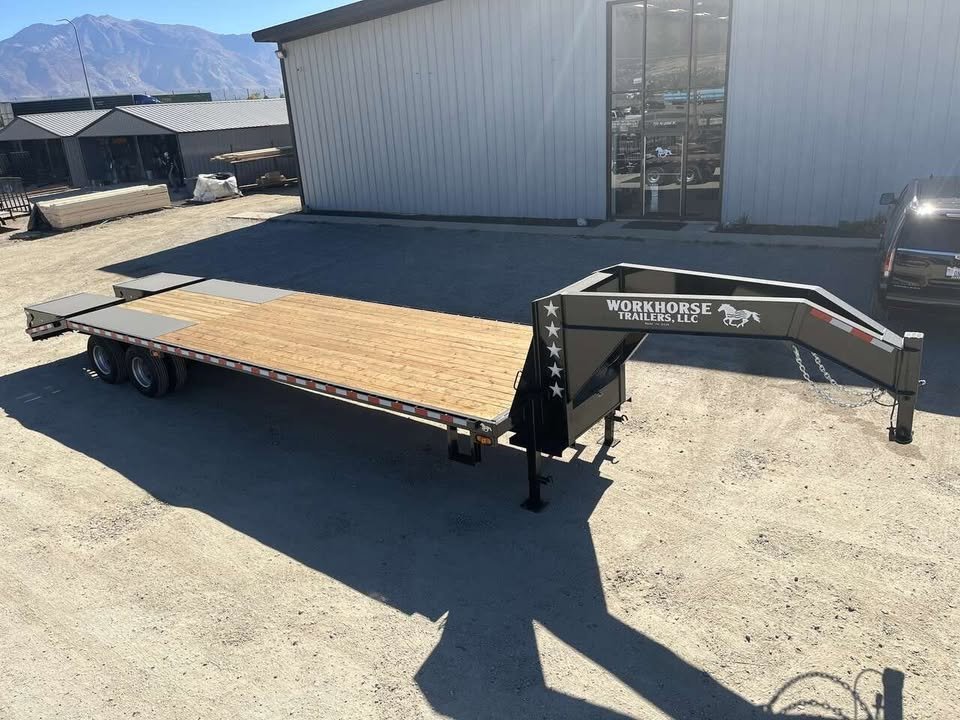
Combining the gooseneck hitch format with a tilting deck produces a trailer that delivers both high payload capacity and ramp-free loading convenience in a single package. The gooseneck connection handles the tongue weight demands of heavy cargo while the tilt mechanism simplifies loading machines that are too heavy or too low-slung for practical ramp use.
Colorado Springs excavation firms and heavy equipment rental companies that operate at the upper end of the payload spectrum frequently choose gooseneck tilt deck trailers as their primary transport units. The combination addresses both the weight challenge and the loading challenge simultaneously, which eliminates the need to own separate trailers for different aspects of the same job.
Bumper-Pull Tilt Deck Trailers
Bumper-pull tilt deck models serve the lighter end of the market where payload requirements stay below 14,000 pounds and the operator’s tow vehicle does not support a gooseneck hitch installation. These trailers connect to standard receiver hitches found on most pickup trucks and many full-size SUVs.
The bumper-pull configuration keeps the overall rig shorter and easier to maneuver in the tighter spaces found throughout established Colorado Springs neighborhoods, commercial parking areas, and older industrial zones near downtown and along South Nevada Avenue. Operators who value urban agility alongside tilt deck convenience find the bumper-pull format to be the most practical choice for their daily routing patterns.
Real-World Loading Scenarios in El Paso County
Describing how tilt deck trailers perform in actual Colorado Springs work situations illustrates why the format continues to gain converts among operators who previously relied on ramp-based trailers.
Landscape Equipment Rotation Between Properties
A commercial landscape maintenance crew servicing accounts scattered from the Broadmoor area to Briargate may cycle a stand-on mower, an aerator, and a debris loader between four or five properties each day. Each stop involves unloading one or two machines, performing the scheduled service, reloading, and moving to the next address. On a ramp trailer, every stop adds the overhead of deploying and stowing ramps in driveways that may slope, yards that may be soft, and curbside positions that offer limited flat staging area behind the trailer.
A tilt deck eliminates the ramp variable entirely. The deck drops to meet whatever ground surface is available, the machines roll on and off under their own power, and the deck levels back for highway travel. The crew moves from property to property with a fluidity that ramp-based loading interrupts at every single stop.
Delivering Rental Equipment to Residential Customers
Equipment rental companies in Colorado Springs serve a large base of homeowner and DIY customers who rent compact machines for weekend projects. These customers rarely have paved, level staging areas for delivery. Gravel driveways, sloped front yards, and narrow alleys between houses are typical delivery destinations where setting up portable ramps safely ranges from difficult to impossible.
The tilt deck conforms to the available ground surface rather than demanding a flat, stable platform to support detachable ramps. The rear edge of the tilted deck contacts the ground directly, and the machine drives off the continuous surface without the wobble and instability that ramps resting on uneven terrain introduce. Rental yard drivers completing five or six residential deliveries per day across Colorado Springs save significant time and avoid the liability exposure that comes with ramp failures on unprepared surfaces.
Emergency Equipment Deployment
Utility companies, municipal public works departments, and emergency response contractors in El Paso County maintain equipment that must deploy rapidly when storms, water main breaks, or infrastructure failures occur. A generator, pump, or compact loader sitting on a tilt deck trailer at the staging yard can be delivered to the emergency site and unloaded in minutes by a single operator without waiting for a second crew member to help manage ramps.
Colorado Springs experiences weather events throughout the year that test emergency response systems, from spring flooding along Fountain Creek to heavy snowfall that overwhelms road clearing capacity. The speed and simplicity of tilt deck unloading under urgent conditions has led several local fleet managers to transition their rapid-response trailers from ramp-based to tilt deck configurations.
Maintaining the Tilt System in a Front Range Climate
The mechanical components that enable the tilt function require regular attention to remain reliable, and the specific environmental conditions found in Colorado Springs influence which maintenance tasks deserve priority.
Pivot Assembly Lubrication
The pivot point where the deck hinges against the stationary frame section carries the full bending load every time the deck tilts and levels. Steel-on-steel contact at this joint generates friction and wear that accelerates when lubrication dries out or becomes contaminated with grit. The dusty conditions common on construction sites along the eastern edge of Colorado Springs near Schriever and along the unpaved roads south of Fountain deposit fine particles into pivot assemblies that act as an abrasive paste if not flushed and re-greased periodically.
A monthly lubrication schedule using a lithium-complex grease rated for high-load applications keeps the pivot moving freely and extends the lifespan of bushings and bearing surfaces. Operators who work primarily on paved surfaces in cleaner environments may stretch this interval to every six weeks, but those working on dirt and gravel should stick to monthly service.
Latch Mechanism Inspection
The latch that locks the deck in its flat traveling position prevents an unintended tilt event during highway transit. A latch that fails to engage completely or that releases unexpectedly while the trailer is moving at speed creates a catastrophic hazard for the operator and for other vehicles on the road.
Before every trip, Colorado Springs operators should visually confirm that the latch has engaged fully and apply a hand check to verify that the locking pin or lever is seated in its detent. Wear patterns on the latch face, elongation of pin holes, and looseness in the engagement mechanism all signal that replacement parts are needed before the system reaches the point of failure.
Hydraulic Component Winterization
Hydraulic tilt systems rely on fluid that responds predictably to control inputs. Cold temperatures during Colorado Springs winters thicken hydraulic fluid and slow the response time of cylinders and valves. In extreme cold, thickened fluid can prevent the tilt mechanism from operating at all until the system warms up.
Switching to a low-temperature hydraulic fluid formulation before the first hard freeze of the season maintains responsive tilt operation throughout the winter months. Inspecting cylinder seals, hose fittings, and the pump reservoir for signs of moisture contamination at the same time prevents the freeze-related cracking that occurs when water trapped in the hydraulic circuit expands as it turns to ice.
Workhorse Trailers LLC Matches Colorado Springs Operators to the Right Tilt Deck
Selecting a tilt deck trailer that aligns with the operator’s equipment weight, loading frequency, tow vehicle capacity, and daily routing requires a consultative approach that generic online shopping cannot provide. Workhorse Trailers LLC delivers that consultation to Colorado Springs buyers from across the Pikes Peak region, welcoming customers from Woodland Park, Divide, Cripple Creek, Penrose, Florence, Walsenburg, and Trinidad who recognize the value of working with a team that understands both the product and the conditions it will face. Every recommendation reflects the actual demands of the buyer’s operation, producing a tilt deck trailer purchase that eliminates the ramp frustrations of the past and delivers loading efficiency that compounds into real savings with every trip across the Front Range.