Colorado Springs Gooseneck Trailers
All locationsThere comes a point in every heavy hauling operation where a bumper-pull hitch simply runs out of answers. The loads get heavier, the distances get longer, the terrain gets steeper, and the margin between safe towing and a white-knuckle ordeal shrinks to nothing. That point arrives sooner than most Colorado Springs operators expect, and when it does, the gooseneck trailer stands ready as the proven upgrade that restores control, capacity, and confidence to the towing experience. By routing the connection through the truck bed and anchoring directly above the rear axle, a gooseneck hitch transforms the relationship between tow vehicle and trailer into a partnership built on physics rather than compromise. Workhorse Trailers LLC helps Colorado Springs buyers recognize when they have outgrown their current setup and guides them toward gooseneck trailers that match both their payload requirements and the challenging road conditions found throughout the Pikes Peak region.
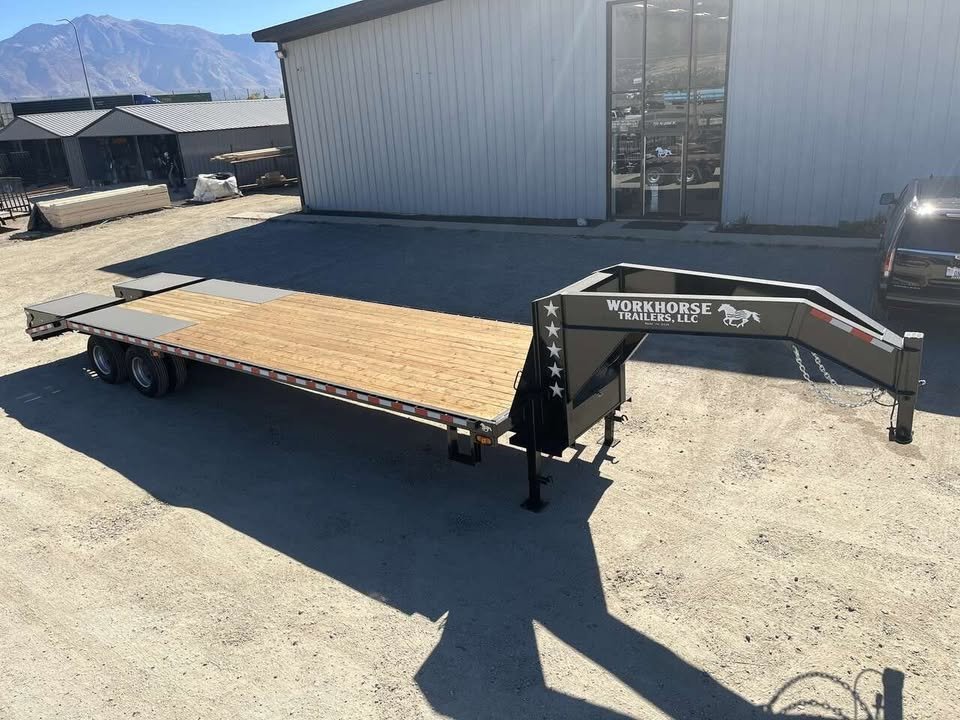
El Paso County sits at the meeting point of Colorado’s high plains and the southern Front Range, a geographic position that sends hauling routes through flatland, foothill, and mountain terrain within a single afternoon of driving. A gooseneck trailer bound for a ranch south of Fountain covers different ground than one climbing toward a construction project above Green Mountain Falls, yet both trips demand the same fundamental stability and load control from the towing rig. Workhorse Trailers LLC stocksColorado Springs Gooseneck Trailers proven across this full range of operating conditions, ensuring that buyers receive a trailer capable of performing reliably whether the day’s route stays on level pavement or ventures into the backcountry.
When Colorado Springs Operators Need to Step Up to Gooseneck
Recognizing the signs that a bumper-pull arrangement has reached its limits prevents dangerous situations on the road. Several indicators commonly surface among Colorado Springs haulers who are approaching the threshold where a gooseneck becomes necessary rather than optional.
Chronic Trailer Sway at Highway Speeds
A bumper-pull trailer that oscillates side to side during highway travel along I-25 or Highway 83 is communicating that the tongue weight balance and hitch geometry are struggling to control the load. Adding sway bars or weight distribution hitches may buy temporary improvement, but these accessories treat the symptom rather than the cause. A gooseneck hitch repositions the entire pivot point forward and above the rear axle, which fundamentally changes the physics that produce sway in the first place.
Colorado Springs operators who have experienced trailer sway while merging through the interchange at Woodmen Road and I-25, or while navigating the exposed stretch of Highway 24 east toward Falcon where crosswinds compound the problem, understand viscerally why a more stable connection matters. The gooseneck eliminates the long lever arm behind the rear axle that amplifies lateral inputs into full oscillation events.
Payload Requirements Exceeding Bumper-Pull Ratings
Most bumper-pull receiver hitches top out at gross trailer weight ratings between 10,000 and 14,000 pounds depending on the tow vehicle. Colorado Springs operators whose cargo regularly pushes against or exceeds those limits face a hard ceiling that no amount of wishful thinking can raise. Gooseneck hitches commonly support gross trailer weight ratings of 25,000 to 30,000 pounds, with some heavy-duty installations rated even higher.
That expanded capacity opens the door to hauling machines, materials, and livestock loads that simply cannot ride behind a bumper-pull connection legally or safely. For Colorado Springs contractors whose business growth has brought larger equipment into the fleet, stepping up to a gooseneck trailer accommodates that growth without requiring a jump to a commercial semi-tractor combination.
Need for Longer Trailer Lengths
Bumper-pull trailers become progressively more difficult to control as overall length increases. The distance between the hitch point at the bumper and the trailer’s rear axle creates a pendulum effect that magnifies steering inputs and road disturbances. A gooseneck connection shortens the effective lever arm between the hitch and the trailer body, which allows for longer trailer platforms without sacrificing handling quality.
Colorado Springs buyers who need 30-foot, 35-foot, or even 40-foot trailer beds for hauling long structural members, multiple pieces of equipment, or extended recreational vehicles find that gooseneck configurations handle these lengths with a composure that bumper-pull models of similar size simply cannot replicate.
Colorado Springs Applications Built Around Gooseneck Capability
The gooseneck platform serves as the foundation for hauling operations that form the backbone of El Paso County’s working economy. The applications described here represent the most common use cases encountered among Colorado Springs buyers, though the versatility of the gooseneck format extends well beyond this list.
Arena and Event Setup Operations
Colorado Springs plays host to hundreds of organized events each year at venues ranging from the Broadmoor World Arena and Norris Penrose Event Center to outdoor festival grounds at Memorial Park and Acacia Park. Event production companies, staging rental firms, and decorating contractors move enormous volumes of equipment between warehouse facilities and venue locations on tight timelines that leave no room for multiple trips.
Gooseneck flatbed trailers carrying stacked staging platforms, lighting trusses, sound system cabinets, and tent framework components make these events possible. The high weight capacity of the gooseneck connection allows a single trailer to carry what would require two bumper-pull loads, cutting transport time in half and reducing the number of trucks needed on event setup day. Production companies serving the Colorado Springs event circuit treat their gooseneck trailers as essential infrastructure equal in importance to the staging equipment itself.
Equestrian Transport Along the Front Range
The horse community in Colorado Springs and the surrounding foothills is deeply rooted. Training barns, boarding facilities, and private equestrian properties are concentrated along the Highway 83 corridor, in the Black Forest area, and throughout the rolling terrain between Monument and Castle Rock. Horse owners in these communities transport their animals to competitions, trail rides, veterinary clinics, and breeding appointments on a regular basis.
Gooseneck horse trailers offer a stable, smooth ride that reduces stress on animals during transit. The forward hitch position places the heaviest part of the load directly over the truck’s rear axle, which minimizes the rocking motion that upsets horses and causes them to scramble for balance inside the trailer. Owners transporting high-value show horses, breeding stock, or injured animals to the veterinary hospital at Colorado State University in Fort Collins demand this level of ride quality, and only a gooseneck connection delivers it consistently over the 150-mile journey north on I-25.
Concrete Batch and Pump Truck Support
The concrete industry supporting Colorado Springs construction pours foundations, flatwork, walls, and structural elements on dozens of active projects simultaneously. While the batch trucks and pump trucks operate independently on public roads, the ancillary equipment that supports them frequently rides on gooseneck trailers. Portable conveyor systems, forming hardware, rebar bending stations, and finishing tool carts all weigh enough to warrant gooseneck-grade hauling capacity.
Concrete contractors working on large-scale projects like the ongoing development along the InterQuest corridor and the commercial expansion near the Polaris Pointe area north of Briargate need their support equipment on site before the first truck of mud arrives. A gooseneck trailer loaded the evening before and staged at the yard means the support gear rolls onto the job site at first light without delay.
Recreational Property and Land Improvement
The acreage properties and rural parcels surrounding Colorado Springs attract owners who invest heavily in land improvement projects. Building ponds, clearing cedar, installing fencing, constructing outbuildings, and improving access roads all require machinery that must be transported from equipment rental yards or personal storage facilities to the property.
Many of these properties lie at the end of unpaved county roads east of Peyton, south of Yoder, or in the timbered foothills west of the city where pavement gives way to graded dirt. A gooseneck trailer navigates these roads more predictably than a bumper-pull alternative because the shorter effective wheelbase and centered hitch connection track behind the tow vehicle with less overshoot through turns and ruts. Property owners who make monthly equipment runs to improve their land appreciate the handling advantage that a gooseneck provides on roads that punish poorly connected rigs.
Truck Bed Compatibility and Hitch Preparation
A gooseneck trailer requires a compatible mounting system in the tow vehicle’s bed, and Colorado Springs buyers should verify their truck’s readiness before committing to a trailer purchase.
Factory Gooseneck Prep Packages
Most current-model three-quarter-ton and one-ton pickups from domestic manufacturers offer factory-installed gooseneck prep packages. These packages include pre-welded frame reinforcement plates, a pre-cut hole in the bed floor for the ball, and pre-routed wiring for the trailer’s electrical connection. Activating the system requires only the installation of the ball and the plug-in of the wiring adapter, which takes minutes rather than hours.
Colorado Springs buyers purchasing a new truck specifically for gooseneck towing should confirm that the gooseneck prep option is included on the build sheet. Adding the package at the factory costs a fraction of the aftermarket installation price and ensures that the mounting hardware is integrated into the frame during assembly rather than bolted on after the fact.
Aftermarket Hitch Installations
Older trucks and certain model configurations that did not include factory gooseneck prep can be retrofitted with aftermarket hitch systems. These installations bolt or weld mounting brackets to the truck’s frame rails and position a ball in the bed floor at the correct location relative to the rear axle centerline.
Professional installation is strongly recommended for aftermarket gooseneck hitches. The forces transmitted through the hitch during towing are substantial, and an improperly secured mounting bracket can tear free from the frame under heavy braking or during a sharp turn with a loaded trailer. Colorado Springs shops specializing in truck accessories and towing equipment perform these installations regularly and understand the torque specifications, frame-drilling patterns, and wiring requirements for a safe, code-compliant result.
Bed Length Considerations
The gooseneck coupler rises vertically from the front of the trailer and extends over the tow vehicle’s tailgate into the truck bed, where it connects to the hitch ball. This neck section occupies a portion of the bed space that is no longer available for carrying loose cargo. Short-bed trucks with six-foot beds sacrifice a larger percentage of their usable bed area to the gooseneck coupler than long-bed trucks with eight-foot beds.
Colorado Springs buyers who plan to carry tools, fuel cans, or other supplies in the truck bed alongside the gooseneck coupler should carefully measure the space remaining after the coupler is in its connected position. Long-bed trucks provide the most practical combination of gooseneck towing capability and retained bed utility, which is why the majority of professional gooseneck operators in the region run eight-foot bed configurations.
Safe Towing Practices on Colorado Springs Routes
Operating a gooseneck trailer through the Colorado Springs road network requires attention to conditions that differ significantly from flat-terrain towing. The elevation, grade changes, and weather patterns unique to this area influence how a loaded gooseneck combination behaves at every point during a trip.
Descent Control on Mountain Grades
Westbound travel from Colorado Springs into the mountains involves climbs followed by descents that test braking systems and driver discipline. The grade dropping from Ute Pass toward Cascade, the winding descent into North Cheyenne Canyon, and the sustained downhill sections along Gold Camp Road all place heavy demand on both truck and trailer brakes.
Engine braking through gear selection should serve as the primary speed control method on extended descents, with the service brakes applied intermittently to maintain target speed rather than riding them continuously. Continuous brake application generates heat that fades braking effectiveness exactly when it is needed most. Gooseneck operators descending mountain grades around Colorado Springs should select a lower gear before the descent begins and resist the urge to exceed a comfortable speed that allows engine compression to do the majority of the retarding work.
Tight Turn Awareness in Urban Areas
Gooseneck trailers pivot at a point much closer to the truck’s rear axle than bumper-pull trailers do. This produces a tighter turning radius for the overall combination, which is generally advantageous in confined spaces. However, the short coupling distance also means that the trailer’s front corner tracks very close to the truck’s rear quarter panel during sharp turns. An operator who cranks the steering wheel too aggressively in a parking lot or at a tight Colorado Springs intersection risks the trailer contacting the truck cab or bed sides.
Practicing turns in an empty parking area before heading into traffic builds the muscle memory needed to gauge safe turning limits with a specific truck and trailer combination. Colorado Springs drivers new to gooseneck towing should invest an hour in an open lot at the Citadel Mall or one of the expansive church parking areas along Woodmen Road before venturing onto busy commercial streets.
Winter Traction Management
Snow-covered and icy roads along the I-25 corridor, throughout the residential hills of Broadmoor and Skyway, and on the unpaved county roads east of town all reduce traction dramatically during Colorado Springs winters. A loaded gooseneck trailer pushes significant weight onto the tow vehicle’s rear axle, which actually improves rear-wheel traction on slippery surfaces compared to an unloaded truck. However, that same weight extends stopping distances and increases the momentum that must be overcome during emergency maneuvers.
Running winter-rated tires on the tow vehicle, reducing speed proportionally to road conditions, and increasing following distances behind other traffic provide the safety margin that winter gooseneck towing demands. Trailer tire traction matters equally. Worn trailer tires with insufficient tread depth on snowy roads can slide laterally and pull the entire combination out of its lane, even when the truck maintains grip.
Workhorse Trailers LLC Serves Colorado Springs Gooseneck Buyers
Stepping up to a gooseneck trailer represents a meaningful commitment to hauling capability, and the decision deserves informed guidance rather than a rushed sales pitch. Workhorse Trailers LLC provides that guidance to Colorado Springs customers from every professional background and experience level. Buyers come from Calhan, Rush, Ellicott, Hanover, Pueblo West, Canon City, Salida, and across the Arkansas River valley because the Workhorse team treats every consultation as an opportunity to match the right gooseneck trailer to the right operator based on documented needs rather than assumptions. For Colorado Springs professionals ready to leave the limitations of bumper-pull towing behind, Workhorse Trailers LLC delivers the gooseneck solutions and the expertise to back them up.