Colorado Gooseneck Trailers
All locationsGooseneck trailers occupy a unique position in the hauling world, bridging the gap between standard bumper pull models and full commercial semi-trailers. Their distinctive raised front section connects to a ball hitch mounted in the bed of a pickup truck, placing the coupling point directly over the rear axle for superior weight distribution and towing stability. For Colorado operators who need to move heavy payloads across mountain passes, through high-wind corridors on the eastern plains, and along winding rural routes, a gooseneck trailer offers a level of control and confidence that other hitch configurations struggle to match. Workhorse Trailers LLC has built a strong following among Colorado gooseneck buyers by stocking quality models suited to the state’s toughest hauling conditions and backing every sale with practical, experience-driven guidance.
The decision to invest in a gooseneck trailer often comes at a turning point in a buyer’s career or operation. It signals a move toward heavier, more frequent, or more demanding hauling tasks that a bumper pull trailer can no longer handle safely. Workhorse Trailers LLC recognizes this moment and treats it with the seriousness it deserves. Rather than simply directing customers toward the most expensive option on the lot, our team listens carefully to each buyer’s circumstances and recommends the gooseneck configuration that delivers the best combination of capacity, durability, and value for their particular Colorado application.
Understanding the Gooseneck Advantage
The engineering principle behind a gooseneck trailer is straightforward but remarkably effective. By routing the trailer’s coupler up and over the tailgate of the tow vehicle to connect with a hitch ball recessed into the truck bed, a significant portion of the trailer’s tongue weight transfers directly onto the truck’s rear axle rather than hanging behind it at bumper level. This forward weight placement accomplishes several things simultaneously. It increases the downward force on the truck’s drive wheels for better traction, reduces the lever arm effect that causes trailer sway in crosswinds, and lowers the overall center of gravity of the combined rig compared to a bumper pull setup carrying the same payload.
These physics-based advantages translate into real-world benefits every time you pull onto a Colorado highway. Gusts that barrel across open stretches of Interstate 76 near Sterling or sweep through the Sangre de Cristo passes become far less unsettling when your trailer tracks predictably behind the truck. Steep descents on Highway 550 between Silverton and Ouray demand precise control, and the inherent stability of a gooseneck connection keeps the trailer from pushing the truck or initiating a dangerous pendulum motion. For anyone who has experienced the white-knuckle sensation of a swaying bumper pull trailer on a windy mountain road, upgrading to a gooseneck often feels like a revelation.
Gooseneck Versus Bumper Pull: Making the Right Call
Both gooseneck and bumper pull trailers serve legitimate purposes, and one is not universally superior to the other. The choice depends on payload weight, frequency of use, towing vehicle capabilities, and the types of roads you regularly travel. Bumper pull trailers work well for lighter loads, shorter trips, and situations where you want the truck bed to remain fully available for other cargo. They are simpler to hook up and can be towed by a broader range of vehicles, including half-ton pickups and SUVs.
Gooseneck trailers become the clear winner when payload demands increase. Most gooseneck models start with gross vehicle weight ratings well above what bumper pull trailers can safely handle, with many configurations rated for 14,000 to 30,000 pounds or more. The improved weight distribution means that a properly matched truck and gooseneck combination handles more predictably under load than a bumper pull setup carrying the same weight would. Turning radius also improves with a gooseneck because the pivot point sits closer to the truck’s rear axle, allowing tighter maneuvers in crowded job sites, feedlots, and loading docks that Colorado operators encounter daily.
The trade-off is that a gooseneck hitch occupies space in the truck bed and requires a compatible three-quarter-ton or one-ton pickup for safe operation. Colorado buyers who already own a heavy-duty truck for work or ranch duties typically find this to be a minor inconvenience compared to the substantial gains in hauling capacity and road manners. Workhorse Trailers LLC can help you evaluate whether a gooseneck is the right step up for your operation or whether a bumper pull still meets your needs.
Types of Gooseneck Trailers for Colorado Applications
The gooseneck hitch style pairs with a variety of trailer body types, giving buyers the flexibility to match the connection’s stability benefits with the cargo space that best fits their work. Workhorse Trailers LLC carries gooseneck trailers across multiple categories to serve the diverse needs of our Colorado customer base.
Flatbed Gooseneck Trailers
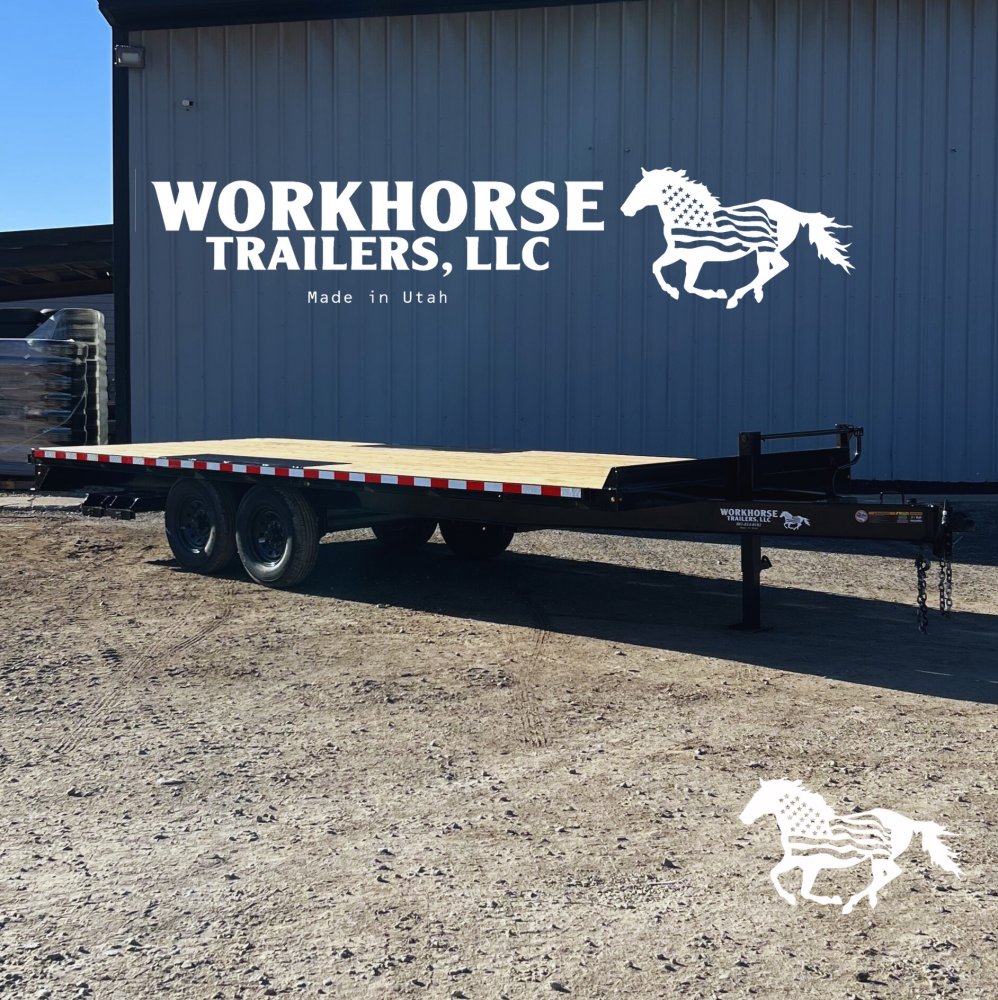
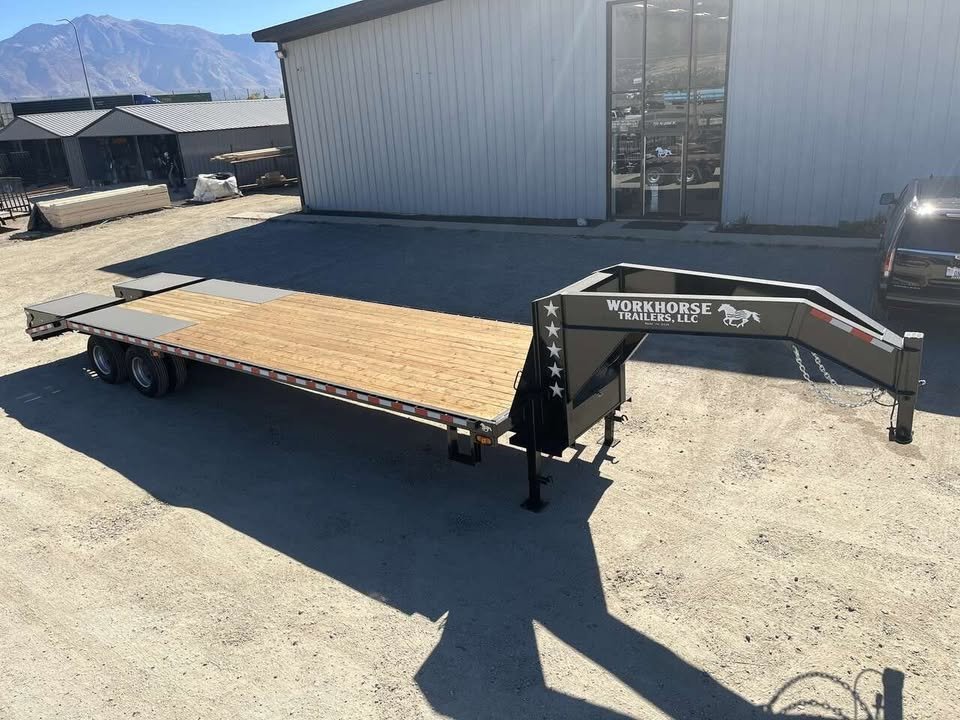
Flatbed gooseneck trailers are the workhorse of the construction and agricultural sectors in Colorado. Their open platform accommodates machinery, building materials, hay bales, and oversized cargo with equal ease. The raised gooseneck section often includes storage space or a secondary platform above the truck bed, adding even more carrying area to the trailer’s total footprint. Ramps at the rear allow drive-on loading of tracked and wheeled equipment, while multiple tie-down points along the deck edges and center rails keep cargo secured during transit over uneven terrain.
Livestock Gooseneck Trailers
Ranching remains a cornerstone of the Colorado economy, and livestock gooseneck trailers are essential tools for cattlemen and horse owners throughout the state. These trailers feature reinforced sidewalls, non-slip flooring, interior dividers, and ventilation systems designed to transport animals safely and humanely. The gooseneck connection is especially valuable for livestock hauling because it minimizes sway that can cause animals to lose their footing and become injured during transport. Whether moving a small group of cattle from summer pasture in the high country back to a lower elevation winter range or hauling competition horses to an event in Castle Rock, a gooseneck livestock trailer provides the smooth, stable ride that animal welfare demands.
Dump Gooseneck Trailers
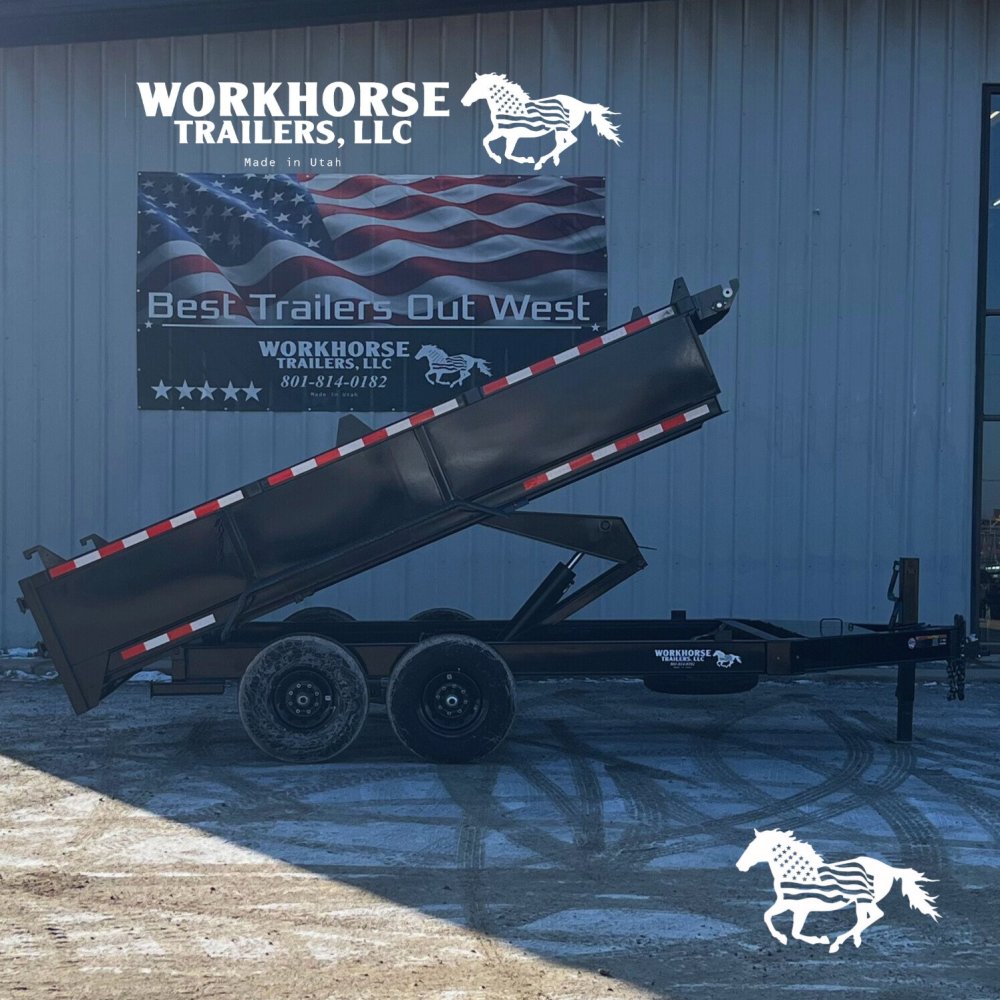
For contractors and landscapers who regularly haul gravel, topsoil, mulch, demolition debris, and other loose materials, gooseneck dump trailers combine high payload capacity with hydraulic unloading convenience. The gooseneck hitch allows these trailers to carry substantially more material per trip than their bumper pull counterparts while maintaining stable road behavior. Hydraulic cylinders raise the dump bed at the push of a button, depositing the load quickly and cleanly. This capability is especially prized on Colorado job sites with tight schedules, where minimizing unloading time keeps projects on track and crews productive.
Enclosed Gooseneck Trailers
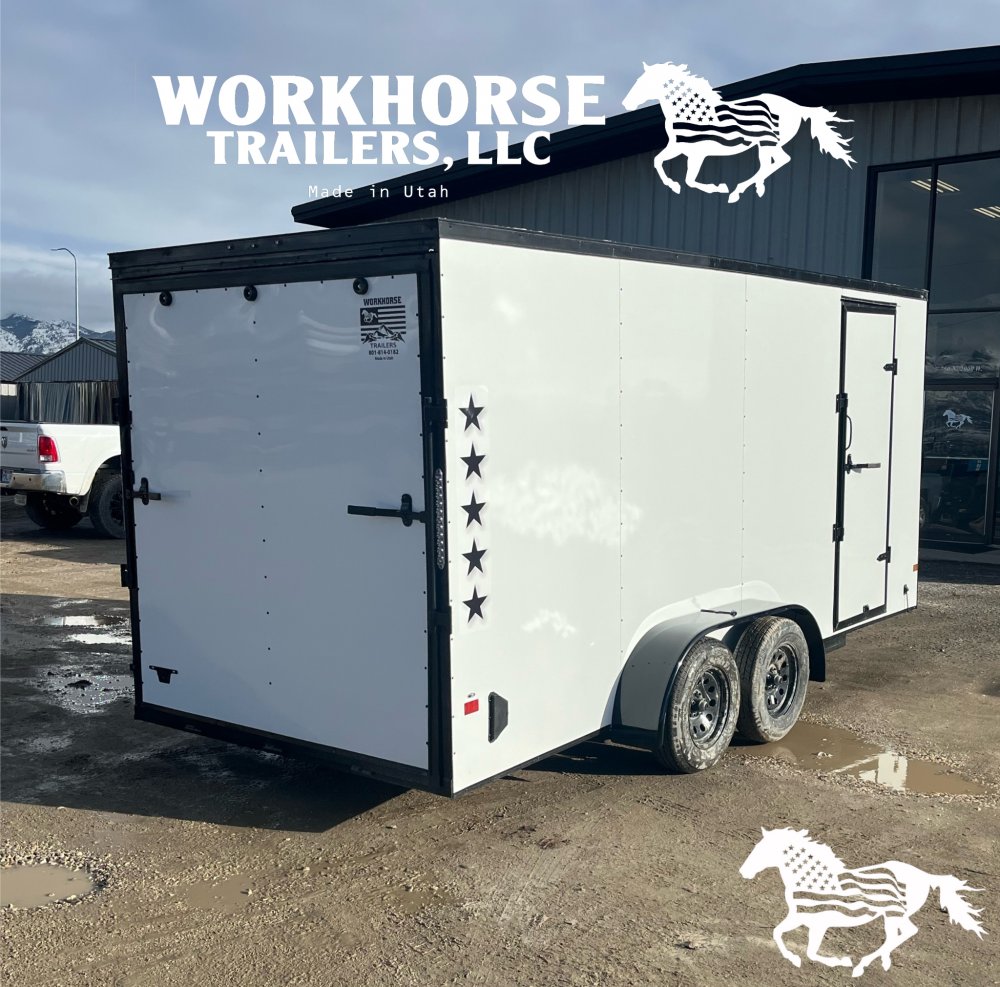
Buyers who need the weather protection and security of an enclosed body combined with the towing advantages of a gooseneck hitch can find both in an enclosed gooseneck trailer. These models are popular among auto racing teams, mobile businesses, and contractors who carry expensive tools and inventory that must be kept dry and locked at all times. The gooseneck section frequently serves as a living quarters or dressing room in toy hauler configurations, making these trailers a favorite among Colorado outdoor enthusiasts who want to bring their side-by-sides, dirt bikes, or snowmobiles on extended backcountry trips without sacrificing comfort at camp.
Critical Features for Colorado Gooseneck Trailer Buyers
Colorado’s challenging geography and climate demand attention to several features that buyers in flatter, milder states might overlook. Workhorse Trailers LLC highlights these considerations during every consultation to ensure our customers leave with a trailer prepared for the realities of Rocky Mountain hauling.
Coupler and Hitch Compatibility
The connection between a gooseneck trailer and the tow vehicle must be solid, properly rated, and correctly installed. Most gooseneck couplers use a standard 2-5/16 inch ball, but coupler designs vary in terms of latch mechanism, adjustment range, and ease of hookup. A poorly matched coupler and ball combination introduces play in the connection that worsens over time and degrades towing performance. Workhorse Trailers LLC verifies compatibility with your truck’s hitch system before you drive off the lot, and can recommend professional installation services for buyers who need a gooseneck hitch added to their vehicle.
Braking Performance on Mountain Grades
Gooseneck trailers carry heavy loads, and stopping those loads on a six-percent downgrade requires a braking system that delivers consistent, fade-resistant performance. Electric drum brakes are standard on many gooseneck models, but buyers who frequently travel routes like the Loveland Pass or the grades along Interstate 70 west of Denver should evaluate whether upgrading to disc brakes is warranted. Disc brakes dissipate heat more effectively and recover faster after sustained use, which provides a meaningful safety margin when descending long mountain stretches with a fully loaded trailer. A quality brake controller installed in the tow vehicle gives the driver precise command over braking force, allowing smooth deceleration that keeps the rig stable and composed.
Structural Durability and Corrosion Resistance
Road salt applied heavily across Colorado highways from November through April attacks exposed metal surfaces relentlessly. A gooseneck trailer’s frame, cross members, coupler neck, and hardware are all susceptible to corrosion if they lack adequate protective coatings. Powder-coated frames, galvanized components, and sealed electrical connectors extend the useful life of a trailer significantly. Workhorse Trailers LLC prioritizes trailers built with robust corrosion protection because we know our Colorado customers operate in an environment where shortcuts on surface treatment lead to premature structural failure and costly repairs.
The Workhorse Trailers LLC Difference for Colorado Gooseneck Buyers
Purchasing a gooseneck trailer represents a meaningful financial commitment, and the decision deserves more than a rushed transaction at a faceless dealership. Workhorse Trailers LLC approaches every gooseneck sale as a partnership. We want to understand not just what you plan to haul today but how your needs may evolve over the next five or ten years. That long-range perspective helps us steer you toward a trailer that remains a productive asset well into the future rather than one you will outgrow in a season or two.
Our inventory reflects a deliberate focus on value and reliability. We do not chase the lowest sticker price or stock trailers from manufacturers that cut corners on materials and assembly. Instead, we curate a selection of gooseneck trailers that meet our standards for weld quality, component sourcing, finish durability, and real-world load performance. When a Colorado buyer drives away with a gooseneck from Workhorse Trailers LLC, they carry the assurance that their trailer was vetted by people who understand what it takes to haul safely and efficiently in this part of the country.
Buyers interested in reviewing available models and discussing their specific requirements are welcome to visit our website for a closer look at our full range ofColorado Gooseneck Trailers along with detailed specifications, photos, and convenient options for contacting our sales team to schedule a consultation or request a quote.
Preparing Your Tow Vehicle for Gooseneck Hauling in Colorado
A gooseneck trailer is only half of the towing equation. The truck pulling it must be properly equipped and maintained to handle the stresses of loaded mountain driving. Three-quarter-ton and one-ton pickups from all major manufacturers offer factory gooseneck prep packages that include a reinforced bed, pre-wired brake controller connections, and a hitch-ready frame. If your truck did not come with this package, aftermarket gooseneck hitch kits from reputable brands can be professionally installed to bring the vehicle up to specification.
Beyond the hitch itself, Colorado gooseneck operators should verify that their truck’s cooling system is adequate for sustained uphill pulls at altitude, where thinner air reduces radiator efficiency. Transmission temperature is another critical variable; an auxiliary transmission cooler is a worthwhile addition for anyone who tows regularly through the mountains. Tire pressure on the tow vehicle should be set to the manufacturer’s recommendation for maximum load, and a weight distribution awareness helps prevent overloading the rear axle beyond its rated capacity. Workhorse Trailers LLC is happy to discuss tow vehicle preparation with every gooseneck buyer, helping you ensure that the entire rig is ready for Colorado’s most challenging roads.
Start Your Search for the Ideal Colorado Gooseneck Trailer
The right gooseneck trailer transforms the way you work, travel, and manage heavy loads across Colorado’s demanding landscape. Whether you are a rancher moving livestock between seasonal pastures near Gunnison, a contractor shuttling heavy machinery to a development site along the Front Range, or a weekend racer hauling your car to Bandimere Speedway, the stability, capacity, and versatility of a gooseneck trailer makes every trip safer and more efficient. Workhorse Trailers LLC is ready to put our product knowledge and regional expertise to work for you. Reach out today to explore your options and discover why Colorado buyers continue to count on us for their gooseneck trailer needs.