Cheyenne Deck Over Trailers
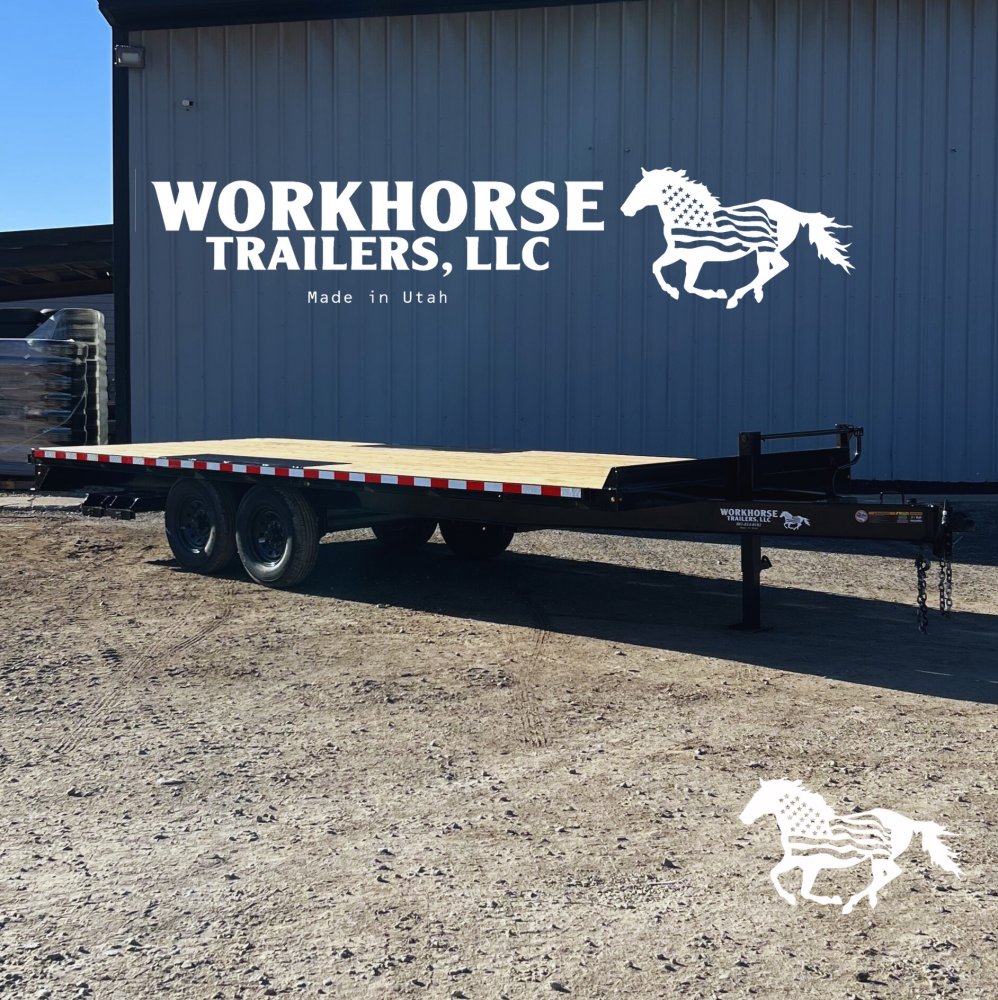
All locationsThe cargo that moves through Cheyenne on any given weekday tells the story of a city that builds, supplies, and supports an entire region. Bundles of steel studs destined for a commercial framing project along Dell Range Boulevard. Palletized roofing materials headed to a re-roof job in the Frontier Mall area. Stacks of precast concrete forms bound for a bridge abutment project on the outskirts of town. Each of these loads shares a common trait. They are wider than the narrow cargo channel a conventional flatbed trailer offers between its wheel wells. A deck over trailer solves that problem at the structural level by raising the entire platform above the tire line, delivering an uninterrupted loading surface that stretches from one side rail to the other without a single fender intrusion. Workhorse Trailers LLC provides Cheyenne buyers with deck over trailers that unlock the full-width hauling capability this city’s growing economy demands from its transport equipment.
Cheyenne’s ongoing expansion has intensified the pressure on contractors, suppliers, and logistics operators to deliver more material per trip and reduce the total number of runs between supply yards and job sites. Fuel costs accumulate fast when every delivery crosses town through traffic along Yellowstone Road or loops around the I-25 interchange system. Labor hours spent behind the wheel represent time not spent on the task generating revenue at the project site. A deck over trailer addresses both of these pressures by maximizing the usable cargo area on every trip, allowing operators to fit loads side by side that would otherwise require two separate hauls on a narrower platform. Workhorse Trailers LLC stocksCheyenne Deck Over Trailers that convert wasted wheel well space into productive cargo area, giving operators the per-trip efficiency gains that make a measurable difference in how profitably they run their businesses.
Cheyenne Industries Where Full-Width Decks Deliver Results
The deck over advantage applies broadly, but certain Cheyenne industries extract disproportionate value from the format because their standard cargo profiles align perfectly with what a full-width deck provides.
Commercial Roofing and Weatherproofing
Cheyenne’s volatile weather cycle drives a steady volume of roofing replacement and repair work throughout the warmer months. Commercial roofing crews transport palletized shingle bundles, rolled membrane stock, insulation board sheets, and sheet metal flashing packages between supply warehouses and active roof sites across the city. These materials arrive from manufacturers packaged on pallets that sit most efficiently when placed two across on a trailer deck without fender obstructions interfering with placement.
A deck over trailer loaded with two pallets of asphalt shingles riding side by side delivers roughly twice the material per trip compared to the same pallets riding single file on a conventional flatbed where wheel wells block side-by-side placement. For a roofing company completing three or four re-roofs per week during Cheyenne’s compressed building season, doubling the material delivered per supply run cuts the total number of trips between the yard and the job site in half. That reduction saves fuel, reduces vehicle wear, and puts the delivery driver back on the roof with a nail gun sooner.
Fencing and Livestock Panel Distribution
Cheyenne sits at the center of a ranching region where miles of fencing go up, come down, and get rebuilt every year. Welded livestock panels, continuous fence sections, steel posts, and gate assemblies travel from farm supply retailers and fabrication shops in town to ranch properties that extend across Laramie County in every direction. Livestock panels measuring 16 feet long and 50 inches tall stack flat on a deck over trailer in quantities that a standard flatbed cannot match because the panels overhang the fender wells when placed crosswise.
A deck over trailer loaded with panels stacked flat across the full deck width carries 30 or 40 panels per trip instead of the 15 or 20 that fit within the restricted width of a conventional bed. Ranch operations purchasing hundreds of panels for a seasonal rebuild project reduce their pickup trips from a half-dozen runs to two or three. The fuel savings alone on deliveries to properties located 40 or 50 miles east of Cheyenne near Carpenter or Pine Bluffs justify the deck over investment within the first major fencing season.
Mechanical Contractor Prefabrication Transport
Plumbing, HVAC, and electrical contractors in Cheyenne increasingly prefabricate assemblies at their shop facilities and transport finished components to the installation site rather than building everything in place. Prefabricated piping racks, ductwork sections, electrical panel boards on mounting frames, and plumbing wall assemblies are all wider than field-assembled equivalents because they arrive intact rather than in pieces.
A deck over trailer accepts these wide prefabricated assemblies flat on the deck with full support beneath them, preventing the flexing and racking damage that occurs when wide items bridge across a conventional trailer’s wheel well gap without support underneath the center span. Mechanical contractors working on institutional projects at state office buildings, school district facilities, and medical complexes throughout Cheyenne save hours of field labor by prefabricating at the shop and delivering completed assemblies on deck over trailers that protect the work during transit.
Event Infrastructure and Temporary Structures
Cheyenne Frontier Days alone generates an enormous logistical operation involving stages, grandstands, vendor booths, fencing systems, portable restroom platforms, and signage structures that must be transported to Frontier Park and assembled within a tight setup window. Beyond the city’s signature event, the year-round calendar of community gatherings, government functions, military ceremonies, and commercial promotions creates ongoing demand for temporary structure transport.
Staging platforms, tent frame bundles, barricade sections, and portable bleacher components are manufactured in widths that assume transport on commercial flatbed trucks. A deck over trailer provides the same full-width cargo surface in a format that a standard pickup truck can tow, giving smaller event companies and rental operations access to hauling capability that previously required hiring a commercial carrier for every setup and teardown cycle.
Evaluating Deck Over Trailers for Cheyenne’s Specific Conditions
The factors that distinguish Cheyenne from other trailer markets influence which deck over specifications deliver the best combination of performance and longevity. Buyers who account for these factors during the selection process avoid the compromises that surface when a trailer designed for a different environment gets pressed into service on the high plains.
Wind Profile and Loaded Height Management
A deck over trailer positions its cargo higher above the road surface than a conventional flatbed because the deck sits above rather than between the wheels. Adding tall cargo on top of that already elevated platform creates a combined profile that catches Cheyenne’s crosswinds with considerable force. A load of stacked fencing panels or palletized material that rises four feet above a deck over surface presents a wind-catching profile that must be managed through careful speed selection and route awareness.
Cheyenne operators hauling tall loads on deck over trailers should identify the most wind-exposed segments of their planned route before departing. The I-80 corridor between Cheyenne and Laramie, the open stretch of I-25 north toward Chugwater, and the unshielded county roads east of town toward the Nebraska border all present sustained crosswind exposure that amplifies the effect of a tall load on an elevated deck. Reducing speed by 10 to 15 miles per hour below the posted limit during high-wind advisories provides a meaningful stability margin without dramatically extending trip time.
Deck Surface Selection for Year-Round Traction
The loading surface of a deck over trailer in Cheyenne must provide reliable footing for workers who climb onto the deck to position and secure cargo in conditions ranging from summer heat to winter ice. A deck surface that is grippy in July may become treacherously slick in January when a thin layer of ice forms overnight and the morning crew steps onto the platform before the sun has a chance to melt it.
Treated wood plank decking offers consistent traction across temperature extremes because the textured grain pattern provides grip even when the surface carries a light frost. Steel diamond plate decking excels at resisting puncture and concentrated loads but develops a glassy surface when wet or icy that demands caution and sometimes aftermarket grip tape at high-traffic stepping zones. Cheyenne buyers should weigh the cargo-handling advantages of steel against the all-season footing advantages of wood when making their deck material decision.
Undercarriage Clearance for Snow and Debris
Winter operations in Cheyenne involve navigating roads where plowed snow berms narrow the travel lanes and accumulated slush forms ridges between lanes that the trailer must cross during lane changes and turns. A deck over trailer with minimal clearance between the undercarriage and the road surface can drag on these snow ridges, creating resistance that strains the tow vehicle and potentially damaging brake lines, wiring harnesses, and suspension components mounted beneath the frame.
Confirming that the deck over trailer provides adequate ground clearance beneath the lowest frame members and axle components prevents these winter contact issues. A minimum of 14 to 16 inches between the road surface and the lowest hanging component keeps the trailer clear of the snow accumulation typically encountered on maintained Cheyenne streets and highways during and immediately after winter storms.
Hitching Options and Their Implications for Cheyenne Use
The choice between bumper-pull and gooseneck hitching on a deck over trailer affects not only payload capacity but also the practical daily experience of towing through Cheyenne’s street network and parking environments.
Bumper-Pull Deck Over Trailers in Urban Settings
Bumper-pull deck over models connect to a standard receiver hitch and present a shorter overall combination length that maneuvers through Cheyenne’s commercial districts, residential neighborhoods, and parking lots with greater agility than gooseneck alternatives. The shorter turning radius makes backing into delivery positions at building supply yards on Missile Drive, navigating the congested lots along South Greeley Highway, and threading through the tight access points at active construction sites more manageable for operators who make multiple urban stops per day.
The trade-off is a lower maximum payload rating compared to gooseneck configurations. Bumper-pull deck over trailers typically top out between 12,000 and 14,000 pounds gross vehicle weight, which limits the cargo to loads that a standard three-quarter-ton or one-ton truck can manage through a rear-mounted receiver. For Cheyenne operators whose loads consistently stay below this threshold, the bumper-pull format provides urban maneuverability that gooseneck models sacrifice.
Gooseneck Deck Over Trailers for Heavy Commercial Work
Gooseneck deck over trailers dominate the heavy commercial segment of the Cheyenne market where loads regularly push past 14,000 pounds and longer deck lengths are needed to accommodate oversized cargo. The gooseneck hitch handles gross weights exceeding 25,000 pounds while delivering the towing stability that Cheyenne’s wind and highway conditions demand from any heavily loaded combination.
The gooseneck connection also allows longer overall deck lengths without the handling penalties that affect long bumper-pull trailers. A 30-foot gooseneck deck over trailer tows and backs with significantly better control than a 30-foot bumper-pull trailer of equivalent weight. Cheyenne contractors who transport long structural members, extended prefabricated assemblies, or multiple pieces of equipment stacked end to end choose gooseneck configurations because the handling advantages at length and weight offset the reduced urban maneuverability compared to the bumper-pull format.
Protecting the Investment Through Cheyenne Seasons
A deck over trailer operating year-round in Cheyenne absorbs the full range of environmental exposure that the high plains deliver. Establishing a protection routine that addresses each seasonal threat preserves the trailer’s structural integrity and appearance across the extended service life that Cheyenne operators expect.
Spring introduces moisture from snowmelt and seasonal rain that pools in frame channels and deck joints if drainage is restricted by accumulated debris. Clearing dirt, leaves, and road material from all frame cavities after the snow recedes allows trapped moisture to drain rather than sitting against steel surfaces where it accelerates corrosion beneath the existing coating.
Summer brings ultraviolet intensity amplified by Cheyenne’s mile-high elevation. UV radiation breaks down paint binders, fades color, and eventually exposes bare steel to atmospheric corrosion. Parking the trailer under cover when not in use and applying a UV-protective spray wax to painted surfaces once per season slows the degradation process measurably.
Fall offers the optimal window for comprehensive maintenance before winter closes in. Bearing repacks, brake inspections, tire condition assessments, and fastener torque checks completed during October prepare the trailer for five months of the harshest operating conditions it will face all year.
Winter demands constant vigilance against road chemical corrosion. Rinsing the trailer’s undercarriage after every trip that involves treated roads prevents the chemical concentration that builds when salt residue accumulates and absorbs atmospheric moisture between uses. This single habit extends the corrosion-free life of the frame by years compared to trailers that go unwashed from November through March.
Workhorse Trailers LLC Matches Cheyenne Buyers with the Right Deck Over
Selecting a deck over trailer that fits the cargo, the route, the weather, and the storage reality of a Cheyenne operation requires guidance from a team that understands what this market actually demands. Workhorse Trailers LLC provides that guidance to buyers from across the capital city and surrounding Laramie County. Customers arrive from Horse Creek, Federal, Hillsdale, Granite, Archer, and the new developments pushing Cheyenne’s footprint outward, confident that the Workhorse team will identify the deck over configuration that maximizes their hauling productivity while standing up to the conditions that make Cheyenne one of the most demanding trailer markets in the Rocky Mountain West. For operators who have been working around the width limitations of conventional trailers long enough, a properly selected deck over from Workhorse Trailers LLC puts the full platform to work on every load.