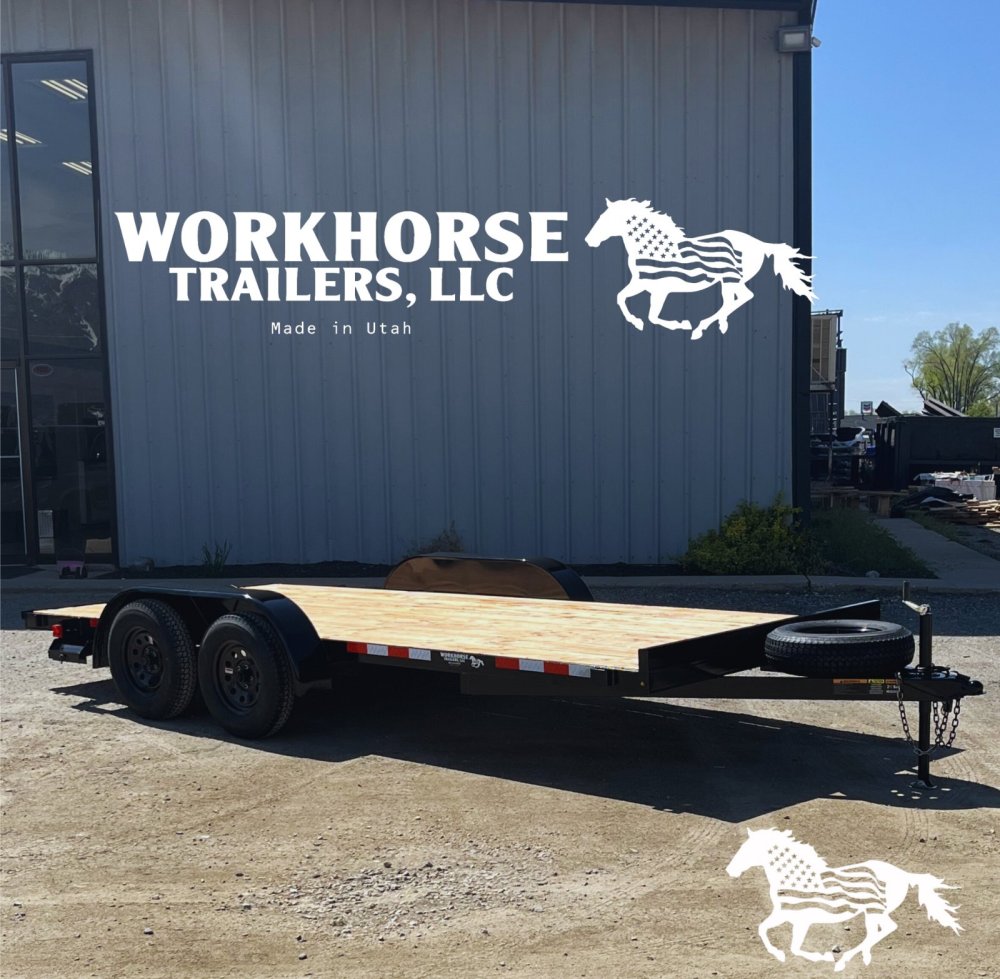
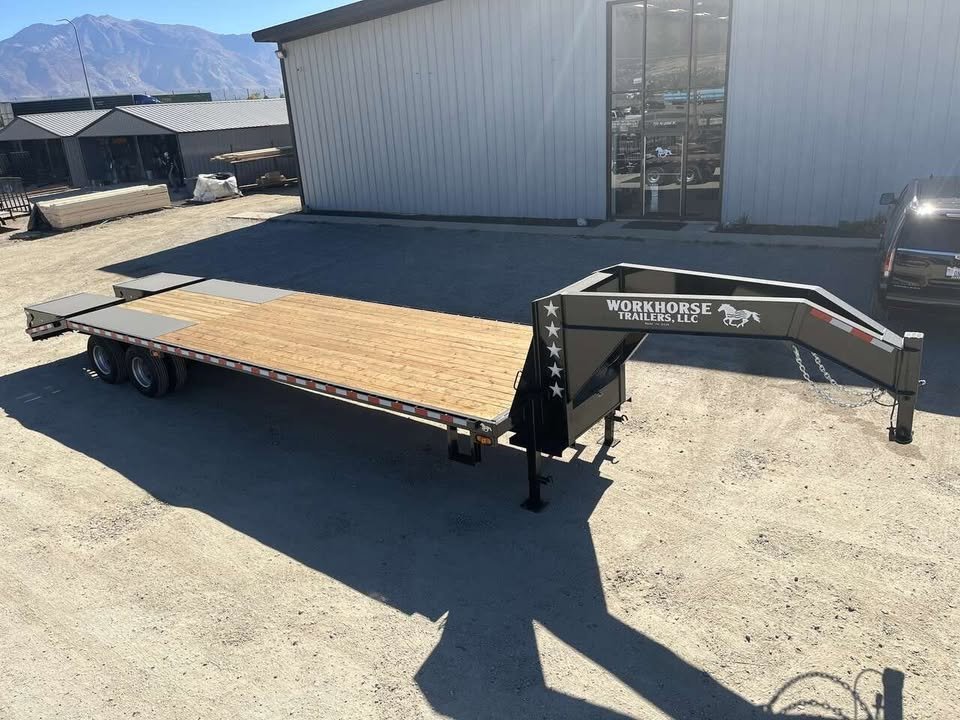
Cedar City Equipment Hauler Trailers
All locationsHeavy machinery keeps Cedar City moving forward. Excavators carve foundations for new neighborhoods, skid steers grade commercial lots along the Interstate 15 corridor, and compact track loaders clear land for the agricultural and energy projects that sustain Iron County’s rural economy. Getting that equipment from one location to the next safely and efficiently demands a trailer purpose-built for the task. Workhorse Trailers LLC provides Cedar City operators with equipment hauler trailers constructed to manage the concentrated weights, irregular dimensions, and rugged loading conditions that define heavy machinery transport in southern Utah.
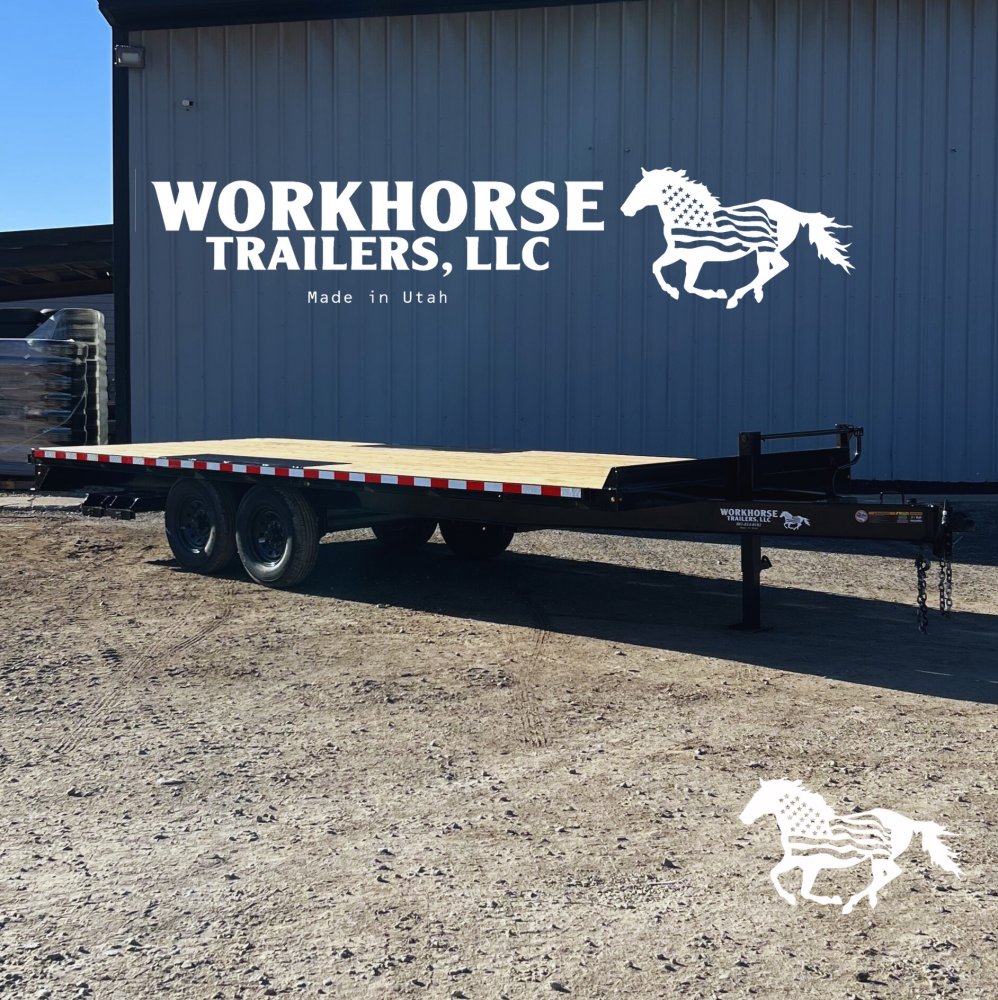
An equipment hauler differs from a standard flatbed or utility trailer in several fundamental ways. The frame carries heavier gauge steel to support payloads measured in tons rather than hundreds of pounds. The deck sits lower to the ground to reduce the center of gravity and provide safer clearance when traveling beneath overpasses and power lines. Ramp systems or hydraulic loading mechanisms accommodate tracked and wheeled machines that would overwhelm lighter trailer platforms. Workhorse Trailers LLC specializes in these heavy-duty builds because we recognize that Cedar City’s growth depends on contractors and operators who need serious hauling capability every working day.
The Role of Equipment Haulers in Cedar City’s Growing Economy
Cedar City is experiencing a sustained wave of development that touches residential housing, commercial real estate, infrastructure improvement, and energy sector expansion. Each of these growth areas generates continuous demand for heavy equipment transport. A single subdivision project may require a contractor to shuttle a mini excavator, a roller compactor, a skid steer, and a trencher between the staging yard and the active site over the course of several weeks. Municipal road projects along Main Street, Cross Hollow Road, and the expanding neighborhoods north of town keep paving crews and utility installers moving equipment across the city on a daily rotation.
Beyond city limits, the mining claims, solar installations, and ranching operations scattered across Iron County create additional equipment transport needs that span long distances over remote roads. A contractor servicing a well site near Lund or a fencing crew working ranch property outside Minersville may travel fifty miles or more on a combination of paved highway and unpaved county roads before reaching the work area. The equipment hauler that carries their machinery must perform reliably on both surfaces without subjecting the cargo or the trailer itself to damage from washboard vibration, loose gravel, or steep grade transitions.
Types of Machinery That Require Equipment Hauler Trailers
Compact Excavators and Mini Excavators
Compact and mini excavators represent the most frequently hauled class of machinery in the Cedar City area. These versatile diggers handle trenching, grading, demolition, and material handling tasks on residential and light commercial job sites. Their operating weights typically range from three thousand to fifteen thousand pounds depending on the model and attachments installed. An equipment hauler rated for these weights must provide adequate deck width to accommodate the machine with its tracks fully extended, along with sufficient length to allow the boom to rest in a stowed position without overhanging the rear of the trailer.
Skid Steers and Compact Track Loaders
Skid steers and compact track loaders appear on virtually every construction and landscaping project in Iron County. Their ability to accept dozens of different attachments makes them indispensable for tasks ranging from grading and backfilling to snow removal and material placement. These machines weigh between five thousand and twelve thousand pounds with a bucket attached and generate significant point loads through their tires or tracks during the loading process. Equipment hauler decks must resist localized deflection under these concentrated forces, which is why Workhorse Trailers LLC uses closely spaced cross members in the loading zone of every hauler we build.
Aerial Lifts and Telescopic Handlers
Boom lifts, scissor lifts, and telehandlers support elevated work on construction sites, building maintenance projects, and event setups throughout Cedar City and the surrounding area. These machines pose unique hauling challenges due to their height, top-heavy weight distribution, and narrow wheel track relative to their overall mass. An equipment hauler carrying an aerial lift must provide a low deck profile to keep the combined transport height within legal limits and a wide enough platform to support the machine’s outrigger footprint or wheel stance. Workhorse Trailers LLC advises Cedar City customers on deck dimensions and weight ratings that safely accommodate these tall, specialized machines.
Generators, Compressors, and Support Equipment
Not all equipment hauler cargo has tracks or wheels. Portable generators, air compressors, welding machines, and light towers are essential support items that accompany primary equipment to remote job sites. These units often sit on skids or small caster assemblies and must be loaded with a forklift or crane rather than driven onto the deck. An equipment hauler with an open side profile and multiple tie-down positions along the bed gives operators flexibility to arrange support equipment alongside or behind their primary machine, consolidating what might otherwise require two separate trailer trips into a single efficient haul.
What Sets Workhorse Equipment Haulers Apart
The equipment hauler market includes products at every price point, and the differences between budget trailers and professionally engineered units become starkly apparent after a few months of hard service. Workhorse Trailers LLC builds equipment haulers with frame rails sized to exceed the stated weight rating by a meaningful safety factor. This approach prevents the gradual sagging and permanent deformation that afflicts trailers operating consistently near their maximum capacity. Our main beams run the full length of the trailer without splices, eliminating potential weak points where joined sections could separate under heavy loading stress.
Weld quality is another area where Workhorse Trailers LLC distinguishes itself from mass-market competitors. Our fabricators produce full-penetration welds at every structural junction, creating bonds that are as strong as the parent material itself. Undercut, porosity, and cold lap defects that weaken joints on hastily assembled trailers are identified and corrected during our in-process inspection routine. Cedar City buyers who compare our craftsmanship against competing brands quickly recognize the difference. Those interested in viewing our complete inventory ofCedar City Equipment Hauler Trailers can explore available models and specifications to find the configuration that matches their machinery and hauling schedule.
Critical Features on a Dependable Equipment Hauler
Low-Profile Deck Design
Deck height directly affects both loading ease and transport safety. A lower deck reduces the ramp angle that equipment must climb during loading, which decreases the risk of tipping, track slippage, and undercarriage contact. It also lowers the center of gravity of the loaded trailer, improving stability during highway travel and reducing the likelihood of rollover in emergency maneuvering situations. Workhorse Trailers LLC achieves low deck heights through dropped axle configurations and channel frame designs that position the cargo surface as close to the road as practical while maintaining adequate ground clearance for speed bumps, driveway transitions, and uneven terrain.
Heavy-Duty Ramp Systems
The ramps on an equipment hauler must support the full weight of the heaviest machine that will cross them during loading and unloading. Undersized ramps flex dangerously, create unstable footing for tracked equipment, and eventually buckle or crack at stress concentration points near the hinges. Our equipment haulers feature ramps fabricated from heavy plate steel with reinforcing ribs that distribute weight across the full ramp width. Hinge assemblies are anchored to the main frame through gusseted brackets that prevent localized tearing under repeated use. Spring-assist or hydraulic-assist lifting mechanisms are available on models where ramp weight makes manual handling impractical for a single operator.
Chain Tie-Down Positions and Binder Pockets
Equipment securement typically involves heavy-grade transport chains and load binders rather than the ratchet straps used for lighter cargo. Workhorse Trailers LLC integrates recessed chain tie-down slots along the outer rails of our equipment haulers, providing anchor points that accept standard transport chain links without requiring separate hooks or adapters. These slots are cut into structural members and reinforced with backing plates to handle the tension loads generated when binders are tightened against a multi-ton machine. Binder storage pockets welded to the frame keep these tools organized and accessible when crews arrive at the loading site.
Rugged Axle and Suspension Packages
The axle and suspension system beneath an equipment hauler absorbs road impacts, maintains tire contact with the pavement, and distributes the payload evenly across all wheels. Workhorse Trailers LLC selects axle assemblies rated to handle the trailer’s gross vehicle weight with reserve capacity that accounts for dynamic loading forces encountered during braking, cornering, and uneven road surfaces. Our suspension options include heavy-duty leaf spring packs and rubber torsion systems, each selected based on the specific model’s weight class and intended operating conditions. Cedar City operators who frequently travel the mix of smooth interstate and rough county roads in Iron County benefit from suspension tuning that balances highway comfort with off-pavement durability.
Matching the Right Equipment Hauler to Your Fleet
Selecting an equipment hauler begins with documenting the heaviest single piece of machinery you intend to transport. That number establishes the minimum gross vehicle weight rating the trailer must carry after accounting for the trailer’s own unladen weight. Workhorse Trailers LLC consistently recommends choosing a trailer with a payload capacity that exceeds your heaviest anticipated load by at least twenty percent. This buffer protects against the gradual weight creep that occurs as operators add attachments, fluid, and accessories to their machines over time without recalculating the total transport weight.
Deck length and width must be evaluated against the physical footprint of the largest machine in your rotation. Measure the overall length of the equipment with its boom, bucket, or attachment in the stowed transport position, and add clearance for tie-down access at the front and rear of the deck. Check the track or tire width against the available deck surface between fenders to confirm that the machine will sit centered without contact on either side. Operators who haul multiple machine types should base their trailer selection on the largest unit in their inventory while verifying that smaller machines can also be secured properly on the same platform.
The tow vehicle’s capacity is the final piece of the equation. The truck or tractor pulling the loaded equipment hauler must have a gross combined weight rating that accommodates its own weight, the trailer weight, and the full cargo weight without exceeding manufacturer limits. Transmission cooling, engine power, brake capacity, and hitch rating all factor into tow vehicle suitability. Workhorse Trailers LLC reviews these details with Cedar City customers during the selection process to prevent mismatches that compromise performance and safety on the road.
Keeping Your Equipment Hauler Road-Ready
Equipment hauler maintenance follows a disciplined schedule that reflects the high stresses these trailers endure. Frame inspections should occur at least quarterly for trailers in daily commercial service. Focus on the areas surrounding the ramp hinge mounts, the transition zone between the tongue and the main deck, and the spring hanger brackets where the axle assemblies connect to the frame. Hairline cracks in these high-stress zones can propagate rapidly under continued heavy loading if they are not caught early and repaired by a qualified welder.
Brake performance is especially critical on equipment haulers because stopping distances increase substantially with heavy payloads. Inspect brake drums for heat discoloration and scoring that indicate excessive wear or overheating. Measure shoe or pad thickness and replace components before they reach minimum specifications to maintain full braking force at all times. Adjust brake mechanisms to compensate for normal wear so that all axles contribute equally to the stopping effort. Cedar City operators who frequently descend the long grades on Interstate 15 south of town or Highway 14 heading down from Cedar Mountain should pay particular attention to brake condition, as sustained downhill runs with heavy loads generate extreme heat in braking components.
Deck surface maintenance protects both the trailer and the equipment riding on it. Wooden deck planks that develop splits or soft spots from moisture absorption should be replaced promptly to prevent a track or tire from punching through during loading. Steel deck plates that develop curled edges or loosened welds create catch points that can damage equipment undercarriages. Keeping the deck surface clean and free of dried mud, gravel, and metal shavings also makes it easier to spot developing issues during routine visual inspections. Workhorse Trailers LLC stocks replacement deck materials and hardware that match our original build specifications, making repairs straightforward for Cedar City owners who prefer to handle maintenance in their own shop.
Iron County and Southern Utah Communities We Serve
Workhorse Trailers LLC serves equipment hauler customers throughout Cedar City and the broader southern Utah region. Contractors and equipment owners from Enoch, Parowan, Paragonah, and Brian Head count on us for trailers that handle the mountain and valley terrain across Iron County. We also work with buyers from Beaver, Milford, and the communities along Highway 21 who operate in mining, agriculture, and renewable energy sectors that require dependable heavy transport solutions. Customers from Washington County, including Hurricane, La Verkin, and Toquerville, make the drive north on Interstate 15 to access our equipment hauler selection because the build quality and pricing justify the trip.
Our regional expertise means we understand the specific conditions that southern Utah equipment haulers face. The alkaline soils near Milford, the steep forest service roads above Brian Head, and the sandy washes encountered on ranch properties south of Cedar City each present distinct challenges for trailer frames, suspensions, and running gear. That firsthand knowledge shapes the recommendations we provide and ensures that every customer leaves with a trailer engineered for the environment where it will actually work.
Talk to Workhorse Trailers LLC About Your Equipment Hauling Needs
Moving heavy equipment safely and efficiently is too important to leave to an undersized or poorly built trailer. Workhorse Trailers LLC offers Cedar City professionals and property owners equipment hauler trailers built with the structural backbone, loading features, and component quality that serious machinery transport demands. Contact our team to discuss your fleet requirements, compare available models, and receive honest guidance on selecting the right trailer for your heaviest loads. We are committed to putting the proper equipment hauler under every Cedar City operator who refuses to compromise on safety, durability, or performance.