
Bluffdale Tilt Deck Trailers
All locationsHauling equipment in Bluffdale, Utah means dealing with conditions that punish inefficiency. Job sites spread across unpaved acreages where setting up detachable ramps on uneven ground wastes time and introduces risk. Solo operators managing livestock properties handle machinery transitions alone because hired help is not always available on a moment’s notice. Seasonal contractors race against weather windows that shrink every hour spent on loading logistics rather than productive work. Tilt deck trailers address every one of these pain points by replacing external ramps with a built-in tilting platform that drops to ground level at the release of a latch, allowing equipment to roll aboard without assistance, improvisation, or delay. Workhorse Trailers LLC provides Bluffdale operators with tilt deck trailers selected for the load ratings, mechanical reliability, and build quality that this hardworking community expects from every piece of equipment it puts into service.
How the Tilt Deck Mechanism Eliminates Common Loading Obstacles
Traditional trailer loading depends on ramps that must be positioned, secured, climbed, and stowed during every single equipment move. Each step in that sequence introduces a potential failure point. Ramps placed on soft ground sink under load. Ramps that are too short create steep angles that strain equipment drivetrains and threaten operator safety. Ramps stored loosely on the trailer deck rattle during transit and occasionally bounce free on rough roads. Ramps left behind at a job site force a return trip that erases whatever time the operator thought they were saving by rushing through the process.
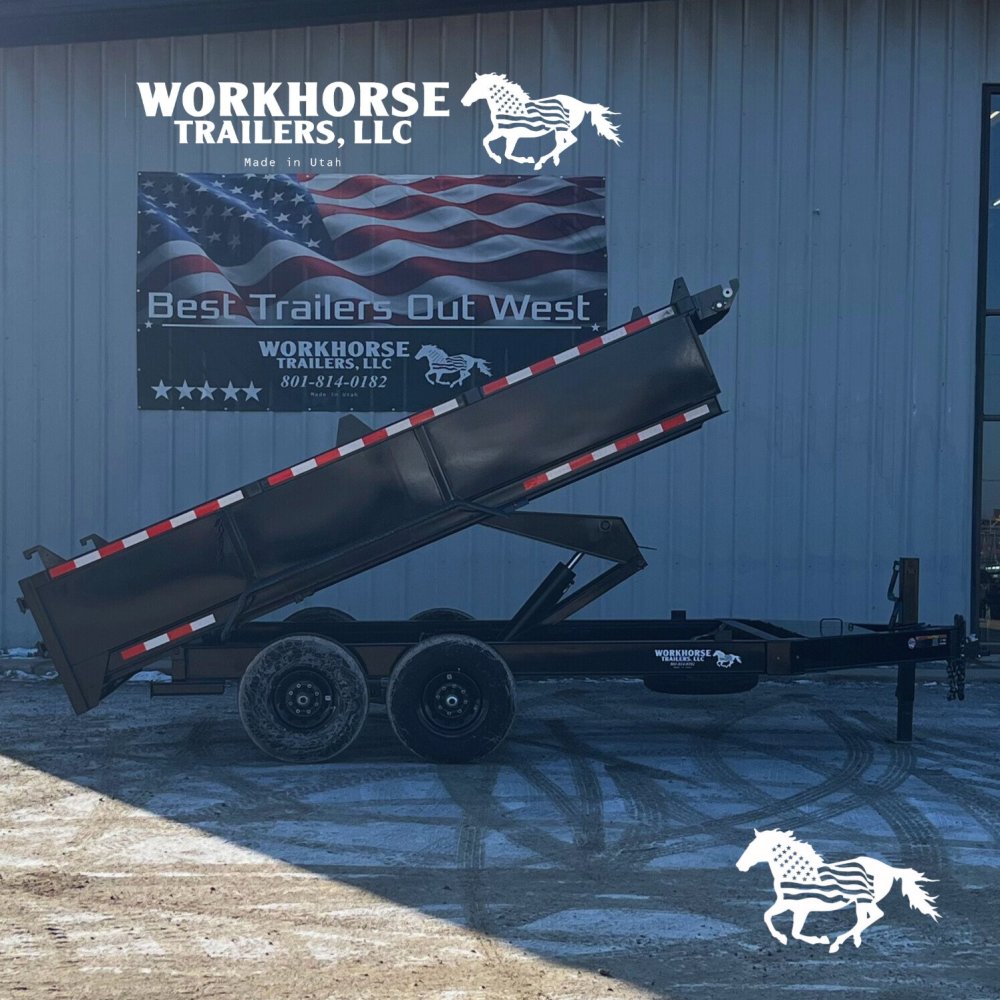
A tilt deck trailer replaces this entire chain of vulnerabilities with a single integrated motion. The deck pivots downward around a fixed point on the trailer frame until its trailing edge meets the ground, creating a gentle incline continuous with the deck surface itself. Equipment drives directly onto this incline, travels forward past the balance point, and brings the deck back to its flat traveling position through either the shifting weight of the machine or the controlled action of a hydraulic cylinder. The operator locks the deck flat, secures the equipment with chains or straps, and departs. The loading sequence that consumed ten minutes with separate ramps compresses to three minutes or less with a tilt deck, and every eliminated step is one fewer opportunity for something to go wrong.
Bluffdale Work Environments Where Tilt Decks Excel
The specific conditions that Bluffdale operators encounter in their daily routines amplify the advantages of a tilt deck system beyond the general convenience factor. Several local industries have adopted tilt deck trailers as their standard loading platform because of how well the design fits their particular workflows.
Septic and Sewer Service Contractors
The septic systems serving Bluffdale properties outside the municipal sewer network require periodic maintenance, repair, and replacement performed by contractors who transport compact excavators, vacuum trailer support equipment, and trenching machines to each service call. These job sites are often located at the end of long gravel driveways on the western flats where level ground is an aspiration rather than a guarantee. A tilt deck trailer that lowers its platform directly to whatever surface is available eliminates the need to search for flat ground suitable for ramp placement and allows the excavator operator to drive aboard from the exact position where they finished working.
Fence Installation and Repair
The fencing industry in Bluffdale thrives on the community’s concentration of horse properties, agricultural parcels, and new residential developments that all require perimeter containment in various forms. Fence crews transport skid steers equipped with auger attachments, hydraulic post drivers, and wire tensioning machines between multiple installations per day. The frequency of loading and unloading across a typical work week makes every minute saved per cycle a meaningful contributor to the crew’s overall productivity. Tilt deck trailers have become the preferred platform among Bluffdale fence contractors because the speed and simplicity of the tilt mechanism directly increases the number of installations a crew can complete between Monday and Friday.
Snow Removal Equipment Staging
Bluffdale’s commercial properties, HOA-managed neighborhoods, and municipal facilities contract with snow removal operators who stage plows, salt spreaders, skid-mounted blowers, and compact loaders at strategic locations before each storm event. These machines must move from storage yards to staging positions quickly when forecasts shift, and the mobilization often happens in predawn darkness on icy surfaces where fumbling with ramps creates genuine hazard. A tilt deck trailer that deploys with a single latch release and loads equipment in under two minutes lets snow removal operators position their fleet before the first flakes fall, which is the difference between winning and losing seasonal contracts tied to response time guarantees.
Firewood Processing and Delivery
The wood-burning stoves and outdoor fire features popular across Bluffdale’s rural and semi-rural properties sustain a local firewood industry that processes, splits, and delivers cord wood throughout the heating season. Processors transport log splitters, stacking conveyors, and tracked wood carts between cutting locations and customer delivery points on trailers that endure daily loading cycles from October through March. Tilt deck trailers handle this repetitive duty with less physical wear on both the operator and the equipment than ramp-based alternatives, and the reduced impact at the ramp-to-deck transition point extends the service life of the wood processing machines themselves.
Property Maintenance on Large Acreages
Bluffdale landowners managing five-acre and ten-acre parcels maintain collections of compact utility tractors, brush mowers, field graders, and material-handling attachments that circulate between the equipment shed and the far corners of the property throughout the year. Not every machine justifies its own permanent parking spot near the work area, and driving a slow-moving tractor across several acres of unimproved ground to reach a task site burns fuel and time disproportionate to the work being performed. Loading the machine onto a tilt deck trailer hitched to the property truck and driving it to the work zone on paved or improved surfaces saves both, and the tilt mechanism makes solo operation practical for the single-operator households that predominate on Bluffdale acreages.
Tilt Deck Configurations Carried by Workhorse Trailers LLC
Workhorse Trailers LLC stocks tilt deck trailers across several weight and feature tiers that correspond to the distinct loading requirements Bluffdale buyers present.
Gravity Tilt Models
Gravity tilt trailers use the natural balance of the unloaded deck to drop the rear section when the front latch is disengaged. The simplicity of this system appeals to Bluffdale buyers who value mechanical reliability above all else. With no hydraulic pump, cylinder, hoses, or electrical connections involved in the tilt operation, there are fewer components to maintain, fewer potential failure points, and a lower initial purchase price. Gravity systems perform consistently in every temperature range Bluffdale experiences, from midsummer heat to the below-zero mornings that occasionally grip the valley floor in January.
Powered Hydraulic Tilt Models
Hydraulic tilt systems add a powered cylinder that raises and lowers the deck at the operator’s command, independent of load weight or balance point position. This powered control proves valuable when Bluffdale operators need to tilt the deck partially for inspection or cleaning, lower it at a controlled speed while a winch cable guides non-running equipment aboard, or raise a loaded deck against a headwind that gravity alone struggles to overcome. The hydraulic system draws power from the tow vehicle’s battery or a dedicated onboard power unit, and the additional cost over a gravity system is justified for operators whose loading scenarios demand the precision that powered control delivers.
Combination Flat and Tilt Platforms
Some tilt deck trailers divide the deck into a fixed front section and a tilting rear section, allowing operators to carry secure cargo on the stationary portion while using the tilt section for equipment loading. Bluffdale fence crews who transport both a skid steer and a pallet of fencing materials on the same trailer find this split layout indispensable because the materials remain stable on the flat section while the skid steer loads and unloads via the tilting rear. The fixed section also provides a solid platform for mounting a winch, toolbox, or auxiliary fuel tank that would otherwise need removal before every tilt cycle.
Heavy Duty Tilt Platforms
Tilt deck trailers rated above 14,000 pounds GVWR serve Bluffdale contractors whose equipment weights push beyond the capacity of standard models. These heavy duty platforms feature thicker frame steel, reinforced pivot assemblies rated for higher cyclic loads, tandem or triple axle configurations with upgraded brakes, and deck surfaces engineered to withstand the concentrated forces that large tracked machines impose during the loading traverse. Workhorse Trailers LLC carries heavy duty tilt options specifically because Bluffdale’s excavation, grading, and land clearing operations demand capacity that lighter models cannot safely provide.
Evaluating Tilt Deck Trailers Before Purchase
Several specifications beyond the basic tilt mechanism influence how well a tilt deck trailer performs across the range of tasks Bluffdale buyers encounter. Workhorse Trailers LLC discusses each of these factors with customers to ensure the selected trailer meets their operational reality.
Tilt Angle and Ground Contact Profile
The maximum tilt angle determines how close the deck’s trailing edge reaches to the ground. A steeper tilt angle brings the edge lower, creating a more gradual equipment approach, but it also increases the height differential at the front of the deck during the tilt. Bluffdale buyers should evaluate the tilt angle in the context of the equipment they load most frequently. Tracked machines with aggressive ground engagement handle steeper approaches than wheeled equipment with limited traction on inclined steel surfaces.
Deck Length Relative to Equipment Wheelbase
The distance between the equipment’s front and rear contact points must fit entirely on the deck surface with enough margin for the machine to clear the pivot zone during loading. A machine whose wheelbase barely fits the available deck length risks straddling the pivot point during the weight transfer phase, creating an unstable condition where the deck oscillates rather than committing to a smooth transition from tilted to flat. Measuring the actual track length or wheelbase of every machine the trailer will carry and comparing it to the effective deck length prevents this dangerous mismatch.
Deck Coating and Traction Treatment
The tilted deck surface functions as an inclined plane that equipment must climb under its own power. Surface traction directly affects loading safety, and Bluffdale operators should examine the deck coating or texture treatment applied by the manufacturer. Raised diamond patterns pressed into steel plate, abrasive grit coatings applied over paint, and expanded metal overlays all enhance grip beyond what bare steel provides. Operators who load frequently in wet or muddy conditions common during Bluffdale’s spring thaw and irrigation season should prioritize the most aggressive traction treatment available.
Bluffdale operators comparing their options forBluffdale Tilt Deck Trailers at Workhorse Trailers LLC gain the advantage of a sales team that has guided hundreds of south valley buyers through these technical considerations and understands which specifications matter most for local operating conditions.
Return on Investment Timeline
A tilt deck trailer costs more than an equivalent-capacity flatbed with separate ramps, and Bluffdale buyers understandably want to know when the premium pays for itself. The calculation depends on loading frequency. An operator who loads equipment twice daily saves roughly eight to ten minutes per cycle compared to ramp-based loading, recovering over 60 hours of productive time annually. At a loaded labor rate of $75 per hour, that recovered time represents $4,500 or more in annual value, which exceeds the typical price difference between a tilt deck and a standard ramp-equipped trailer within the first year of ownership. Operators with even higher loading frequency reach payback proportionally faster.
Preserving Tilt Deck Performance in Bluffdale Conditions
The tilt mechanism introduces maintenance requirements beyond those of a standard fixed-deck trailer, and addressing them proactively prevents the gradual degradation that eventually renders the tilt action unreliable.
The pivot hardware at the center of the tilt mechanism accumulates grit, dried mud, and corrosive residue from road treatments that increase friction and accelerate bushing wear. Cleaning the pivot zone with a pressure washer after exposure to muddy conditions and applying marine-grade grease to the pivot pin and bushings at monthly intervals during active-use seasons keeps the mechanism operating smoothly. Neglecting this maintenance allows the pivot to bind progressively until the tilt action becomes sluggish or uneven, forcing the operator to apply excessive manual force that stresses the latch hardware and frame connections.
The latch mechanism that secures the deck in its flat traveling position deserves inspection at every pre-trip check. A worn latch that does not engage fully can release under road vibration, allowing the deck to tilt unexpectedly during transit with potentially catastrophic results for the secured equipment, the tow vehicle, and surrounding traffic. Replace any latch component that shows visible wear, deformation, or corrosion rather than relying on the secondary safety catch that exists as a backup rather than a primary retention device.
Hydraulic systems on powered tilt models require fluid level verification before each use and a complete fluid and filter change at the manufacturer’s recommended interval. Bluffdale’s temperature extremes test hydraulic seals and hose assemblies across their full rated range, and a seal that performs adequately in moderate weather may leak when stressed by extreme cold or heat. Inspecting cylinder shafts for pitting and hose fittings for weeping after the first hard freeze of each winter catches developing failures before they strand the operator with a non-functional tilt system at a remote job site.
Workhorse Trailers LLC and the Bluffdale Tilt Deck Market
Workhorse Trailers LLC has supplied tilt deck trailers to Bluffdale’s fence contractors, septic service providers, snow removal operators, firewood processors, and acreage landowners with consistent results that generate repeat business and peer referrals throughout the community. Customers from Herriman, Riverton, Eagle Mountain, and the rural stretches south toward Cedar Fort share Bluffdale’s appetite for trailers that perform dependably under physically demanding conditions and visit Workhorse Trailers LLC for the same combination of product quality, honest guidance, and hands-on evaluation that local buyers have relied on for years.
The team encourages Bluffdale residents considering a tilt deck trailer to visit the lot, operate the tilt mechanisms on available models, and bring the dimensions and weights of their most frequently hauled equipment. That firsthand evaluation paired with the team’s practical knowledge produces purchasing decisions that deliver value from the first loading cycle through years of continuous service.