Bluffdale Deck Over Trailers
All locationsWhen the cargo you need to haul stretches wider than the gap between two wheel wells, conventional trailers force an uncomfortable choice between downsizing the load or making multiple trips. Deck over trailers refuse that compromise. By positioning the entire hauling platform above the tire line, they open up a continuous flat surface that spans the full legal width of the trailer, granting Bluffdale operators the room they need to carry oversized items in a single pass. Workhorse Trailers LLC serves the Bluffdale, Utah market with a targeted selection of deck over trailers chosen for the agricultural, commercial, and residential hauling patterns that define this community’s daily rhythm.
How Deck Over Geometry Unlocks Additional Width
Standard trailers nestle the deck between the frame rails at axle height, requiring wheel wells to protrude upward through the deck surface on each side. Those wells consume roughly 10 to 14 inches of usable width on each flank, carving a significant portion of the deck into unusable territory for flat cargo. A four-foot-wide pallet placed against one wheel well leaves an awkward gap on the opposite side too narrow for a second pallet, wasting capacity on every load.
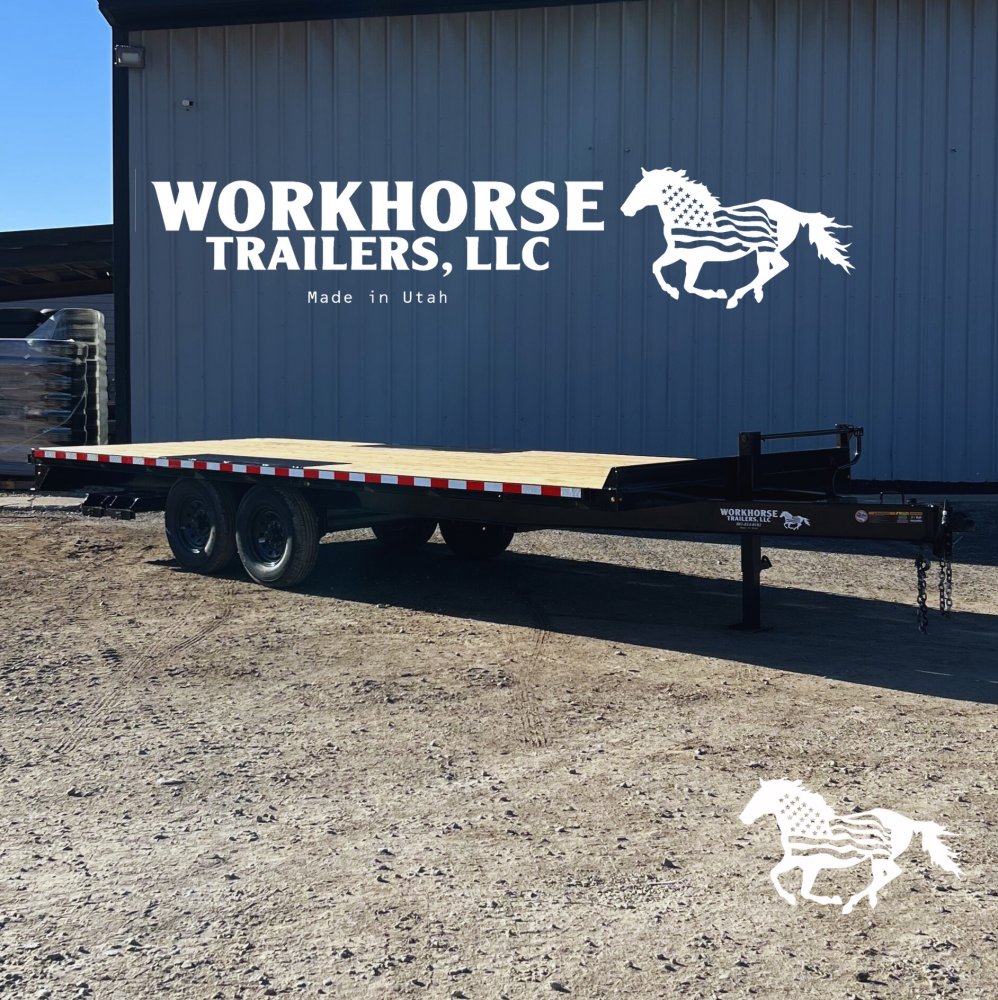
Deck over trailers reposition the platform so it rides on top of the frame and above the wheel assemblies entirely. The result is an unbroken surface that stretches from one outer rail to the other, typically delivering 96 to 102 inches of usable width depending on the model. That reclaimed space transforms loading math for Bluffdale operators who deal with wide cargo daily, allowing two standard pallets to sit side by side with room to spare or a single oversized item to rest centered on the deck without hanging over the edges.
The engineering tradeoff is a taller overall profile. Cargo rides higher off the ground than it would on a between-the-fender trailer of similar capacity, which raises the combined center of gravity and requires attentive driving habits during crosswind exposure and directional changes. Bluffdale operators who understand this characteristic and adapt their highway behavior accordingly report that deck over trailers tow predictably and inspire confidence once the driver becomes accustomed to the slightly elevated load position.
Bluffdale Applications That Favor the Deck Over Design
The width advantage of a deck over trailer solves specific problems that recur across multiple facets of Bluffdale’s economy and lifestyle. Each application exploits the full-width deck in a different way, but all share the common benefit of eliminating wasted trips and awkward loading workarounds.
Hay and Feed Distribution
Bluffdale’s horse properties and small livestock operations consume substantial volumes of hay, straw, and bagged feed throughout the year. Large square bales measuring 3 by 4 feet and round bales approaching 5 feet in diameter demand a hauling surface wide enough to stack them efficiently without overhang. A deck over trailer accommodates three-wide rows of large square bales where a conventional trailer restricts the same operator to two, boosting payload per trip by roughly 50 percent. Over the course of a cutting season when Bluffdale buyers make dozens of trips to hay fields in Goshen, Nephi, or the Heber Valley, that efficiency gain translates into thousands of dollars saved on fuel and driver time.
Fence Panel and Corral Component Transport
Portable livestock panels, round pen sections, and arena fencing components are inherently wide, rigid items that resist being squeezed between wheel wells. A standard 12-foot corral panel laid flat extends beyond the usable width of most conventional trailer decks, forcing operators to stack panels vertically and risk toppling during transit. The full-width surface of a deck over trailer accepts these panels flat in stable horizontal stacks, secured with simple ratchet straps across the top. Bluffdale equestrian facility owners and fence contractors who deliver panel systems to properties across the west side of the valley rely on this capability for safe, efficient transport.
Pallet-Loaded Building Materials
The residential construction and renovation activity throughout Bluffdale generates constant demand for palletized goods including concrete block, retaining wall stone, roof tiles, and banded lumber packages. Forklift operators at lumber yards and masonry suppliers prefer loading deck over trailers because the absence of wheel well obstructions allows clean pallet placement from the side without repositioning or angle adjustments. Two pallets placed side by side on a deck over occupy the same footprint they held in the warehouse, and a third can often fit ahead or behind them depending on deck length. This stacking efficiency reduces delivery runs and keeps project timelines on track.
Farm Implement Relocation
The compact tractors, hay rakes, disc harrows, and rotary mowers used on Bluffdale’s working acreages occasionally need transport to dealerships for service, to neighboring properties for shared use, or to new owners after a sale. Many of these implements feature wide working widths that fold for road travel but still exceed the between-the-wheel clearance of a standard trailer. A deck over platform accepts these machines at their folded transport width without requiring further disassembly, saving the operator the time and mechanical effort of removing wings, guards, or extension arms before loading.
Tiny Home and Shed Delivery
The growing interest in accessory dwelling units, backyard offices, and prefabricated storage sheds across Bluffdale has created a niche delivery market for structures that measure 8 to 10 feet wide. These buildings travel from fabrication shops to residential properties on trailers that must support the distributed weight of a finished structure without flexing and provide a level surface that prevents racking damage to walls, windows, and door frames during transit. Deck over trailers with adequate length and weight ratings serve this application well, and several Bluffdale shed builders have adopted them as their primary delivery platform.
Deck Over Trailer Configurations at Workhorse Trailers LLC
Workhorse Trailers LLC carries deck over trailers in configurations that address the capacity, hitching, and feature requirements Bluffdale buyers present most frequently.
Bumper Pull Deck Over Trailers
Bumper pull deck over models connect to a standard receiver hitch on the tow vehicle and typically carry gross vehicle weight ratings between 7,000 and 14,000 pounds. Their straightforward hitching procedure and compatibility with common pickup trucks make them accessible to Bluffdale homeowners and small operators who want full-width hauling capability without investing in a gooseneck hitch installation. Deck lengths in this category commonly range from 16 to 22 feet, providing ample surface area for the hay, fencing, and pallet loads that dominate local demand.
Gooseneck Deck Over Trailers
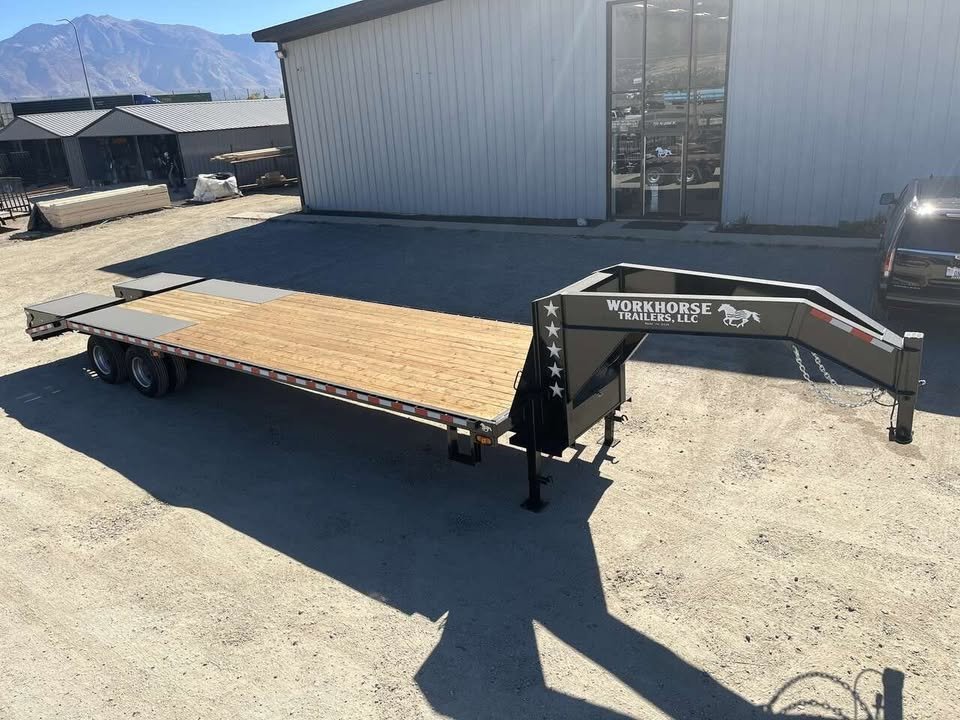
For loads that push beyond the practical limits of bumper pull towing, gooseneck deck over trailers shift the connection point into the truck bed, enabling higher weight ratings and superior directional control. Bluffdale contractors and agricultural operators who regularly haul near or above 14,000 pounds find the gooseneck configuration essential for maintaining safe towing dynamics on the highways and rural roads they travel daily. The elevated gooseneck neck section also creates usable storage space above the truck bed, which many owners outfit with toolboxes, chain bins, or auxiliary fuel containers.
Tilt Deck Over Trailers
Combining the full-width advantage of a deck over design with the loading convenience of a tilting mechanism, tilt deck over trailers appeal to Bluffdale operators who load wheeled and tracked equipment without the benefit of a loading dock or external ramp. The entire platform pivots to meet the ground, allowing machinery to drive aboard under its own power. Once the equipment passes the balance point, the deck returns to level and locks into its transport position. This hybrid configuration solves the dual problem of needing maximum width and ramp-free loading in a single trailer.
Stake Side Deck Over Trailers
Stake side models incorporate removable vertical posts along both edges of the deck that accept drop-in side panels, mesh extensions, or simple cross rails. This modular containment system adapts to whatever the operator is hauling. Tall stakes with solid panels contain loose bulk materials like firewood and mulch. Short stakes with a single cross rail keep flat items like lumber stacks and fence panels from sliding off during turns and braking. With all stakes removed, the deck reverts to a clean flatbed ready for overhead crane loading or side-access forklift placement. The versatility of this setup resonates strongly with Bluffdale buyers who use their trailer across a rotating mix of agricultural, construction, and household tasks.
Specifications That Guide the Purchase Decision
Workhorse Trailers LLC walks Bluffdale customers through several technical considerations that influence which deck over trailer will perform best in their specific operation.
Load Concentration Versus Distributed Weight
Some cargo spreads its weight evenly across the deck surface while other items concentrate force through narrow contact patches. A stack of hay bales distributes load gently, but a compact tractor channels its entire mass through four tire contact points. Bluffdale buyers who haul concentrated loads should confirm that the deck material thickness and crossmember spacing beneath the deck can handle point loading without permanent deflection. Workhorse Trailers LLC identifies which models in inventory are rated for concentrated loads versus distributed-only applications so buyers avoid overloading a trailer designed for a different stress profile.
Deck Height and Loading Method
The elevated deck position that defines a deck over trailer means cargo must be raised higher during loading compared to a between-the-fender design. Bluffdale operators who load primarily with forklifts or cranes experience no penalty from the added height since mechanical lifting is unaffected by a few extra inches of elevation. Operators who drive equipment aboard via ramps, however, face a steeper climb that increases with deck height. Evaluating how you will load the trailer most frequently prevents selecting a model whose deck height conflicts with your primary loading method.
Tongue Weight Management
Wide loads positioned across the full deck surface can shift the trailer’s center of gravity laterally in ways that narrower between-the-fender loads cannot. A heavy pallet placed off-center on a deck over trailer imposes uneven tongue loading that the tow vehicle’s suspension must absorb. Bluffdale buyers should develop the habit of centering loads carefully and distributing weight symmetrically across the deck width to maintain balanced tongue loading and predictable tow vehicle handling.
Those evaluatingBluffdale Deck Over Trailers at Workhorse Trailers LLC benefit from a sales team that discusses load placement strategy as part of every purchase consultation, ensuring buyers understand how to use the full-width deck safely from the first trip forward.
Corrosion Resistance for Agricultural Exposure
Deck over trailers serving Bluffdale’s agricultural community encounter manure, urine, wet hay residue, fertilizer runite, and irrigation water that accelerate corrosion far beyond what highway-only trailers experience. Buyers operating in these conditions should prioritize powder-coated frames with additional undercoating protection, galvanized or aluminum deck surfaces that resist organic acid attack, and stainless steel or zinc-plated fastener hardware throughout the chassis. Investing in corrosion resistance at the point of purchase eliminates the annual scraping and recoating cycle that agricultural trailers with basic paint finishes demand.
Caring for a Deck Over Trailer in Bluffdale’s Environment
Bluffdale’s climate and terrain impose maintenance demands that reflect the community’s blend of agricultural activity and seasonal weather extremes.
Deck surface cleaning after hauling organic materials prevents the acids in manure, silage, and decomposing vegetation from etching into protective coatings and attacking the steel or wood beneath. A pressure washer applied within 24 hours of an agricultural haul removes residue before it bonds permanently to the surface. Bluffdale operators who haul livestock byproducts weekly should consider scheduling a standing wash routine rather than waiting for visible buildup.
Stake pocket drainage deserves attention that many owners overlook. The square tubes welded to the trailer frame to accept removable stakes collect rainwater, irrigation spray, and snowmelt that sits stagnant if the pockets lack drainage holes at their base. Stagnant water corrodes the pocket interior from within, eventually weakening the tube wall to the point where stakes no longer seat securely. Verifying that every stake pocket drains freely and clearing any debris that plugs the drain openings protects this frequently used feature.
Spring pin and bolt hardware connecting the deck to the frame should be checked for tightness after every significant exposure to rough terrain. The jolting and flexing that occur when a loaded deck over trailer crosses rutted farm roads and gravel lanes work fasteners loose incrementally, and a periodic torque check with a calibrated wrench prevents the cumulative loosening that leads to deck shift or rattling during highway transport.
Tire sidewall inspection takes on added importance for Bluffdale deck over trailers that travel on roads bordered by barbed wire fencing, thorny brush, and agricultural debris. Small punctures and sidewall cuts that a highway-only trailer would never encounter can develop into blowouts under load if left unaddressed. Walking the full perimeter of each tire before every trip and replacing any tire showing visible damage maintains the safety margin that loaded deck over trailers require.
Workhorse Trailers LLC and Bluffdale’s Hauling Needs
Workhorse Trailers LLC has earned a reputation among Bluffdale buyers for stocking deck over trailers that reflect the practical realities of this community rather than the generic preferences of a distant market. The inventory accounts for the hay hauling, livestock management, building material delivery, and implement transport that Bluffdale operators perform routinely, and the sales team speaks fluently about the conditions these trailers encounter on western valley roads, pasture lanes, and the highway corridors connecting Bluffdale to suppliers across the region.
Buyers from Herriman, Riverton, Eagle Mountain, Saratoga Springs, and the southern edges of South Jordan share similar hauling profiles and visit Workhorse Trailers LLC for the same reasons. The lot is open for inspection, the staff welcomes detailed technical questions, and every deck over trailer on display can be examined closely enough to verify construction quality before a dollar changes hands. Workhorse Trailers LLC invites Bluffdale residents and commercial operators to bring their cargo dimensions, their tow vehicle specifications, and their most demanding hauling scenario to the conversation. The recommendation that follows will be built on those specifics rather than assumptions.