Billings Deck Over Trailers
All locationsThe loads that move through Billings on any given day don’t all fit neatly between a set of trailer fenders. Wide pallets of roofing material headed to a subdivision off Zimmerman Trail. A zero-turn mower flanked by a walk-behind edger and blower for a landscaping crew working the South Hills neighborhoods. A pair of round hay bales destined for a feedlot along the Yellowstone River bottoms east of town. Each of these loads shares a common problem: standard trailers with wheel wells intruding into the deck space force compromises in how cargo gets arranged, stacked, and secured. Deck over trailers eliminate that constraint entirely by placing the bed above the wheels, delivering a flat, uninterrupted loading surface that spans the full width of the trailer. Workhorse Trailers LLC provides deck over trailers to Billings buyers who’ve grown tired of working around fender wells and want a hauling platform that accommodates their actual loads without creative stacking or downsized expectations.
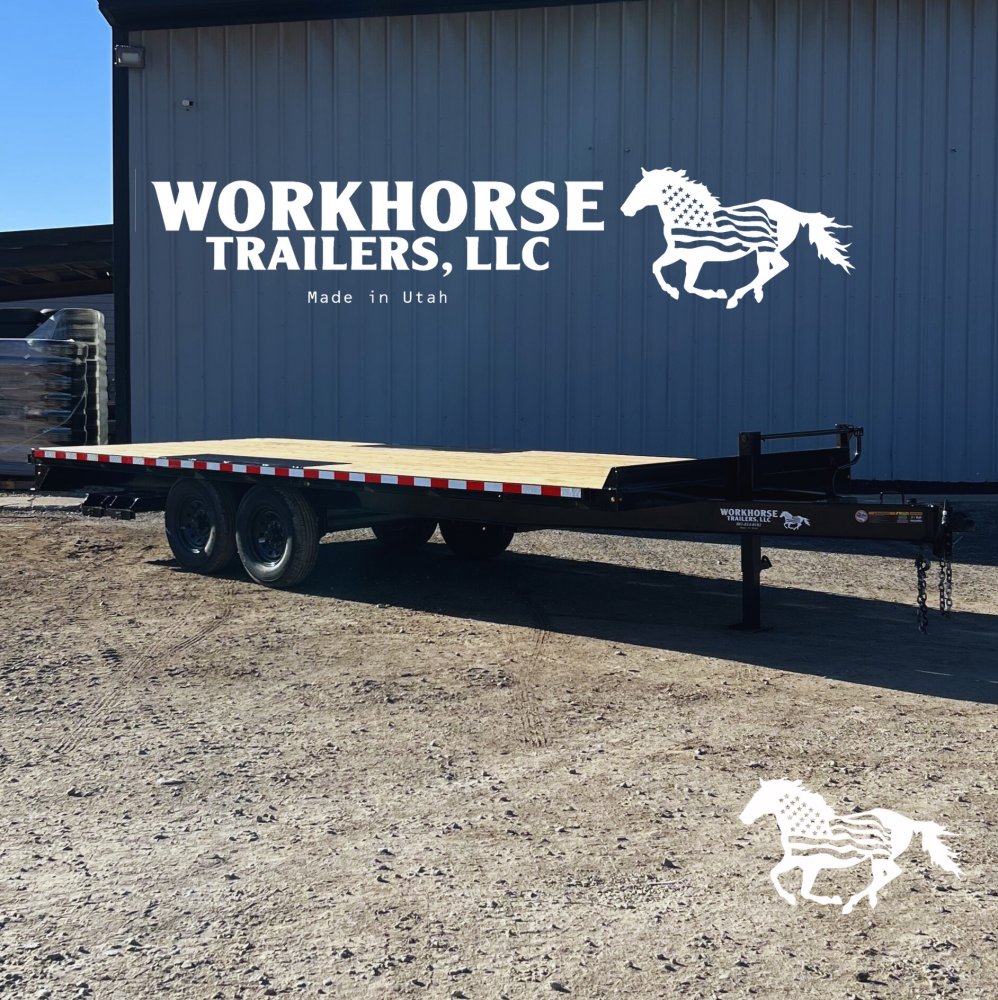
The design concept is straightforward. On a conventional trailer, the bed sits between the axles with fender arches rising above the tires on each side. That arrangement keeps the deck low to the ground but sacrifices usable width. A deck over trailer raises the entire bed above the wheel assemblies, giving the buyer a continuous flat surface from rail to rail. At 102 inches wide on most full-size models, that’s roughly eight and a half feet of clear deck space with nothing protruding upward to obstruct loading or limit how cargo sits on the surface.
For Billings buyers who haul wide or irregularly shaped loads regularly, that unbroken deck geometry solves problems that no amount of ratchet strap creativity can fix on a narrower between-the-fender trailer.
Who Relies on Deck Over Trailers in the Billings Area
The buyer base for deck over trailers in Billings cuts across residential, commercial, and agricultural lines. The common thread is a need for maximum usable deck width and loading flexibility.
Contractors and Building Supply Delivery
Billings general contractors, roofers, and building material suppliers move loads that are both heavy and wide. A pallet of shingles measures roughly 40 by 48 inches and weighs over 3,000 pounds. Placing two pallets side by side on a between-the-fender trailer with 78 inches of clear width between the wheel wells leaves almost no margin for forklift placement error. The same two pallets on a 102-inch deck over sit comfortably with clearance to spare, and the forklift operator can place them without threading a needle between fender walls.
Lumber deliveries follow a similar pattern. Stacking 16-foot dimensional lumber or engineered floor trusses across a deck over’s full width lets contractors load more material per trip, reducing the number of runs between the supply yard on South Frontage Road and the build site. Fewer trips mean lower fuel costs, less windshield time, and more hours on the job site where the work actually happens.
Hay and Feed Operations
The agricultural corridor running east and south of Billings supports cattle operations that depend on regular hay and feed deliveries. A standard large round bale measures roughly five feet in diameter and five feet wide, weighing between 800 and 1,500 pounds depending on the crop and moisture content. Fitting two bales side by side requires clear deck width that between-the-fender trailers can’t always provide. A deck over trailer handles two-wide bale loading cleanly, and the flat surface makes it possible to stack a second tier with proper securing.
Ranchers running cattle along Pryor Creek, in the Molt area, or across the grazing lands south of Huntley use deck over trailers as their primary hay transport because the loading math works out better than any alternative configuration.
Landscaping and Outdoor Services
Commercial landscaping operations based in Billings serve residential neighborhoods, HOA common areas, business parks, and municipal properties across the metro area. A typical crew runs with a riding mower, one or two walk-behind mowers, a stand-on edger, trimmers, blowers, and fuel cans. Arranging all of that equipment on a fender-obstructed deck forces awkward positioning and limits what fits on a single trip. A deck over’s flat surface lets crews organize equipment in whatever layout works best for their loading sequence, with ramp access from the rear for driving mowers on and off.
Several Billings lawn care companies have standardized on deck over trailers specifically because the wide deck accommodates equipment changes season to season. The mowing setup in June transforms into a leaf cleanup or snow equipment configuration in November without the trailer becoming the limiting factor.
Recreational and Personal Hauling
Billings residents who own side-by-sides, snowmobiles, or multiple ATVs use deck over trailers to carry machines that don’t fit comfortably on narrower platforms. A full-size UTV like a Polaris Ranger Crew measures roughly 64 inches wide at the body. Loading one alongside a standard ATV on a between-the-fender trailer with restricted interior width is tight or impossible depending on the models. A deck over trailer fits both machines with room for fuel, recovery gear, and coolers alongside them.
The Beartooth Highway, Pryor Mountains, and trail systems accessible from the Billings area draw riders year-round, and the deck over trailer parked in a Billings Heights driveway or a garage bay in Lockwood West is often the enabler that makes those trips happen.
Deck Over Loading Methods
One of the practical advantages of a deck over design is the variety of ways cargo can be loaded onto the trailer. Unlike between-the-fender trailers where loading is essentially limited to driving up a ramp or lifting over the side rails, deck over trailers accommodate multiple approaches.
Rear Ramp Loading
Most deck over trailers include fold-down rear ramps, either as stand-up ramps stored vertically against the trailer’s rear or as fold-flat ramps that form an extension of the deck when stowed. Equipment, vehicles, and wheeled cargo drive up the ramps onto the deck surface. The ramp width on a deck over typically matches the full deck width, which means there’s no need to align the machine precisely with a narrow ramp opening.
Crane and Forklift Loading From the Side
The unobstructed deck surface and lack of fender walls mean that cargo can be placed onto a deck over trailer from the side using a forklift, telehandler, or crane. This is the primary loading method for palletized materials, heavy fabricated components, and awkwardly shaped items that can’t drive themselves onto the trailer. Billings construction sites where a boom truck or forklift is already on location take advantage of this by loading materials directly over the side rails without repositioning the trailer for rear access.
Manual Loading Over the Rails
For lighter cargo loaded by hand, the deck over’s open sides allow workers to place items over the side rails from ground level or from a loading dock. This is less relevant for heavy equipment but highly practical for fencing materials, bundled pipe, landscape timbers, and other items that are carried and placed rather than driven or lifted mechanically.
Bumper Pull vs. Gooseneck Deck Over Configurations
Deck over trailers come in both bumper pull and gooseneck hitch configurations. The right choice depends on the loads being carried and the tow vehicle being used.
Bumper Pull Deck Overs
Bumper pull models attach to a standard receiver hitch behind the truck. They’re appropriate for deck over trailers rated up to approximately 14,000 pounds GVWR, though the practical comfort zone for most drivers falls closer to 10,000 to 12,000 pounds. Bumper pull deck overs are easier to hitch, don’t require a ball installed in the truck bed, and can be towed by a wider range of vehicles including some larger half-ton pickups.
The trade-off is reduced tongue weight capacity compared to a gooseneck, which makes bumper pull deck overs more susceptible to sway when loaded near their maximum rating. On the windy stretches of I-90 heading west from Billings toward Laurel or east toward Custer, trailer sway on a heavily loaded bumper pull deck over gets the driver’s full attention in a hurry.
Gooseneck Deck Overs
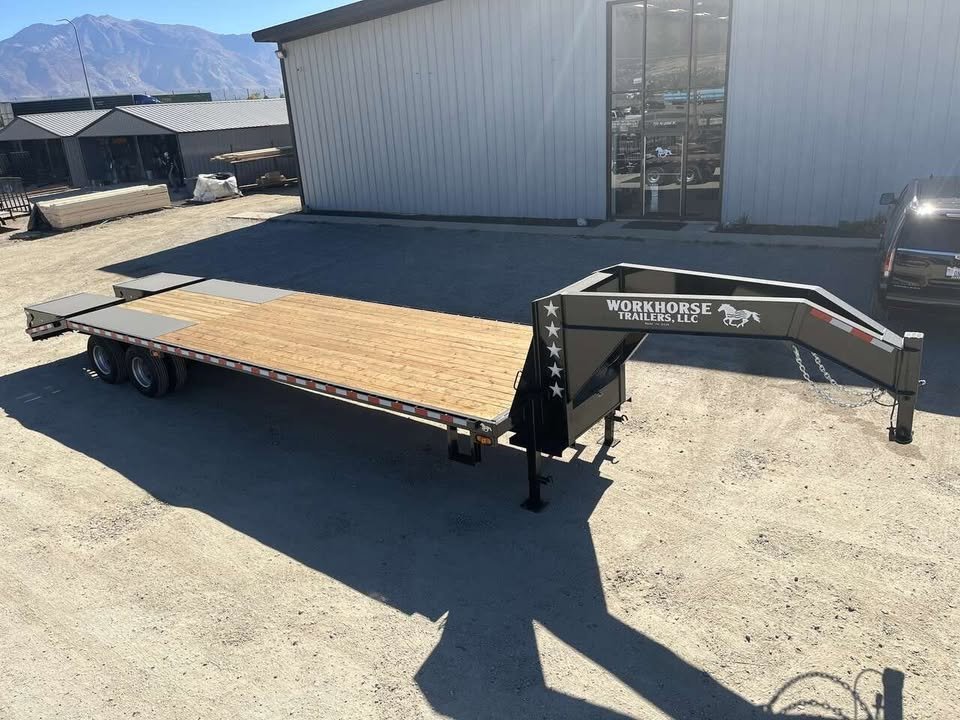
Gooseneck hitching positions the coupling over the truck’s rear axle, improving weight distribution and towing stability. For deck over trailers rated above 14,000 pounds GVWR or for any configuration where loads regularly approach the trailer’s capacity, gooseneck is the safer and more controllable option.
Gooseneck deck overs also gain usable space on the neck section that extends over the truck bed. Many buyers use this area for mounting a toolbox, carrying chains and binders, or storing ramp extensions. That bonus storage keeps the main deck clear for cargo without requiring a separate tool carrier.
Billings contractors who already run gooseneck equipment haulers or stock trailers often prefer gooseneck deck overs for consistency. Using the same hitch type across multiple trailers means one ball setup in the truck bed works for the entire fleet.
Deck Surface Options and Durability
The material covering the deck over’s frame affects grip, durability, weight, and maintenance requirements. Billings buyers should consider how their specific cargo interacts with the deck surface before defaulting to the cheapest option.
Treated Wood Decking
Pressure-treated pine boards are the most common deck surface on steel-frame deck over trailers. Wood provides natural grip for both tires and cargo, absorbs impact from dropped loads without denting, and can be replaced board by board when sections wear out. The treatment resists rot and insect damage, though Montana’s freeze-thaw cycles can accelerate checking and splitting in boards exposed to standing water. Sealing the end grain of deck boards after installation adds years to their service life.
Steel Tread Plate
Some deck over trailers use diamond plate steel for the deck surface, either across the entire bed or in high-wear sections like the ramp landing area. Steel tread plate is extremely durable and handles point loads from equipment tracks and outrigger pads better than wood. The disadvantage is that steel becomes slippery when wet or icy, which is a real consideration for Billings buyers loading equipment during early morning frost or after a rain. Adding non-skid coating to steel tread plate mitigates this partially.
Composite and Aluminum Decking
Composite deck materials and aluminum planking offer weight savings and corrosion resistance but come at a higher price point. These materials appear more frequently on specialty trailers than on standard work-grade deck overs. For Billings buyers prioritizing longevity and minimal maintenance over initial cost, they deserve evaluation.
Tie-Down Strategy on a Deck Over Trailer
The flat, open deck surface on a deck over trailer provides flexibility in cargo placement but requires deliberate tie-down planning. Unlike enclosed trailers where walls provide lateral containment, or fender trailers where the wheel wells create natural barriers, a deck over relies entirely on straps, chains, and anchor points to keep cargo stationary.
D-rings welded to the frame perimeter and across the deck at regular intervals give the buyer maximum options for securing loads in various positions. Stake pockets along the side rails accept removable stake sides for containing loose materials like firewood, landscape rock, or bulk items that would otherwise require individual strapping.
For heavy equipment and machinery, chain tie-downs attached to the trailer’s D-rings provide the working load capacity needed to restrain loads during braking and cornering. The open deck geometry lets the operator position chains at optimal angles rather than routing them around fender obstructions, which improves the effectiveness of each tie-down point.
Billings buyers who haul mixed loads on their deck over trailers benefit from carrying both ratchet straps for lighter items and chain binders for heavier cargo. The versatility of the deck surface only pays off if the securement hardware matches the variety of loads being carried.
Storing and Parking a Deck Over Trailer in Billings
Deck over trailers carry a wider profile than between-the-fender models at the same deck length. A 102-inch-wide deck over occupies more lateral space in a driveway, parking area, or storage yard than a standard trailer measuring 80 to 84 inches at the fenders. Billings buyers should measure their intended storage spot before purchasing to confirm the trailer fits without encroaching on property lines, sidewalks, or neighboring driveways.
Billings municipal code addresses trailer storage in residential areas, and some neighborhoods enforce restrictions on how long a trailer can remain parked in a driveway or on the street. Buyers in HOA-governed subdivisions around Billings West End, Rehberg Ranch, or the Grand Avenue corridor should review their covenants for trailer storage provisions before assuming a new deck over can live in the driveway permanently.
For commercial buyers, yard space at a Billings shop or lot typically accommodates deck over trailers without issue. The wider profile is a minor consideration when the trailer parks among other commercial equipment.
Working With Workhorse Trailers LLC in Billings
Workhorse Trailers LLC helps Billings deck over buyers sort through the combination of deck length, weight rating, hitch type, and surface material that matches their hauling reality. The conversation starts with what you’re moving and how often you’re moving it, and the recommendation builds from there. Buyers exploring available deck over configurations and current pricing can visitBillings Deck Over Trailers to review the selection and reach out with specific questions.
The goal is a trailer that earns its place in your operation from the first load forward. For Billings buyers who need a full-width hauling surface without compromise, a properly specified deck over trailer from Workhorse Trailers LLC delivers exactly that.