
Billings Car Hauler Trailers
All locationsMoving a vehicle that can’t or shouldn’t be driven requires a trailer built specifically for the job. In Billings, that need surfaces more often than you might expect. Collectors transporting a restored muscle car to a show in Red Lodge don’t want road debris pitting the fresh paint. Mechanics picking up a broken-down sedan from a parking lot across town need a reliable way to get it back to the shop. Dealers buying inventory at auction in other cities need to haul purchases home without putting unnecessary miles on the odometer. And racers towing a drag car or dirt track vehicle out to Yellowstone Drag Strip or BMP Speedway need a platform that protects the machine and loads safely every single time. Workhorse Trailers LLC supplies car hauler trailers to Billings buyers across all of these scenarios, matching each customer to a hauler that fits the vehicles they’re transporting and the frequency with which they’re transporting them.
Car hauler trailers differ from general-purpose flatbeds in ways that matter once you’re actually loading a vehicle. The deck sits lower to the ground, creating a shallower ramp angle that cars with limited ground clearance can negotiate without scraping. Integrated ramps or a beaver tail rear section guide the vehicle onto the deck smoothly. Tire stops, wheel chocks, and strategically placed D-ring tie-downs keep the vehicle locked in place during transit. These details might seem minor on paper, but they’re the difference between delivering a car in the same condition it was loaded and explaining a new scratch to a customer or a fresh dent to yourself.
Open vs. Enclosed Car Haulers
The first decision any Billings car hauler buyer faces is whether an open or enclosed trailer better serves their needs. Each type has clear advantages depending on what’s being hauled and how much protection the cargo requires.
Open Car Hauler Trailers
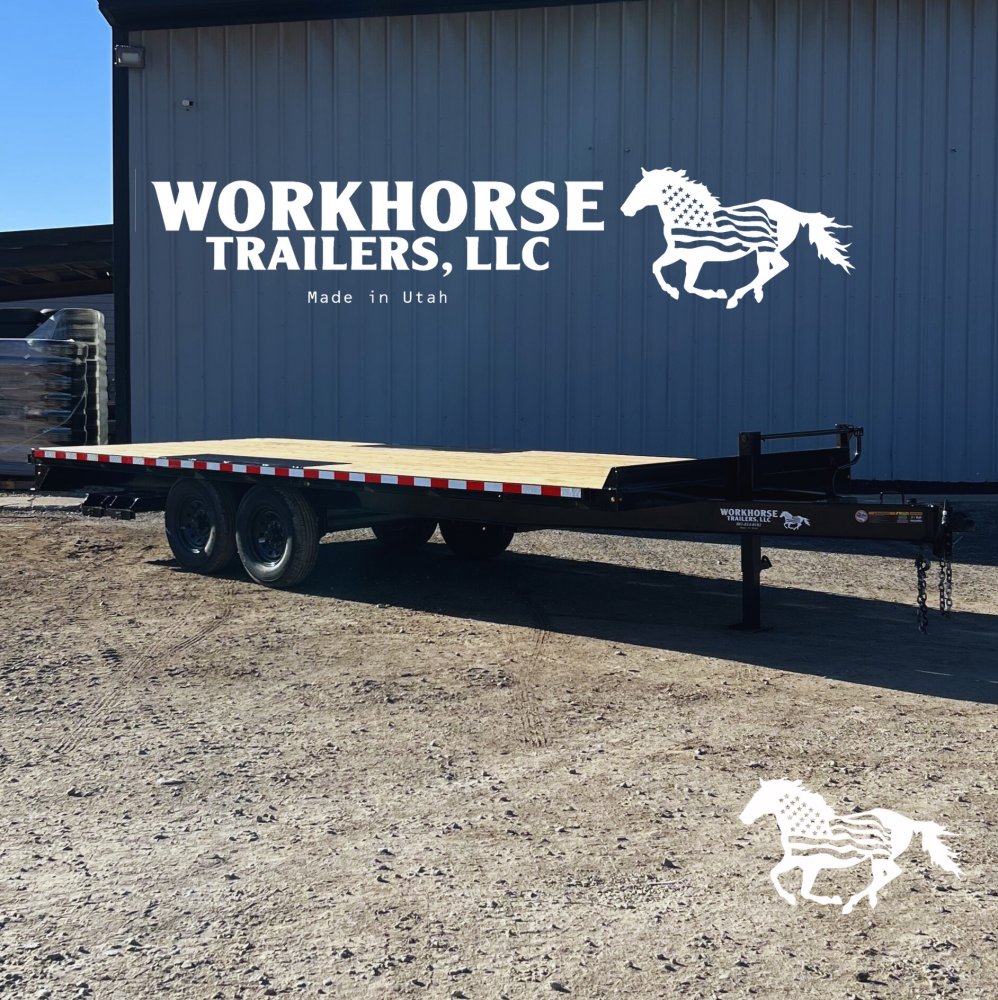
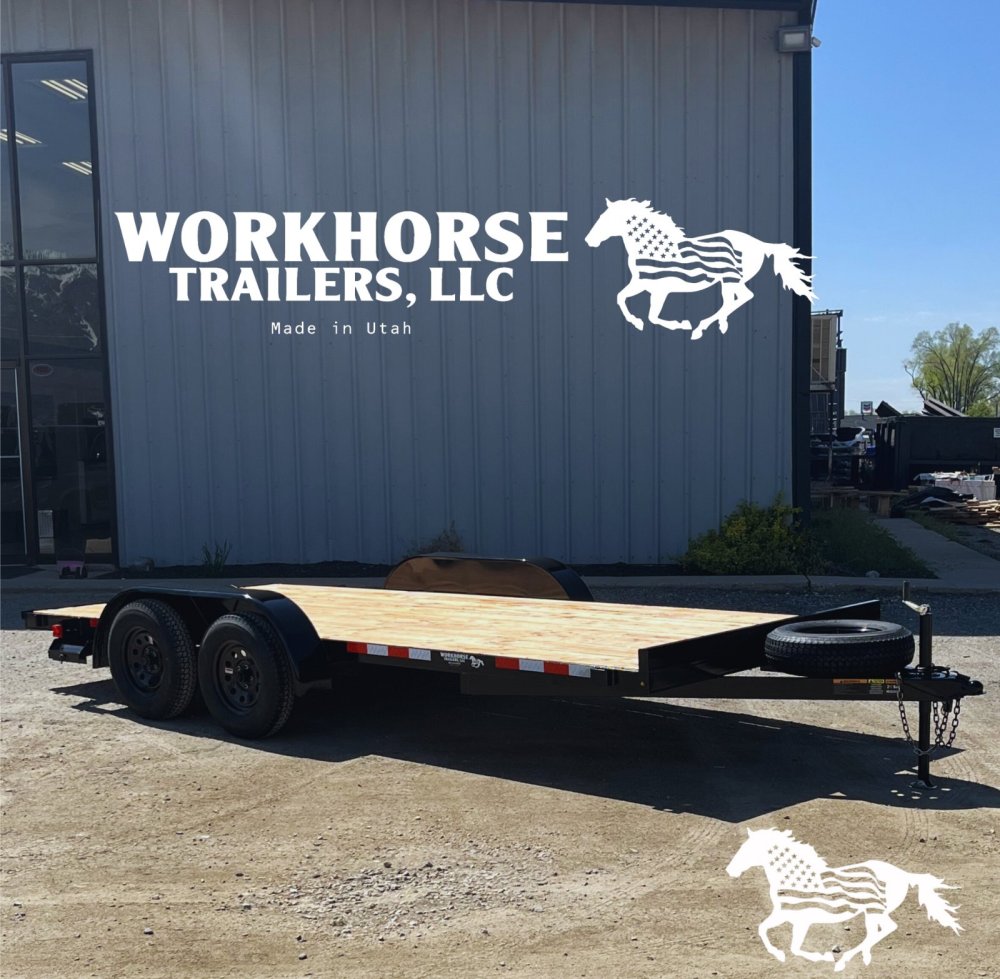
Open car haulers are the more common choice in the Billings market. They consist of a steel or aluminum frame with a flat deck, side rails, ramps, and tie-down hardware. There are no walls, no roof, and no doors. The vehicle rides exposed to the elements during transit.
For most practical hauling, open trailers do the job well. A tow company retrieving a disabled vehicle from the shoulder of Interstate 90 near Laurel doesn’t need weather protection for the twenty-minute drive back to the yard. A hobbyist trailering a project car from a Craigslist purchase in Shepherd to their garage in Billings West End isn’t worried about cosmetic exposure during a short trip. A landscaping company using a car hauler as a double-duty equipment mover doesn’t benefit from an enclosure that would complicate loading.
Open car haulers are lighter than enclosed models at comparable deck dimensions, which means better fuel economy, lower tow vehicle strain, and the ability to haul heavier vehicles without exceeding weight ratings. They’re also significantly less expensive, making them accessible to buyers who haul vehicles periodically rather than daily.
Enclosed Car Hauler Trailers
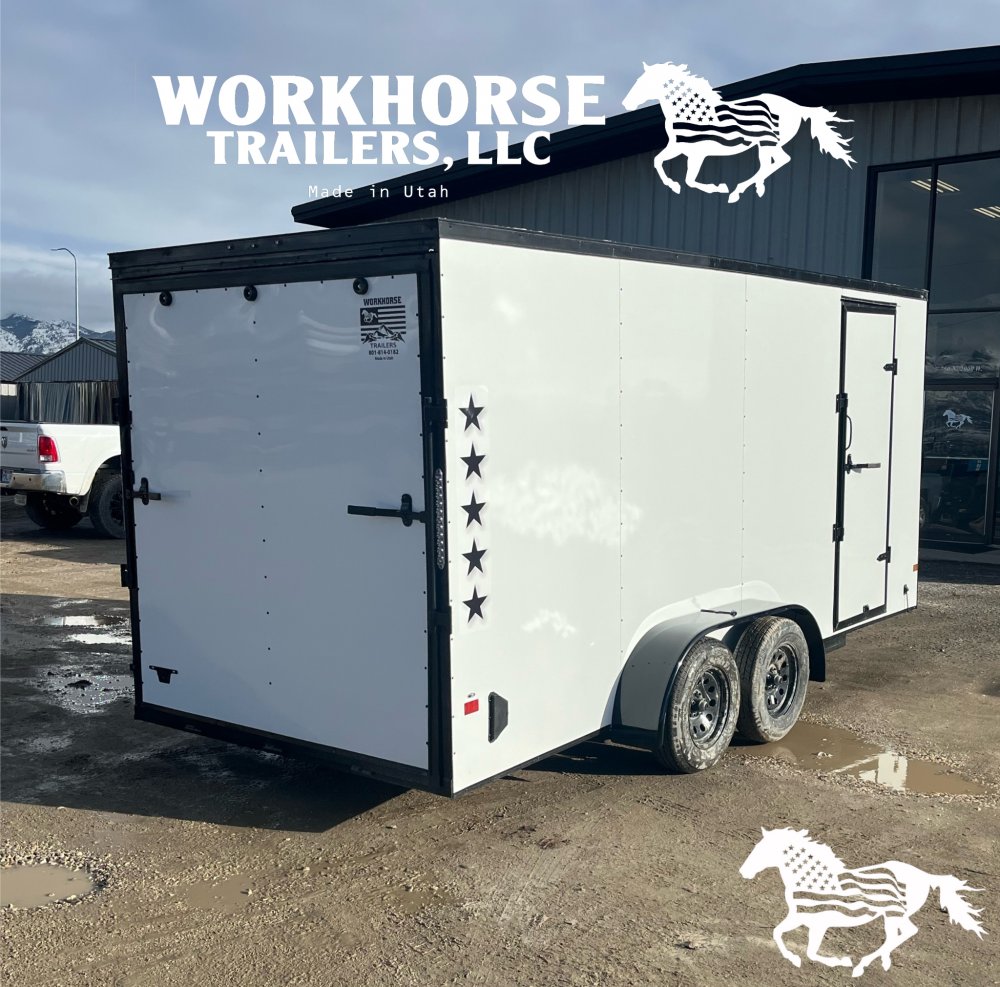
Enclosed car haulers wrap the cargo in aluminum or steel walls and a roof, providing complete protection from weather, road grime, and prying eyes. For high-value vehicles, show cars, and race machines, that protection justifies the added cost and weight.
Billings sits at a crossroads for car culture in eastern Montana. The region hosts cruise nights, car shows, and motorsport events throughout the summer, and enthusiasts who’ve invested thousands into a restoration or build want their vehicle arriving in showroom condition. An enclosed hauler eliminates the risk of rock chips from highway debris on I-90, bug splatter that etches into fresh clear coat, or a sudden afternoon thunderstorm dumping hail on an exposed vehicle somewhere between Billings and wherever the event happens to be.
Enclosed haulers also provide secure storage. A race team parked overnight at an event can lock their car inside the trailer rather than leaving it exposed in a paddock. Dealers transporting a luxury or specialty vehicle between locations keep it invisible to passersby, reducing the chance of vandalism or theft during stops.
The trade-off is cost, weight, and size. An enclosed car hauler occupies more space in a driveway or shop yard, requires a more capable tow vehicle, and represents a substantially larger investment than an open hauler of the same deck length.
Deck Styles and Loading Configurations
Car hauler trailers use several different deck and ramp configurations to accommodate the range of vehicles Billings buyers need to transport.
Flatbed With Rear Ramps
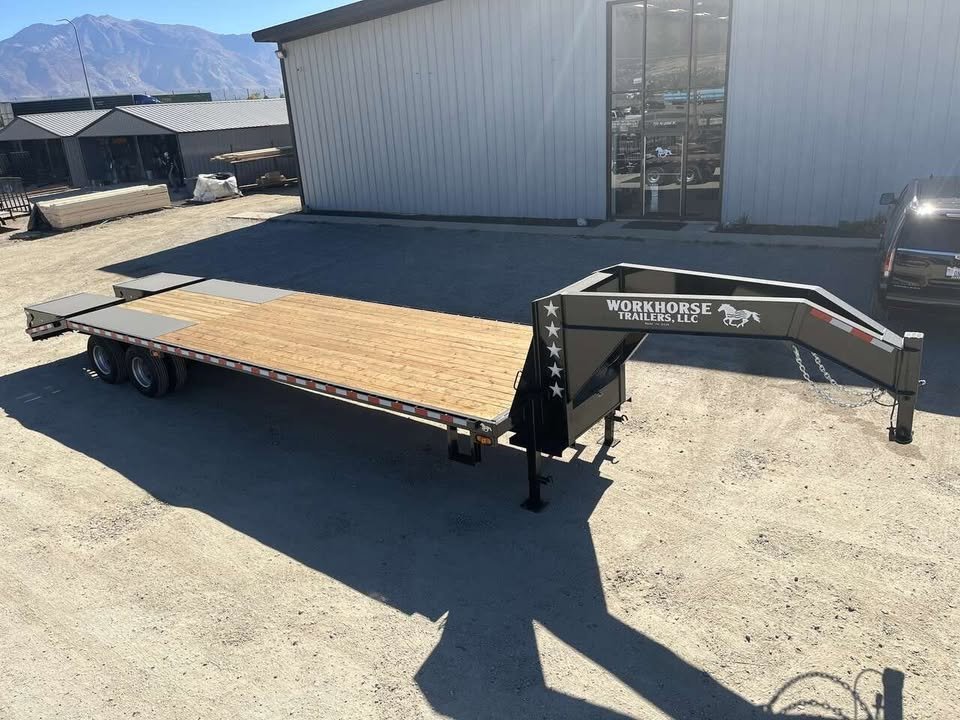
The simplest configuration places the vehicle deck at a uniform height with fold-down ramps at the rear. This works well for trucks, SUVs, and vehicles with reasonable ground clearance. The ramp angle depends on deck height and ramp length, and some models include spring assist to make deploying and stowing the ramps a one-person task.
Dovetail Rear Section
A dovetail drops the last several feet of the deck at a downward angle before the ramps begin. This design reduces the effective loading angle and virtually eliminates the breakover point where the ramp meets the deck. For lowered cars, sports cars with front air dams, and vehicles with extended body kits, the dovetail prevents the undercarriage damage that a flat deck with standard ramps can cause. Billings buyers hauling anything lower than a stock sedan should seriously consider a dovetail configuration.
Tilt Bed Car Haulers
Some car haulers use a tilting deck mechanism instead of fixed ramps. The entire bed pivots to create a continuous slope from ground to deck front, producing the shallowest possible loading angle. Tilt bed car haulers are excellent for extremely low vehicles and for operators who load and unload frequently and want to minimize the time spent handling ramps. The tilting mechanism adds mechanical complexity and cost, but for the right buyer, the convenience is worth every dollar.
Drive-Over Fenders vs. Open Deck
Standard car haulers place the wheels of the hauled vehicle between the trailer’s fenders, which limits the usable deck width to the space inside the fender wells. Drive-over fender designs or completely fenderless open deck layouts allow wider vehicles to sit on the full deck surface without clearance issues. This matters for wide-body builds, duallys, and vehicles on aftermarket wheel setups that extend beyond factory track widths.
Weight Ratings and Tow Vehicle Pairing
Getting the weight math right prevents unsafe towing situations and avoids legal problems on Montana’s roads. Car hauler buyers in Billings need to account for the weight of the trailer itself, the weight of the vehicle being hauled, and any additional cargo like tools, spare tires, or fuel jugs.
Typical Vehicle Weights
A compact sedan weighs roughly 2,800 to 3,300 pounds. A mid-size sedan or crossover runs 3,500 to 4,200 pounds. A full-size truck or SUV can reach 5,500 to 6,500 pounds. And modified or race vehicles carrying roll cages, additional equipment, or heavier drivetrains can exceed stock weights by several hundred pounds.
Matching Trailer GVWR to the Load
A single-car open hauler with a GVWR of 7,000 pounds and an empty weight of 2,000 pounds provides 5,000 pounds of payload capacity. That covers most passenger vehicles comfortably. Hauling a full-size truck or a heavier vehicle pushes you toward trailers rated at 9,990 to 12,000 pounds GVWR, which also provide a margin of safety for the additional gear and accessories that inevitably ride along.
For two-car haulers, GVWRs of 14,000 pounds and above are standard, and gooseneck hitching becomes the practical choice for managing the combined tongue weight and total load. Billings-area auto dealers and race teams who regularly move two vehicles at once should plan for a gooseneck two-car hauler from the start rather than attempting to make a single-car bumper pull trailer serve double duty through overloading.
Tow Vehicle Requirements
Any truck towing a loaded car hauler in the Billings area needs sufficient GCWR (gross combined weight rating) to handle the loaded trailer plus its own weight with passengers and cargo. A half-ton pickup handles a single-car open hauler carrying a lighter vehicle. Three-quarter-ton and one-ton trucks are the appropriate match for heavier single-car loads and any two-car configuration. Transmission coolers, properly rated hitches, and functional brake controllers are not optional accessories for car hauler towing. They’re baseline safety requirements.
Securing the Vehicle During Transport
A car that shifts on the trailer during transit creates a dangerous weight imbalance and risks serious damage to both the vehicle and the trailer. Proper tie-down technique is not complicated, but it requires the right equipment and the right attachment points.
Tire Straps and Wheel Nets
Over-the-tire straps with ratchet tensioners are the most common method for securing a vehicle on an open car hauler. Each wheel gets its own strap, pulled tight enough to compress the vehicle’s suspension slightly. This loads the tires against the deck and prevents lateral and longitudinal movement. Wheel nets wrap around the entire tire and provide even distribution of the holding force, which reduces the chance of the strap slipping off a tire under vibration.
Axle Straps
For vehicles without wheels, like chassis being transported for builds, or for additional security on high-value loads, axle straps wrap around the vehicle’s axle tubes and attach to the trailer’s D-rings. These supplement tire straps and provide a secondary retention point that’s independent of the tire and wheel assembly.
Frame Hooks and Chain
Some car hauler trailers include chain tie-down systems with grab hooks designed to attach to the vehicle’s frame or designated tow points. This method is common for tow companies and auto transport operators who need fast, secure attachment without the time investment of individual tire straps. Chain systems require knowing where the vehicle’s structural tie-down points are located to avoid attaching to suspension components, brake lines, or body panels that can’t handle the load.
What Not to Do
Never strap a vehicle by its bumpers, spoilers, or body trim. Never rely on the vehicle’s parking brake as a substitute for proper tie-downs. And never assume that a vehicle sitting in a dovetail or between wheel stops is secure enough without straps. Gravity and friction are not tie-down methods.
Billings Road and Event Considerations
Billings’ position along Interstate 90 and Interstate 94 makes it a natural hub for vehicle transport across eastern Montana and into neighboring states. Car hauler owners in Billings regularly tow to events and destinations including Beartooth Rally runs toward Red Lodge and Cooke City, drag events and dirt track races at local motorsport venues, car shows in Livingston, Bozeman, and Sheridan across the Wyoming border, and auction houses and dealer lots in Miles City, Glendive, and as far as Rapid City.
Those routes include significant elevation changes, sustained highway grades, and wind exposure across open stretches of prairie. A car hauler loaded with a 4,000-pound vehicle and traveling westbound on I-90 through the stretch between Columbus and Big Timber faces crosswinds that can push an improperly balanced trailer into adjacent lanes. Proper tongue weight balance, correctly inflated tires, and a tow vehicle with adequate wheelbase all contribute to stable towing across these corridors.
Winter towing between Billings and mountain destinations requires extra caution. Ice on the trailer deck makes loading treacherous, and reduced traction on snow-packed highways amplifies any towing instability. Many Billings car hauler owners store their show and race vehicles from November through March and reserve their hauling for the spring-through-fall season when conditions are safer.
Registration and Compliance in Yellowstone County
Car hauler trailers registered in Yellowstone County follow Montana’s standard trailer registration process at the county treasurer’s office. No sales tax applies to the purchase, which represents a meaningful savings on higher-value enclosed haulers that can carry five-figure price tags. Annual registration fees are based on age and declared gross vehicle weight and remain modest across all car hauler categories.
Lighting and reflective marking requirements apply to car haulers just as they do to any trailer on Montana roads. A vehicle loaded on the trailer that obscures the trailer’s tail lights requires auxiliary lighting mounted at the rear of the loaded vehicle or on extensions that remain visible from behind. Running without visible rear lighting on a car hauler is both illegal and extremely dangerous, particularly after dark on unlit stretches of Highway 3 south of Billings or Highway 87 heading north toward Roundup.
Why Billings Buyers Choose Workhorse Trailers LLC
Purchasing a car hauler involves more variables than grabbing the first flatbed with ramps bolted to the back. The vehicle you’re hauling, how often you haul it, what tow vehicle you’re working with, and whether you need weather protection all factor into the right choice. Workhorse Trailers LLC walks Billings buyers through each of these considerations without rushing the process or pushing unnecessary upgrades.
The company’s inventory spans single-car open haulers for occasional personal use through enclosed and multi-car configurations for dealers, collectors, and motorsport operations. Billings area buyers ready to compare models and specifications can visitBillings Car Hauler Trailers to review what’s currently available and get specific answers about which hauler fits their situation.
What Billings buyers consistently report is that the buying experience feels different from the typical dealer lot interaction. The questions come first. The recommendation follows. And the trailer that rolls off the lot is one that was selected for the job rather than sold on margin. That approach builds the kind of repeat and referral business that keeps Workhorse Trailers LLC growing across the Yellowstone Valley and beyond.