
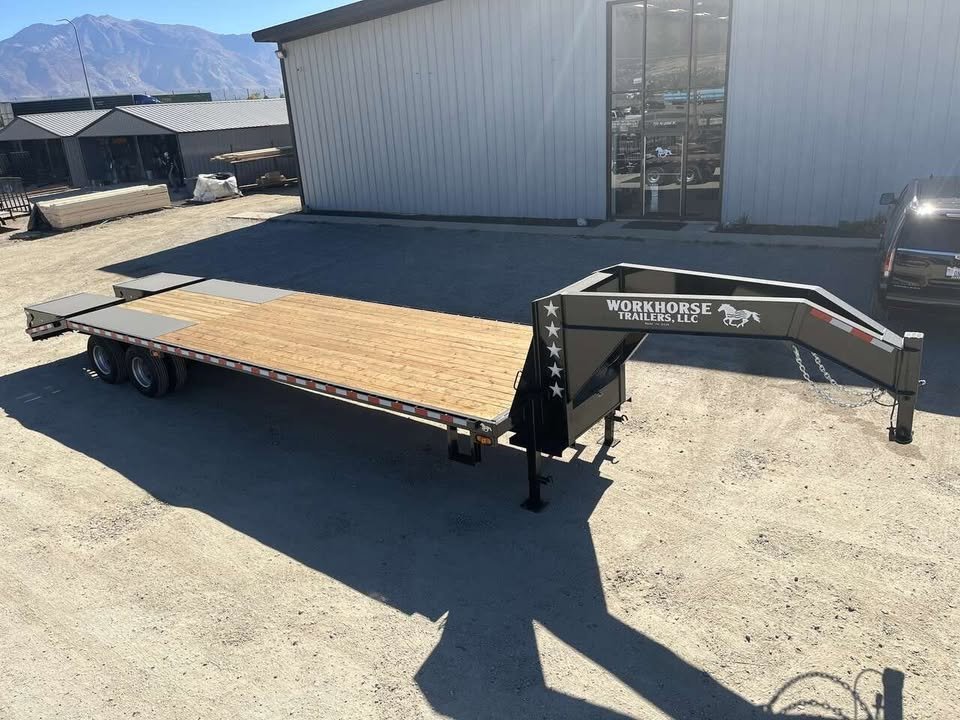
Provo Car Hauler Trailers
All locationsProvo sits at the cultural and economic center of Utah County, anchoring a population that treats automobiles as far more than daily transportation. Vehicles here represent livelihoods for the mechanics who rebuild them, investments for the collectors who preserve them, competitive tools for the racers who push them to their limits, and sentimental treasures for the families who pass them between generations. Moving any of these vehicles without putting them at risk requires a purpose-built car hauler trailer that accepts the full weight of the machine, cradles it on a stable platform, and delivers it to the destination without adding a single scratch, rattle, or unnecessary mile to the odometer. Workhorse Trailers LLC supplies Provo's vehicle transport community with car hauler trailers engineered for the cargo weights, road conditions, and use frequencies that define how this city moves its most valued machines.
Provo's car hauler market draws energy from overlapping sources that keep demand consistent throughout the year. The city's geographic spread between the lake flats and the mountain bench means vehicles travel across elevation changes that test both the trailer and the tow vehicle on routine trips. Its thriving independent automotive trade generates daily retrieval and delivery runs that put commercial car haulers through punishing duty cycles. And its deep cultural connection to family, recreation, and self-reliance means private car hauler ownership is viewed not as a luxury but as a practical household asset that earns its keep many times over. This page examines the Provo-specific factors that influence car hauler selection, presents the models Workhorse Trailers LLC keeps available for local buyers, and shares the operational wisdom that protects both the trailer and the vehicles it carries.
Provo's Vehicle Transport Ecosystem
The demand for car hauler trailers in Provo originates from distinct segments of the local economy and community, each contributing a different set of requirements to the overall market.
Independent Automotive Trade Network
Provo supports a dense network of independent mechanics, collision repair specialists, paint and detail shops, and aftermarket performance installers spread throughout the city. These businesses depend on car hauler trailers to retrieve customer vehicles that arrive disabled from accidents, breakdowns, or incomplete repairs started elsewhere. A single busy shop might dispatch its car hauler three or four times per day during peak season, collecting vehicles from residences, insurance lots, tow yard impounds, and roadside locations across southern Utah County. The trailer becomes an extension of the shop's service capability, turning the entire region into the business's effective service area rather than limiting it to customers who can drive to the front door.
Collector and Enthusiast Community
Provo's collector vehicle community is active and well connected, participating in regional car shows, cruise nights, swap meets, and private sales that move vehicles between owners throughout the year. Collectors transport cars that may be worth tens of thousands of dollars in restored condition, and the risk of stone chips, road salt exposure, or a mechanical failure during a highway drive makes trailering the only acceptable transport method. The collector segment tends toward enclosed car haulers that shield paint, chrome, and delicate trim from every environmental threat, though open haulers remain popular for project vehicles and barn finds that have not yet reached their restored value.
Motorsport Competitors Based in Provo
Drag racers, autocross participants, hill climb competitors, and off-road endurance teams based in Provo haul purpose-built machines to events at tracks and venues scattered across the Intermountain West. These vehicles are not street legal, not insured for road use, and often not physically capable of sustained highway travel due to race-specific modifications that sacrifice comfort and compliance for performance. A car hauler trailer is the only way these machines reach the competition venue, and the trailer must accommodate the vehicle's unique dimensions, lowered ground clearance, wide tire packages, and the supplementary gear that every race team carries alongside the car.
Dealership and Wholesale Inventory Transfers
Used car dealers, wholesale buyers, and auction resellers operating out of Provo regularly transport inventory between purchase locations, reconditioning facilities, and retail lots. These transfers happen in volume, sometimes multiple vehicles per day, and the car hauler trailer must cycle efficiently between loads without extended downtime for maintenance or repair. Commercial dealers evaluate car haulers primarily on reliability and turnaround speed rather than on protective features, favoring open deck models that load and unload in minutes over enclosed trailers that add time to every transfer.
Car Hauler Models Available Through Workhorse Trailers LLC
Workhorse Trailers LLC curates their car hauler selection to reflect the transport priorities Provo buyers express most consistently. Each model category addresses a specific combination of vehicle weight, protection requirement, and usage intensity.
Economy Flatbed Car Haulers
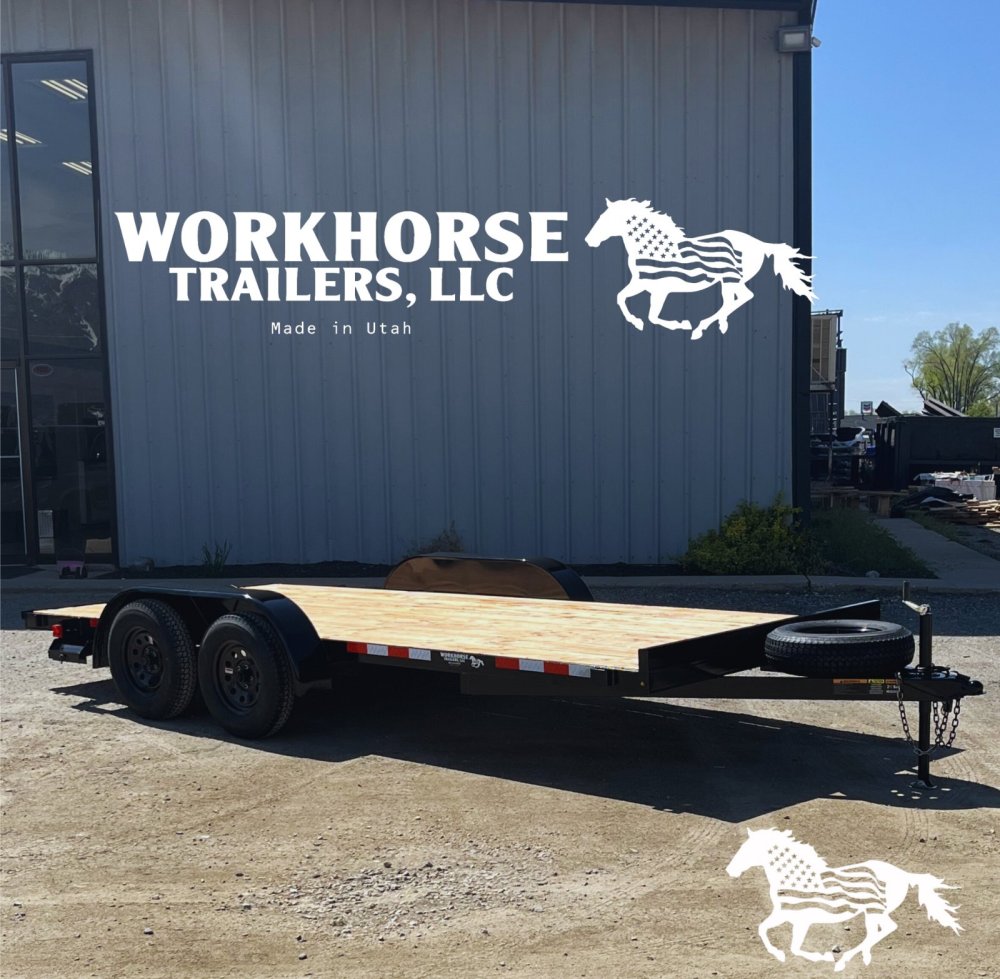
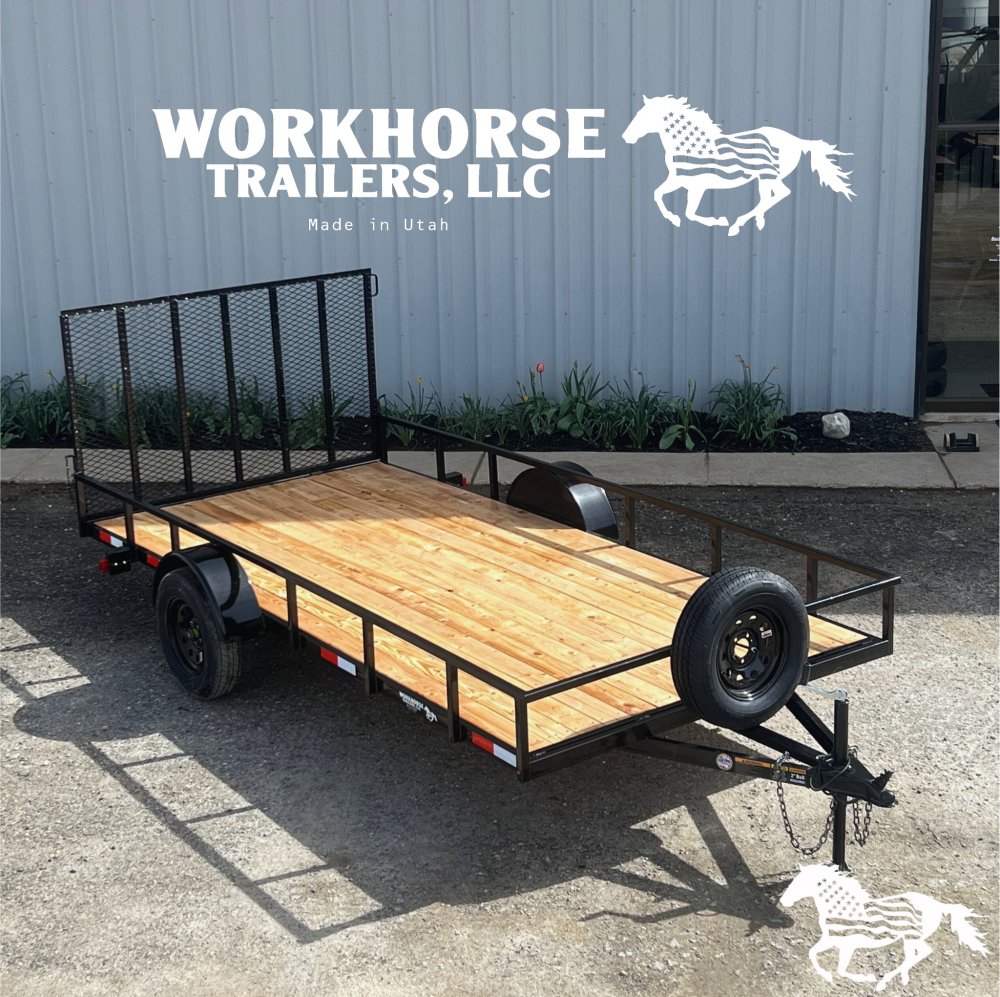
Economy flatbed car haulers deliver functional vehicle transport at the most accessible price point in the lineup. These models feature welded steel tube frames, treated wood or steel plank decking, basic rear ramps, and a four-point tie-down anchor system sufficient for securing passenger vehicles weighing up to 4,500 pounds. Deck lengths of 16 to 17 feet fit the majority of sedans, coupes, and compact trucks with enough remaining space for a small toolbox or jack stand behind the vehicle.
Provo buyers entering the car hauler market for the first time, whether college students retrieving a project vehicle or homeowners who need occasional transport capability, find the economy flatbed category a practical starting point. Workhorse Trailers LLC builds reliability into these entry-level models through full perimeter welding, factory-sealed lighting, and axle assemblies rated with a comfortable margin above the advertised payload to ensure the trailer performs safely even when loads approach the upper limit.
Professional Grade Open Car Haulers
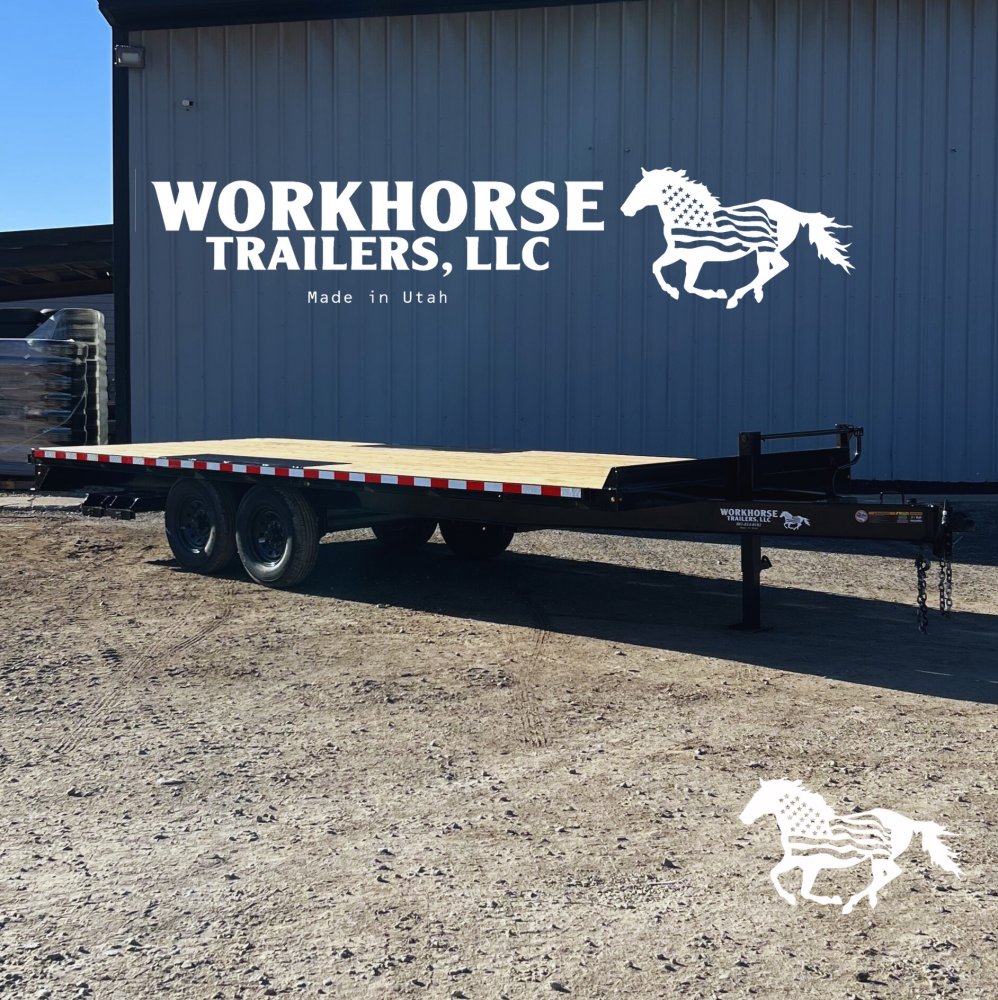
Professional grade open car haulers upgrade every component to withstand the demands of frequent commercial use. Frame rails step up to heavier channel sections. Axle ratings increase to support vehicles weighing 6,000 pounds or more, including full-size trucks and loaded work vans. Electric brake packages on both axles provide the stopping force that heavy loads require in Provo's hilly terrain. Diamond plate steel fenders replace stamped sheet metal. And the ramp system upgrades to wider, heavier units with enhanced surface traction and spring-assist mechanisms that ease deployment and stowage during rapid turnaround cycles.
Those shopping forProvo Car Hauler Trailers at Workhorse Trailers LLC will find professional grade models configured with features that commercial operators specify repeatedly: winch mounting plates pre-welded to the tongue for recovering disabled vehicles, removable fender brackets that allow tire clearance adjustment for wide-body vehicles, and stake pocket arrays along the deck perimeter that accept side rail extensions for hauling secondary cargo alongside or in place of a vehicle when the job demands versatility.
Protective Enclosed Car Haulers
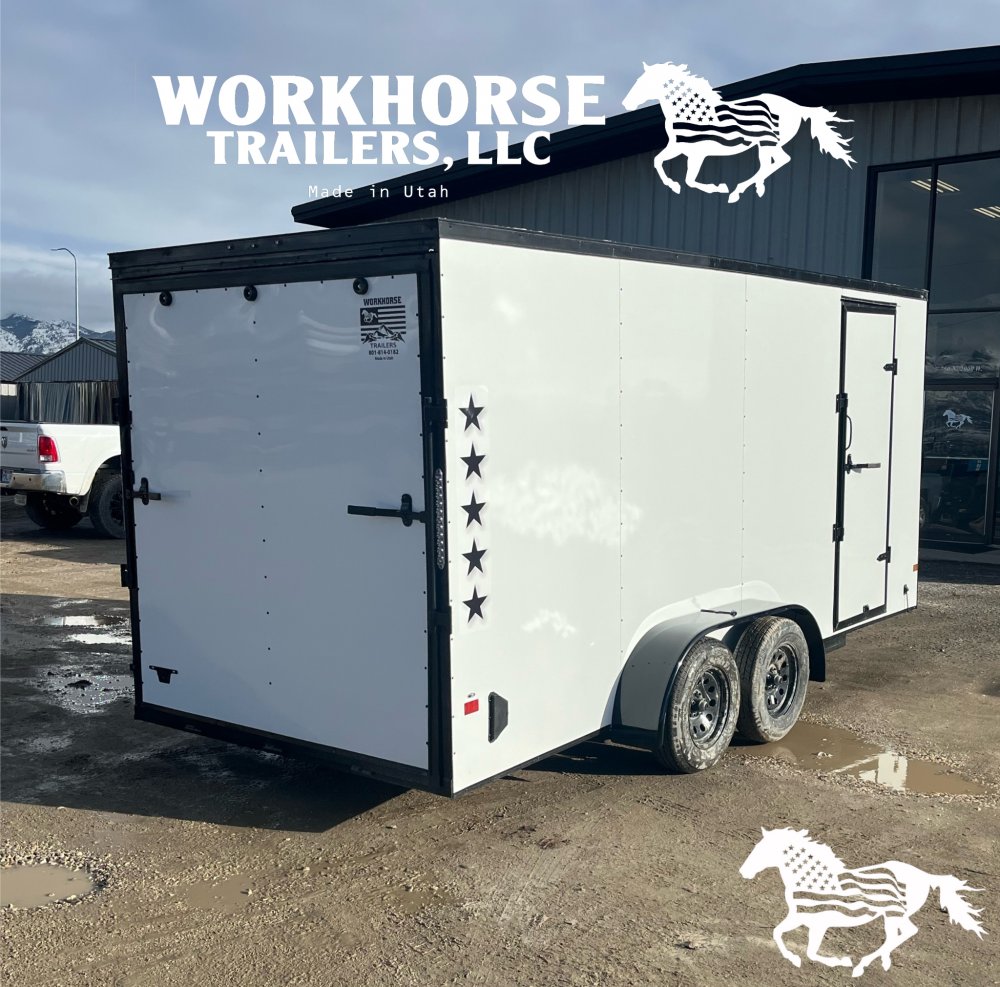
Enclosed car haulers deliver total environmental isolation for vehicles whose condition demands zero compromise during transport. The sealed body blocks rain, road spray, gravel impacts, sun exposure, and the prying eyes of anyone who might take interest in a high-value vehicle parked at a rest stop or overnight lot. Interior features on the Workhorse enclosed car hauler lineup include recessed floor tie-down rings that sit flush with the deck surface to prevent trip hazards and tire contact, LED light panels that illuminate the cargo space evenly without creating hot spots or shadows, and aluminum sidewall liner options that brighten the interior and simplify cleaning after muddy or dusty loads.
Enclosed models at Workhorse Trailers LLC range from 18 to 24 feet in cargo length, with single and tandem axle configurations matched to the vehicle weight each model is designed to carry. Rear ramp doors with spring-assist or hydraulic-assist mechanisms manage the weight of the ramp panel during deployment, and optional beaver tail floor sections reduce the loading angle at the ramp-to-deck transition for vehicles with aggressive front splitters or low-hanging exhaust components that Provo's performance community commonly encounters.
Assessing Car Hauler Quality Before Purchase
The differences between a car hauler that lasts a decade and one that develops problems within its first year often hide in construction details that require deliberate inspection to evaluate.
Deck Surface Integrity Under Wheel Loads
The deck must support the concentrated weight of four tire contact patches without deflecting between crossmembers. Press firmly on the deck surface between crossmembers at several points along the trailer's length. Noticeable flex indicates either insufficient deck material thickness or excessive crossmember spacing. Either condition allows the deck to fatigue over time, developing depressions that pool water, trap debris, and eventually crack. Workhorse Trailers LLC specs deck material and crossmember spacing as a matched system, ensuring that the surface strength and the support structure work together to resist deflection under the full rated payload.
Ramp Attachment and Retention
Car hauler ramps endure repeated impact as vehicles cross the hinge point, and the hardware securing the ramps to the trailer frame absorbs this force directly. Inspect the hinge pins for signs of elongation in the mounting holes, which indicates the connection has loosened and is wearing progressively with each loading cycle. Examine the ramp retention system, whether pins, clips, or latches, that secures the ramps in their stowed position during transport. A ramp that vibrates free and drops to the road surface at highway speed creates an extreme hazard for following traffic.
Electrical Connector Quality
The wiring connector between the tow vehicle and the trailer transmits power for lights, brakes, and auxiliary circuits through a plug that mates and separates with every hitching event. Cheap connectors with thin pins, loose housings, and minimal weathersealing develop intermittent contact failures that cause flickering lights, weak brakes, and diagnostic headaches that waste hours of troubleshooting time. Workhorse Trailers LLC uses heavy-duty connectors with corrosion-resistant pins and sealed housings on every car hauler they sell, giving Provo buyers a reliable electrical interface that maintains consistent performance through thousands of connection cycles and all four seasons of Utah weather.
Protecting the Transported Vehicle Beyond Basic Tie-Downs
Securing a vehicle to the trailer deck prevents movement, but thoughtful operators go further to protect the vehicle from the secondary hazards that transport introduces.
Surface Protection at Contact Points
Every point where a strap, hook, or chain contacts the vehicle represents a potential scuff, scratch, or paint compression mark. Protective sleeves slipped over straps at contact points cushion the interface and prevent damage to painted surfaces, chrome trim, and alloy wheel finishes. Rubber-coated hooks eliminate the metal-on-metal contact that chips paint at anchor points. These inexpensive protective accessories preserve the vehicle's cosmetic condition during transport, which matters enormously when the cargo is a freshly restored classic or a customer's daily driver entrusted to a Provo shop for service.
Fluid and Leak Containment
Project vehicles, barn finds, and accident-damaged cars frequently leak fluids from compromised cooling systems, cracked oil pans, or ruptured brake lines. These fluids stain the trailer deck, create slip hazards during future loading events, and can contaminate the tires of the next vehicle loaded if residue remains on the deck surface. Placing an absorbent mat or drip pan beneath the leaking vehicle during transport contains the fluid, protects the deck, and simplifies cleanup at the destination. Provo shops that retrieve damaged vehicles as a regular service develop the habit of carrying absorbent materials on every dispatch.
Loose Component Security
Vehicles in mid-restoration or post-accident condition often have loose components that can detach during transport. Bumper covers held by a single remaining clip. Side mirrors dangling from wiring harnesses. Exhaust sections hanging from a broken hanger. Before departing the loading site, walk around the vehicle and either remove loose components and store them inside the cab or secure them with zip ties, tape, or supplemental straps to prevent them from detaching at highway speed and becoming road debris that endangers other Provo motorists.
Navigating Provo Roads With a Car Hauler
Provo's road network blends urban congestion, suburban sprawl, and mountain access routes that each present distinct challenges for a loaded car hauler.
Center Street and State Street Corridors
These east-west and north-south arteries carry the heaviest traffic volumes in Provo, with closely spaced signals, frequent turning conflicts, and aggressive peak-hour congestion. A loaded car hauler adds 20 to 30 feet to the tow vehicle's overall length, which restricts lane changes, extends the time needed to clear intersections, and limits the ability to react to sudden stops by vehicles ahead. Travel these corridors during off-peak hours whenever schedule flexibility allows, and add two to three car lengths of following distance beyond normal passenger vehicle spacing to account for the trailer's braking demands.
East Bench Grade Management
Deliveries and pickups along Provo's east bench neighborhoods involve sustained grades that place continuous demand on the tow vehicle's drivetrain and brakes during descent. Use the transmission's lower gears to maintain engine braking on downhill stretches rather than riding the brake pedal, which generates heat that degrades braking performance over the length of a long descent. The vehicle sitting on the trailer adds to the momentum the brakes must absorb, and sustained pedal braking under that load can reach the fade point faster than many drivers anticipate.
Weather-Related Surface Changes
Provo's winter freeze-thaw cycles produce potholes, cracked pavement, and frost heaves that jar the trailer and its cargo during cold-weather towing. Summer monsoon storms deposit water across low-lying road sections, creating hydroplaning risks that a loaded car hauler amplifies due to its additional weight and reduced tire-to-road feedback through the tow vehicle's steering. Reduce speed when road surfaces deteriorate beyond normal conditions, and inspect the secured vehicle for shifted straps after traveling over rough pavement sections.
Maintaining a Car Hauler Through Provo's Seasons
Consistent maintenance aligned with Provo's seasonal cycles keeps a car hauler performing reliably across its full service life.
Bearing and Brake Service
Wheel bearings and brake components wear proportionally to load frequency and stopping intensity. Provo's hilly terrain and frequent traffic signals accelerate both wear modes compared to flat, open-road towing. Service bearings with fresh grease every six months for actively used car haulers, and inspect brake shoes or pads at the same interval. Replace any component that has worn to within 20 percent of its minimum specification rather than running it to the absolute limit where a single heavy braking event could push it past safe performance.
Deck and Ramp Surface Refresh
The deck and ramp surfaces accumulate tire marks, fluid stains, and surface rust over time. A seasonal scrub with a degreaser followed by a fresh coat of rust-inhibiting paint restores traction, protects the steel from accelerating corrosion, and presents a professional appearance to clients who judge the quality of a Provo shop partly by the condition of the trailer that retrieves their vehicle.
Wiring and Ground Circuit Testing
Corrosion at ground connections is the most common cause of intermittent trailer lighting failures, and Provo's winter salt exposure makes ground corrosion a recurring maintenance item. Clean all ground attachment points to bare metal each spring, apply dielectric grease to connectors, and test every lighting circuit under load by activating the brakes while verifying that all rear lights respond at full brightness. A dim or flickering brake light on a loaded car hauler traveling through Provo's evening traffic creates a rear-end collision risk that five minutes of annual wiring maintenance eliminates entirely.
Why Provo Chooses Workhorse Trailers LLC
Provo's car hauler buyers need a dealer who recognizes that the vehicles riding on these trailers often carry value far exceeding the trailer itself. A $2,000 project car deserves safe transport. A $50,000 restored classic demands it. Workhorse Trailers LLC approaches every car hauler sale with this awareness, recommending models whose structural quality, tie-down systems, and road manners match the value and vulnerability of the cargo Provo buyers intend to carry. Their inventory spans from accessible economy flatbeds to fully equipped enclosed haulers, their specifications are presented without ambiguity, and their post-sale support ensures that Provo owners maintain their car haulers to the standard the cargo deserves. For anyone in Provo who needs to move a vehicle safely, legally, and without compromise, Workhorse Trailers LLC provides the car hauler trailers and the knowledgeable guidance that make every transport a success.