American Fork Gooseneck Trailers
All locationsThere comes a point in every hauling operation's growth where the bumper pull hitch that served faithfully during the early years stops keeping pace with the loads the business demands. For contractors, agricultural producers, and commercial fleet operators in American Fork, Utah, that tipping point arrives when payloads consistently push past 10,000 pounds, when towing stability on I-15 becomes a concern rather than an afterthought, and when the time spent making two lighter trips could be eliminated by making one heavier trip on a trailer built for the task. Gooseneck trailers represent the mechanical answer to each of these pressures, coupling to the tow vehicle through a bed-mounted hitch that fundamentally changes the physics of heavy towing. Workhorse Trailers LLC delivers this capability to the American Fork market through gooseneck trailers selected for the structural grades and working configurations that local operators put to the test every single week.
Why the Gooseneck Connection Outperforms at Higher Weights
The gooseneck hitch ball sits in the truck bed directly above the rear axle, positioning the trailer's tongue weight over the strongest part of the vehicle's chassis. This placement keeps the truck's weight distribution close to its factory-designed balance even under heavy tongue loads, preserving steering feel, front tire traction, and braking proportionality that a rear-mounted bumper pull hitch progressively degrades as tongue weight increases.
The physics extend beyond static weight placement. Road surface impacts traveling through the trailer frame reach the truck at a point where the rear springs and axle absorb them most effectively. Crosswind forces acting on the trailer's broadside profile generate yawing moments around a pivot point that is shorter and more controlled than the extended lever arm a bumper pull coupler creates. Backing maneuvers respond more intuitively because the trailer articulates around a pivot centered within the truck's footprint rather than projecting behind it.
For American Fork operators who have experienced the white-knuckle instability of a heavily loaded bumper pull trailer oscillating at highway speed through the wind corridor near Point of the Mountain, the transition to a gooseneck connection is not merely an equipment upgrade. It is a restoration of confidence that the truck and trailer will behave predictably regardless of what the wind, the road surface, or the traffic around them decides to do.
American Fork Industries Operating at Gooseneck Scale
The industries generating gooseneck-level hauling demand in American Fork share a common trait: their core operations involve moving loads whose weight, volume, or dimensional profile exceeds what bumper pull trailers can transport safely or legally.
Demolition and Debris Removal
American Fork's ongoing cycle of residential renovation and commercial tenant turnover produces a continuous stream of demolition projects whose debris volumes overwhelm the capacity of standard dump trailers. Concrete slab sections, brick and block walls, roof decking, and structural framing from a single interior gut job can exceed 15,000 pounds of material that must reach a licensed disposal facility in as few trips as possible to control project costs. Gooseneck dump trailers rated at 14 to 20 cubic yards haul these loads in single passes that would require three or four trips on a smaller bumper pull unit, compressing demolition timelines and freeing the crew to advance to the next phase of the renovation.
Pipe and Conduit Distribution
The plumbing supply houses and electrical distributors serving American Fork's construction market deliver bundled PVC pipe, steel conduit runs, copper tube stock, and corrugated drainage pipe in lengths that demand extended trailer decks. A gooseneck flatbed measuring 30 feet or more accommodates 20-foot pipe bundles with adequate remaining deck for fittings, hangers, and accessory crates, eliminating the overhang issues and multiple delivery complications that shorter bumper pull flatbeds create when transporting long, rigid materials. The gooseneck connection's inherent stability prevents the tail wag amplification that extended bumper pull loads experience when the trailing cargo acts as a pendulum behind the rear axle.
Commercial Kitchen and Restaurant Outfitting
The food service industry expanding across American Fork's commercial districts requires heavy kitchen equipment installation that involves transporting walk-in cooler panels, exhaust hood assemblies, commercial ovens weighing over 1,000 pounds each, and stainless steel prep station modules from distributor warehouses to restaurant build-out sites. A single restaurant kitchen outfitting delivery can approach 12,000 pounds of combined equipment weight, placing the transport squarely in gooseneck territory. The controlled towing dynamics of a gooseneck trailer protect fragile refrigeration components and calibrated cooking systems from the jarring lateral shifts that lighter trailers transmit through their cargo during lane changes and highway merges.
Firewood Processing and Bulk Delivery
American Fork's proximity to canyon timber resources and its established residential market for seasoned firewood supports a local processing industry that splits, seasons, and delivers cord wood throughout the heating season. A full cord of seasoned hardwood weighs approximately 4,000 pounds, and commercial firewood operations deliver multiple cords per trip to maximize route efficiency during the concentrated October through March demand period. Gooseneck dump trailers loaded with three to five cords per delivery run replace the half-cord bumper pull trips that would otherwise dominate the delivery calendar, reclaiming hours that the operator redirects toward processing and sales rather than windshield time.
Monument and Memorial Installation
The monument companies serving American Fork's cemeteries, civic spaces, and private estates transport polished granite headstones, bronze memorial plaques, and carved stone monuments whose individual weights range from several hundred to several thousand pounds. These finished pieces require transport on trailers stable enough to prevent the shifting and tipping that would chip polished surfaces and crack carved details representing weeks of artisan labor. Gooseneck flatbeds equipped with A-frame support racks and pneumatic cushioning systems deliver monuments in the pristine condition that families and institutions demand.
Gooseneck Trailer Styles Available Through Workhorse Trailers LLC
Workhorse Trailers LLC maintains gooseneck inventory spanning the styles that American Fork's commercial and agricultural buyers request with the greatest frequency and urgency.
Gooseneck Flatbed Trailers
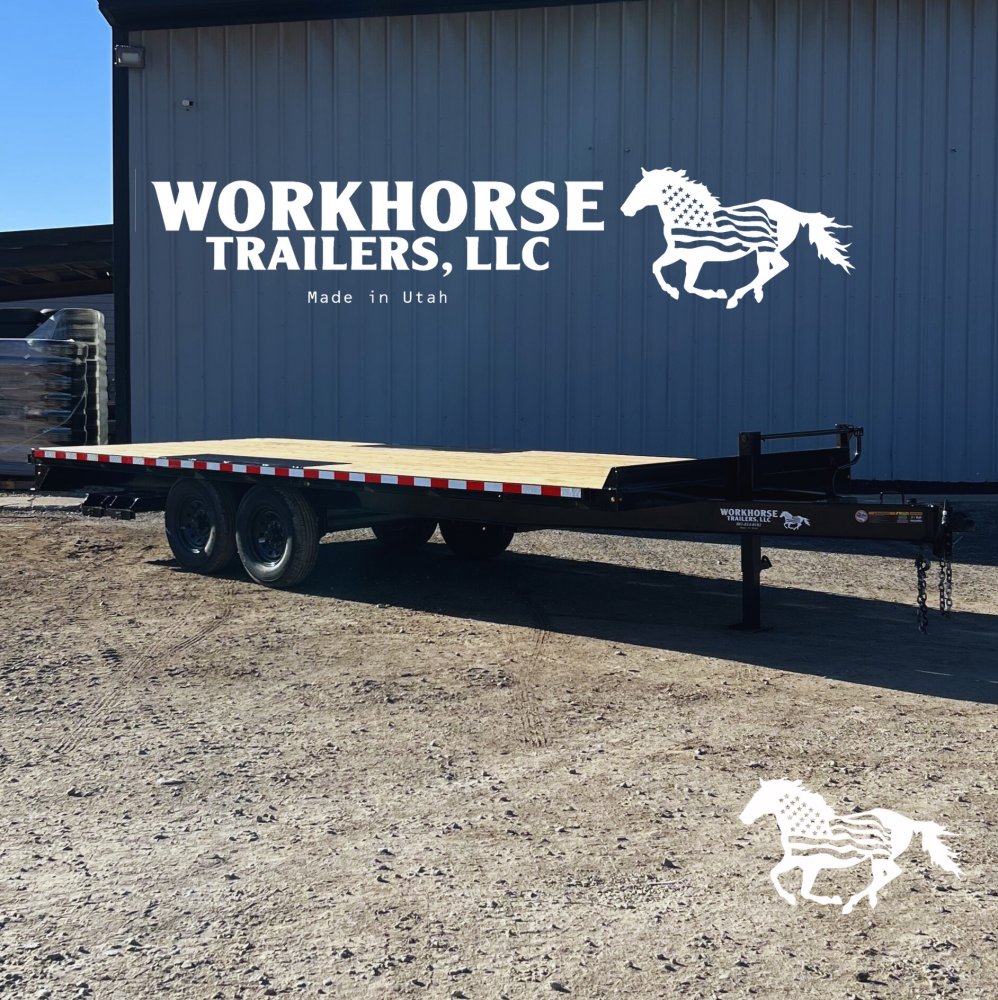
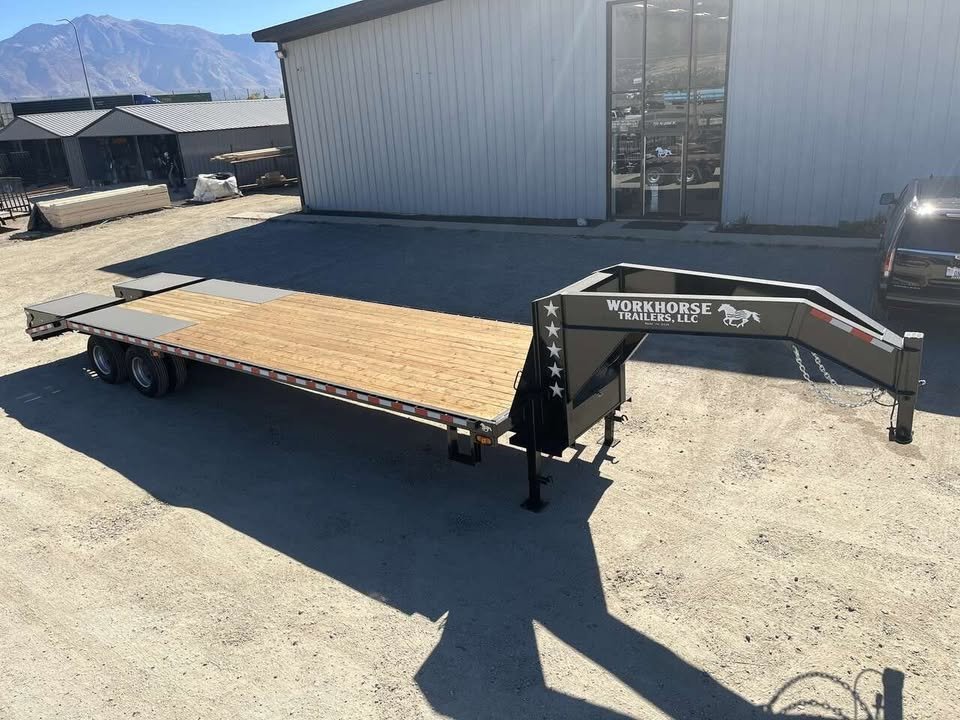
The versatile open platform remains the foundation of the gooseneck category, accepting cargo from above, from the sides, or from the rear depending on job site conditions. Treated wood or steel plank decking sits on a reinforced frame built from I-beam or structural tube main rails, with stake pockets at standard intervals along both edges and rear ramps scaled to the trailer's weight class. American Fork operators who haul a rotating mix of cargo types across different days and projects value the flatbed's refusal to specialize as its greatest asset.
Gooseneck Dump Trailers
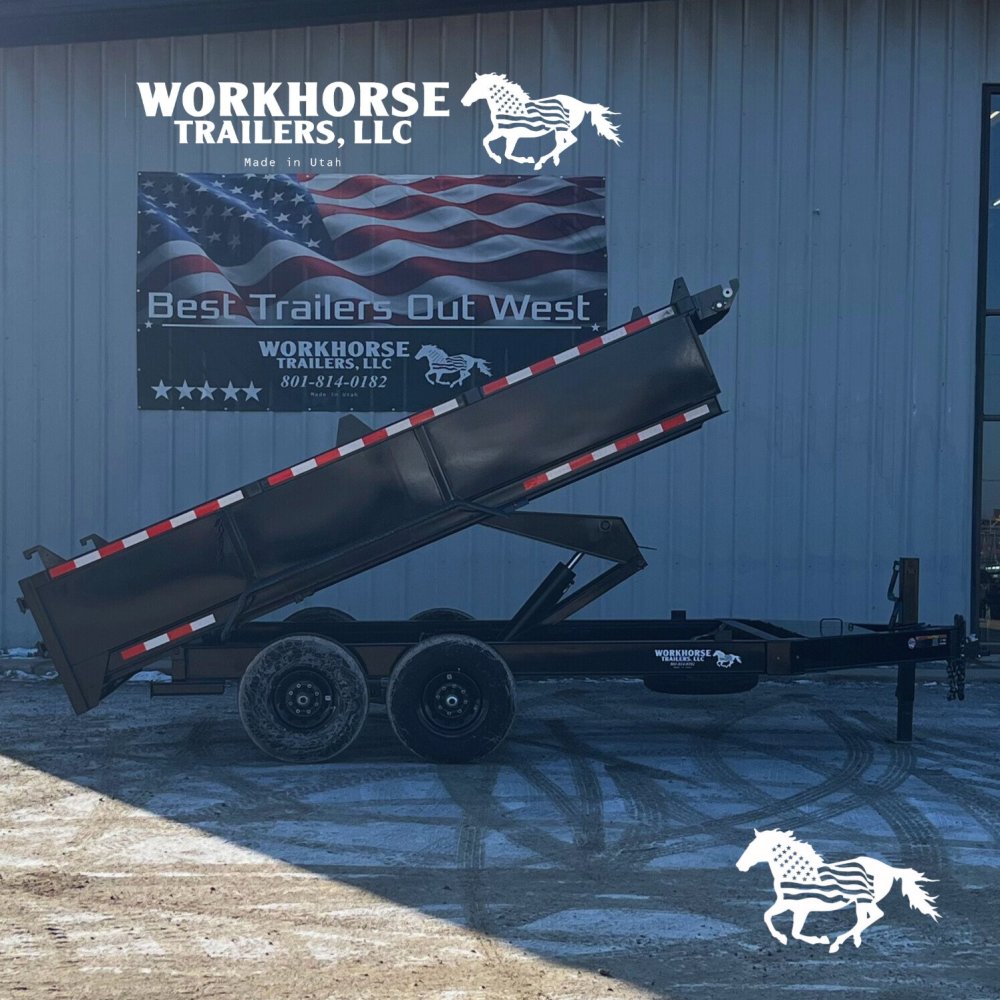
Hydraulic dump mechanisms paired with gooseneck connections produce the most capable bulk material hauling platform available in the towable trailer market. The gooseneck coupling maintains truck stability during the dump cycle when the raised bed shifts the trailer's center of gravity sharply rearward, a condition that would lift the rear of a bumper pull tow vehicle dangerously off the ground at equivalent bed capacities. American Fork demolition crews, firewood operators, and landscape material haulers depend on gooseneck dump trailers for the combination of volume, stability, and powered unloading that their operations require.
Gooseneck Tilt Deck Trailers
Combining the capacity advantages of gooseneck towing with the ramp-free loading convenience of a tilting deck, gooseneck tilt models serve American Fork equipment operators who load and unload heavy machinery multiple times per day without the benefit of loading dock infrastructure. The tilting mechanism drops the deck's rear edge to ground level, allowing tracked and wheeled machines to climb aboard on a gentle incline that eliminates the separate ramp deployment and retrieval steps of fixed-deck alternatives.
Gooseneck Enclosed Trailers
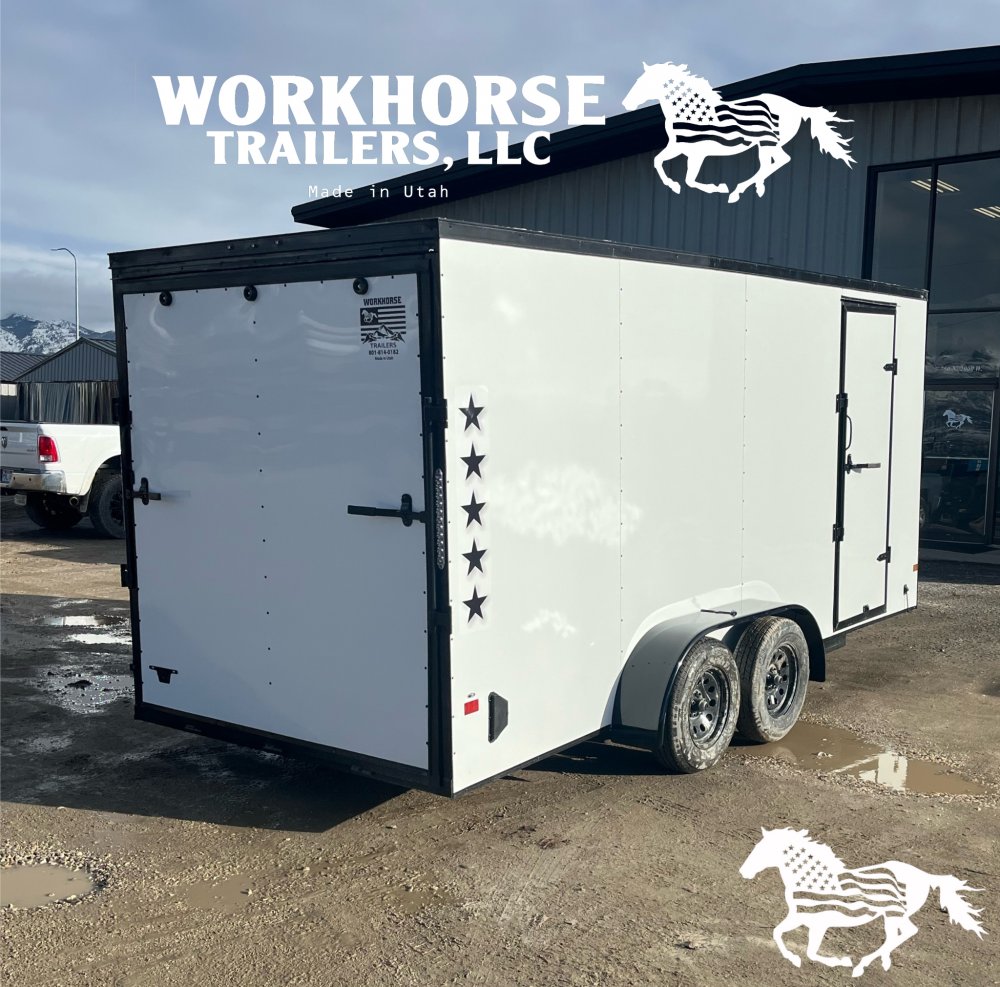
Sealed gooseneck enclosed trailers provide maximum cargo protection at gooseneck payload capacities, serving American Fork operators who transport high-value inventories, weather-sensitive materials, or secured cargo that demands both heavy hauling capability and complete environmental isolation. The gooseneck neck section above the truck bed creates an elevated storage compartment accessible from inside the enclosed body, adding usable volume for tools, documentation, and lightweight supplies without extending the trailer's overall road length.
Matching a Gooseneck Trailer to an American Fork Operation
Workhorse Trailers LLC evaluates several compatibility factors with every American Fork buyer to ensure the gooseneck trailer performs safely and productively within the buyer's specific operating conditions.
Truck Bed Length and Hitch Placement
The gooseneck hitch ball occupies space in the truck bed that must accommodate the trailer's neck section during turns without the neck contacting the truck cab, bed sides, or any accessories mounted in the bed. Short-bed trucks offer less clearance than standard-bed models, potentially limiting the turning angle before contact occurs. American Fork buyers with short-bed trucks should verify that the trailer's neck geometry clears their specific cab configuration at full steering lock before committing to a purchase. Workhorse Trailers LLC performs this clearance check on the lot whenever possible to eliminate guesswork.
Gross Combined Weight Rating Compliance
The truck's gross combined weight rating defines the maximum legal total of the truck's loaded weight plus the trailer's loaded weight. Exceeding this figure violates federal weight regulations and places mechanical demands on the truck's engine, transmission, brakes, and frame that the manufacturer did not engineer the vehicle to sustain. American Fork buyers should calculate their intended operating weights against their truck's GCWR rather than relying solely on the towing capacity figure, which represents only one component of the overall weight equation.
Fifth Wheel Versus Gooseneck Hitch Decision
Some heavy-towing applications offer a choice between a gooseneck ball hitch and a fifth wheel plate hitch, each with distinct characteristics. Gooseneck hitches use a ball-and-coupler connection that installs quickly, stores compactly when the ball retracts, and couples to the trailer without precision alignment. Fifth wheel hitches use a kingpin-and-plate connection that provides a broader bearing surface and smoother articulation under extreme loads but requires more bed space and careful alignment during coupling. Most American Fork commercial trailer applications operate effectively on gooseneck ball connections, but buyers hauling at the extreme upper end of the weight spectrum should discuss whether a fifth wheel offers measurable advantages for their specific load profile.
American Fork operators comparing their options forAmerican Fork Gooseneck Trailers at Workhorse Trailers LLC receive this level of hitch configuration analysis as a standard part of the sales consultation, ensuring every buyer leaves with a towing system matched to their actual demands.
Operating Gooseneck Trailers Safely on American Fork Roads
Gooseneck trailers reward proper technique with stable, predictable towing behavior, but they also magnify the consequences of poor habits because the loads involved are heavier and the forces generated during driving errors are proportionally greater.
Cornering Speed Discipline
A loaded gooseneck trailer's momentum resists directional change more powerfully than a lighter rig, and the elevated coupling point transmits lateral forces through the truck's frame with greater mechanical advantage than a bumper pull connection. Taking corners too quickly in American Fork's commercial districts, particularly the tighter turns onto side streets from State Street and Main Street, generates lateral loading that can shift unsecured cargo, stress tie-down hardware, and in extreme cases induce a rollover sequence that the truck driver cannot arrest once it begins. Slowing to a pace that allows the trailer to track smoothly through every curve without tire scrub or suspension compression protects cargo, equipment, and everyone sharing the road.
Backing Technique Adaptation
Backing a gooseneck trailer requires opposite steering inputs compared to backing a bumper pull rig because the shorter distance between the hitch point and the trailer's rear amplifies steering corrections and makes the trailer respond faster to wheel input. American Fork buyers new to gooseneck towing should practice backing in an empty parking lot before attempting to position a loaded trailer in a confined job site, driveway, or loading dock. The adjustment period is typically brief, and most drivers report that backing a gooseneck becomes more intuitive than backing a bumper pull once the muscle memory establishes itself.
Pre-Trip Coupling Verification
The gooseneck coupler must seat fully over the hitch ball with the latch mechanism engaged positively before any towing begins. A coupler that appears seated but has not latched can separate from the ball during the jolting and flexing of loaded highway travel, and the consequences of a gooseneck trailer separating at speed are catastrophic for the driver, the trailer, and surrounding traffic. Physically verifying latch engagement by attempting to lift the coupler off the ball after closing the latch, connecting both safety chains in a crossed pattern beneath the coupler, and confirming that the breakaway cable reaches the truck's frame without excessive slack establishes a pre-trip verification routine that takes 60 seconds and eliminates the most dangerous failure mode a gooseneck trailer can experience.
Maintaining Gooseneck Trailers for American Fork Longevity
Gooseneck trailers operating in American Fork's mixed-use environment accumulate wear from highway miles, construction site vibration, and the loading impacts that every equipment cycle transmits through the frame.
Coupler socket lubrication at two-week intervals during active towing seasons prevents the metal-on-metal friction that scores the ball surface and enlarges the coupler bore. A thin film of lithium grease applied to the ball before each coupling session provides the barrier layer that absorbs this friction and extends the service life of both components.
Neck weld inspection at the base of the gooseneck where it transitions into the main frame should occur every six months under commercial use. This junction absorbs the concentrated bending forces generated during every turn and every braking event, and developing fatigue cracks announce themselves through paint flaking along the weld toe before they propagate into structural territory. Catching these indicators during routine inspection allows scheduled repair that prevents the far more expensive emergency that an undetected crack eventually produces.
Safety chain replacement should follow the chain manufacturer's recommended service life rather than a visual pass-fail assessment, because internal link fatigue from thousands of loading cycles weakens the chain's rated capacity before visible distortion appears. American Fork operators who tow commercially should record chain installation dates and replace both chains as a set at the interval the manufacturer specifies.
Brake fluid and hydraulic line inspection on trailers equipped with hydraulic surge brakes or hydraulic-assist systems should accompany every brake pad check. Fluid darkening indicates moisture contamination that lowers the fluid's boiling point and increases the risk of vapor lock during sustained braking on the grades between American Fork and the canyon or foothill communities. Replacing contaminated fluid restores full braking confidence under thermal stress conditions that American Fork's terrain generates regularly.
Workhorse Trailers LLC and American Fork's Gooseneck Buyers
Workhorse Trailers LLC serves American Fork's gooseneck trailer market with an inventory built around the hauling realities of a city that renovates as aggressively as it builds, that maintains agricultural traditions alongside commercial ambitions, and that connects to mountain recreation through a canyon whose approach roads test every towing combination that travels them. The team understands that gooseneck buyers are making a significant capital decision and treats every consultation with the thoroughness that investment deserves.
Customers from Pleasant Grove, Lindon, Highland, Alpine, Cedar Hills, Lehi, and the communities extending through northern Utah County visit because the gooseneck selection and the technical advisory process have earned consistent endorsement through the professional networks binding these communities together. Workhorse Trailers LLC invites American Fork buyers to arrive with their truck specifications, their heaviest projected loads, and their most demanding route profiles. That information produces a gooseneck trailer recommendation engineered for the buyer's actual operation, and the trailer that enters service will validate that recommendation with every loaded mile it completes.