American Fork Deck Over Trailers
All locationsWidth limitations cost money. Every trip where cargo sits surrounded by wasted space because wheel wells carved the usable deck into a narrow channel is a trip that could have carried more product, more material, or more equipment if the platform had been designed without those obstructions. Deck over trailers solve this problem permanently by raising the hauling surface above the wheel assemblies, delivering an unbroken flat expanse that stretches from rail to rail without a single square inch surrendered to fender intrusion. In American Fork, Utah, where renovation contractors, sign fabricators, agricultural suppliers, and outdoor event operators all move cargo that demands the widest possible platform, deck over trailers have become an essential component of the local hauling fleet. Workhorse Trailers LLC provides American Fork's commercial and residential buyers with deck over trailers selected for the load capacities, deck treatments, and configuration options that this industrious community puts to work every day.
Understanding the Full-Width Deck Advantage
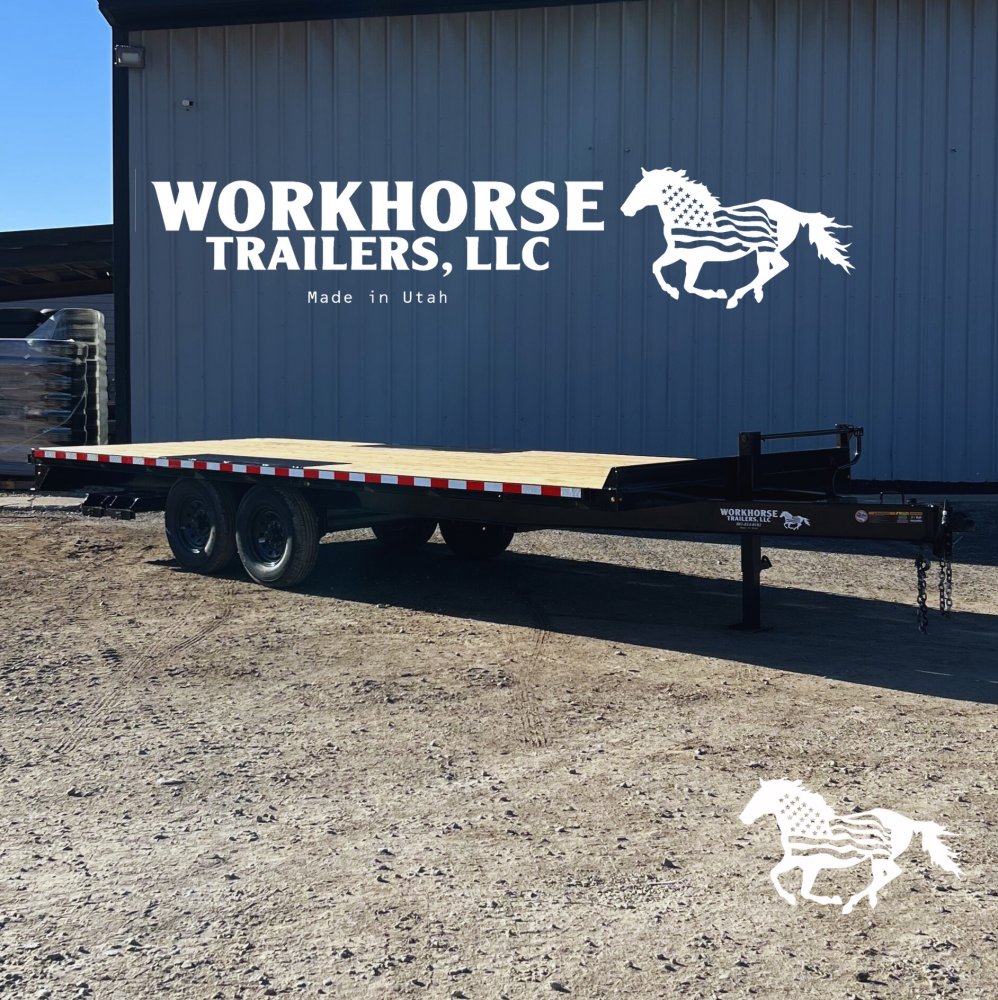
The geometry of a deck over a trailer is straightforward. Instead of nestling between the axles with wheel wells protruding through the deck surface, the platform mounts on top of the frame and sits entirely above the tire assemblies. This positioning eliminates the fender cutouts that consume 10 to 14 inches of usable width on each side of a conventional trailer, restoring a continuous flat surface typically measuring 96 to 102 inches across.
That recovered width changes the cargo mathematics fundamentally. Two sheets of plywood measuring 48 inches each fit side by side on a deck over with room remaining between them for strap routing. A pair of standard shipping pallets occupy the full deck width in a configuration that leaves no dead space alongside either pallet. A piece of furniture, a fabricated sign panel, or a machine component that exceeds 70 inches in width rides centered on the deck with comfortable clearance on both sides rather than hanging precariously over fender wells or requiring diagonal placement that wastes length to gain width.
The tradeoff is a higher deck height that elevates cargo above where it would ride on a between-the-fender trailer. American Fork operators who account for this added elevation during route planning and loading method selection find that the width advantage more than compensates for the manageable adjustment in their operating habits.
American Fork Applications That Exploit the Full-Width Platform
The deck over the trailer's continuous surface solves real cargo challenges for specific American Fork industries whose daily operations involve items too wide for conventional trailers to handle efficiently.
Custom Sign and Display Fabrication
American Fork hosts several sign fabrication companies and display builders whose finished products include illuminated channel letter assemblies, monument sign faces, trade show backdrops, and retail display fixtures that ship in dimensions dictated by the client's architectural specifications rather than by what fits on a standard trailer. A storefront sign assembly measuring 6 feet tall by 10 feet wide cannot be rotated, folded, or disassembled for transport without risking damage to the electrical components and painted finish surfaces that represent the bulk of its fabrication value. A deck over trailer accepts these oversized finished products flat on the deck with protective padding beneath and sufficient width to avoid contact with any structural element of the trailer during transit.
Roofing Material Distribution
The roofing supply companies serving American Fork's active re-roofing market deliver palletized shingle bundles, rolls of commercial membrane, stacks of metal roofing panels, and crated ventilation assemblies to job sites across the city on a daily rotation. Metal roofing panels in particular present a width challenge because individual sheets measuring 36 inches across ship in banded stacks that spread to 48 inches or wider at the base. Loading two stacks side by side for efficient delivery requires the full width a deck provides. Roofing contractors who manage their own material logistics rather than relying on supplier delivery trucks find that a deck over trailer pays for itself through reduced per-job delivery costs within the first full roofing season.
HVAC Ductwork and Sheet Metal Transport
The sheet metal shops fabricating custom ductwork, flashing, and architectural metal components for American Fork's construction projects produce pieces whose flat dimensions routinely exceed what conventional trailers can lay flat. A fabricated duct section measuring 72 inches wide must lie flat during transport to prevent the bending and creasing that compromises its air seal integrity when installed. Deck over trailers provide the unobstructed surface these shops need to transport finished duct runs, custom flashings, and decorative metal panels to job sites without the field straightening and re-rolling that damaged pieces would require.
Nursery Stock and Balled Tree Transport
The garden centers and wholesale nurseries supplying American Fork's landscaping projects transport balled-and-burlapped trees, potted specimen shrubs, and palletized seasonal color stock that occupies substantial width per unit. A row of three balled trees measuring 30 inches in root ball diameter fills 90 inches of deck width before accounting for the spacing needed to prevent root ball contact during transit. A deck over trailer's full platform accommodates these wide plant loads with the lateral clearance that prevents damage to branch structures and root masses that represent months or years of growing investment.
Gymnasium and Athletic Equipment Installation
The schools, recreation centers, and private fitness facilities across American Fork periodically upgrade gymnasiums, weight rooms, and multipurpose courts with equipment that ships in oversized crates and assembled components that defy compact packaging. Basketball backstop assemblies, volleyball post systems, bleacher sections, and rubber flooring rolls arrive in dimensions driven by athletic specifications rather than shipping convenience. Deck over trailers accept these wide, rigid items in the orientation they were designed to travel without requiring the creative angling and stacking that narrower trailers demand and that risks damage to precision-aligned components.
Deck Over Configurations Stocked by Workhorse Trailers LLC
Workhorse Trailers LLC offers American Fork buyers deck over trailers in configurations that span the weight, length, and feature combinations local operators request most frequently.
Tandem Axle Deck Over Flatbeds
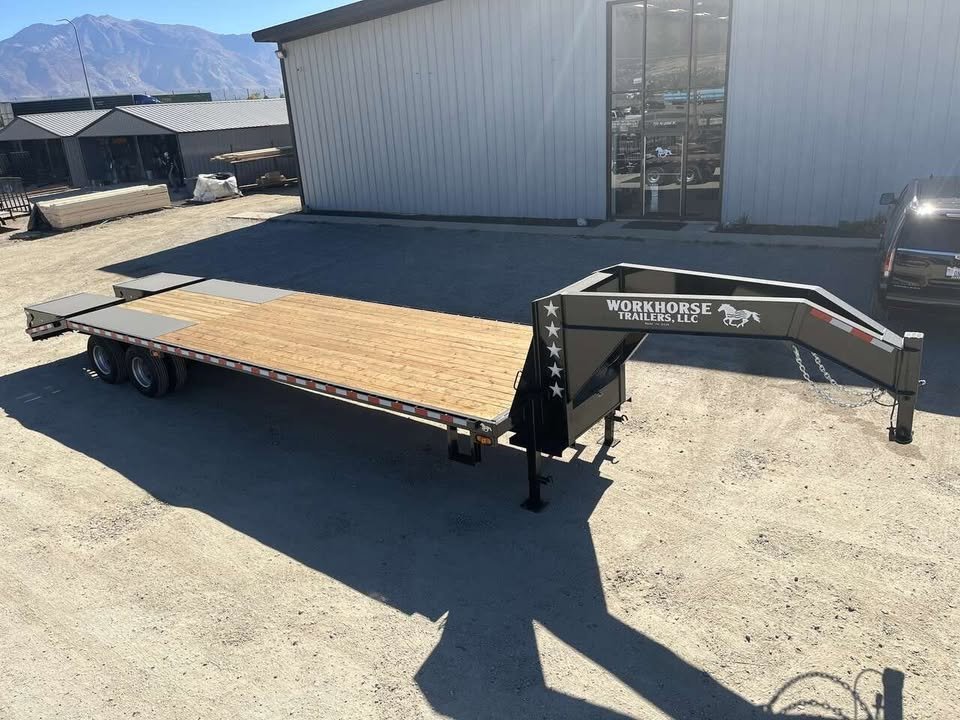
The workhorse of the deck over category features twin axle assemblies supporting a clean, open platform available in lengths from 18 to 24 feet. This configuration balances payload capacity against overall trailer weight, delivering GVWR ratings between 10,000 and 16,000 pounds that accommodate the majority of American Fork commercial hauling requirements. The open deck accepts loading from above, from either side, and from the rear, giving operators maximum flexibility when job site conditions dictate the available loading approach.
Triple Axle Heavy Capacity Deck Over Flatbeds
When payloads push beyond tandem axle limits, triple axle deck over trailers distribute the increased weight across six tires and three brake assemblies, raising GVWR ratings to 20,000 pounds and beyond while maintaining road stability and stopping performance. American Fork operators who regularly haul palletized masonry, banded steel, or stacked heavy equipment components find the triple axle configuration essential for staying within legal axle weight limits while maximizing payload per trip.
Deck Over Trailers with Removable Side Rails
Adjustable side rail systems that bolt into stake pockets along the deck perimeter give American Fork operators the ability to configure containment height based on the cargo at hand. Tall rails hold loose or stacked items securely during transit. Short rails provide a lateral guide for palletized loads without restricting overhead crane access. Full rail removal restores the clean flatbed profile needed for side-loading with a forklift or for carrying oversized items that extend beyond the deck edges under permitted wide-load conditions.
Deck Over Trailers with Integrated Ramps
While many deck over trailers rely on crane or forklift loading due to their elevated deck height, models equipped with integrated rear ramps extend accessibility to wheeled and tracked equipment that can climb aboard under its own power. The ramps fold against the rear face of the trailer for transit and deploy to the ground for loading. American Fork operators who use their deck over trailer for both palletized material delivery and occasional equipment transport appreciate the dual capability that integrated ramps provide without permanently committing the trailer to one loading method.
Aluminum Deck Over Trailers
Aluminum construction reduces the trailer's empty weight by 30 to 40 percent compared to equivalent steel models, directly increasing the payload available within the tow vehicle's rated towing capacity. The weight savings compounds into meaningful fuel economy improvements across thousands of annual miles and reduces wear on the tow vehicle's brakes, transmission, and suspension over the trailer's service life. American Fork buyers who tow trucks near their rated capacity or who prioritize long-term operating cost reduction over minimum purchase price find aluminum decks over trailers deliver superior total value despite their higher initial investment.
Selection Factors for American Fork Deck Over Buyers
Workhorse Trailers LLC reviews several practical considerations with every American Fork customer to match the right deck over trailer to their operation.
Loading Method Compatibility
The elevated deck height that defines a deck over trailer means cargo must be raised higher during loading than it would on a between-the-fender alternative. American Fork operators who load exclusively with forklifts, telehandlers, or overhead cranes experience no practical disadvantage from the added height. Operators who occasionally need to roll wheeled equipment aboard should select a model with integrated ramps whose length produces an acceptable climb angle for their specific machines. Buyers who load primarily by hand should consider whether the step-up height is manageable for the weights they lift or whether a lower-profile trailer better suits their physical workflow.
Deck Surface Selection for Cargo Protection
Different deck surface materials interact with cargo in distinct ways that affect both the cargo's condition and the trailer's longevity. Treated pine planking cushions fragile items, grips loads naturally through surface friction, and allows individual plank replacement when damage occurs. Steel tread plate resists abrasion from dragged loads, cleans easily after hauling wet or contaminated materials, and withstands chemical exposure from concrete residue and petroleum products. Composite decking offers corrosion immunity and consistent friction characteristics across wet and dry conditions but at a premium price point. American Fork buyers should identify which surface interaction matters most for their primary cargo type before selecting a deck material.
Those comparing options forAmerican Fork Deck Over Trailers at Workhorse Trailers LLC receive detailed guidance on deck surface selection that considers the buyer's specific cargo profile rather than defaulting to a single material across all applications.
Route Clearance Awareness
American Fork's older commercial districts include drive-through lanes, parking structure entrances, overhead utility drops, and decorative arch features whose clearance heights were established decades before deck over trailers became common in the local hauling fleet. An operator whose regular delivery route passes beneath a 12-foot clearance bar must know whether their loaded deck over the trailer clears that barrier before discovering the answer at speed. Measuring the loaded trailer height at its tallest point and cataloging the clearance restrictions along every frequent route prevents the costly overhead strikes that damage cargo, trailer structure, and fixed property simultaneously.
Tongue Weight and Tow Vehicle Suspension Response
Deck over trailers loaded with heavy, wide cargo can generate tongue weights that compress the tow vehicle's rear suspension noticeably, lifting the front end and reducing steering traction. American Fork buyers who haul near their trailer's rated capacity on a regular basis should evaluate their truck's suspension response under loaded tongue weight conditions and consider supplemental airbag kits or helper spring installations that maintain level ride height and preserve front axle contact pressure. Workhorse Trailers LLC discusses tow vehicle suspension behavior as part of every deck over purchase consultation because the trailer's performance is inseparable from the truck's ability to manage the forces it transmits.
Maintaining Deck Over Trailers in American Fork Service
American Fork's operating environment combines highway commuting, construction site exposure, and seasonal weather stress in patterns that demand targeted maintenance attention.
Deck fastener inspection at the start of each season catches bolts and screws that loosened during the previous period's thermal cycling and road vibration. The deck panels on a deck over trailer experience more direct thermal exposure than those on a between-the-fender design because no fender structure shades the deck edges from afternoon sun. This increased thermal range accelerates the expansion and contraction cycle that works fasteners loose, making seasonal torque verification more critical for deck over trailers than for their lower-profile counterparts.
Frame joint inspection beneath the deck surface requires removing a panel or accessing the underside through the wheel openings. The crossmember-to-main-rail junctions that support the deck accumulate stress from every loaded mile and every impact event the trailer absorbs. Paint cracking at these junctions signals developing fatigue that a qualified welder can address during scheduled downtime. Ignoring these early indicators allows cracks to propagate into the base metal, eventually requiring full crossmember replacement rather than a simple weld repair.
Brake adjustment and inspection deserve special attention on deck over trailers because the elevated deck position raises the combined center of gravity higher than on conventional trailers, increasing the tipping forces that act on the trailer during emergency stops. Brakes that provide adequate stopping force on a low-profile trailer may feel insufficient on a loaded deck over descending the grade from Highland into American Fork. Verifying brake shoe clearance, magnet condition, and drum surface integrity at intervals proportional to loaded mileage ensures the braking system delivers the stopping authority that the trailer's elevated load profile demands.
Tire sidewall inspection for weather checking, cuts, and bulging should occur before every loaded trip. Deck over trailer tires operate beneath the deck surface where they are partially shielded from visual observation during casual walkaround checks. Developing the habit of crouching to inspect each tire's full sidewall rather than glancing at only the visible lower portion catches damage that would otherwise go unnoticed until a loaded highway blowout forces an emergency stop.
Workhorse Trailers LLC and the American Fork Deck Over Market
Workhorse Trailers LLC has developed consistent deck over trailer demand among American Fork's sign fabricators, roofing distributors, sheet metal shops, nursery operators, and commercial delivery fleets by maintaining inventory that reflects the cargo widths and weight classes these industries actually move. The team understands that an American Fork deck over buyer is purchasing uninterrupted surface area above all else, and every recommendation begins with confirming that the selected trailer delivers that surface in the dimensions, weight rating, and configuration the buyer's cargo requires.
Customers from Pleasant Grove, Lindon, Highland, Alpine, Cedar Hills, and the communities connecting American Fork to the broader Utah County market visit because the deck over selection and the purchase guidance accompanying it address real hauling conditions rather than theoretical capabilities. Workhorse Trailers LLC invites American Fork buyers to arrive with their widest cargo dimensions, their heaviest anticipated load, and their most common delivery routes mapped out. That information shapes a deck over trailer recommendation built for the buyer's actual operation, and the trailer that follows them home will justify its investment from the first full-width load it carries.