Springville Gooseneck Trailers
All locationsWhen the payload gets serious and a standard bumper pull hitch can no longer keep up, a gooseneck trailer becomes the obvious answer. Gooseneck trailers connect to a ball mounted inside the bed of a pickup truck, creating a towing arrangement that handles heavier loads with greater control than any receiver hitch configuration can provide. For buyers across Springville, Utah who regularly move livestock, heavy equipment, construction materials, or multiple vehicles in a single haul, Workhorse Trailers LLC delivers a curated selection of gooseneck trailers engineered for the workloads and road conditions found throughout Utah County.
The gooseneck design has been a cornerstone of commercial and agricultural hauling for decades, and its popularity in Springville continues to grow as the region's construction industry expands and its farming operations modernize. The combination of high payload ratings, improved towing dynamics, and extended deck lengths makes gooseneck trailers the go-to choice for operators who have outgrown the limitations of bumper pull equipment and need a platform capable of scaling with their business.
How a Gooseneck Hitch System Works
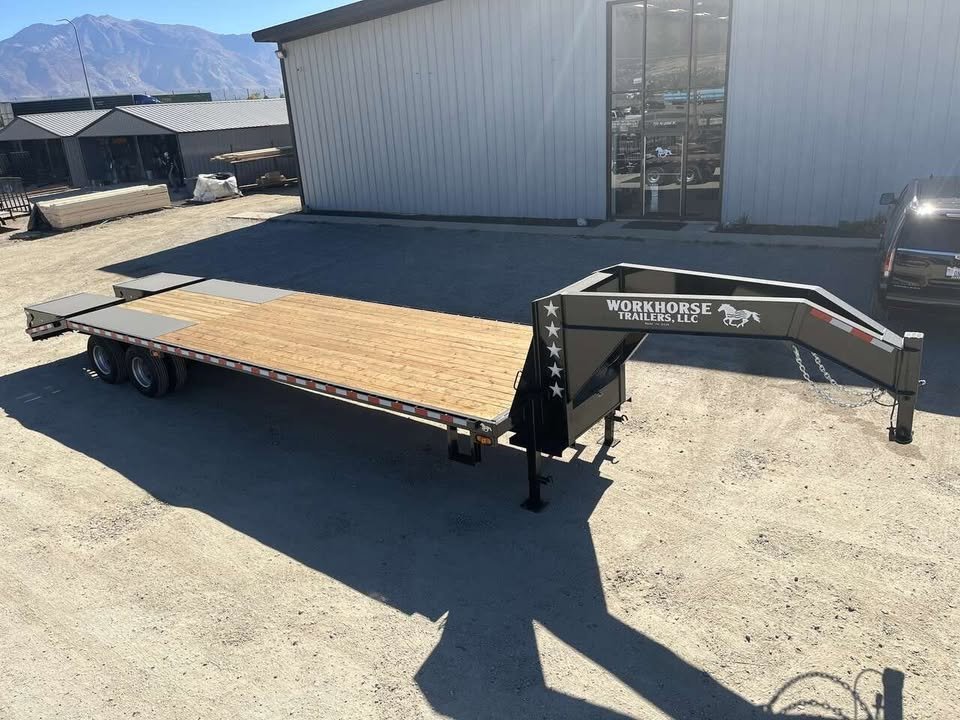
The term gooseneck refers to the curved steel neck that extends upward and forward from the front of the trailer, arching over the tailgate of the tow truck and connecting to a ball coupler recessed into the truck bed floor. This connection point sits directly above or slightly forward of the truck's rear axle, which is the strongest structural zone in the vehicle's chassis.
By positioning the hitch point over the rear axle rather than behind the bumper, a gooseneck setup transfers a substantial portion of the trailer's tongue weight onto the truck's drive wheels. This downward force increases rear tire traction, improves steering responsiveness, and reduces the pendulum effect that causes trailer sway on bumper pull rigs. The result is a towing experience that feels planted and predictable, even when carrying loads that would overwhelm a conventional hitch arrangement.
The gooseneck ball itself is typically a two and five-sixteenths inch ball mounted in a recessed pocket or a flip-over mechanism that sits flush with the truck bed when not in use. This preserves the full utility of the truck bed for hauling loose cargo when the trailer is detached. Workhorse Trailers LLC advises all Springville customers to verify that their truck's frame has been properly reinforced and that the ball mount is rated for the gross trailer weight they intend to pull.
Why Gooseneck Trailers Outperform Bumper Pull Models for Heavy Loads
Springville buyers who are comparing gooseneck and bumper pull options often wonder whether the added complexity of a bed-mounted hitch is justified. For light and moderate loads, a bumper pull trailer serves perfectly well. But once payload demands cross into the territory where gooseneck trailers operate, the performance gap becomes impossible to ignore.
Superior Weight Capacity
Bumper pull trailers are generally limited to gross vehicle weight ratings below 16,000 pounds, and many common models top out well below that threshold. Gooseneck trailers routinely carry GVWR ratings of 14,000 to 30,000 pounds or higher, depending on axle count and frame construction. This expanded capacity opens up hauling possibilities that simply do not exist with a bumper pull setup, from transporting a pair of full-size trucks on a single trailer to moving a loaded shipping container across town.
Enhanced Turning and Maneuverability
Despite their longer overall length, gooseneck trailers actually turn more sharply than bumper pull trailers of comparable size. The pivot point of a gooseneck sits inside the truck bed rather than several feet behind the rear bumper, which shortens the effective wheelbase of the towing combination and tightens the turning radius. Springville operators navigating narrow construction site entrances, farm gates, and residential cul-de-sacs notice this maneuverability advantage immediately.
Reduced Trailer Sway
Trailer sway is a dangerous condition caused by insufficient tongue weight, crosswinds, or uneven load distribution. Because a gooseneck hitch places the connection point over the truck's rear axle, the lever arm between the hitch and the trailer's center of mass is much shorter than on a bumper pull. This geometric advantage makes gooseneck trailers inherently more resistant to sway, which is a critical safety benefit on windy stretches of I-15 and elevated passes near Springville where gusts can hit without warning.
Greater Deck Length Without Sacrificing Stability
The gooseneck neck section extends over the truck bed, allowing the main deck of the trailer to begin further forward than it could on a bumper pull design. This means that a 30-foot gooseneck trailer can provide 25 or more feet of usable deck length while maintaining a balanced weight distribution that keeps the towing combination stable. Achieving that same deck length on a bumper pull trailer would push the trailer's center of mass dangerously far behind the hitch point, creating severe handling problems.
Gooseneck Trailer Types Available Through Workhorse Trailers LLC
Workhorse Trailers LLC serves the Springville market with gooseneck trailers spanning multiple categories. Each category addresses a distinct set of hauling requirements, and the team helps customers identify which platform aligns with their operational needs.
Gooseneck Flatbed Trailers
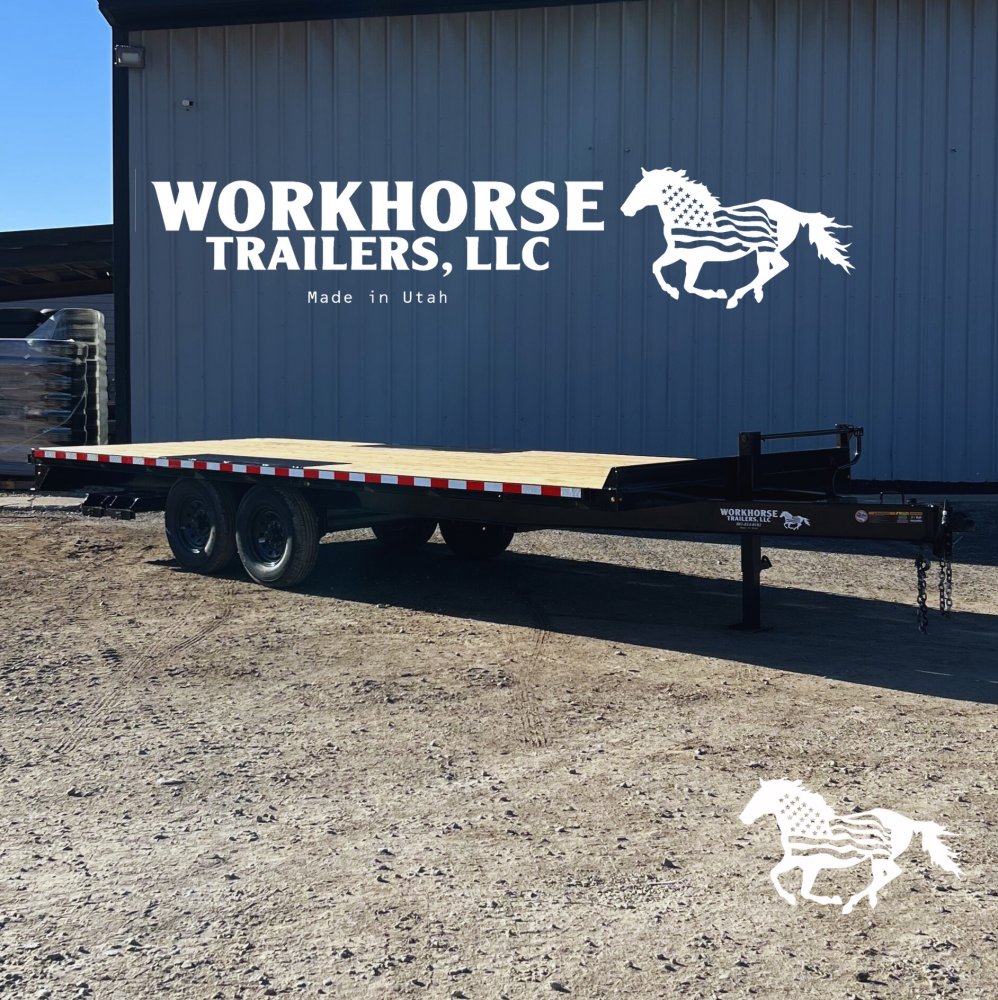
Flatbed gooseneck trailers offer a long, open deck surface ideal for carrying lumber, steel, pipe, pallets, and machinery that can be loaded from the sides or rear using a forklift, crane, or ramps. These trailers form the backbone of many Springville construction operations because their open design accommodates irregularly shaped loads that would not fit inside an enclosed body.
Stake pockets welded along the deck perimeter accept removable uprights and side rails that contain loose or stacked cargo during transport. Headache racks at the front of the deck protect the gooseneck neck and truck cab from shifting materials during hard braking. Workhorse Trailers LLC carries flatbed gooseneck trailers in steel and aluminum frame options, with treated wood or steel decking surfaces suited to different cargo types.
Gooseneck Dump Trailers
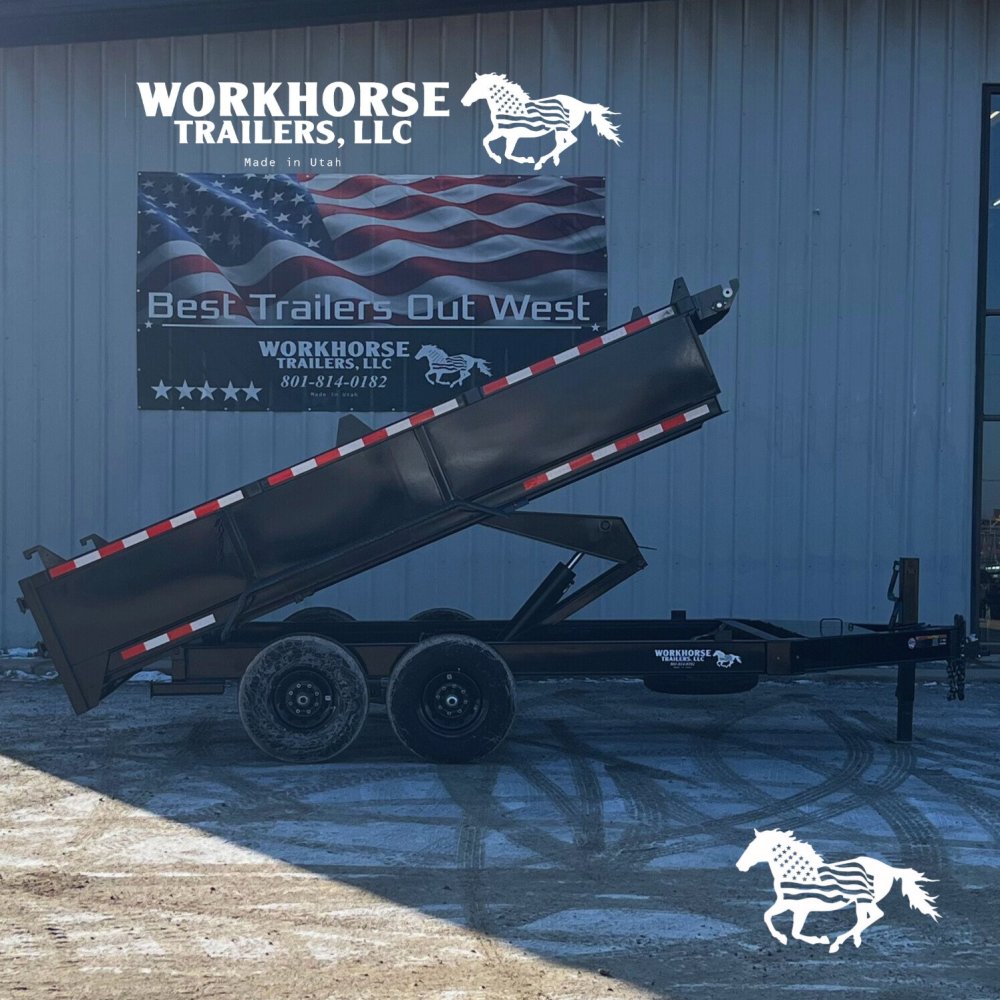
Dump gooseneck trailers incorporate a hydraulic lift system that raises the front of the cargo box, allowing bulk materials to slide out the rear under gravity. Gravel, sand, topsoil, mulch, demolition debris, and aggregate are among the most common payloads for dump gooseneck trailers in the Springville area.
The gooseneck hitch provides the stability necessary to handle the shifting center of gravity that occurs when the dump box rises and the load migrates toward the rear. A bumper pull dump trailer of equivalent capacity would risk lifting the rear of the tow truck off the ground during the dumping cycle, creating a dangerous and potentially damaging situation. Workhorse Trailers LLC offers gooseneck dump models with scissor lift and telescoping cylinder mechanisms in capacities that serve both small landscaping firms and large excavation contractors operating throughout Utah County.
Gooseneck Livestock Trailers
Springville's agricultural community relies on gooseneck livestock trailers to transport cattle, horses, sheep, and other animals between pastures, auction facilities, veterinary clinics, and show grounds. These trailers feature ventilated side walls, non-slip flooring, interior divider gates, and smooth interior surfaces that minimize injury risk during loading and transit.
The gooseneck configuration is nearly universal in the livestock trailer market because the weight of live animals combined with the trailer structure easily exceeds bumper pull limits. Horses alone can weigh 1,000 to 1,500 pounds each, and a four-horse trailer loaded to capacity plus tack and feed quickly surpasses 10,000 pounds of gross weight. Workhorse Trailers LLC understands the specific needs of Springville ranchers and equestrian enthusiasts and stocks livestock gooseneck models designed for animal welfare and handler convenience.
Gooseneck Enclosed Trailers
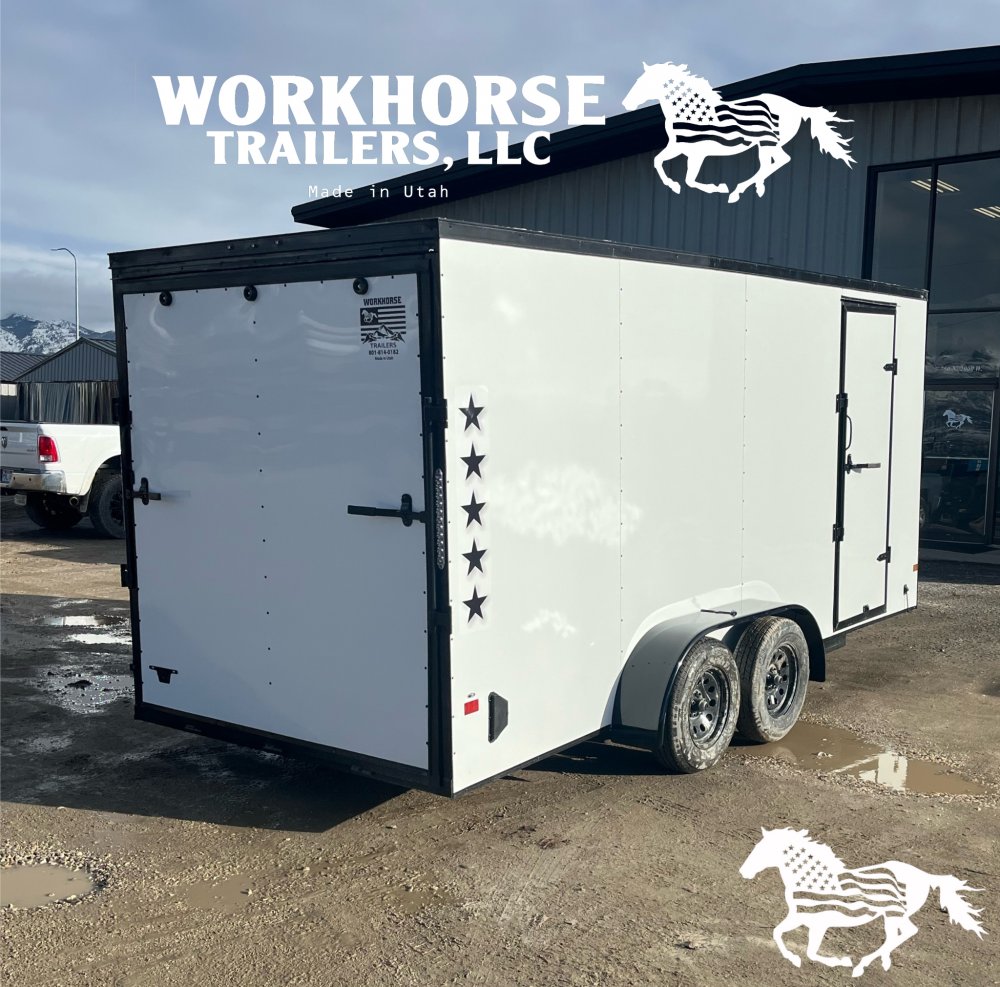
Enclosed gooseneck trailers combine the weather protection and security of a sealed cargo body with the heavy-duty towing performance of the gooseneck hitch system. These trailers are popular among Springville motorsports teams, mobile business operators, and large-scale event companies that need to move substantial volumes of valuable or sensitive cargo under full cover.
The gooseneck neck section on enclosed models often creates a raised forward compartment inside the trailer that can serve as a storage loft, sleeping quarters for race weekends, or a dedicated space for fragile items that benefit from separation from the main cargo area. Workhorse Trailers LLC carries enclosed gooseneck trailers in multiple lengths and interior heights to match the specific volume and access requirements of each Springville buyer.
Preparing Your Truck for Gooseneck Towing
A gooseneck trailer is only as capable as the truck pulling it. Springville buyers should evaluate their tow vehicle's ratings and condition carefully before purchasing a gooseneck trailer to ensure safe and legal operation.
Truck Towing and Payload Ratings
Every truck has two critical ratings that govern gooseneck towing. The maximum towing capacity defines the heaviest loaded trailer the truck can pull, while the payload capacity defines the maximum weight the truck itself can carry in its bed and cab. Because a gooseneck trailer transfers significant tongue weight into the truck bed, the payload rating often becomes the limiting factor before the towing rating is reached.
A general rule places tongue weight at 15 to 25 percent of the loaded trailer weight for gooseneck configurations. If a trailer and its cargo weigh 20,000 pounds, the tongue weight resting in the truck bed could range from 3,000 to 5,000 pounds. The truck's payload rating must accommodate that tongue weight plus the weight of passengers, toolboxes, fuel, and any other items carried in the cab and bed. Workhorse Trailers LLC walks every Springville customer through these calculations to prevent overloading situations that compromise safety and void manufacturer warranties.
Hitch Installation and Compatibility
Gooseneck hitches are available in several mounting styles including fixed ball, folding ball, and under-bed rail systems. The chosen hitch must match the truck's frame dimensions and bed layout, and it must be rated at or above the gross trailer weight of the heaviest trailer the owner intends to pull. Professional installation is strongly recommended to ensure that the hitch integrates properly with the truck's frame and does not interfere with spare tire access, fuel tank components, or exhaust routing.
Brake Controller and Electrical Connections
All gooseneck trailers sold by Workhorse Trailers LLC for use in Springville come equipped with electric or electric-over-hydraulic brake systems that require a brake controller installed in the tow truck's cab. Proportional brake controllers deliver the smoothest braking response by matching trailer brake force to the rate of truck deceleration. A seven-pin electrical connector links the truck's lighting and brake circuits to the trailer, and Springville owners should verify that all seven pins are functioning correctly before each trip.
Gooseneck Towing on Springville's Roads and Terrain
The road network surrounding Springville includes flat valley highways, moderate interstate grades, and steep canyon routes that each present different challenges for gooseneck trailer operators.
Flat stretches of Main Street and the agricultural roads west of town allow straightforward cruising, but these routes also feature railroad crossings, irrigation canal bridges, and intersections with limited sight distances that require attentive driving with a long trailer in tow. Always approach railroad crossings at reduced speed and avoid stopping on the tracks, as a fully loaded gooseneck trailer takes considerably more distance to clear the crossing than a passenger vehicle.
Canyon routes leading into Hobble Creek Canyon and the Nebo Loop gain elevation rapidly through a series of switchbacks and narrow curves. Gooseneck trailers handle these roads better than bumper pull equivalents, but operators should still reduce speed, use lower transmission gears to control descent without overheating the brakes, and pull into designated turnouts to let faster traffic pass safely.
Winter conditions add another layer of complexity. Icy bridges, packed snow on canyon roads, and reduced visibility during storms all demand conservative speeds and increased following distances. Tire chains rated for the trailer's axle weight should be carried during winter months, and Springville owners should confirm that the trailer's braking system responds correctly at cold temperatures before departing.
Maintaining a Gooseneck Trailer for Reliable Performance
Gooseneck trailers endure significant mechanical stress due to the heavy loads they carry, and a disciplined maintenance routine keeps them safe and roadworthy across many years of service.
Lubricate the gooseneck coupler and ball socket at every hookup to prevent metal-on-metal galling that accelerates wear and eventually creates a sloppy connection. Inspect the gooseneck neck structure for cracks along the bends and at the junction where the neck meets the main frame, as these high-stress zones bear the full tongue load during braking and acceleration.
Check axle alignment periodically by measuring the distance between corresponding points on the front and rear axles. Misaligned axles cause uneven tire wear, increased rolling resistance, and directional pulling that fatigues the driver over long hauls. Wheel bearings should be repacked annually, and brake components should be inspected at the start of each season to verify adequate pad thickness, drum condition, and magnet clearance on electric brake systems.
Examine the trailer floor for soft spots, delamination, and fastener corrosion, particularly around the areas where heavy equipment is loaded and unloaded. Replace compromised floor sections before they progress to the point where cargo could break through the surface during transit.
Find Your Gooseneck Trailer at Workhorse Trailers LLC
A gooseneck trailer unlocks a level of hauling capability that transforms how Springville professionals and landowners approach their most demanding transport challenges. The stability, capacity, and versatility of the gooseneck platform make it the definitive choice for anyone who consistently moves heavy or oversized loads and needs a towing setup that performs without compromise.
Discover the full range of gooseneck models available to Springville residents by visitingSpringville Gooseneck Trailers for specifications, photos, and current pricing from Workhorse Trailers LLC. The team is ready to assess your towing setup, match you with a gooseneck trailer built for your specific applications, and provide the ongoing support that keeps your equipment performing at its best across every road and season in Utah County.