Draper Gooseneck Trailers
All locationsThere comes a point in every hauling operation where a bumper pull trailer simply runs out of capacity. The loads get heavier, the distances grow longer, and the stability margins shrink until the driver spends more energy managing sway than focusing on the road ahead. Gooseneck trailers exist precisely for that threshold, delivering a fundamentally different towing geometry that unlocks higher payloads, steadier handling, and greater confidence behind the wheel. Draper, Utah has emerged as a hotbed for gooseneck trailer demand, driven by the convergence of booming construction, active agriculture, thriving motorsport culture, and a population that refuses to accept half measures when it comes to getting serious work done. Workhorse Trailers LLC meets that demand with an inventory of gooseneck trailers selected specifically for the weight classes, configurations, and durability standards that Draper professionals require.
The Engineering Behind Gooseneck Towing
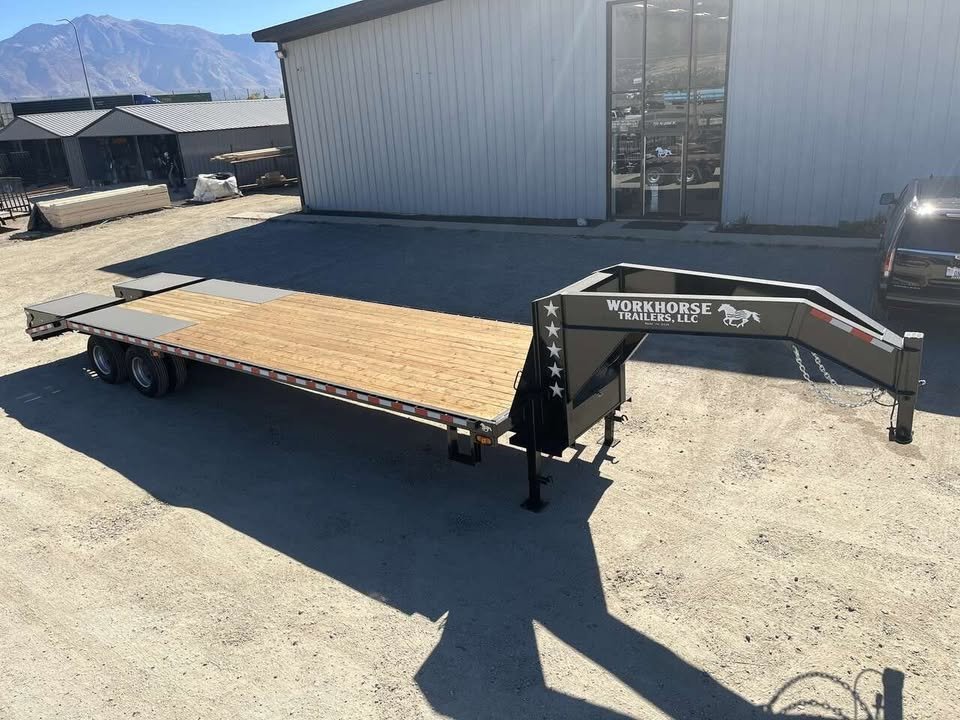
Gooseneck trailers derive their name from the curved neck section that arches upward and forward from the trailer frame, terminating in a coupler that connects to a ball hitch mounted in the bed of the tow vehicle. This forward coupling point positions the trailer’s tongue weight directly above the truck’s rear axle rather than behind it at the bumper, creating a mechanical relationship between truck and trailer that produces measurably different handling characteristics compared to conventional receiver hitch towing.
The most immediate effect is improved directional stability. Because the pivot point sits closer to the center of the tow vehicle’s wheelbase, the trailer follows the truck’s path more faithfully during lane changes, curves, and evasive maneuvers. Pendulum-style sway that plagues bumper pull setups at highway speed is dramatically reduced, which matters greatly on windy stretches of I-15 near the Point of the Mountain where crosswinds funnel through the gap between the Traverse and Oquirrh ranges.
Weight distribution is the second major advantage. Placing tongue weight over the rear axle presses the truck’s drive wheels firmly against the pavement, improving both traction and braking authority. This allows gooseneck trailers to carry gross vehicle weight ratings that routinely double or triple what a comparable bumper pull design can safely manage. For Draper operators towing through the steep grade changes along Wasatch Boulevard or climbing toward Big Cottonwood Canyon, that added traction and braking contact can be the difference between a controlled descent and a white-knuckle emergency.
The third benefit is tighter turning radius. A gooseneck trailer pivots around the ball in the truck bed rather than swinging wide from a hitch receiver extending behind the bumper. This allows the trailer to track closer to the truck’s path during sharp turns, which proves invaluable when navigating congested construction staging areas, backing into narrow loading docks along the 12300 South industrial pockets, or threading through residential streets where Draper’s hillside lots leave little room for error.
Who Relies on Gooseneck Trailers in Draper
The gooseneck platform supports an extraordinarily wide range of applications because its core strengths of capacity, stability, and maneuverability apply across numerous industries. Draper’s economic diversity generates demand from buyers whose daily operations look nothing alike yet share the common need for a trailer that handles serious tonnage without compromise.
Earthwork and Site Preparation Contractors
Before any building rises in Draper’s expanding footprint, earthwork crews reshape the land. Grading dozers, hydraulic excavators, vibratory rollers, and articulated dump trucks cycle between the equipment yard and active sites throughout each workday. These machines routinely weigh 15,000 to 25,000 pounds individually, pushing well past the safe envelope of bumper pull transport. Gooseneck flatbed and equipment hauler trailers rated at 20,000 pounds GVWR and above have become the standard transport method for these crews, and many Draper earthwork companies operate multiple gooseneck trailers to keep their fleet mobile across simultaneous projects.
Livestock and Equine Operations
The pastoral pockets that remain along Draper’s southern boundary and into the neighboring communities of Bluffdale and Highland sustain active horse boarding facilities, small cattle operations, and breeding programs. Transporting large animals safely demands a trailer that delivers a smooth, predictable ride free of the lurching and swaying that distresses livestock and increases the risk of injury during transit. The inherent stability of a gooseneck hitch connection provides that smoother ride, and the elevated gooseneck neck section creates additional interior space in stock and horse trailers that designers use for tack rooms, dressing areas, and feed storage compartments above the truck bed.
Hotshot and Expedited Freight Haulers
The hotshot trucking model has gained significant traction across Utah’s transportation economy, and Draper serves as a base of operations for independent owner-operators who haul time-sensitive freight on gooseneck flatbeds using heavy-duty pickup trucks instead of full-size semi tractors. These operators bid on loads ranging from oilfield pipe and industrial valves to prefabricated structural components and oversized machinery headed to job sites throughout the Intermountain West. A gooseneck flatbed rated at 30,000 pounds or more, paired with a properly equipped one-ton dually truck, gives hotshot haulers the legal capacity to compete for loads that lighter rigs cannot touch.
Recreational Vehicle and Toy Hauler Transport
Draper residents who own boats, side-by-side UTVs, snowmobile fleets, or multiple recreational vehicles frequently find themselves needing to move several machines simultaneously for family trips to Strawberry Reservoir, Moab, Bear Lake, or the backcountry trails accessible from the Wasatch range. Gooseneck trailers configured with enclosed cargo areas, open rear decks, or combination layouts accommodate these multi-vehicle loads within a single towing package, eliminating the need for multiple trailers or follow vehicles on recreation outings.
Gooseneck Trailer Varieties Stocked by Workhorse Trailers LLC
Workhorse Trailers LLC maintains a diverse gooseneck inventory that spans the primary categories Draper buyers request most frequently. Each category addresses a distinct set of hauling requirements, and the sales team helps customers identify which platform aligns with their real-world demands.
Gooseneck Flatbed Trailers
The open flatbed remains the most adaptable gooseneck format. Its clear deck surface accepts machinery, building materials, agricultural implements, and oddly shaped cargo with equal ease. Side-loading capability allows forklifts and cranes to place items anywhere on the deck without restriction. Standard features on quality gooseneck flatbeds include heavy-gauge I-beam frames, adjustable ratchet tie-down rings at frequent intervals, removable side rail stakes, and either fixed or folding rear ramps suited to wheeled and tracked equipment.
Gooseneck Livestock Trailers
Purpose-engineered for animal welfare during transport, gooseneck livestock trailers incorporate ventilated sidewalls, slip-resistant aluminum or rubber flooring, interior sorting gates that adjust to different herd sizes, and reinforced kick panels along the lower walls that withstand impact from hooves and horns. The gooseneck neck area often houses a separate forward compartment accessible from the truck bed, giving handlers a convenient space to store halters, feed buckets, medical supplies, and grooming equipment without consuming interior animal space.
Gooseneck Enclosed Trailers
When cargo demands both the capacity of a gooseneck platform and the total protection of a sealed enclosure, gooseneck enclosed trailers deliver on both fronts. Racing teams, mobile business operators, and contractors hauling high-value tool inventories rely on these trailers for secure, weather-tight transport. The enclosed shell also creates opportunities for sophisticated interior customization including cabinets, workbenches, climate control, and electrical systems that transform the trailer into a self-contained mobile operations center.
Gooseneck Dump Trailers
Hydraulic dump capability paired with gooseneck towing geometry produces a trailer that carries heavy aggregate, demolition debris, and bulk landscaping material in large volumes and unloads them without manual labor. The gooseneck connection prevents the dramatic tongue weight shift that occurs when a bumper pull dump trailer raises its bed, maintaining stability throughout the dump cycle. Contractors managing excavation spoils and material deliveries across Draper’s active construction sites rely on gooseneck dump trailers to keep productivity high and turnaround times short.
Selecting the Right Gooseneck for Draper Conditions
Purchasing a gooseneck trailer involves technical decisions that affect safety, performance, and longevity. Workhorse Trailers LLC walks every Draper customer through the critical selection criteria to ensure the chosen trailer delivers lasting value.
Matching GVWR to Operational Reality
Calculate the weight of your heaviest anticipated load, add the empty weight of the trailer itself, and then select a model whose gross vehicle weight rating exceeds that combined total by a meaningful margin. Operating consistently near the maximum rating accelerates wear on axles, bearings, brakes, and tires while leaving zero margin for the occasional overweight load that real-world conditions inevitably produce. A 15 to 20 percent capacity buffer above your normal maximum protects both the trailer components and the safety of everyone on the road.
Trailer Length and Deck Layout
Gooseneck trailers commonly range from 20 to 40 feet in overall length, with the neck section consuming the forward portion and the usable deck occupying the remainder. Measure the footprint of your largest cargo item, factor in the space consumed by tie-down hardware and securing equipment, and verify that the effective deck length accommodates everything with room for the operator to walk around the load during the securing process.
Coupler and Hitch System Compatibility
Standard gooseneck couplers mate with a 2-5/16 inch ball mounted in the truck bed via a dedicated gooseneck hitch kit. Confirm that your tow vehicle’s frame can accept the hitch installation, that the truck’s payload rating supports the expected tongue weight, and that the bed-mounted ball sits at the correct height to maintain a level trailer profile when loaded. Workhorse Trailers LLC assists Draper buyers in verifying this compatibility before finalizing a purchase, preventing costly mismatches between truck and trailer.
Draper buyers who investigate their options forDraper Gooseneck Trailers at Workhorse Trailers LLC consistently find that the team’s emphasis on proper vehicle-to-trailer matching sets the foundation for a safe and productive towing experience from the very first trip.
Brake Configuration and Stopping Performance
Every gooseneck trailer in the weight classes relevant to Draper buyers requires an independent braking system. Electric brakes controlled by an in-cab brake controller represent the most common configuration and provide proportional braking force that the driver can adjust on the fly. Hydraulic disc brakes are gaining popularity on heavier gooseneck models because they offer more consistent stopping power in wet conditions and resist the fade that drum brakes experience during sustained downhill braking. Given Draper’s proximity to canyon roads and mountain grades, brake selection deserves careful consideration during the buying process.
Protecting Your Gooseneck Investment Year-Round
Gooseneck trailers operating in Draper face a climate that tests every component across the full seasonal spectrum. A deliberate maintenance approach tailored to these conditions maximizes trailer lifespan and minimizes unexpected failures.
The gooseneck neck assembly itself warrants focused attention because it bears constant stress at the junction where the curved neck meets the main frame. Inspect this transition zone for hairline cracks, paint flaking that reveals underlying corrosion, and any looseness in the bolted or welded connections. Catching a developing crack early allows for a controlled repair at the shop rather than a catastrophic failure on the highway.
Coupler maintenance should happen before every towing session. The ball socket accumulates road grit that accelerates wear on both the coupler and the ball, and a thin application of lithium grease before coupling reduces friction and extends the service life of both components. Verify that the coupler latch engages fully and that the locking pin or safety clip is in place before pulling away from the loading point.
Axle bearing service intervals depend on mileage and operating conditions, but Draper operators who frequently haul near their trailer’s capacity or drive through standing water on construction sites should inspect and repack bearings more often than the manufacturer’s baseline recommendation. Contaminated bearing grease is the leading precursor to bearing failure, and a seized bearing at speed can result in a detached wheel and total loss of trailer control.
Seasonal undercarriage washing removes the road salt and chemical residue that Utah’s winter maintenance crews apply heavily along the I-15 corridor, Bangerter Highway, and the local arterials connecting Draper to surrounding communities. Allowing these corrosive agents to sit on the frame through multiple freeze-thaw cycles dramatically accelerates rust formation on even well-coated steel surfaces.
Why Draper Chooses Workhorse Trailers LLC
Workhorse Trailers LLC has built its gooseneck trailer reputation among Draper buyers through a straightforward commitment to stocking quality products and providing candid advice that prioritizes the customer’s long-term satisfaction over short-term sales volume. The team understands that a gooseneck trailer is a working asset that must perform reliably under pressure, not a showroom piece that looks impressive but disappoints in the field.
Customers from across the south valley and northern Utah County, including Alpine, Cedar Fort, Eagle Mountain, Herriman, and the communities lining the Mountain View Corridor, regularly make the trip because the combination of inventory depth, technical knowledge, and honest dealing justifies the drive. Repeat purchases and word-of-mouth referrals account for a significant share of the company’s business, reflecting the trust that working professionals place in the Workhorse name.
Workhorse Trailers LLC invites Draper residents and commercial operators to visit the lot with their towing specifications, payload requirements, and operational questions in hand. The goal of every interaction is to match the buyer with a gooseneck trailer that handles their toughest loads with capacity to spare, tows predictably on every road they travel, and holds up season after season under the real conditions of life along the Wasatch Front.