Draper Equipment Hauler Trailers
All locationsHeavy machinery keeps Draper, Utah moving forward. Every foundation poured along the expanding southern corridor, every water line trenched beneath a new subdivision, and every hillside graded for commercial development depends on equipment that must travel reliably between the yard and the job site. Equipment hauler trailers carry that responsibility, and choosing the wrong one can stall an entire project before the first scoop of dirt is turned. Workhorse Trailers LLC partners with contractors, rental operators, and municipal agencies throughout Draper to supply equipment hauler trailers engineered for the punishing demands of daily commercial use in one of Utah’s most active construction markets.
Defining the Equipment Hauler Category
Equipment hauler trailers occupy the heavy end of the trailer spectrum, purpose-built to transport machinery that exceeds the safe capacity of standard utility or car hauler platforms. Excavators, backhoes, skid steers, compact track loaders, aerial lifts, rollers, pavers, and industrial generators all fall within the scope of what these trailers are designed to carry. The defining characteristics of an equipment hauler include reinforced frame members capable of supporting concentrated point loads, heavy-duty axle assemblies rated for sustained high-weight operation, wider deck surfaces that accommodate tracked and wheeled machines with generous clearance, and ramp or loading systems robust enough to withstand repeated impact from steel tracks and heavy rubber tires.
Where lighter trailer categories prioritize versatility and affordability, equipment haulers prioritize structural integrity above all else. Every weld, crossmember, and connection point exists to manage forces that would buckle or fatigue a trailer not designed for this class of service. Workhorse Trailers LLC understands that distinction and stocks equipment haulers from manufacturers whose engineering reflects the seriousness of the loads these trailers bear.
Why Draper Generates Strong Demand for Equipment Haulers
Draper’s geographic position and economic trajectory create conditions that keep equipment hauler trailers in constant motion across the region. Several overlapping factors contribute to this sustained demand.
Accelerating Commercial and Residential Construction
The stretch of land between the Point of the Mountain and the Traverse Mountain interchange has transformed dramatically over the past decade. Technology campuses, mixed-use developments, medical facilities, and master-planned residential communities have replaced what was once open sagebrush and agricultural parcels. Each of these projects mobilizes fleets of heavy equipment that must be shuttled between staging yards, material suppliers, and active work zones scattered across the south valley. Contractors based in Draper find themselves dispatching machines to sites in Lehi, Saratoga Springs, Eagle Mountain, and beyond, making a dependable equipment hauler trailer an operational necessity rather than an occasional convenience.
Utility and Infrastructure Expansion
Population growth drives infrastructure investment, and Draper sits squarely within the corridor receiving the most attention from utility providers and municipal planners. Water treatment upgrades, sewer line extensions, fiber optic installations, and electrical grid improvements all require heavy equipment transported to work zones that shift weekly or even daily. The crews performing this work operate under tight schedules governed by permits, weather windows, and coordination with other trades. A trailer breakdown or loading incident that delays equipment delivery can cascade into costly schedule overruns that affect the entire project timeline.
Mining and Aggregate Operations
The quarries and gravel pits operating in the foothills west of Draper and south toward Utah County supply the raw materials that fuel regional construction. Crushers, screening plants, conveyors, and heavy loaders used at these sites require periodic relocation, maintenance transport, and replacement cycling that depends on equipment hauler trailers rated for the extreme weights involved. Even within a single quarry operation, moving a 30,000-pound crusher from one bench to another demands a trailer built to absorb concentrated loads without flexing or sustaining structural fatigue.
Equipment Rental Companies
The rental model has reshaped how many Draper contractors access machinery. Rather than purchasing and maintaining a full fleet, companies rent excavators, loaders, and lifts for specific project phases and return them when the work is complete. Rental yards distribute and retrieve this equipment constantly, and their delivery trailers accumulate loading cycles at a pace that would destroy anything less than a commercial-grade equipment hauler. The rental companies serving Draper need trailers that tolerate daily abuse from operators of varying skill levels while remaining safe and roadworthy month after month.
Equipment Hauler Configurations Available at Workhorse Trailers LLC
Workhorse Trailers LLC carries equipment hauler trailers across multiple weight classes and design configurations, allowing Draper buyers to select the precise combination of capacity, features, and dimensions their work demands.
Flatbed Equipment Haulers
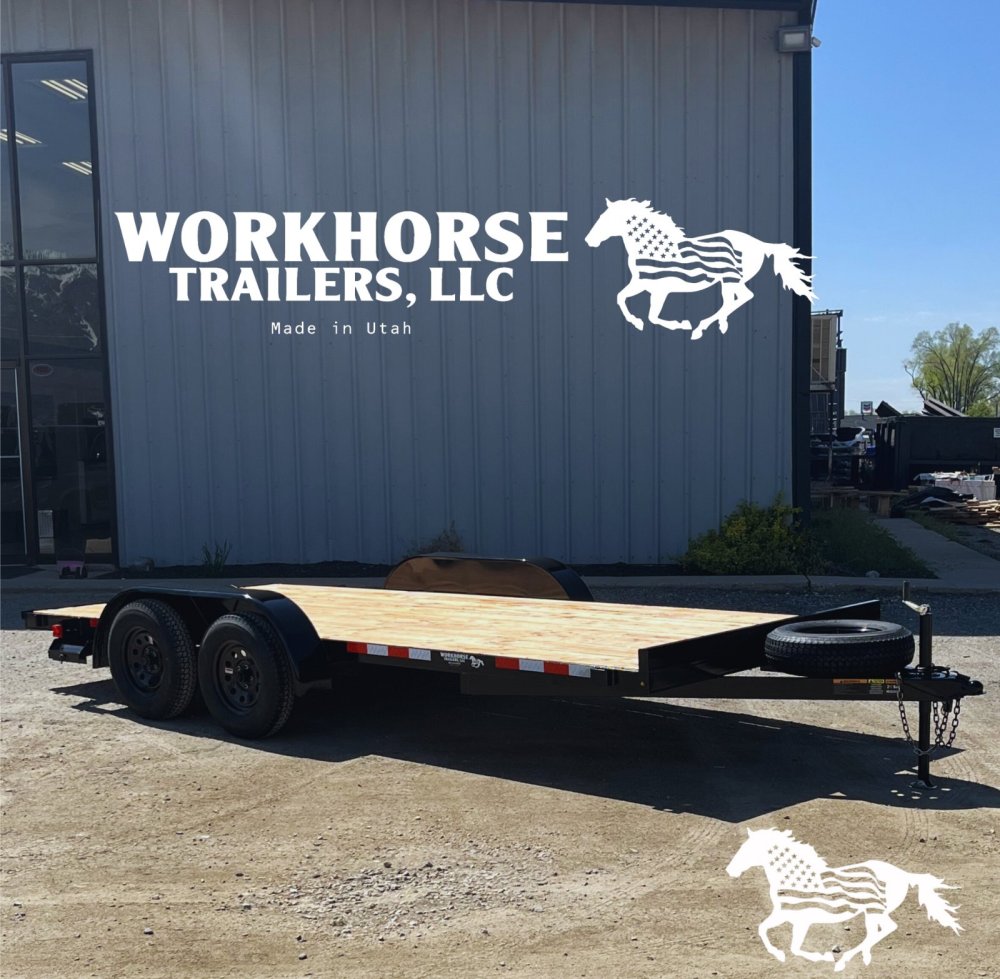
The flatbed configuration offers an unobstructed deck surface ideal for machines that load from the rear via ramps or from the side using a crane or forklift. Steel I-beam frames welded to heavy channel iron crossmembers create a rigid platform that resists deflection under concentrated loads. Flatbed equipment haulers are the default choice for contractors who transport a rotating mix of machinery types and appreciate the flexibility of an open deck that accommodates different footprints without modification.
Deckover Equipment Haulers
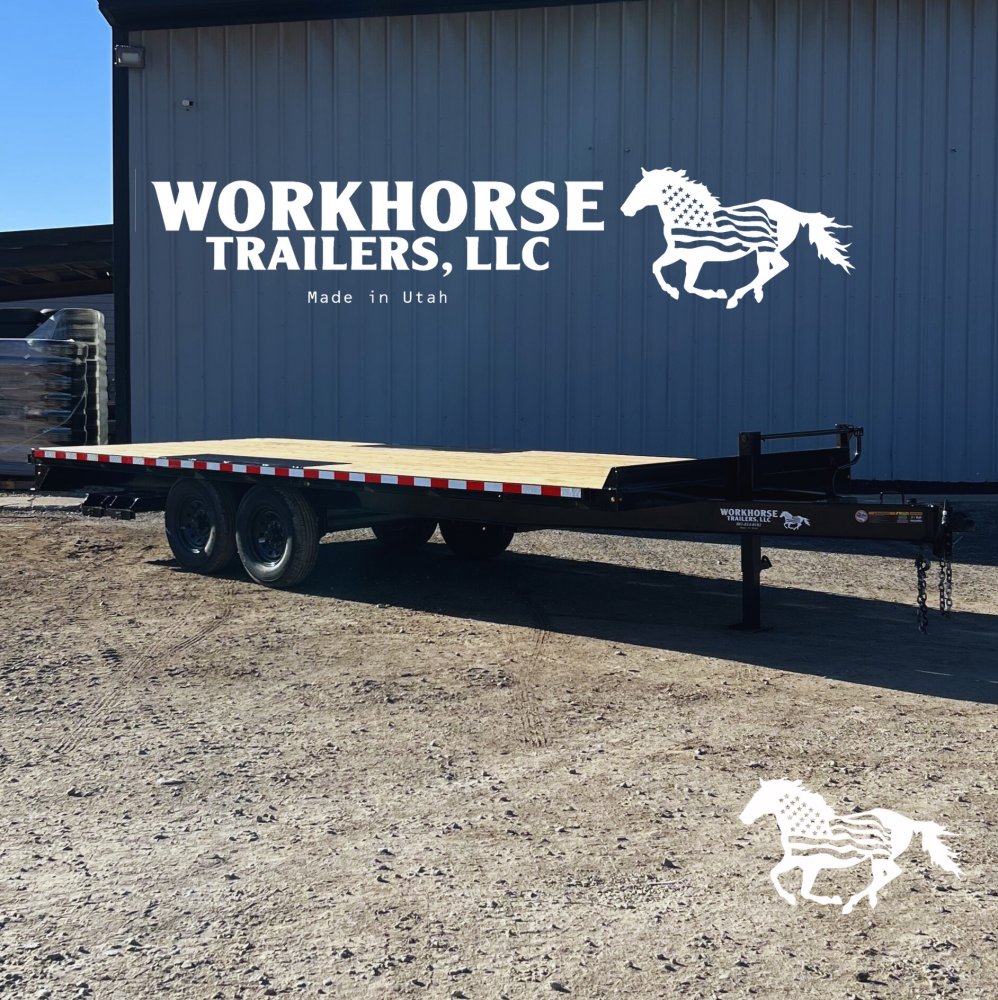
Deckover trailers position the deck surface above the wheels rather than between them, maximizing usable width across the entire platform. This design allows operators to load wider machines without worrying about tire clearance against interior fender wells. Deckover models are particularly popular among Draper contractors who haul compact track loaders and mini excavators with cabs that extend beyond the width of their tracks. The full-width deck also simplifies loading procedures because the operator can approach from a straighter angle without needing to thread the machine through a narrow channel.
Drop Deck Equipment Haulers
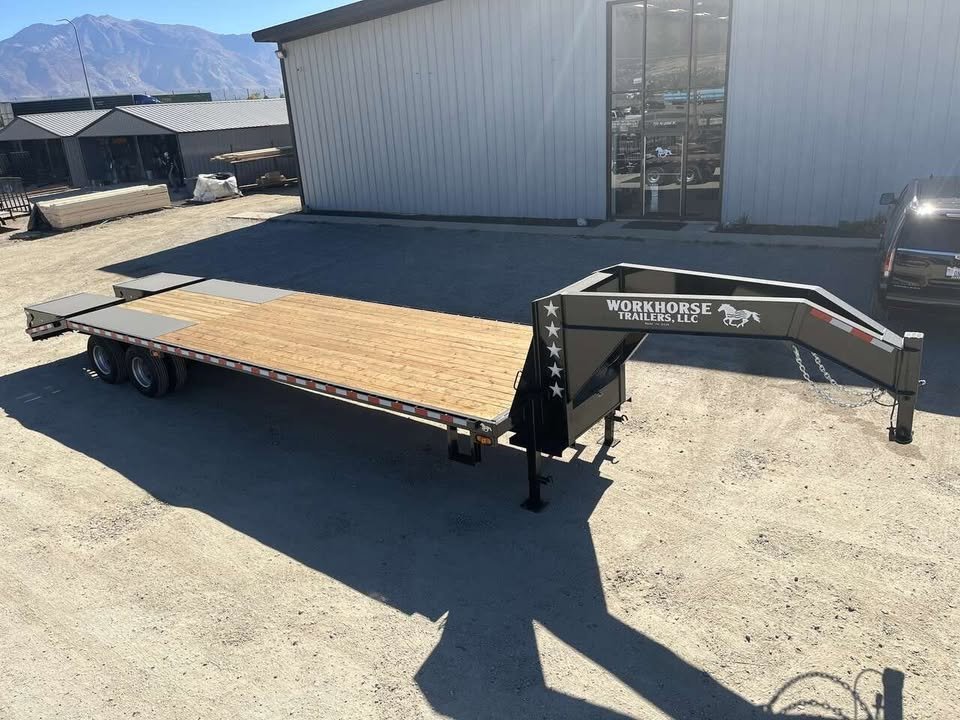
Drop deck trailers, also called lowboy or low-profile haulers, position the main deck section closer to the ground by dropping the frame height between a raised gooseneck front section and the rear axle assembly. The lower center of gravity improves towing stability with tall equipment like aerial lifts, telehandlers, and large excavators whose boom structures raise the overall load height significantly. The reduced deck height also decreases the ramp angle, making it easier and safer to load tracked machines that have limited climbing ability on steep inclines.
Tag-Along Versus Gooseneck Mounting
Equipment haulers connect to the tow vehicle using either a tag-along (bumper pull) hitch or a gooseneck coupling mounted in the truck bed. Tag-along configurations work well for lighter equipment haulers in the 10,000 to 14,000-pound GVWR range and offer the simplicity of a standard ball hitch receiver. Gooseneck mounting shifts the tongue weight over the tow vehicle’s rear axle, enabling higher weight ratings and improved directional stability that become essential as trailer loads climb above 14,000 pounds. Most professional-grade equipment haulers in the Draper market use gooseneck connections because the machinery they carry routinely pushes into weight territory where a bumper pull setup would be unsafe.
Evaluating Equipment Hauler Trailers Before Purchase
An equipment hauler represents a substantial capital investment, and Draper buyers should approach the selection process with a clear understanding of the specifications that separate a capable trailer from one that will underperform or fail prematurely.
Frame Material and Construction Method
The frame is the skeleton that everything else depends on. Look for main beams fabricated from structural I-beam steel rather than lighter C-channel or tubular stock. I-beam frames resist twisting and vertical deflection more effectively under heavy asymmetric loads, which is exactly the type of stress that equipment haulers encounter when a tracked machine drives up one side of the ramp and positions itself off-center during loading. Crossmember spacing also matters. Tighter crossmember intervals distribute point loads from steel tracks and outrigger pads across a larger area of the frame, preventing localized stress concentrations that lead to cracking over time.
Axle Ratings and Suspension Type
Each axle beneath an equipment hauler carries a manufacturer-assigned weight rating that represents the maximum load it can safely support during continuous operation. Tandem and triple axle setups are standard in this category, with individual axle ratings commonly ranging from 7,000 to 10,000 pounds each. Spring suspension provides proven durability and simple maintenance for most applications, while air ride suspension offers adjustable load leveling and a smoother ride that protects sensitive equipment during highway transport. Workhorse Trailers LLC helps Draper buyers match axle configurations to their actual payload requirements so they avoid both dangerous overloading and unnecessary expense from over-specifying.
Ramp Style and Capacity
Equipment hauler ramps must support the full weight of the heaviest machine crossing them during the loading process. Standalone ramps that fold against the trailer’s rear face and swing down for use are the most common design, but their hinge points, locking mechanisms, and surface material vary considerably between manufacturers. Spring-loaded assists reduce the effort required to raise and stow heavy ramps after loading. Serrated or punch plate surfaces maintain traction in muddy and wet conditions that are unavoidable on active construction sites around Draper, especially during the spring thaw when melting snowpack saturates the ground.
Electrical and Braking Infrastructure
Equipment haulers in the weight classes common around Draper require electric or hydraulic braking systems that operate independently from the tow vehicle’s brakes. Wiring harnesses must be routed and protected against damage from shifting cargo, ramp operation, and road debris. LED lighting has become the standard for this trailer class because it draws less power, resists vibration-induced failure, and provides brighter illumination that improves visibility during early morning and late evening transport runs that are common in the construction industry.
Those exploringDraper Equipment Hauler Trailers at Workhorse Trailers LLC gain access to a team that evaluates every specification in the context of real-world jobsite conditions rather than abstract catalog numbers.
Jobsite Loading Safety and Best Practices
Operating an equipment hauler safely requires discipline during the loading and unloading phases, which is where the majority of trailer-related accidents and equipment damage occur. Draper contractors who adopt consistent procedures protect their crews, their machines, and the public.
Surface Preparation
Position the trailer on the firmest, most level ground available at the job site. Soft soil, gravel shoulders, and uneven terrain cause the trailer to shift or sink during loading, which alters ramp angles and creates unstable conditions for the equipment operator. If level ground is unavailable, use blocking or cribbing under the trailer’s jack stands and wheels to create a stable platform before beginning the loading sequence.
Controlled Equipment Movement
Drive machinery onto the trailer slowly and steadily, maintaining a straight approach whenever possible. Turning on ramps shifts weight laterally and increases the risk of a track or tire slipping off the ramp edge. Once the machine reaches the deck, position it according to the trailer manufacturer’s load placement guidelines, centering the weight between the frame rails and distributing it appropriately between the axles and the tongue.
Securing the Load
Chain binders and heavy-duty ratchet straps rated for the weight of the equipment provide the securement needed for transport on public roads. Federal and state regulations specify minimum working load limits for tie-down assemblies based on cargo weight, and Draper operators hauling on I-15, Bangerter Highway, or through the construction zones along Redwood Road should expect periodic enforcement checks during peak construction season. Attach chains to designated tie-down brackets on the equipment frame, never to hydraulic cylinders, bucket teeth, or accessories that could detach or deform under tension.
Seasonal Considerations for Equipment Hauling in Draper
Draper’s four-season climate introduces variables that equipment hauler operators must account for throughout the year. Winter conditions present the most obvious challenges, as icy roads, reduced visibility, and frozen ramp surfaces complicate both transport and loading procedures. Applying sand or absorbent material to ramp surfaces before loading in freezing conditions restores traction and prevents dangerous slips. Brake performance diminishes when components are cold, so allow extra stopping distance during the first several miles of a winter haul until the system warms to operating temperature.
Summer brings its own concerns. Sustained high temperatures accelerate tire degradation, particularly on trailers that sit loaded in direct sunlight between hauls. Checking tire pressure more frequently during hot weather prevents blowouts caused by thermal expansion in tires already carrying heavy loads. Hydraulic systems on trailers equipped with tilt decks or powered ramps can also experience pressure fluctuations in extreme heat, making pre-trip function checks especially important during July and August.
Workhorse Trailers LLC and the Draper Professional Community
Workhorse Trailers LLC serves Draper’s equipment hauler market with a combination of deep product knowledge and genuine respect for the professionals who depend on these trailers to earn their living. The company recognizes that downtime caused by trailer failure costs far more than the repair bill alone. Lost productivity, missed deadlines, idle crew wages, and damaged client relationships all multiply the true cost of owning an inadequate trailer.
That understanding shapes every recommendation the team makes. They stock trailers from manufacturers with documented track records in commercial construction applications, and they decline to carry brands whose build quality falls below the threshold that Draper’s demanding environment requires. Customers visiting from Riverton, Herriman, Cedar Hills, Pleasant Grove, and throughout the south valley corridor benefit from the same product standards and consultative approach.
Workhorse Trailers LLC welcomes Draper contractors and equipment operators to visit the lot, climb underneath the trailers, inspect the welds, test the ramp mechanisms, and compare frame construction across different models firsthand. Confidence in a purchase decision comes from verifying quality with your own eyes, and the team at Workhorse Trailers LLC is ready to answer every question that arises during that process.