
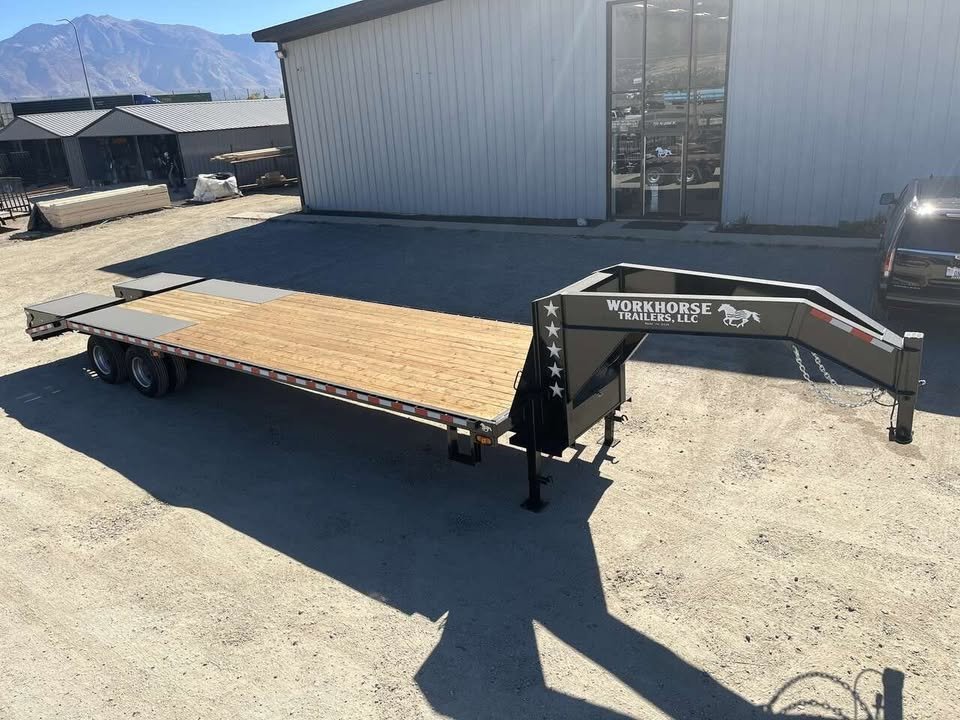
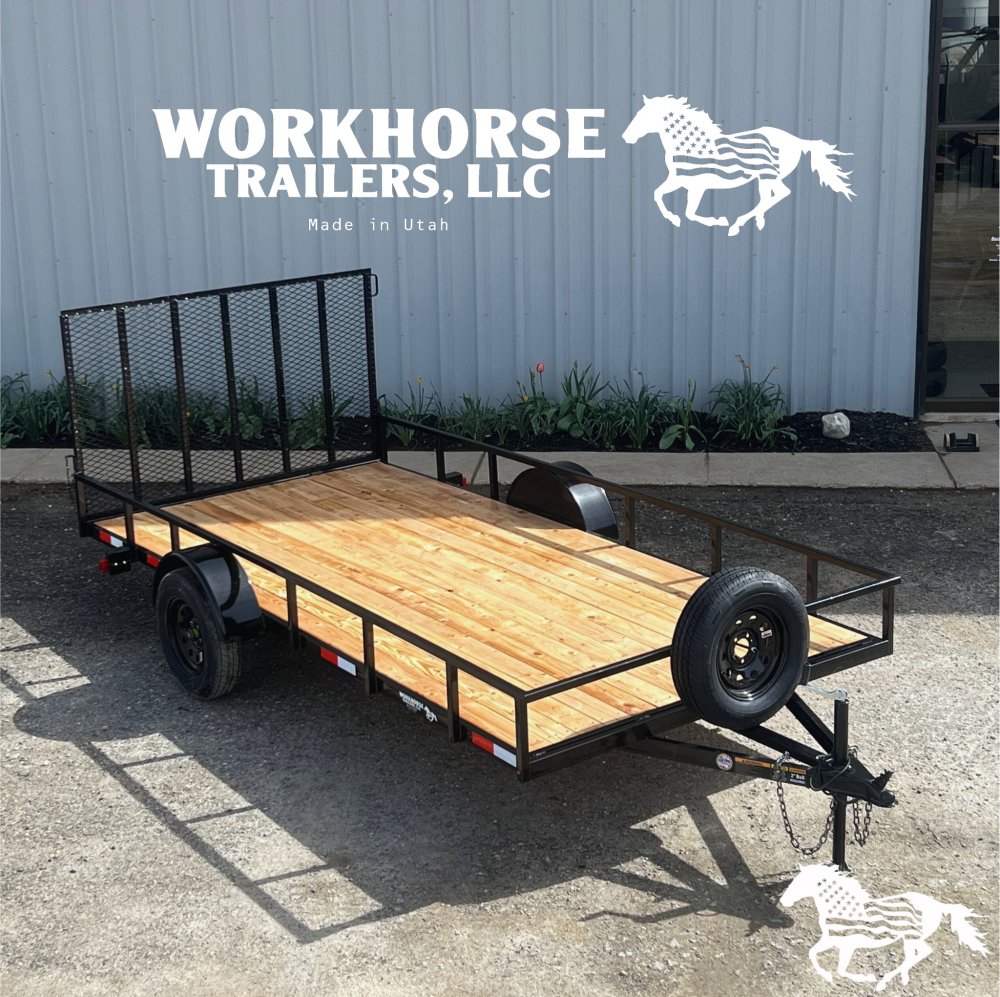
Bluffdale Equipment Hauler Trailers
All locationsMoving heavy equipment across Bluffdale, Utah requires a trailer built for punishment. The compact tractors clearing horse pastures along the western flats, the mini excavators trenching utility connections for new housing clusters, and the aerial platforms servicing cell towers dotting the valley floor all share one thing in common. They depend on an equipment hauler trailer sturdy enough to carry their full weight and reliable enough to deliver them safely to wherever the next job begins. Workhorse Trailers LLC provides Bluffdale’s working community with equipment hauler trailers constructed for this exact purpose, offering the load capacity, structural resilience, and practical features that keep machinery moving across one of the south valley’s most active and geographically diverse communities.
Defining the Equipment Hauler for Bluffdale Buyers
Equipment hauler trailers are built from heavier materials, ride on beefier axle assemblies, and incorporate stronger tie-down infrastructure than their lighter utility and car hauler counterparts. These distinctions exist because the cargo they carry imposes forces that would compromise a trailer designed for lesser loads. A six-ton compact excavator concentrates its entire weight through two narrow tracks, creating point loads that would punch through a standard utility trailer deck. A wheeled skid steer climbing a loading ramp transfers dynamic impact forces through the ramp hinges and into the frame at magnitudes that lighter hardware cannot absorb without bending or cracking.
The category encompasses trailers rated from roughly 10,000 pounds gross vehicle weight on the lighter end to well beyond 25,000 pounds for heavy commercial platforms. Within that range, Bluffdale buyers find models scaled to everything from compact hobby farm implements up through full-size construction machines that anchor professional contracting operations. Workhorse Trailers LLC stocks across this spectrum because the Bluffdale market does not cluster around a single weight class. The diversity of work happening in and around this city demands options at every capacity level.
How Bluffdale’s Character Shapes Equipment Hauler Demand
Bluffdale straddles two worlds. Its eastern neighborhoods connect to the dense suburban fabric of the Salt Lake Valley while its western expanses open into agricultural and semi-rural land that still functions as working terrain. This duality produces equipment transport needs that differ from purely urban or purely rural communities.
Small Acreage Land Management
The five-acre and ten-acre parcels that define much of western Bluffdale require ongoing land management that goes beyond what hand tools and riding mowers can accomplish. Property owners maintain drainage swales with compact excavators, clear overgrown fence lines with brush cutters mounted on skid steers, grade access roads with box blades pulled behind utility tractors, and excavate post holes for corrals and outbuildings using auger attachments. Many of these machines belong to cooperative arrangements among neighbors who share ownership and rotate equipment between properties. The shared equipment hauler trailer that transports these machines from one parcel to the next becomes as essential as the machines themselves.
Well Drilling and Water System Installation
Bluffdale properties outside the municipal water service boundary rely on private wells and pressurized storage tanks for their domestic and agricultural water supply. Well drilling rigs, trenching machines for distribution lines, and pump installation equipment cycle through the area as new homes connect to wells and existing systems undergo rehabilitation. The companies performing this work operate specialized machinery that often exceeds 12,000 pounds per unit, placing their transport needs firmly in equipment hauler territory.
Equestrian Facility Construction and Maintenance
The concentration of horse properties in Bluffdale sustains a cottage industry of arena builders, barn contractors, and facility maintenance specialists who construct riding arenas, install paddock fencing, grade turnout areas, and maintain footing surfaces. Their equipment inventory includes compact track loaders for arena footing work, telescoping forklifts for setting barn trusses, vibratory plate compactors for preparing base layers, and laser grading systems that demand careful handling during transport. Each piece requires a trailer engineered for its specific weight and dimensional profile.
Telecommunications Infrastructure Expansion
The push to extend fiber optic and 5G wireless coverage across Bluffdale’s sprawling footprint has brought telecommunications construction crews into the area on a sustained basis. These crews deploy directional boring machines, cable plows, bucket trucks, and reel trailers that shuttle between staging yards and active installation corridors along Redwood Road, Porter Rockwell Boulevard, and the residential streets branching off these main arteries. The directional boring machines alone weigh upward of 15,000 pounds and require equipment hauler trailers with reinforced decks capable of supporting the concentrated weight of the machine’s drill head assembly.
Pond and Irrigation System Development
Agricultural water management remains central to Bluffdale’s western landscape, where stock ponds, lined reservoirs, and gravity-fed irrigation networks serve both livestock operations and hobby farms. Building and maintaining these water features requires excavators, compaction equipment, and grading machinery that must travel between project sites spread across miles of rural road. Equipment hauler trailers rated for repeated trips over gravel and unimproved surfaces see constant use among the contractors specializing in this niche.
Equipment Hauler Styles at Workhorse Trailers LLC
Workhorse Trailers LLC offers Bluffdale buyers a selection of equipment hauler trailer styles, each optimized for different loading methods, cargo profiles, and towing configurations.
Channel Frame Equipment Haulers
Channel frame trailers use C-shaped steel beams as their primary structural members, creating a strong yet relatively lightweight foundation suited to equipment in the 10,000 to 16,000 pound GVWR range. The channel profile positions the deck surface between the frame rails at a lower height than I-beam alternatives, reducing the ramp angle for loading and lowering the overall center of gravity during transport. Bluffdale buyers who haul compact equipment like mini skid steers, walk-behind trenchers, and small utility tractors often find channel frame haulers deliver the right balance of capacity and ease of use for their application.
I-Beam Frame Equipment Haulers
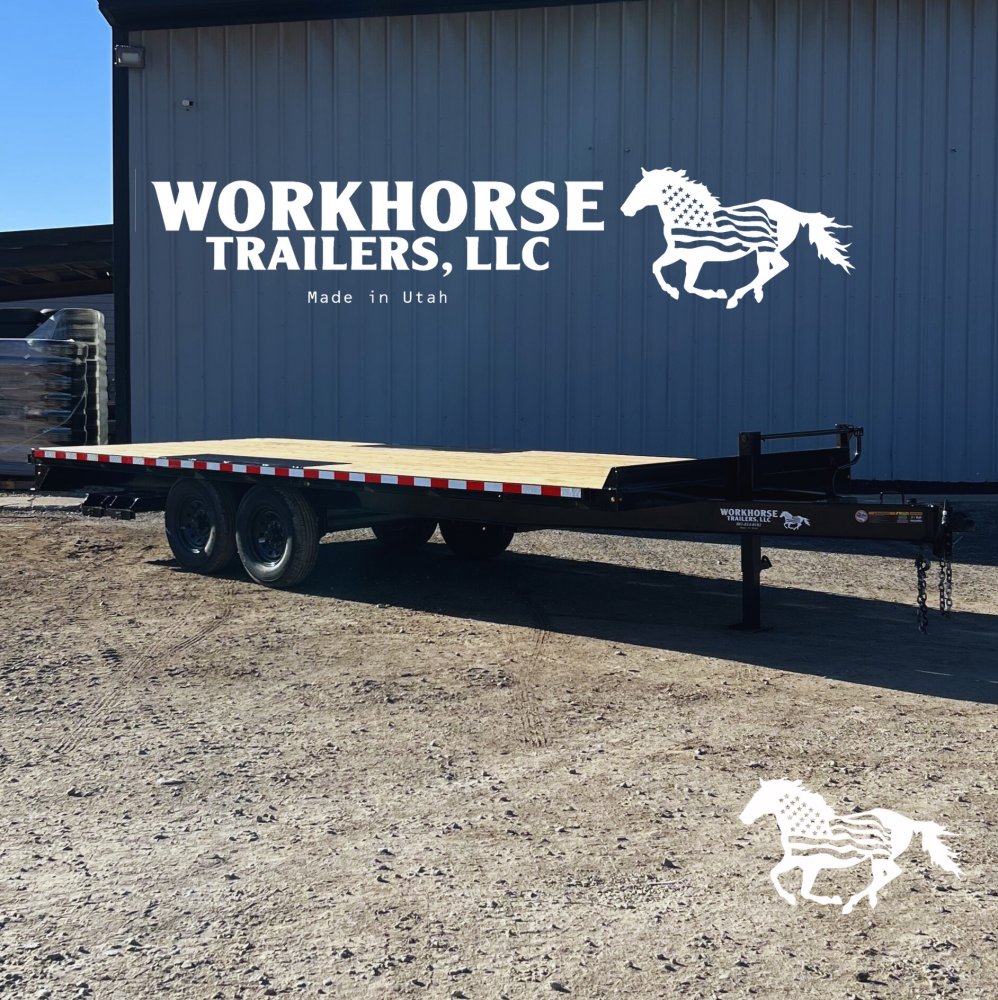
When loads climb above 16,000 pounds, I-beam frames provide the rigidity and deflection resistance that heavier machinery demands. The symmetrical cross-section of an I-beam resists twisting forces more effectively than channel stock, which matters when a tracked excavator drives up one side of the ramp and imposes an asymmetric load path through the frame during the loading sequence. Professional contractors in Bluffdale who regularly transport machines in the 10-ton range and above gravitate toward I-beam equipment haulers because the structural margin they provide translates directly into longer frame life and reduced risk of fatigue cracking at weld joints.
Pintle Hitch Equipment Haulers
While most consumer-grade trailers connect to a ball-and-coupler system, equipment haulers in the heavier weight classes often employ pintle hitch connections that use a hook-and-lunette ring coupling. Pintle hitches tolerate greater vertical and lateral articulation between the truck and trailer, which proves beneficial on the uneven ground that Bluffdale equipment operators encounter when accessing rural properties, construction staging areas, and undeveloped parcels. The robust mechanical connection also accommodates the higher tongue weights associated with heavily loaded equipment trailers without the wear concerns that ball hitches exhibit at extreme loads.
Air Brake Equipped Haulers
Equipment haulers at the upper end of the weight spectrum may require air brake systems rather than the electric brakes found on lighter trailers. Air brakes deliver consistent, powerful stopping force regardless of how many times they are applied during a trip, resisting the heat-induced fade that can affect electric drum brakes during prolonged downhill descents. Bluffdale operators who tow near the maximum capacity of their equipment hauler on routes that include the grade changes along I-15 or the descent from the east bench into the valley floor should evaluate whether air brake capability belongs on their requirements list.
Buying Criteria Specific to Bluffdale Operations
The conditions unique to Bluffdale influence which equipment hauler features deliver the most value. Workhorse Trailers LLC helps local buyers prioritize the specifications that matter most for their environment.
Durability on Unpaved Surfaces
A significant percentage of Bluffdale equipment hauler trips begin or end on gravel driveways, compacted dirt access roads, or unimproved field lanes that transmit constant vibration and impact into the trailer structure. Frames built with thicker gauge steel, suspension systems with adequate travel to absorb rough terrain inputs, and tires rated for mixed-surface duty all contribute to a trailer that holds together over thousands of miles of non-highway use. Buyers whose routes include substantial unpaved segments should communicate this clearly during the selection process so the team at Workhorse Trailers LLC can steer them toward models validated for that duty cycle.
Ramp Strength and Resistance to Deformation
Equipment hauler ramps absorb concentrated impact every time a tracked machine crosses their surface. Steel tracks with aggressive grousers dig into ramp material under load, and the repeated compression and release cycle at the ramp hinge point fatigues lightweight hardware quickly. Bluffdale buyers should examine ramp thickness, hinge pin diameter, and the gauge of the support channels beneath the ramp surface when comparing trailers. A ramp that flexes noticeably under foot traffic will deform unacceptably under the weight of a loaded excavator.
Adequate Tie-Down Capacity
Federal bridge law and Utah-specific securement regulations dictate minimum working load limits for the chains, binders, and straps used to restrain equipment during highway transport. Equipment hauler trailers should provide enough D-ring anchors distributed at close intervals along both sides and across the front and rear of the deck to allow operators multiple attachment configurations for different machine shapes. Bluffdale buyers who haul various equipment types benefit from trailers with anchor points spaced no more than 24 inches apart, ensuring that every machine they transport can be secured at the optimal angles regardless of where it sits on the deck.
Bluffdale professionals exploring their options forBluffdale Equipment Hauler Trailers at Workhorse Trailers LLC find an inventory curated for the actual working conditions of the south valley rather than the hypothetical scenarios described in generic product brochures.
Fender and Mud Management
Hauling equipment on Bluffdale’s western roads during spring runoff season or after irrigation cycles coat trailer fenders, axles, and wiring harnesses in thick mud that traps moisture against steel surfaces. Trailers with removable or hinged fenders simplify the cleaning process by providing access to the areas behind the wheels where mud accumulates most aggressively. Polymer fender liners resist corrosion entirely and shed caked mud more readily than painted steel, offering a low-maintenance alternative for operators who spend significant time on wet, unpaved surfaces.
Maintaining Equipment Haulers in Bluffdale Conditions
The operating environment in Bluffdale stresses equipment hauler components in patterns that differ from trailers used exclusively on paved highways in urbanized areas. A maintenance approach calibrated to these local conditions prevents premature failures and keeps the trailer productive.
Suspension Wear Monitoring
Regular travel over rough terrain accelerates wear on leaf spring eyes, shackle bushings, equalizer bars, and U-bolt hardware. Visual inspection of these components every 90 days catches elongated bolt holes, cracked spring leaves, and worn bushings before they progress to the point of affecting ride quality or allowing axle misalignment. Replacing individual worn components promptly avoids the cascading damage that occurs when one failed part shifts loads onto its neighbors.
Structural Weld Audits
Vibration from rough surface travel works on weld joints relentlessly, and even high-quality welds develop hairline stress fractures over time under sustained cyclic loading. Bluffdale equipment hauler owners should perform a thorough visual weld audit at the beginning and end of each heavy-use season, paying particular attention to the joints where crossmembers connect to the main frame, where the tongue assembly meets the body, and where ramp hinge brackets attach to the rear of the trailer. A mobile welding service can address developing cracks onsite before they propagate into structural concerns.
Brake System Flushing and Inspection
Mud and water contamination within brake drums accelerates pad wear, degrades magnet effectiveness on electric brakes, and promotes corrosion on internal drum surfaces. Bluffdale operators who regularly tow through standing water or saturated soil conditions should flush brake assemblies with clean water after exposure events and inspect pad thickness and magnet condition at twice the interval recommended for highway-only service. Catching a worn pad before it reaches bare metal prevents the expensive drum scoring that turns a routine pad replacement into a complete brake overhaul.
Wiring Harness Protection
Exposed wiring runs between the tongue connector and the tail light assemblies pass through the most vulnerable zone on any trailer, where road spray, kicked-up gravel, dangling chains, and shifting cargo can abrade insulation and sever conductors. Bluffdale operators should verify that their equipment hauler routes all wiring inside protective conduit or loom and that junction points use sealed, weatherproof connectors rather than exposed crimps or wire nuts. Adding aftermarket conduit protection to a trailer that ships with minimal wire management costs little and prevents the intermittent electrical failures that consume diagnostic time disproportionate to their repair cost.
Workhorse Trailers LLC and the Bluffdale Working Community
Workhorse Trailers LLC understands that Bluffdale equipment hauler buyers are purchasing a tool that generates revenue, maintains property value, or enables a way of life that depends on reliable machinery transport. The company treats that understanding as the starting point of every customer interaction, focusing on durability, appropriate capacity, and honest value rather than feature lists that sound impressive in conversation but add nothing in the field.
Customers from Herriman, Riverton, Saratoga Springs, Eagle Mountain, and the southern reaches of South Jordan round out a regional customer base that shares Bluffdale’s practical outlook on trailer ownership. The lot is open for walkthroughs, the team is available for detailed technical conversations, and every equipment hauler in inventory can be inspected closely enough to judge construction quality with your own hands. Workhorse Trailers LLC invites Bluffdale buyers to bring their equipment specifications, their tow vehicle documentation, and their toughest questions. The answers will be straightforward, the recommendations will be honest, and the trailer that follows the customer home will be ready to work from the first day it enters service.