
Elko Enclosed Cargo Trailers
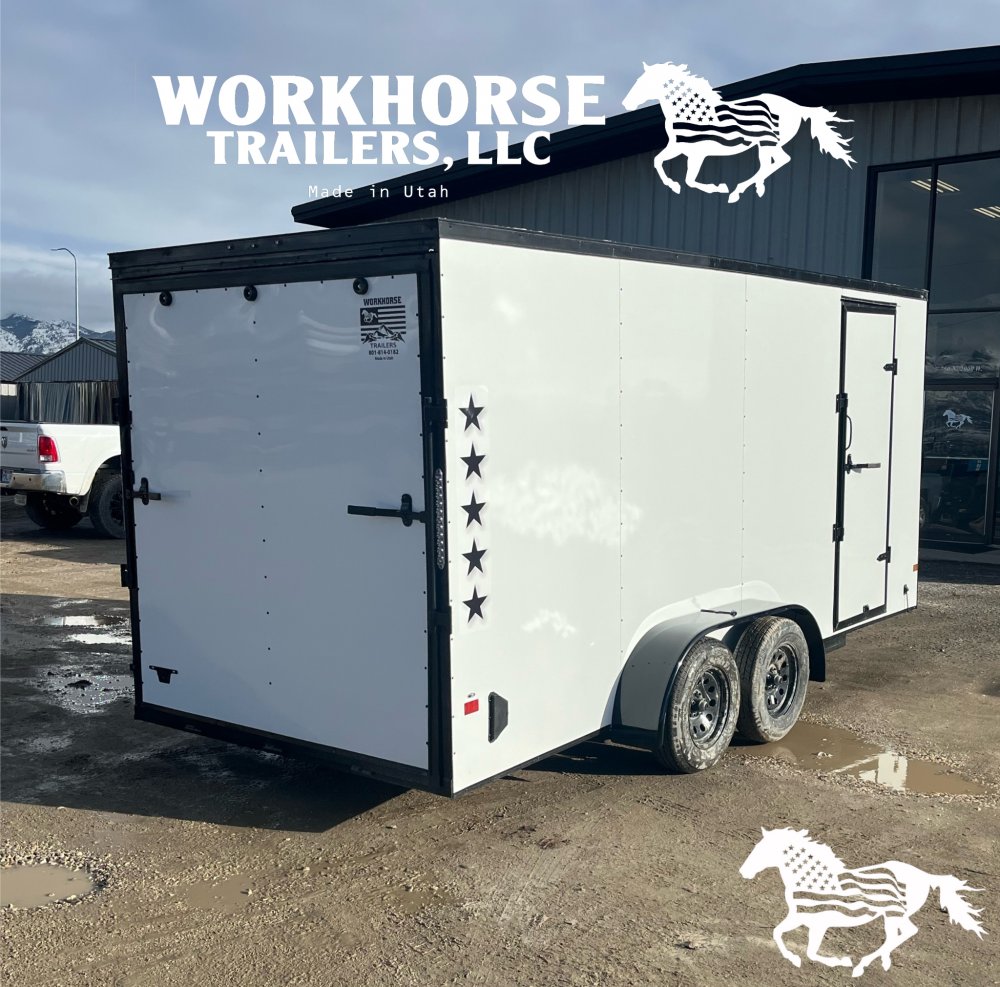
All locationsLeaving tools, parts, or supplies on an open trailer overnight at a remote work site in Elko County invites problems that urban operators rarely think about. Overnight temperatures that drop 40 degrees below the daytime high coat unprotected metal with condensation that accelerates corrosion. Dust from mine roads and desert wind settles into every exposed mechanism. Wildlife, from packrats to range cattle, investigates anything left accessible. And the sheer isolation of many Elko work sites means that unattended cargo sits unwatched for hours or days between visits. An enclosed cargo trailer solves every one of these problems with walls, a roof, a floor, and a lock. For Elko buyers who operate across the remote landscapes of northeastern Nevada, the enclosed trailer functions less as a transport vehicle and more as a portable, secure, climate-buffered supply room that travels wherever the work requires it. Workhorse Trailers LLC provides enclosed cargo trailers to Elko area buyers whose operations extend into terrain where protecting cargo from the elements, the wildlife, and the distance between service visits isn’t optional.
The enclosed cargo trailer’s value proposition in Elko differs fundamentally from its appeal in a city like Las Vegas or Reno. Urban buyers prioritize theft prevention and weather protection during transit. Elko buyers need those things too, but they also need a sealed environment that functions as on-site storage for days or weeks at a time, that withstands the vibration of unpaved road travel without developing leaks or structural fatigue, and that protects contents from the biological and environmental hazards specific to high desert rangeland. The enclosed trailer in Elko isn’t just moving cargo between locations. It’s keeping cargo viable between uses at locations where no other storage infrastructure exists.
Enclosed Trailers as Remote Site Supply Depots
The geographic spread of work in Elko County creates a logistical pattern where materials need to be staged at remote locations well in advance of the crew’s arrival. An enclosed cargo trailer parked at a work site becomes the supply depot that eliminates daily round trips to town for parts and materials.
Mining Exploration and Drilling Support
Mineral exploration drilling programs operate at sites scattered across the mountain ranges surrounding Elko, often accessible only by roads that require 45 minutes or more of unpaved driving from the nearest paved highway. Drill crews need consumable supplies including drill bits, lubricants, sample bags, core boxes, and replacement parts for pumps, compressors, and hydraulic systems. Hauling these items from an Elko warehouse to the drill site every morning wastes two or more hours of productive drilling time daily.
An enclosed cargo trailer staged at the drill site holds a week’s supply of consumables in an organized, weather-protected, locked environment. The crew draws from the trailer’s inventory throughout the work week, and a single resupply run replaces what was consumed. This arrangement converts daily supply trips into weekly deliveries, recovering eight or more hours of drilling time per week that would otherwise be spent in transit.
The trailer also protects high-value drilling consumables from the environmental exposure that degrades them. Diamond-impregnated drill bits corrode when left exposed to overnight condensation. Hydraulic seals and O-rings harden and crack when subjected to unshielded UV exposure at elevation. Core samples contaminated by windblown dust lose analytical value. The enclosed environment prevents all of these degradation modes.
Fence and Range Improvement Projects
Ranchers and BLM contractors performing fence construction, water system installation, and range improvement projects across Elko County’s grazing allotments stage materials at the project site for the duration of the work. Wire, posts, clips, tools, pipe fittings, and valve assemblies need to remain organized and accessible across a project that may span several weeks.
An enclosed cargo trailer parked at the project staging area keeps these materials sorted, dry, and secure between work days. The alternative, leaving materials stacked on the ground under a tarp, subjects them to moisture intrusion, wind damage, and the attention of cattle that will rub against, step on, and scatter anything within reach. Ranchers who have lost a morning’s productivity reassembling a supply pile after cattle pushed through it overnight don’t need convincing that the enclosed trailer is worth its cost.
Hunting Camp and Outfitter Logistics
Elko County’s backcountry hunting draws residents and guided clients into the Ruby Mountains, the Jarbidge Wilderness, and the Humboldt Range for elk, mule deer, and upland game seasons that span from late summer through winter. Outfitters and serious hunting camps require supply trailers that haul camp infrastructure, provisions, game processing equipment, and personal gear to trailheads and base camps accessed by mountain roads.
An enclosed cargo trailer keeps camp supplies consolidated, rodent-proof, and weather-protected during the pre-season staging period and throughout the hunt. Provisions stored in an unsealed trailer or open truck bed attract mice, ground squirrels, and occasionally bears in Elko County’s mountain environments. An enclosed trailer with intact door seals and no underfloor penetrations keeps wildlife outside the supply inventory.
Structural Durability on Elko’s Unpaved Roads
An enclosed cargo trailer traveling Elko County’s unpaved road network endures forces that challenge the box structure in ways that highway-only trailers never experience.
Wall Panel Fatigue and Fastener Stress
The walls of an enclosed trailer are attached to an internal framework of vertical studs and horizontal cross members. Road vibration from washboard surfaces transmits through the frame and into the wall panel attachment points, which on most trailers consist of rivets or self-tapping screws at each stud intersection. Over thousands of miles of rough road travel, these fastener points experience cyclic loading that progressively enlarges the fastener holes in the panel material. Once the holes elongate, the panels develop play against the frame, which generates noise, allows water intrusion at the fastener points, and accelerates further hole enlargement.
Elko buyers should inspect wall panel attachment quality on any enclosed trailer under consideration. Panels fastened with structural rivets at close spacing resist vibration-induced loosening better than panels attached with widely spaced screws. Trailers built with bonded panel attachment, where adhesive supplements mechanical fasteners, resist panel fatigue even more effectively because the adhesive distributes stress across the full panel-to-stud contact area rather than concentrating it at discrete fastener points.
Door Seal Integrity Under Vibration
Rear ramp doors, swing doors, and side access doors rely on rubber or foam seal strips to maintain the weather barrier between the door panel and the trailer body. Road vibration causes the door to oscillate against the seal, compressing and releasing the seal material thousands of times per mile on rough surfaces. Seal materials that maintain their resilience under this cyclic compression continue to seal effectively. Materials that take a permanent compression set after repeated loading lose their contact pressure against the door panel and allow dust, moisture, and insects to enter the cargo space.
Closed-cell EPDM rubber seals outperform open-cell foam seals in vibration environments because the closed-cell structure resists permanent compression set and recovers its original profile after each loading cycle. Elko enclosed trailer owners who notice daylight visible around closed doors or dust accumulation inside a nominally sealed trailer should replace the door seals with EPDM material rated for the compression cycling that unpaved road travel generates.
Floor Panel Deflection
The floor of an enclosed cargo trailer bears the full weight of the cargo and absorbs the impact forces transmitted upward through the axles and frame during rough road travel. Standard three-quarter-inch plywood floors handle most cargo loads on smooth roads adequately. On Elko’s washboard roads, the dynamic amplification of those loads can double the effective force on the floor at impact peaks. Cargo that sits stable on a floor during smooth highway travel bounces and hammers the plywood during rough road segments, concentrated at the points where the cargo contacts the floor.
Reinforcing the floor with additional cross members beneath high-load areas, or upgrading to a thicker plywood or composite floor panel, prevents the cracking and delamination that standard floors develop under rough-road dynamic loading. Rubber matting placed over the plywood further absorbs impact energy and distributes point loads across a wider floor area.
Rodent and Pest Prevention in Elko’s Rural Environment
Enclosed trailers stored or staged at rural Elko County locations face biological intrusion pressure that urban environments don’t produce at the same intensity.
Rodent Entry Points
Packrats, deer mice, and voles common to the high desert sagebrush ecosystem surrounding Elko seek enclosed spaces for nesting, especially as temperatures drop in fall. A gap as small as a quarter inch around a door seal, a plumbing penetration for a vent pipe, or an unsealed conduit entry point for electrical wiring provides sufficient access for mice. Once inside, rodents nest in stored materials, chew wiring insulation and rubber components, and contaminate inventory with droppings that present health hazards including hantavirus transmission.
Sealing every potential entry point before staging the trailer at a rural site is the most effective prevention. Inspect the door seals with the doors closed and look for daylight gaps. Check the underfloor for any openings where plumbing, electrical, or structural components penetrate the floor sheathing. Seal penetrations with steel wool backed by expanding foam, which provides both a physical barrier and a chew-resistant surface.
Insect and Arachnid Habitation
Black widow spiders, which are common throughout Elko County’s desert terrain, frequently establish webs inside enclosed spaces that remain undisturbed for extended periods. A trailer staged at a remote site for weeks between visits provides ideal habitat. Before opening and entering an enclosed trailer that has sat undisturbed at a rural Elko location, inspect the door frame area, interior corners, and the undersides of any shelving or stored items for web presence. Wearing gloves during this inspection prevents accidental contact with spiders concealed in the web structure.
Wasp species native to northeastern Nevada also colonize enclosed trailer interiors during warm months, building nests in ceiling corners and inside stored equipment housings. Checking the interior before loading or unloading prevents the unpleasant surprise of disturbing an active nest during a time-sensitive supply operation at a remote work site.
Winter Performance in Elko’s Cold Climate
Elko’s winters produce sustained cold that affects enclosed trailer functionality in ways that seasonal use in milder climates does not reveal.
Door Operation in Freezing Conditions
Ramp door hinges, swing door latches, and locking mechanisms stiffen and bind when temperatures drop below zero. Moisture that migrated into the hinge pin bore or latch mechanism during warmer weather freezes and locks the components together. Applying dry lubricant or silicone-based penetrant to all moving door hardware before the first hard freeze prevents the ice binding that turns a simple door opening into a struggle requiring heat application or physical force.
Ramp door gas struts that assist with lifting the heavy ramp panel lose pressure and responsiveness in extreme cold. A strut that holds the ramp in the open position at 50 degrees may allow it to sag or drop at minus 10 degrees. Operators should maintain manual control of the ramp door during cold weather operation rather than relying on strut pressure to hold the panel safely.
Condensation and Interior Moisture
Temperature differentials between the trailer interior and exterior air produce condensation on the interior wall and ceiling surfaces during cold weather, particularly when the trailer has been in sun during the day and cools rapidly after sunset. This condensation drips onto stored cargo and creates moisture conditions that promote corrosion on metal items and mold growth on organic materials.
Passive roof vents that allow moisture-laden air to escape reduce condensation formation significantly. For trailers staged at Elko work sites through winter months, cracking a roof vent open maintains enough air exchange to prevent the worst condensation accumulation without admitting rain or snow under normal conditions.
Workhorse Trailers LLC and Elko Enclosed Cargo Buyers
Workhorse Trailers LLC serves Elko enclosed cargo buyers with knowledge of the conditions that make northeastern Nevada a uniquely demanding operating environment for sealed trailers. The distances, the road quality, the wildlife, and the seasonal extremes all influence which enclosed trailer configuration delivers lasting service rather than progressive disappointment. The company matches each Elko buyer to a trailer built for the specific combination of transport demands and remote staging requirements their operation presents.
Elko area buyers evaluating enclosed cargo trailers for mining supply staging, ranch project support, trade use, or backcountry logistics can visitElko Enclosed Cargo Trailers to review available options and connect with the Workhorse team for recommendations specific to northeastern Nevada conditions.
An enclosed cargo trailer in Elko County does more than haul and protect. It serves as the portable infrastructure that makes remote work possible. Workhorse Trailers LLC ensures the trailer you choose is built to fill that role reliably across every season and surface Elko County presents.