
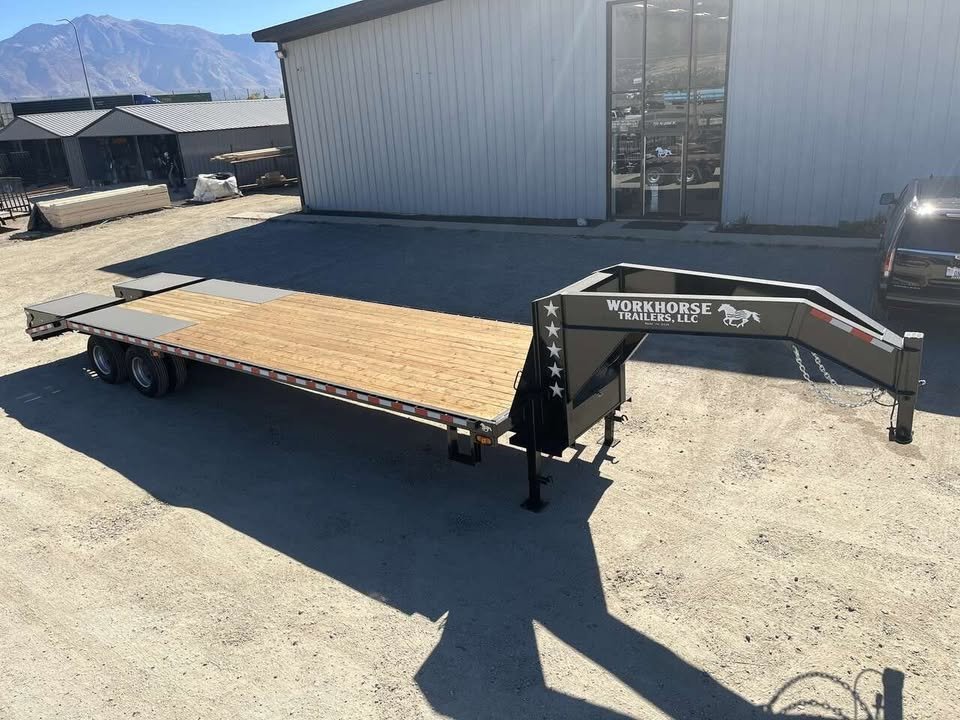
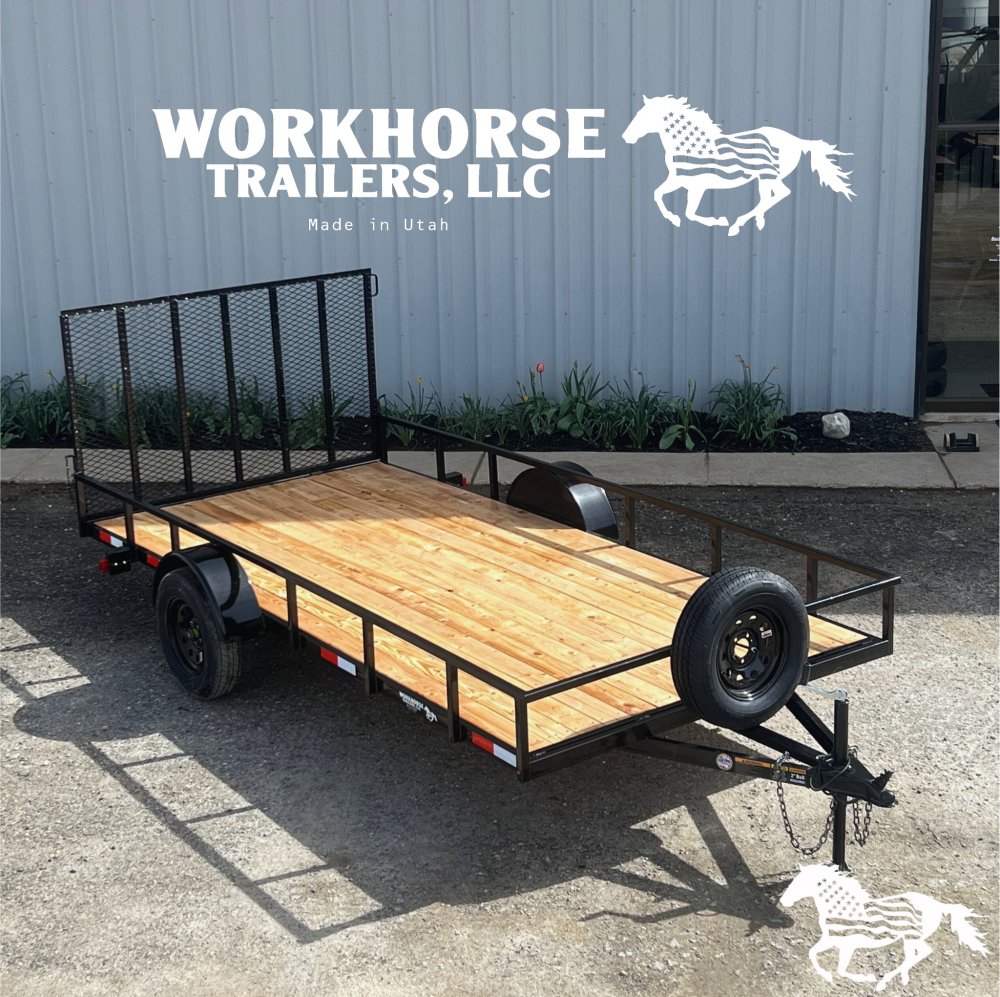
Elko Car Hauler Trailers
All locationsBuying a vehicle in Elko means choosing from whatever sits on the local lots. Buying the vehicle you actually want often means finding it in Reno, Salt Lake City, Boise, or somewhere online and figuring out how to get it home across 200 to 300 miles of high desert highway. Professional auto transport companies charge rates that make sense for a luxury purchase but feel excessive when you’re retrieving a $6,000 project truck from a Craigslist seller in Twin Falls. Elko residents who buy, sell, restore, or collect vehicles with any regularity eventually arrive at the same conclusion: owning a car hauler trailer pays for itself faster here than it does in cities where the nearest dealership inventory sits ten miles away instead of four hours. Workhorse Trailers LLC supplies car hauler trailers to Elko buyers who need a dependable way to move vehicles across the long stretches of highway that separate northeastern Nevada from everywhere else, with construction quality suited to roads that test every component the trailer carries.
Car hauler trailers exist to transport vehicles that can’t, won’t, or shouldn’t drive themselves to their destination. A freshly purchased truck with an unknown transmission history. A classic Chevy that hasn’t turned a wheel in eight years. A drag car headed to an event in Wendover. A ranch truck with a blown engine being shuttled to a mechanic in Spring Creek. Each scenario requires a trailer designed to load, secure, and haul a full-size vehicle safely across distances that in Elko’s case almost always involve significant highway mileage and meaningful elevation changes.
Why Elko Residents Own Car Haulers at a Higher Rate Than Urban Buyers
The economics and logistics of vehicle ownership in a remote community create car hauler demand that per-capita statistics in larger cities don’t reflect.
Limited Local Vehicle Selection
Elko supports a handful of new car dealerships and a rotating selection of used car lots. The inventory covers mainstream needs but thins rapidly for buyers seeking specific configurations, performance vehicles, classic restorations, or commercial trucks with particular specifications. A rancher looking for a specific year and configuration of flatbed work truck may find nothing suitable within 150 miles. A hobbyist searching for a particular muscle car project will almost certainly need to look outside Elko County entirely.
The result is that Elko vehicle buyers routinely purchase from sellers in distant cities and need transport home. Hiring a commercial hauler for each purchase adds $500 to $1,500 per trip depending on distance. A car hauler trailer that costs $3,000 to $6,000 breaks even after just a few retrievals, and every subsequent use represents pure savings against what the transport service would have charged.
Mining Workforce Rotation
Elko’s gold mining industry employs thousands of workers, many of whom rotate between Elko-area housing and home communities scattered across Nevada, Idaho, Utah, and Oregon. Workers relocating to Elko for a contract period frequently tow a second vehicle behind their primary truck, and workers departing at contract end do the same in reverse. Not all of these moves involve drivable vehicles. Project cars, recreational vehicles, and non-running equipment accumulate in Elko garages during work rotations and need transport when the worker moves on.
The mining workforce also generates a secondary vehicle market within Elko itself. Workers sell vehicles locally when they transfer, and buyers within the mining community purchase vehicles from departing colleagues. A car hauler trailer that circulates within this community sees regular use facilitating transactions that would otherwise require hiring transport or making deals contingent on the vehicle being drivable.
Mechanical and Body Shop Vehicle Retrieval
Elko’s automotive repair shops and body shops serve a geographic area that extends well beyond city limits. A mechanic whose reputation draws customers from Carlin, Lamoille, Jiggs, Deeth, and the ranching communities along the Humboldt River corridor needs a way to retrieve vehicles that can’t be driven to the shop. A car hauler trailer hitched to a shop truck turns a customer’s breakdown into a service call rather than a lost customer. Several Elko repair businesses maintain a car hauler specifically for this purpose, and the trailer’s availability is part of the service proposition that distinguishes them from competitors who require the customer to arrange their own tow.
Highway Conditions Between Elko and Everywhere Else
Elko sits on Interstate 80 at roughly 5,000 feet of elevation, surrounded by mountain ranges that the highway climbs over or threads between on every route out of town. Car hauler owners based in Elko tow through conditions that urban haulers rarely encounter.
The I-80 Corridor
Heading west toward Reno, I-80 crosses the Humboldt Range near Emigrant Pass, traverses the broad valleys around Winnemucca and Lovelock, and climbs through the Truckee River canyon to reach the Reno-Sparks metro. The 290-mile run involves multiple summit crossings, sustained grades, and winter conditions that include chain controls, whiteout visibility, and road closures that can strand travelers for hours.
Heading east toward Salt Lake City, I-80 crosses the Pequop Summit and the wide basin surrounding Wendover before descending into the Bonneville Salt Flats and the Wasatch Front. This stretch is less mountainous than the westbound route but includes long exposed sections where crosswinds push loaded trailers laterally and winter storms arrive with minimal warning.
A car hauler loaded with a 4,000-pound vehicle towed across either of these corridors needs a tow vehicle with adequate cooling, braking, and payload capacity for sustained mountain highway operation. The trailer itself needs brakes calibrated for loaded descent, tires rated for highway speed at elevation, and tie-down systems tight enough to hold the vehicle stationary through the lateral forces that summit winds and curve sequences generate.
The Mountain City Highway and Northern Routes
State Route 225 heading north from Elko toward Owyhee and the Idaho border climbs through the Bull Run Mountains and crosses terrain that’s beautiful, remote, and unforgiving of mechanical failures. Car hauler owners retrieving vehicles from sellers in southern Idaho sometimes use this route to reach the Twin Falls and Boise areas. The road is well-maintained but narrow, winding, and subject to weather closures during winter months.
The combination of steep grades, tight curves, and limited shoulder width on these northern routes places a premium on trailer maneuverability and braking performance. A car hauler that tracks straight and responds predictably to braking inputs on a mountain descent provides a margin of safety that a loosely balanced or poorly maintained rig does not.
Highway 93 South
US-93 running south from West Wendover through Ely connects Elko area buyers to vehicle sources in southern Nevada and Arizona. This corridor passes through genuinely remote desert where services are sparse and cell coverage unreliable. The drive from Elko to Las Vegas via this route exceeds 400 miles and takes roughly six hours under good conditions. Car hauler owners making this run should plan fuel stops deliberately, carry water and emergency supplies, and ensure the trailer and tow vehicle are mechanically sound before departure.
Selecting a Car Hauler for Elko’s Operating Profile
The distances and conditions Elko car hauler owners face should inform every aspect of the purchase decision, from frame gauge to tire selection to ramp geometry.
Frame and Structural Durability
A car hauler that primarily tows across urban streets accumulates stress slowly. A car hauler that logs hundreds of miles per trip across highways with expansion joints, rough patches, and construction zones accumulates stress rapidly. Elko buyers should prioritize car haulers with frame rails heavy enough to resist fatigue over high-mileage service. Channel iron or I-beam main rails in the 5-inch or 6-inch range provide the longitudinal stiffness that prevents the deck flex and frame cracking that lighter construction develops after a few years of Elko-distance hauling.
Cross member spacing matters for the same reason. Closely spaced cross members distribute the vehicle’s weight across more support points, reducing the concentrated stress that causes deck surface damage and cross member bending under the tire contact patches.
Brake System Capacity
Electric brakes on a car hauler serving the Elko area need to handle repeated loaded descents on mountain grades. The brake drums, shoes, and magnets should be sized for the trailer’s full rated capacity, not the minimum specification that satisfies the weight rating on paper. Drums with greater mass dissipate heat more effectively during sustained braking, which matters on the long descent from Emigrant Pass or the drop into the Humboldt valley from the eastern summits.
Brake controller selection in the tow vehicle also deserves attention. Proportional brake controllers that modulate trailer braking force in proportion to the truck’s deceleration rate provide smoother, more predictable stops than time-delayed controllers. On mountain grades where braking modulation determines whether the descent feels controlled or alarming, the proportional controller is the appropriate choice.
Tire Selection for Mixed Conditions
Elko car hauler owners tow across temperature ranges that span from below zero in January to above 100 in July, sometimes within the same month during shoulder seasons. Trailer tires should carry speed ratings appropriate for sustained highway travel and load ratings that provide thermal margin during hot-weather trips. Radial trailer tires generally outperform bias-ply alternatives for highway use because their construction runs cooler at speed and provides more stable handling characteristics.
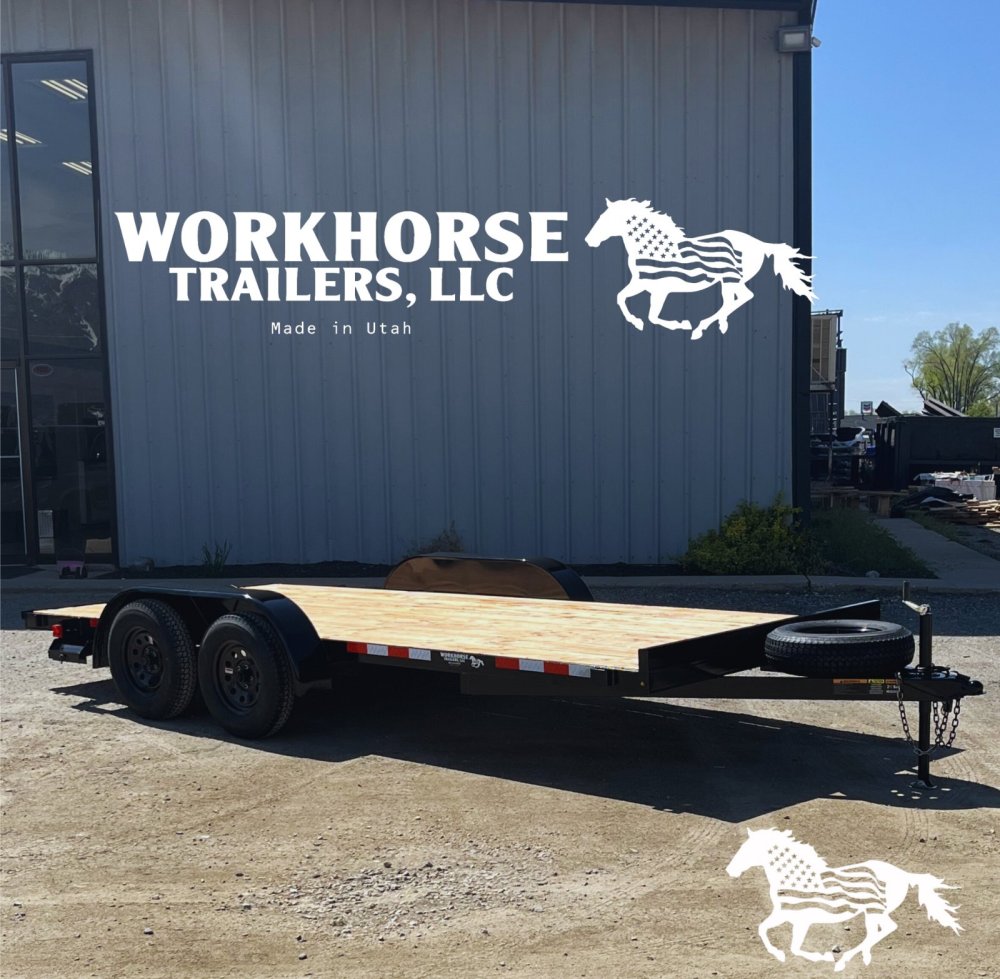
Carrying a mounted spare tire on the car hauler eliminates the dependence on roadside assistance that remote highway travel makes unreliable. A spare that matches the trailer’s installed tires in size, load rating, and speed rating ensures that a blowout between Elko and Winnemucca results in a 20-minute tire change rather than a multi-hour wait for a service truck that may need to come from Elko or Battle Mountain.
Protecting the Hauled Vehicle on Long Elko Runs
The highway miles that Elko car hauler trips accumulate expose the transported vehicle to road debris, weather, and vibration for hours at a stretch. Protecting the vehicle during these extended transits requires more deliberate attention than a 30-minute crosstown haul demands.
Road debris on I-80 through Nevada’s open desert includes tire fragments from commercial trucks, gravel thrown from construction zones, and the occasional tumbleweight that rolls across the highway without warning. A vehicle riding on an open car hauler catches this debris across its front surfaces. Windshield protection using a fitted cover or clear film applied to vulnerable glass reduces the chip risk that hours of highway exposure creates.
Tie-down tension requires verification at intervals during long runs. Straps that felt tight at the loading point in Elko lose tension as the vehicle’s suspension settles during the first 50 to 100 miles of highway travel. Checking and retensioning at the first fuel or rest stop prevents the progressive loosening that develops over a 300-mile trip. A vehicle that shifts even slightly on the trailer during a mountain descent changes the trailer’s weight distribution at the moment it matters most.
Dust accumulation during summer desert runs coats every exposed surface of the transported vehicle. For finished paint and exposed chrome, the combination of fine alkali dust and highway-speed airflow creates a mild abrasive effect that can dull surfaces over repeated long-distance hauls. Buyers transporting show-quality or freshly finished vehicles should consider an enclosed car hauler or a fitted vehicle cover that seals the body surfaces from airborne particulate.
Elko County Registration and Requirements
Car hauler trailers registered in Elko County follow Nevada’s DMV process handled at the local Elko office. Elko County’s sales tax rate of 6.85 percent applies to the purchase, positioning it below the rates charged in Nevada’s more populated counties. For a car hauler purchase in the $4,000 to $8,000 range, the tax savings compared to a Clark County purchase amounts to roughly $60 to $120, a modest but real difference.
Braking, lighting, and reflective marking requirements follow Nevada’s statewide standards. Car haulers carrying a vehicle whose profile blocks the trailer’s rear lights must display supplemental lighting visible from behind. Magnetic LED light bars that attach to the transported vehicle’s rear surface satisfy this requirement inexpensively and store easily when not in use.
Workhorse Trailers LLC and Elko Car Hauler Buyers
Workhorse Trailers LLC understands that Elko car hauler buyers use their trailers differently than buyers in cities where every trip covers 20 miles of surface streets. The distances are longer. The terrain is steeper. The consequences of a mechanical failure are more isolated. The company matches Elko buyers to car haulers built for this reality, emphasizing structural durability, brake capacity, and highway-grade running gear over cosmetic features that don’t affect performance on a 300-mile mountain highway run.
Elko area buyers evaluating car hauler trailers for personal vehicle retrieval, shop service operations, or regular long-distance transport can visitElko Car Hauler Trailers to compare available configurations and connect with the Workhorse team for recommendations suited to northeastern Nevada’s operating demands.
The car hauler you choose in Elko has to earn its keep across real miles and real mountains. Workhorse Trailers LLC makes sure it does.