
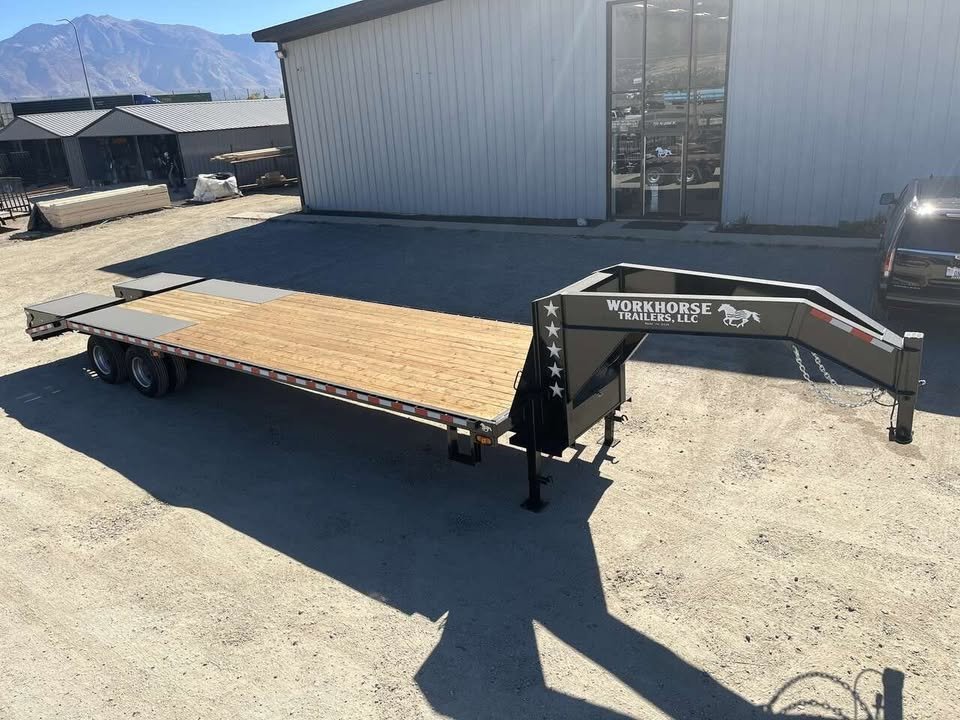
Rawlins Equipment Hauler Trailers
All locationsCarbon County operates on machinery. The wells do not pump without the equipment that services them. The roads do not stay open without the graders and plows that clear them. The ranches do not function without the tractors, loaders, and post drivers that build and maintain them. And none of that machinery does a single useful thing until it reaches the location where the work is waiting. In a county that stretches across nearly 8,000 square miles of basin, mountain, and high desert, the equipment hauler trailer is the vehicle that closes the gap between where machines are stored and where they are needed. Rawlins sits at the geographic and logistical center of this territory, functioning as the staging point from which heavy equipment disperses outward to job sites that may lie an hour or more in any direction along roads that test every piece of equipment that travels them. Workhorse Trailers LLC provides Rawlins operators with equipment hauler trailers built for a service environment where breakdown is not an inconvenience but a crisis, because the nearest replacement part or repair facility may be half a state away.
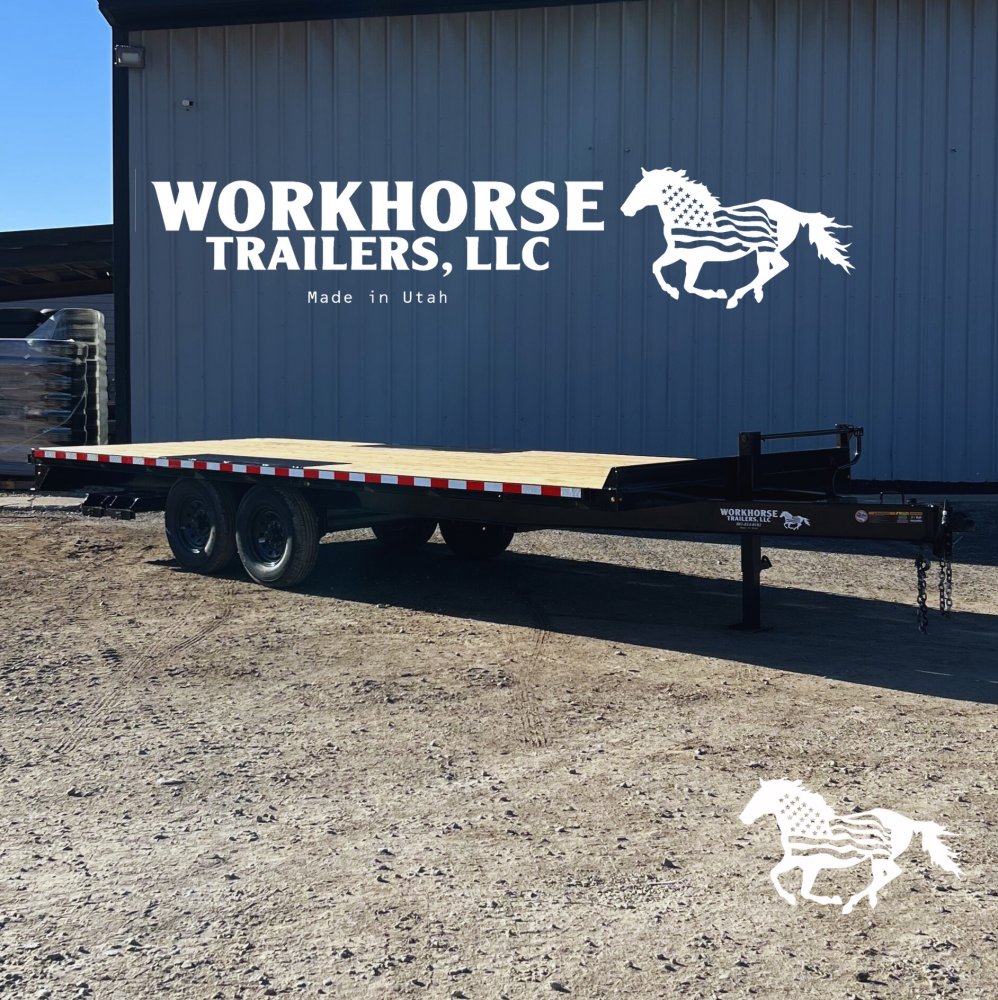
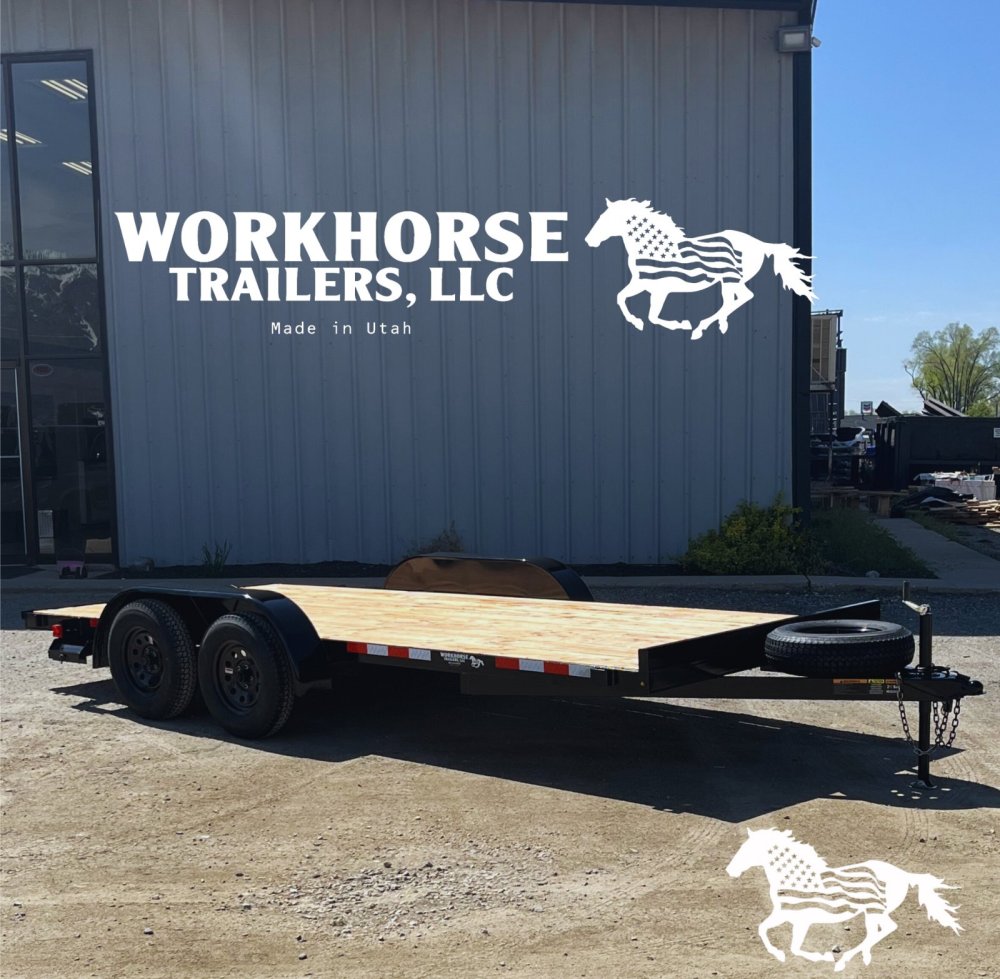
The industries surrounding Rawlins place relentless transport demands on a relatively small population of equipment owners and operators. A single earthmoving contractor might serve pipeline projects south of Baggs on Monday, a highway shoulder repair near Elk Mountain on Wednesday, and a wellsite pad construction in the Wamsutter field on Friday. Each of those jobs sits in a different corner of Carbon County, separated by 80 to 120 miles of highway and unpaved access road that the equipment hauler trailer must cross loaded in one direction and empty in the other. Workhorse Trailers LLC stocksRawlins Equipment Hauler Trailers rated and constructed for this cycle of long-haul delivery, rough-road final approach, and immediate turnaround that defines equipment transport in one of the most demanding operating territories in the American West.
Industries Driving Equipment Hauler Demand From Rawlins
The sectors that keep equipment hauler trailers rolling out of Rawlins yards before dawn each morning share a common dependence on heavy machinery deployed across terrain that offers no shortcuts and no forgiveness for poorly maintained transport equipment.
Natural Gas Gathering and Compression
The gas fields stretching south and west of Rawlins toward the Continental Divide produce billions of cubic feet of natural gas annually through a network of wellheads, gathering lines, and compression stations that require constant mechanical attention. Compressor maintenance crews transport portable air compressors, hydraulic torque wrenches, valve actuators, and heavy lifting equipment between stations spread across dozens of miles of field road.
When a compressor station goes down, production from every connected well stalls until the problem is resolved. The urgency of these repairs means that the equipment hauler trailer carrying the diagnostic and repair machinery cannot afford a mechanical delay of its own during the trip from the Rawlins shop to the affected station. A broken ramp mechanism, a flat tire, or a failed brake actuator on the trailer transforms a four-hour compressor repair into a full-day production outage that costs the operator thousands of dollars in deferred revenue. Rawlins gas field contractors invest in premium equipment hauler trailers specifically to prevent the trailer itself from becoming the bottleneck in an already time-critical repair response.
Carbon County Road and Bridge Maintenance
Carbon County maintains a road network that covers an area larger than the states of Delaware and Rhode Island combined. County road crews based in Rawlins and at satellite maintenance yards in outlying communities operate motor graders, backhoes, front-end loaders, dump trucks, and snow removal equipment that must reach work zones scattered across this vast territory on schedules driven by weather, budget cycles, and public safety priorities.
Equipment hauler trailers shuttle these machines between the central yard in Rawlins and the work zones where they are needed. A grader that spent the morning smoothing a county road near Savery might need to relocate 70 miles northeast to address a washout reported on a road outside Hanna by afternoon. The equipment hauler trailer that makes this transfer must load quickly at the first location, travel the highway segment at legal speed without handling problems, and deliver the machine at the second location ready for immediate use. The county’s maintenance schedule cannot absorb the lost hours that a slow-loading or mechanically unreliable trailer introduces into the equipment transfer process.
Wind Energy Construction and Maintenance
The wind energy corridor along I-80 between Rawlins and Medicine Bow has attracted significant turbine installation and is positioned for continued expansion as transmission capacity increases. During active construction phases, crawler cranes, rough-terrain forklifts, concrete batch plant components, and specialized foundation equipment travel to turbine sites on equipment hauler trailers that navigate the access roads connecting the tower locations to the highway.
Once the turbines are operational, maintenance crews transport aerial work platforms, hydraulic pump units, and blade repair equipment between towers on schedules dictated by manufacturer service intervals and fault alarms that trigger unplanned visits. The tower access roads are built to accommodate construction traffic temporarily but receive minimal maintenance after the installation phase concludes. Equipment hauler trailers serving the wind energy maintenance cycle must handle these deteriorating access surfaces without damage to the trailer or the machines riding on the deck.
Timber and Wildfire Mitigation Projects
The forested slopes of the Sierra Madre and the Medicine Bow Mountains south and east of Rawlins support timber harvest operations and wildfire fuel reduction projects that deploy heavy equipment to mountain work sites accessible only by forest service roads. Feller bunchers, skidders, chippers, and portable sawmill units travel from staging areas near Rawlins to timber sale boundaries at elevations exceeding 8,000 feet on roads with grades, switchbacks, and stream crossings that demand careful speed management and constant attention from the driver.
Equipment hauler trailers bound for these mountain work sites face conditions unlike anything encountered on the basin floor. Steep approach grades test the tow vehicle’s power reserve with a loaded trailer. Narrow road widths eliminate the possibility of passing oncoming traffic without one vehicle pulling aside. And the combination of altitude, shade, and moisture creates road surfaces that transition from firm gravel to boot-sucking mud within a few hundred yards. Rawlins timber contractors select equipment hauler trailers with the ground clearance, suspension travel, and braking capacity to navigate these conditions safely while carrying machines that weigh 15,000 to 30,000 pounds.
Equipment Hauler Specifications for Carbon County Service
The environmental and logistical conditions specific to Rawlins and Carbon County influence which equipment hauler trailer specifications deliver reliable performance and which lead to premature failure or compromised safety.
Frame Construction for Thermal and Impact Fatigue
An equipment hauler trailer based in Rawlins absorbs two distinct types of fatigue simultaneously. Thermal fatigue results from the 130-degree annual temperature range that cycles steel through expansion and contraction thousands of times per year. Impact fatigue results from the thousands of miles of gravel, shale, and unimproved road surface the trailer traverses during normal Carbon County operations.
These two fatigue mechanisms attack different parts of the frame but compound each other’s effects. A weld joint weakened by thermal cycling cracks sooner under impact loading than the same joint in a trailer operating in a stable-temperature environment on smooth roads. Rawlins buyers should prioritize frames fabricated with full-penetration welds at every structural junction and built from steel grades that maintain toughness across the complete local temperature range. Intermittent welds and tack-welded gussets that concentrate stress at small contact areas fail earlier and more unpredictably under the combined thermal and impact loading that Carbon County imposes.
Brake System Reliability Over Extended Distances
Equipment hauler trips originating from Rawlins routinely cover 60 to 130 miles of highway before reaching the delivery destination. At these distances with a loaded trailer, the brake system operates under sustained thermal load that tests the heat dissipation capacity of drums or rotors, the thermal stability of brake shoe or pad material, and the integrity of electrical connections delivering current from the tow vehicle’s brake controller to the trailer’s brake magnets.
Brake components sized generously relative to the trailer’s gross vehicle weight rating provide the thermal mass needed to absorb heat during long loaded runs without reaching temperatures that cause fade. Electric brake magnets with heavy-gauge windings maintain consistent electromagnetic force at the elevated temperatures sustained highway braking generates. And wiring connections sealed against the dust and moisture intrusion common on Carbon County roads deliver reliable current flow to every brake assembly throughout the trip.
Ramp Systems Built for Repeated Cycling on Abrasive Surfaces
Equipment hauler ramps in the Rawlins area contact loading surfaces composed of crushed shale, pit-run gravel, native clay, and compacted fill that vary widely in firmness, texture, and abrasiveness. Every loading event deposits grit into hinge assemblies, latch mechanisms, and the interface between ramp surface and trailer deck that wears components designed for cleaner environments down to failure threshold in a fraction of their rated service life.
Ramp hinge pins machined from hardened steel and fitted into greaseable bushings withstand the abrasive contamination that destroys plain bearing surfaces within a single busy season. Spring-loaded latch mechanisms with positive engagement features resist the vibration-induced loosening that allows ramps to shift during transit on rough roads. And ramp surface textures deep enough to provide traction through a layer of accumulated grit keep machines from slipping during the loading angle even when the ramp surface is far from clean.
Pre-Trip Protocols for Rawlins Equipment Haulers
The isolation of most Carbon County equipment delivery destinations makes a thorough pre-trip inspection essential rather than optional. A mechanical failure 50 miles south of Rawlins on a county road with no cell reception and no passing traffic creates a situation that can escalate from inconvenient to dangerous within hours, particularly during winter months when exposure risk compounds the mechanical problem.
Tire Condition and Pressure Verification
Every tire on the trailer should be inspected for sidewall damage, tread depth, and embedded objects before each loaded departure. Checking inflation pressure with a calibrated gauge confirms that all tires match the load-rated specification for the day’s cargo weight. Running even a single tire at significantly low pressure during a 100-mile loaded highway run generates internal heat that weakens the tire structure and increases the probability of a blowout on a stretch of road where changing a trailer tire safely may require pulling entirely off the travel surface onto soft shoulders or rough terrain.
Lighting System Function Check
Confirming that every tail lamp, brake lamp, turn signal, clearance marker, and reflector functions properly before leaving the yard takes less than two minutes with a helper or a set of mirrors. A missing brake light during a night run on I-80 or an absent turn signal during a left turn onto a county road creates a collision risk that no amount of schedule pressure justifies accepting. Rawlins operators who depart before dawn during winter months are driving into darkness that may persist for the entire outbound trip, making full lighting function a non-negotiable safety requirement.
Carrying Self-Recovery Equipment
A loaded equipment hauler trailer that develops a flat tire or gets stuck in soft ground at a remote Carbon County delivery location presents a recovery problem that the operator should be prepared to handle independently. A spare tire mounted on a matching wheel, a bottle jack or scissor jack capable of lifting the loaded axle, a set of basic hand tools, tire blocks for the remaining wheels, and a high-visibility vest for roadside work compose a self-recovery kit that addresses the most common mechanical interruptions.
Adding a tow strap rated for the combined weight of the truck and loaded trailer provides an option for extraction from soft ground if another vehicle is available at the delivery site. Rawlins operators who deliver equipment to wellsites and ranch properties where other trucks are typically present can often arrange a pull-out using the equipment already on location, provided they carry the strap that makes the connection possible.
Workhorse Trailers LLC Keeps Rawlins Machinery Moving
The equipment that builds, maintains, and powers Carbon County depends entirely on the trailers that deliver it to the ground where the work happens. Workhorse Trailers LLC understands that an equipment hauler trailer in Rawlins is not an accessory to the operation but a load-bearing link in a chain that stretches from the shop yard to the most remote wellsite, mountain timber sale, or county road work zone in the territory. Customers arrive from Sinclair, Baggs, Dixon, Savery, Encampment, Saratoga, Hanna, Elk Mountain, Medicine Bow, and Wamsutter knowing that the Workhorse team will recommend a trailer built for the actual conditions Carbon County delivers rather than the theoretical conditions a marketing department imagines. For Rawlins operators whose livelihoods depend on getting heavy equipment to distant job sites without delay or damage, Workhorse Trailers LLC provides the equipment hauler trailers that make that outcome reliable on every trip.