
Evanston Tilt Deck Trailers
All locationsLoading heavy equipment onto a trailer should not require a crew of helpers, a collection of makeshift ramps, or a white-knuckle drive up a steep incline. Tilt deck trailers solve the loading challenge with an elegantly simple mechanism that allows the entire deck or a portion of it to pivot downward, creating a gentle slope that wheeled and tracked machines can drive up and down with minimal effort. For contractors, operators, and business owners across Evanston, Wyoming, tilt deck trailers have become an essential tool that saves time, reduces risk, and streamlines daily hauling routines. Workhorse Trailers LLC carries a focused selection of tilt deck models chosen specifically for the working conditions and industry demands found throughout the Evanston region.
The growing popularity of tilt deck trailers in southwestern Wyoming reflects a broader shift in how professionals think about efficiency at the job site. Every minute spent wrestling with detachable ramps, aligning equipment on a narrow loading path, or waiting for additional help to arrive is a minute lost from billable work. Tilt deck trailers compress the loading process into a quick, one-person operation that gets equipment on and off the trailer faster and with far less physical strain than traditional alternatives.
How Tilt Deck Trailers Work
The tilt deck mechanism operates on a pivot point positioned somewhere along the length of the trailer frame. When the tilt is activated, the rear section of the deck angles downward until the trailing edge contacts the ground, forming a gradual ramp surface. Equipment operators simply drive their machines up the inclined deck, and once the load is positioned and secured, the deck returns to its level transport position.
The activation method varies by model and manufacturer. Gravity tilt systems use the weight of the equipment itself to push the deck downward as a machine drives onto the rear section. Once the load moves forward past the pivot point, the deck settles back to level under the combined weight of the machine and the front portion of the frame. Hydraulic tilt systems use a powered cylinder to raise and lower the deck on command, giving the operator precise control over the tilt angle regardless of load weight. Some hybrid designs combine gravity activation with a hydraulic dampening system that controls the speed of the tilt to prevent the deck from slamming down or snapping back up too quickly.
Workhorse Trailers LLC stocks tilt deck trailers with each of these activation types so that Evanston customers can choose the system that best fits their loading habits and the type of equipment they haul most frequently.
Advantages of Choosing a Tilt Deck Over Ramp-Based Trailers
The decision between a tilt deck trailer and a conventional trailer with detachable or fold-down ramps comes down to how often you load equipment, what kind of machines you move, and how much you value speed and simplicity in your daily routine.
Faster Loading and Unloading Cycles
On a standard ramp trailer, the loading sequence involves parking the trailer, walking to the rear, releasing ramp latches, lowering or positioning the ramps, driving the equipment aboard, climbing off the machine to stow the ramps, and then securing the ramp latches again before departure. That process reverses at the destination. On a tilt deck trailer, the operator activates the tilt, drives the machine on, and the deck levels itself. The entire cycle takes a fraction of the time, which adds up dramatically for operators who load and unload multiple times per day across different job sites in the Evanston area.
Reduced Ground Clearance Issues
Ramps create an abrupt angle change at the point where they meet the trailer deck. Machines with low ground clearance, belly-mounted components, or long wheelbases risk catching on that transition point and becoming stuck or sustaining damage to undercarriage parts. Tilt deck trailers eliminate the harsh angle by creating a single continuous surface from ground level to the full deck height. Compact track loaders, scissor lifts, floor scrapers, and other low-profile machines load onto tilt decks without the scraping and high-centering problems that plague ramp-based loading.
Single Operator Convenience
Many of the professionals who purchase tilt deck trailers from Workhorse Trailers LLC operate as solo crews or small teams where every person on site has a task to perform. Dedicating someone to manage ramps while another person drives equipment is a luxury that small operations cannot afford. Tilt deck trailers allow a single operator to handle the entire loading process independently, which is a practical advantage that directly improves workforce efficiency on lean job site teams common throughout Evanston’s contracting and service industries.
Reduced Wear on Loading Components
Detachable ramps take abuse. They get dropped, bent, driven over by passing traffic when left leaning against the trailer, and eventually corrode from constant ground contact. Replacement ramps are expensive, and operating with damaged ramps introduces serious safety hazards. Tilt deck trailers have no separate ramp components to lose, damage, or replace. The deck itself is the loading surface, and because it is an integral part of the trailer frame, it is engineered to handle loading stresses as part of its core structural design.
Tilt Deck Trailer Configurations Available in Evanston
Workhorse Trailers LLC provides tilt deck trailers in multiple configurations to accommodate the range of hauling demands their Evanston customers bring through the door.
Full Tilt Trailers
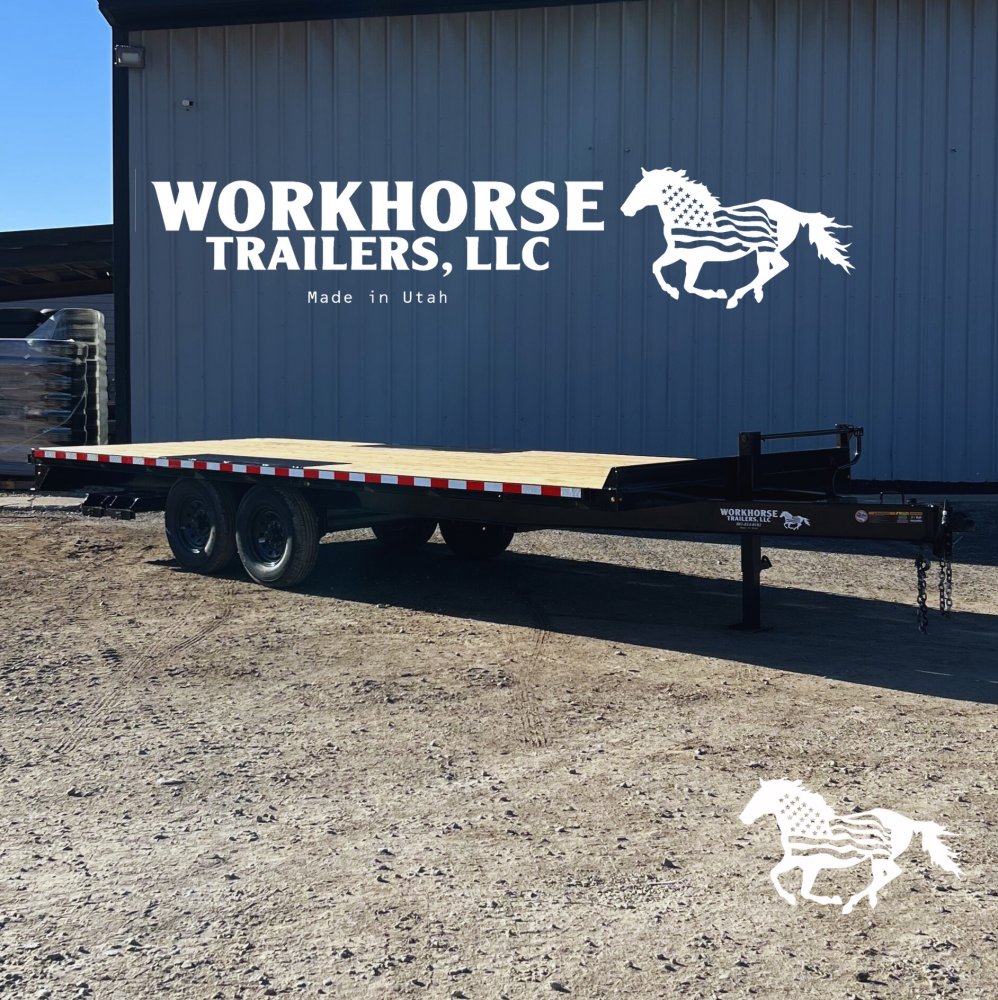
On a full tilt model, the entire deck surface pivots from front to rear. This configuration offers the longest possible loading surface and creates the shallowest approach angle, making it the easiest style for loading low-clearance or heavy tracked equipment. Full tilt trailers are favored by operators who primarily haul a single large piece of equipment per trip and want the simplest, most forgiving loading geometry available.
The trade-off with a full tilt design is that the entire load shifts rearward during the tilt cycle, which means cargo positioned near the front of the deck must be secured before tilting. For single-machine hauling, this is rarely a concern, but operators who carry additional tools or materials alongside their primary load should account for this movement during their securement routine.
Split Tilt or Stationary Front Trailers
Split tilt trailers feature a fixed front section and a tilting rear section. The stationary portion provides a stable platform for cargo that remains in place during loading, while the rear tilt section handles equipment loading and unloading. This design is popular among customers who carry toolboxes, fuel containers, spare parts, or secondary equipment on the front of the trailer and do not want those items disturbed every time the deck tilts.
The fixed front section also serves as a natural stop point that prevents equipment from rolling too far forward during loading. Once the machine reaches the stationary portion, the operator knows the load is properly positioned and can begin the securement process. Many of the Evanston-area construction and utility professionals who shop at Workhorse Trailers LLC gravitate toward split tilt configurations because of this practical balance between tilting convenience and stable cargo management.
Power Tilt vs. Gravity Tilt
The choice between hydraulic power tilt and gravity tilt depends on load characteristics and operator preference. Gravity tilt systems are mechanically simpler, with fewer components that can fail or require maintenance. They work reliably for loads within a specific weight range that is heavy enough to activate the tilt but not so heavy that the deck drops too aggressively.
Power tilt systems offer consistent operation regardless of load weight. An empty deck tilts just as smoothly as a loaded one, which matters for operators who haul equipment of varying weights throughout the week. Hydraulic tilt also provides controlled lowering speed and powered return to level, removing the physical effort of manually latching or pushing the deck back into transport position. Customers who handle a diverse equipment fleet generally find that the added cost of a hydraulic tilt system pays for itself through daily convenience and operational consistency.
Industries Relying on Tilt Deck Trailers in Evanston
The practical benefits of the tilt deck design resonate across several of Evanston’s core economic sectors. Each industry has specific reasons for choosing tilt over conventional loading methods.
Excavation and Site Preparation
Mini excavators, compact track loaders, and skid steers move between job sites constantly during active construction seasons in and around Evanston. These machines board and exit trailers multiple times per week, and the cumulative time savings of tilt deck loading versus ramp loading become substantial over the course of a busy season. Excavation contractors who switched to tilt deck trailers frequently describe the change as one of the best operational upgrades they have made.
Road Maintenance and Public Works
Municipal and county road crews responsible for maintaining highways, county roads, and residential streets throughout Uinta County transport pavement rollers, plate compactors, cold patch equipment, and portable sign trailers between work zones on tight schedules. Tilt deck trailers allow these crews to relocate equipment quickly without blocking traffic lanes any longer than necessary, which improves both worker safety and public convenience.
Rental Equipment Delivery
Equipment rental companies serving the Evanston market deliver and retrieve machines from customer locations throughout the day. Speed of delivery directly affects customer satisfaction, and minimizing time spent at each drop-off and pickup keeps the delivery schedule on track. Tilt deck trailers give delivery drivers the ability to unload a machine, collect a signature, and move on to the next stop without the delays associated with ramp deployment and stowage.
Oil and Gas Field Support
Service companies supporting drilling and production operations across the basin transport pumps, generators, light towers, and compressor units to well sites that are often located on unpaved access roads with limited maneuvering space. Tilt deck trailers simplify equipment delivery at these tight locations by eliminating the need to position and retrieve ramps on uneven ground. The single-surface loading approach works more reliably on gravel pads and muddy access points than ramps that can sink, shift, or slide during the loading process.
Evaluating Build Quality on a Tilt Deck Trailer
Not all tilt deck trailers are constructed to the same standard, and understanding the quality indicators that separate a durable commercial trailer from a budget model helps Evanston buyers protect their investment.
The pivot mechanism is the heart of every tilt deck trailer. Look for heavy-duty pivot pins with greaseable bushings that allow smooth rotation under load and resist wear over thousands of tilt cycles. Lightweight pivot assemblies with pressed-in bushings wear out faster and develop play that makes the deck feel sloppy and unstable during loading.
Frame rail thickness and crossmember spacing determine how the deck handles concentrated loads. Thicker main beams and tighter crossmember gaps produce a stiffer platform that resists bowing when heavy tracked equipment sits in the center of the deck. Ask about steel gauge and spacing when comparing models at Workhorse Trailers LLC, as these details often separate trailers that last a decade from those that fatigue within a few seasons.
Wiring protection deserves attention on any trailer, but tilt deck models face additional wiring challenges because electrical runs must accommodate the deck’s range of motion without stretching, pinching, or abrading against moving components. Quality tilt deck trailers route wiring through conduit or flexible loom and secure it away from pivot points and hydraulic cylinders where damage is most likely to occur.
For Evanston buyers ready to compare tilt deck models side by side and discuss specifications in detail, the full current inventory is available atEvanston Tilt Deck Trailers where Workhorse Trailers LLC showcases their complete tilt deck selection alongside detailed feature breakdowns for each model.
Tilt Deck Trailer Safety Practices for Wyoming Roads
Operating a tilt deck trailer safely requires attention to a few key habits that go beyond standard towing precautions. Before activating the tilt on any surface, confirm that the ground beneath the trailer’s rear edge is firm and level enough to support the deck contact point without sinking or shifting. Soft ground, steep slopes, and icy surfaces can cause the trailer to behave unpredictably during the tilt cycle.
Always chock the tow vehicle wheels before tilting the deck, especially on any grade. The weight transfer that occurs during tilting can push the entire rig forward or backward if the truck’s parking brake alone is relied upon. A pair of heavy-duty wheel chocks takes seconds to place and removes a significant source of potential movement during loading.
Verify that all cargo on the stationary portion of a split tilt trailer is properly secured before activating the tilt. Items that appear stable on a level deck can slide or topple when the rear section drops and the trailer’s center of gravity shifts. This check is particularly important for Evanston operators who carry fuel cans, compressed gas cylinders, or heavy toolboxes alongside their primary equipment load.
After loading and returning the deck to transport position, walk the full perimeter of the trailer to confirm that all latches, pins, and locks are fully engaged before pulling away. A deck that is not completely locked in its travel position can shift during transit, creating a dangerous situation at highway speeds on the I-80 corridor and surrounding roads.
Your Tilt Deck Trailer Resource in Evanston
Workhorse Trailers LLC has earned the trust of Evanston’s professional community by consistently delivering product knowledge that goes deeper than a spec sheet and customer service that continues well after the sale. Their tilt deck trailer inventory reflects careful selection based on real feedback from working buyers who depend on their trailers to perform without excuses in demanding conditions across southwestern Wyoming.
Whether you are upgrading from a ramp trailer that has slowed you down for too long or purchasing your first tilt deck to launch a new contracting venture, the Workhorse Trailers LLC team is prepared to walk you through every option, answer every question, and help you drive away with a trailer that transforms your daily loading routine from a chore into a seamless part of getting the job done.